Blog

  • How to Compete With Budget Gym Chains: Strategies for Independent UK Gym Owners

    How to Compete With Budget Gym Chains: Strategies for Independent UK Gym Owners

    The David and Goliath Reality

    PureGym has over 300 locations in the UK. The Gym Group is expanding rapidly. JD Gyms is opening new sites every month. These chains have national brand recognition, slick marketing, and price points that independent gym owners simply cannot match on a per-month basis. with a coach

  • Specialist classes: Olympic lifting, mobility, pre/post-natal, youth fitness
  • Structured programmes (beginner courses, 8-week transformation challenges)
  • Seasonal programming tied to member goals (New Year, summer, pre-winter)

Coaching and Support

  • Floor coaches available during peak hours to help with form and answer questions
  • Complimentary programme reviews for all members (not just PT clients)
  • Technique workshops (squat clinic, deadlift workshop, Olympic lifting intro)
  • Goal-setting sessions for new members

Facilities

  • Specialist equipment that chains do not have (sleds, farmers walk handles, specialty bars, GHD machines)
  • Dedicated stretching and mobility area
  • Recovery facilities: sauna, steam room, ice bath
  • Supplement shop with quality products and staff recommendations

Strategy 3: Own Your Local Identity

Chains are faceless and generic. Independent gyms have character, personality, and local roots. Use that.

  • Tell your story. Why did you open the gym? What is your fitness philosophy? What makes your approach different? Share this on your website, social media, and in your GymPal profile.
  • Partner with local businesses. Cross-promote with nearby cafes, physiotherapists, sports shops, and meal prep companies. Offer each other’s customers discounts.
  • Sponsor local events. School sports days, charity runs, local rugby or football clubs. This builds goodwill and visibility in your community.
  • Support local causes. Host charity workouts, donate a portion of new memberships to local charities, or offer discounted rates for key workers, NHS staff, and emergency services.

Strategy 4: Master Your Online Presence

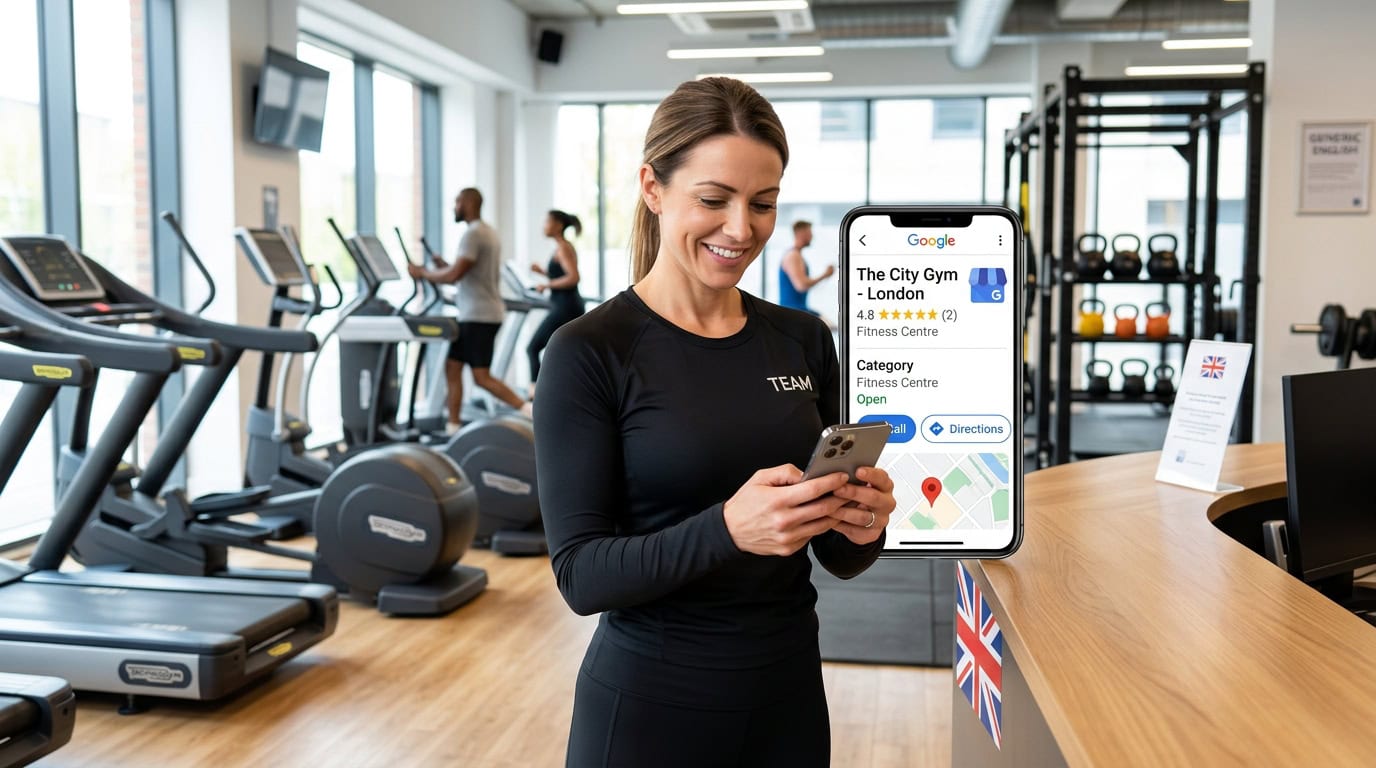
  • Google Business Profile. Claim and optimise yours. Respond to every review. Post weekly updates. Keep your photos fresh.
  • Instagram. Post real content from your gym daily. Show members, classes, behind-the-scenes moments. Chains post generic content; you post authenticity.
  • GymPal listing. Claim your free listing and make it detailed. Include your unique facilities, class schedule, member testimonials, and a compelling description.
  • Google Reviews. Actively ask for reviews. Your goal is to have significantly more reviews and a higher average rating than the local chain.

Strategy 5: Get Your Pricing Right

  • Tiered memberships. Offer a basic tier (gym floor only), a standard tier (gym + classes), and a premium tier (gym + classes + PT sessions + extras).
  • Off-peak rates. Fill quiet hours with a discounted membership for students, retirees, or anyone who can train before 4pm.
  • No hidden fees. Be upfront about joining fees, annual increases, and cancellation terms. Chains often hide these; your transparency builds trust.
  • Annual discounts. Offer meaningful savings for annual prepayment (15-20% off). This improves cash flow and locks in members for longer.
  • Corporate partnerships. Approach local businesses and offer their employees discounted rates.

Strategy 6: Deliver an Experience, Not Just a Facility

The ultimate differentiator is how people feel when they walk through your door. Budget chains provide access to equipment. Independent gyms can provide an experience:

  • Clean, well-maintained facilities (chains often cut corners here)
  • Staff who know your name, remember your goals, and ask about your progress
  • A welcoming atmosphere where beginners do not feel intimidated
  • Music that matches your gym’s personality (not generic playlist)
  • Attention to detail: good lighting, temperature control, clean changing rooms, working showers
  • A culture where members encourage each other and celebrate wins

The One Thing to Remember

PureGym members leave PureGym at a rate of 30-50% per year. They are not loyal to the brand — they are loyal to convenience and price. When they have a bad experience (crowded gyms, broken equipment, impersonal service), they look for alternatives.

Your job is to be the alternative they find. When a frustrated chain member searches for gyms near them and discovers your gym — with its glowing reviews, community atmosphere, and genuine coaching — the choice becomes clear.

The Bottom Line

Independent gyms do not need to compete with chains on their terms. You compete on yours: community, coaching, character, and experience. These are things that chains cannot replicate at scale.

Focus on being the gym that people love, not the gym that is cheapest. Build a community that members feel proud to belong to. Deliver an experience that makes people look forward to their next session. Do those things consistently, and you will never need to worry about the chain down the road again.


Make sure potential members can find you when they search for alternatives to the big chains. Claim your free GymPal listing and showcase what makes your independent gym different. Facilities, reviews, pricing, and a compelling description — all in one place for fitness seekers who are ready to make a switch.


Is your gym listed on GymPal? Over 10,000 UK fitness businesses are in our directory. Claim your free listing in 5 minutes — and start getting discovered by local fitness seekers today.

  • Climbing and Bouldering Gyms in the UK: A Complete Beginner Guide

    Climbing and Bouldering Gyms in the UK: A Complete Beginner Guide


    <a href="https://askgympal.co.uk/blog/climbing-bouldering-gyms-uk-complete-beginners-guide/" target="_blank" rel="dofollow" >Climbing</a> and Bouldering Gyms in the UK: A Complete Beginner Guide

    The UK Climbing Boom

    Climbing and bouldering have exploded in popularity across the UK over the past decade. What was once seen as a niche outdoor pursuit is now one of the fastest-growing fitness activities, with over 300 climbing walls and bouldering centres across the country. The inclusion of sport climbing in the Tokyo 2020 Olympics gave the sport a massive visibility boost, and participation has been climbing ever since. According to Sport England Active Lives survey

    There are good reasons for the surge. Climbing and bouldering offer a unique combination of physical challenge, mental problem-solving, and community spirit that is hard to find in traditional gyms. They build full-body strength, grip, flexibility, and mental resilience — and most people find them genuinely enjoyable in a way that treadmill running simply is not.

    If you are curious but have never tried it, this guide covers everything you need to know before your first session.

    Climbing vs Bouldering: What Is the Difference?

    These terms are often used interchangeably, but they refer to different activities. Understanding the distinction helps you choose the right gym and the right experience:

    Feature Bouldering Rope Climbing
    Height Up to 4–5 metres (walls are low) 10–15+ metres (walls are tall)
    Safety Thick crash mats below; no ropes or harnesses needed Ropes and harnesses required; belayer needed
    Equipment needed Just climbing shoes and chalk (usually available to hire) Shoes, chalk, harness, and belay device
    Training required None for bouldering walls (watch the safety video on arrival) Must complete a belay training course (usually 1–2 hours)
    Cost Lower (less equipment, no instruction required) Higher (training course, equipment hire, or partner required)
    Social Very social — people chat between attempts and share beta More focused on the belay partnership
    Physical intensity Short, powerful bursts of effort Sustained effort over longer routes
    Best for beginners Yes — the easiest entry point Yes, but requires a training course first

    Most UK climbing centres offer both bouldering and rope climbing under one roof. If you are completely new, start with bouldering. It is cheaper, requires less equipment and training, and gives you an immediate sense of what climbing feels like.

    What to Expect on Your First Visit

    Arrival and Registration

    When you arrive at a climbing centre, you will need to register. For bouldering, this typically involves:

    1. Signing a waiver (standard at all climbing centres)
    2. Watching a short safety video (covers falling technique, mat awareness, and wall rules)
    3. Hiring shoes and chalk if you do not have your own

    The whole process takes about 10–15 minutes. Staff at UK climbing centres are generally very welcoming to beginners — do not be afraid to ask questions.

    The Grading System

    Climbing routes (called “problems” in bouldering) are colour-coded and graded by difficulty. In the UK, bouldering grades typically use the V-scale or the Font scale:

    Grade Level What to Expect
    V0 / Font 3 Beginner Simple moves, big holds, straightforward
    V1–V2 / Font 4–5 Easy Slightly harder, requires basic technique
    V3–V4 / Font 6A–6B Intermediate Requires technique, strength, and problem-solving
    V5–V7 / Font 6C–7A Advanced Significant strength, flexibility, and skill required
    V8+ / Font 7B+ Expert Elite-level climbing

    On your first visit, look for the easiest colour on the wall and start there. There is no shame in starting at the bottom — every climber did.

    How a Bouldering Session Works

    A typical bouldering session looks like this:

    1. Warm up: 10 minutes of light cardio, dynamic stretching, and easy traversing (climbing sideways along the bottom of the wall)
    2. Choose a problem: Pick a colour that looks manageable and study the holds from the ground
    3. Climb: Start from the marked start holds, follow the colour to the top hold, and climb back down (never jump off)
    4. Rest: Bouldering is intense. Rest 2–3 minutes between attempts
    5. Repeat: Try the same problem a few times, then move to a different one
    6. Cool down: Light stretching and forearm exercises

    A typical session lasts 60–90 minutes. Your forearms will tell you when you are done.

    How Much Does Climbing Cost in the UK?

    Item Typical Cost
    Bouldering entry (day pass) £8–15
    Rope climbing entry (day pass) £10–18
    Shoe hire £2–4
    Chalk bag hire £1–2
    Belay training course £30–50 (one-off, 1–2 hours)
    Monthly membership (unlimited) £50–90
    Off-peak membership £35–60

    Day passes make climbing easy to try without commitment. Many centres offer introductory packages (entry + shoe hire + chalk) for around £10–15. Monthly memberships are competitive with traditional gym prices, and most include both bouldering and rope climbing.

    The Physical Benefits of Climbing

    Climbing is one of the most comprehensive full-body workouts available. Here is what it trains:

    • Grip strength: Your forearms, fingers, and hands get an incredible workout
    • Upper body: Back, shoulders, biceps, and chest all engage on every climb
    • Core: Keeping your body close to the wall requires constant core activation
    • Legs: Surprisingly, your legs do most of the pushing. Climbing is not all upper body
    • Flexibility: Reaching for holds in awkward positions improves hip and shoulder mobility
    • Balance and coordination: Every move requires body awareness and precise weight shifting

    Because climbing is inherently varied (every problem is different), it avoids the repetitive strain patterns of traditional weight training. It also builds functional strength that translates to real-world movement.

    The Mental Benefits

    Climbing is often described as physical chess. Each problem requires you to:

    • Read the sequence of moves from the ground
    • Plan your body position and weight distribution
    • Adapt when your plan does not work
    • Overcome the fear of falling (in a controlled, safe environment)
    • Persist through repeated failure until you succeed

    This combination of physical exertion and mental problem-solving makes climbing uniquely absorbing. It is very difficult to think about work stress when you are three metres up a wall trying to figure out where to put your left foot. Many climbers describe the experience as meditative.

    Finding a Climbing Gym Near You

    The UK has climbing walls in most cities and many larger towns. Some of the best-known chains include:

    Chain Locations Known For
    The Climbing Hangar Liverpool, London, Birmingham, Harrogate Bouldering-focused, strong community
    Boulder Shack Exeter, Plymouth Bouldering specialist
    Clip n Climb Nationwide (franchise) Family-friendly, auto-belay, beginner-focused
    The Depot Leeds, Sheffield, Birmingham Large facilities, bouldering and rope climbing
    Rocking Frog Manchester, Nottingham Bouldering, training boards, youth programmes
    Creation Climbing London (multiple) Bouldering-focused, modern walls
    Awesome Walls Liverpool, Sheffield, Stockport Huge facilities, both bouldering and rope

    Beyond the chains, many independent walls offer excellent experiences. To find climbing gyms near you — including independent operators and specialist centres — GymPal lists thousands of UK gyms with filtering by facilities, location, and member reviews.

    What to Bring to Your First Session

    • Climbing shoes (or hire them at the centre — £2–4)
    • Chalk bag (or hire one — £1–2)
    • Comfortable clothes — leggings or shorts and a t-shirt work well. Avoid anything too loose or restrictive.
    • Water bottle — climbing is deceptively thirsty work
    • A friend (optional but recommended) — climbing is more fun with company, and you can spot each other

    Common Beginner Mistakes

    • Using too much arm strength. Your legs should do most of the work. Push with your feet, pull with your arms.
    • Not warming up. Climbing places intense stress on finger tendons. Always warm up thoroughly.
    • Climbing to exhaustion every session. Tendon injuries from overtraining are the most common climbing injury. Stop before your forearms give out completely.
    • Skipping easier problems. Even experienced climbers warm up on easy problems. Build up gradually.
    • Jumping off the wall. Always climb down. Jumping from height onto crash mats is the most common source of ankle injuries in bouldering.
    • Being intimidated. Every climber was a beginner once. The climbing community is famously welcoming.

    Should You Combine Climbing with Gym Training?

    Many climbers find that supplementing their climbing with gym training improves their performance. Key exercises include:

    • Pull-ups and rows — build back and bicep strength for pulling on holds
    • Deadlifts and squats — build leg and posterior chain strength for powerful moves
    • Planks and hollow body holds — core strength for body tension on the wall
    • Forearm exercises — wrist curls, dead hangs, and fingerboarding (advanced only)

    If you are looking for a gym that complements your climbing training, GymPal can help you find UK gyms with the right equipment and training atmosphere.

    The Bottom Line

    Climbing and bouldering offer something rare in fitness: an activity that is physically demanding, mentally engaging, and genuinely fun. The barrier to entry is low (a day pass and shoe hire is all you need), the community is welcoming, and the benefits extend far beyond physical fitness.

    If you have been curious about climbing, there has never been a better time to try. Find a local wall, book a day pass, and give it a go. You might just find your new favourite way to stay fit.


    Looking for a climbing gym near you? Search GymPal to find UK bouldering walls and climbing centres in your area. Filter by facilities, read member reviews, and compare day pass and membership prices.


  • 5 Email Marketing Campaigns Every UK Gym Owner Should Be Sending

    5 Email Marketing Campaigns Every UK Gym Owner Should Be Sending

    5 Email Marketing Campaigns Every UK Gym Owner Should Be Sending Free up to 300 emails/day SMS + email combined ActiveCampaign From £29/month Advanced automation and segmentation ConvertKit Free up to 1,000 subscribers Content-focused, simple tagging

    For most gyms, Mailchimp or MailerLite is the best starting point. Both offer free tiers generous enough to get started, and you can upgrade as your list grows.

    Campaign 1: The Welcome Sequence for New Members

    When someone joins your gym, they are at their most enthusiastic — and most receptive to communication. A welcome sequence capitalises on that momentum and reduces early drop-off.

    How It Works

    Set up an automated series of 3–5 emails triggered when a new member joins:

    Email Timing Content
    Welcome Immediately Thank them for joining, confirm their membership details, set expectations for their first visit, include a link to book an induction
    Getting started Day 2 Share a beginner guide to your gym (equipment map, class timetable, etiquette tips), introduce key staff members
    First week check-in Day 7 Ask how their first week went, remind them about classes, offer help if they have questions
    30-day milestone Day 30 Celebrate their consistency, share a quick workout tip, encourage them to book a free PT session or attend a class
    Community invite Day 45 Invite them to your WhatsApp group, Facebook group, or upcoming member event

    Why It Works

    Members who receive a welcome sequence are significantly more likely to form a habit and stay beyond the first three months. You are guiding them through the critical onboarding period with structured, helpful communication.

    Campaign 2: The Re-Engagement Win-Back

    The single biggest predictor of cancellation is declining attendance. A re-engagement campaign targets members who have gone quiet before they cancel.

    How It Works

    Set up an automation triggered when a member has not checked in for 14 days:

    Email Timing Tone
    We miss you 14 days inactive Friendly check-in: noticed we have not seen you recently, everything okay, here is what you are missing this week
    We can help 21 days inactive Supportive offer: offer a free PT session, programme review, or class recommendation to help them get back on track
    Last chance 28 days inactive Soft urgency: offer a membership freeze or modified plan if they are struggling with cost or time

    Why It Works

    Many members simply fall out of habit and need a gentle nudge. These emails show that you notice when someone is missing and that you care enough to reach out. A well-timed re-engagement email can recover 15–25% of at-risk members.

    Campaign 3: The Lead Nurture Sequence

    Not everyone who visits your website or claims a free trial is ready to join immediately. A lead nurture sequence builds trust and provides value over time, so when they are ready, your gym is top of mind.

    How It Works

    Triggered when someone signs up for your email list (newsletter, free guide download, or trial registration but no-show):

    Email Timing Content
    Deliver the value Immediately Send whatever they signed up for (guide, checklist, or trial reminder)
    Social proof Day 3 Share a member transformation story or testimonial
    Behind the scenes Day 7 Show what makes your gym different — community, coaching, facilities
    FAQ and objection handling Day 10 Address common concerns: cost, commitment, intimidation, time
    Offer Day 14 Invite them to claim a free trial, attend an open day, or book a tour with a time-limited incentive

    Why It Works

    Most people need 5–7 touchpoints before making a purchasing decision. A nurture sequence provides those touchpoints automatically, building trust and addressing objections before the prospect even speaks to you.

    Campaign 4: The Referral Programme Promotion

    Your existing members are your best marketing channel. They already love your gym, and a personal recommendation is the most trusted form of marketing. But they need a nudge to actually refer someone.

    How It Works

    Send a monthly or quarterly email to your entire member list promoting your referral programme. The email should:

    • Thank them for being a member
    • Explain the referral offer clearly (e.g. give a friend a free 3-day trial, if they join you both get your next month half price)
    • Make sharing easy — include a unique referral link or a pre-written message they can forward
    • Show social proof: share how many members joined through referrals last month

    Why It Works

    Referred members convert at higher rates, stay longer, and are more engaged than members acquired through paid advertising. A simple referral programme costs almost nothing to run and can become your most reliable source of new members.

    Campaign 5: The Monthly Newsletter

    A regular newsletter keeps your gym in members minds even when they are not thinking about fitness. It also provides value to your broader email list (non-members who have not yet joined).

    What to Include

    Keep it short, scannable, and valuable. A good monthly gym newsletter includes:

    • Gym news: New equipment, class changes, staff updates
    • Member spotlight: A short feature on a member achievement or transformation
    • Fitness tip: One actionable piece of advice (exercise, nutrition, or recovery)
    • Upcoming events: Class launches, social events, competitions
    • Offer or incentive: A reason to visit or bring a friend

    Why It Works

    Consistency builds trust. A monthly newsletter shows that your gym is active, engaged, and focused on its members. It also gives you a regular touchpoint with your entire email list, including people who have not yet joined.

    Email Marketing Best Practices for Gyms

    • Segment your list. Send different emails to active members, inactive members, leads, and former members. One-size-fits-all emails perform significantly worse.
    • Personalise subject lines. Using a recipient name can increase open rates by up to 26%.
    • Keep it concise. Most people scan emails in under 15 seconds. Use short paragraphs, bullet points, and clear calls to action.
    • Mobile optimise. Over 60% of emails are opened on mobile. Test your emails on a phone before sending.
    • Do not over-email. Two to four emails per month is the sweet spot for most gyms.
    • Track your metrics. Monitor open rates, click-through rates, and unsubscribes. Aim for open rates above 25% and click-through rates above 3%.
    • Include an unsubscribe link. This is a legal requirement under UK GDPR and the Privacy and Electronic Communications Regulations (PECR).

    Building Your Email List

    If your list is small, here is how to grow it quickly:

    • Add an email opt-in to your GymPal profile and website
    • Collect emails during gym inductions and sign-ups
    • Run a competition (win a free month — enter with your email)
    • Create a free downloadable resource (a 10-minute home workout guide for busy people)
    • Add a sign-up link to your Instagram bio

    The Bottom Line

    Email marketing is not flashy, but it is effective. For the cost of a free Mailchimp account and a couple of hours per month, you can build automated campaigns that retain members, re-engage lapsed ones, and convert leads into paying members. No other marketing channel offers that level of return on investment.

    Start with the welcome sequence. It is the easiest to set up, delivers immediate value, and provides the template for building more campaigns over time. Your members — and your revenue — will thank you.


    Want to reach more potential members? Claim your free GymPal listing and put your gym in front of thousands of UK fitness seekers. Include your email sign-up link in your profile to grow your list while you attract new visitors.


    Is your gym listed on GymPal? Over 10,000 UK fitness businesses are in our directory. Claim your free listing in 5 minutes — and start getting discovered by local fitness seekers today.

  • How to Build Your First Gym Workout Programme (A Complete Beginner Template)

    How to Build Your First Gym Workout Programme (A Complete Beginner Template)


    How to Build Your First Gym Workout Programme
    Compound + isolation, moderate rest 8–12 reps General fitness Mix of strength and cardio 8–15 reps Weight loss Full-body circuits, cardio emphasis 10–15 reps + cardio

    For most beginners, “general fitness” or “build muscle” is the best starting point. You can specialise later once you have a foundation.

    The Beginner Full-Body Programme

    A full-body routine performed three times per week is the optimal starting point. It trains every major muscle group multiple times per week, builds a solid movement foundation, and fits most schedules. Here is a complete template:

    Warm-Up (5–10 Minutes)

    Never skip this. A proper warm-up reduces injury risk and improves performance.

    • 5 minutes light cardio (treadmill walk, rowing machine, or stationary bike)
    • Dynamic stretches: arm circles, leg swings, hip rotations, bodyweight squats
    • 2 light sets of your first exercise (e.g. goblet squat with just the bar or light weight)

    Workout A

    Exercise Sets Reps Rest
    Goblet Squat 3 8–12 90 seconds
    Dumbbell Bench Press (flat) 3 8–12 90 seconds
    Lat Pulldown 3 8–12 90 seconds
    Dumbbell Walking Lunges 3 (each leg) 8–10 60 seconds
    Dumbbell Shoulder Press (seated) 3 8–12 90 seconds
    Plank 3 30–45 seconds 60 seconds

    Workout B

    Exercise Sets Reps Rest
    Leg Press 3 10–12 90 seconds
    Dumbbell Row (single arm) 3 (each arm) 8–12 90 seconds
    Chest Press Machine 3 8–12 90 seconds
    Leg Curls 3 10–12 60 seconds
    Cable Face Pulls 3 12–15 60 seconds
    Dead Bug 3 (each side) 8–10 60 seconds

    Weekly Schedule

    Day Workout
    Monday Workout A
    Tuesday Rest
    Wednesday Workout B
    Thursday Rest
    Friday Workout A
    Saturday / Sunday Rest or light activity (walk, swim, yoga)

    Alternate A and B each session. In week two, your Friday session becomes Workout B. In week three, Monday is Workout A again. This creates a natural rotation that ensures balanced training.

    Understanding the Key Exercises

    Every exercise in this programme was chosen for a reason. Here is what each one does and why it matters:

    Goblet Squat

    The best squat variation for beginners. Holding a dumbbell at chest height teaches proper squat mechanics — upright torso, knees tracking over toes, and depth — without the complexity of a barbell. It trains your quads, glutes, and core simultaneously.

    Dumbbell Bench Press

    The foundational chest exercise. Dumbbells are safer than barbells for beginners (you will not get pinned under them) and allow a greater range of motion. Lie flat on a bench, press the dumbbells up until your arms are extended, and lower them to chest level with control.

    Lat Pulldown

    Builds your back muscles (latissimus dorsi) and biceps. Most beginners have underdeveloped back muscles from daily life (sitting at desks, looking at phones). The lat pulldown is the gateway exercise that leads to pull-ups and barbell rows as you progress.

    Dumbbell Row

    The single-arm dumbbell row targets your mid-back and rear deltoids. It also challenges your core stability since you need to brace against a bench while pulling. This is one of the most important exercises for developing a strong, balanced upper body.

    Dumbbell Shoulder Press

    Builds your deltoid (shoulder) muscles. Strong shoulders improve posture and upper body aesthetics. Seated is recommended for beginners as it provides back support and reduces the temptation to use momentum.

    Plank and Dead Bug

    Core training is essential but often neglected. The plank builds isometric strength (holding a position under tension) while the dead bug teaches your core to stabilise your spine during limb movement. Together, they build a foundation that protects your lower back during heavier lifts.

    Progression: How to Get Stronger Over Time

    The programme above will work for 4–8 weeks as written. After that, you need to progress to keep seeing results. Here is how to do it systematically:

    Method 1: Add Weight

    If you completed all sets and reps of an exercise easily, increase the weight by the smallest increment available (usually 1–2.5kg for dumbbells). If you can only manage one more rep at the new weight, that is fine — stay at that weight until you hit all the target reps.

    Method 2: Add Reps

    If you are not ready to increase weight, add one rep per set. When you hit 15 reps across all sets at a given weight, increase the weight and drop back to the starting rep range.

    Method 3: Improve Form

    Slower, more controlled reps are harder reps. If you have been rushing through your sets, slow down the eccentric (lowering) phase to 2–3 seconds. This increases time under tension and stimulates more muscle growth.

    Track Everything

    Use your phone’s notes app, a spreadsheet, or a dedicated app (like Strong, Hevy, or JEFIT) to log every workout. Write down the exercise, weight, sets, and reps. This makes progression tangible and motivating.

    Common Beginner Mistakes to Avoid

    • Skipping the warm-up. Five minutes now saves five weeks of injury recovery later.
    • Lifting too heavy too soon. Start lighter than you think you need to. Master the movement first.
    • Only training muscles you can see in the mirror. Back, legs, and glutes make up the majority of your muscle mass. Train them.
    • Resting too little or too much. Stick to the rest periods in the template. They are there for a reason.
    • Comparing yourself to others. Everyone in the gym was a beginner once. Focus on your own progress.
    • Programme hopping. Stick with this programme for at least 8 weeks before changing it. Consistency beats novelty.
    • Ignoring nutrition and sleep. You cannot out-train a poor diet or chronic sleep deprivation.

    Finding the Right Gym for Your Programme

    This programme uses equipment found in virtually every UK gym — dumbbells, benches, machines, and cables. Whether you prefer a budget chain, an independent gym, or a boutique studio, you can run this programme effectively.

    If you are still looking for the right gym, GymPal makes it easy to compare UK gyms by location, facilities, and price. Look for a gym with a good free weight area, benches, and cable machines — these are the essentials for this programme and for long-term training progression.

    The Bottom Line

    You do not need a complex programme to see results. A simple full-body routine, performed three times per week with progressive overload, will transform your fitness over the first three to six months. The key is not the programme itself — it is the consistency with which you follow it.

    Write down the workouts. Go to the gym. Do the work. Track your progress. In eight weeks, you will look back and be amazed at how far you have come.


    Ready to start training? Search GymPal to find a UK gym near you with the equipment and atmosphere that fits your goals. Compare prices, read reviews, and claim a free trial — your first workout is closer than you think.


  • How to Run a Successful Free Trial at Your UK Gym (And Convert Trialists Into Members)

    How to Run a Successful Free Trial at Your UK Gym (And Convert Trialists Into Members)

    How to Run a Successful Free Trial at Your UK Gym 20–30% Free personal training session Gyms that want to showcase coaching quality 40–55%

    The longer the trial, the higher the conversion — but also the higher the risk of tyre-kickers. For most independent gyms, a 3-day pass strikes the best balance between commitment and accessibility.

    Promote Your Trial Effectively

    A great trial offer is useless if nobody knows about it. Make your trial visible everywhere:

    • Google Business Profile: Add a booking button linking to your trial signup
    • Website: A prominent call-to-action above the fold on every page
    • Instagram and social media: Regular Stories and Reels promoting the trial
    • GymPal listing: Mention your free trial in your GymPal profile description
    • Local partnerships: Offer trial passes through local businesses, workplaces, and community groups
    • Referral programme: Give existing members free trial passes to give to friends

    The signup process should be frictionless. Ideally, someone should be able to claim their trial in under 60 seconds. Ask for the minimum information: name, email, and phone number. You can collect more details when they visit.

    The Trial Experience: Day One

    The first impression is everything. How you handle a trialist on their first visit largely determines whether they will return for day two. Here is a step-by-step process:

    1. Welcome Them Personally

    Do not just point them at a sign-in screen. Greet them by name, introduce yourself, and make them feel expected. A simple “Hi [Name], great to meet you — we’ve been looking forward to your visit” sets a completely different tone than “Sign in over there.””

    2. Give a Proper Tour

    Walk them through the entire gym. Explain what each area is for, what equipment is available, and how busy it gets at different times. Highlight things that differentiate you from competitors. A tour shows that you are proud of your facility and that you care about their experience.

    3. Understand Their Goals

    Ask why they are looking for a gym. Listen carefully. Common goals include weight loss, building strength, improving fitness, stress relief, and social connection. Tailor your tour and recommendations to their specific goals.

    4>Offer a Quick Orientation

    For beginners, the gym floor can be overwhelming. Offer a 10–15 minute orientation covering the basics: how the cardio machines work, where the free weights are, and how to adjust the pin-loaded equipment. This alone can be the difference between someone feeling confident and someone feeling lost.

    5. Introduce Them to Staff and Members

    If your gym has a strong community, show it off. Introduce them to a coach or friendly regular. The social connection factor is a powerful conversion driver — people join gyms where they feel they will belong.

    6. Follow Up Before They Leave

    Before they walk out the door, give them something concrete: a class timetable, a printed welcome guide, or a recommendation for their next session. Say something like: “I’d love to see you back for our HIIT class on Wednesday at 6pm — it’s a great way to meet some of the regulars.””

    During the Trial: Stay Connected

    If your trial spans multiple days, do not wait for the trialist to come to you. Be proactive:

    • Day 1 evening: Send a quick text or email: “Great having you in today, [Name]. How was your first session? Any questions about anything?””
    • Day 2: If they have not returned, send a gentle nudge: “Hey [Name], just checking in — remember your trial is active until [date]. We’d love to see you back. Got any questions about classes or equipment?””
    • During visits: Greet them by name, ask how their session is going, and offer help. Small interactions compound into a sense of belonging.

    Converting Trialists Into Members

    The conversion conversation should feel natural, not pushy. Here is how to approach it:

    Timing Matters

    The best time to discuss membership is during or after their final trial session, when they have just finished a workout and are feeling positive. Do not ambush them at reception before they have even broken a sweat.

    Ask, Do Not Tell

    Instead of launching into a sales pitch, ask questions:

    • “How has your trial experience been so far?”
    • “Is there anything that would have made your experience better?”
    • “Can you see yourself training here regularly?”

    If the answers are positive, transition naturally: “Brilliant — I’d love to talk you through our membership options so we can keep that momentum going.””

    Offer a Trialist Incentive

    Creating urgency without pressure is key. Consider:

    • Same-day signup discount: 10–20% off their first month if they join on the final trial day
    • No joining fee: Waive the joining fee for trialists who sign up within 48 hours
    • Free PT session: Include a complimentary personal training session with their first month
    • Buddy discount: If they sign up with a friend, both get a discount

    Frame it as a reward for trying the gym, not a hard sell.

    Remove Friction

    Make the signup process as easy as the trial signup. Digital forms, card payments, and instant access — no one wants to fill out a paper form and wait for a direct debit to process.

    What to Do If They Do Not Sign Up

    Not every trialist will convert, and that is okay. Handle it gracefully:

    • Thank them genuinely for trying the gym
    • Ask for feedback — understanding why they did not join helps you improve
    • Offer to stay in touch — add them to an email list for events, open days, and future promotions
    • Leave the door open — “You are welcome back anytime. We run promotions throughout the year if the timing is not right just now.””

    Many people who do not convert immediately will rejoin months later when their circumstances change — if you handled the trial well and left a positive impression.

    Track Your Trial Performance

    Measure these metrics to continuously improve your trial process:

    Metric How to Track Target
    Trial signups per month Website analytics + CRM Growing month on month
    Trial attendance rate Check-in system Above 70%
    Conversion rate CRM (trialists who join / total trialists) Above 35%
    Average time to convert CRM (days between first visit and signup) Within 3 days
    Re-activation rate CRM (trialists who join within 6 months) Above 10%

    The Bottom Line

    Free trials are not a marketing gimmick — they are the single most effective way to convert interested prospects into paying members. The difference between a trial that converts and one that does not comes down to experience, not price.

    Invest in making your trial feel personal, welcoming, and structured. Train your staff to treat every trialist like a potential long-term member — because they are. Follow up, remove friction, and handle rejection gracefully. Over time, a well-run trial programme becomes your most reliable source of new members.


    Want more people discovering your gym and claiming your free trial? Claim your free GymPal listing and put your gym in front of thousands of UK fitness seekers actively searching for their next gym. Include your trial offer in your profile to convert browsers into visitors.


    Is your gym listed on GymPal? Over 10,000 UK fitness businesses are in our directory. Claim your free listing in 5 minutes — and start getting discovered by local fitness seekers today.
  • The Mental Health Benefits of Regular Exercise: What the Science Actually Says

    The Mental Health Benefits of Regular Exercise: What the Science Actually Says


    The Mental Health Benefits of Regular Exercise

    Exercise stimulates the production of BDNF, a protein that supports the growth of new brain cells and strengthens existing neural connections. Harvard Medical School describes BDNF as “Miracle-Gro for the brain.” It plays a crucial role in learning, memory, and emotional regulation.

    Cortisol Reduction

    While exercise temporarily raises cortisol (the stress hormone), regular physical activity actually lowers baseline cortisol levels over time. This means chronic exercisers are less reactive to everyday stressors.

    Reduced Inflammation

    Chronic inflammation is increasingly linked to depression and other mental health conditions. Exercise reduces systemic inflammation, which may explain some of its antidepressant effects.

    Exercise and Specific Mental Health Conditions

    Depression

    A landmark review by the Cochrane Collaboration (covering 39 trials and 2,326 participants) found that exercise is moderately effective in reducing symptoms of depression, with effects comparable to psychotherapy and pharmacotherapy for mild to moderate cases. The Royal College of Psychiatrists recommends exercise as part of a comprehensive treatment approach.

    Importantly, the benefits are dose-responsive: more exercise generally leads to greater improvements, but even small amounts make a difference.

    Anxiety

    A meta-analysis published in the Journal of Anxiety Disorders found that exercise significantly reduces anxiety symptoms across all populations studied. Both aerobic exercise (running, cycling, swimming) and resistance training have been shown to be effective.

    For people with generalised anxiety disorder, regular exercise can reduce worry, improve sleep quality, and increase emotional resilience. The effects are often felt within the first few weeks of starting a routine.

    Stress

    Exercise is one of the fastest ways to reduce acute stress. A brisk 20-minute walk can lower cortisol levels and improve mood within hours. For chronic stress, regular exercise builds resilience — your body becomes more efficient at regulating its stress response over time.

    Sleep

    Poor sleep and mental health problems form a vicious cycle. Exercise helps break it. Research from the Journal of Clinical Sleep Medicine shows that regular physical activity improves sleep quality, reduces the time it takes to fall asleep, and decreases insomnia symptoms. Better sleep, in turn, improves mood, cognitive function, and emotional regulation.

    Self-Esteem and Confidence

    Regular exercise improves body image, self-efficacy, and sense of achievement. These are not superficial benefits — low self-esteem is a risk factor for depression and anxiety, and exercise directly addresses it through visible progress, skill development, and goal achievement.

    How Much Exercise Do You Need for Mental Health Benefits?

    The good news is that you do not need to train like an athlete to experience mental health benefits. Here is a practical breakdown:

    Duration/Intensity Mental Health Benefit
    10 minutes of brisk walking Immediate mood improvement and stress reduction
    30 minutes of moderate exercise Significant anxiety reduction lasting several hours
    3 sessions per week Noticeable improvement in depression symptoms within 4–6 weeks
    150 minutes per week (NHS guideline) Optimal mental health protection and resilience
    300 minutes per week Maximum benefit — additional improvements taper off beyond this

    The most important factor is consistency. Three 30-minute sessions per week, sustained over months, will deliver far more benefit than an occasional intense session.

    Which Type of Exercise Is Best for Mental Health?

    Different activities offer different mental health benefits. The best exercise for mental health is the one you will actually do consistently, but here is what the research suggests:

    Exercise Type Mental Health Strengths
    Running / Jogging Strongest evidence for depression reduction; rhythmic, meditative quality
    Swimming Low impact, calming water environment; good for anxiety
    Yoga Combines physical movement with mindfulness; excellent for stress and anxiety
    Weight Training Builds self-efficacy and confidence; emerging evidence for depression
    Group Classes Social connection reduces isolation; accountability and routine
    Walking (especially outdoors) Accessible to everyone; nature exposure adds additional mental health benefits
    Martial Arts Discipline, focus, and confidence; stress release through controlled exertion

    A well-rounded routine that combines cardiovascular exercise, strength training, and flexibility work (like yoga or stretching) will give you the broadest mental health benefits.

    The Social Factor: Why Your Gym Community Matters

    Loneliness and social isolation are significant risk factors for depression and anxiety in the UK. A gym membership can be a powerful antidote — not because of the equipment, but because of the people.

    Research from the American Journal of Preventive Medicine found that team sports and group fitness activities are associated with better mental health outcomes than individual exercise. The combination of physical activity and social connection creates a synergistic effect that is greater than either alone.

    When choosing a gym, consider the community aspect. Gyms with group classes, social events, and a friendly atmosphere provide mental health benefits that go beyond the workout itself. If you are looking for a gym that values community, GymPal can help you find UK gyms with strong member communities and a welcoming atmosphere.

    Practical Tips for Using Exercise to Support Mental Health

    • Start small. A 10-minute walk is infinitely better than doing nothing. Build gradually.
    • Schedule it. Treat exercise like an appointment. Put it in your calendar and protect that time.
    • Find activities you enjoy. If you hate running, do not run. Swim, cycle, lift, dance, or climb instead. Enjoyment drives consistency.
    • Exercise outdoors when possible. Green exercise (physical activity in nature) has additional mental health benefits beyond indoor exercise alone.
    • Combine exercise with social connection. Join a class, find a gym buddy, or join a running club.
    • Be patient. Mental health benefits accumulate over weeks, not days. Give it at least four to six weeks before judging the impact.
    • Seek professional help if needed. Exercise is a powerful tool, but it is not a replacement for professional mental health treatment. If you are struggling, speak to your GP or contact the Samaritans on 116 123.

    The Bottom Line

    The evidence is clear and it is compelling: regular exercise is one of the most effective things you can do for your mental health. It reduces symptoms of depression and anxiety, lowers stress, improves sleep, boosts self-esteem, and builds resilience. It is free, accessible, and has no negative side effects when done sensibly.

    You do not need to become a fitness enthusiast to benefit. You just need to move regularly, find activities you enjoy, and make it part of your routine. Your brain will thank you for it.


    Looking for a gym that supports your mental and physical wellbeing? Search GymPal to find UK gyms with yoga classes, swimming pools, welcoming communities, and flexible membership options. Your journey to better mental health starts with a single step.


  • Why Every UK Gym Owner Needs a Google Business Profile (And How to Optimise It)

    Why Every UK Gym Owner Needs a Google Business Profile (And How to Optimise It)

    Why Every UK Gym Owner Needs a <a href="https://askgympal.co.uk/blog/google-business-profile-get-more-local-gym-members/" target="_blank" rel="dofollow" >Google Business</a> Profile. Google penalises this. Keep it clean: “Joe’s Gym.”

    Address and Service Area

    Your physical address helps Google determine which local searches to show you for. If you serve a wider area (e.g. a mobile PT or outdoor fitness company), set your service area radius as well.

    Phone Number and Website

    Use a dedicated business phone number if possible — not a personal mobile. Link to your website, or if you do not have one, link to your GymPal listing or booking page.

    Business Hours

    Be accurate and keep them updated. If your hours change for bank holidays or seasonal schedules, update them. Incorrect hours frustrate potential members and can lead to negative reviews.

    Business Description

    You get 750 characters. Use them wisely. Include:

    • What your gym offers (facilities, classes, personal training)
    • What makes you different (community, specialist equipment, expert coaches)
    • Your location and who you serve
    • A call to action

    Example: “Independent gym in the heart of Bristol offering strength training, functional fitness, and group classes. Friendly community atmosphere with expert coaching. Free trial available — come and see why our members stay. Open 6am–10pm weekdays, 8am–6pm weekends.”

    Photos and Videos

    This is one of the most underutilised features. Businesses with photos receive 42% more direction requests on Google Maps and 35% more clicks to their website. Upload:

    • Exterior and interior shots of your gym
    • Equipment and training areas
    • Classes in action (with member permission)
    • Your team
    • Member events and achievements

    Aim for at least 10–15 high-quality photos. Add new photos regularly — Google rewards active profiles.

    Services

    List your key services with descriptions and prices where possible:

    • Monthly membership (from £XX)
    • Personal training (from £XX/session)
    • Group classes (included in membership)
    • Induction programme (free/fee)

    The Reviews Factor: Why It Matters and How to Get Them

    Google reviews are one of the top three ranking factors for local search. Your star rating and review count directly influence whether someone clicks on your profile or scrolls past to a competitor.

    Quick wins for getting more reviews:

    • Ask at the right time — after a positive experience (hitting a milestone, great class, membership renewal)
    • Make it easy — create a direct review link and share it via text, email, or QR code
    • Train staff to ask — front desk and coaches should feel comfortable requesting reviews
    • Respond to every review — positive and negative. This shows Google (and potential members) that you are active and engaged

    For a deeper dive on review strategy, check out our guide on getting more Google reviews for your UK gym.

    Google Posts: Your Free Mini-Adverts

    Google Business Profiles include a “Posts” feature that lets you publish updates directly to your profile — similar to social media posts but appearing in Google search results. Use them for:

    • New class announcements
    • Membership offers and free trials
    • Member success stories
    • Seasonal promotions (New Year, summer fitness challenges)
    • Event promotion (open days, charity workouts)

    Each post can include an image, text, and a call-to-action button (Book, Sign Up, Learn More). Posts expire after seven days, so post regularly — aim for at least one per week.

    Insights: Understanding Your Local Performance

    Google provides free analytics for your Business Profile. Track these metrics monthly:

    Metric What It Tells You
    Searches (direct vs discovery) How many people found you by name vs. by searching for gyms in your area
    Website clicks How many people visited your website from your profile
    Direction requests How many people asked Google for directions to your gym
    Phone calls How many people called directly from your profile
    Photos views How many people looked at your photos

    Direction requests and phone calls are your strongest indicators of purchase intent. If these are low, review your profile completeness, photos, and reviews.

    Google Business Profile vs Gym Directory Listings

    Your Google Business Profile and your GymPal listing serve different but complementary purposes:

    Google Business Profile GymPal
    Primary local search discovery Targeted fitness audience actively comparing gyms
    Shows in Google Maps and “near me” searches Advanced filtering by facilities, price, type
    General audience Fitness-specific audience with high intent
    Free to use Free listing available
    Limited gym-specific features Class schedules, facility details, member reviews, direct enquiries

    Having both gives you maximum coverage. Google captures the general local search traffic, while GymPal captures the fitness-specific audience who are actively comparing their options and ready to make a decision.

    Common Mistakes to Avoid

    • Leaving the profile incomplete — every empty field is a missed opportunity
    • Using stock photos — real photos of your gym always outperform generic stock images
    • Ignoring reviews — unresponded reviews, especially negative ones, damage trust
    • Keyword stuffing the business name — this can get your profile suspended
    • Not posting regularly — inactive profiles rank lower in local search
    • Duplicate listings — having multiple listings for the same location confuses Google and splits your reviews

    The Bottom Line

    Your Google Business Profile is free, it works 24/7, and it reaches people at the exact moment they are looking for a gym in your area. There is no excuse for not having one — and there is no excuse for not keeping it updated.

    Spend an hour this week claiming or auditing your profile. Fill in every section, upload fresh photos, ask three members for reviews, and publish your first Google Post. These small actions compound over time into a steady stream of local enquiries that cost you nothing.


    Already claimed your Google Business Profile? Take the next step and list your gym on GymPal to reach a fitness-focused audience actively comparing gyms in your area. Free listing, real member reviews, and direct enquiries — set up takes minutes.


    Is your gym listed on GymPal? Over 10,000 UK fitness businesses are in our directory. Claim your free listing in 5 minutes — and start getting discovered by local fitness seekers today.

  • Meal Prep for Gym Beginners: A Simple UK-Friendly Guide

    Meal Prep for Gym Beginners: A Simple UK-Friendly Guide


    Meal Prep for Gym Beginners: A Simple UK-Friendly Guide
    — brown in a large pan with onions and garlic. £5–7/kg.

  • Eggs — hard-boil a batch for snacks or breakfasts. £2–3 for a box of 12–15.
  • Tinned tuna or salmon — zero cooking required. £1–2 per tin.
  • White fish or tofu — bake in the oven with seasoning. £6–10/kg.
  • Step 2: Cook Your Carbs

    Carbs are cheap and easy to prepare in bulk:

    Step 3: Prep Your Vegetables

    Do not skip this. Vegetables provide fibre, vitamins, and the volume that keeps you full:

    Step 4: Assemble and Store

    Invest in a set of meal prep containers (glass or BPA-free plastic). Amazon sells packs of 10–20 for £10–15. Portion your meals using this simple framework:

    Component Portion Size
    Protein Palm-sized portion (roughly 150–200g cooked)
    Carbs Fist-sized portion (roughly 150–200g cooked rice/pasta)
    Vegetables 2 fist-sized portions (fill half the container)
    Healthy fat Thumb-sized portion (olive oil, avocado, nuts)

    This hand-portion method means you never need to weigh food unless you want to. It is accurate enough for most beginners and far more sustainable than obsessive tracking.

    Five Easy Meal Prep Recipes for UK Beginners

    1. Chicken, Rice, and Roasted Veg Bowl

    The classic for good reason. Season chicken breasts with smoked paprika, garlic powder, salt, and pepper. Roast at 200°C for 20–25 minutes. Cook rice. Roast broccoli and carrots. Assemble in containers. Drizzle with a little olive oil or a light dressing. Makes 4 portions.

    2. Beef Mince and Pasta Bolognese

    Brown 500g mince with onion and garlic. Add a jar of passata (£50–80p), a carrot (grated), and dried herbs. Simmer for 20 minutes. Cook pasta separately and combine. This tastes even better on day two. Makes 4 portions. Cost: roughly £1.20 per portion.

    3. Overnight Oats with Banana and Peanut Butter

    Mix 50g oats, 150ml milk (dairy or plant-based), 1 tbsp chia seeds, and a pinch of cinnamon in a container. Refrigerate overnight. In the morning, top with sliced banana and a tablespoon of peanut butter. Takes 3 minutes to prepare. Makes 1 portion. Cost: roughly 60p per portion.

    4. Tuna and Sweet Potato

    Bake sweet potatoes at 200°C for 40–45 minutes. Mix tinned tuna with a little mayonnaise, sweetcorn, and black pepper. Split the potatoes open and fill with the tuna mixture. Simple, filling, and high protein. Makes 2 portions. Cost: roughly £1.50 per portion.

    5. Egg Fried Rice

    Cook rice (day-old rice works best for frying). Scramble 3–4 eggs in a wok or large pan with a little oil. Add cooked rice, frozen peas, diced carrot, and soy sauce. Stir-fry for 5 minutes. Cheap, quick, and genuinely tasty. Makes 2–3 portions. Cost: roughly 80p per portion.

    Where to Shop: UK Supermarket Hacks

    You do not need to shop at expensive health food stores. The best value for meal prep in the UK comes from standard supermarkets:

    Shop Best For
    Aldi / Lidl Cheapest overall — excellent protein and veg prices
    Asda Large packs of chicken breast and frozen veg
    Tesco Clubcard prices and meal deal components
    Sainsbury’s Taste the Difference range for quality proteins
    Morrisons Market Street butchers and fresh fish counters
    Iceland Frozen chicken, fish, and veg in bulk

    For supplements (protein powder, creatine), online retailers like MyProtein, Bulk, and The Protein Works consistently offer the best value in the UK with regular discount codes.

    How Much Does Meal Prep Actually Cost?

    One of the biggest myths is that eating well is expensive. Here is a realistic weekly breakdown for one person:

    Item Weekly Cost
    Chicken breast (1.5kg) £9–12
    Eggs (15 pack) £3–4
    Rice and pasta £2–3
    Vegetables (mixed fresh and frozen) £5–8
    Oats and milk £2–3
    Tinned tuna (3 tins) £3–4
    Sauces, oils, seasonings £1–2
    Total £25–36 per week

    That is roughly £3.50–£5 per day for all your main meals. Compare that to a meal deal (£4–5) and a Pret or Itsu lunch (£6–9) — meal prep saves you money while being far more nutritious.

    Common Beginner Mistakes

    Meal Prep and Your Gym Routine

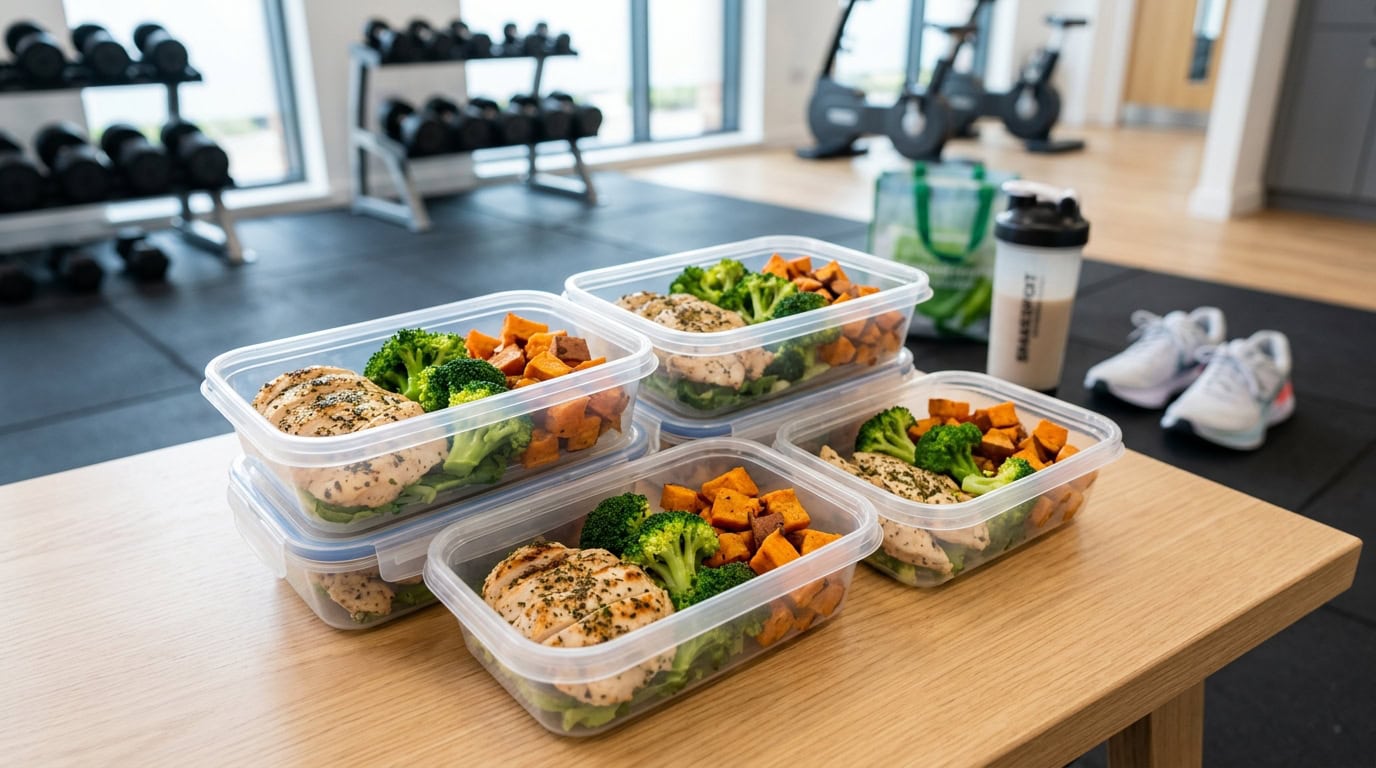
    Good nutrition and a consistent gym routine reinforce each other. When you have meals prepped, you are more likely to train because you feel fuelled. When you train regularly, you are more motivated to eat well because you can see the results of both.

    The key is building a system that fits your life. If you are still looking for the right gym to start your fitness journey, GymPal can help you compare UK gyms by location, price, and facilities. Finding a gym close to home or work makes it easier to build that consistent routine — and when your gym is convenient and your meals are prepped, there is nothing stopping you.

    The Bottom Line

    Meal prep is not about perfection — it is about making healthy eating the default option. Start with one batch-cook session this weekend. Prep your lunches for Monday to Friday. See how it feels. You do not need to become a chef or spend hours in the kitchen. Two hours on a Sunday can save you time, money, and decision fatigue for the entire working week.

    Combine good nutrition with a gym routine that you actually enjoy, and the results will follow. Start simple, stay consistent, and adjust as you learn what works for your body and your life.


    Ready to start your fitness journey? Search GymPal to find UK gyms near you — compare prices, read member reviews, and find the perfect gym to pair with your new meal prep routine.


  • How to Reduce Gym Member Churn: 9 Retention Strategies That Actually Work

    How to Reduce Gym Member Churn: 9 Retention Strategies That Actually Work

    How to Reduce Gym Member Churn: 9 Retention Strategies

  • Social events — BBQs, charity workouts, Christmas parties
  • Private Facebook or WhatsApp groups for members
  • Buddy programmes pairing new members with regulars
  • Celebrating member milestones (100th visit, first pull-up, personal best)
  • The goal is to make leaving your gym feel like leaving a group of friends, not just cancelling a subscription.

    4. Offer Flexible Membership Options

    Not everyone can commit to a 12-month contract. Offering flexibility reduces the number of members who leave because they feel trapped or cannot afford it. Consider:

    Members who feel they have options are more likely to stay than those who feel locked in.

    5. Invest in Your Staff

    Your team is the face of your gym. Members who feel recognised and welcomed by staff are significantly more likely to stay. Train your team to:

    High staff turnover is a retention killer. Invest in your team’s development, pay fairly, and create a positive working environment. Happy staff create happy members.

    6. Keep Your Equipment Clean and Updated

    Nothing signals “we do not care” faster than broken equipment, dirty changing rooms, or out-of-order signs that stay up for weeks. Establish a maintenance schedule and stick to it:

    Members notice when a gym is well maintained — and they notice when it is not.

    7. Gather and Act on Member Feedback

    Most members who leave never tell you why — they simply cancel. Implement regular feedback mechanisms:

    The key is not just collecting feedback but acting on it visibly. When members see their suggestions implemented, it builds loyalty and trust.

    8. Diversify Your Class Offering

    Members who attend classes churn at significantly lower rates than those who only use the gym floor. Classes provide structure, social connection, and accountability — three things that drive habit formation.

    Regularly review your class timetable based on attendance data and member requests. Consider adding:

    9. Make It Easy to Stay, Not Hard to Leave

    This sounds counterintuitive, but it works. Gyms that make cancellation difficult breed resentment and negative reviews. Gyms that handle cancellation gracefully often retain members who were simply testing the waters — and they gain positive word of mouth.

    When a member cancels, respond with:

    Members who leave on good terms are far more likely to rejoin in the future than those who leave frustrated.

    Retention Metrics to Track

    Measure what matters. These are the key numbers to monitor monthly:

    Metric How to Calculate Target
    Monthly churn rate (Cancellations / Total members) x 100 Below 5%
    Annual retention rate % of members still active after 12 months Above 60%
    Average member lifetime 1 / Annual churn rate Above 2 years
    Attendance frequency Average visits per member per month Above 8
    Net Promoter Score (NPS) % Promoters − % Detractors Above 40

    How Being Listed on GymPal Helps Retention

    Retention is not just about what happens inside your gym — it is also about your visibility and reputation outside it. A strong online presence on platforms like GymPal reinforces your members’ decision to stay. When current members see positive reviews and a polished profile, it validates their choice. When they share their gym with friends on a platform that makes it easy to find and compare, it strengthens their identity as a member of your community.

    If your gym is not yet listed, claim your free GymPal listing to boost your visibility and give existing members another reason to recommend you.

    The Bottom Line

    Member retention is not one strategy — it is a system. It requires attention to onboarding, community, staff, facilities, communication, and flexibility. The good news is that most of these strategies cost very little to implement. What they require is consistency and genuine care for your members’ experience.

    Start with the easiest wins: track attendance, reach out to members who go quiet, and build a proper onboarding process. These three changes alone can reduce your churn by 10–15% within six months.


    Want to strengthen your gym’s online presence and attract members who stick around? Claim your free GymPal listing and join thousands of UK gyms building their reputation with fitness seekers across the country.


    Is your gym listed on GymPal? Over 10,000 UK fitness businesses are in our directory. Claim your free listing in 5 minutes — and start getting discovered by local fitness seekers today.
  • The Best Budget Gyms in the UK: What You Actually Get for Under £30 a Month

    The Best Budget Gyms in the UK: What You Actually Get for Under £30 a Month


    The Best Budget Gyms in the UK: What You Get for Under £30 a Month

    Gym Memberships Do Not Have to Cost a Fortune

    The average UK gym membership now sits around £40–£50 per month, but if you know where to look, you can get a solid workout for significantly less. Budget gym chains have transformed the UK fitness landscape over the past decade, making gym access affordable for students, young professionals, and anyone watching their spending. Group classes (or very limited) Free weights area Swimming pool Resistance machines Sauna or steam room Changing rooms and showers Personal training included 24/7 or extended opening hours Towels provided App-based access (no staffed desk) Extra facilities (cafe, crèche)

    If you primarily need access to equipment and are happy to train independently, a budget gym can give you everything you need. If you want classes, pools, and a more premium experience, you may need to stretch your budget or look at independent gyms that bundle more value.

    The Major Budget Gym Chains Compared

    PureGym

    Detail Info
    Monthly cost £10–20 (varies by location and contract length)
    Locations 300+ across the UK
    Contract Rolling monthly — no commitment
    Hours 24/7
    Notable features Large free weights areas, functional training zones, some locations have dedicated lifting platforms. No joining fee on standard memberships.
    Downsides Can get very busy during peak hours (5–7pm). Limited classes at most locations. No pool or sauna.

    PureGym is the biggest budget chain in the UK and the default choice for most people looking for affordable access. The no-contract model is a major selling point — you can cancel at any time. Equipment quality varies by location, so it is worth visiting your local branch before signing up.

    The Gym Group

    r

    Detail Info
    Monthly cost £11–£22 (varies by location)
    Locations 90+ across the UK
    Contract Rolling monthly — no commitment
    Hours 24/7
    Notable features Spacious gyms with large cardio zones, decent free weights sections. Some locations include functional training areas and turf strips.
    Downsides Fewer locations than PureGym. Peak times can be crowded. Classes are limited or non-existent at most branches.

    The Gym Group offers a similar proposition to PureGym at a comparable price point. If there is one near you, it is worth comparing both — your local branch quality matters more than the brand name.

    JD Gyms

    Detail Info
    Monthly cost £16–£30 (varies by location and tier)
    Locations 80+ across the UK
    Contract Rolling monthly — no commitment
    Hours 24/7 at most locations
    Notable features Often includes classes, saunas, and spin studios at no extra cost. Generally newer builds with modern equipment. Free WiFi and charging points.
    Downsides Fewer locations than PureGym. Some locations are only in larger towns and cities.

    JD Gyms punches above its weight on facilities. If you want classes and a sauna without paying premium prices, JD Gyms is often the best value option — provided there is one in your area.

    EasyGym

    Detail Info
    Monthly cost £10–£20
    Locations Primarily London and South East
    Contract Rolling monthly
    Hours 24/7
    Notable features Some locations include classes and personal training. Easy-to-use app.
    Downsides Limited geographic coverage. Some locations have reported equipment maintenance issues.

    EasyGym is a solid option if you are based in or around London, but its limited national presence means it will not be relevant for most people outside the South East.

    Anytime Fitness

    Detail Info
    Monthly cost £25–£40 (franchise-dependent)
    Locations 50+ across the UK
    Contract Varies — some franchises require 3–12 month commitments
    Hours 24/7
    Notable features Global access — use any Anytime Fitness worldwide. Often includes classes and showers. Key fob access system.
    Downsides Pricier than PureGym or The Gym Group. Contract terms vary by franchise owner, so read carefully.

    Anytime Fitness sits at the upper end of the budget tier but offers global access, which is a genuine differentiator if you travel regularly. The franchise model means quality varies between locations.

    Budget Chain Comparison at a Glance

    Chain From 24/7 Classes No Contract Locations
    PureGym £10/mo Yes Limited Yes 300+
    The Gym Group £11/mo Yes Limited Yes 90+
    JD Gyms £16/mo Most Yes Yes 80+
    EasyGym £10/mo Yes Some Yes London area
    Anytime Fitness £25/mo Yes Most Varies 50+

    What Budget Chains Do Not Tell You

    Before signing up, keep these practical considerations in mind:

    Peak Hour Crowding

    Budget gyms keep prices low by serving high volumes of members. Between 5pm and 7pm on weekdays, many locations are genuinely packed. If you can train off-peak (before 7am, mid-morning, or after 8pm), the experience is dramatically better.

    Equipment Maintenance

    With thousands of members using equipment daily, wear and tear is inevitable. Budget chains vary in how quickly they repair or replace broken machines. Visit during the time you plan to train and check the equipment condition yourself.

    Hidden Costs

    Watch out for joining fees (some chains waive these during promotions), annual price increases, and fees for extra services like personal training or classes. Read the terms before clicking sign-up.

    No Contract Does Not Mean No Notice Period

    Most budget chains advertise “no contract,” but many still require 30 days’ notice to cancel. Factor this in — do not assume you can cancel the day before your direct debit is due.

    The Independent Gym Alternative

    Budget chains are not your only affordable option. Many independent gyms across the UK offer competitive pricing with a very different experience:

    • Better equipment: Independent owners often invest in higher-quality kit
    • Community atmosphere: Smaller member base means you recognise familiar faces
    • Flexible facilities: Some include classes, saunas, or specialist zones at no extra cost
    • Personal service: You deal with owners and coaches, not a call centre

    The challenge is finding them. That is exactly what GymPal is built for. Rather than only showing the big chains, GymPal lists thousands of UK gyms — including independent operators, boutique studios, and specialist facilities that you might never find through a Google search alone. You can compare prices, read member reviews, and filter by the facilities that matter to you.

    How to Choose the Right Budget Gym

    1. Make a shortlist — use GymPal or Google Maps to find all gyms within a realistic travel distance
    2. Check pricing directly — prices vary by location even within the same chain
    3. Visit during your planned training time — see how busy it gets when you will actually be there
    4. Check the equipment — does it have what you need? Is it well maintained?
    5. Ask about free trials — most budget chains offer a one-day or three-day pass
    6. Read reviews — check Google and Trustpilot for your specific branch, not just the brand overall

    The Bottom Line

    You do not need to spend £50+ a month to get fit in the UK. Budget gym chains have democratised access to fitness equipment, and for many people, a £10–£20 monthly membership is genuinely all they need. The key is choosing the right one for your training style, location, and schedule — and being realistic about what budget pricing does and does not include.

    And remember: the best gym is not the cheapest one or the most expensive one. It is the one you actually turn up to. Pick a gym that fits your life, and the rest will follow.


    Compare UK gyms by price, location, and facilities in one place. Search GymPal to find budget chains, independent gyms, and specialist fitness centres near you — with real member reviews to help you decide.