Blog

  • Why Every UK Gym Needs a Directory Listing in 2026

    Why Every UK Gym Needs a Directory Listing in 2026

    Running a gym in the UK has never been more competitive. With boutique studios, franchise chains, and big-box gyms all fighting for the same members, independent gym owners and studio operators need every advantage they can get. (see ukactive State of the UK Fitness Industry report. According to Sport England Active Lives survey

    Here’s the uncomfortable truth: if your gym isn’t listed online, most people searching for fitness options in your area will never find you.

    In 2026, a gym directory listing isn’t a nice-to-have — it’s a fundamental part of staying discoverable, competitive, and full.

    How Local Search Has Changed Everything

    Ten years ago, word of mouth and a sign above the door were enough for many gyms. Today, the journey to finding a gym almost always starts with a search.

    Consider what happens when someone new moves to Sheffield or Manchester or any UK town or city. They open their phone and type “gyms near me” or “yoga studio in [area]”. Search engines and fitness directories immediately serve up a ranked list. The gyms that appear are the gyms that get calls, visits, and memberships.

    The gyms that don’t appear? They don’t exist — at least, not in the mind of that prospective member.

    According to Google, 46% of all searches have local intent. In the fitness industry, that number is even higher. People are actively looking for places to exercise near where they live, work, and commute. They’re not browsing casually — they’re ready to sign up.

    If your gym isn’t in those results, you’re not just missing a lead. You’re handing that lead directly to your competitor.

    What Is a Gym Directory Listing?

    A gym directory listing is your gym’s profile on a dedicated fitness discovery platform — a site where people specifically go to find gyms, studios, and fitness services.

    Think of it like this: a general search engine is a map of the entire internet. A fitness directory like GymPal is a curated, specialist map just for fitness. When someone searches on GymPal, they’re not looking for restaurants or plumbers. They’re looking for exactly what you offer.

    GymPal currently lists over 10,000 fitness businesses across the UK. Every day, people use it to discover gyms in their area, compare facilities, and reach out directly to businesses they want to join.

    A listing on GymPal means your gym appears in front of people who are already motivated to sign up. That’s not just traffic — it’s qualified, high-intent traffic.

    The Real Cost of Being Invisible Online

    Many independent gym owners underestimate how much business they’re losing to low online visibility. Let’s break it down.

    Foot traffic alone isn’t enough anymore. Even people who walk past your gym will often search for it online before committing. If they can’t find your reviews, your class schedule, or basic contact details quickly, they’ll move on.

    New residents default to search. The UK sees hundreds of thousands of people relocate each year. Every new resident in your catchment area is a potential member — but only if they can find you.

    Your competitors are already listed. Every day a gym owner isn’t listed on a major directory is a day competitors are capturing those searches. The fitness market is not going to slow down. If anything, the shift toward local, community-based fitness options makes directories more valuable, not less.

    Advertising spend doesn’t solve discoverability. Paying for Google Ads or social media posts can generate short-term visibility, but the moment you stop paying, you disappear. A directory listing works continuously in the background, generating organic discovery 24/7.

    Why GymPal Is the Platform Worth Getting Listed On

    There are a few fitness directories available in the UK, but GymPal is built specifically around how modern gym seekers actually search — including through AI-powered search tools.

    Here’s what makes a GymPal listing different:

    Free to Start

    Claiming or creating your listing on GymPal is completely free. You get a public profile, basic information, and the ability to connect with people who find you. There’s no reason not to start.

    Priority Placement for Pro Members

    With GymPal’s Pro plan at just £9/month, your gym gets priority positioning in search results — including on GymPal’s AI chatbot. When someone asks the GymPal assistant “where can I find a CrossFit gym in Leeds?”, Pro members get surfaced first. That’s an edge that pays for itself with a single new member.

    Direct Member Communication

    GymPal lets interested fitness seekers contact your gym directly through the platform. No intermediary, no lead forms that go nowhere. Real enquiries, straight to you.

    Built for Independent Gyms and Studios

    GymPal isn’t designed for national chains with dedicated marketing teams. It’s built for independent gym owners, boutique studios, and personal trainers — businesses that punch above their weight through community and quality, not just budget.

    Why 2026 Is the Year to Stop Waiting

    The fitness industry is in the middle of a structural shift. AI-powered search tools are changing how people discover local services. Voice search, chatbot recommendations, and directory aggregators are increasingly the first touchpoint between a potential member and a gym.

    Gym owners who are already listed and have established profiles will be the ones surfaced in these results. Those who wait will face an uphill battle to catch up.

    The good news: getting listed now is easy, affordable, and immediate. You don’t need a marketing team, a big budget, or a redesigned website. You need a GymPal listing.

    What to Expect After You List

    Here’s what typically happens when an independent gym claims or creates its GymPal listing:

    • Increased discoverability — your gym appears in relevant local searches on a platform built for fitness
    • More direct enquiries — interested prospects reach out without having to navigate your website first
    • Social proof visibility — your reviews and profile build credibility with undecided searchers
    • Competitive parity — you appear alongside well-known gyms rather than below them in search

    For gym owners spending hundreds or thousands of pounds per month on advertising with mixed results, a directory listing is a measurably more efficient use of budget.

    Getting Listed Is Simpler Than You Think

    If your gym isn’t listed on GymPal, or if your listing exists but hasn’t been claimed, it takes less than ten minutes to get started.

    Start here: Find out why gym owners are choosing GymPal

    Once you’ve claimed your listing, you’re immediately discoverable to fitness seekers across the UK. If you want the additional advantage of priority placement and AI chatbot visibility, upgrading to Pro is a straightforward decision at £9/month.

    Create or claim your listing today: askgympal.co.uk

    In a market where visibility is everything, an unclaimed or missing directory listing is leaving real membership revenue on the table. The gym owners who thrive in 2026 will be the ones who show up where their future members are already searching.

    Don’t let your gym be invisible. Get listed on GymPal.


    Is your gym listed on GymPal? Over 10,000 UK fitness businesses are in our directory. Claim your free listing in 5 minutes — and start getting discovered by local fitness seekers today.

  • How to Write a Gym Membership Agreement That Protects Your UK Business

    How to Write a Gym Membership Agreement That Protects Your UK Business

    Why Your Gym Membership Agreement Matters More Than You Think

    As a UK gym owner, your membership agreement is one of the most important documents in your business. It sets the terms of your relationship with every member who walks through your doors, protects you from legal disputes, and ensures your revenue stays predictable. Yet many independent gym owners rely on generic templates that haven’t been updated since they opened.

  • Payment frequency and accepted methods

2. Cancellation and Freeze Policies

This is where most gym owners get into trouble. Under UK consumer law, your cancellation terms must be fair and transparent. Include:

  • The minimum contract period (if applicable)
  • Notice period required for cancellation (typically 30 days)
  • Any early cancellation fees and how they’re calculated
  • Freeze policy — how long, how many times per year, and any associated costs
  • Exceptions for medical reasons (with documentation requirements)

Top tip: Be generous with your freeze policy. Members who can freeze rather than cancel are far more likely to return — and recommend your gym to friends.

3. Liability Waivers and Health Declarations

Every member should complete a health screening questionnaire before starting. Your agreement should reference this and include a liability disclaimer. However, remember that UK law doesn’t allow you to fully exclude liability for negligence — your waiver needs to be reasonable and clearly worded.

Include clauses covering:

  • Confirmation that the member has disclosed relevant medical conditions
  • Acceptance that they exercise at their own risk
  • Responsibility to follow staff instructions and equipment guidelines
  • Gym’s right to revoke access if a member’s behaviour endangers others

4. Payment Terms and Debt Recovery

Late payments and direct debit cancellations cost UK gyms thousands of pounds each year. Your agreement should clearly state:

  • Payment dates and what happens on bank holidays or weekends
  • Failed payment procedures and retry schedules
  • Admin fees for failed payments (must be reasonable under consumer law)
  • Debt recovery process and any referral to collections
  • Right to suspend access for overdue accounts

5. Code of Conduct and House Rules

Protect your gym culture and other members’ experience with a clear code of conduct covering:

  • Equipment usage and re-racking expectations
  • Hygiene requirements (towels, wiping down equipment)
  • Photography and social media policies
  • Behaviour towards staff and other members
  • Guest and day pass rules

6. Data Protection and GDPR Compliance

Your agreement must explain how you handle member data. Under GDPR, you need:

  • Clear consent for marketing communications
  • Explanation of what data you collect and why
  • How long you retain data after membership ends
  • Member’s right to access and delete their data

Common Mistakes That Get UK Gyms Into Trouble

Using Unfair Contract Terms

The Consumer Rights Act 2015 means your contract terms must be fair. Auto-renewal clauses that lock members in without clear notice, disproportionate cancellation fees, and one-sided variation rights can all be challenged. If a member complains to trading standards, an unfair term is unenforceable — potentially leaving you out of pocket.

Not Displaying Terms Prominently

Your agreement should be easy to read and accessible. Burying important terms in dense legal jargon won’t protect you if a dispute arises. Consider providing a plain-English summary alongside the full legal document.

Forgetting to Update

Consumer law evolves. GDPR introduced major changes in 2018, and further updates are expected. Review your membership agreement at least once a year to ensure it remains compliant.

How a Good Membership Agreement Helps Retain Members

It might seem counterintuitive, but a clear, fair membership agreement can actually improve retention. Here’s why:

  • Transparency builds trust. Members who understand exactly what they’re signing up for are less likely to feel misled and cancel.
  • Flexible options reduce cancellations. Offering freezes, downgrades, and clear exit paths means members choose to stay rather than feeling trapped.
  • Professionalism attracts quality members. A well-structured agreement signals that your gym is a well-run business, which appeals to the kind of members you want.

Getting Professional Help

While templates are a good starting point, every gym is different. If you run specialised classes, have unique facilities, or employ personal trainers, your agreement needs to reflect that. Consider having a solicitor with experience in the fitness industry review your terms — it’s a worthwhile investment that can save significant costs down the line.

Make Sure Your Gym Is Easy to Find

A great membership agreement is just one part of running a successful gym. If potential members can’t find you online, even the best contract won’t help. GymPal lists over 10,000 UK gyms and fitness centres, making it easy for people searching for gyms in their area to discover you.

Claim your free GymPal listing today at askgympal.co.uk — it takes just a few minutes and puts your gym in front of thousands of people actively looking for fitness services near them. For even more visibility, upgrade to GymPal Pro at just £9/month and get priority placement in search results and the GymPal AI chatbot.

Key Takeaways

  • Your membership agreement is a business-critical document — don’t treat it as an afterthought
  • Include clear pricing, fair cancellation terms, liability waivers, payment procedures, and GDPR compliance
  • Review and update your agreement at least annually
  • Keep terms fair and transparent to build trust and reduce disputes
  • Make sure potential members can actually find you — claim your free GymPal listing

Is your gym listed on GymPal? Over 10,000 UK fitness businesses are in our directory. Claim your free listing in 5 minutes — and start getting discovered by local fitness seekers today.
  • Gym Membership vs Home Workouts: Which Is Better for UK Fitness in 2026?

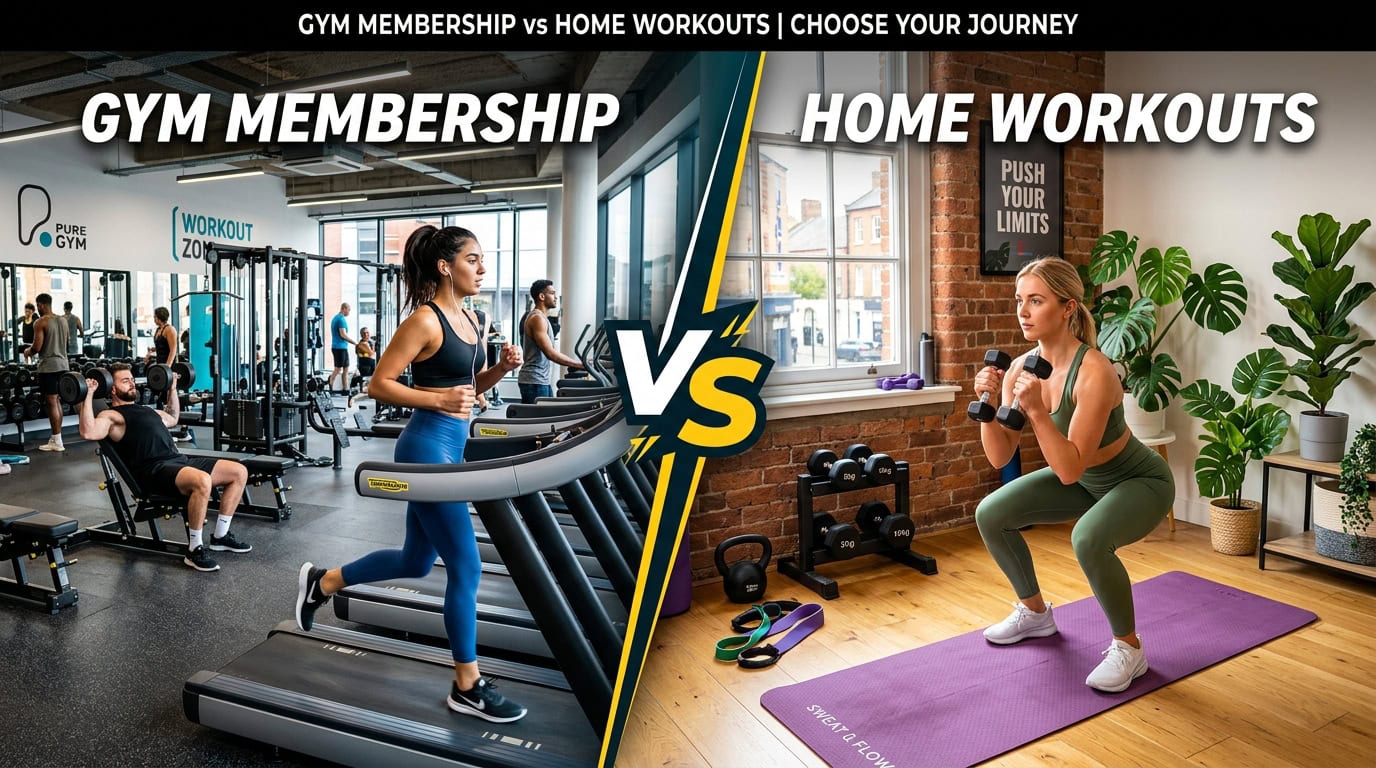
    Gym Membership vs Home Workouts: Which Is Better for UK Fitness in 2026?

    The Great UK Fitness Debate: Gym vs Home

    If you’ve scrolled through fitness TikTok lately, you’ve seen both sides — the influencer deadlifting 200kg in a commercial gym and the calisthenics expert crushing it in their back garden. Both look brilliant. Both promise results. But which approach actually works best for you?

  • You thrive in social, motivating environments
  • You want access to classes (spin, yoga, HIIT)
  • You’re training for something specific (a competition, sport)
  • Go with home workouts if:

    The Hybrid Approach: Best of Both Worlds

    Here’s what many experienced fitness enthusiasts eventually land on: do both. Use your gym membership 2–3 times per week for heavy compound lifts and classes, then supplement with home workouts on busy days. You get the equipment and community of a gym without the pressure to go every single day.

    Finding the Right Gym If You Go That Route

    Not all gyms are created equal. The UK has an incredible range of options — from budget chains like PureGym and The Gym Group to boutique studios, women-only gyms, and independent local facilities. The key is finding one that fits your specific needs.

    That’s exactly what GymPal is built for. Browse thousands of UK gyms by location, read real reviews, compare facilities, and find the perfect match for your fitness journey — whether it’s a CrossFit box down the road or a premium health club with a pool. It’s free to search, and gym owners can claim their listing to connect directly with potential members like you.

    The Bottom Line

    The best workout is the one you actually do consistently. Whether that’s in a fully equipped gym or your living room, the most important thing is starting — and sticking with it. Explore your options, be honest about what works for your lifestyle, and remember: you can always change your mind later.

    Ready to find your perfect gym? Search GymPal’s UK gym directory today and discover facilities near you.

  • How to Use Instagram to Attract New Members to Your UK Gym

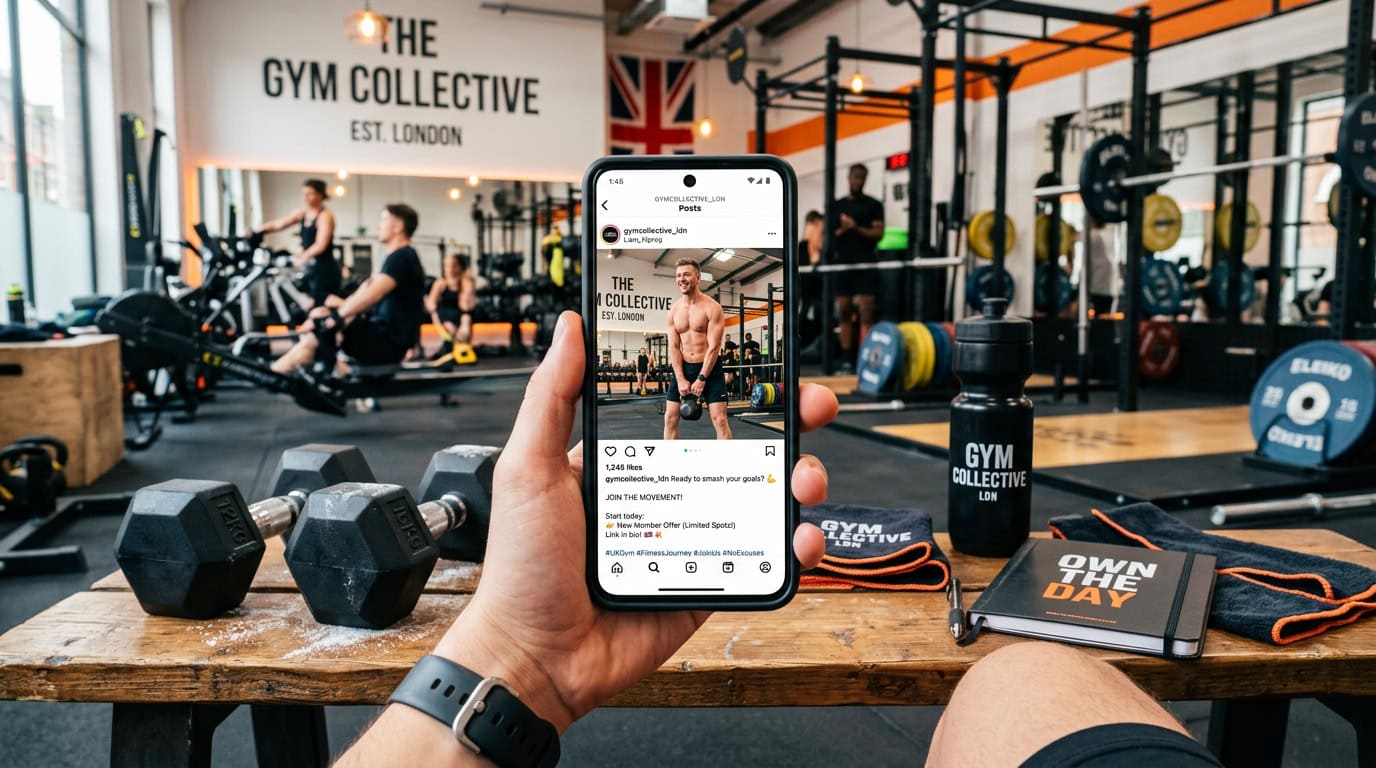
    How to Use Instagram to Attract New Members to Your UK Gym

    Instagram Is Where Your Next Members Are Already Scrolling

    If you run a gym in the UK and you’re not actively using Instagram, you’re ignoring the platform where most of your potential members spend their time. According to Ofcom’s latest data, over 30 million people in the UK use Instagram, and the fitness niche is one of the most engaged categories on the platform.. People search for gyms by area.

  • Keyword-rich bio: Use terms your audience searches for: “strength training,” “HIIT classes,” “personal training,” “Bristol gym.” Instagram bios are searchable.
  • Professional profile photo: Your logo or a high-quality exterior shot of your gym.
  • Link in bio: Use a link tool (Linktree or similar) that directs to your sign-up page, class timetable, free trial offer, and your GymPal listing.
  • Highlights: Create story highlights for FAQs, facilities, member results, classes, and testimonials.
  • 2. Content Types That Actually Drive Sign-Ups

    Not all content is created equal. Here are the formats that consistently drive results for UK gyms:

    Member Transformations and Testimonials

    Nothing sells a gym membership like real results from real members. Ask members if they’d be happy to share their story (with before/after photos if appropriate). Always get written permission before posting someone’s image or story.

    Example: “Sarah joined IronWorks in January having never stepped foot in a gym. 6 months later, she’s deadlifting 80kg and ran her first 10K. Here’s what she has to say about her journey…”

    Behind-the-Scenes Content

    People want to see the real side of your gym — not just polished marketing. Post about:

    Educational Content

    Position your gym as a knowledge hub. Short-form video content performs exceptionally well:

    Reels and Short-Form Video

    Instagram Reels are currently the best way to reach non-followers. The algorithm actively pushes Reels to people who don’t follow you yet, which means organic reach potential far beyond your existing audience.

    Keep Reels under 30 seconds, use trending audio strategically (not at the expense of content quality), and always include captions — many people watch without sound.

    3. Post Consistently Without Burning Out

    Consistency matters more than volume. A gym posting 4-5 times per week will outperform one posting daily for two weeks then disappearing for a month. Here’s a realistic schedule:

    Batch-create content on one afternoon per week. Film 4-5 Reels in one session, write your captions in advance, and schedule posts using Meta Business Suite (free) or a scheduling tool.

    4. Use Local Hashtags Strategically

    As a local gym, your target audience is geographically specific. Use a mix of:

    Use 15-20 relevant hashtags per post. Mix broad (#fitness) with specific (#BristolHIITClasses) for best reach.

    5. Engage With Your Local Community

    Instagram is a social network, not a billboard. Engagement drives visibility:

    6. Run Instagram-Specific Promotions

    Drive followers to become members with targeted offers:

    7. Track What’s Working

    Switch to a professional/creator account (free) to access Instagram Insights. Track these metrics monthly:

    If reach is growing but link clicks aren’t, your content is attracting attention but not driving action. Review your bio and call-to-action strategy. If link clicks are strong but sign-ups are low, the issue may be on your website or sign-up process.

    Make Your Gym Easy to Find Beyond Instagram

    Instagram is a powerful tool, but it shouldn’t be your only digital presence. When someone sees your Reel and wants to find out more — your opening times, facilities, real member reviews, and how to sign up — they’ll search for you online. Make sure they find a complete, up-to-date profile on GymPal.

    A free GymPal listing puts your gym in front of thousands of UK fitness seekers every month, complete with photos, facilities, contact details, and genuine reviews. It’s the perfect complement to your Instagram strategy — one drives awareness, the other captures intent. List your gym on GymPal for free today.


    Is your gym listed on GymPal? Over 10,000 UK fitness businesses are in our directory. Claim your free listing in 5 minutes — and start getting discovered by local fitness seekers today.
  • The Complete Beginner’s Guide to Stretching and Mobility

    The Complete Beginner’s Guide to Stretching and Mobility

    Why Stretching and Mobility Deserve More Than Five Minutes

    Walk into any UK gym and you’ll see the same pattern: people rush through a quick quad stretch, maybe touch their toes once, then load up a barbell. Meanwhile, the physiotherapists and sports therapists are busier than ever. There’s a direct connection. According to Sport England Active Lives survey

    Stretching and mobility work aren’t glamorous. They won’t get you a personal best on your deadlift or make for an impressive Instagram story. But they might be the single most important thing you can do to train consistently, stay injury-free, and actually enjoy going to the gym.

    Whether you’re a complete beginner or someone who’s been training for years but never quite got around to a proper mobility routine, this guide will walk you through everything you need to know. According to NHS physical activity guidelines

    Stretching vs Mobility: What’s the Difference?

    People often use these terms interchangeably, but they’re not the same thing:

    • Stretching is about lengthening muscles. Think of reaching for your toes or pulling your heel to your glute. It targets the muscle tissue itself.
    • Mobility is about how well a joint moves through its full range of motion. It involves muscles, tendons, ligaments, and the joint capsule working together. Think of hip circles, shoulder dislocates with a band, or deep squat holds.

    You need both. Stretching a muscle that’s tight might help temporarily, but if the underlying joint has limited range of motion, that tightness will keep coming back. A good routine includes elements of both.

    Why It Matters for Gym-Goers

    Injury Prevention

    Research published in the British Journal of Sports Medicine consistently shows that regular stretching and mobility work reduce the risk of muscle strains and joint injuries. If you’ve ever pulled a hamstring doing deadlifts or felt your shoulder pinch during an overhead press, limited mobility was likely a contributing factor.

    Better Performance

    A joint that moves through its full range produces more force. If your hips are tight, your squat depth suffers. If your thoracic spine is stiff, your overhead pressing power is limited. Mobility work isn’t supplementary — it’s foundational to getting stronger.

    Faster Recovery

    Targeted stretching after training helps reduce muscle soreness and promotes blood flow to worked areas. It’s not a magic cure for DOMS, but it genuinely helps you feel less like a robot the morning after leg day. See also: Gym Design and Fit-Out: How to Create a Space That Members L. See also: Women-Only Gyms in the UK: Why They Are Growing in Popularit.

    Long-Term Joint Health

    The “use it or lose it” principle applies to joint range of motion. As we age — and as we spend more time sitting at desks — our joints naturally stiffen. Regular mobility work counteracts this and keeps you moving well into your 40s, 50s, and beyond.

    Before Your Workout: Dynamic Warm-Up (5-10 Minutes)

    Static stretching (holding a stretch for 30+ seconds) before exercise has been shown to temporarily reduce power output. Instead, use dynamic movements that take your joints through their full range while increasing blood flow:

    Lower Body Focus

    • Leg swings: 10 per side, forward and back, then side to side. Hold onto a wall for balance.
    • Walking lunges with a twist: 8-10 steps, rotating your torso toward your front leg. Opens hips and thoracic spine simultaneously.
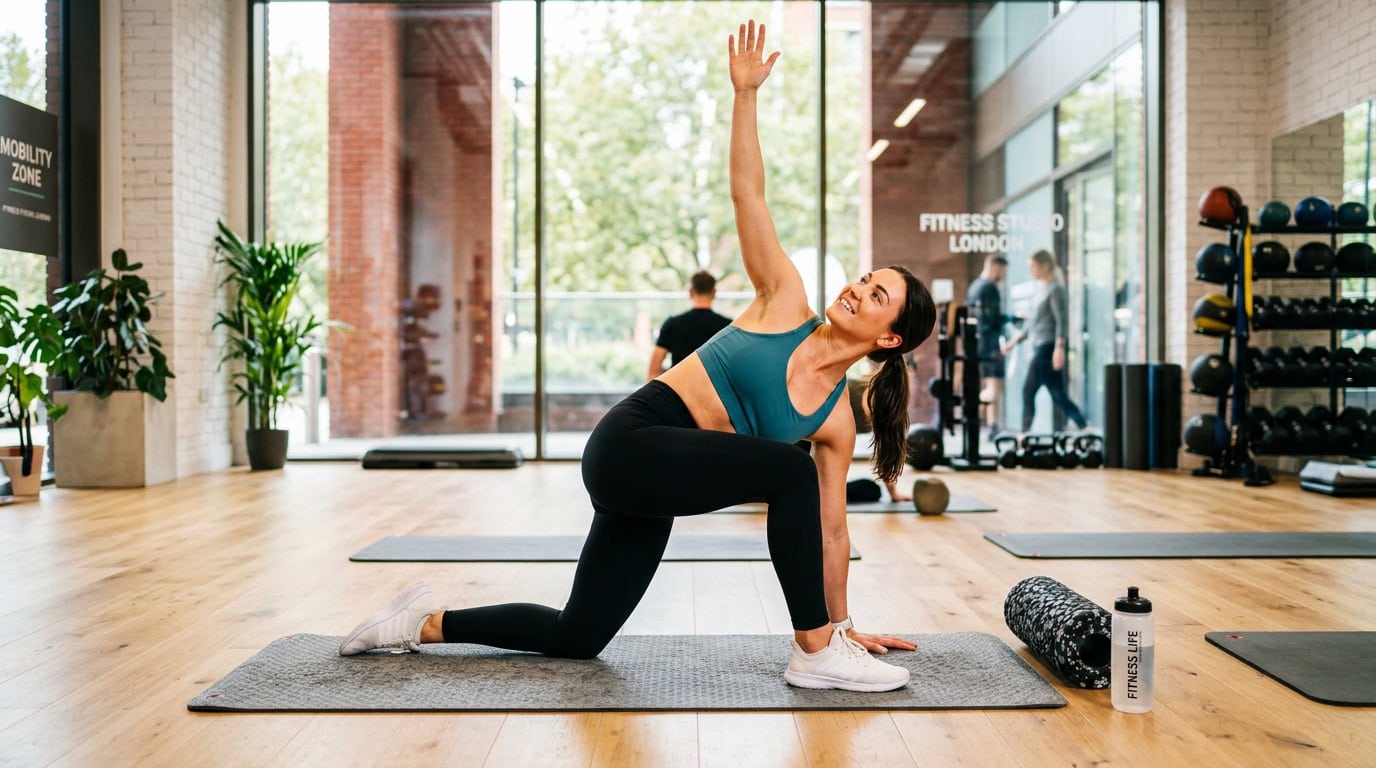
    • World’s greatest stretch: 5 per side. Lunge forward, place your elbow on the ground, rotate your arm to the sky. A full-body opener in one movement.
    • Bodyweight squats: 10 reps, focusing on depth and pushing knees out. If your heels lift, place a small plate under them.
    • Ankle circles: 10 per direction per ankle. Often overlooked but critical for squat depth.

    Upper Body Focus

    • Arm circles: 15 forward, 15 backward. Gradually increase the size.
    • Band pull-aparts: 15 reps with a light resistance band. Great for posture and shoulder health.
    • Cat-cow stretches: 10 reps on all fours. Mobilises the entire spine.
    • Thread the needle: 8 per side. From all fours, reach one arm under your body and rotate your torso. Excellent for thoracic rotation.

    After Your Workout: Static Stretching Routine (10-15 Minutes)

    Post-workout is when static stretching shines. Your muscles are warm, making them more receptive to lengthening. Hold each stretch for 30-60 seconds, breathing deeply:

    Essential Stretches for Gym-Goers

    • Standing hamstring stretch: Place one foot on a bench, hinge at the hips with a flat back. Feel the stretch in the back of your thigh, not your lower back.
    • Pigeon stretch: From all fours, bring one knee forward to the same-side wrist and extend the other leg back. Opens the hip flexors and glutes — essential for anyone who sits at a desk.
    • Wall pec stretch: Place your forearm on a wall at 90 degrees and turn your body away. Targets the chest and anterior shoulder, counteracting the hunched posture from desk work and bench pressing.
    • Couch stretch: Kneel with one knee on the floor against a wall, other foot forward in a lunge position. The single best stretch for hip flexors. Hold for 60 seconds — it’s uncomfortable, but that means it’s working.
    • Lat stretch: Grab a bar or doorframe with one hand, lean back and let your shoulder drop. Opens the lats and side of your torso.
    • Figure-four glute stretch: Lie on your back, cross one ankle over the opposite knee, and pull the bottom leg toward you. Targets the glutes and piriformis.

    Mobility Work You Can Do at Home

    You don’t need to be at the gym to improve your mobility. Here’s a simple 15-minute routine you can do in your living room, ideally on rest days or in the evening:

    1. Deep squat hold: 60 seconds. Use a doorframe for balance if needed. Push your knees out and keep your chest up.
    2. 90/90 hip switches: 10 switches. Sit with both knees bent at 90 degrees, then switch sides by lifting your legs and rotating.
    3. Thoracic spine foam rolling: 2 minutes. Lie on a foam roller across your mid-back, support your head, and extend over the roller.
    4. Shoulder dislocates: 15 reps with a broomstick or resistance band. Hold it wide, slowly bring it from in front of your body to behind and back.
    5. Ankle dorsiflexion stretch: 60 seconds per side. Kneel with one foot flat against a wall, knee touching the wall, and lean forward.

    Common Mistakes to Avoid

    • Bouncing during stretches: This triggers the stretch reflex, which actually makes the muscle tighter. Hold still and breathe.
    • Stretching cold muscles: Always do some light movement (even a brisk walk) before static stretching.
    • Ignoring pain: Stretching should feel like mild discomfort, not pain. Sharp or shooting pain means you’re going too far or there’s an existing issue that needs attention.
    • Only stretching the muscles you trained: If you sit at a desk all day, your hip flexors, chest, and hamstrings are probably tight regardless of what you trained. Address your posture-related tightness every session.
    • Doing it once and giving up: Like strength training, mobility requires consistency. Five minutes daily is far better than 30 minutes once a week.

    How Long Until You Notice a Difference?

    Most people notice improved range of motion within 2-3 weeks of consistent daily stretching. Significant mobility improvements typically take 4-8 weeks. The key word is consistent. Ten minutes every day will get you further than an hour once a fortnight.

    Find a Gym That Supports Your Goals

    The best gym for you is one that fits your lifestyle, goals, and location. Whether you’re looking for a facility with dedicated stretching zones, recovery equipment, or classes that incorporate mobility work, you can find it on GymPal. Browse thousands of UK gyms, read real reviews, and compare facilities to find the right fit for your training journey.

  • How to Build a Member Referral Programme That Actually Works

    How to Build a Member Referral Programme That Actually Works

    Why Word-of-Mouth Is Your Gym’s Most Powerful Marketing Tool

    When someone recommends your gym to a friend, that referral carries more weight than any advert, social post, or flyer ever could. According to industry research, referred members are 18% more likely to stay beyond their first year compared to members who found you through paid channels. Yet many UK gym owners still don’t have a structured referral programme in place.. This is the gold standard because it gives both parties a reason to act.

  • Single-sided cash or credit: The referrer gets account credit or a small cash bonus. Straightforward but less motivating for the new member.
  • Free personal training session: Great if you have in-house trainers — it costs you wholesale but feels premium to the member.
  • The key is making the reward immediate. If someone refers a friend and has to wait three months for their free month, the motivation disappears. Trigger the reward as soon as the new member signs up.

    2. Make It Ridiculously Easy to Refer

    If your referral process involves printing a card, filling out a form at reception, or remembering a special code, it’s already too complicated.

    Modern referral programmes should work like this:

    The fewer steps between “I want to recommend this gym” and “I’ve sent the referral,” the more referrals you’ll get.

    3. Time Your Ask Strategically

    Not every moment is equally good for asking for a referral. Ask at the wrong time and it feels pushy; ask at the right time and it feels natural.

    The best moments to prompt a referral:

    4. Promote It Everywhere — Not Just Once

    A common mistake is launching a referral programme with a splash and then forgetting about it. Your members have a lot going on; they need regular reminders.

    Integrate referral prompts into your regular touchpoints:

    5. Track, Measure, and Optimise

    You can’t improve what you don’t measure. Set up tracking from day one:

    Most gym owners find that referred members have a significantly lower CPA than paid channels and a higher lifetime value. If your numbers don’t reflect this, it’s usually because the reward isn’t compelling enough or the sharing process is too friction-heavy.

    6. Create a Referral Culture, Not Just a Programme

    The most successful referral programmes feel less like a marketing tactic and more like a natural part of gym culture. Here’s how:

    Getting Started: Your 30-Day Action Plan

    You don’t need a massive budget or a custom-built app to launch a referral programme. Here’s a simple 30-day roadmap:

    1. Week 1: Decide on your reward structure and set up tracking (even a simple spreadsheet works to start).
    2. Week 2: Create your referral landing page and generate unique links for existing members.
    3. Week 3: Launch with an email campaign to all current members, plus in-gym signage.
    4. Week 4: Review early results, gather feedback, and tweak the process.

    Make Your Gym Easy to Find and Recommend

    Before you ask members to refer friends, make sure your gym is easy to discover online. A complete, up-to-date listing on GymPal gives potential members all the information they need — facilities, photos, reviews, and contact details — in one place. When your existing members share a referral, they want confidence that their friend will find a great first impression online.

    Whether you’re running a single studio or managing multiple locations, GymPal’s free listing puts your gym in front of thousands of UK fitness seekers every month. Claim or update your free listing today and make every referral count.


    Is your gym listed on GymPal? Over 10,000 UK fitness businesses are in our directory. Claim your free listing in 5 minutes — and start getting discovered by local fitness seekers today.

  • The Best Post-Workout Meals for UK Gym-Goers: What to Eat and When

    The Best Post-Workout Meals for UK Gym-Goers: What to Eat and When

    You’ve just crushed a workout. Your muscles are fatigued, your energy stores are depleted, and your body is crying out for fuel. What you eat in the next hour can make a real difference to your recovery, your next session, and your long-term results.

    But with so much conflicting advice out there, it’s hard to know what’s actually worth eating. Here’s a straightforward, no-nonsense guide to post-workout nutrition for UK gym-goers.

  • Getting the right balance helps you recover faster, reduces muscle soreness, and ensures you’re ready for your next session. Skimp on post-workout nutrition and you’ll feel it — in sluggish recovery, poor performance, and slower progress.

    How Soon Should You Eat?

    The old “anabolic window” myth suggested you had 30 minutes to eat or your workout was wasted. The reality is more forgiving. Current research shows that as long as you eat a balanced meal within 2 hours of finishing your workout, you’ll capture the recovery benefits.

    That said, if you trained hard or fasted, eating sooner (within 30–60 minutes) is ideal. The key is consistency over timing perfection.

    The Golden Ratio: Protein and Carbs

    Aim for a ratio of roughly 1:2 to 1:3 protein to carbohydrates after a standard gym session. For a 70kg person, that’s roughly 25–35g of protein and 50–70g of carbohydrates.

    If your goal is specifically muscle building (hypertrophy), lean slightly more towards protein. If you did an endurance session (long run, HIIT class), prioritise carbohydrates.

    5 Easy Post-Workout Meals (Available Anywhere in the UK)

    1. Grilled Chicken, Rice, and Roasted Vegetables

    The classic bodybuilding staple — and for good reason. It’s cheap, easy to prepare, and hits the macro targets perfectly. Most UK supermarkets sell ready-to-eat versions if you’re short on time.

    Approximate macros: 35g protein, 55g carbs, 10g fat

    2. Scrambled Eggs on Wholemeal Toast

    Quick, affordable, and packed with protein. Three large eggs on two slices of wholemeal toast gives you a solid recovery meal in under 10 minutes. Add a bit of spinach or tomatoes for extra micronutrients.

    Approximate macros: 22g protein, 35g carbs, 15g fat

    3. Greek Yoghurt with Banana and Honey

    Perfect if you train in the morning or don’t have time to cook. Greek yoghurt is one of the most protein-dense dairy options available. The banana provides fast-digesting carbs and potassium, which helps prevent cramps.

    Approximate macros: 20g protein, 45g carbs, 5g fat

    4. Salmon Jacket Potato with Salad

    Salmon brings omega-3 fatty acids, which have anti-inflammatory properties that support recovery. A medium jacket potato with a side salad is filling, nutritious, and easy to find at any UK pub, café, or supermarket meal deal.

    Approximate macros: 30g protein, 40g carbs, 15g fat

    5. Protein Shake and a Banana

    When you’re genuinely pushed for time, a quality whey protein shake with a banana is better than skipping a meal entirely. It’s not a replacement for whole foods, but it gets the job done. Keep a shaker and powder in your gym bag.

    Approximate macros: 25g protein, 30g carbs, 2g fat

    What to Avoid After Training

    Not everything marketed as “healthy” helps recovery. Post-workout, try to limit:

    Meal Prep: Your Secret Weapon

    The easiest way to stay consistent with post-workout nutrition is meal prep. Spend an hour on Sunday cooking batches of rice, chicken, and roasted vegetables. Portion them into containers and you’ve got post-workout meals sorted for the week.

    Many UK gyms now have microwaves available, so you can bring your prepped meal with you. If you’re choosing a gym with good facilities, GymPal can help you compare options in your area and find one that suits your lifestyle.

    Hydration: Don’t Forget It

    Food is only part of the equation. Replacing fluids lost through sweat is just as important. Aim to drink at least 500ml of water within the first hour after training, more if you sweated heavily.

    If you had a particularly long or intense session, consider an electrolyte drink. UK brands like Science in Sport and High5 offer affordable options that are easy to find.

    The Bottom Line

    Post-workout nutrition doesn’t need to be complicated or expensive. Focus on getting a decent amount of protein and carbohydrates within a couple of hours of training, stay hydrated, and be consistent. The best post-workout meal is the one you’ll actually eat regularly.

    Looking for a gym with good facilities — including microwaves, changing rooms, and everything you need to support your training routine? Search Gyms on GymPal to find the right fit in your area.

  • How to Run a Successful Free Trial at Your Gym (And Convert Trial Members to Paying Ones)

    How to Run a Successful Free Trial at Your Gym (And Convert Trial Members to Paying Ones)

    Free trials are one of the most powerful tools in a gym owner’s arsenal. They lower the barrier to entry, let potential members experience your facility firsthand, and — when done right — convert curious visitors into long-term paying members. But here’s the catch: most gyms run free trials poorly, and that means they’re leaving money on the table. According to Sport England Active Lives survey

    If your free trial is just a case of “here’s a pass, see you in a week,” you’re doing it wrong. Here’s how to run a free trial that actually converts.

    Why Free Trials Matter More Than Ever

    The UK fitness market is more competitive than ever. Between budget chains, boutique studios, and at-home workout options, potential members have endless choices. A well-executed free trial gives them a compelling reason to choose your gym over the competition — and it lets your facility speak for itself. According to NHS physical activity guidelines

    Industry data suggests that free trials with a structured onboarding process convert at 30–60%, compared to just 10–20% for unmanaged passes. That’s a significant difference in revenue.

    1. Set a Clear Trial Structure

    The most effective free trials are focused and time-bound. Consider these options:

    • 3-day pass — enough to experience the gym, short enough to maintain urgency
    • 1-week pass — gives visitors time to try different classes and times
    • 7-day class pass — perfect if your gym has a strong class schedule

    Whatever you choose, make sure the terms are crystal clear. Ambiguous offers create confusion, and confused prospects don’t sign up.

    2. Make the Sign-Up Process Frictionless

    Every extra step in the sign-up process loses you potential trial members. Aim for a process that takes under two minutes:

    • Online booking form on your website (not a phone call)
    • Minimal required fields — name, email, phone number
    • Instant confirmation via email or SMS
    • A clear welcome message with what to expect

    If your gym isn’t easy to find online, you’re already losing trials before they start. Make sure your gym is listed on directories like GymPal — it’s free, and it puts your facility in front of people actively searching for gyms in your area.

    3. Give a Proper Welcome (Not Just a Wristband)

    The first impression matters enormously. When a trial member walks through your door, they should feel genuinely welcomed — not like an inconvenience.

    Train your front-desk team to:

    • Greet trial members by name
    • Give a brief tour of the facility
    • Explain the class schedule and key facilities
    • Introduce them to a trainer or instructor if possible
    • Offer a simple starter workout plan or orientation

    A five-minute welcome can be the difference between someone who feels at home and someone who never comes back.

    4. Stay in Touch During the Trial

    This is where most gyms fail. They hand over a pass and never follow up. The trial member is left to figure everything out alone, and if they don’t love it immediately, they quietly move on.

    Instead, build a simple touch-point sequence:

    • Day 1: Welcome message after their first visit — “Great to have you! How was your first workout?”
    • Day 2–3: Check-in text or email — “Have you tried our [specific class/equipment]? Let us know if you need any help.”
    • Day 5: Reminder of what’s coming up — classes, events, or facilities they haven’t explored yet
    • Final day: Conversion conversation — “Your trial ends tomorrow. Here’s what members love about us, and here’s a special offer to join.”

    5. Create a No-Pressure Conversion Conversation

    When the trial ends, the conversation about joining should feel natural, not salesy. Your team should understand the trial member’s goals and position membership as the solution.

    Effective approaches include:

    • Ask about their experience: “What did you enjoy most about your trial?” This reveals what to emphasise.
    • Connect membership to their goals: “You mentioned wanting to build strength — our members who train consistently see real results within 8 weeks.”
    • Offer a time-sensitive incentive: A joining fee waiver or discounted first month for signing up on the spot is effective without being pushy.
    • Show social proof: “We’ve had 15 new members join this month — here’s what they said about us.”

    6. Track Your Numbers

    You can’t improve what you don’t measure. Track these key metrics for every free trial campaign:

    • Trial sign-ups per month — how many people are taking your offer?
    • First-visit rate — what percentage of sign-ups actually show up?
    • Return rate — how many come back after the first visit?
    • Conversion rate — what percentage become paying members?

    If your first-visit rate is low, improve your follow-up. If your conversion rate is low, work on the trial experience and your sales conversation.

    7. Make Your Gym Easy to Discover

    All the trial optimisation in the world won’t help if people can’t find your gym in the first place. Beyond your own website and social media, make sure your gym appears where people are searching:

    • Claim your Google Business Profile with up-to-date photos, hours, and reviews
    • Get listed on fitness directories — GymPal lets you claim your free listing and manage how your gym appears to thousands of UK fitness seekers
    • Encourage happy members to leave reviews — word of mouth is still the most powerful marketing tool

    The Bottom Line

    A successful free trial programme isn’t about giving away free access — it’s about creating a structured, welcoming experience that demonstrates the value of your gym. When trial members feel supported, informed, and excited about what you offer, conversion follows naturally.

    Start by reviewing your current trial process against the steps above. Even small improvements — a better welcome, a follow-up text, a more personal conversion conversation — can significantly boost your sign-up rate.

    Is your gym easy to find online? Claim your free GymPal listing today and make sure potential trial members can discover you when they’re searching for gyms in your area.


    Is your gym listed on GymPal? Over 10,000 UK fitness businesses are in our directory. Claim your free listing in 5 minutes — and start getting discovered by local fitness seekers today.

  • Gym Anxiety: How to Overcome the Fear of Working Out in Public

    Gym Anxiety: How to Overcome the Fear of Working Out in Public

    If the thought of walking into a gym makes your stomach flip, you’re far from alone. Gym anxiety — sometimes called “gymtimidation” — affects millions of people in the UK. In fact, research suggests that up to 50% of people feel intimidated by the gym environment at some point, and it’s one of the most common reasons people put off starting their fitness journey., mid-afternoon (2pm–4pm on weekdays), and late evenings tend to be quieter. Weekends are generally busier, so if possible, stick to weekday visits.

    3. Book an Induction

    Most UK gyms offer a free induction session when you join. This is a guided tour of the equipment with a member of staff who shows you how everything works. It’s designed for beginners, so there’s absolutely no shame in asking for one — even if you’ve been a member for a while.

    4. Wear What Makes You Comfortable

    You don’t need the latest designer activewear to have a good workout. Wear whatever makes you feel comfortable and confident. Many people start in loose-fitting clothes and gradually shift to more fitted gym wear as their confidence grows.

    5. Bring Headphones

    A good pair of headphones is your best friend at the gym. Music or podcasts create a personal bubble, help you focus, and reduce the feeling that everyone is watching you. Noise-cancelling headphones are particularly effective for blocking out the gym environment.

    6. Start Small and Build Up

    You don’t need to do an hour-long intense workout on your first visit. Start with 20–30 minutes and focus on getting comfortable in the space. Gradually increase the duration and intensity as your confidence grows. Consistency matters more than intensity in the early days.

    7. Consider a Small or Boutique Gym

    Large commercial gyms can feel overwhelming. Independent gyms, boutique studios, and specialist fitness centres often have a more intimate, community feel. They’re typically less crowded, and the staff often have more time to help newcomers feel at home. You can explore local options on GymPal — the UK’s fitness directory lets you browse gyms in your area, read what others say, and find one that suits your vibe.

    8. Remember: Everyone Was a Beginner Once

    Every single person at the gym — including the most muscular person lifting the heaviest weights — started exactly where you are now. Nobody is born knowing how to use a cable machine. Everyone had their first day, and everyone felt nervous. You belong there just as much as anyone else.

    When to Consider a Personal Trainer

    If your anxiety feels unmanageable, a few sessions with a personal trainer can make a world of difference. They’ll guide you through exercises, correct your form, and give you the confidence to train independently. Many gyms offer introductory PT sessions at a reduced rate. If you’re looking for a trainer, GymPal can help you find local gyms with personal training services.

    Signs Your Gym Anxiety Is Improving

    Progress isn’t always obvious, but here are some signs you’re heading in the right direction:

    • You no longer dread going to the gym the night before
    • You’re comfortable asking staff questions
    • You’ve tried a new piece of equipment without overthinking it
    • You stop worrying about what other people think mid-workout
    • You actually start looking forward to your gym sessions

    Final Thoughts

    Gym anxiety is a barrier, but it’s a temporary one. Every time you show up, you’re proving to yourself that you’re stronger than your doubts. Start small, be patient with yourself, and remember — the hardest part is always walking through the door.

    Ready to find a gym that feels right for you? Search Gyms on GymPal to discover local fitness options, read reviews, and find your perfect fit. Your fitness journey starts with a single step — and we’re here to help you take it.

  • How to Get More Gym Reviews (And Why They Are Your Best Marketing Tool)

    How to Get More Gym Reviews (And Why They Are Your Best Marketing Tool)

    Your Gym’s Reviews Are Doing More Than You Think

    Most gym owners know that reviews matter. But few realise just how much they matter — or how much control they have over the process. According to Sport England Active Lives survey

    Here is what the data actually says: a gym with a 4.5+ star rating on Google gets significantly more enquiries than one with fewer stars, even if the lower-rated gym is closer or cheaper. Reviews are not just nice-to-have. They are a primary ranking factor for local search and a deciding factor for potential members.

    Why Reviews Drive Real Results

    When someone searches for a gym in your area, they are not just looking at a map. They are reading what other people have experienced. A five-star review from a real member who mentions specific things they love about your gym is more persuasive than any advert you could run.

    Google uses reviews to determine which businesses appear in the local pack — those top three listings that get the majority of clicks. More reviews, better ratings, and recent activity all push you higher.

    How to Build a Review Engine for Your Gym

    1. Ask at the Right Moment

    The best time to ask for a review is when a member is most enthusiastic. That usually means:

    • After their first week (they just made a commitment — they are excited)
    • After hitting a personal milestone (new PB, first class completed)
    • When they renew their membership (they just chose to stay — ask why)

    2. Make It Ridiculously Easy

    Do not just say “leave us a review”. Send a text or email with a direct link to your Google review page. One tap. Done. The fewer steps between the ask and the review, the more reviews you will get.

    3. Respond to Every Single Review

    This is where most gym owners drop the ball. Responding to reviews shows potential members that you are active, engaged, and that you care about your community. See also: How to Create a Gym Cancellation Policy That Protects Revenu.

    • Positive reviews: Thank them specifically. Mention what they highlighted. It shows future readers that the praise is genuine.
    • Negative reviews: Stay calm, acknowledge the issue, and explain how you will address it. Never get defensive. Future members are reading your response to see how you handle problems.

    4. Showcase Reviews Everywhere

    Reviews should not live only on Google. Add them to:

    • Your website homepage and testimonial page
    • Your social media profiles
    • Your gym’s listing on GymPal
    • In-gym screens or notice boards

    If you have not claimed your GymPal listing yet, visit askgympal.co.uk — it takes minutes and gives you a dedicated profile where reviews and member feedback can help new people discover your gym.

    What Not to Do

    • Never buy reviews. Google will catch you and penalise your profile. It is not worth the risk.
    • Never offer incentives. “Free protein shake for a review” violates Google’s guidelines and can get your reviews wiped.
    • Never ignore negative feedback. An unanswered bad review looks worse than the review itself.

    A Simple Monthly Review Routine

    1. Week 1: Identify 5-10 members who recently joined or hit a milestone. Send them a personal message asking for a review.
    2. Week 2: Respond to any new reviews (positive and negative). Aim for within 48 hours.
    3. Week 3: Share your best recent review on social media with a screenshot and a thank-you.
    4. Week 4: Check your overall rating and review count. Set a target for the next month.

    The Bottom Line

    Reviews are free marketing that works 24/7. Every review is a recommendation from a real person to a potential new member. The more you have, the more trustworthy and attractive your gym becomes.

    Start today: ask one member for a review. Then do it again tomorrow. Within a month, you will see the difference in your online presence — and in your enquiry rate.

    Make sure your gym is easy to find and review: claim your free GymPal listing and keep your profile up to date.


    Is your gym listed on GymPal? Over 10,000 UK fitness businesses are in our directory. Claim your free listing in 5 minutes — and start getting discovered by local fitness seekers today. According to NHS physical activity guidelines