Blog

  • Gym Etiquette: The Unwritten Rules Every New Member Should Know

    Gym Etiquette: The Unwritten Rules Every New Member Should Know

    Fitting In at the Gym Starts With Common Courtesy

    Walking into a gym for the first time can feel intimidating enough without worrying about whether you are doing something wrong. The good news is that gym etiquette mostly comes down to common sense and being considerate of others. (see ukactive State of the UK Fitness Industry report. According to Sport England Active Lives survey

    Whether you have just joined your first gym or you are coming back after a long break, here are the unwritten rules that will help you feel confident and keep the gym a positive space for everyone.

    1. Wipe Down Equipment After Use

    This is the golden rule of gym etiquette. Nobody wants to sit in someone else’s sweat. Most gyms provide spray bottles and paper towels near the equipment — use them.

    • Wipe down benches, seats, and pads after every use
    • Do it even if you do not think you have sweated much
    • If your gym does not provide cleaning supplies, bring a small towel

    2. Do Not Hog the Equipment

    During busy hours, equipment is in high demand. Be mindful of how long you are spending on any single machine or piece of kit.

    • Avoid spending more than 15 to 20 minutes on a single machine during peak times
    • If you need to rest between sets, let others work in
    • Do not camp out on a bench scrolling through your phone between sets
    • If someone is clearly waiting, offer to let them use the equipment between your sets

    3. Put Your Weights Away

    Leaving dumbbells, kettlebells, or plates on the floor is a tripping hazard and makes life harder for everyone else, especially staff.

    • Return all weights to their correct rack after use
    • Strip plates off barbells and machines when you are finished
    • If you are unsure where something goes, ask a member of staff

    4. Respect Personal Space

    The gym is a shared space, and people need room to move safely.

    • Do not set up directly next to someone if there is plenty of free space
    • Avoid standing too close to someone who is mid-exercise
    • Be aware of your surroundings when walking through the weights area

    5. Keep Your Phone Calls Off the Gym Floor

    Quick texts or checking your workout app is fine, but full phone conversations are distracting and inconsiderate.

    • Take calls in the lobby or changing room
    • Use headphones if you are watching videos or listening to music
    • Avoid filming yourself if the gym is busy — check the gym’s policy first

    6. Do Not Offer Unsolicited Advice

    It can be tempting to correct someone’s form or suggest an exercise, but unless they ask, keep it to yourself. Unsolicited advice can feel condescending and make people uncomfortable. See also: How to Create a Gym Induction Process That Reduces Early Can.

    • Only offer help if someone is clearly struggling and in danger of injury
    • If you are concerned, alert a member of staff instead
    • Let qualified trainers do the coaching

    7. Be Mindful of Mirrors

    Mirrors in the gym are there to help people check their form, not for prolonged posing sessions.

    • Do not stand directly in front of someone who is using the mirror to check their technique
    • Avoid blocking mirror space during busy periods

    8. Follow the Changing Room Rules

    The changing room is a shared space too, and a little consideration goes a long way.

    • Keep your belongings tidy in the lockers or on benches
    • Do not leave wet towels on benches or the floor
    • Respect others’ privacy
    • Use the showers efficiently during busy times

    9. Control Your Noise

    Some noise during heavy lifting is normal and expected. Constant grunting, slamming weights, or dropping equipment from height is not.

    • Control the eccentric phase of your lift — do not just let the weight drop
    • If you need to grunt, keep it reasonable
    • Use collars on barbells to prevent plates sliding off noisily

    10. Follow Gym-Specific Rules

    Every gym has its own policies on things like chalk, deadlifting on platforms, using lifting belts, bringing bags onto the floor, and filming. Read the rules when you join and respect them.

    When in Doubt, Just Ask

    If you are unsure about anything — how a machine works, where to put weights back, or what the policy is on something — ask a member of staff. They would rather help you than deal with the consequences of a guess.

    Most experienced gym members remember what it felt like to be new and will be patient and helpful if you are polite and considerate. The gym community thrives when everyone looks out for each other.

    Find the Right Gym for You

    Every gym has its own culture and vibe. Finding one where you feel comfortable makes all the difference. GymPal lets you browse thousands of UK gyms, compare facilities, read about what each one offers, and find the right fit for your goals and preferences. Start your search at askgympal.co.uk.


  • How to Reduce Gym Member Churn: Why Members Leave and How to Keep Them

    How to Reduce Gym Member Churn: Why Members Leave and How to Keep Them

    Keeping Your Members Is Cheaper Than Finding New Ones

    Acquiring a new gym member costs five to seven times more than retaining an existing one. Yet many UK gym owners focus almost all their energy on sales and marketing, while quietly losing members through the back door. (see ukactive State of the UK Fitness Industry report. According to Sport England Active Lives survey

    If your gym has a high churn rate, no amount of new sign-ups will fix the problem long term. Here is a practical look at why members leave — and what you can do about it.

    Why Gym Members Leave

    Understanding the reasons behind cancellations is the first step to reducing them. The most common drivers are not what most owners expect.

    1. They Do Not Feel Noticed

    Members who feel anonymous are the first to go. If someone can walk in, train, and walk out without a single member of staff acknowledging them, it is only a matter of time before they question whether they are getting value.

    2. They Are Not Seeing Results

    People join gyms with a goal — lose weight, build strength, improve fitness. When weeks turn into months without visible progress, motivation drops and the membership starts to feel like a waste of money.

    3. The Gym Environment Does Not Match Expectations

    Overcrowded peak hours, poorly maintained equipment, unclean changing rooms, or a cliquey atmosphere can all push members towards the exit. First impressions matter, but so do the impressions from month three onwards.

    4. Life Gets in the Way

    Work schedules change, routines shift, and motivation dips. Many members cancel not because they dislike your gym, but because they have lost the habit. The question is whether your gym makes it easy to come back.

    5. Financial Pressure

    With the cost of living affecting households across the UK, gym memberships are often one of the first expenses people review. If they do not perceive strong value, the cut is swift.

    Proven Strategies to Reduce Churn

    Create a Strong Onboarding Experience

    The first 90 days are critical. Members who form a habit in their first three months are far more likely to stay long term.

    • Offer a proper induction — not just a equipment walkthrough, but a personalised plan based on their goals
    • Schedule a check-in at 30, 60, and 90 days to track progress and offer support
    • Introduce them to other members or classes that match their interests
    • Make sure they know how to use your booking system, app, or any member perks

    Build a Community, Not Just a Facility

    Gyms that feel like communities have significantly lower churn rates. People stay for the relationships, not just the equipment.

    • Host member events — social nights, fitness challenges, charity workouts
    • Create member-led groups or running clubs that extend beyond the gym floor
    • Recognise member milestones publicly — weight loss achievements, attendance streaks, competition results
    • Encourage a welcoming culture where regulars help newcomers feel at home

    Track Engagement and Act Early

    Do not wait for a cancellation request to find out someone is unhappy. Use your data to spot at-risk members before they leave.

    • Monitor attendance patterns — a drop-off in visits is the strongest predictor of cancellation
    • Reach out to members who have not visited in 10 to 14 days with a friendly message, not a sales pitch
    • Offer a free personal training session or class pass to re-engage quiet members
    • Send regular feedback surveys and act on the results visibly

    Deliver Consistent Quality

    The basics matter more than any flashy retention programme.

    • Keep equipment clean and well-maintained
    • Ensure changing rooms and communal areas are spotless
    • Train staff to be approachable, knowledgeable, and genuinely helpful
    • Manage peak-time capacity so members can actually complete their workouts

    Offer Flexibility

    Rigid contracts push people away, especially during uncertain times. Consider offering:

    • Monthly rolling contracts alongside annual options
    • Freeze options for members who need a temporary break
    • Off-peak or budget tiers that allow price-sensitive members to stay
    • Downgrade paths so members can reduce cost without cancelling entirely

    Measure What Matters

    Track your churn rate monthly and break it down by membership type, length of tenure, and reason for leaving. This data tells you where to focus your efforts.

    A healthy monthly churn rate for an independent UK gym is typically between 3% and 5%. If yours is higher, start with the strategies above and measure the impact over 90 days.

    Get Discovered by Members Who Want to Stay

    Reducing churn is one side of the equation — bringing in the right members is the other. GymPal connects UK gyms with people actively searching for fitness services. Claim your free listing and make sure your gym is visible to the thousands of fitness seekers browsing the directory every month.


    Is your gym listed on GymPal? Over 10,000 UK fitness businesses are in our directory. Claim your free listing in 5 minutes — and start getting discovered by local fitness seekers today.

  • What to Eat Before and After Your Gym Session: A Simple UK Guide

    What to Eat Before and After Your Gym Session: A Simple UK Guide

    Fuel Your Workouts the Right Way

    You have got your gym bag packed, your playlist ready, and your motivation peaked. But have you thought about what you are putting on your plate? Nutrition is not just for athletes — what you eat before and after a gym session can make a real difference to your energy, recovery, and results.:

    • Porridge with banana and a drizzle of honey
    • Wholemeal toast with peanut butter and a glass of milk
    • Baked sweet potato with grilled chicken
    • Pasta with a light tomato sauce

    Quick snacks (30-60 minutes before):

    • A banana or apple
    • A small handful of dried fruit and nuts
    • A slice of toast with jam
    • A small yoghurt

    Stay Hydrated

    Start sipping water throughout the day, not just right before you train. Arriving at the gym already dehydrated will affect your performance more than skipping a snack will.

    After Your Workout: Helping Your Body Recover

    What you eat after training matters because it helps your muscles repair, replenishes your energy stores, and reduces soreness. The sooner you refuel, the better your body can start recovering.

    The Recovery Window

    You do not need to race to the kitchen the second you finish your last set, but try to eat a balanced meal or snack within 30 minutes to 2 hours after your session. See also: How to Use Google Business Profile to Get More Local Gym Mem.

    What to Eat After Training

    Combine protein for muscle repair with carbohydrates to replenish energy. This combination is more effective than protein alone.

    Good post-workout options:

    • Grilled chicken breast with brown rice and roasted vegetables
    • A protein shake blended with a banana and oats
    • Eggs on wholemeal toast with avocado
    • Greek yoghurt with berries, granola, and a drizzle of honey
    • Salmon with a baked potato and side salad
    • A turkey and cheese wholegrain wrap

    Do Not Skip the Carbs

    There is a common myth that you should avoid carbs after training. In reality, your body needs them to replace the glycogen you have just used up. A carb-and-protein combo after training supports better recovery than protein on its own.

    Simple Principles to Remember

    You do not need to overthink your nutrition. These basics will cover most situations:

    • Carbs before training give you energy to perform
    • Protein + carbs after training help you recover
    • Stay hydrated throughout the day, not just at the gym
    • Keep it simple — whole foods, regular meal times, and listening to your body
    • Avoid experimenting on training days — try new foods on rest days

    Supplements: Do You Need Them?

    For most people, a balanced diet covers what you need. Protein powders can be convenient, but they are not essential. Creatine is one of the most researched supplements and may help with strength and power output, but it is entirely optional — especially if you are just getting started.

    If you do consider supplements, stick to reputable brands and remember that nothing replaces a good diet.

    Find a Gym That Fits Your Lifestyle

    Nutrition is one part of the equation — finding the right gym is another. Whether you are looking for a budget-friendly option, a specialist facility, or something close to home, GymPal makes it easy to discover gyms across the UK. Browse thousands of listings, compare facilities, and find the perfect fit for your fitness journey.

    Already running a gym? Claim your free listing on GymPal and get discovered by people actively searching for fitness services in your area.

  • How to Choose the Right Gym Membership for Your Budget: A UK Guide

    How to Choose the Right Gym Membership for Your Budget: A UK Guide

    Why Your Gym Membership Choice Matters More Than You Think

    A gym membership is one of the few purchases where the cheapest option is not always the best value — and the most expensive is not always the most effective. With UK gym prices ranging from £10 a month at budget chains to £150+ at premium facilities, choosing the right one for your budget can save you hundreds of pounds a year and dramatically improve your chances of actually going., you will want a gym with enough equipment to handle the crowds.

Step 2: Understand the UK Gym Price Tiers

Budget Gyms (£10–£25/month)

Chains like PureGym, The Gym Group, and easyGym dominate this space. You get basic equipment, no frills, and usually 24-hour access. The trade-off? No classes (or very limited ones), no pool, and peak times can be packed.

Best for: Self-motivated gym-goers who know their way around a weight room and want the lowest possible cost.

Mid-Range Gyms (£30–£60/month)

This tier includes independent gyms, JD Gyms, Nuffield Health, and local leisure centres. You will typically get a wider range of equipment, group classes, and sometimes extras like a sauna or swimming pool. The staff-to-member ratio is usually better too.

Best for: People who want classes, a more social environment, or specific equipment like squat racks and functional training areas.

Premium Gyms (£70–£150+/month)

David Lloyd, Virgin Active, and high-end boutique facilities sit here. You are paying for luxury changing rooms, pools, spas, racquet sports, and a curated member experience. The equipment is top-tier and the atmosphere is noticeably different.

Best for: Those who want a full leisure experience, families, and people who treat the gym as a lifestyle destination rather than just a workout space.

Step 3: Watch Out for Hidden Costs

The monthly price is rarely the full story. Check for:

  • Joining fees — Some gyms charge £20–£50 upfront. Always ask if they will waive it (many will, especially if you mention you are comparing options).
  • Contract length — Rolling monthly contracts give you flexibility. Fixed 12-month contracts are sometimes cheaper but lock you in. Avoid anything longer than 12 months unless you are absolutely certain.
  • Cancellation fees — Read the small print. Some gyms charge up to £50–£100 to cancel a fixed contract early.
  • Extra charges — Classes, personal training sessions, towels, lockers, and parking can all cost extra on top of your base membership.

Step 4: Always Take a Free Trial First

Almost every UK gym offers a free day pass or a discounted trial period. Use it. Visit at the time you would normally train and pay attention to:

  • How crowded is it? Are you waiting for equipment?
  • Is the equipment well-maintained and clean?
  • Do the staff seem approachable and helpful?
  • Is the changing room somewhere you would actually want to use?
  • Does the atmosphere motivate you or make you want to leave?

A gym you do not enjoy visiting is a gym you will not go to — regardless of how cheap it is.

Step 5: Compare Gyms in Your Area

The UK has thousands of gyms, and the right one for you depends heavily on location. A £15/month gym that is a 5-minute walk away will get more use than a £10/month gym that requires a 30-minute bus ride.

Use GymPal to browse gyms in your area, compare facilities and pricing, read reviews from real members, and find options you might not have discovered otherwise. You can filter by gym type, facilities, and location to narrow down the choices before you even visit.

Quick Budget Calculator

To figure out what is reasonable for your budget, try this simple approach:

  1. Decide your max monthly spend (be honest — do not overcommit).
  2. Estimate your realistic weekly visits (most people overestimate this).
  3. Divide monthly cost by weekly visits, then by 4.3 (average weeks per month).

Example: If your budget is £35/month and you will go twice a week:

£35 ÷ (2 × 4.3) = £4.07 per session

That is cheaper than a coffee and a pastry. Compare that per-session cost across different gyms and the value becomes much clearer.

The Bottom Line

The best gym membership is the one you will actually use consistently. Do not overspend on facilities you will not touch, and do not underspend to the point where the gym becomes an unpleasant experience. Take your time, compare your options, and start with a trial before committing.

Ready to find gyms near you? Search on GymPal to compare UK gyms by price, facilities, and location — and find the perfect fit for your budget.

  • How to Get More Google Reviews for Your UK Gym (Without Begging)

    How to Get More Google Reviews for Your UK Gym (Without Begging)

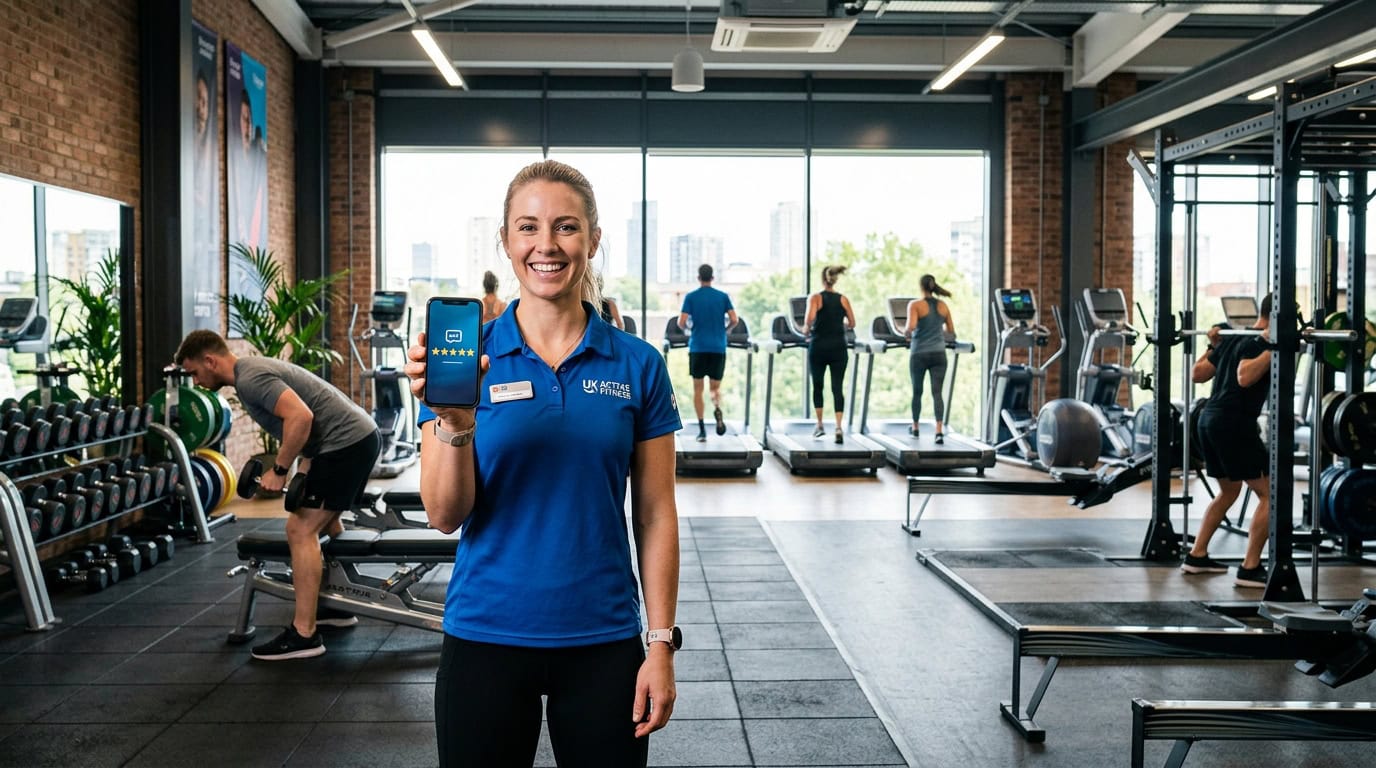
    Google reviews can make or break your gym’s online reputation. When someone in your area searches for “gyms near me,” the first thing they see after your name is your star rating. A gym with 4.8 stars and dozens of reviews will almost always win over a gym with 2.3 stars and a handful of complaints — even if your facilities are superior.

    This is step zero. If you don’t have a verified Google Business Profile, nobody can leave you a review. Head to business.google.com, claim your listing, and fill out every detail: opening hours, photos, services, facilities, and a compelling description.

    If your gym is listed on GymPal, you can claim and enhance your listing there too — it’s another place potential members will find you when searching for gyms in your area. The more complete your online presence, the more trustworthy you appear.

    2. Create a Seamless Review Process

    The biggest barrier to getting reviews is friction. If a member has to search for your gym, find the right listing, and figure out how to leave a review, most of them simply won’t bother.

    Instead, give them a direct link. You can find your review URL by searching for your gym on Google, clicking the “Write a review” button, and copying the URL that appears. Then:

    • Add it to your email signature — every email you send becomes a subtle invitation
    • Create a QR code — place it at reception, on lockers, and near the exit
    • Add it to your website — a simple “Love our gym? Leave us a review” button in the footer
    • Text it to new members — include it in your welcome message after their first week

    The easier you make it, the more reviews you’ll get. Period.

    3. Time Your Ask Strategically

    The key to getting positive reviews is asking at the right moment — when your member is feeling great about their experience. Some prime windows:

    • After a personal training milestone — they just hit a PB or completed a programme
    • After their first month — they’re past the initial soreness and starting to see results
    • After a class they loved — catch them while the endorphins are flowing
    • When they renew their membership — they’ve already committed, so they clearly value your gym

    A quick “Really glad you’re part of our community — if you have a spare minute, a Google review helps us a lot” is all it takes. No pressure, no guilt.

    4. Train Your Team to Mention Reviews Naturally

    Your reception staff and personal trainers have dozens of positive interactions with members every single day. A brief mention during these moments is far more effective than any marketing campaign.

    Train your team to naturally weave review requests into conversation. For example:

    • When a member compliments the gym: “That means a lot! If you ever get a chance to drop that in a Google review, it really helps us out.”
    • At the end of a great PT session: “Cracking session today. If you’re happy with your progress, a quick review on Google helps others find us.”

    The key is authenticity. If it sounds scripted, it feels like begging. If it sounds genuine, it feels like a friend recommending something they believe in.

    5. Respond to Every Single Review

    This is where most gyms fall down. Responding to reviews — both positive and negative — shows that you’re engaged and that you care about member feedback.

    For positive reviews, keep it brief and personal: “Thanks so much, Sarah! Really glad you’re enjoying the classes. See you next week!” This encourages others to leave reviews because they can see someone actually reads them.

    For negative reviews, stay professional and constructive. Acknowledge the issue, explain what you’re doing about it, and invite the person to discuss it further offline. Potential members read negative reviews too, and how you respond says more about your gym than the review itself.

    6. Run a Monthly Review Drive

    Once a month, run a focused push for reviews. This could be:

    • A social media post asking members to share their experience
    • An email to your member base with a direct review link
    • A noticeboard announcement in the gym
    • A small incentive — enter reviewers into a monthly prize draw (check Google’s guidelines on incentives, and keep it optional — never make reviews conditional)

    The monthly cadence keeps your review velocity up without being annoying. Google also values recency, so regular new reviews help more than a burst followed by silence.

    7. Showcase Your Reviews On-Premises

    Print your best reviews and display them in the gym. A “Wall of Love” near the entrance or changing rooms serves a dual purpose: it boosts morale for existing members and reminds new visitors that real people love your gym.

    Make sure to include the reviewer’s first name and star rating. Seeing that others have taken the time to write something positive creates social proof that encourages even more reviews.

    8. Leverage Your Online Directory Listings

    Beyond Google, make sure your gym is listed on fitness directories where potential members are actively searching. GymPal is one such platform — with over 10,000 gyms already listed, it’s where fitness seekers go to find and compare gyms in their area.

    Claiming your listing on GymPal is free and takes minutes. You can add photos, update your facilities, and respond to enquiries directly. A complete, active listing on platforms like GymPal complements your Google presence and gives you another channel to attract members who might never find you through search alone.

    Common Mistakes to Avoid

    • Don’t buy reviews. Google actively removes fake reviews and can penalise your Business Profile. It’s not worth the risk.
    • Don’t incentivise specific ratings. “Leave us 5 stars for a free protein shake” violates Google’s review policies. If you offer incentives, make them for any honest review.
    • Don’t ignore negative reviews. Unanswered criticism looks worse than the criticism itself.
    • Don’t review your own business. This is an obvious one, but Google will remove self-reviews and may flag your entire profile.
    • Don’t copy-paste responses. If every reply to a positive review is identical, it looks robotic. Mix it up.

    The Bottom Line

    Getting more Google reviews isn’t about tricks or gimmicks — it’s about making it easy for satisfied members to share their experience, and showing that you value their feedback when they do. A steady stream of genuine reviews builds trust, improves your search visibility, and ultimately drives more people through your doors.

    Start with the basics: claim your Google Business Profile, create a direct review link, and train your team to mention reviews naturally. From there, build a monthly rhythm and watch your star rating climb.

    And if you haven’t already, list your gym on GymPal to reach even more fitness seekers in your area. It’s free, and it takes less than five minutes.


    Is your gym listed on GymPal? Over 10,000 UK fitness businesses are in our directory. Claim your free listing in 5 minutes — and start getting discovered by local fitness seekers today.

  • How to Track Your Fitness Progress (Without Obsessing Over the Scales)

    How to Track Your Fitness Progress (Without Obsessing Over the Scales)

    Why the Scales Are the Worst Way to Measure Progress

    If you have ever stepped on the scales after a solid week of training and felt your stomach drop because the number has not moved (or worse, gone up), you are not alone. The scales are the most commonly used fitness metric, and they are also the most misleading. According to Sport England Active Lives survey

    Your body weight fluctuates daily based on hydration, glycogen stores, stress, hormones, and even how much you ate the night before. A single number tells you nothing about what is actually changing inside your body.

    Here is a better approach: track what actually matters.

    The Metrics That Actually Show Progress

    1. How Your Clothes Fit

    This is the single most underrated progress indicator. If your jeans feel looser around the waist, your shirts fit better through the shoulders, or you have dropped a belt notch, you are making progress — regardless of what the scales say. Muscle is denser than fat, so you can look leaner and feel stronger without the number changing at all.

    2. Strength Gains in the Gym

    Are you lifting heavier than last month? Can you do more reps with the same weight? Have you progressed from knee push-ups to full push-ups? Strength gains are a direct sign that your body is adapting and improving. Keep a simple training log — a notes app on your phone is enough — and compare your lifts every four to six weeks.

    3. Progress Photos

    Take a front, side, and back photo once every two to four weeks in the same lighting and clothing. You will notice changes in your physique that are impossible to see day to day. Most people who start tracking this way are genuinely surprised by the difference after just eight weeks.

    4. Energy Levels and Sleep Quality

    These are the metrics nobody talks about but everyone notices. When your fitness improves, you sleep better, wake up feeling more rested, and have more energy throughout the day. If your afternoon slump has disappeared since you started training, that is progress.

    5. Body Measurements

    A tape measure costs less than £3 and tells you far more than any smart scale. Measure your chest, waist, hips, thighs, and upper arms every two weeks. Even small changes — half a centimetre off your waist — add up over time and are a clear sign that your training and nutrition are working.

    The Simple Tracking System That Actually Works

    You do not need a complicated spreadsheet or an expensive gadget. Here is a system you can start using today:

    • Weekly: Log your key lifts and note how your workouts felt
    • Fortnightly: Take progress photos and body measurements
    • Monthly: Assess how your clothes fit and review your training log for trends
    • Optional: Use a fitness app like Strong, JEFIT, or Hevy to automate your training log

    The key is consistency. Tracking once and then forgetting about it for three weeks will not help. Pick your metrics, set a reminder, and stick with it.

    What About Smart Scales and Fitness Trackers?

    Smart scales that measure body fat percentage can be useful for spotting trends over time, but they are notoriously inaccurate for single readings. If you use one, focus on the monthly trend rather than daily fluctuations.

    Fitness trackers and smartwatches are excellent for monitoring daily activity levels, heart rate during exercise, and recovery metrics. If you already own one, use it as a supplementary tool — not your primary measure of progress.

    The Mental Shift That Changes Everything

    The biggest mistake people make is tying their self-worth to a number. Fitness progress is not linear. There will be weeks where you feel stronger but the measurements have not changed. There will be weeks where the measurements drop but your energy is low. That is normal.

    Focus on the process: showing up, training consistently, eating well, and recovering properly. The results will follow.

    Find the Right Gym for Your Goals

    Whether you are just starting out or looking to take your training to the next level, having the right gym makes a massive difference. GymPal helps you find and compare gyms across the UK so you can find one that matches your goals, budget, and schedule. Browse thousands of listings, read real reviews, and discover your ideal training space today. According to ukactive State of the UK Fitness Industry report

  • How to Create an Effective Gym Class Timetable That Keeps Members Coming Back

    How to Create an Effective Gym Class Timetable That Keeps Members Coming Back

    Why Your Class Timetable Is Your Most Underrated Marketing Tool

    Most UK gym owners spend hours tweaking their Facebook ads, redesigning their website, and chasing Google reviews. Meanwhile, their class timetable — the one thing members look at every single week — gets a quick update once a quarter and is promptly forgotten. sent via email or posted in your gym’s WhatsApp group can reveal what members actually want versus what you think they want.

    Ask things like:

    • Which classes would you like to see more of?
    • What times work best for you to attend classes?
    • Are there any classes you’ve stopped attending? Why?
    • Would you attend early morning or late evening classes if we offered them?

    Step 2: Choose the Right Mix of Class Types

    A balanced timetable offers variety while avoiding the trap of trying to be everything to everyone. The goal is to cover the main fitness categories that appeal to your specific member base.

    The core class categories

    Most successful UK gyms build their timetable around these pillars:

    • Cardio/HIIT: Spin, circuit training, HIIT, BoxFit — high energy, calorie burn, appeals to members focused on weight loss and fitness gains
    • Strength: Body Pump, kettlebells, functional training — attracts members who want to build muscle and get stronger
    • Mind-body: Yoga, Pilates, stretching — popular with members managing stress, improving flexibility, or recovering from injury
    • Dance/entertainment: Zumba, dance fitness, aerobics — fun, social, lower barrier to entry for beginners
    • Specialist: CrossFit, Olympic lifting, martial arts — attracts dedicated niches and creates strong community bonds

    The right ratio depends on your gym

    A boutique yoga studio doesn’t need HIIT classes. A strength-focused gym doesn’t need Zumba. Match your class mix to your membership and your brand identity. If 60% of your members are over 45, you’ll want more low-impact options. If you’re near a university, high-intensity classes and evening slots will perform better.

    As a general rule for mixed gyms: aim for roughly 30% cardio, 25% strength, 25% mind-body, and 20% variety or specialist classes. Adjust based on your data.

    Step 3: Master the Art of Time Slot Placement

    When you place a class matters as much as what class it is. The same HIIT session will fill up at 6:30am and sit half-empty at 2:00pm on a Tuesday.

    The golden time slots

    These are the windows where class demand is consistently highest across most UK gyms:

    • Early morning (6:00–7:30am): Popular with working professionals before their commute. Best for high-energy formats — HIIT, spin, circuit training. Keep these to 30–45 minutes so people can shower and leave.
    • Mid-morning (9:30–11:00am): Favoured by parents after school drop-off, freelancers, and retirees. Yoga, Pilates, and lighter formats work well here.
    • Lunchtime (12:00–1:30pm): Office workers on their break. Keep these classes short (30 minutes) and high-intensity — members want maximum results in minimum time.
    • Evening (5:30–7:30pm): The busiest window. This is where you put your flagship classes and most popular instructors. Offer a mix of formats to capture different preferences.
    • Late evening (7:30–9:00pm): Smaller but loyal audience. Good for wind-down classes like yoga or stretching, or specialist sessions for dedicated members.

    Avoid class conflicts

    Never schedule two popular classes at the same time. If your Tuesday 6pm spin class is always full, don’t put your equally popular HIIT class against it. You’ll split your audience and create two half-empty rooms instead of one packed one and a waiting list for the next.

    Stagger intensity throughout the day

    Think about the member journey. An early morning HIIT class followed by a lunchtime yoga session makes sense. Two back-to-back high-intensity classes in the same time slot cannibalise each other. Give members reasons to attend multiple classes per week by varying the intensity and format.

    Step 4: Staff Your Classes Strategically

    Your instructors make or break your timetable. The same class format with two different instructors can have wildly different attendance figures.

    Match instructors to time slots

    • Morning slots: High-energy, motivational instructors who can get people fired up at 6am
    • Mid-morning: Patient, welcoming instructors who create a comfortable environment for less confident members
    • Evening: Charismatic, community-focused instructors who can manage larger groups and keep energy high

    Build instructor consistency

    Members build relationships with specific instructors. If your popular Thursday yoga teacher is replaced by a different instructor every other week, attendance will drop. Wherever possible, keep the same instructor on the same class week after week.

    Invest in instructor development

    Send your instructors on courses, encourage them to get additional qualifications, and let them suggest new class formats. Instructors who feel invested in will deliver better classes, and better classes mean better retention.

    Step 5: Seasonal and Quarterly Refreshes

    A timetable that never changes gets stale. Members lose interest, attendance plateaus, and new prospects see the same old schedule every time they visit.

    The quarterly review

    Every 12 weeks, review your timetable with fresh eyes:

    • Which classes consistently fill up? Consider adding extra sessions.
    • Which classes have declining numbers? Either refresh the format, change the instructor, move the time slot, or replace it entirely.
    • Are there gaps in your schedule? If there’s demand for a Saturday morning class you don’t offer, test it.
    • What’s trending? If Pilates Reformer or sound bath meditation is gaining popularity in your area, consider trialling it.

    Seasonal adjustments

    UK gym habits shift with the seasons. In January, you’ll see a surge in beginners — add more introductory-level classes. In summer, outdoor fitness and early morning classes gain popularity. In the lead-up to Christmas, members are busier — shorter, more intensive lunchtime classes can maintain engagement when evening attendance drops.

    The “new class” launch playbook

    When introducing a new class format, don’t just slot it in and hope for the best:

    1. Run a free taster session — let members try it without commitment
    2. Promote it heavily — in-gym posters, social media, email, and in other classes
    3. Put your best instructor on it — first impressions matter
    4. Give it 4–6 weeks before deciding whether to keep it
    5. Ask for feedback — survey attendees after the first month

    Step 6: Make Your Timetable Easy to Find and Use

    The best timetable in the world is useless if members can’t find it or don’t know what’s on.

    Digital presence

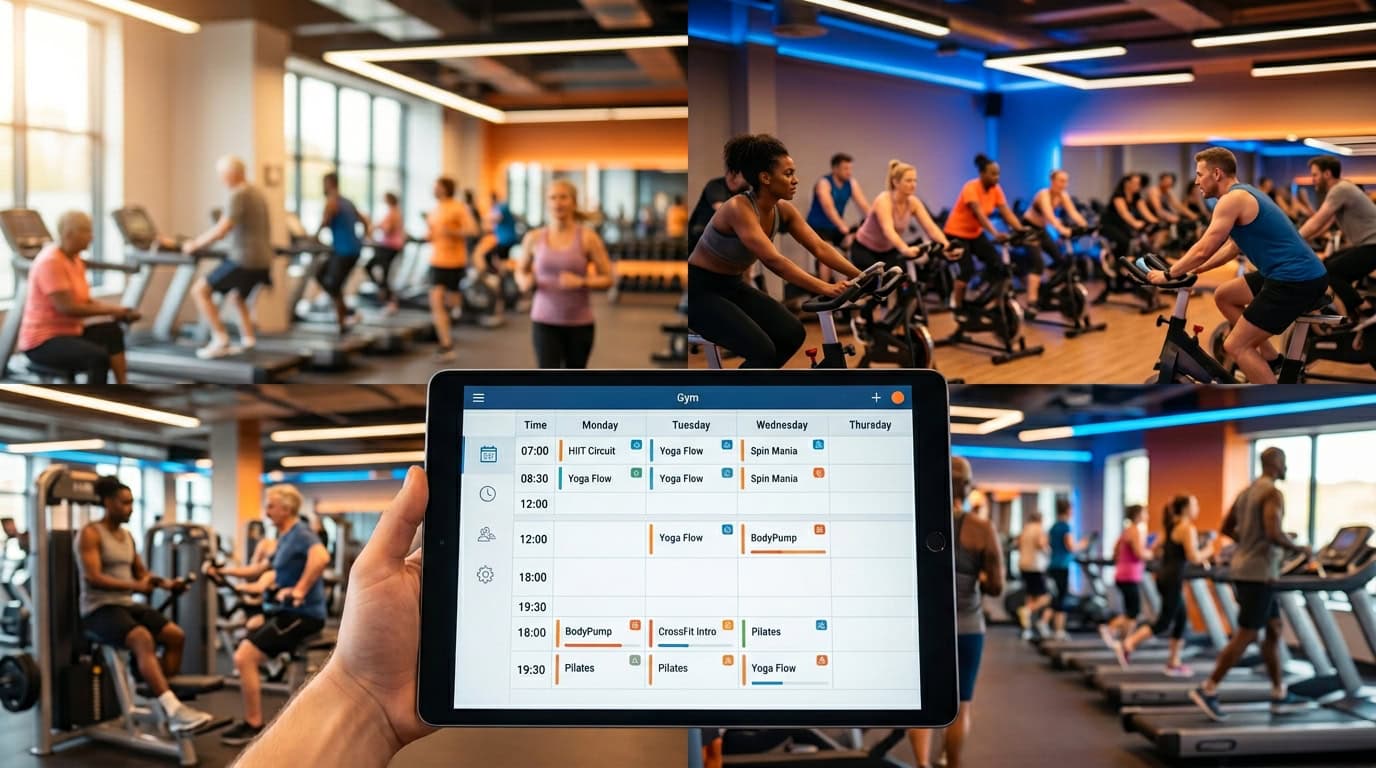
    • Website: Your timetable should be front and centre on your website, not buried three clicks deep. Make it mobile-friendly — most members check it on their phone.
    • Booking system: Use a platform like Mindbody, GymCatch, or TeamUp that lets members book, cancel, and see real-time availability.
    • Social media: Post your weekly timetable every Sunday evening on Instagram Stories and in your Facebook group.

    In-gym visibility

    • Physical timetable boards: Large, clear, well-lit displays near the entrance and in the changing rooms.
    • TV screens: Digital displays showing today’s classes and any changes or cancellations.
    • Printed schedules: Pocket-sized timetables at reception for members who prefer physical copies.

    Communication is key

    If a class is cancelled or an instructor changes, tell members immediately. A last-minute cancellation with no communication is one of the fastest ways to lose trust. Use WhatsApp groups, push notifications from your booking app, and email to keep everyone informed.

    Step 7: Track What Matters and Iterate

    You can’t improve what you don’t measure. Track these key metrics for every class on your timetable:

    • Average attendance: How many people show up per session?
    • Capacity utilisation: What percentage of available spots are filled?
    • Booking rate: How far in advance do members book? Classes that book out days in advance have high demand.
    • No-show rate: If you have a booking system, track how often members book but don’t show up.
    • Retention correlation: Do members who attend classes regularly stay longer than those who only use the gym floor?

    Use this data to make informed decisions about what to keep, change, or drop. Never remove a popular class based on a hunch — let the numbers guide you.

    How GymPal Supports Your Class Strategy

    A great timetable drives attendance, and attendance drives results. But getting new members through the door in the first place is the other half of the equation.

    Listing your gym on GymPal ensures that when people in your area search for fitness options, your gym shows up with accurate class information, facilities, and direct contact details. A well-optimised GymPal listing works alongside your timetable strategy — it brings people in, and your classes keep them there.

    If you haven’t claimed your listing yet, it takes just a few minutes. Get started here and make sure your gym is visible to the thousands of people searching for fitness options in your area every month.

    Quick-Reference Timetable Checklist

    Area Key Actions
    Audience research Pull 12-week attendance data; survey members on preferences
    Class mix Cover cardio, strength, mind-body, and variety; match to member base
    Time slots Prioritise 6–7:30am, 9:30–11am, 12–1:30pm, 5:30–7:30pm
    Instructor placement Match energy to time slot; keep consistent instructors
    Quarterly refresh Review attendance, add new formats, drop underperformers
    Visibility Mobile-friendly website, booking system, in-gym displays
    Measurement Track attendance, booking rate, no-shows, retention correlation

    A great timetable isn’t set-and-forget — it’s a living document that evolves with your membership. Start with the data, build around your members’ actual habits, review regularly, and don’t be afraid to experiment. Your members — and your retention rate — will thank you for it.


    Is your gym listed on GymPal? Over 10,000 UK fitness businesses are in our directory. Claim your free listing in 5 minutes — and start getting discovered by local fitness seekers today.

  • How to Stay Consistent at the Gym When Life Gets Busy: A Practical Guide

    How to Stay Consistent at the Gym When Life Gets Busy: A Practical Guide

    We have all been there. You start the year with the best intentions, hit the gym three or four times a week, and then life happens. Work gets demanding, the kids need picking up, social events pile up, and before you know it, your gym bag is gathering dust in the corner of your bedroom.

    Killer 1: All-or-Nothing Thinking

    This is the single biggest reason people fall off the wagon. The thought process goes like this: if I cannot do my full 60-minute workout, there is no point going at all. So you skip the session entirely.

    The fix: Adopt the minimum viable workout mindset. A 15-minute session is infinitely better than zero minutes. If you only have time for three sets of squats and a quick walk on the treadmill, do exactly that. Something always beats nothing.

    Killer 2: No Fixed Schedule

    Training whenever you feel like it sounds flexible and appealing, but in practice it means you rarely go. Without a fixed time in your calendar, the gym always loses to whatever else comes up.

    The fix: Treat your gym sessions like work meetings. Put them in your calendar and protect that time. If someone asks if you are free at 6pm on Tuesday, the answer is no, you have a prior commitment. You do not need to explain what that commitment is.

    Killer 3: Unrealistic Expectations

    Setting a goal of training five or six days a week when you are new to exercise or have a demanding job is a recipe for burnout. You start strong, miss a couple of sessions, feel guilty, and then give up entirely.

    The fix: Start with a sustainable baseline. For most people, two to three sessions per week is realistic and achievable. You can always add a fourth session once the habit is established. Building up is motivating; cutting back feels like failure.

    Killer 4: Friction in the Process

    If getting to the gym requires packing your bag the night before, driving 30 minutes in traffic, finding parking, and navigating a crowded changing room, you have built in too much friction. Each extra step is a reason to skip.

    The fix: Reduce friction wherever possible. Pack your bag the night before and put it by the door. Choose a gym close to your home or workplace. Keep a set of gym clothes at work. The fewer decisions you need to make before a session, the more likely you are to go.

    Killer 5: Boredom and Lack of Progress

    Doing the same three exercises on the same three machines for months on end is a fast track to losing motivation. If you are bored, you will find excuses not to go.

    The fix: Mix things up regularly. Try a new class, switch from machines to free weights, follow a structured programme with progressive overload, or try a completely different gym environment. GymPal makes it easy to find different gyms in your area, so you can try a new spot when your current routine feels stale.

    A Practical Framework for Busy People

    Step 1: Define Your Non-Negotiable Sessions

    Pick two days per week that are your guaranteed training days. These are non-negotiable, rain or shine. For most people, a Tuesday evening and a Saturday morning works well because they bookend the working week.

    Anything beyond those two sessions is a bonus. If you manage a third session, great. If life gets in the way and you only do two, you have still hit your minimum.

    Step 2: Create a Transition Ritual

    A transition ritual is a small habit that signals to your brain that it is time to train. It could be putting on your gym playlist as soon as you finish work, making a pre-workout coffee, or even just changing into your gym clothes the moment you walk through the front door.

    The key is that the ritual should be automatic and take less than five minutes. Once the ritual starts, momentum takes over and you are far more likely to follow through.

    Step 3: Have a Backup Plan for Short Weeks

    Sometimes a genuine emergency comes up and you miss a session. That is fine, as long as you have a plan for how to handle it. Options include:

    • Do a short home workout instead. Bodyweight squats, press-ups, and a plank take 15 minutes and keep the habit alive.
    • Shift the session to another day in the same week. If you miss Tuesday, go on Thursday instead.
    • Combine activities. Walk or cycle to work instead of driving. Take the stairs. Do a stretching routine before bed. It all counts.

    The rule is simple: never let a missed session turn into a missed week.

    Step 4: Track Your Progress Visually

    Use a wall calendar, a habit tracker app, or a simple tick sheet. Every time you complete a session, mark it with a big visible tick or cross. The satisfaction of seeing a chain of consecutive sessions is surprisingly powerful motivation to keep going.

    Do not break the chain. And if you do break it, start a new chain immediately rather than waiting for Monday or the start of next month.

    Step 5: Find an Accountability Partner

    Having someone who expects you at the gym is one of the most effective consistency tools available. This could be a training partner, a friend you text before each session, or even a personal trainer.

    If you are looking for a personal trainer who can keep you accountable, our guide to finding the right PT in the UK covers everything you need to know.

    What to Do When You Have Missed Multiple Weeks

    If life has genuinely derailed your routine for a few weeks, do not beat yourself up. It happens to everyone. Here is how to get back on track:

    1. Do not try to make up for lost time. Your first session back should be easy. A light full-body workout or a 20-minute walk on the treadmill. The goal is to rebuild the habit, not to punish yourself.
    2. Schedule your next session before you leave the gym. While you are still feeling good from the workout, book your next one in your calendar.
    3. Remove the guilt. A gap in training does not erase your previous progress. Your muscles have memory, your cardiovascular fitness will come back faster than it took to build originally, and you already know how to train.
    4. Review what went wrong. Were you doing too many sessions? Was the gym too far away? Were you bored? Fix the root cause before restarting.

    Finding the Right Gym Makes Consistency Easier

    The gym you choose has a massive impact on how often you go. If your gym is inconveniently located, overcrowded at the times you want to train, or lacks the equipment you enjoy using, you are fighting an uphill battle.

    GymPal helps you find gyms near you with real reviews, detailed facility information, and honest pricing. Whether you need a gym close to your office for lunchtime workouts or a 24-hour facility for early morning sessions, you can search and compare options in minutes.

    Visit askgympal.co.uk to find a gym that fits your lifestyle, not the other way around.

    The Bottom Line

    Consistency is not about being perfect. It is about showing up often enough that skipping a session feels unusual rather than normal. Set a realistic minimum, protect your training time, reduce friction, and forgive yourself when life gets in the way. The gym will always be there when you are ready to come back.

  • How to Build a Referral Programme That Actually Works for Your UK Gym

    How to Build a Referral Programme That Actually Works for Your UK Gym

    Word of mouth is still the most powerful marketing tool for independent gyms in the UK. When a member recommends your gym to a friend, that referral converts at a significantly higher rate than any paid advert. Yet most gym owners either have no referral system at all, or they have one that is so complicated that nobody uses it. or a free supplement sample pack. The key is keeping the reward relevant to your price point.

    Personal Training Studio

    For PT-focused gyms, offer a free session for both the referrer and the new client when the new client purchases a block of sessions. This is powerful because the free session serves as a sales opportunity for the PT to convert the referred friend into a paying client.

    How to Launch Your Referral Programme in 7 Days

    1. Day 1: Decide on your offer. Pick one clear two-sided reward. Write it in one sentence.
    2. Day 2: Create your referral cards or set up your digital tracking system. Keep it simple.
    3. Day 3: Brief your team. Explain the programme, how to track it, and how to talk about it with members.
    4. Day 4: Design your in-gym signage. One poster at reception, one at the entrance, and a mention on your digital screens if you have them.
    5. Day 5: Write an email to your member database announcing the programme. Include the offer, how it works, and a call to action.
    6. Day 6: Post about it on social media. Share it in your member Facebook group or WhatsApp community if you have one.
    7. Day 7: Launch. Start promoting it in every member interaction from this day forward.

    How GymPal Helps Amplify Your Referrals

    Getting found online is half the battle. When your existing members refer friends, those friends will almost certainly search for your gym online before visiting. Having a strong, verified presence on GymPal means those referred prospects find accurate information, positive reviews, and professional photos when they look you up.

    If you have not claimed your gym on GymPal yet, it takes less than five minutes. A complete profile with updated facilities, class timetable, and member reviews gives your referred leads even more confidence to sign up. Visit askgympal.co.uk to claim or update your listing today.

    Ready to Turn Your Members Into Your Best Marketing Channel?

    A well-designed referral programme is one of the highest-returning investments you can make as a gym owner. It costs very little to run, it rewards your most loyal members, and it brings in new sign-ups who are more likely to stick around. Start simple, promote it consistently, and watch it grow.

    And make sure your online presence matches the quality of your in-gym experience. Claim your GymPal listing today and ensure every referral who looks you up finds a gym they cannot wait to join.


    Is your gym listed on GymPal? Over 10,000 UK fitness businesses are in our directory. Claim your free listing in 5 minutes — and start getting discovered by local fitness seekers today.

  • How to Find the Right Personal Trainer in the UK: A Complete Guide

    How to Find the Right Personal Trainer in the UK: A Complete Guide

    A Good PT Is Worth Every Penny

    If you are training consistently but feel like your progress has stalled, you are confused about programming, or you have a specific goal that requires expert guidance, a personal trainer could be the catalyst that transforms your results. that requires structured programming

  • You struggle with consistency and need accountability
  • You are returning from an injury and need safe, progressive programming
  • You probably do not need a PT if:

    Qualifications: What to Look For

    A qualified PT in the UK should hold at minimum:

    Additional qualifications that indicate specialisation:

    Ask about qualifications before signing up. A reputable PT will be happy to show you their certificates.

    Where to Find Personal Trainers

    At Your Gym

    The easiest option. Most gyms have in-house PTs or allow external trainers to operate within the facility. Ask at reception or check the gym’s website. Advantages include convenience, a known facility, and potentially discounted rates for members.

    On GymPal

    GymPal lists thousands of UK gyms, many of which feature PT profiles or contact details. You can search for gyms with personal training services in your area and enquire directly.

    Online Directories

    Social Media

    Instagram and TikTok are where many UK PTs showcase their work. Search for personal trainers in your area and look for:

    Avoid PTs whose feed is entirely motivational stock images and “hustle culture” content. The best PTs educate and demonstrate their expertise.

    Questions to Ask Before Hiring a PT

    Before committing to a PT, have an initial conversation (many offer a free consultation). Ask these questions:

    1. What are your qualifications and how long have you been training?
    2. Do you specialise in any particular area? (weight loss, strength, sports performance, rehabilitation, etc.)
    3. How do you structure your programmes? (should be periodised and progressive, not random)
    4. How do you track progress? (should measure and adjust regularly)
    5. What happens if I need to cancel or reschedule? (flexibility is important)
    6. Can I see testimonials or speak to current or past clients?
    7. How do you handle injuries or limitations?

    A good PT will answer these questions confidently and in detail. A poor PT will be vague or evasive.

    Understanding PT Pricing in the UK

    Session Type Typical Price
    1-to-1 session (60 min) £30–75
    1-to-1 session (45 min) £25–55
    Small group (2-3 people) £15–25 per person
    Online coaching (monthly) £80–200/month
    Block of 5 sessions £140–335 (5-10% discount)
    Block of 10 sessions £260–650 (10-15% discount)

    London and the South East command the highest rates. Expect to pay £40–75 per hour in London and £25–50 in most other UK cities and towns.

    What to Expect for Your Money

    A good PT session should include:

    A bad PT will spend the session chatting, count your reps, and send you on your way without meaningful coaching or progression.

    Red Flags to Watch For

    Types of Personal Training

    In-Person 1-to-1

    The traditional model. You meet your PT at your gym for face-to-face sessions. Best for beginners who need hands-on coaching and technique correction.

    Online Coaching

    Your PT programmes your workouts, tracks your progress, and checks in via an app or video call, but you train on your own. Significantly cheaper (£80–200/month vs £120–180 for in-person). Best for experienced trainees who are confident with technique and want structured programming at a lower cost.

    Small Group / Semi-Private

    Train with 2-4 other people under one PT. Cost per person is lower while still getting coaching and programming. Best for friends with similar goals or budget-conscious trainees.

    Specialist Coaching

    PTs who focus on specific areas: weight loss, sports performance, powerlifting, bodybuilding, rehabilitation, pre/post-natal, or older adults. If you have a specific goal, a specialist is worth the investment.

    Getting the Most from Your PT

    The Bottom Line

    A good personal trainer is one of the best investments you can make in your fitness journey. They provide expertise, accountability, and programming that is difficult to replicate on your own. The key is finding the right one — qualified, experienced, communicative, and genuinely invested in your results.

    Start with your gym’s in-house PTs, check qualifications, ask the right questions, and commit to at least 8 weeks. If you do your research and choose wisely, a PT can be the difference between training hard and training smart.


    Need to find a gym with quality personal trainers? Search GymPal to find UK gyms with PT services near you. Compare facilities, read member reviews, and claim a free trial to meet the team before committing.