Tag: Beginner Tips

  • How to Track Your Fitness Progress (Without Obsessing Over the Scales)

    How to Track Your Fitness Progress (Without Obsessing Over the Scales)

    Why the Scales Are the Worst Way to Measure Progress

    If you have ever stepped on the scales after a solid week of training and felt your stomach drop because the number has not moved (or worse, gone up), you are not alone. The scales are the most commonly used fitness metric, and they are also the most misleading. According to Sport England Active Lives survey

    Your body weight fluctuates daily based on hydration, glycogen stores, stress, hormones, and even how much you ate the night before. A single number tells you nothing about what is actually changing inside your body.

    Here is a better approach: track what actually matters.

    The Metrics That Actually Show Progress

    1. How Your Clothes Fit

    This is the single most underrated progress indicator. If your jeans feel looser around the waist, your shirts fit better through the shoulders, or you have dropped a belt notch, you are making progress — regardless of what the scales say. Muscle is denser than fat, so you can look leaner and feel stronger without the number changing at all.

    2. Strength Gains in the Gym

    Are you lifting heavier than last month? Can you do more reps with the same weight? Have you progressed from knee push-ups to full push-ups? Strength gains are a direct sign that your body is adapting and improving. Keep a simple training log — a notes app on your phone is enough — and compare your lifts every four to six weeks.

    3. Progress Photos

    Take a front, side, and back photo once every two to four weeks in the same lighting and clothing. You will notice changes in your physique that are impossible to see day to day. Most people who start tracking this way are genuinely surprised by the difference after just eight weeks.

    4. Energy Levels and Sleep Quality

    These are the metrics nobody talks about but everyone notices. When your fitness improves, you sleep better, wake up feeling more rested, and have more energy throughout the day. If your afternoon slump has disappeared since you started training, that is progress.

    5. Body Measurements

    A tape measure costs less than £3 and tells you far more than any smart scale. Measure your chest, waist, hips, thighs, and upper arms every two weeks. Even small changes — half a centimetre off your waist — add up over time and are a clear sign that your training and nutrition are working.

    The Simple Tracking System That Actually Works

    You do not need a complicated spreadsheet or an expensive gadget. Here is a system you can start using today:

    • Weekly: Log your key lifts and note how your workouts felt
    • Fortnightly: Take progress photos and body measurements
    • Monthly: Assess how your clothes fit and review your training log for trends
    • Optional: Use a fitness app like Strong, JEFIT, or Hevy to automate your training log

    The key is consistency. Tracking once and then forgetting about it for three weeks will not help. Pick your metrics, set a reminder, and stick with it.

    What About Smart Scales and Fitness Trackers?

    Smart scales that measure body fat percentage can be useful for spotting trends over time, but they are notoriously inaccurate for single readings. If you use one, focus on the monthly trend rather than daily fluctuations.

    Fitness trackers and smartwatches are excellent for monitoring daily activity levels, heart rate during exercise, and recovery metrics. If you already own one, use it as a supplementary tool — not your primary measure of progress.

    The Mental Shift That Changes Everything

    The biggest mistake people make is tying their self-worth to a number. Fitness progress is not linear. There will be weeks where you feel stronger but the measurements have not changed. There will be weeks where the measurements drop but your energy is low. That is normal.

    Focus on the process: showing up, training consistently, eating well, and recovering properly. The results will follow.

    Find the Right Gym for Your Goals

    Whether you are just starting out or looking to take your training to the next level, having the right gym makes a massive difference. GymPal helps you find and compare gyms across the UK so you can find one that matches your goals, budget, and schedule. Browse thousands of listings, read real reviews, and discover your ideal training space today. According to ukactive State of the UK Fitness Industry report

  • How to Stay Consistent at the Gym When Life Gets Busy: A Practical Guide

    How to Stay Consistent at the Gym When Life Gets Busy: A Practical Guide

    We have all been there. You start the year with the best intentions, hit the gym three or four times a week, and then life happens. Work gets demanding, the kids need picking up, social events pile up, and before you know it, your gym bag is gathering dust in the corner of your bedroom.

    Killer 1: All-or-Nothing Thinking

    This is the single biggest reason people fall off the wagon. The thought process goes like this: if I cannot do my full 60-minute workout, there is no point going at all. So you skip the session entirely.

    The fix: Adopt the minimum viable workout mindset. A 15-minute session is infinitely better than zero minutes. If you only have time for three sets of squats and a quick walk on the treadmill, do exactly that. Something always beats nothing.

    Killer 2: No Fixed Schedule

    Training whenever you feel like it sounds flexible and appealing, but in practice it means you rarely go. Without a fixed time in your calendar, the gym always loses to whatever else comes up.

    The fix: Treat your gym sessions like work meetings. Put them in your calendar and protect that time. If someone asks if you are free at 6pm on Tuesday, the answer is no, you have a prior commitment. You do not need to explain what that commitment is.

    Killer 3: Unrealistic Expectations

    Setting a goal of training five or six days a week when you are new to exercise or have a demanding job is a recipe for burnout. You start strong, miss a couple of sessions, feel guilty, and then give up entirely.

    The fix: Start with a sustainable baseline. For most people, two to three sessions per week is realistic and achievable. You can always add a fourth session once the habit is established. Building up is motivating; cutting back feels like failure.

    Killer 4: Friction in the Process

    If getting to the gym requires packing your bag the night before, driving 30 minutes in traffic, finding parking, and navigating a crowded changing room, you have built in too much friction. Each extra step is a reason to skip.

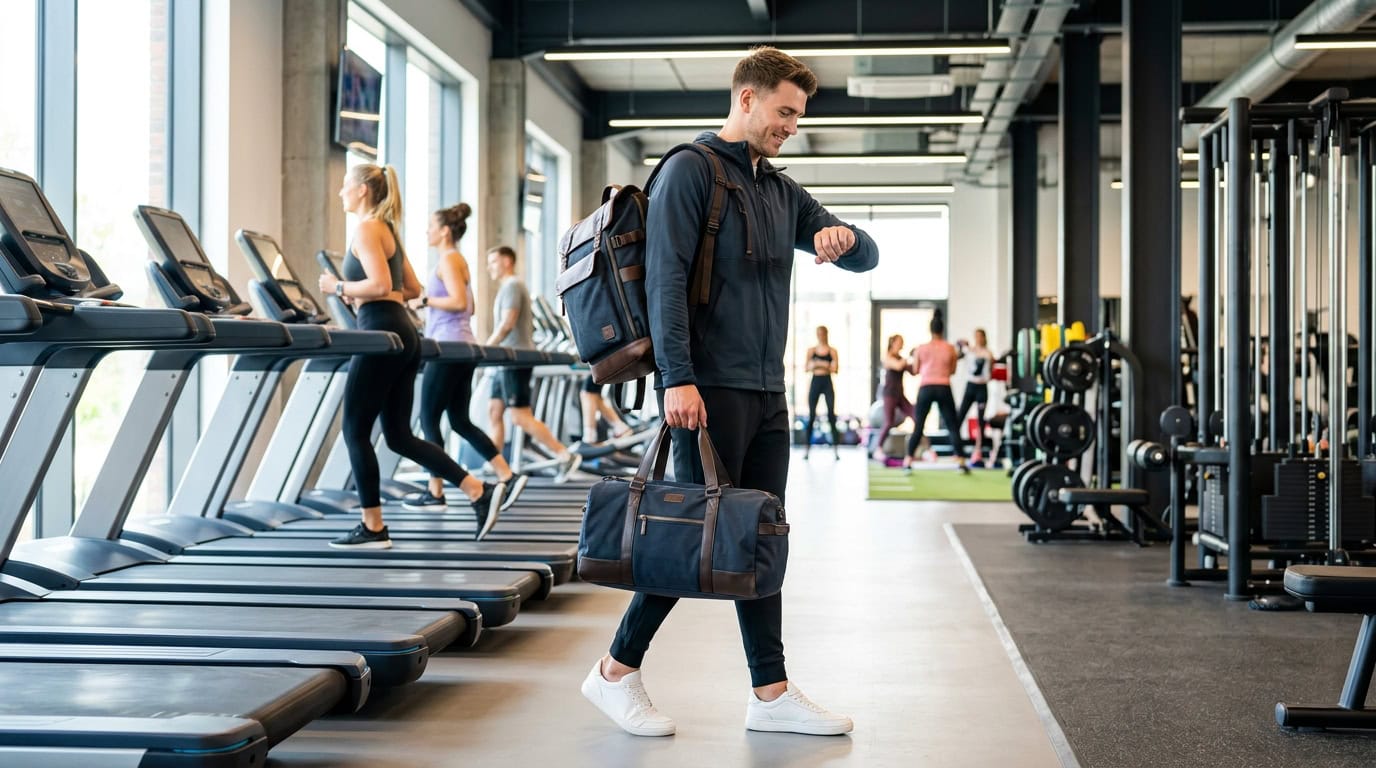
    The fix: Reduce friction wherever possible. Pack your bag the night before and put it by the door. Choose a gym close to your home or workplace. Keep a set of gym clothes at work. The fewer decisions you need to make before a session, the more likely you are to go.

    Killer 5: Boredom and Lack of Progress

    Doing the same three exercises on the same three machines for months on end is a fast track to losing motivation. If you are bored, you will find excuses not to go.

    The fix: Mix things up regularly. Try a new class, switch from machines to free weights, follow a structured programme with progressive overload, or try a completely different gym environment. GymPal makes it easy to find different gyms in your area, so you can try a new spot when your current routine feels stale.

    A Practical Framework for Busy People

    Step 1: Define Your Non-Negotiable Sessions

    Pick two days per week that are your guaranteed training days. These are non-negotiable, rain or shine. For most people, a Tuesday evening and a Saturday morning works well because they bookend the working week.

    Anything beyond those two sessions is a bonus. If you manage a third session, great. If life gets in the way and you only do two, you have still hit your minimum.

    Step 2: Create a Transition Ritual

    A transition ritual is a small habit that signals to your brain that it is time to train. It could be putting on your gym playlist as soon as you finish work, making a pre-workout coffee, or even just changing into your gym clothes the moment you walk through the front door.

    The key is that the ritual should be automatic and take less than five minutes. Once the ritual starts, momentum takes over and you are far more likely to follow through.

    Step 3: Have a Backup Plan for Short Weeks

    Sometimes a genuine emergency comes up and you miss a session. That is fine, as long as you have a plan for how to handle it. Options include:

    • Do a short home workout instead. Bodyweight squats, press-ups, and a plank take 15 minutes and keep the habit alive.
    • Shift the session to another day in the same week. If you miss Tuesday, go on Thursday instead.
    • Combine activities. Walk or cycle to work instead of driving. Take the stairs. Do a stretching routine before bed. It all counts.

    The rule is simple: never let a missed session turn into a missed week.

    Step 4: Track Your Progress Visually

    Use a wall calendar, a habit tracker app, or a simple tick sheet. Every time you complete a session, mark it with a big visible tick or cross. The satisfaction of seeing a chain of consecutive sessions is surprisingly powerful motivation to keep going.

    Do not break the chain. And if you do break it, start a new chain immediately rather than waiting for Monday or the start of next month.

    Step 5: Find an Accountability Partner

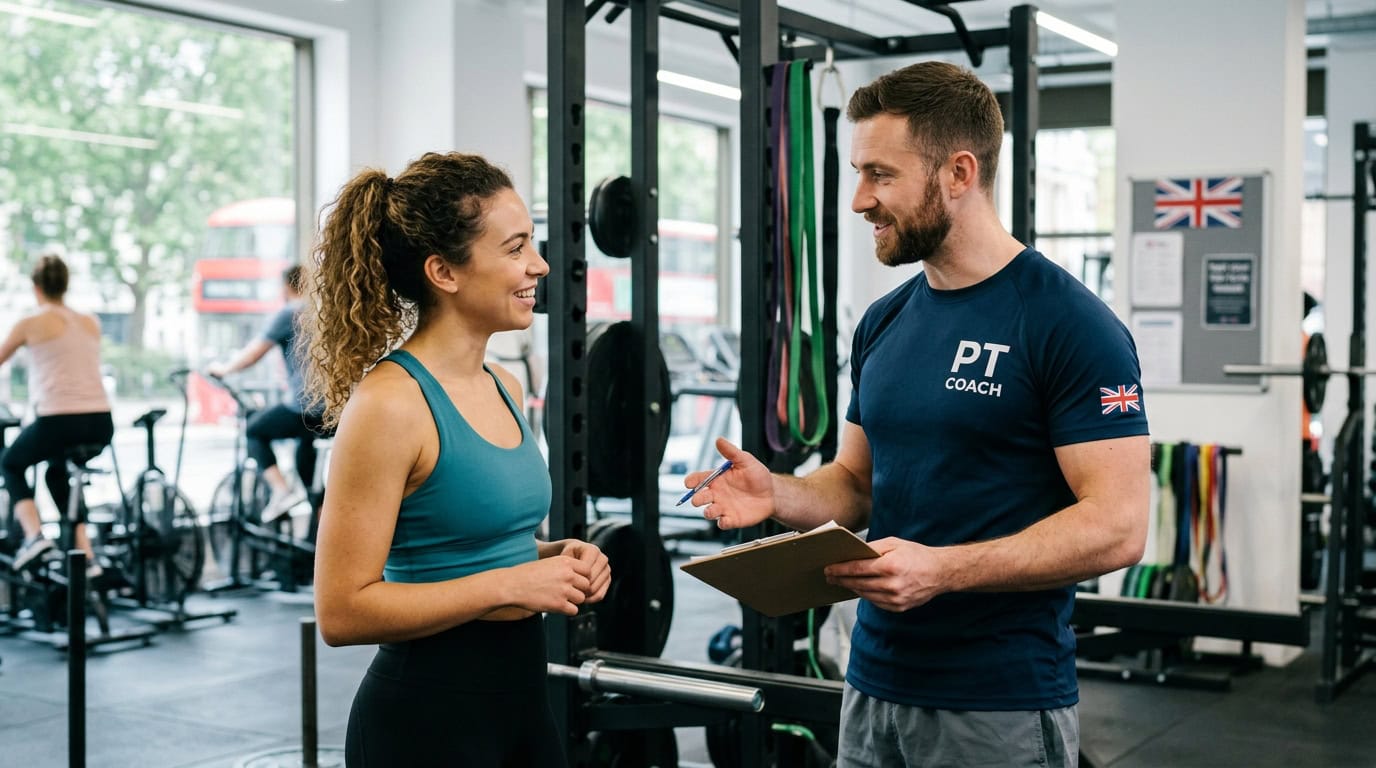
    Having someone who expects you at the gym is one of the most effective consistency tools available. This could be a training partner, a friend you text before each session, or even a personal trainer.

    If you are looking for a personal trainer who can keep you accountable, our guide to finding the right PT in the UK covers everything you need to know.

    What to Do When You Have Missed Multiple Weeks

    If life has genuinely derailed your routine for a few weeks, do not beat yourself up. It happens to everyone. Here is how to get back on track:

    1. Do not try to make up for lost time. Your first session back should be easy. A light full-body workout or a 20-minute walk on the treadmill. The goal is to rebuild the habit, not to punish yourself.
    2. Schedule your next session before you leave the gym. While you are still feeling good from the workout, book your next one in your calendar.
    3. Remove the guilt. A gap in training does not erase your previous progress. Your muscles have memory, your cardiovascular fitness will come back faster than it took to build originally, and you already know how to train.
    4. Review what went wrong. Were you doing too many sessions? Was the gym too far away? Were you bored? Fix the root cause before restarting.

    Finding the Right Gym Makes Consistency Easier

    The gym you choose has a massive impact on how often you go. If your gym is inconveniently located, overcrowded at the times you want to train, or lacks the equipment you enjoy using, you are fighting an uphill battle.

    GymPal helps you find gyms near you with real reviews, detailed facility information, and honest pricing. Whether you need a gym close to your office for lunchtime workouts or a 24-hour facility for early morning sessions, you can search and compare options in minutes.

    Visit askgympal.co.uk to find a gym that fits your lifestyle, not the other way around.

    The Bottom Line

    Consistency is not about being perfect. It is about showing up often enough that skipping a session feels unusual rather than normal. Set a realistic minimum, protect your training time, reduce friction, and forgive yourself when life gets in the way. The gym will always be there when you are ready to come back.

  • How to Find the Right Personal Trainer in the UK: A Complete Guide

    How to Find the Right Personal Trainer in the UK: A Complete Guide

    A Good PT Is Worth Every Penny

    If you are training consistently but feel like your progress has stalled, you are confused about programming, or you have a specific goal that requires expert guidance, a personal trainer could be the catalyst that transforms your results. that requires structured programming

  • You struggle with consistency and need accountability
  • You are returning from an injury and need safe, progressive programming

You probably do not need a PT if:

  • You are happy with your current progress and enjoy self-directed training
  • You already have solid technique and a well-structured programme
  • Your goal is general fitness maintenance rather than specific targets

Qualifications: What to Look For

A qualified PT in the UK should hold at minimum:

  • Level 3 Certificate in Personal Training — this is the baseline qualification. It is issued by awarding bodies like YMCA Awards, Active IQ, Focus Awards, and Train Fitness.
  • Public liability insurance — essential. Ask to see their certificate.
  • First aid certificate — a current, valid first aid qualification.

Additional qualifications that indicate specialisation:

  • Level 4 Certificate in Personal Training (advanced programming)
  • Strength and Conditioning Coach (CIMSPA accredited)
  • Sports Nutrition qualification
  • Corrective Exercise Specialist (for injury rehabilitation)
  • Olympic Lifting Coach
  • Pre and Post-Natal Exercise qualification

Ask about qualifications before signing up. A reputable PT will be happy to show you their certificates.

Where to Find Personal Trainers

At Your Gym

The easiest option. Most gyms have in-house PTs or allow external trainers to operate within the facility. Ask at reception or check the gym’s website. Advantages include convenience, a known facility, and potentially discounted rates for members.

On GymPal

GymPal lists thousands of UK gyms, many of which feature PT profiles or contact details. You can search for gyms with personal training services in your area and enquire directly.

Online Directories

  • Yell: Search “personal trainer” + your area. Read reviews before contacting.
  • Reps (Register of Exercise Professionals): The official UK register. You can search for qualified PTs by location.
  • CIMSPA: The Chartered Institute for the sport and physical activity sector. You can search their member directory.

Social Media

Instagram and TikTok are where many UK PTs showcase their work. Search for personal trainers in your area and look for:

  • Client transformation posts (before/after photos with context)
  • Exercise demonstration videos showing good technique
  • Client testimonials and reviews
  • Educational content (not just motivational quotes)

Avoid PTs whose feed is entirely motivational stock images and “hustle culture” content. The best PTs educate and demonstrate their expertise.

Questions to Ask Before Hiring a PT

Before committing to a PT, have an initial conversation (many offer a free consultation). Ask these questions:

  1. What are your qualifications and how long have you been training?
  2. Do you specialise in any particular area? (weight loss, strength, sports performance, rehabilitation, etc.)
  3. How do you structure your programmes? (should be periodised and progressive, not random)
  4. How do you track progress? (should measure and adjust regularly)
  5. What happens if I need to cancel or reschedule? (flexibility is important)
  6. Can I see testimonials or speak to current or past clients?
  7. How do you handle injuries or limitations?

A good PT will answer these questions confidently and in detail. A poor PT will be vague or evasive.

Understanding PT Pricing in the UK

Session Type Typical Price
1-to-1 session (60 min) £30–75
1-to-1 session (45 min) £25–55
Small group (2-3 people) £15–25 per person
Online coaching (monthly) £80–200/month
Block of 5 sessions £140–335 (5-10% discount)
Block of 10 sessions £260–650 (10-15% discount)

London and the South East command the highest rates. Expect to pay £40–75 per hour in London and £25–50 in most other UK cities and towns.

What to Expect for Your Money

A good PT session should include:

  • A check-in on how you are feeling and any issues since last session
  • A structured warm-up specific to your programme
  • The main training component with coaching on technique
  • Progress tracking (measurements, weight, photos)
  • Homework or a plan for training days without the PT
  • Nutrition guidance if relevant to your goals

A bad PT will spend the session chatting, count your reps, and send you on your way without meaningful coaching or progression.

Red Flags to Watch For

  • No qualifications or unwilling to show them. This is non-negotiable. Walk away.
  • One-size-fits-all programmes. Every client should have a programme tailored to their goals, limitations, and progress.
  • Focusing exclusively on intensity, not technique. Hard sessions that leave you unable to walk the next day are a sign of poor programming.
  • Pressuring you to buy supplements or add-ons. Recommendations are fine; pressure tactics are not.
  • Being on their phone during sessions. Your PT should be focused on you.
  • Guaranteeing specific results. “You will lose 2 stone in 4 weeks” is unethical and unrealistic.
  • Dismissing your questions or concerns. A good PT listens and adapts.

Types of Personal Training

In-Person 1-to-1

The traditional model. You meet your PT at your gym for face-to-face sessions. Best for beginners who need hands-on coaching and technique correction.

Online Coaching

Your PT programmes your workouts, tracks your progress, and checks in via an app or video call, but you train on your own. Significantly cheaper (£80–200/month vs £120–180 for in-person). Best for experienced trainees who are confident with technique and want structured programming at a lower cost.

Small Group / Semi-Private

Train with 2-4 other people under one PT. Cost per person is lower while still getting coaching and programming. Best for friends with similar goals or budget-conscious trainees.

Specialist Coaching

PTs who focus on specific areas: weight loss, sports performance, powerlifting, bodybuilding, rehabilitation, pre/post-natal, or older adults. If you have a specific goal, a specialist is worth the investment.

Getting the Most from Your PT

  • Be honest about your lifestyle. Your PT can only programme effectively if they know your schedule, sleep, stress levels, and nutrition habits.
  • Follow the programme. If your PT gives you homework, do it. You are paying for their expertise — ignoring it wastes both your money and their time.
  • Communicate. Tell your PT if a weight feels too heavy, an exercise hurts, or you are struggling with motivation. They can adjust.
  • Commit to a minimum of 8-12 weeks. Meaningful results take time. One or two sessions will not transform your fitness.
  • Track your own progress. Take photos, log your workouts, and note how you feel. This gives you objective data to discuss with your PT.

The Bottom Line

A good personal trainer is one of the best investments you can make in your fitness journey. They provide expertise, accountability, and programming that is difficult to replicate on your own. The key is finding the right one — qualified, experienced, communicative, and genuinely invested in your results.

Start with your gym’s in-house PTs, check qualifications, ask the right questions, and commit to at least 8 weeks. If you do your research and choose wisely, a PT can be the difference between training hard and training smart.


Need to find a gym with quality personal trainers? Search GymPal to find UK gyms with PT services near you. Compare facilities, read member reviews, and claim a free trial to meet the team before committing.

  • How to Avoid Common Gym Injuries: A Prevention Guide for Beginners

    How to Avoid Common Gym Injuries: A Prevention Guide for Beginners

    Nothing Derails Progress Faster Than an Injury

    You have been training consistently for six weeks. The weights are going up, you are feeling good, and then — a sharp pain in your shoulder during a bench press. Two weeks later, you are still not back to full training. Worse, you have lost motivation and are questioning whether the gym is worth it.

    What it is: A muscle strain or ligament sprain in the lower back, caused by excessive loading with poor form.

    How it happens: Deadlifting, squatting, or rowing with a rounded lower back; using too much weight before mastering technique; sitting for long periods then immediately loading the spine.

    Prevention:

    • Learn and maintain a neutral spine position for every lift
    • Warm up your back with cat-cow stretches and bird-dog exercises before deadlifts or squats
    • Strengthen your core — planks, dead bugs, and hollow body holds support your spine under load
    • Start light and progress gradually — ego lifting is the number one cause of back injuries

    2. Shoulder Impingement

    What it is: Pain in the front or side of the shoulder when raising the arm, caused by inflammation of the rotator cuff tendons.

    How it happens: Overhead pressing with poor scapular positioning; bench pressing too frequently without balancing pulling movements; behind-the-neck lat pulldowns; inadequate warm-up.

    Prevention:

    • Pull as much as you push — for every pressing exercise, include a pulling exercise
    • Warm up shoulders with arm circles, band pull-aparts, and face pulls
    • Avoid behind-the-neck pulldowns — use front pulldowns instead
    • Do not bench press heavy every session — vary your exercises
    • Strengthen the rotator cuff with external rotations using a light band

    3. Knee Injuries (Patellar Tendinitis / Meniscus)

    What they are: Pain at the front of the knee (patellar tendinitis) or a sharp pain with twisting (meniscus tear).

    How they happen: Squatting with knees caving inward (valgus collapse); landing hard from box jumps; running on treadmills at high speeds with poor form; sudden changes in training volume.

    Prevention:

    • Learn proper squat mechanics — push your knees out over your toes, track them in line with your feet
    • Strengthen the VMO (vastus medialis oblique) with leg extensions, split squats, and lunges
    • Warm up knees with bodyweight squats and hip circles
    • Land softly and softly from jumps — never lock your knees on landing
    • Do not increase running speed or distance by more than 10% per week

    4. Rotator Cuff Tear

    What it is: A partial or full tear of one of the four muscles that stabilise the shoulder joint.

    How it happens: Sudden heavy loading on an unprepared shoulder; chronic impingement that weakens the tendon until it tears; bench pressing or overhead pressing with excessive range of motion.

    Prevention:

    • Strengthen the rotator cuff with light band work (external and internal rotations)
    • Progress pressing movements slowly — do not jump to heavy weights
    • Warm up shoulders thoroughly before any overhead or pressing work
    • If you feel shoulder pain during pressing, stop immediately and assess

    5. Neck Strain

    What it is: A muscle strain in the cervical spine, causing pain, stiffness, and limited range of motion.

    How it happens: Straining the neck during heavy lifts (squats, overhead press) by craning to look at the mirror or at the weight; poor bench press setup with excessive neck arch; poor posture during seated exercises.

    Prevention:

    • Keep a neutral neck position during all exercises — your head should be in line with your spine
    • Do not look up or around during heavy lifts — focus your eyes straight ahead
    • Strengthen your neck with isometric holds (push your head into your hand in each direction and hold)
    • Set up bench press properly with shoulder blades retracted and feet on the floor

    6. Muscle Strains (Hamstrings, Groin, Calf)

    What they are: Tears in the muscle fibres, typically caused by sudden stretching under load.

    How they happen: Sprinting without warming up; deadlifting with rounded back (hamstring); deep lunges or squats with insufficient mobility (groin); jumping without warm-up (calf/Achilles).

    Prevention:

    • Dynamic stretching before any explosive or high-speed work
    • Progressive loading — do not suddenly attempt a weight significantly heavier than your usual
    • Build mobility gradually — do not force your body into positions it is not ready for
    • Strengthen muscles eccentrically (slow lowering phase) to build resilience

    7. Wrist Strain

    What it is: Pain and inflammation in the wrist, common in pressing movements and exercises like cleans and snatches.

    How it happens: Excessive wrist extension under load (bench press, overhead press); heavy barbell movements without wrist wraps; poor grip technique.

    Prevention:

    • Keep your wrists neutral (straight, not bent backwards) during pressing movements
    • Use wrist wraps for heavy pressing or overhead work
    • Strengthen your forearms with wrist curls and reverse wrist curls
    • Take breaks from heavy pressing if you feel wrist discomfort

    Universal Injury Prevention Rules

    Beyond specific exercises, these principles apply to every gym session:

    1. Warm Up Properly (5-10 Minutes)

    Never skip this. A proper warm-up increases blood flow, raises tissue temperature, and prepares your joints for the work ahead. Use the dynamic stretching routine from our stretching guide before every session.

    2. Master Form Before Adding Weight

    Ego is the enemy of longevity. If you cannot perform an exercise with good form using just the bar or light dumbbells, you have no business adding weight. Film yourself from the side to check your form.

    3. Progress Gradually

    The general rule: increase weight by no more than 2.5-5% per week. Increase volume (sets/reps) by no more than 10% per week. Sudden jumps in training load are the number one predictor of injury.

    4. Balance Your Training

    • Push and pull in equal volume
    • Train upper and lower body
    • Include horizontal and vertical pulling movements
    • Include core work in every programme

    Imbalances create weak points that are more susceptible to injury.

    5. Listen to Your Body

    There is a difference between productive discomfort (muscle burn, fatigue) and pain (sharp, shooting, joint-related). If something feels wrong, stop. Pushing through joint pain is how small injuries become big ones.

    6. Get Enough Rest and Recovery

    Muscles do not grow during training — they grow during rest. If you are training the same muscle group hard every day, you are accumulating damage without allowing repair. Allow 48-72 hours between sessions for the same muscle group.

    7. Deload Regularly

    Every 4-8 weeks, take a deload week: reduce your volume and/or intensity by 40-50%. This allows your body to fully recover and adapt, reducing your long-term injury risk while actually improving performance.

    What to Do If You Get Injured

    1. Stop the exercise immediately. Do not push through sharp or joint pain.
    2. Assess the severity. If it is mild discomfort, modify the exercise. If it is sharp or shooting pain, stop training that area entirely.
    3. Apply RICE for the first 48 hours: Rest, Ice, Compression, Elevation. This reduces inflammation and promotes healing.
    4. See a professional if: Pain persists beyond a week, you heard a pop during the injury, or you cannot move the joint through its normal range.
    5. Do not rush back. Returning to training before an injury has fully healed is the most common cause of recurring injuries.

    Choosing a Gym That Supports Injury Prevention

    The right gym environment helps you train safely:

    • Well-maintained equipment that functions correctly
    • Floor coaches who can check your form
    • Space to move without colliding with other members
    • Warm-up and stretching areas
    • Recovery facilities (sauna, ice bath)

    When you are choosing a gym, these factors matter more than the number of machines or the price. GymPal helps you find UK gyms with the facilities and atmosphere that support safe, long-term training.

    The Bottom Line

    Gym injuries are frustrating, painful, and demotivating — but they are almost entirely preventable. The vast majority of injuries come down to three things: poor form, too much weight too soon, and inadequate recovery.

    Warm up properly, master your technique before loading up, progress gradually, balance your training, and rest when your body tells you to. Do these things consistently and you will train injury-free for years.


    Ready to start training safely? Search GymPal to find UK gyms with well-maintained equipment, floor coaches, warm-up areas, and recovery facilities. Train smart, train safe, and train long.

  • The 5 Best Supplements for Beginners (And Which Ones You Actually Need)

    The 5 Best Supplements for Beginners (And Which Ones You Actually Need)

    Most Beginners Spend Too Much on Supplements

    Walk into any supplement shop or browse online, and you will be hit with an overwhelming wall of products promising bigger muscles, faster recovery, and better performance. Pre-workouts, BCAAs, fat burners, testosterone boosters, greens powders — the list is endless, and the marketing is aggressive.

    The truth is that most supplements make a marginal difference at best, and many are completely unnecessary — especially for beginners who have not yet dialled in their training and nutrition. The supplement industry in the UK is worth over £800 million per year, and a significant portion of that is spent on products that provide little to no benefit., sufficient calories, and a balanced diet?

  • Sleep: Are you getting 7-9 hours per night?
  • Supplements sit at the top of this pyramid. They enhance results — they do not create them. If your foundation is weak, supplements will not save you.

    1. Whey Protein: The Essential Staple

    What It Is

    A powdered form of protein derived from milk during the cheese-making process. One scoop typically provides 20-25g of protein.

    Why It Works

    Whey protein is not magic — it is simply a convenient way to hit your daily protein target. It digests quickly (making it ideal post-workout), is affordable, and tastes good. The muscle-building benefits come from the protein itself, not from whey being inherently superior to food sources. A chicken breast provides the same amino acids.

    Do You Need It?

    No, not strictly. You can get all the protein you need from food. But at £25-35 for 2.5kg (roughly 80-90 servings), whey is one of the cheapest protein sources per gram in the UK. It is a convenience purchase, not a necessity.

    How to Use It

    Where to Buy

    MyProtein, Bulk, The Protein Works, and GN all offer good quality whey at competitive UK prices. Wait for discount codes — they run 30-50% off sales regularly.

    2. Creatine Monohydrate: The Most Researched Supplement

    What It Is

    A naturally occurring compound found in small amounts in red meat and fish. As a supplement, it is typically sold as a flavourless powder.

    Why It Works

    Creatine monohydrate is the most extensively researched sports supplement in history, with over 500 peer-reviewed studies. It works by increasing your muscles’ phosphocreatine stores, which improves performance in short, high-intensity activities (weight training, sprinting). The benefits include:

    Do You Need It?

    It is the one supplement that is genuinely worth considering for anyone training consistently. The evidence is overwhelming, the cost is negligible, and the side effect profile is excellent.

    How to Use It

    Where to Buy

    Approximately £8-15 for 250g (50-80 servings). MyProtein, Bulk, and The Protein Works all sell it. Look for “creatine monohydrate” specifically — avoid expensive “creatine blends” that add unnecessary ingredients.

    3. Vitamin D: The UK Deficiency Problem

    What It Is

    A fat-soluble vitamin that your body produces when exposed to sunlight. It plays a critical role in bone health, immune function, and muscle function.

    Why It Matters for Gym-Goers

    The UK has a significant vitamin D problem. Public Health England estimates that roughly 1 in 5 people in the UK have low vitamin D levels during winter months (October to March), and the NHS recommends that everyone consider taking a 10 microgram (400 IU) supplement during winter.

    For gym-goers specifically, vitamin D deficiency has been linked to:

    Do You Need It?

    Yes, particularly during autumn and winter in the UK. It is cheap, safe, and addresses a genuine widespread deficiency.

    How to Use It

    Where to Buy

    £5-10 for a 3-6 month supply. Available from Boots, Superdrug, Holland and Barrett, MyProtein, and most pharmacies. The NHS recommends Vitamin D3 specifically.

    4. Caffeine: The Proven Performance Enhancer

    What It Is

    The world’s most widely consumed psychoactive substance, found naturally in coffee, tea, and chocolate.

    Why It Works

    Caffeine is one of the few supplements with consistent, dose-responsive performance benefits:

    The optimal dose for performance is 3-6mg per kg of bodyweight, taken 30-60 minutes before training. For a 70kg person, that is 210-420mg — roughly 2-3 cups of strong coffee.

    Do You Need It?

    Probably not as a supplement. If you already drink coffee, you are getting caffeine. If you do not, a cup of coffee before training is cheaper and equally effective as a pre-workout powder. Pre-workout supplements often contain caffeine alongside proprietary blends with unproven ingredients and a premium price tag.

    How to Use It

    Where to Buy

    Coffee. Genuinely. A £10 bag of ground coffee from a supermarket will provide months of pre-workout caffeine. If you prefer the convenience of pre-workout powder, MyProtein and Bulk sell basic caffeine-only options for £10-15.

    5. Omega-3 Fish Oil: For Recovery and Joint Health

    What It Is

    Essential fatty acids found in oily fish (salmon, mackerel, sardines). Supplements typically provide EPA and DHA, the two most beneficial omega-3 fatty acids.

    Why It Works

    Omega-3 supplementation has well-documented benefits for active people:

    The NHS recommends eating at least two portions of oily fish per week. Most people in the UK do not meet this target, making supplementation a practical alternative.

    Do You Need It?

    It is worth considering if you do not regularly eat oily fish. The anti-inflammatory benefits are particularly useful for people training intensely 3+ times per week.

    How to Use It

    Where to Buy

    £10-20 for a 2-3 month supply. Look for high-strength fish oil capsules with at least 500mg combined EPA/DHA per capsule. Brands like Nordic Naturals, Boots, and MyProtein offer reliable options.

    Supplements That Are NOT Worth It for Beginners

    Save your money on these until you have been training consistently for at least a year:

    Monthly Supplement Budget for Beginners

    Supplement Monthly Cost Priority
    Creatine monohydrate (5g/day) £2–3 High
    Vitamin D3 (10mcg/day) £2–3 High
    Whey protein (1 scoop/day) £10–15 Medium
    Omega-3 fish oil £5–10 Medium
    Caffeine (coffee) £2–5 Low (if you already drink it)
    Total £21–36/month

    That is under £1.50 per day for supplements that are backed by strong scientific evidence. Compare that to the £80-150 per month some beginners spend on unnecessary products from supplement shops.

    The Bottom Line

    Supplements are the cherry on top — not the cake. Focus on training hard, eating well, and sleeping enough before spending heavily on supplements. When you are ready to add them, stick to the evidence-based five: creatine, protein, vitamin D, caffeine, and omega-3. Everything else can wait until you have a solid foundation of consistent training and nutrition.

    And remember: no supplement will work if you are not training consistently. If you are still looking for the right gym to build that consistency, GymPal can help you find UK gyms near you. Compare facilities, read reviews, and claim a free trial. The best supplement is showing up.


    Looking for a gym that supports your training goals? Search GymPal to compare UK gyms by location, facilities, and membership options. Your training, nutrition, and supplements all work better when you have the right gym to call home.

  • The Best Gym Bags for UK Commuters: What to Look For and Top Picks

    The Best Gym Bags for UK Commuters: What to Look For and Top Picks

    A Good Gym Bag Makes or Breaks Your Routine

    If you commute to work and train before or after, your gym bag is not just a bag — it is your mobile locker room. It needs to carry your workout gear, keep your work clothes separate and fresh, survive the British weather, and ideally not look out of place on the Tube or in the office.

  • A separate wet/dry compartment for used towels or sweaty clothes
  • Internal dividers that prevent everything from mixing together
  • Size and Capacity

    The right size depends on your routine:

    Capacity Best For
    20-30 litres Minimalists — shoes, shorts, t-shirt, towel, water bottle
    30-40 litres Most people — full change of clothes, shoes, toiletries, towel, shaker
    40-50 litres Commuters — gym kit plus work clothes, laptop, lunch
    50+ litres Heavy trainers, swimmers, or anyone who carries a lot

    Comfort and Carry Options

    You will be carrying this bag on your commute and to the gym. Check for:

    Material and Durability

    Organisation

    Top Picks for Different Needs

    Best Overall: Nike Brasilia (Medium)

    Feature Detail
    Capacity 30L (medium) / 41L (large)
    Price £25–35
    Ventilated compartment Yes — separate shoe compartment
    Water resistant Yes
    Best for Most gym-goers who want a reliable, no-fuss bag

    The Nike Brasilia is the default recommendation for a reason. It is affordable, well-made, has a ventilated shoe compartment, and comes in dozens of colourways. The medium size is perfect for most people. Available from Nike, JD Sports, Sports Direct, and most UK sports retailers.

    Best for Commuters: Baggu Medium Crescent

    Feature Detail
    Capacity 30L
    Price £65–75
    Ventilated compartment No (but internal organisation is excellent)
    Water resistant Yes
    Best for People who want a bag that works for the gym and the office

    If you want a bag that does not scream “gym,” the Baggu Crescent is a stylish alternative that works just as well in a meeting room as in a changing room. It has plenty of internal organisation, a laptop sleeve, and a comfortable crossbody strap. Available direct from Baggu or via UK stockists.

    Best Backpack Style: Under Armour Hustle 5.0

    Feature Detail
    Capacity 33L
    Price £55–65
    Ventilated compartment Yes — dry/ wet separation
    Water resistant Yes (UA Storm technology)
    Best for Cyclists, walkers, and anyone who prefers backpack carry

    The Hustle 5.0 is the gold standard for gym backpacks. It has a large ventilated shoe compartment, padded laptop sleeve, water-resistant materials, and comfortable padded straps. It looks professional enough for the commute and sporty enough for the gym. Available from Under Armour, JD Sports, and Sports Direct. See also: How to Open and Run a Gym in Stoke-on-Trent or Wolverhampton. See also: UK Bootcamp Fitness Classes: Your Complete Guide. See also: How to Increase Gym Revenue Without Adding Members — Upselli.

    Best Budget Option: Karrimor X-Lite 25L

    Feature Detail
    Capacity 25L
    Price £15–25
    Ventilated compartment No (single main compartment)
    Water resistant Yes
    Best for Minimalists on a budget who just need the basics

    Available from Sports Direct and Decathlon, the Karrimor X-Lite is ultra-lightweight, water-resistant, and costs under £25. It does not have a shoe compartment, but at this price point, it is hard to argue. Perfect for people who travel light to the gym.

    Best for Swimmers: Speedo Teamster 35L

    Feature Detail
    Capacity 35L
    Price £40–50
    Ventilated compartment Yes — waterproof pool compartment
    Water resistant Yes
    Best for Swimmers who need a dedicated wet kit compartment

    Swimmers have unique bag needs. The Speedo Teamster has a waterproof pool compartment designed specifically for wet swimwear and towels, plus a ventilated shoe pocket and plenty of space for goggles, cap, and shampoo. Available from Speedo, Amazon UK, and specialist swimming retailers.

    Best Premium: Lululemon Cruise Bag

    Feature Detail
    Capacity 28L
    Price £120–140
    Ventilated compartment Yes — separate shoe compartment
    Water resistant Yes
    Best for People who want premium quality and design

    If budget is not a concern, the Lululemon Cruise Bag is beautifully designed, incredibly well-made, and thoughtfully organised. It has a separate shoe compartment, internal organisation pockets, a water bottle sleeve, and premium materials that will last for years. Available from Lululemon stores and their website.

    What to Pack in Your Gym Bag

    The right bag is only half the equation. Here is a checklist of essentials:

    Training Essentials

    Post-Workout

    Optional Extras

    Maintaining Your Gym Bag

    A gym bag that smells will make your whole routine unpleasant. Follow these habits:

    The Bottom Line

    A good gym bag is a small investment that pays dividends in convenience and consistency. You do not need to spend a fortune — the Nike Brasilia at £25 will serve most people perfectly. But if you commute, cycle, swim, or simply want something that looks as good as it functions, the options above cover every need and budget.

    The best gym bag is the one that makes going to the gym easier. If you have to think too hard about packing, carrying, or organising your bag, it is the wrong one. Find one that works for your routine, pack it the night before, and remove every excuse for skipping your next session.


    Packing your bag is the easy part — finding the right gym is the next step. Search GymPal to compare UK gyms by location, facilities, and price. Read member reviews, check opening hours, and claim a free trial. Your perfect gym is out there — let us help you find it.

  • How to Overcome Gym Anxiety: A Practical Guide for Beginners

    How to Overcome Gym Anxiety: A Practical Guide for Beginners

    Gym Anxiety Is Completely Normal

    You are not alone. Studies suggest that up to 50% of people experience some form of gym anxiety, and for many, it is the single biggest barrier to starting an exercise routine. The feeling has a name — gymtimidation — and it is more common than you might think.

  • Knowing where everything is and how it works removes a major source of anxiety.

    3. Have a Plan Before You Arrive

    Walking into a gym without a plan is a recipe for anxiety. You end up wandering around, feeling lost, and eventually leaving early. Write your workout down before you go — even if it is just three exercises. When you know exactly what you are doing, you can walk in with purpose and get straight to work.

    Need a starting programme? Our beginner workout programme guide includes two complete workouts you can take straight to the gym floor.

    4. Wear What Makes You Comfortable

    There is no dress code for the gym. Wear whatever makes you feel comfortable and confident. If that means a baggy t-shirt and tracksuit bottoms, wear that. If you prefer shorts and a vest, go for it. No one is judging your outfit — they are too busy worrying about their own.

    5. Use Headphones

    A simple pair of headphones is one of the most effective anxiety-reduction tools available. Music or a podcast creates a personal bubble that reduces self-consciousness and makes you feel less exposed. It also signals to others that you are focused on your workout, which reduces unwanted interaction.

    6. Start With Machines, Not Free Weights

    Resistance machines have clear instructions, fixed movement paths, and adjustable seats. They are designed to be beginner-friendly and are much less intimidating than the free weight area. Start here for your first few sessions. As your confidence grows, you can gradually introduce free weights.

    7. Focus on Your Own Workout

    This is easier said than done, but it gets easier with practice. Before each session, remind yourself: everyone here is focused on their own goals. No one is analysing your form, counting your reps, or judging your body. The occasional glance is normal — it is not judgement. People look around gyms. It means nothing.

    8. Bring a Friend

    If possible, go with someone who already goes to the gym. A friend provides emotional support, practical guidance, and a distraction from anxious thoughts. If you do not have a gym-going friend, many gyms run buddy-matching programmes or group classes where you can meet people in a structured, low-pressure environment.

    9. Consider Group Classes

    Classes are surprisingly effective for reducing anxiety. In a class, everyone is following the same instructions, which means you are not standing out by doing your own thing. The instructor provides structure and guidance, and the group setting creates a sense of shared purpose. Start with beginner-friendly classes like body conditioning, yoga, or a gentle circuit.

    10. Celebrate Small Wins

    Overcoming gym anxiety is not a one-time event — it is a process. Celebrate the small victories: walking through the door, completing your first workout, trying a new machine, going during a busier time. Each one is progress, and each one deserves recognition.

    What to Do When Anxiety Hits Mid-Workout

    Sometimes anxiety shows up even when you have prepared. Here is what to do when it happens:

    Choosing the Right Gym for Anxiety

    The gym you choose makes a big difference. Some environments are more anxiety-friendly than others:

    When you are researching gyms, look for these qualities. GymPal lets you filter UK gyms by type, read member reviews that often mention atmosphere and friendliness, and compare options before you visit. Finding the right gym environment can make overcoming anxiety significantly easier.

    How Long Does It Take to Feel Comfortable?

    Most people report that gym anxiety reduces significantly after 3-5 consistent visits. By week three or four, the gym starts to feel familiar rather than intimidating. By month two, many people wonder what they were worried about.

    The key is consistency. Going once every two weeks keeps the gym feeling new and unfamiliar. Going three times a week accelerates the adaptation process dramatically.

    The Bottom Line

    Gym anxiety is real, common, and completely manageable. It is not a sign of weakness or a reason to avoid exercise. It is simply your brain responding to a new, unfamiliar environment — and like any new environment, it becomes familiar with exposure and practice.

    You do not need to feel confident before you go to the gym. You just need to go. Confidence builds from the inside out, one session at a time. Start small, be kind to yourself, and remember: every single person in that gym was a beginner once.


    Ready to take the first step? Search GymPal to find a welcoming gym near you. Filter by type, read member reviews about atmosphere and friendliness, and claim a free trial to visit without commitment. Your future self will thank you.

  • Climbing and Bouldering Gyms in the UK: A Complete Beginner Guide

    Climbing and Bouldering Gyms in the UK: A Complete Beginner Guide


    <a href="https://askgympal.co.uk/blog/climbing-bouldering-gyms-uk-complete-beginners-guide/" target="_blank" rel="dofollow" >Climbing</a> and Bouldering Gyms in the UK: A Complete Beginner Guide

    The UK Climbing Boom

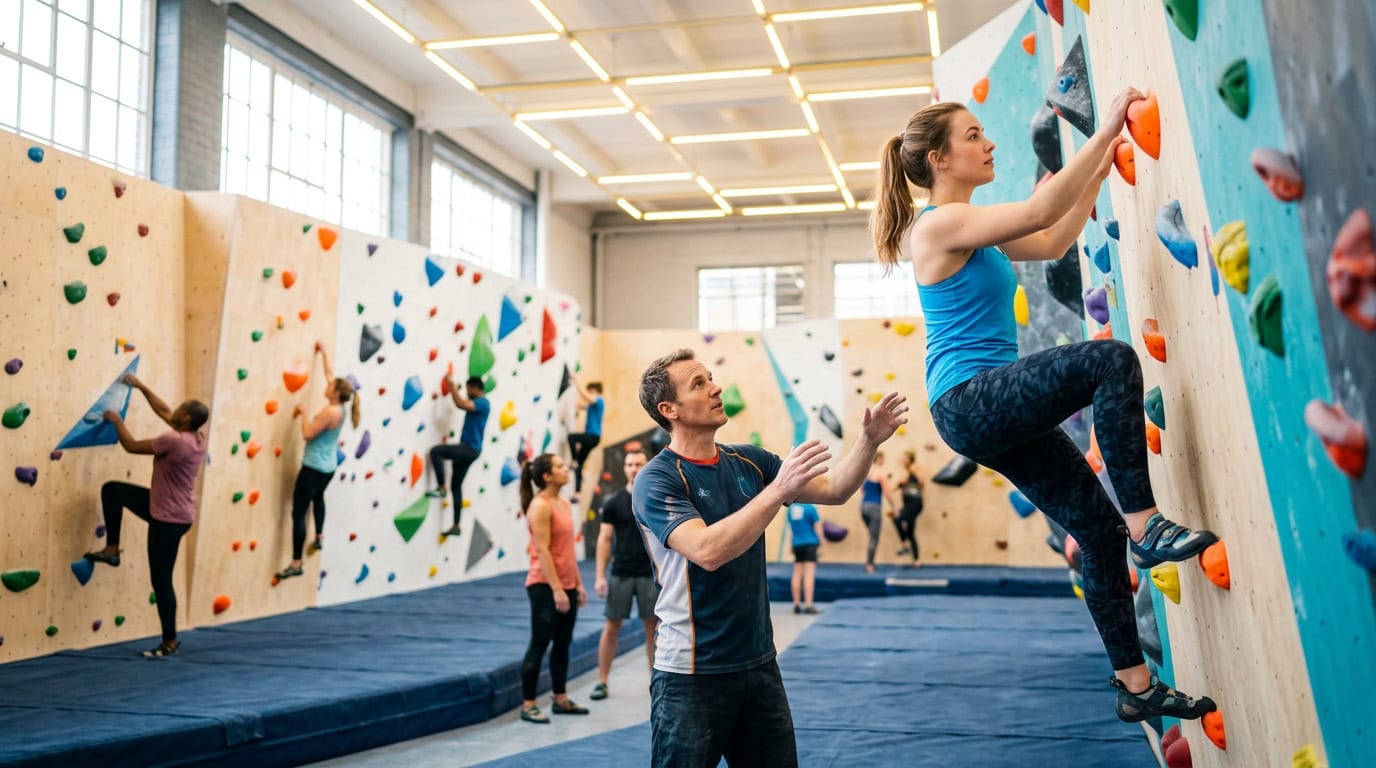
    Climbing and bouldering have exploded in popularity across the UK over the past decade. What was once seen as a niche outdoor pursuit is now one of the fastest-growing fitness activities, with over 300 climbing walls and bouldering centres across the country. The inclusion of sport climbing in the Tokyo 2020 Olympics gave the sport a massive visibility boost, and participation has been climbing ever since. According to Sport England Active Lives survey

    There are good reasons for the surge. Climbing and bouldering offer a unique combination of physical challenge, mental problem-solving, and community spirit that is hard to find in traditional gyms. They build full-body strength, grip, flexibility, and mental resilience — and most people find them genuinely enjoyable in a way that treadmill running simply is not.

    If you are curious but have never tried it, this guide covers everything you need to know before your first session.

    Climbing vs Bouldering: What Is the Difference?

    These terms are often used interchangeably, but they refer to different activities. Understanding the distinction helps you choose the right gym and the right experience:

    Feature Bouldering Rope Climbing
    Height Up to 4–5 metres (walls are low) 10–15+ metres (walls are tall)
    Safety Thick crash mats below; no ropes or harnesses needed Ropes and harnesses required; belayer needed
    Equipment needed Just climbing shoes and chalk (usually available to hire) Shoes, chalk, harness, and belay device
    Training required None for bouldering walls (watch the safety video on arrival) Must complete a belay training course (usually 1–2 hours)
    Cost Lower (less equipment, no instruction required) Higher (training course, equipment hire, or partner required)
    Social Very social — people chat between attempts and share beta More focused on the belay partnership
    Physical intensity Short, powerful bursts of effort Sustained effort over longer routes
    Best for beginners Yes — the easiest entry point Yes, but requires a training course first

    Most UK climbing centres offer both bouldering and rope climbing under one roof. If you are completely new, start with bouldering. It is cheaper, requires less equipment and training, and gives you an immediate sense of what climbing feels like.

    What to Expect on Your First Visit

    Arrival and Registration

    When you arrive at a climbing centre, you will need to register. For bouldering, this typically involves:

    1. Signing a waiver (standard at all climbing centres)
    2. Watching a short safety video (covers falling technique, mat awareness, and wall rules)
    3. Hiring shoes and chalk if you do not have your own

    The whole process takes about 10–15 minutes. Staff at UK climbing centres are generally very welcoming to beginners — do not be afraid to ask questions.

    The Grading System

    Climbing routes (called “problems” in bouldering) are colour-coded and graded by difficulty. In the UK, bouldering grades typically use the V-scale or the Font scale:

    Grade Level What to Expect
    V0 / Font 3 Beginner Simple moves, big holds, straightforward
    V1–V2 / Font 4–5 Easy Slightly harder, requires basic technique
    V3–V4 / Font 6A–6B Intermediate Requires technique, strength, and problem-solving
    V5–V7 / Font 6C–7A Advanced Significant strength, flexibility, and skill required
    V8+ / Font 7B+ Expert Elite-level climbing

    On your first visit, look for the easiest colour on the wall and start there. There is no shame in starting at the bottom — every climber did.

    How a Bouldering Session Works

    A typical bouldering session looks like this:

    1. Warm up: 10 minutes of light cardio, dynamic stretching, and easy traversing (climbing sideways along the bottom of the wall)
    2. Choose a problem: Pick a colour that looks manageable and study the holds from the ground
    3. Climb: Start from the marked start holds, follow the colour to the top hold, and climb back down (never jump off)
    4. Rest: Bouldering is intense. Rest 2–3 minutes between attempts
    5. Repeat: Try the same problem a few times, then move to a different one
    6. Cool down: Light stretching and forearm exercises

    A typical session lasts 60–90 minutes. Your forearms will tell you when you are done.

    How Much Does Climbing Cost in the UK?

    Item Typical Cost
    Bouldering entry (day pass) £8–15
    Rope climbing entry (day pass) £10–18
    Shoe hire £2–4
    Chalk bag hire £1–2
    Belay training course £30–50 (one-off, 1–2 hours)
    Monthly membership (unlimited) £50–90
    Off-peak membership £35–60

    Day passes make climbing easy to try without commitment. Many centres offer introductory packages (entry + shoe hire + chalk) for around £10–15. Monthly memberships are competitive with traditional gym prices, and most include both bouldering and rope climbing.

    The Physical Benefits of Climbing

    Climbing is one of the most comprehensive full-body workouts available. Here is what it trains:

    • Grip strength: Your forearms, fingers, and hands get an incredible workout
    • Upper body: Back, shoulders, biceps, and chest all engage on every climb
    • Core: Keeping your body close to the wall requires constant core activation
    • Legs: Surprisingly, your legs do most of the pushing. Climbing is not all upper body
    • Flexibility: Reaching for holds in awkward positions improves hip and shoulder mobility
    • Balance and coordination: Every move requires body awareness and precise weight shifting

    Because climbing is inherently varied (every problem is different), it avoids the repetitive strain patterns of traditional weight training. It also builds functional strength that translates to real-world movement.

    The Mental Benefits

    Climbing is often described as physical chess. Each problem requires you to:

    • Read the sequence of moves from the ground
    • Plan your body position and weight distribution
    • Adapt when your plan does not work
    • Overcome the fear of falling (in a controlled, safe environment)
    • Persist through repeated failure until you succeed

    This combination of physical exertion and mental problem-solving makes climbing uniquely absorbing. It is very difficult to think about work stress when you are three metres up a wall trying to figure out where to put your left foot. Many climbers describe the experience as meditative.

    Finding a Climbing Gym Near You

    The UK has climbing walls in most cities and many larger towns. Some of the best-known chains include:

    Chain Locations Known For
    The Climbing Hangar Liverpool, London, Birmingham, Harrogate Bouldering-focused, strong community
    Boulder Shack Exeter, Plymouth Bouldering specialist
    Clip n Climb Nationwide (franchise) Family-friendly, auto-belay, beginner-focused
    The Depot Leeds, Sheffield, Birmingham Large facilities, bouldering and rope climbing
    Rocking Frog Manchester, Nottingham Bouldering, training boards, youth programmes
    Creation Climbing London (multiple) Bouldering-focused, modern walls
    Awesome Walls Liverpool, Sheffield, Stockport Huge facilities, both bouldering and rope

    Beyond the chains, many independent walls offer excellent experiences. To find climbing gyms near you — including independent operators and specialist centres — GymPal lists thousands of UK gyms with filtering by facilities, location, and member reviews.

    What to Bring to Your First Session

    • Climbing shoes (or hire them at the centre — £2–4)
    • Chalk bag (or hire one — £1–2)
    • Comfortable clothes — leggings or shorts and a t-shirt work well. Avoid anything too loose or restrictive.
    • Water bottle — climbing is deceptively thirsty work
    • A friend (optional but recommended) — climbing is more fun with company, and you can spot each other

    Common Beginner Mistakes

    • Using too much arm strength. Your legs should do most of the work. Push with your feet, pull with your arms.
    • Not warming up. Climbing places intense stress on finger tendons. Always warm up thoroughly.
    • Climbing to exhaustion every session. Tendon injuries from overtraining are the most common climbing injury. Stop before your forearms give out completely.
    • Skipping easier problems. Even experienced climbers warm up on easy problems. Build up gradually.
    • Jumping off the wall. Always climb down. Jumping from height onto crash mats is the most common source of ankle injuries in bouldering.
    • Being intimidated. Every climber was a beginner once. The climbing community is famously welcoming.

    Should You Combine Climbing with Gym Training?

    Many climbers find that supplementing their climbing with gym training improves their performance. Key exercises include:

    • Pull-ups and rows — build back and bicep strength for pulling on holds
    • Deadlifts and squats — build leg and posterior chain strength for powerful moves
    • Planks and hollow body holds — core strength for body tension on the wall
    • Forearm exercises — wrist curls, dead hangs, and fingerboarding (advanced only)

    If you are looking for a gym that complements your climbing training, GymPal can help you find UK gyms with the right equipment and training atmosphere.

    The Bottom Line

    Climbing and bouldering offer something rare in fitness: an activity that is physically demanding, mentally engaging, and genuinely fun. The barrier to entry is low (a day pass and shoe hire is all you need), the community is welcoming, and the benefits extend far beyond physical fitness.

    If you have been curious about climbing, there has never been a better time to try. Find a local wall, book a day pass, and give it a go. You might just find your new favourite way to stay fit.


    Looking for a climbing gym near you? Search GymPal to find UK bouldering walls and climbing centres in your area. Filter by facilities, read member reviews, and compare day pass and membership prices.


  • How to Build Your First Gym Workout Programme (A Complete Beginner Template)

    How to Build Your First Gym Workout Programme (A Complete Beginner Template)


    How to Build Your First Gym Workout Programme
    Compound + isolation, moderate rest 8–12 reps General fitness Mix of strength and cardio 8–15 reps Weight loss Full-body circuits, cardio emphasis 10–15 reps + cardio

    For most beginners, “general fitness” or “build muscle” is the best starting point. You can specialise later once you have a foundation.

    The Beginner Full-Body Programme

    A full-body routine performed three times per week is the optimal starting point. It trains every major muscle group multiple times per week, builds a solid movement foundation, and fits most schedules. Here is a complete template:

    Warm-Up (5–10 Minutes)

    Never skip this. A proper warm-up reduces injury risk and improves performance.

    • 5 minutes light cardio (treadmill walk, rowing machine, or stationary bike)
    • Dynamic stretches: arm circles, leg swings, hip rotations, bodyweight squats
    • 2 light sets of your first exercise (e.g. goblet squat with just the bar or light weight)

    Workout A

    Exercise Sets Reps Rest
    Goblet Squat 3 8–12 90 seconds
    Dumbbell Bench Press (flat) 3 8–12 90 seconds
    Lat Pulldown 3 8–12 90 seconds
    Dumbbell Walking Lunges 3 (each leg) 8–10 60 seconds
    Dumbbell Shoulder Press (seated) 3 8–12 90 seconds
    Plank 3 30–45 seconds 60 seconds

    Workout B

    Exercise Sets Reps Rest
    Leg Press 3 10–12 90 seconds
    Dumbbell Row (single arm) 3 (each arm) 8–12 90 seconds
    Chest Press Machine 3 8–12 90 seconds
    Leg Curls 3 10–12 60 seconds
    Cable Face Pulls 3 12–15 60 seconds
    Dead Bug 3 (each side) 8–10 60 seconds

    Weekly Schedule

    Day Workout
    Monday Workout A
    Tuesday Rest
    Wednesday Workout B
    Thursday Rest
    Friday Workout A
    Saturday / Sunday Rest or light activity (walk, swim, yoga)

    Alternate A and B each session. In week two, your Friday session becomes Workout B. In week three, Monday is Workout A again. This creates a natural rotation that ensures balanced training.

    Understanding the Key Exercises

    Every exercise in this programme was chosen for a reason. Here is what each one does and why it matters:

    Goblet Squat

    The best squat variation for beginners. Holding a dumbbell at chest height teaches proper squat mechanics — upright torso, knees tracking over toes, and depth — without the complexity of a barbell. It trains your quads, glutes, and core simultaneously.

    Dumbbell Bench Press

    The foundational chest exercise. Dumbbells are safer than barbells for beginners (you will not get pinned under them) and allow a greater range of motion. Lie flat on a bench, press the dumbbells up until your arms are extended, and lower them to chest level with control.

    Lat Pulldown

    Builds your back muscles (latissimus dorsi) and biceps. Most beginners have underdeveloped back muscles from daily life (sitting at desks, looking at phones). The lat pulldown is the gateway exercise that leads to pull-ups and barbell rows as you progress.

    Dumbbell Row

    The single-arm dumbbell row targets your mid-back and rear deltoids. It also challenges your core stability since you need to brace against a bench while pulling. This is one of the most important exercises for developing a strong, balanced upper body.

    Dumbbell Shoulder Press

    Builds your deltoid (shoulder) muscles. Strong shoulders improve posture and upper body aesthetics. Seated is recommended for beginners as it provides back support and reduces the temptation to use momentum.

    Plank and Dead Bug

    Core training is essential but often neglected. The plank builds isometric strength (holding a position under tension) while the dead bug teaches your core to stabilise your spine during limb movement. Together, they build a foundation that protects your lower back during heavier lifts.

    Progression: How to Get Stronger Over Time

    The programme above will work for 4–8 weeks as written. After that, you need to progress to keep seeing results. Here is how to do it systematically:

    Method 1: Add Weight

    If you completed all sets and reps of an exercise easily, increase the weight by the smallest increment available (usually 1–2.5kg for dumbbells). If you can only manage one more rep at the new weight, that is fine — stay at that weight until you hit all the target reps.

    Method 2: Add Reps

    If you are not ready to increase weight, add one rep per set. When you hit 15 reps across all sets at a given weight, increase the weight and drop back to the starting rep range.

    Method 3: Improve Form

    Slower, more controlled reps are harder reps. If you have been rushing through your sets, slow down the eccentric (lowering) phase to 2–3 seconds. This increases time under tension and stimulates more muscle growth.

    Track Everything

    Use your phone’s notes app, a spreadsheet, or a dedicated app (like Strong, Hevy, or JEFIT) to log every workout. Write down the exercise, weight, sets, and reps. This makes progression tangible and motivating.

    Common Beginner Mistakes to Avoid

    • Skipping the warm-up. Five minutes now saves five weeks of injury recovery later.
    • Lifting too heavy too soon. Start lighter than you think you need to. Master the movement first.
    • Only training muscles you can see in the mirror. Back, legs, and glutes make up the majority of your muscle mass. Train them.
    • Resting too little or too much. Stick to the rest periods in the template. They are there for a reason.
    • Comparing yourself to others. Everyone in the gym was a beginner once. Focus on your own progress.
    • Programme hopping. Stick with this programme for at least 8 weeks before changing it. Consistency beats novelty.
    • Ignoring nutrition and sleep. You cannot out-train a poor diet or chronic sleep deprivation.

    Finding the Right Gym for Your Programme

    This programme uses equipment found in virtually every UK gym — dumbbells, benches, machines, and cables. Whether you prefer a budget chain, an independent gym, or a boutique studio, you can run this programme effectively.

    If you are still looking for the right gym, GymPal makes it easy to compare UK gyms by location, facilities, and price. Look for a gym with a good free weight area, benches, and cable machines — these are the essentials for this programme and for long-term training progression.

    The Bottom Line

    You do not need a complex programme to see results. A simple full-body routine, performed three times per week with progressive overload, will transform your fitness over the first three to six months. The key is not the programme itself — it is the consistency with which you follow it.

    Write down the workouts. Go to the gym. Do the work. Track your progress. In eight weeks, you will look back and be amazed at how far you have come.


    Ready to start training? Search GymPal to find a UK gym near you with the equipment and atmosphere that fits your goals. Compare prices, read reviews, and claim a free trial — your first workout is closer than you think.


  • Meal Prep for Gym Beginners: A Simple UK-Friendly Guide

    Meal Prep for Gym Beginners: A Simple UK-Friendly Guide


    Meal Prep for Gym Beginners: A Simple UK-Friendly Guide
    — brown in a large pan with onions and garlic. £5–7/kg.

  • Eggs — hard-boil a batch for snacks or breakfasts. £2–3 for a box of 12–15.
  • Tinned tuna or salmon — zero cooking required. £1–2 per tin.
  • White fish or tofu — bake in the oven with seasoning. £6–10/kg.
  • Step 2: Cook Your Carbs

    Carbs are cheap and easy to prepare in bulk:

    Step 3: Prep Your Vegetables

    Do not skip this. Vegetables provide fibre, vitamins, and the volume that keeps you full:

    Step 4: Assemble and Store

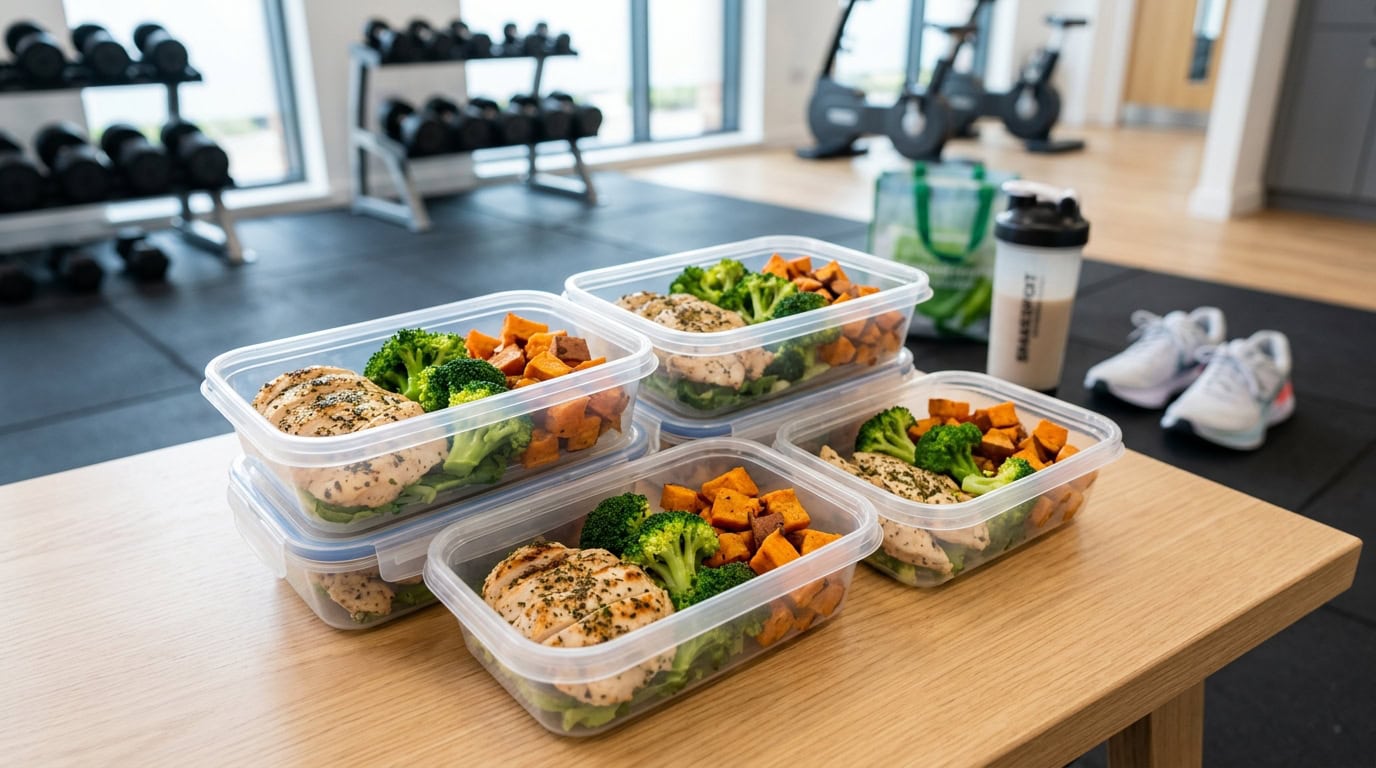
    Invest in a set of meal prep containers (glass or BPA-free plastic). Amazon sells packs of 10–20 for £10–15. Portion your meals using this simple framework:

    Component Portion Size
    Protein Palm-sized portion (roughly 150–200g cooked)
    Carbs Fist-sized portion (roughly 150–200g cooked rice/pasta)
    Vegetables 2 fist-sized portions (fill half the container)
    Healthy fat Thumb-sized portion (olive oil, avocado, nuts)

    This hand-portion method means you never need to weigh food unless you want to. It is accurate enough for most beginners and far more sustainable than obsessive tracking.

    Five Easy Meal Prep Recipes for UK Beginners

    1. Chicken, Rice, and Roasted Veg Bowl

    The classic for good reason. Season chicken breasts with smoked paprika, garlic powder, salt, and pepper. Roast at 200°C for 20–25 minutes. Cook rice. Roast broccoli and carrots. Assemble in containers. Drizzle with a little olive oil or a light dressing. Makes 4 portions.

    2. Beef Mince and Pasta Bolognese

    Brown 500g mince with onion and garlic. Add a jar of passata (£50–80p), a carrot (grated), and dried herbs. Simmer for 20 minutes. Cook pasta separately and combine. This tastes even better on day two. Makes 4 portions. Cost: roughly £1.20 per portion.

    3. Overnight Oats with Banana and Peanut Butter

    Mix 50g oats, 150ml milk (dairy or plant-based), 1 tbsp chia seeds, and a pinch of cinnamon in a container. Refrigerate overnight. In the morning, top with sliced banana and a tablespoon of peanut butter. Takes 3 minutes to prepare. Makes 1 portion. Cost: roughly 60p per portion.

    4. Tuna and Sweet Potato

    Bake sweet potatoes at 200°C for 40–45 minutes. Mix tinned tuna with a little mayonnaise, sweetcorn, and black pepper. Split the potatoes open and fill with the tuna mixture. Simple, filling, and high protein. Makes 2 portions. Cost: roughly £1.50 per portion.

    5. Egg Fried Rice

    Cook rice (day-old rice works best for frying). Scramble 3–4 eggs in a wok or large pan with a little oil. Add cooked rice, frozen peas, diced carrot, and soy sauce. Stir-fry for 5 minutes. Cheap, quick, and genuinely tasty. Makes 2–3 portions. Cost: roughly 80p per portion.

    Where to Shop: UK Supermarket Hacks

    You do not need to shop at expensive health food stores. The best value for meal prep in the UK comes from standard supermarkets:

    Shop Best For
    Aldi / Lidl Cheapest overall — excellent protein and veg prices
    Asda Large packs of chicken breast and frozen veg
    Tesco Clubcard prices and meal deal components
    Sainsbury’s Taste the Difference range for quality proteins
    Morrisons Market Street butchers and fresh fish counters
    Iceland Frozen chicken, fish, and veg in bulk

    For supplements (protein powder, creatine), online retailers like MyProtein, Bulk, and The Protein Works consistently offer the best value in the UK with regular discount codes.

    How Much Does Meal Prep Actually Cost?

    One of the biggest myths is that eating well is expensive. Here is a realistic weekly breakdown for one person:

    Item Weekly Cost
    Chicken breast (1.5kg) £9–12
    Eggs (15 pack) £3–4
    Rice and pasta £2–3
    Vegetables (mixed fresh and frozen) £5–8
    Oats and milk £2–3
    Tinned tuna (3 tins) £3–4
    Sauces, oils, seasonings £1–2
    Total £25–36 per week

    That is roughly £3.50–£5 per day for all your main meals. Compare that to a meal deal (£4–5) and a Pret or Itsu lunch (£6–9) — meal prep saves you money while being far more nutritious.

    Common Beginner Mistakes

    Meal Prep and Your Gym Routine

    Good nutrition and a consistent gym routine reinforce each other. When you have meals prepped, you are more likely to train because you feel fuelled. When you train regularly, you are more motivated to eat well because you can see the results of both.

    The key is building a system that fits your life. If you are still looking for the right gym to start your fitness journey, GymPal can help you compare UK gyms by location, price, and facilities. Finding a gym close to home or work makes it easier to build that consistent routine — and when your gym is convenient and your meals are prepped, there is nothing stopping you.

    The Bottom Line

    Meal prep is not about perfection — it is about making healthy eating the default option. Start with one batch-cook session this weekend. Prep your lunches for Monday to Friday. See how it feels. You do not need to become a chef or spend hours in the kitchen. Two hours on a Sunday can save you time, money, and decision fatigue for the entire working week.

    Combine good nutrition with a gym routine that you actually enjoy, and the results will follow. Start simple, stay consistent, and adjust as you learn what works for your body and your life.


    Ready to start your fitness journey? Search GymPal to find UK gyms near you — compare prices, read member reviews, and find the perfect gym to pair with your new meal prep routine.