Tag: Beginner Tips

  • Gym Changing Rooms: What to Look For Before You Join (And Red Flags to Avoid)

    Gym Changing Rooms: What to Look For Before You Join (And Red Flags to Avoid)

    Most people judge a gym by its equipment, classes, or price. But there’s one feature that can make or break your entire experience: the changing rooms. Bad changing facilities are the number one complaint in gym reviews across the UK — and good ones can be the reason people stay loyal for years. when it comes to gym changing rooms.

    Why Changing Rooms Matter More Than You Think

    Think about it: you spend time in the changing room before and after every single visit. If it’s dirty, cramped, or poorly designed, it colours your whole experience. A 2024 ukactive survey found that 67% of gym members rank changing room cleanliness as a top-three factor in choosing (and staying with) a gym.

    For women in particular, changing room quality is often a decisive factor. Privacy, cleanliness, and adequate facilities aren’t nice-to-haves — they’re essential.

    The Red Flags

    • Perpetually wet floors — if the floor is always soaking, the ventilation is poor and mould risk is high
    • Limited hot water — nothing worse than a cold shower after a tough session
    • Broken lockers — if half the lockers don’t work, you can’t secure your belongings
    • No privacy — open-plan changing with no cubicles is a dealbreaker for many people
    • Poor lighting — dim, flickering lights make the space feel unwelcoming and unsafe
    • Bad smells — a lingering damp or chemical smell is a sign of inadequate cleaning
    • No hairdryers or plug sockets — if you’re going straight to work, you need to be able to get ready

    The Green Flags

    • Private changing cubicles — the gold standard, increasingly common in newer gyms
    • Individual shower cubicles — with doors, not curtains
    • Free towels — premium gyms and some mid-range chains provide these
    • Grooming products — shampoo, body wash, and sometimes conditioner in showers
    • Hairdryers and straighteners — essential for anyone going straight to work or a night out
    • Clean, well-lit mirrors — for getting ready after your workout
    • Sauna and steam room access — usually near the changing rooms, huge value-add
    • Sustainable design — energy-efficient hand dryers, refillable product dispensers

    How Changing Rooms Differ by Gym Type

    Budget Gyms (£10-25/month)

    Functional but basic. Expect clean but small changing areas, individual showers (usually with curtains rather than doors), and limited grooming facilities. Bring your own towel, toiletries, and hairdryer. Lockers usually require a padlock (bring your own or buy one at reception).

    Mid-Range Gyms (£30-60/month)

    Noticeably better. Most provide towels, shampoo and body wash in showers, hairdryers, and decent-sized changing areas. Some have private cubicles. Showers should be clean and well-maintained with consistent hot water.

    Premium Gyms (£70+/month)

    Expect luxury. High-end toiletries (sometimes brands like Molton Brown or Elemis), spacious private changing cubicles, powerful rainfall showers, heated floors, grooming stations with straighteners, and sometimes even vanity areas. Some have separate steam rooms inside the changing areas.

    Tips for Assessing Changing Rooms Before You Join

    • Ask for a tour — any reputable gym will show you the changing rooms before you sign up
    • Visit during peak hours — the real test is how the facilities hold up when busy
    • Check online reviews — Google and Trustpilot reviews often mention changing room quality
    • Look at the details — are the bins overflowing? Are there enough hooks? Is the grout clean?

    Use GymPal to find gyms near you and read reviews that mention facilities. A gym that looks great on the website but has terrible changing rooms is a gym you’ll eventually stop visiting.

    For Gym Owners: Why Your Changing Rooms Are Your Secret Weapon

    Changing rooms are the most underrated competitive advantage in the UK gym market. Most owners focus on equipment and classes — but member retention is often won or lost in the facilities.

    • Invest in cleanliness — hire dedicated cleaning staff for peak hours, not just early mornings
    • Add private cubicles — this single upgrade can attract members who currently avoid gyms
    • Provide basics — free shampoo, body wash, and hairdryers cost little but make a huge impression
    • Upgrade showers — powerful, consistent hot water is non-negotiable
    • Update your GymPal listing — mention your facilities prominently on your listing to attract quality-conscious members

    The right gym isn’t just about the workout floor. Search, compare, and read honest reviews on GymPal to find a gym where every part of the experience — including the changing rooms — meets your standards.

  • Yoga Studios vs Traditional Gyms: Which Is Right for You?

    Yoga Studios vs Traditional Gyms: Which Is Right for You?

    Yoga has gone mainstream in the UK. Once viewed as a niche wellness practice, you’ll now find yoga studios in nearly every town and city — and traditional gyms are adding yoga classes to their timetables left, right, and centre. But should you join a dedicated yoga studio, or is the gym-based version good enough?

    It depends on what you’re looking for. Here’s how to decide.

    The Case for Dedicated Yoga Studios

    Atmosphere

    This is the biggest difference. A yoga studio is designed for one thing: yoga. Expect warm lighting, wooden floors, calming music, incense, and a sense of calm the moment you walk in. No clanking weights, no TVs blaring music videos, no people queuing for machines. It’s a completely different headspace.

    Teaching Quality

    Studio instructors are usually highly qualified specialists — many have completed 200 or 500 hours of yoga teacher training. They can offer hands-on adjustments, variations for different abilities, and deeper guidance on breathwork and meditation. Gym yoga instructors are often group fitness teachers who’ve done a weekend certification.

    Variety

    Studios typically offer a wide range of styles: Vinyasa, Hatha, Ashtanga, Yin, Restorative, Hot Yoga, Aerial Yoga, and more. You can explore and find what works for your body. Gym timetables usually offer one or two generic “yoga” classes per week.

    Community

    Regulars at yoga studios form genuine communities. You’ll see the same faces each week, attend workshops together, and build relationships. It’s one of the reasons people become deeply loyal to their studio.

    The Case for Gym-Based Yoga

    Cost

    Gym yoga is effectively free if you already have a membership. Dedicated studios charge £10–£20 per class or £60–£120/month for unlimited access. If budget is a concern, gym yoga wins hands down.

    Convenience

    One membership, one location, everything under one roof. You can lift weights, hit the treadmill, take a yoga class, and use the sauna — all in the same visit. Studios only offer yoga.

    Low Barrier to Entry

    Trying yoga at your gym is zero-commitment. Just show up to a class. If you hate it, you’ve lost nothing. Signing up for a studio feels like a bigger decision. See also: How to Run a Gym Open Day That Converts Visitors Into Paying.

    What About Hot Yoga?

    Hot yoga (practiced in a heated room, typically 35–42 degrees) deserves its own mention. It’s increasingly popular across the UK, with studios like Hot Pod Yoga and Fierce Grace expanding rapidly. Most traditional gyms don’t offer it because it requires a dedicated heated room.

    If hot yoga is your thing, a studio membership is non-negotiable. If you’re curious, most hot yoga studios offer introductory offers (£20–£30 for two weeks of unlimited classes).

    Quick Comparison

    • Price: Gym yoga (included in membership) vs Studio (£60–120/month)
    • Atmosphere: Studio wins — purpose-built calm environment
    • Teaching: Studio wins — specialist instructors with deep training
    • Variety: Studio wins — multiple styles and levels
    • Convenience: Gym wins — everything in one place
    • Community: Studio wins — regulars, workshops, events
    • Flexibility: Gym wins — go whenever you want, not just class times

    Our Recommendation

    Start at the gym. If your gym offers yoga classes, try them first. See if you enjoy the practice. If you find yourself wanting more — better instruction, more variety, a calmer environment — then invest in a studio membership.

    Many people do both: gym for strength and cardio, studio for yoga. It’s not either/or.

    Use GymPal to search for gyms with yoga classes and dedicated yoga studios near you. Compare facilities, read reviews, and find the right fit.

    For Studio Owners: Standing Out in a Growing Market

    The UK yoga market is growing but competitive. Here’s how to stand out:

    • Offer introductory deals — low-risk trials get people through the door
    • Host workshops and events — guest teachers, sound baths, retreats
    • Build an online presence — Instagram and TikTok are where your audience lives
    • Partner with local gyms — offer discounted studio passes to gym members as a “next step”
    • Claim your GymPal listing — make sure your studio shows up when people search for yoga in your area

    Whether you choose a studio or a gym, the best yoga practice is the one you actually do. Find classes near you on GymPal and start today.

  • Budget Gyms vs Premium Gyms: What Do You Actually Get for Your Money?

    Budget Gyms vs Premium Gyms: What Do You Actually Get for Your Money?

    Walk into any UK high street and you’ll see the full spectrum of gym pricing — from £10.99/month budget chains to £100+/month premium clubs. But what are you actually paying for? And does a more expensive gym mean a better workout?, a decent range of cardio and weight equipment, and not much else.

    What you get

    • Open 24 hours (most sites)
    • Cardio machines, fixed weights, free weights
    • Functional training areas (at larger sites)
    • No contract (usually rolling monthly)
    • Multiple locations (chain-dependent)

    What you don’t get

    • Group fitness classes (or very limited)
    • Swimming pools, saunas, or steam rooms
    • Towels, toiletries, or luxury changing rooms
    • Personal training (available but extra cost)
    • Cafe or social areas

    Best for: Self-motivated lifters, cardio fans, anyone who just wants a place to sweat without the frills.

    The Mid-Range Tier: £30–£60/month

    This is where you’ll find chains like David Lloyd, Nuffield Health, and many independent gyms. You’re paying for variety — classes, pools, and better facilities.

    What you get

    • Everything in the budget tier, plus:
    • Group fitness classes (often 50+ per week)
    • Swimming pool (at most locations)
    • Sauna, steam room, jacuzzi
    • Better changing rooms with towels provided
    • Creche or kids’ activities (family-friendly clubs)
    • Cafe or lounge area

    What you don’t get

    • Top-tier equipment (some mid-range gyms have older kit)
    • Personal training included (still extra)
    • Tennis, squash, or specialist facilities (some have these, some don’t)

    Best for: People who want classes and pool access, families, anyone who treats the gym as a social destination.

    The Premium Tier: £70–£150+/month

    Think Third Space, Equinox, or high-end independent clubs. These gyms sell an experience, not just a workout.

    What you get

    • Everything in mid-range, plus:
    • Premium equipment (Technogym, Eleiko, etc.)
    • Luxury changing rooms with grooming products
    • Spa treatments, hydrotherapy pools
    • In-house personal training (often included or discounted)
    • Member events, wellness workshops
    • Restaurant-quality food and juice bars
    • Beautiful interior design

    Best for: People who see the gym as a lifestyle choice, want a premium experience, or need the motivation of a beautiful environment.

    The Hidden Costs to Watch For

    • Joining fees: Mid-range and premium gyms often charge £50–£200 to join. Budget gyms usually don’t.
    • Annual fees: Some chains tack on an annual “maintenance” or “membership” fee of £20–£50.
    • Class supplements: Even at pricier gyms, specialist classes (reformer Pilates, small-group PT) can cost extra.
    • Parking: Premium city-centre gyms may charge for parking on top of membership.
    • Price freezes: Check if your monthly rate is fixed or if it increases annually.

    How to Choose

    Before you sign up, ask yourself three questions:

    • What will I actually use? If you only lift weights, a budget gym is all you need. If you love classes and swimming, mid-range is worth it.
    • How often will I go? A £100/month gym you visit twice a week costs £12.50/session. A £15/month gym you never visit costs infinitely more per session.
    • Can I try before I commit? Most gyms offer free day passes or trial periods. Use them. A gym that feels right is one you’ll actually use.

    Use GymPal to compare gyms near you — filter by price, facilities, and ratings to find the right match for your budget and goals.

    For Gym Owners: Competing on Value, Not Just Price

    If you run an independent gym, you can’t compete with the budget chains on price — and you shouldn’t try. Your advantage is personality, community, and specialist services that the big chains can’t replicate.

    • Highlight what makes you different — specialist equipment, expert coaching, unique classes
    • Offer flexible memberships — class packs, off-peak deals, student rates
    • Build a community — social events, challenges, member spotlights
    • Get found online — claim your free GymPal listing and make sure your facilities, photos, and pricing are up to date

    The right gym is the one you’ll actually go to. Search, compare, and try before you buy on GymPal.

  • Gym Anxiety: How to Feel Confident Walking Into Any Gym

    Gym Anxiety: How to Feel Confident Walking Into Any Gym

    Walking into a gym for the first time (or the fiftieth) can be genuinely nerve-wracking. You might worry that everyone’s watching you, that you don’t know what you’re doing, or that you simply don’t “belong” there. If any of that sounds familiar, you’re far from alone — gym anxiety is one of the most common reasons people avoid exercise altogether. (see NHS exercise and mental wellbeing guidance. According to NHS exercise guidelines

    The good news? It gets easier, and there are practical things you can do right now to feel more confident walking through those doors.

    Why Gym Anxiety Is So Common

    A 2023 survey by Mindbody found that nearly half of UK adults have felt intimidated at the gym at some point. The most common triggers? Feeling like everyone else is fitter, not knowing how to use equipment, and worrying about being judged.

    Here’s the thing: almost everyone feels this way at first. Even the person bench-pressing 100kg in the corner was once a nervous beginner. Gym confidence isn’t something you’re born with — it’s something you build.

    8 Practical Tips to Overcome Gym Anxiety

    1. Visit Before You Sign Up

    Most gyms offer a free tour or day pass. Use it. Walk around, see the layout, check out the changing rooms. Familiarity kills anxiety faster than anything else. If a gym won’t let you look around before joining, that’s a red flag.

    2. Go During Off-Peak Hours

    Your first few sessions don’t need to be at 6 PM on a Monday. Try mid-morning, late evening, or weekend afternoons when the gym is quieter. Fewer people means less pressure and more space to figure out the equipment at your own pace.

    3. Have a Plan

    Anxiety loves uncertainty. Walk in knowing exactly what you’re going to do — even if it’s just “20 minutes on the treadmill and some stretches.” Write it down on your phone if you need to. A plan gives you purpose and stops you wandering around feeling lost.

    4. Start With What You Know

    There’s no rule that says you have to use the complicated machines right away. If the treadmill or exercise bike feels safe, start there. Build your confidence with familiar movements before branching out.

    5. Wear Whatever Makes You Comfortable

    You don’t need designer gymwear. Wear whatever you feel good in — oversized t-shirt, joggers, whatever. The gym isn’t a fashion show. Most people are too focused on their own workout to notice what anyone else is wearing.

    6. Use Headphones

    Headphones are the universal “I’m in my own world” signal. Put on a playlist or podcast and create your own bubble. It helps block out the noise and makes the whole experience feel more personal and less performative.

    7. Book an Induction

    Nearly every gym in the UK offers a free induction when you join. Take it. A staff member will show you around, explain how the equipment works, and help you feel at home. It’s literally their job to make you feel welcome.

    8. Remember: Nobody Is Watching You

    This is the biggest truth about gyms. Everyone is focused on their own workout. The person you think is judging you is actually just trying to remember how many reps they’ve done. Once you internalise this, gym anxiety loses a lot of its power.

    Choosing a Gym That Helps With Anxiety

    Not all gyms are created equal when it comes to beginner-friendliness. Here’s what to look for:

    • Friendly staff: Good gyms have approachable team members who say hello and offer help without being pushy.
    • Women-only areas: Many gyms now offer dedicated women’s sections — PureGym, David Lloyd, and local independents often have these.
    • Beginner classes: Classes labelled “intro,” “basics,” or “beginner” are great low-pressure entry points.
    • Clean, well-maintained spaces: A gym that looks after its facility usually looks after its members too.

    Use GymPal to find beginner-friendly gyms near you. You can filter by facilities like women-only areas, read reviews from other members, and compare the vibe before you commit.

    For Gym Owners: How to Make New Members Feel Welcome

    If you run a gym, tackling gym anxiety isn’t just kind — it’s good business. Anxious beginners are the people most likely to cancel within the first month. Here’s how to keep them:

    • Proper inductions: Don’t rush them. Spend 30 minutes showing new members around and explaining the basics.
    • Buddy systems: Pair new members with existing ones for their first few visits.
    • Clear signage: Label equipment zones clearly so newcomers don’t feel lost.
    • Beginner-only sessions: Dedicated time slots for new members remove the intimidation factor entirely.
    • Follow up: A quick message after their first week shows you care and helps build loyalty.

    Make sure your GymPal listing highlights these features — beginners actively search for welcoming gyms, and you want to show up when they do.

    The Bottom Line

    Gym anxiety is real, but it’s also temporary. Every visit gets a little easier. Start small, go at your own pace, and remember that every single person in that gym was once a beginner too. Find a gym that makes you feel welcome on GymPal and take that first step. You’ve got this.

  • CrossFit Gyms in the UK: What to Expect, What It Costs, and How to Get Started

    CrossFit Gyms in the UK: What to Expect, What It Costs, and How to Get Started

    CrossFit has exploded across the UK over the last decade. From converted warehouses in Manchester to purpose-built boxes in London, there are now hundreds of CrossFit affiliates dotted around the country. But if you’ve never tried it, the whole thing can feel a bit intimidating. What actually happens in a CrossFit class? Do you need to be super fit to start? And how much does it cost?

    Here’s everything you need to know about CrossFit gyms in the UK — whether you’re a complete beginner curious about giving it a go, or a gym owner wondering whether CrossFit affiliation could work for your facility. into short, high-intensity workouts. Each day’s workout is called a WOD (Workout of the Day), and it’s different every time you walk through the door.

    Workouts are typically 45-60 minutes including warm-up, skill work, the WOD itself, and a cool-down. They’re led by qualified CrossFit coaches in small groups — usually 8 to 15 people per class.

    What to Expect at a CrossFit Gym

    The Space

    CrossFit gyms are called “boxes” because, well, many of them started in basic industrial units. Expect rubber flooring, pull-up rigs, Olympic bars and bumper plates, kettlebells, rowing machines, assault bikes, and plenty of open floor space. No machines, no mirrors, no TV screens — just functional training equipment.

    The Community

    This is the bit that surprises most newcomers. CrossFit boxes are genuinely community-driven. You’ll know the names of the people you train with. You’ll cheer each other through the final burpees. Many boxes organise social events, charity workouts, and in-house competitions. It’s a far cry from the anonymous experience of a big commercial gym.

    The Coaching

    Every class is coached. That means someone watching your form, scaling the workout to your ability, and pushing you at the right moments. For beginners, this is invaluable — especially when learning Olympic lifts like the snatch and clean and jerk.

    How Much Does CrossFit Cost in the UK?

    CrossFit memberships are typically more expensive than budget gyms — you’re paying for coached group training, not just floor access. Here’s a rough guide:

    • Drop-in: 10-20 pounds per session (great for trying it out)
    • Unlimited monthly: 80-150 pounds/month (varies by location — London is pricier)
    • 2-3 sessions per week: 60-100 pounds/month
    • Intro / fundamentals course: 50-150 pounds (most boxes require this before joining regular classes)

    Yes, it costs more than a 15 pounds/month budget gym membership. But you’re getting personal-training-level coaching in every session. Compare it to personal training rates (40-80 pounds/hour in most UK cities) and CrossFit starts to look like excellent value.

    Do You Need to Be Fit to Start CrossFit?

    Absolutely not. Every workout is scalable. Can’t do a pull-up? Use a resistance band. Can’t overhead squat with 40kg? Use a PVC pipe. The coach’s job is to make the WOD challenging for you, whatever your starting point.

    Most UK CrossFit boxes run a fundamentals or “on-ramp” course for beginners — typically 3 to 6 sessions covering the basic movements, safety, and gym etiquette. This is the best way to get started without feeling overwhelmed.

    How to Find a CrossFit Gym Near You

    There are over 500 CrossFit affiliates across the UK, so there’s a good chance you’ve got one nearby. Use GymPal to search for CrossFit gyms in your area, compare prices, read reviews, and find the right fit for your goals and budget.

    Most boxes offer a free taster session — book one and see how it feels. There’s no obligation.

    For Gym Owners: Should You Consider CrossFit Affiliation?

    If you run an independent gym and you’re considering adding CrossFit programming, here are a few things to think about:

    • Affiliation fees: CrossFit charges an annual affiliate fee (currently around $3,000 USD/year).
    • Coaching requirements: You’ll need at least one CrossFit Level 1 (CF-L1) certified trainer on staff. The CF-L1 course costs around $1,000.
    • Community appeal: CrossFit builds loyal, engaged memberships. Box members typically stay longer and pay more than standard gym members.
    • Equipment investment: Pull-up rigs, Olympic bars, bumper plates, and gymnastics gear require dedicated space and investment.
    • Marketing advantage: Being an official CrossFit affiliate gives you instant brand recognition within the fitness community.

    Whether or not you affiliate, offering functional fitness classes can be a smart way to differentiate your gym. And if you want more people to find your facility, make sure your GymPal listing is up to date with your class offerings and facilities.

    Ready to Give It a Go?

    CrossFit isn’t for everyone — but you won’t know until you try. Search for CrossFit gyms near you on GymPal, book a free taster session, and see what all the hype is about. Worst case, you get a good workout. Best case, you find a fitness community that changes your life.

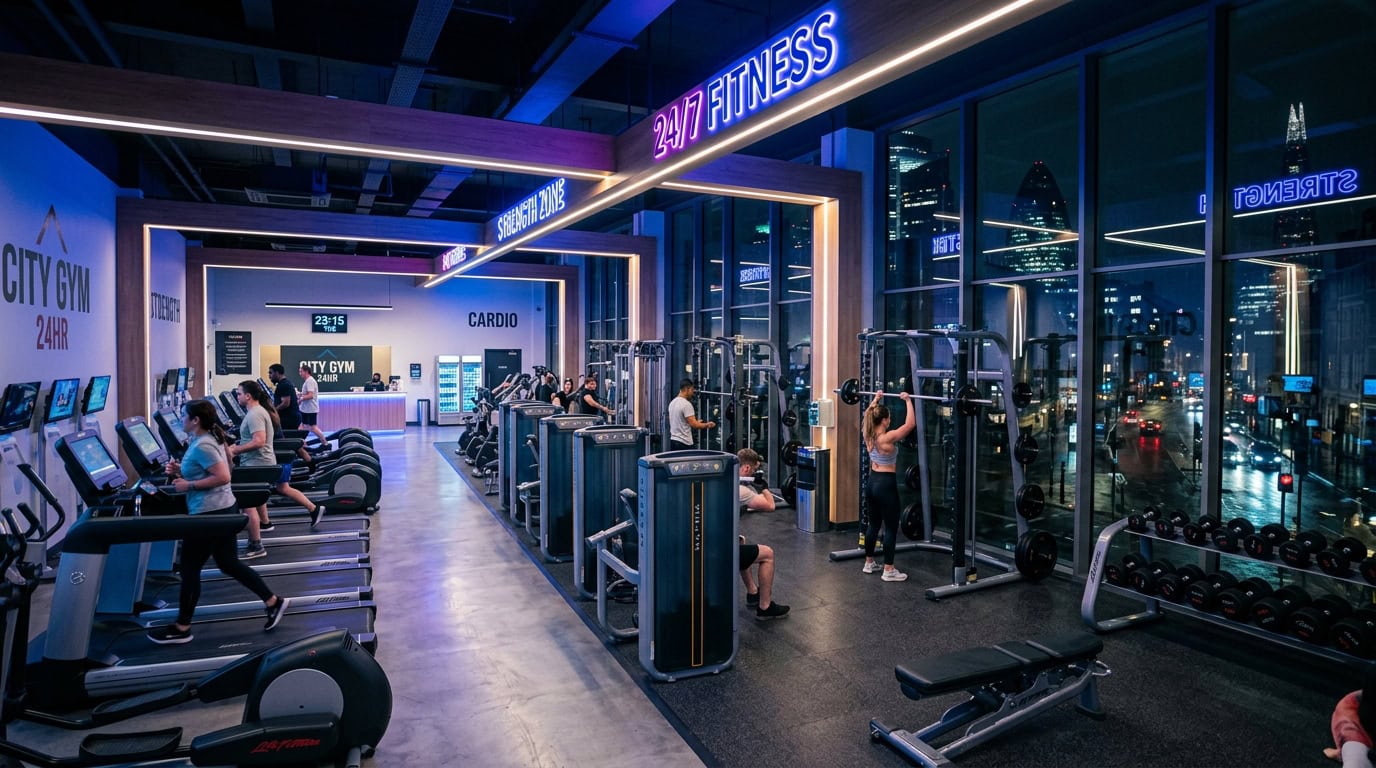
  • Best 24-Hour Gyms in the UK: Where to Train Any Time of Day or Night

    Best 24-Hour Gyms in the UK: Where to Train Any Time of Day or Night

    Not everyone can squeeze in a workout between 9 and 5. Whether you’re an early bird who likes a 5 AM session before work, a shift worker looking for a post-midnight lift, or simply someone who prefers an empty gym, 24-hour gyms are a game-changer. The good news? The UK has plenty of them., and they’ve invested heavily in kit — ThinkKit is their branded equipment range. They also offer a free gym induction for new members.

    Anytime Fitness

    With roughly 180 UK clubs, Anytime Fitness is a global brand that prides itself on community feel alongside 24/7 access. Members get a key fob that works at any Anytime location worldwide — handy if you travel. Monthly fees tend to be higher than PureGym or The Gym Group (typically £25–£40), but you’ll often find more personal training support and smaller, more intimate gym floors.

    JD Gyms

    Backed by the JD Sports group, JD Gyms offers 24-hour access at many of its 60+ UK locations. They position themselves as a step up from the ultra-budget chains, with larger free weight areas, premium equipment, and a more premium feel while still keeping prices reasonable (around £19.99/month).

    Independent 24-Hour Gyms Worth Knowing

    Don’t overlook independent gyms. Many local operators have embraced 24-hour access using key fob or app-based entry systems. These gyms often offer a more specialised experience — think powerlifting platforms, strongman equipment, or dedicated functional training zones that the big chains can’t match.

    To find independent 24-hour gyms near you, GymPal is a great starting point — search your area and filter by the facilities that matter to you.

    What to Look for in a 24-Hour Gym

    • Safety: Look for gyms with CCTV, emergency buttons, and good lighting — especially if you plan to train late at night.
    • Equipment variety: Check whether the gym has enough kit to handle off-peak and peak hours. Some budget gyms strip back equipment in smaller sites.
    • Cleanliness: 24-hour gyms rely on members wiping down equipment. Read reviews to see how well-managed a site is.
    • Accessibility: Make sure the entry system (PIN, app, fob) works reliably. Nothing worse than being locked out at 11 PM.
    • Classes: If you want group fitness, check the timetable — most 24-hour gyms only run classes during staffed hours.

    Tips for Training at Off-Peak Hours

    • Plan your session in advance. With fewer staff around, you won’t have someone to ask for help. Know your workout before you arrive.
    • Bring your own water and towel. Some 24-hour gyms turn off water fountains or vending machines during unstaffed hours.
    • Be mindful of noise. Late-night training is great, but dropping heavy deadlifts at 2 AM won’t win you friends in neighbouring flats.
    • Use GymPal to compare gyms near you. Not all 24-hour gyms are created equal — check reviews, equipment lists, and pricing before committing.

    For Gym Owners: Is 24-Hour Access Worth It?

    If you run a gym and you’re considering extending your hours, the data is encouraging. Members consistently rank flexible hours as one of their top reasons for choosing (and staying with) a gym. The upfront cost of key fob or app-based entry systems and upgraded CCTV has come down significantly, and many operators report that overnight usage is low but growing — driven largely by shift workers and serious lifters who value the quiet.

    If you want more people to find your gym, make sure your GymPal listing is up to date with your opening hours, facilities, and photos. It’s free to claim your listing and it puts you in front of thousands of UK fitness seekers every month.

    Find Your Nearest 24-Hour Gym

    Ready to train on your own schedule? Use GymPal to search for 24-hour gyms in your area. Compare prices, read reviews, and find the gym that fits your life — not the other way around.

  • Gym Etiquette: The Unwritten Rules Every New Member Should Know

    Gym Etiquette: The Unwritten Rules Every New Member Should Know

    Fitting In at the Gym Starts With Common Courtesy

    Walking into a gym for the first time can feel intimidating enough without worrying about whether you are doing something wrong. The good news is that gym etiquette mostly comes down to common sense and being considerate of others. (see ukactive State of the UK Fitness Industry report. According to Sport England Active Lives survey

    Whether you have just joined your first gym or you are coming back after a long break, here are the unwritten rules that will help you feel confident and keep the gym a positive space for everyone.

    1. Wipe Down Equipment After Use

    This is the golden rule of gym etiquette. Nobody wants to sit in someone else’s sweat. Most gyms provide spray bottles and paper towels near the equipment — use them.

    • Wipe down benches, seats, and pads after every use
    • Do it even if you do not think you have sweated much
    • If your gym does not provide cleaning supplies, bring a small towel

    2. Do Not Hog the Equipment

    During busy hours, equipment is in high demand. Be mindful of how long you are spending on any single machine or piece of kit.

    • Avoid spending more than 15 to 20 minutes on a single machine during peak times
    • If you need to rest between sets, let others work in
    • Do not camp out on a bench scrolling through your phone between sets
    • If someone is clearly waiting, offer to let them use the equipment between your sets

    3. Put Your Weights Away

    Leaving dumbbells, kettlebells, or plates on the floor is a tripping hazard and makes life harder for everyone else, especially staff.

    • Return all weights to their correct rack after use
    • Strip plates off barbells and machines when you are finished
    • If you are unsure where something goes, ask a member of staff

    4. Respect Personal Space

    The gym is a shared space, and people need room to move safely.

    • Do not set up directly next to someone if there is plenty of free space
    • Avoid standing too close to someone who is mid-exercise
    • Be aware of your surroundings when walking through the weights area

    5. Keep Your Phone Calls Off the Gym Floor

    Quick texts or checking your workout app is fine, but full phone conversations are distracting and inconsiderate.

    • Take calls in the lobby or changing room
    • Use headphones if you are watching videos or listening to music
    • Avoid filming yourself if the gym is busy — check the gym’s policy first

    6. Do Not Offer Unsolicited Advice

    It can be tempting to correct someone’s form or suggest an exercise, but unless they ask, keep it to yourself. Unsolicited advice can feel condescending and make people uncomfortable. See also: How to Create a Gym Induction Process That Reduces Early Can.

    • Only offer help if someone is clearly struggling and in danger of injury
    • If you are concerned, alert a member of staff instead
    • Let qualified trainers do the coaching

    7. Be Mindful of Mirrors

    Mirrors in the gym are there to help people check their form, not for prolonged posing sessions.

    • Do not stand directly in front of someone who is using the mirror to check their technique
    • Avoid blocking mirror space during busy periods

    8. Follow the Changing Room Rules

    The changing room is a shared space too, and a little consideration goes a long way.

    • Keep your belongings tidy in the lockers or on benches
    • Do not leave wet towels on benches or the floor
    • Respect others’ privacy
    • Use the showers efficiently during busy times

    9. Control Your Noise

    Some noise during heavy lifting is normal and expected. Constant grunting, slamming weights, or dropping equipment from height is not.

    • Control the eccentric phase of your lift — do not just let the weight drop
    • If you need to grunt, keep it reasonable
    • Use collars on barbells to prevent plates sliding off noisily

    10. Follow Gym-Specific Rules

    Every gym has its own policies on things like chalk, deadlifting on platforms, using lifting belts, bringing bags onto the floor, and filming. Read the rules when you join and respect them.

    When in Doubt, Just Ask

    If you are unsure about anything — how a machine works, where to put weights back, or what the policy is on something — ask a member of staff. They would rather help you than deal with the consequences of a guess.

    Most experienced gym members remember what it felt like to be new and will be patient and helpful if you are polite and considerate. The gym community thrives when everyone looks out for each other.

    Find the Right Gym for You

    Every gym has its own culture and vibe. Finding one where you feel comfortable makes all the difference. GymPal lets you browse thousands of UK gyms, compare facilities, read about what each one offers, and find the right fit for your goals and preferences. Start your search at askgympal.co.uk.

  • How to Reduce Gym Member Churn: Why Members Leave and How to Keep Them

    How to Reduce Gym Member Churn: Why Members Leave and How to Keep Them

    Keeping Your Members Is Cheaper Than Finding New Ones

    Acquiring a new gym member costs five to seven times more than retaining an existing one. Yet many UK gym owners focus almost all their energy on sales and marketing, while quietly losing members through the back door. (see ukactive State of the UK Fitness Industry report. According to Sport England Active Lives survey

    If your gym has a high churn rate, no amount of new sign-ups will fix the problem long term. Here is a practical look at why members leave — and what you can do about it.

    Why Gym Members Leave

    Understanding the reasons behind cancellations is the first step to reducing them. The most common drivers are not what most owners expect.

    1. They Do Not Feel Noticed

    Members who feel anonymous are the first to go. If someone can walk in, train, and walk out without a single member of staff acknowledging them, it is only a matter of time before they question whether they are getting value.

    2. They Are Not Seeing Results

    People join gyms with a goal — lose weight, build strength, improve fitness. When weeks turn into months without visible progress, motivation drops and the membership starts to feel like a waste of money.

    3. The Gym Environment Does Not Match Expectations

    Overcrowded peak hours, poorly maintained equipment, unclean changing rooms, or a cliquey atmosphere can all push members towards the exit. First impressions matter, but so do the impressions from month three onwards.

    4. Life Gets in the Way

    Work schedules change, routines shift, and motivation dips. Many members cancel not because they dislike your gym, but because they have lost the habit. The question is whether your gym makes it easy to come back.

    5. Financial Pressure

    With the cost of living affecting households across the UK, gym memberships are often one of the first expenses people review. If they do not perceive strong value, the cut is swift.

    Proven Strategies to Reduce Churn

    Create a Strong Onboarding Experience

    The first 90 days are critical. Members who form a habit in their first three months are far more likely to stay long term.

    • Offer a proper induction — not just a equipment walkthrough, but a personalised plan based on their goals
    • Schedule a check-in at 30, 60, and 90 days to track progress and offer support
    • Introduce them to other members or classes that match their interests
    • Make sure they know how to use your booking system, app, or any member perks

    Build a Community, Not Just a Facility

    Gyms that feel like communities have significantly lower churn rates. People stay for the relationships, not just the equipment.

    • Host member events — social nights, fitness challenges, charity workouts
    • Create member-led groups or running clubs that extend beyond the gym floor
    • Recognise member milestones publicly — weight loss achievements, attendance streaks, competition results
    • Encourage a welcoming culture where regulars help newcomers feel at home

    Track Engagement and Act Early

    Do not wait for a cancellation request to find out someone is unhappy. Use your data to spot at-risk members before they leave.

    • Monitor attendance patterns — a drop-off in visits is the strongest predictor of cancellation
    • Reach out to members who have not visited in 10 to 14 days with a friendly message, not a sales pitch
    • Offer a free personal training session or class pass to re-engage quiet members
    • Send regular feedback surveys and act on the results visibly

    Deliver Consistent Quality

    The basics matter more than any flashy retention programme.

    • Keep equipment clean and well-maintained
    • Ensure changing rooms and communal areas are spotless
    • Train staff to be approachable, knowledgeable, and genuinely helpful
    • Manage peak-time capacity so members can actually complete their workouts

    Offer Flexibility

    Rigid contracts push people away, especially during uncertain times. Consider offering:

    • Monthly rolling contracts alongside annual options
    • Freeze options for members who need a temporary break
    • Off-peak or budget tiers that allow price-sensitive members to stay
    • Downgrade paths so members can reduce cost without cancelling entirely

    Measure What Matters

    Track your churn rate monthly and break it down by membership type, length of tenure, and reason for leaving. This data tells you where to focus your efforts.

    A healthy monthly churn rate for an independent UK gym is typically between 3% and 5%. If yours is higher, start with the strategies above and measure the impact over 90 days.

    Get Discovered by Members Who Want to Stay

    Reducing churn is one side of the equation — bringing in the right members is the other. GymPal connects UK gyms with people actively searching for fitness services. Claim your free listing and make sure your gym is visible to the thousands of fitness seekers browsing the directory every month.


    Is your gym listed on GymPal? Over 10,000 UK fitness businesses are in our directory. Claim your free listing in 5 minutes — and start getting discovered by local fitness seekers today.

  • What to Eat Before and After Your Gym Session: A Simple UK Guide

    What to Eat Before and After Your Gym Session: A Simple UK Guide

    Fuel Your Workouts the Right Way

    You have got your gym bag packed, your playlist ready, and your motivation peaked. But have you thought about what you are putting on your plate? Nutrition is not just for athletes — what you eat before and after a gym session can make a real difference to your energy, recovery, and results.:

    • Porridge with banana and a drizzle of honey
    • Wholemeal toast with peanut butter and a glass of milk
    • Baked sweet potato with grilled chicken
    • Pasta with a light tomato sauce

    Quick snacks (30-60 minutes before):

    • A banana or apple
    • A small handful of dried fruit and nuts
    • A slice of toast with jam
    • A small yoghurt

    Stay Hydrated

    Start sipping water throughout the day, not just right before you train. Arriving at the gym already dehydrated will affect your performance more than skipping a snack will.

    After Your Workout: Helping Your Body Recover

    What you eat after training matters because it helps your muscles repair, replenishes your energy stores, and reduces soreness. The sooner you refuel, the better your body can start recovering.

    The Recovery Window

    You do not need to race to the kitchen the second you finish your last set, but try to eat a balanced meal or snack within 30 minutes to 2 hours after your session. See also: How to Use Google Business Profile to Get More Local Gym Mem.

    What to Eat After Training

    Combine protein for muscle repair with carbohydrates to replenish energy. This combination is more effective than protein alone.

    Good post-workout options:

    • Grilled chicken breast with brown rice and roasted vegetables
    • A protein shake blended with a banana and oats
    • Eggs on wholemeal toast with avocado
    • Greek yoghurt with berries, granola, and a drizzle of honey
    • Salmon with a baked potato and side salad
    • A turkey and cheese wholegrain wrap

    Do Not Skip the Carbs

    There is a common myth that you should avoid carbs after training. In reality, your body needs them to replace the glycogen you have just used up. A carb-and-protein combo after training supports better recovery than protein on its own.

    Simple Principles to Remember

    You do not need to overthink your nutrition. These basics will cover most situations:

    • Carbs before training give you energy to perform
    • Protein + carbs after training help you recover
    • Stay hydrated throughout the day, not just at the gym
    • Keep it simple — whole foods, regular meal times, and listening to your body
    • Avoid experimenting on training days — try new foods on rest days

    Supplements: Do You Need Them?

    For most people, a balanced diet covers what you need. Protein powders can be convenient, but they are not essential. Creatine is one of the most researched supplements and may help with strength and power output, but it is entirely optional — especially if you are just getting started.

    If you do consider supplements, stick to reputable brands and remember that nothing replaces a good diet.

    Find a Gym That Fits Your Lifestyle

    Nutrition is one part of the equation — finding the right gym is another. Whether you are looking for a budget-friendly option, a specialist facility, or something close to home, GymPal makes it easy to discover gyms across the UK. Browse thousands of listings, compare facilities, and find the perfect fit for your fitness journey.

    Already running a gym? Claim your free listing on GymPal and get discovered by people actively searching for fitness services in your area.

  • How to Choose the Right Gym Membership for Your Budget: A UK Guide

    How to Choose the Right Gym Membership for Your Budget: A UK Guide

    Why Your Gym Membership Choice Matters More Than You Think

    A gym membership is one of the few purchases where the cheapest option is not always the best value — and the most expensive is not always the most effective. With UK gym prices ranging from £10 a month at budget chains to £150+ at premium facilities, choosing the right one for your budget can save you hundreds of pounds a year and dramatically improve your chances of actually going., you will want a gym with enough equipment to handle the crowds.

Step 2: Understand the UK Gym Price Tiers

Budget Gyms (£10–£25/month)

Chains like PureGym, The Gym Group, and easyGym dominate this space. You get basic equipment, no frills, and usually 24-hour access. The trade-off? No classes (or very limited ones), no pool, and peak times can be packed.

Best for: Self-motivated gym-goers who know their way around a weight room and want the lowest possible cost.

Mid-Range Gyms (£30–£60/month)

This tier includes independent gyms, JD Gyms, Nuffield Health, and local leisure centres. You will typically get a wider range of equipment, group classes, and sometimes extras like a sauna or swimming pool. The staff-to-member ratio is usually better too.

Best for: People who want classes, a more social environment, or specific equipment like squat racks and functional training areas.

Premium Gyms (£70–£150+/month)

David Lloyd, Virgin Active, and high-end boutique facilities sit here. You are paying for luxury changing rooms, pools, spas, racquet sports, and a curated member experience. The equipment is top-tier and the atmosphere is noticeably different.

Best for: Those who want a full leisure experience, families, and people who treat the gym as a lifestyle destination rather than just a workout space.

Step 3: Watch Out for Hidden Costs

The monthly price is rarely the full story. Check for:

  • Joining fees — Some gyms charge £20–£50 upfront. Always ask if they will waive it (many will, especially if you mention you are comparing options).
  • Contract length — Rolling monthly contracts give you flexibility. Fixed 12-month contracts are sometimes cheaper but lock you in. Avoid anything longer than 12 months unless you are absolutely certain.
  • Cancellation fees — Read the small print. Some gyms charge up to £50–£100 to cancel a fixed contract early.
  • Extra charges — Classes, personal training sessions, towels, lockers, and parking can all cost extra on top of your base membership.

Step 4: Always Take a Free Trial First

Almost every UK gym offers a free day pass or a discounted trial period. Use it. Visit at the time you would normally train and pay attention to:

  • How crowded is it? Are you waiting for equipment?
  • Is the equipment well-maintained and clean?
  • Do the staff seem approachable and helpful?
  • Is the changing room somewhere you would actually want to use?
  • Does the atmosphere motivate you or make you want to leave?

A gym you do not enjoy visiting is a gym you will not go to — regardless of how cheap it is.

Step 5: Compare Gyms in Your Area

The UK has thousands of gyms, and the right one for you depends heavily on location. A £15/month gym that is a 5-minute walk away will get more use than a £10/month gym that requires a 30-minute bus ride.

Use GymPal to browse gyms in your area, compare facilities and pricing, read reviews from real members, and find options you might not have discovered otherwise. You can filter by gym type, facilities, and location to narrow down the choices before you even visit.

Quick Budget Calculator

To figure out what is reasonable for your budget, try this simple approach:

  1. Decide your max monthly spend (be honest — do not overcommit).
  2. Estimate your realistic weekly visits (most people overestimate this).
  3. Divide monthly cost by weekly visits, then by 4.3 (average weeks per month).

Example: If your budget is £35/month and you will go twice a week:

£35 ÷ (2 × 4.3) = £4.07 per session

That is cheaper than a coffee and a pastry. Compare that per-session cost across different gyms and the value becomes much clearer.

The Bottom Line

The best gym membership is the one you will actually use consistently. Do not overspend on facilities you will not touch, and do not underspend to the point where the gym becomes an unpleasant experience. Take your time, compare your options, and start with a trial before committing.

Ready to find gyms near you? Search on GymPal to compare UK gyms by price, facilities, and location — and find the perfect fit for your budget.