Blog

  • Student Gym Memberships: How to Get the Best Deal at UK Universities

    Student Gym Memberships: How to Get the Best Deal at UK Universities

    University is one of the best times to build a fitness habit. Most UK universities have on-campus gyms with heavily subsidised rates for students, and the surrounding area is usually packed with commercial gyms competing for student memberships. According to Sport England Active Lives survey

    But with so many options, how do you find the best deal? Here’s your complete guide to student gym memberships in the UK. According to ukactive State of the UK Fitness Industry report

    University Gyms: The Default Option

    Most UK universities have their own sports facilities, and they’re often excellent. Think £10-25/month for full access to the gym, swimming pool, sports halls, and group fitness classes. Some universities include gym access in tuition fees or offer it at a deeply discounted annual rate.

    Pros

    • Cheapest option in most cases
    • On campus — no travel time
    • Often includes pool, courts, and classes
    • Student-only environment (less intimidating for beginners)
    • Flexible around lecture timetables (long opening hours)

    Cons

    • Can be very busy during peak hours (especially January)
    • Equipment may not be as extensive as commercial gyms
    • Some university gyms close during holidays
    • Limited specialist equipment (Olympic lifting platforms, etc.)

    Commercial Gyms With Student Discounts

    Many UK gym chains offer student pricing, especially those near university campuses:

    PureGym

    Offers student discount codes via UNiDAYS and Student Beans. Typical student rate: £14-18/month (vs standard £15-25). No contract, 24/7 access, and locations near most UK universities.

    The Gym Group

    Similar to PureGym with student discounts available. Prices start from around £10.99/month in some areas. 24/7 access and no contract.

    Council Leisure Centres

    Often overlooked, but many council-run leisure centres offer student pay-as-you-go rates and flexible memberships. You’ll get pool access, group classes, and gym floor — usually for less than commercial chains.

    How to Get the Best Deal

    • Check UNiDAYS, Student Beans, and Totum — all three list current gym discount codes
    • Ask about annual memberships — paying upfront for the year is often cheaper than monthly rolling
    • Look for off-peak deals — if your timetable allows daytime workouts, off-peak memberships are significantly cheaper
    • Consider sharing a membership — some gyms offer “buddy” or “couple” discounts that work for flatmates
    • Don’t forget NUS Extra / Totum card — accepted at many independent gyms for 10-20% off
    • Ask about summer deals — gyms near universities often run discounted summer memberships when students leave

    Budget Breakdown: What Students Typically Pay

    • University gym: £10-25/month or £100-200/year
    • Budget chain (with student discount): £14-20/month
    • Council leisure centre: £15-30/month (often includes pool)
    • Mid-range gym: £25-45/month (with student discount)
    • Pay-as-you-go: £5-10 per session (good if you go less than 3 times per week)

    Tips for Staying Consistent at University

    • Go between lectures — the quietest times are usually 10 AM – 3 PM
    • Find a gym buddy — your flatmate, course mate, or society member. You’re more likely to stick with it.
    • Join a sports society — many university sports clubs include gym access or training sessions
    • Use the gym when you’re stressed — exercise is one of the best ways to manage exam and deadline pressure
    • Don’t worry about January — it’s the busiest month. By February, the crowds thin out.

    Use GymPal to compare gyms near your university — filter by price, facilities, and student discounts to find the best deal.

    For Gym Owners: Attracting Student Members

    Students are a massive, often underserved market. Here’s how to reach them:

    • Offer genuine student pricing — not a token £2 off. Students compare deals carefully.
    • Be on UNiDAYS and Student Beans — this is where students look for discounts
    • Create flexible terms — no 12-month contracts. Students want monthly rolling or term-time-only deals.
    • Partner with university sports societies — offer group rates or sponsor events
    • Keep your GymPal listing updated — mention student discounts on your listing so students find you when searching near campus

    Whether you’re a fresher looking for your first gym or a returning student wanting a better deal, GymPal helps you find and compare the best student gym options in your area.
  • Women-Only Gyms in the UK: Your Complete Guide to Finding the Right Space

    Women-Only Gyms in the UK: Your Complete Guide to Finding the Right Space

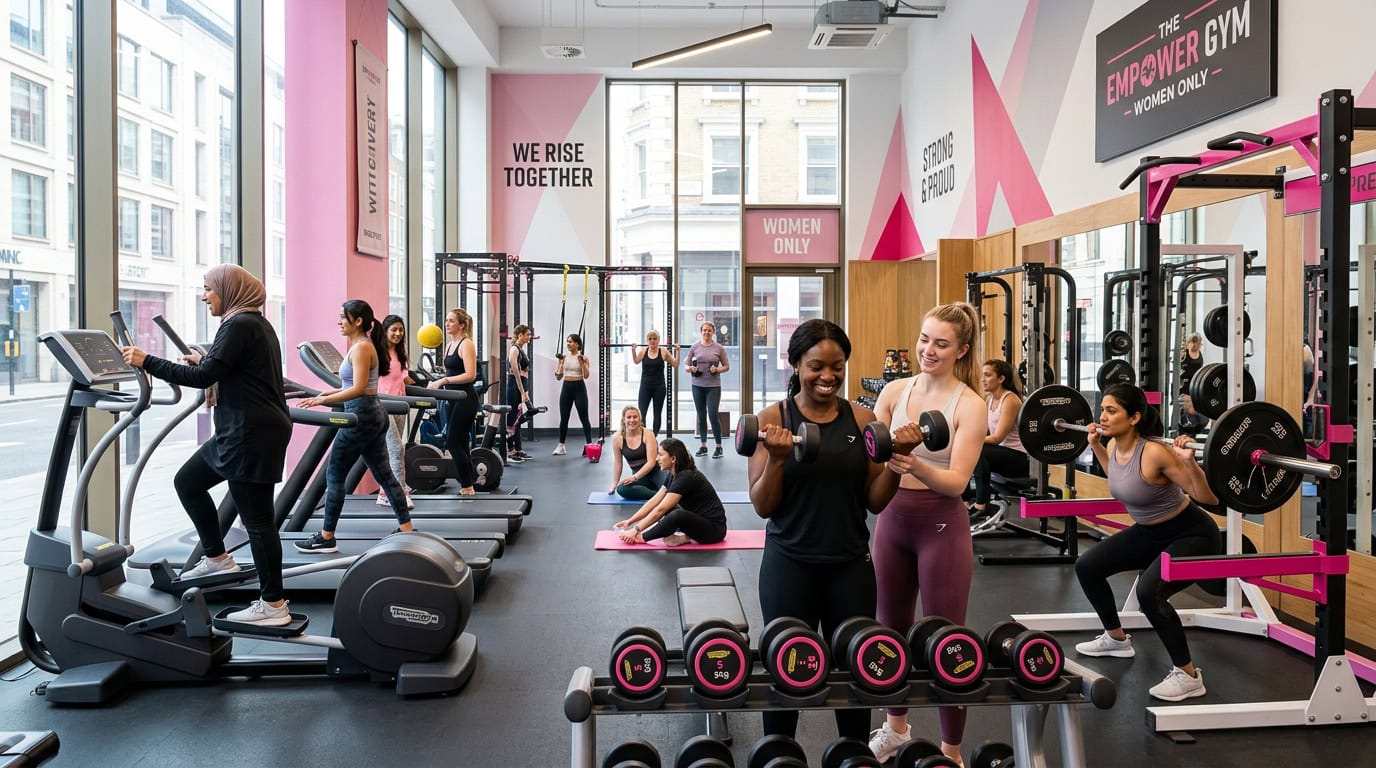
    For many women, walking into a mixed-gym weights area can feel intimidating. The staring, the unsolicited advice, the feeling of being watched — it’s real, and it puts millions of UK women off strength training entirely. Enter women-only gyms and women-only gym zones: spaces designed so women can train in comfort, confidence, and privacy. According to Sport England Active Lives survey

    Here’s your complete guide to women-only gym options across the UK.

    Why Women-Only Gyms Exist

    A This Girl Can campaign survey found that 39% of UK women feel too self-conscious to exercise in public. Cultural, religious, and personal reasons all play a role. Women-only spaces remove these barriers entirely, creating an environment where women can focus on their workout without feeling judged. According to NHS physical activity guidelines

    These spaces aren’t about segregating anyone — they’re about opening doors. Many women who start in women-only sections eventually move into the main gym floor once they’ve built confidence.

    Types of Women-Only Gym Options in the UK

    1. Dedicated Women-Only Gyms

    Entire facilities designed exclusively for women. These are usually independently owned and offer a full range of equipment, classes, and personal training. Examples include Curves (over 60 UK locations), and independent studios in most major cities.

    2. Women-Only Zones Within Mixed Gyms

    Many larger gyms now offer dedicated women-only sections — separate areas with their own equipment, often in a quieter part of the building. PureGym, David Lloyd, and several council-run leisure centres have introduced these in recent years.

    3. Women-Only Sessions

    Some gyms designate specific hours where certain areas (usually the pool, studio, or entire gym floor) are women-only. This is common in council leisure centres and community gyms, particularly in areas with diverse populations.

    4. Women-Focused Studios

    Not strictly women-only, but designed with women as the primary audience. Think barre studios, women-focused bootcamps, and female-run personal training studios. The vibe is welcoming and the programming considers women’s specific fitness needs.

    What to Expect

    • Equipment: Full range — cardio, free weights, resistance machines, functional training. Some women-only gyms use hydraulic resistance machines (like Curves) for a circuit-style workout.
    • Classes: Often women-focused: barre, dance fitness, yoga, pilates, HIIT designed for female bodies.
    • Atmosphere: Supportive, non-judgemental, community-driven. You’ll find women of all ages, shapes, and fitness levels.
    • Staff: Predominantly female coaches and personal trainers.
    • Changing rooms: Often cleaner and better-maintained than mixed facilities (a common theme in reviews).

    How to Find Women-Only Gyms Near You

    Use GymPal to search for gyms in your area and look for women-only sections or dedicated facilities. You can filter by amenities and read reviews from other women to find the right fit.

    Tips for your search:

    • Search for “women-only gym” plus your city name
    • Check if local PureGym or David Lloyd locations have women-only zones
    • Ask at your local leisure centre about women-only session times
    • Look for female-run PT studios — they often offer small-group training in a women-friendly environment

    For Gym Owners: Adding a Women-Only Section

    Adding a women-only zone is one of the smartest investments a UK gym owner can make. Women make up roughly 50% of the population but are significantly underrepresented in gym memberships, especially in the free weights area. Here’s why you should consider it:

    • Untapped market — millions of women want to exercise but feel uncomfortable in mixed spaces
    • Higher retention — women who feel comfortable in your gym are more likely to stay long-term
    • Word-of-mouth — women recommend gyms they feel safe and comfortable in to their friends
    • Cultural sensitivity — in diverse communities, women-only access can be essential for reaching certain demographics
    • Low setup cost — you don’t need a huge space. A partitioned area with basic equipment is enough to start

    Make sure your GymPal listing clearly states if you offer women-only facilities — this is one of the most searched-for features on the platform.

    The Bottom Line

    Every woman deserves to feel comfortable working out. Whether you choose a dedicated women-only gym, a women’s section in a mixed facility, or simply a gym with a welcoming culture, the important thing is finding a space where you can focus on your fitness — not on how others perceive you. Start your search on GymPal today.

  • Gym Changing Rooms: What to Look For Before You Join (And Red Flags to Avoid)

    Gym Changing Rooms: What to Look For Before You Join (And Red Flags to Avoid)

    Most people judge a gym by its equipment, classes, or price. But there’s one feature that can make or break your entire experience: the changing rooms. Bad changing facilities are the number one complaint in gym reviews across the UK — and good ones can be the reason people stay loyal for years. when it comes to gym changing rooms.

    Why Changing Rooms Matter More Than You Think

    Think about it: you spend time in the changing room before and after every single visit. If it’s dirty, cramped, or poorly designed, it colours your whole experience. A 2024 ukactive survey found that 67% of gym members rank changing room cleanliness as a top-three factor in choosing (and staying with) a gym.

    For women in particular, changing room quality is often a decisive factor. Privacy, cleanliness, and adequate facilities aren’t nice-to-haves — they’re essential.

    The Red Flags

    • Perpetually wet floors — if the floor is always soaking, the ventilation is poor and mould risk is high
    • Limited hot water — nothing worse than a cold shower after a tough session
    • Broken lockers — if half the lockers don’t work, you can’t secure your belongings
    • No privacy — open-plan changing with no cubicles is a dealbreaker for many people
    • Poor lighting — dim, flickering lights make the space feel unwelcoming and unsafe
    • Bad smells — a lingering damp or chemical smell is a sign of inadequate cleaning
    • No hairdryers or plug sockets — if you’re going straight to work, you need to be able to get ready

    The Green Flags

    • Private changing cubicles — the gold standard, increasingly common in newer gyms
    • Individual shower cubicles — with doors, not curtains
    • Free towels — premium gyms and some mid-range chains provide these
    • Grooming products — shampoo, body wash, and sometimes conditioner in showers
    • Hairdryers and straighteners — essential for anyone going straight to work or a night out
    • Clean, well-lit mirrors — for getting ready after your workout
    • Sauna and steam room access — usually near the changing rooms, huge value-add
    • Sustainable design — energy-efficient hand dryers, refillable product dispensers

    How Changing Rooms Differ by Gym Type

    Budget Gyms (£10-25/month)

    Functional but basic. Expect clean but small changing areas, individual showers (usually with curtains rather than doors), and limited grooming facilities. Bring your own towel, toiletries, and hairdryer. Lockers usually require a padlock (bring your own or buy one at reception).

    Mid-Range Gyms (£30-60/month)

    Noticeably better. Most provide towels, shampoo and body wash in showers, hairdryers, and decent-sized changing areas. Some have private cubicles. Showers should be clean and well-maintained with consistent hot water.

    Premium Gyms (£70+/month)

    Expect luxury. High-end toiletries (sometimes brands like Molton Brown or Elemis), spacious private changing cubicles, powerful rainfall showers, heated floors, grooming stations with straighteners, and sometimes even vanity areas. Some have separate steam rooms inside the changing areas.

    Tips for Assessing Changing Rooms Before You Join

    • Ask for a tour — any reputable gym will show you the changing rooms before you sign up
    • Visit during peak hours — the real test is how the facilities hold up when busy
    • Check online reviews — Google and Trustpilot reviews often mention changing room quality
    • Look at the details — are the bins overflowing? Are there enough hooks? Is the grout clean?

    Use GymPal to find gyms near you and read reviews that mention facilities. A gym that looks great on the website but has terrible changing rooms is a gym you’ll eventually stop visiting.

    For Gym Owners: Why Your Changing Rooms Are Your Secret Weapon

    Changing rooms are the most underrated competitive advantage in the UK gym market. Most owners focus on equipment and classes — but member retention is often won or lost in the facilities.

    • Invest in cleanliness — hire dedicated cleaning staff for peak hours, not just early mornings
    • Add private cubicles — this single upgrade can attract members who currently avoid gyms
    • Provide basics — free shampoo, body wash, and hairdryers cost little but make a huge impression
    • Upgrade showers — powerful, consistent hot water is non-negotiable
    • Update your GymPal listing — mention your facilities prominently on your listing to attract quality-conscious members

    The right gym isn’t just about the workout floor. Search, compare, and read honest reviews on GymPal to find a gym where every part of the experience — including the changing rooms — meets your standards.

  • Budget Gyms vs Premium Gyms: What Do You Actually Get for Your Money?

    Budget Gyms vs Premium Gyms: What Do You Actually Get for Your Money?

    Walk into any UK high street and you’ll see the full spectrum of gym pricing — from £10.99/month budget chains to £100+/month premium clubs. But what are you actually paying for? And does a more expensive gym mean a better workout?, a decent range of cardio and weight equipment, and not much else.

    What you get

    • Open 24 hours (most sites)
    • Cardio machines, fixed weights, free weights
    • Functional training areas (at larger sites)
    • No contract (usually rolling monthly)
    • Multiple locations (chain-dependent)

    What you don’t get

    • Group fitness classes (or very limited)
    • Swimming pools, saunas, or steam rooms
    • Towels, toiletries, or luxury changing rooms
    • Personal training (available but extra cost)
    • Cafe or social areas

    Best for: Self-motivated lifters, cardio fans, anyone who just wants a place to sweat without the frills.

    The Mid-Range Tier: £30–£60/month

    This is where you’ll find chains like David Lloyd, Nuffield Health, and many independent gyms. You’re paying for variety — classes, pools, and better facilities.

    What you get

    • Everything in the budget tier, plus:
    • Group fitness classes (often 50+ per week)
    • Swimming pool (at most locations)
    • Sauna, steam room, jacuzzi
    • Better changing rooms with towels provided
    • Creche or kids’ activities (family-friendly clubs)
    • Cafe or lounge area

    What you don’t get

    • Top-tier equipment (some mid-range gyms have older kit)
    • Personal training included (still extra)
    • Tennis, squash, or specialist facilities (some have these, some don’t)

    Best for: People who want classes and pool access, families, anyone who treats the gym as a social destination.

    The Premium Tier: £70–£150+/month

    Think Third Space, Equinox, or high-end independent clubs. These gyms sell an experience, not just a workout.

    What you get

    • Everything in mid-range, plus:
    • Premium equipment (Technogym, Eleiko, etc.)
    • Luxury changing rooms with grooming products
    • Spa treatments, hydrotherapy pools
    • In-house personal training (often included or discounted)
    • Member events, wellness workshops
    • Restaurant-quality food and juice bars
    • Beautiful interior design

    Best for: People who see the gym as a lifestyle choice, want a premium experience, or need the motivation of a beautiful environment.

    The Hidden Costs to Watch For

    • Joining fees: Mid-range and premium gyms often charge £50–£200 to join. Budget gyms usually don’t.
    • Annual fees: Some chains tack on an annual “maintenance” or “membership” fee of £20–£50.
    • Class supplements: Even at pricier gyms, specialist classes (reformer Pilates, small-group PT) can cost extra.
    • Parking: Premium city-centre gyms may charge for parking on top of membership.
    • Price freezes: Check if your monthly rate is fixed or if it increases annually.

    How to Choose

    Before you sign up, ask yourself three questions:

    • What will I actually use? If you only lift weights, a budget gym is all you need. If you love classes and swimming, mid-range is worth it.
    • How often will I go? A £100/month gym you visit twice a week costs £12.50/session. A £15/month gym you never visit costs infinitely more per session.
    • Can I try before I commit? Most gyms offer free day passes or trial periods. Use them. A gym that feels right is one you’ll actually use.

    Use GymPal to compare gyms near you — filter by price, facilities, and ratings to find the right match for your budget and goals.

    For Gym Owners: Competing on Value, Not Just Price

    If you run an independent gym, you can’t compete with the budget chains on price — and you shouldn’t try. Your advantage is personality, community, and specialist services that the big chains can’t replicate.

    • Highlight what makes you different — specialist equipment, expert coaching, unique classes
    • Offer flexible memberships — class packs, off-peak deals, student rates
    • Build a community — social events, challenges, member spotlights
    • Get found online — claim your free GymPal listing and make sure your facilities, photos, and pricing are up to date

    The right gym is the one you’ll actually go to. Search, compare, and try before you buy on GymPal.

  • Yoga Studios vs Traditional Gyms: Which Is Right for You?

    Yoga Studios vs Traditional Gyms: Which Is Right for You?

    Yoga has gone mainstream in the UK. Once viewed as a niche wellness practice, you’ll now find yoga studios in nearly every town and city — and traditional gyms are adding yoga classes to their timetables left, right, and centre. But should you join a dedicated yoga studio, or is the gym-based version good enough?

    It depends on what you’re looking for. Here’s how to decide.

    The Case for Dedicated Yoga Studios

    Atmosphere

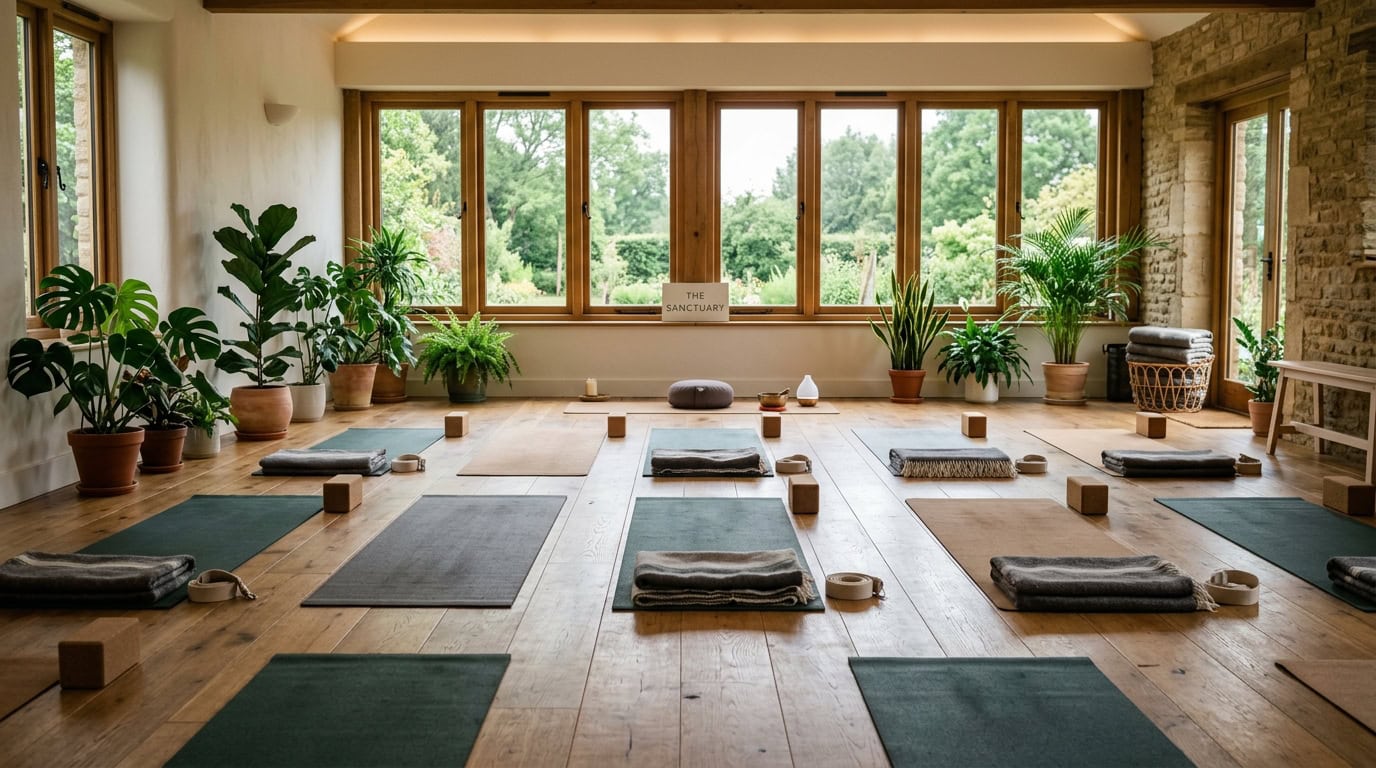
    This is the biggest difference. A yoga studio is designed for one thing: yoga. Expect warm lighting, wooden floors, calming music, incense, and a sense of calm the moment you walk in. No clanking weights, no TVs blaring music videos, no people queuing for machines. It’s a completely different headspace.

    Teaching Quality

    Studio instructors are usually highly qualified specialists — many have completed 200 or 500 hours of yoga teacher training. They can offer hands-on adjustments, variations for different abilities, and deeper guidance on breathwork and meditation. Gym yoga instructors are often group fitness teachers who’ve done a weekend certification.

    Variety

    Studios typically offer a wide range of styles: Vinyasa, Hatha, Ashtanga, Yin, Restorative, Hot Yoga, Aerial Yoga, and more. You can explore and find what works for your body. Gym timetables usually offer one or two generic “yoga” classes per week.

    Community

    Regulars at yoga studios form genuine communities. You’ll see the same faces each week, attend workshops together, and build relationships. It’s one of the reasons people become deeply loyal to their studio.

    The Case for Gym-Based Yoga

    Cost

    Gym yoga is effectively free if you already have a membership. Dedicated studios charge £10–£20 per class or £60–£120/month for unlimited access. If budget is a concern, gym yoga wins hands down.

    Convenience

    One membership, one location, everything under one roof. You can lift weights, hit the treadmill, take a yoga class, and use the sauna — all in the same visit. Studios only offer yoga.

    Low Barrier to Entry

    Trying yoga at your gym is zero-commitment. Just show up to a class. If you hate it, you’ve lost nothing. Signing up for a studio feels like a bigger decision. See also: How to Run a Gym Open Day That Converts Visitors Into Paying.

    What About Hot Yoga?

    Hot yoga (practiced in a heated room, typically 35–42 degrees) deserves its own mention. It’s increasingly popular across the UK, with studios like Hot Pod Yoga and Fierce Grace expanding rapidly. Most traditional gyms don’t offer it because it requires a dedicated heated room.

    If hot yoga is your thing, a studio membership is non-negotiable. If you’re curious, most hot yoga studios offer introductory offers (£20–£30 for two weeks of unlimited classes).

    Quick Comparison

    • Price: Gym yoga (included in membership) vs Studio (£60–120/month)
    • Atmosphere: Studio wins — purpose-built calm environment
    • Teaching: Studio wins — specialist instructors with deep training
    • Variety: Studio wins — multiple styles and levels
    • Convenience: Gym wins — everything in one place
    • Community: Studio wins — regulars, workshops, events
    • Flexibility: Gym wins — go whenever you want, not just class times

    Our Recommendation

    Start at the gym. If your gym offers yoga classes, try them first. See if you enjoy the practice. If you find yourself wanting more — better instruction, more variety, a calmer environment — then invest in a studio membership.

    Many people do both: gym for strength and cardio, studio for yoga. It’s not either/or.

    Use GymPal to search for gyms with yoga classes and dedicated yoga studios near you. Compare facilities, read reviews, and find the right fit.

    For Studio Owners: Standing Out in a Growing Market

    The UK yoga market is growing but competitive. Here’s how to stand out:

    • Offer introductory deals — low-risk trials get people through the door
    • Host workshops and events — guest teachers, sound baths, retreats
    • Build an online presence — Instagram and TikTok are where your audience lives
    • Partner with local gyms — offer discounted studio passes to gym members as a “next step”
    • Claim your GymPal listing — make sure your studio shows up when people search for yoga in your area

    Whether you choose a studio or a gym, the best yoga practice is the one you actually do. Find classes near you on GymPal and start today.

  • How to Recover Faster After a Tough Gym Session: Tips That Actually Work

    How to Recover Faster After a Tough Gym Session: Tips That Actually Work

    You pushed hard. You left everything on the gym floor. Now your muscles are screaming, your legs feel like jelly, and you are wondering if you will even be able to get out of bed tomorrow. Sound familiar?

  • Increased injury risk
  • Stalled progress and plateaus
  • Fatigue and poor sleep
  • Motivation drop-offs

1. Rehydrate Properly (Not Just Water)

You lose a lot of fluid through sweat during an intense session. Plain water is a good start, but you also need to replace electrolytes — sodium, potassium, and magnesium — that help your muscles function properly.

What to do:

  • Drink 500–750ml of water within 30 minutes of finishing
  • Add a pinch of salt or an electrolyte tablet if you sweated heavily
  • Avoid relying solely on sports drinks — many are packed with sugar
  • Coconut water or a banana with a glass of milk is a solid natural alternative

2. Eat for Recovery Within the Golden Window

There is a lot of debate about the “anabolic window,” but the science is clear on one thing: eating protein and carbs after training helps your body recover faster than fasting.

Aim for:

  • Protein: 20–40g within a couple of hours (chicken, eggs, Greek yoghurt, a protein shake)
  • Carbs: A portion of rice, sweet potato, oats, or fruit to replenish glycogen
  • Fats: Keep them moderate immediately post-workout — they slow down nutrient absorption

A simple post-gym meal could be grilled chicken with rice and veg, or a protein shake blended with oats and a banana. You do not need expensive supplements — real food works brilliantly.

3. Use Active Recovery Instead of Complete Rest

Sitting on the sofa for two days after leg day is the worst thing you can do. Light movement increases blood flow, delivers nutrients to damaged muscles, and clears out waste products like lactic acid.

Try these active recovery options:

  • A 20–30 minute walk
  • Swimming or aqua aerobics (low impact, great for joints)
  • Yoga or gentle stretching
  • A light cycle on a stationary bike
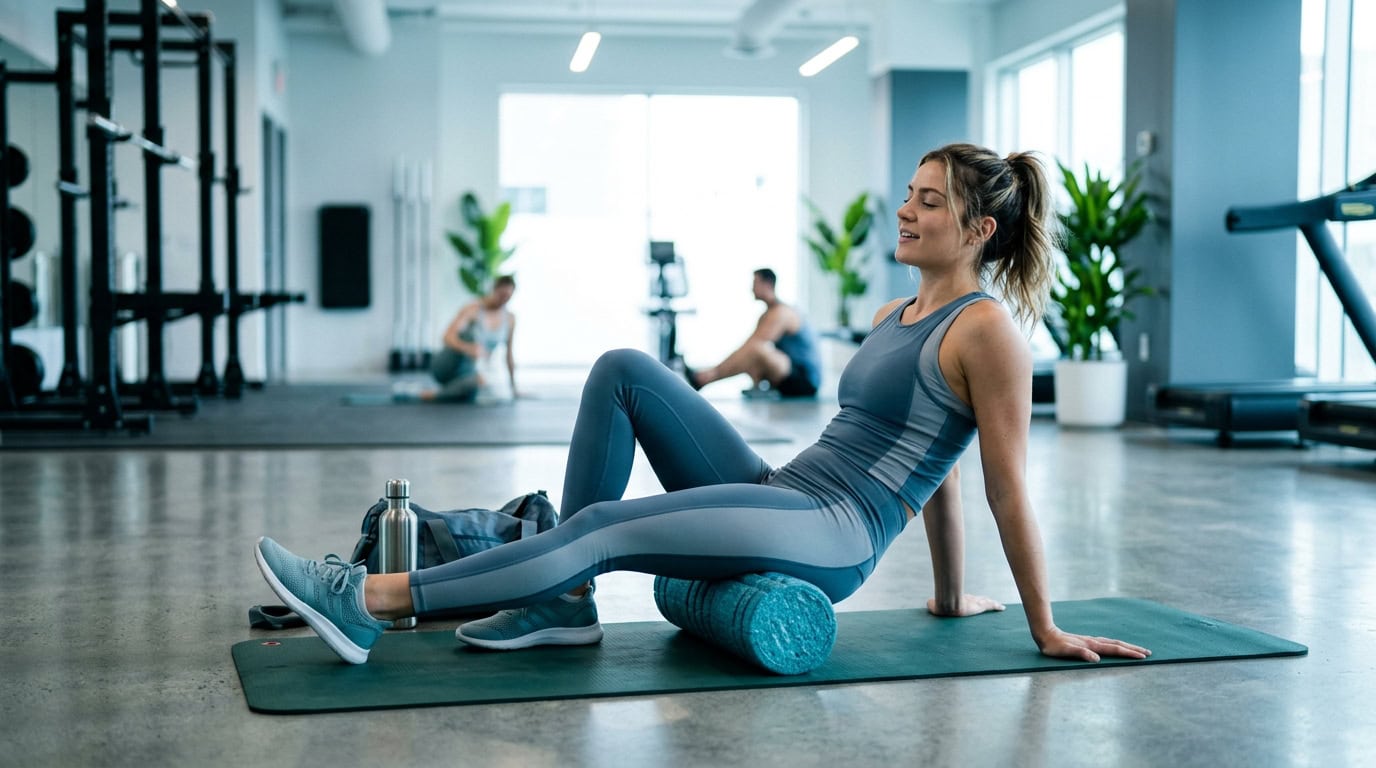
  • Foam rolling for 10–15 minutes

The key is keeping the intensity low. You should feel better afterwards, not more tired.

4. Sleep: Your Most Powerful Recovery Tool

Sleep is when your body releases growth hormone, repairs tissue, and consolidates the adaptations from your training. If your sleep is poor, your recovery will be poor — no matter how well you eat or stretch.

Quick sleep tips:

  • Aim for 7–9 hours per night
  • Keep a consistent bedtime, even on weekends
  • Avoid caffeine after 2pm if you train in the evening
  • Keep your room cool, dark, and quiet
  • Put your phone away 30 minutes before bed

If you are training hard and sleeping less than 6 hours a night, you are working against yourself.

5. Foam Rolling and Stretching

Foam rolling (also called self-myofascial release) helps break up adhesions in your muscle tissue and improve range of motion. It can also reduce the severity of delayed onset muscle soreness (DOMS).

How to do it effectively:

  • Spend 1–2 minutes on each major muscle group
  • Roll slowly — do not rush
  • Pause on tender spots for 20–30 seconds
  • Focus on the areas you trained: quads, hamstrings, glutes, back, calves
  • Follow up with static stretches, holding each for 30 seconds

Most UK gyms have foam rollers available. If yours does not, they are affordable online and one of the best recovery investments you can make.

6. Cold Water Therapy and Contrast Showers

Cold water immersion has become increasingly popular in the UK fitness scene, and for good reason. Cold exposure reduces inflammation, numbs pain, and can speed up perceived recovery.

How to use it:

  • Ice bath: 10–15 minutes at 10–15°C (if you have access)
  • Cold shower: 2–3 minutes of cold at the end of your normal shower
  • Contrast shower: Alternate 1 minute hot / 1 minute cold for 6–8 rounds

Note: Avoid cold water immersion immediately after a strength session if your goal is muscle growth — some evidence suggests it may blunt hypertrophy signals. Save it for after cardio-heavy or endurance sessions.

7. Manage Your Training Load

One of the most overlooked recovery strategies is simply not overdoing it in the first place. Progressive overload works, but jumping from three sessions a week to six overnight is a recipe for burnout and injury.

Smart training tips:

  • Increase volume or intensity by no more than 10% per week
  • Include at least 1–2 rest or active recovery days per week
  • Deload every 4–6 weeks (reduce volume by 40–50%)
  • Listen to your body — persistent fatigue, soreness, or poor performance are signs to ease off

Quick Recovery Checklist

  • ✅ Hydrate with water and electrolytes straight after training
  • ✅ Eat a protein- and carb-rich meal within 2 hours
  • ✅ Do 10–15 minutes of foam rolling or stretching
  • ✅ Get 7–9 hours of quality sleep
  • ✅ Use active recovery the day after an intense session
  • ✅ Manage your training volume to avoid overtraining

The Bottom Line

Recovery is not passive — it is an active process that you can optimise with the right habits. Hydrate, eat well, sleep properly, move gently on rest days, and do not ignore your body when it tells you to ease off. The people who make the best progress are not the ones who train the hardest — they are the ones who recover the best.

If you are looking for a gym that fits your training style and recovery needs, GymPal can help you find the right fit. With thousands of UK gyms listed, from 24-hour facilities to specialist recovery centres, it is the easiest way to discover what is available near you.

  • Gym Anxiety: How to Feel Confident Walking Into Any Gym

    Gym Anxiety: How to Feel Confident Walking Into Any Gym

    Walking into a gym for the first time (or the fiftieth) can be genuinely nerve-wracking. You might worry that everyone’s watching you, that you don’t know what you’re doing, or that you simply don’t “belong” there. If any of that sounds familiar, you’re far from alone — gym anxiety is one of the most common reasons people avoid exercise altogether. (see NHS exercise and mental wellbeing guidance. According to NHS exercise guidelines

    The good news? It gets easier, and there are practical things you can do right now to feel more confident walking through those doors.

    Why Gym Anxiety Is So Common

    A 2023 survey by Mindbody found that nearly half of UK adults have felt intimidated at the gym at some point. The most common triggers? Feeling like everyone else is fitter, not knowing how to use equipment, and worrying about being judged.

    Here’s the thing: almost everyone feels this way at first. Even the person bench-pressing 100kg in the corner was once a nervous beginner. Gym confidence isn’t something you’re born with — it’s something you build.

    8 Practical Tips to Overcome Gym Anxiety

    1. Visit Before You Sign Up

    Most gyms offer a free tour or day pass. Use it. Walk around, see the layout, check out the changing rooms. Familiarity kills anxiety faster than anything else. If a gym won’t let you look around before joining, that’s a red flag.

    2. Go During Off-Peak Hours

    Your first few sessions don’t need to be at 6 PM on a Monday. Try mid-morning, late evening, or weekend afternoons when the gym is quieter. Fewer people means less pressure and more space to figure out the equipment at your own pace.

    3. Have a Plan

    Anxiety loves uncertainty. Walk in knowing exactly what you’re going to do — even if it’s just “20 minutes on the treadmill and some stretches.” Write it down on your phone if you need to. A plan gives you purpose and stops you wandering around feeling lost.

    4. Start With What You Know

    There’s no rule that says you have to use the complicated machines right away. If the treadmill or exercise bike feels safe, start there. Build your confidence with familiar movements before branching out.

    5. Wear Whatever Makes You Comfortable

    You don’t need designer gymwear. Wear whatever you feel good in — oversized t-shirt, joggers, whatever. The gym isn’t a fashion show. Most people are too focused on their own workout to notice what anyone else is wearing.

    6. Use Headphones

    Headphones are the universal “I’m in my own world” signal. Put on a playlist or podcast and create your own bubble. It helps block out the noise and makes the whole experience feel more personal and less performative.

    7. Book an Induction

    Nearly every gym in the UK offers a free induction when you join. Take it. A staff member will show you around, explain how the equipment works, and help you feel at home. It’s literally their job to make you feel welcome.

    8. Remember: Nobody Is Watching You

    This is the biggest truth about gyms. Everyone is focused on their own workout. The person you think is judging you is actually just trying to remember how many reps they’ve done. Once you internalise this, gym anxiety loses a lot of its power.

    Choosing a Gym That Helps With Anxiety

    Not all gyms are created equal when it comes to beginner-friendliness. Here’s what to look for:

    • Friendly staff: Good gyms have approachable team members who say hello and offer help without being pushy.
    • Women-only areas: Many gyms now offer dedicated women’s sections — PureGym, David Lloyd, and local independents often have these.
    • Beginner classes: Classes labelled “intro,” “basics,” or “beginner” are great low-pressure entry points.
    • Clean, well-maintained spaces: A gym that looks after its facility usually looks after its members too.

    Use GymPal to find beginner-friendly gyms near you. You can filter by facilities like women-only areas, read reviews from other members, and compare the vibe before you commit.

    For Gym Owners: How to Make New Members Feel Welcome

    If you run a gym, tackling gym anxiety isn’t just kind — it’s good business. Anxious beginners are the people most likely to cancel within the first month. Here’s how to keep them:

    • Proper inductions: Don’t rush them. Spend 30 minutes showing new members around and explaining the basics.
    • Buddy systems: Pair new members with existing ones for their first few visits.
    • Clear signage: Label equipment zones clearly so newcomers don’t feel lost.
    • Beginner-only sessions: Dedicated time slots for new members remove the intimidation factor entirely.
    • Follow up: A quick message after their first week shows you care and helps build loyalty.

    Make sure your GymPal listing highlights these features — beginners actively search for welcoming gyms, and you want to show up when they do.

    The Bottom Line

    Gym anxiety is real, but it’s also temporary. Every visit gets a little easier. Start small, go at your own pace, and remember that every single person in that gym was once a beginner too. Find a gym that makes you feel welcome on GymPal and take that first step. You’ve got this.

  • CrossFit Gyms in the UK: What to Expect, What It Costs, and How to Get Started

    CrossFit Gyms in the UK: What to Expect, What It Costs, and How to Get Started

    CrossFit has exploded across the UK over the last decade. From converted warehouses in Manchester to purpose-built boxes in London, there are now hundreds of CrossFit affiliates dotted around the country. But if you’ve never tried it, the whole thing can feel a bit intimidating. What actually happens in a CrossFit class? Do you need to be super fit to start? And how much does it cost?

    Here’s everything you need to know about CrossFit gyms in the UK — whether you’re a complete beginner curious about giving it a go, or a gym owner wondering whether CrossFit affiliation could work for your facility. into short, high-intensity workouts. Each day’s workout is called a WOD (Workout of the Day), and it’s different every time you walk through the door.

    Workouts are typically 45-60 minutes including warm-up, skill work, the WOD itself, and a cool-down. They’re led by qualified CrossFit coaches in small groups — usually 8 to 15 people per class.

    What to Expect at a CrossFit Gym

    The Space

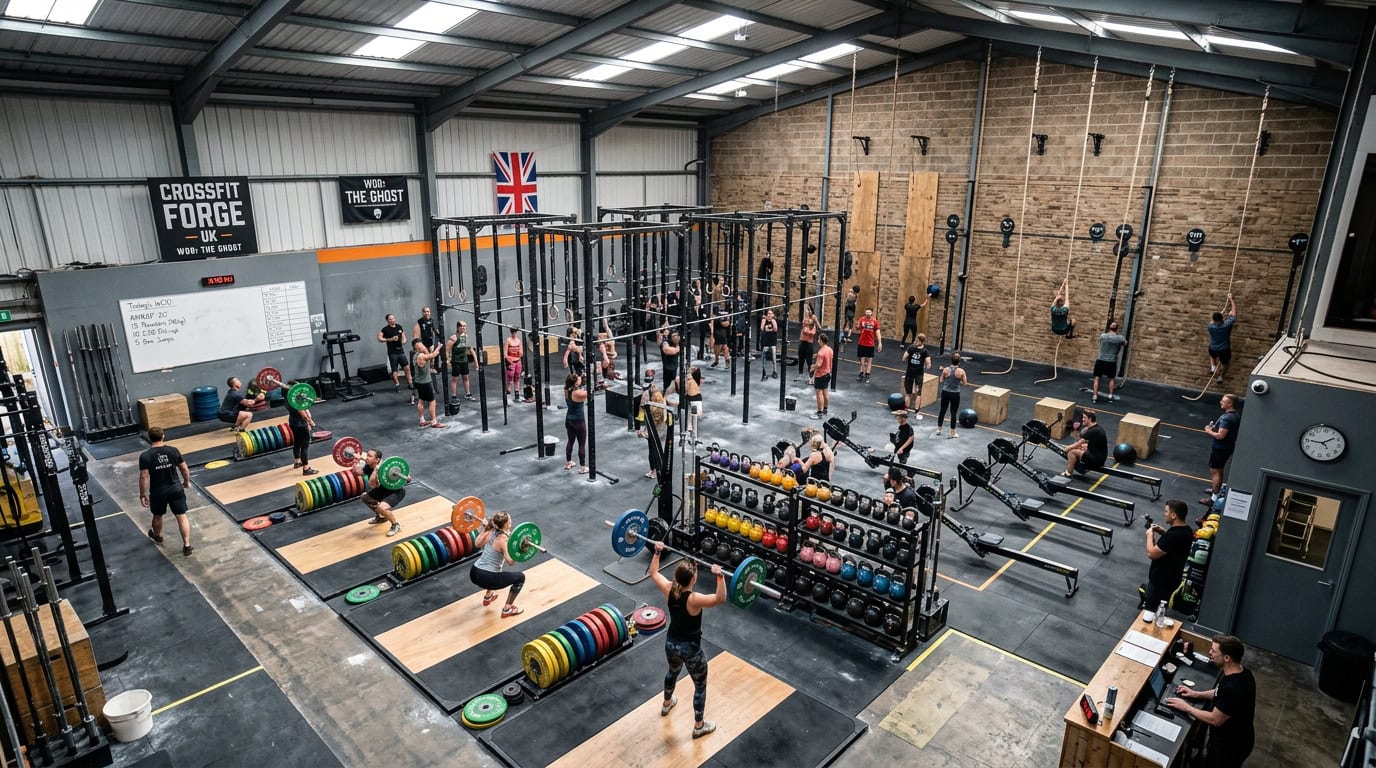
    CrossFit gyms are called “boxes” because, well, many of them started in basic industrial units. Expect rubber flooring, pull-up rigs, Olympic bars and bumper plates, kettlebells, rowing machines, assault bikes, and plenty of open floor space. No machines, no mirrors, no TV screens — just functional training equipment.

    The Community

    This is the bit that surprises most newcomers. CrossFit boxes are genuinely community-driven. You’ll know the names of the people you train with. You’ll cheer each other through the final burpees. Many boxes organise social events, charity workouts, and in-house competitions. It’s a far cry from the anonymous experience of a big commercial gym.

    The Coaching

    Every class is coached. That means someone watching your form, scaling the workout to your ability, and pushing you at the right moments. For beginners, this is invaluable — especially when learning Olympic lifts like the snatch and clean and jerk.

    How Much Does CrossFit Cost in the UK?

    CrossFit memberships are typically more expensive than budget gyms — you’re paying for coached group training, not just floor access. Here’s a rough guide:

    • Drop-in: 10-20 pounds per session (great for trying it out)
    • Unlimited monthly: 80-150 pounds/month (varies by location — London is pricier)
    • 2-3 sessions per week: 60-100 pounds/month
    • Intro / fundamentals course: 50-150 pounds (most boxes require this before joining regular classes)

    Yes, it costs more than a 15 pounds/month budget gym membership. But you’re getting personal-training-level coaching in every session. Compare it to personal training rates (40-80 pounds/hour in most UK cities) and CrossFit starts to look like excellent value.

    Do You Need to Be Fit to Start CrossFit?

    Absolutely not. Every workout is scalable. Can’t do a pull-up? Use a resistance band. Can’t overhead squat with 40kg? Use a PVC pipe. The coach’s job is to make the WOD challenging for you, whatever your starting point.

    Most UK CrossFit boxes run a fundamentals or “on-ramp” course for beginners — typically 3 to 6 sessions covering the basic movements, safety, and gym etiquette. This is the best way to get started without feeling overwhelmed.

    How to Find a CrossFit Gym Near You

    There are over 500 CrossFit affiliates across the UK, so there’s a good chance you’ve got one nearby. Use GymPal to search for CrossFit gyms in your area, compare prices, read reviews, and find the right fit for your goals and budget.

    Most boxes offer a free taster session — book one and see how it feels. There’s no obligation.

    For Gym Owners: Should You Consider CrossFit Affiliation?

    If you run an independent gym and you’re considering adding CrossFit programming, here are a few things to think about:

    • Affiliation fees: CrossFit charges an annual affiliate fee (currently around $3,000 USD/year).
    • Coaching requirements: You’ll need at least one CrossFit Level 1 (CF-L1) certified trainer on staff. The CF-L1 course costs around $1,000.
    • Community appeal: CrossFit builds loyal, engaged memberships. Box members typically stay longer and pay more than standard gym members.
    • Equipment investment: Pull-up rigs, Olympic bars, bumper plates, and gymnastics gear require dedicated space and investment.
    • Marketing advantage: Being an official CrossFit affiliate gives you instant brand recognition within the fitness community.

    Whether or not you affiliate, offering functional fitness classes can be a smart way to differentiate your gym. And if you want more people to find your facility, make sure your GymPal listing is up to date with your class offerings and facilities.

    Ready to Give It a Go?

    CrossFit isn’t for everyone — but you won’t know until you try. Search for CrossFit gyms near you on GymPal, book a free taster session, and see what all the hype is about. Worst case, you get a good workout. Best case, you find a fitness community that changes your life.

  • Best 24-Hour Gyms in the UK: Where to Train Any Time of Day or Night

    Best 24-Hour Gyms in the UK: Where to Train Any Time of Day or Night

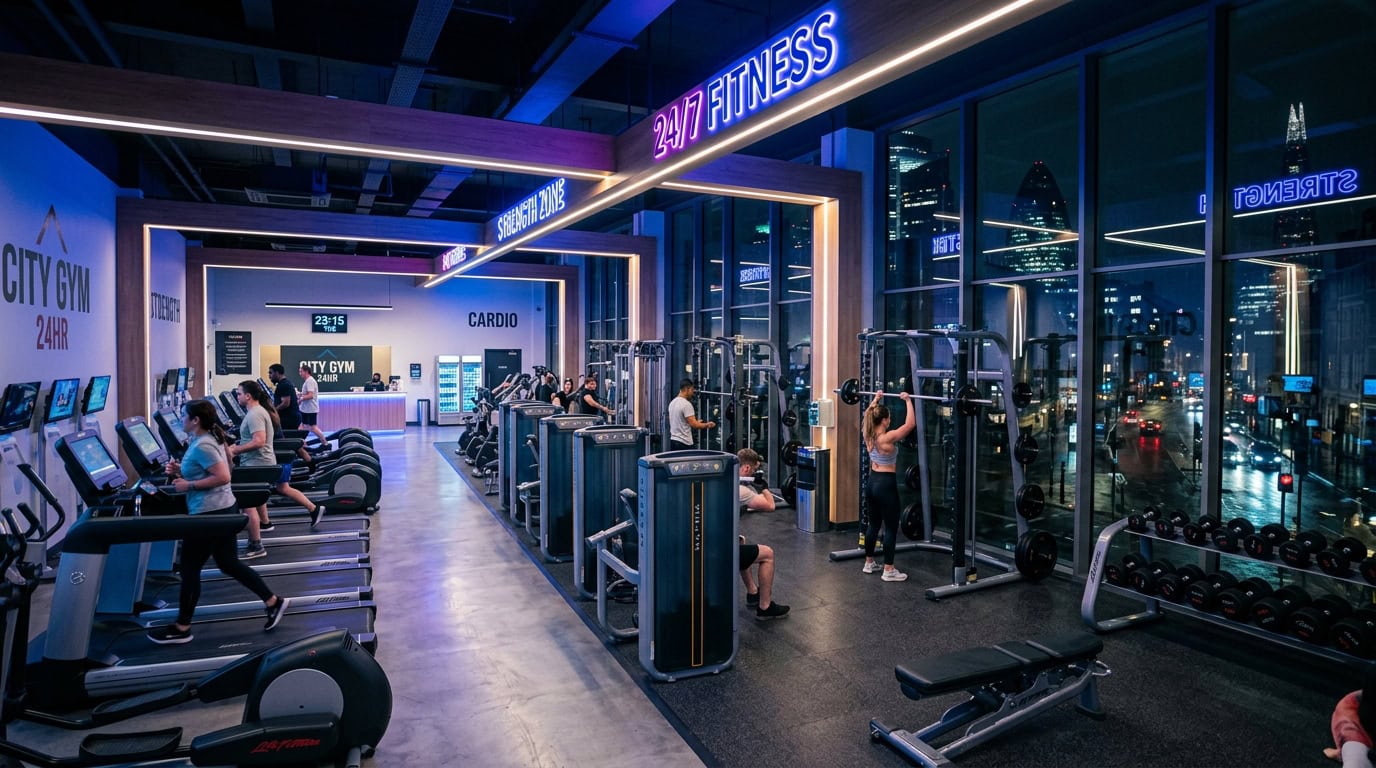
    Not everyone can squeeze in a workout between 9 and 5. Whether you’re an early bird who likes a 5 AM session before work, a shift worker looking for a post-midnight lift, or simply someone who prefers an empty gym, 24-hour gyms are a game-changer. The good news? The UK has plenty of them., and they’ve invested heavily in kit — ThinkKit is their branded equipment range. They also offer a free gym induction for new members.

    Anytime Fitness

    With roughly 180 UK clubs, Anytime Fitness is a global brand that prides itself on community feel alongside 24/7 access. Members get a key fob that works at any Anytime location worldwide — handy if you travel. Monthly fees tend to be higher than PureGym or The Gym Group (typically £25–£40), but you’ll often find more personal training support and smaller, more intimate gym floors.

    JD Gyms

    Backed by the JD Sports group, JD Gyms offers 24-hour access at many of its 60+ UK locations. They position themselves as a step up from the ultra-budget chains, with larger free weight areas, premium equipment, and a more premium feel while still keeping prices reasonable (around £19.99/month).

    Independent 24-Hour Gyms Worth Knowing

    Don’t overlook independent gyms. Many local operators have embraced 24-hour access using key fob or app-based entry systems. These gyms often offer a more specialised experience — think powerlifting platforms, strongman equipment, or dedicated functional training zones that the big chains can’t match.

    To find independent 24-hour gyms near you, GymPal is a great starting point — search your area and filter by the facilities that matter to you.

    What to Look for in a 24-Hour Gym

    • Safety: Look for gyms with CCTV, emergency buttons, and good lighting — especially if you plan to train late at night.
    • Equipment variety: Check whether the gym has enough kit to handle off-peak and peak hours. Some budget gyms strip back equipment in smaller sites.
    • Cleanliness: 24-hour gyms rely on members wiping down equipment. Read reviews to see how well-managed a site is.
    • Accessibility: Make sure the entry system (PIN, app, fob) works reliably. Nothing worse than being locked out at 11 PM.
    • Classes: If you want group fitness, check the timetable — most 24-hour gyms only run classes during staffed hours.

    Tips for Training at Off-Peak Hours

    • Plan your session in advance. With fewer staff around, you won’t have someone to ask for help. Know your workout before you arrive.
    • Bring your own water and towel. Some 24-hour gyms turn off water fountains or vending machines during unstaffed hours.
    • Be mindful of noise. Late-night training is great, but dropping heavy deadlifts at 2 AM won’t win you friends in neighbouring flats.
    • Use GymPal to compare gyms near you. Not all 24-hour gyms are created equal — check reviews, equipment lists, and pricing before committing.

    For Gym Owners: Is 24-Hour Access Worth It?

    If you run a gym and you’re considering extending your hours, the data is encouraging. Members consistently rank flexible hours as one of their top reasons for choosing (and staying with) a gym. The upfront cost of key fob or app-based entry systems and upgraded CCTV has come down significantly, and many operators report that overnight usage is low but growing — driven largely by shift workers and serious lifters who value the quiet.

    If you want more people to find your gym, make sure your GymPal listing is up to date with your opening hours, facilities, and photos. It’s free to claim your listing and it puts you in front of thousands of UK fitness seekers every month.

    Find Your Nearest 24-Hour Gym

    Ready to train on your own schedule? Use GymPal to search for 24-hour gyms in your area. Compare prices, read reviews, and find the gym that fits your life — not the other way around.

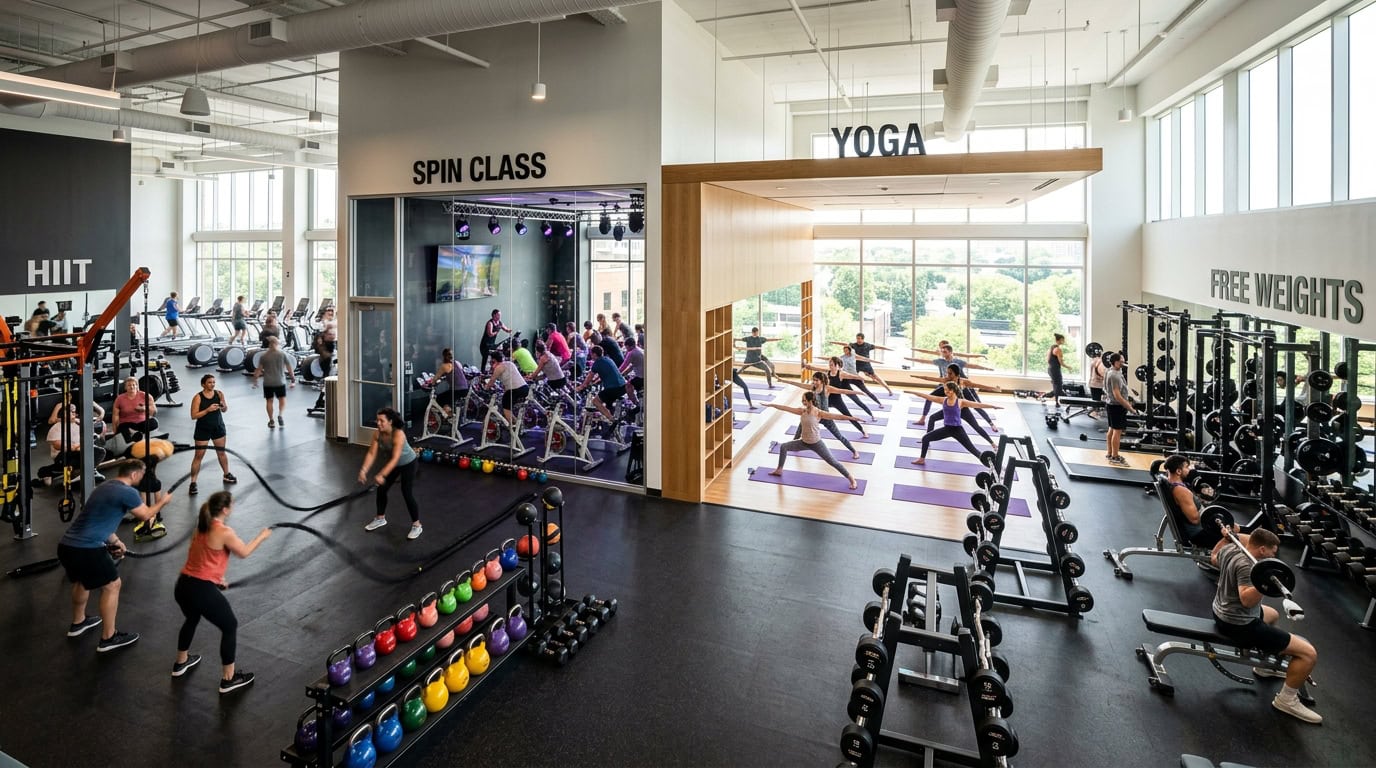
  • HIIT, Spin, Yoga or Weights? How to Pick the Right Gym Class for Your Goals

    HIIT, Spin, Yoga or Weights? How to Pick the Right Gym Class for Your Goals

    Walking into a gym for the first time is overwhelming enough. Walking in and seeing a timetable packed with acronyms — HIIT, LBT, CXWorx — can make you want to turn straight back round.

    Choosing the right gym class shouldn’t feel like sitting an exam. Whether you want to lose weight, build strength, reduce stress, or simply find a workout you actually enjoy, there’s a class for you. The trick is matching the class to your goals — not the other way round.

    In this guide, we’ll break down the most popular gym class types available in the UK, explain who each one is best suited to, and help you figure out where to start. We’ll also show you how to use GymPal to find gyms near you that offer the classes you want.

    Know Your Goals First

    Before picking a class, ask yourself what you actually want to achieve:

    • Fat loss and cardiovascular fitness — you want to get your heart rate up and burn calories
    • Strength and muscle tone — you want to build lean muscle and get stronger
    • Flexibility and recovery — you want to move better, reduce stiffness, or complement other training
    • Mental wellbeing and stress relief — you want exercise that calms your mind as much as your body
    • Social motivation — you want the energy of a group to keep you showing up

    Most people want a combination of these. The good news? Many classes tick several boxes at once.

    HIIT Classes — The Calorie Crusher

    What it is: High-Intensity Interval Training alternates between short bursts of all-out effort and brief recovery periods. A typical class lasts 30–45 minutes.

    Best for: Fat loss, cardiovascular fitness, time-pressed gym-goers.

    What to expect: Burpees, sprints, kettlebell swings, box jumps, and bodyweight exercises. You’ll be working at 80–95% of your maximum heart rate during the intense intervals.

    Who should think twice: Complete beginners with no exercise background might want to build a base fitness level first. If you have joint problems, check with the instructor about modifications.

    GymPal tip: Many UK gyms now offer HIIT classes under different names — Metafit, Tabata, Sprint, or simply “HIIT.” Use GymPal to search for gyms in your area and check their class timetables before you commit to a membership.

    Spin Classes — Low Impact, High Intensity

    What it is: Indoor cycling on stationary bikes, typically led by an instructor who controls the pace, resistance, and intervals. Classes range from 30 to 60 minutes.

    Best for: Cardiovascular fitness, lower-body endurance, calorie burning without joint stress.

    What to expect: You’ll adjust your bike’s resistance to simulate hills, sprints, and flat roads. Most classes are set to high-energy music. Some studios, like Les Mills RPM or Peloton-style classes, add structured programming.

    Who should think twice: If you have lower back issues or knee problems, make sure the bike is set up correctly — most instructors will help you with this before the class starts.

    Yoga Classes — Strength Meets Stillness

    What it is: A range of classes from gentle stretching (Hatha, Yin) to athletic, sweat-inducing flows (Vinyasa, Ashtanga, Power Yoga). According to NHS guide to yoga

    Best for: Flexibility, core strength, stress relief, recovery, and mental focus.

    What to expect: Depending on the style, you might hold poses for several minutes (Yin), flow dynamically between postures (Vinyasa), or work in a heated room (Hot Yoga/Bikram). Most classes end with a few minutes of guided relaxation.

    Who should think twice: If you’re looking for a pure calorie burn, yoga alone won’t match HIIT or spin. But as a complement to other training, it’s invaluable for injury prevention and mobility.

    Pilates — Core Strength and Posture

    What it is: A low-impact method focusing on core stability, posture, alignment, and controlled movement. Mat Pilates uses bodyweight; Reformer Pilates uses a sliding carriage with springs.

    Best for: Core strength, back pain relief, posture correction, postnatal recovery.

    What to expect: Small, precise movements that target deep stabilising muscles. It doesn’t look exhausting, but you’ll feel it the next day. Reformer classes tend to be more intense and are increasingly popular across UK gyms.

    Body Pump and Strength Classes — Build Lean Muscle

    What it is: Barbell-based group strength training (Les Mills BodyPump is the most common format). You work through a full-body routine set to music, using adjustable weights.

    Best for: Muscle tone, strength endurance, bone density, metabolic boost.

    What to expect: Squats, lunges, chest presses, dead rows, shoulder presses, and core work — all done with a barbell in a group setting. The instructor demonstrates each track and encourages you to choose your own weight.

    Who should think twice: If you want to build maximum strength or muscle size, you’ll eventually need to move to the free weights area. But BodyPump is an excellent starting point and a great way to learn proper form.

    Circuit Training — All-Round Fitness

    What it is: Rotating through a series of exercise stations with minimal rest. Each station targets a different muscle group or fitness component.

    Best for: Total-body conditioning, fat loss, variety, all fitness levels.

    What to expect: You might do 30–60 seconds at each station — press-ups, lunges, battle ropes, box steps, rowing machine — then move to the next. Classes are usually 45 minutes and scale to different ability levels.

    Dance Fitness — Fun That Doesn’t Feel Like Exercise

    What it is: Zumba, Dance Fit, Clubbercise, and similar classes that combine dance routines with cardio exercise.

    Best for: Cardiovascular fitness, coordination, mood boosting, anyone who finds traditional gym workouts boring.

    What to expect: Follow-along dance routines set to upbeat music. No dance experience required — it’s about moving, not performing. You’ll burn anywhere from 300–600 calories per session.

    Boxing and Combat Classes — Stress-Busting Conditioning

    What it is: Group fitness classes based on boxing techniques — pads, bags, and bodyweight drills. Think Boxercise, Boxx, or gym-specific boxing fitness classes.

    Best for: Cardiovascular fitness, upper-body conditioning, stress relief, coordination.

    What to expect: A mix of punching combinations, pad work, footwork drills, and bodyweight exercises. Most classes don’t involve any contact — you’ll work on bags or with a partner holding pads.

    How to Choose the Right Class for You

    Here’s a quick reference to help you decide:

    Your Goal Best Classes to Start With
    Lose weight / burn fat HIIT, Spin, Circuit Training
    Build strength / tone up BodyPump, Circuit Training, Pilates
    Improve flexibility / reduce pain Yoga, Pilates
    Reduce stress / mental health Yoga, Boxing, Dance Fitness
    Get started as a beginner Circuit Training, Spin, Dance Fitness
    Train with an injury Spin (low impact), Pilates, Yoga (with modifications)

    Mixing Classes for Balanced Fitness

    The best approach for most people is a combination:

    • 2–3 cardio-focused classes per week (HIIT, spin, or boxing)
    • 1–2 strength classes (BodyPump, circuit training)
    • 1 flexibility/recovery session (yoga or Pilates)

    This balance gives you the cardiovascular benefits of aerobic training, the metabolic boost of strength work, and the injury prevention that comes from regular mobility practice.

    Finding the Right Gym for Your Class Schedule

    Not every gym offers every class — and class timetables vary enormously. Before you sign up for a membership, check that the gym actually runs the classes you want at times you can attend.

    GymPal makes this easy. You can search for gyms in your area, filter by the facilities and classes they offer, and compare timetables side by side. Whether you’re looking for a gym with a dedicated spin studio, one that offers Reformer Pilates, or simply a place with a packed HIIT timetable, GymPal helps you find the right fit without the guesswork.

    Final Tips for Your First Class

    • Arrive 10 minutes early — introduce yourself to the instructor and let them know you’re new
    • Don’t go all-out on day one — pace yourself and learn the format first
    • Wear comfortable, breathable clothing and proper trainers (flat soles for weights, cushioned for HIIT)
    • Bring a water bottle — most classes will have water fountains but you’ll want your own supply
    • Don’t compare yourself to anyone — everyone in that room was a beginner once

    The best gym class is the one you’ll actually go to. Start with whatever sounds fun, give it a few sessions to get comfortable, and don’t be afraid to try something new. Your perfect workout is out there — and GymPal can help you find it.