Blog

  • Is Your UK Gym Ready for the Summer Fitness Rush? A Checklist for Gym Owners

    Is Your UK Gym Ready for the Summer Fitness Rush? A Checklist for Gym Owners

    Summer is nearly here, and with it comes a predictable surge in fitness enquiries. Every year, thousands of people in the UK search for gyms, classes, and personal trainers as the weather warms up and the holiday season looms — just like the January fitness rush, summer creates a predictable surge in demand. If your gym isn’t prepared, those potential members will find your competitors instead. (see ukactive State of the UK Fitness Industry report. According to Sport England Active Lives survey

    The good news? A few focused actions now can make the difference between a quiet July and your busiest summer yet. Here’s your eight-point checklist to make sure your gym is ready.

    1. Claim and Optimise Your GymPal Listing

    This is the single fastest thing you can do. Claim your GymPal business listing so that people searching for gyms in your area find accurate, up-to-date information about your facility. An unclaimed listing looks neglected — a claimed one signals an active, welcoming gym. Add your opening hours, facilities, class timetable, and a strong description. It takes ten minutes and it’s free.

    2. Update Your Google Business Profile

    Your Google Business Profile is often the first impression potential members get. Refresh your summer opening hours, upload recent photos of your space and equipment, and encourage current members to leave reviews. A well-maintained profile builds trust before someone even clicks through to your website.

    3. Refresh Your Website Contact Information

    Double-check that your phone number, email address, and location map are all correct. Broken links, old phone numbers, or out-of-date class timetables frustrate visitors and cost you sign-ups. If you don’t have a website at all, your GymPal listing can serve as your primary online presence in the meantime.

    4. Launch a Summer Introductory Offer

    A time-limited summer offer is one of the most effective ways to convert enquiry into commitment. Consider a discounted first month, a free week trial, or a reduced-rate summer membership. Promote it on your GymPal listing, social media, and in-club posters. Keep the terms simple — the easier it is to understand, the more people will take you up on it.

    5. Stress-Test Your Booking and Enquiry System

    When enquiry volume spikes, the last thing you want is a clunky sign-up flow or a contact form that nobody checks. Test your online booking system end to end. Make sure enquiry emails route to the right person and that auto-responses are turned on. If you’re still relying on a spreadsheet and WhatsApp messages, consider upgrading — there are affordable options that will save you hours every week. GymPal Pro starts at just £9/month and puts direct enquiries from local fitness seekers in one place.

    6. Plan Your Summer Social Media Calendar

    Consistent social media activity keeps your gym visible during the months when people are actively looking. Avoid the pitfalls many gym owners fall into — check our guide to the 5 gym marketing mistakes to make sure your summer campaigns are on track. Plan at least two posts per week: mix member success stories, behind-the-scenes content, class spotlights, and seasonal promotions. Batch-creating content in advance means you won’t be scrambling during a busy week.

    7. Confirm Staff Cover for the Holiday Period

    Summer holidays mean staff absences — and nothing damages your reputation faster than cancelled classes or a reception desk that’s suddenly unstaffed. Confirm holiday cover now, cross-train team members where possible, and consider bringing in temporary staff for peak weeks. Your members and walk-ins should never notice a dip in service. If converting those walk-ins into signed-up members is a challenge, our guide on getting more walk-in members has you covered.

    8. Set Up a Member Referral Campaign

    Word of mouth is the most powerful driver of new gym sign-ups, and summer is the ideal time to harness it. Offer existing members an incentive — a free guest pass, a discount on their next month, or branded merchandise — for every new member they refer. Make it easy by providing shareable links or printable referral cards.

    Get Started Today

    You don’t need to tackle all eight items at once. Start with claiming your GymPal listing — it’s quick, free, and puts your gym in front of people who are already searching. Then work through the rest of the checklist at your own pace. Your summer members are out there right now, looking for the right gym. Make sure they find yours.

    Claim your free GymPal listing →

  • How UK Gym Owners Can Build a 5-Star Online Reputation

    How UK Gym Owners Can Build a 5-Star Online Reputation

    When someone in your area searches for “gym near me,” what do they find? If you want to rank higher in those local results, our local SEO primer for UK gym owners is the place to start. Chances are, they find your competitors — not because those gyms are better, but because they show up first with a wall of five-star reviews. (see ukactive State of the UK Fitness Industry report. According to Sport England Active Lives survey

    Your classes might be outstanding. Your equipment might be top-tier. But if your online reputation is thin, you’re losing members before they even walk through your door.

    Why Online Reputation Is the #1 Gym Selection Factor

    Research consistently shows that over 90% of people read online reviews before choosing a local business. For gyms specifically, potential members want social proof that your facility delivers results, has a welcoming atmosphere, and is worth their monthly subscription.

    A gym with 50+ positive reviews will outperform a gym with none — even if the unreviewed gym is objectively better. That’s the reality of how people choose services in 2026. Reviews have replaced word-of-mouth as the primary trust signal, and gyms that ignore this shift are leaving members on the table.

    Claim and Optimise Your GymPal Listing

    Your first move should be claiming your profile on GymPal. GymPal is the UK’s dedicated fitness directory, and thousands of people use it every month to find gyms, studios, and personal trainers near them.

    An unclaimed listing looks neglected. Claiming it lets you add accurate opening hours, upload quality photos, list your classes, and respond to member feedback. For a full strategy on getting your gym found online, read our free directory strategy guide. It takes minutes but the impact is lasting — a complete, owner-verified profile builds immediate trust with people comparing gyms in your area.

    Claim your GymPal business listing here to get started.

    Google Business Profile Reviews: How to Ask Without Incentivising

    Google reviews carry enormous weight in local search rankings — for a complete playbook, see our guide to getting more Google reviews for your UK gym. The key is asking at the right moment — when a member is feeling positive about their experience. Train your front desk team to say something simple: “If you’re enjoying your time with us, a Google review really helps us reach more people like you.”

    Never offer discounts or freebies in exchange for reviews. It’s against Google’s policies and, more importantly, it undermines the authenticity that makes reviews valuable in the first place. Genuine reviews from real members will always outperform incentivised ones. Consider adding a QR code at reception that links directly to your Google review page — removing friction is half the battle.

    Responding to Negative Reviews Like a Professional

    Negative reviews will happen. A missed class, a billing issue, or a clash of personalities — it’s part of running any service business. How you respond is what potential members actually notice.

    Acknowledge the issue quickly. Apologise for the experience, not necessarily for a mistake. Offer to resolve it offline by providing a contact email or asking them to speak with a manager. A measured, professional response to criticism shows prospective members that you care about every individual’s experience.

    Use Your GymPal Profile to Showcase Your Strengths

    Your GymPal listing is more than a directory entry — it’s a mini-website for your gym. Upload photos of your facilities, detail your class timetable, and highlight what makes you different. Whether it’s specialist equipment, expert trainers, or a strong community vibe, make sure visitors can see it at a glance.

    For gym owners who want to stand out further, GymPal’s Pro plan puts your listing in front of people using GymPal’s AI chatbot — a channel that’s growing fast as more fitness seekers turn to conversational search.

    The Compounding Effect: Reviews Drive More Reviews

    Here’s the thing about online reputation — it compounds. A profile with 30 reviews encourages the 31st person to leave one. People follow social cues. A strong base of existing reviews makes new members more likely to add their own, which attracts even more prospective members searching for gyms.

    The gym owners who win are the ones who start now. Every review you earn today makes the next one easier to get. Claim your profiles, ask your members, and respond to feedback. Over time, that consistent effort becomes an unfair advantage your competitors can’t easily replicate.

    Ready to take control of your gym’s online presence? Claim your free GymPal listing and start building the reputation your gym deserves.

  • The UK Gym Owner Guide to Getting More Walk-In Members in 2026

    The UK Gym Owner Guide to Getting More Walk-In Members in 2026

    Member acquisition is the one problem every independent gym owner in the UK shares. You have the facility, the equipment, the coaches — but getting new people through the door is a different challenge entirely. The market is competitive, marketing budgets are tight, and the big chains have advantages you cannot match on spend alone. for every new person they refer who signs up. Make the offer visible in your gym — on the notice board, at reception, and in your member emails. Do not overcomplicate it with tiers or points systems. Keep it simple, and track it manually at first.

    4. Nail the First-Visit Experience

    The first visit is where you win or lose a potential member for life. Yet most gyms treat walk-ins as an afterthought — a quick tour, a price list, and a “let us know if you have questions.”

    Instead, make it personal. Greet them by name if they booked ahead. Introduce them to one member of staff they can ask questions. Show them how the gym fits their specific goals — whether that is strength training, classes, or general fitness. Let them try a class or a session for free if you can. The goal is not to sell them a membership on the spot; it is to make them feel like they already belong.

    People who feel welcomed on their first visit are far more likely to join — and even more likely to tell someone else about your gym.

    5. Partner With Local Businesses

    Your potential members are already in your area. They visit physiotherapists, join running clubs, play in five-a-side leagues, and shop at local health food shops. These businesses share your target audience.

    Reach out to local physios, sports clubs, and wellness businesses and propose a reciprocal arrangement: they refer clients to your gym, and you display their flyers or mention them to your members. You can also offer a discounted first month to members of partner organisations. It costs you little, and it puts your gym in front of people who are already health-conscious and likely to convert.

    6. Convert Free Trials Into Paying Members

    Free trials are standard in the industry, but most gyms run them without a conversion strategy. Someone turns up for their free session, works out, and leaves — and you never hear from them again.

    Change the approach. During the trial, collect their contact details and follow up within 24 hours with a message that references something specific from their visit — the class they tried, the goal they mentioned, the exercise they enjoyed. Pair the follow-up with a time-limited offer: a reduced first month if they sign up within 48 hours. A personal touch at the right moment makes a significant difference to conversion rates.

    Start With the Easiest Win

    You do not need to implement all six tactics at once. Start with claiming your online listings — it takes five minutes and has an immediate impact on how potential members find you. Then build from there.

    Claim your free GymPal listing now and make sure your gym shows up the way it should. For even more visibility, check out GymPal’s Pro plan — priority placement and AI chatbot access for just £9 a month.

    The gym market in the UK is not getting any less competitive. But the gym owners who win are the ones who show up where people are already looking. Make sure that is you.

  • How to Get Your UK Gym Found Online — The Free Directory Strategy

    How to Get Your UK Gym Found Online — The Free Directory Strategy

    If someone in your town searches "gyms near me" right now, does your gym show up? (see ukactive State of the UK Fitness Industry report. According to Sport England Active Lives survey

    If the answer is "I'm not sure" or "probably not," you're not alone. Most independent gym owners focus on what happens inside their four walls — the equipment, the classes, the coaches. But if nobody can find you online, all of that effort is invisible to the people who'd benefit from it most.

    Here's the good news: getting discovered doesn't require a marketing budget, an SEO agency, or a social media following. It requires about 30 minutes and a free directory strategy.

    Why local search matters more than you think

    Nearly half of all Google searches have local intent. That means people aren't just browsing fitness content — they're actively looking for a gym to join. They type things like:

    If your gym doesn't appear in those results, those searchers walk through someone else's doors.

    This isn't about outspending big chains on Google Ads. It's about being present in the places people already look. Free directories are the quickest way to do that.

    What the free directory strategy looks like

    The approach is simple: claim a listing on every free platform that matters. Each one is another digital doorway into your gym. The big ones are:

    Google Business Profile — This is non-negotiable. It powers your Google Maps listing and local search results. Claim it, fill in every field, add photos, and encourage members to leave reviews.

    Yelp — Still heavily used for local business searches in the UK. A completed Yelp profile with a few reviews can rank well on its own.

    TripAdvisor — Yes, really. People searching for gyms in areas they're visiting, or new residents researching their neighbourhood, check TripAdvisor.

    GymPal — This is the one built specifically for gyms. It's a directory where people actively search for fitness services, and it's free to list your business.

    Each listing takes 5–10 minutes to set up. Do all four and you've opened four new channels for member discovery.

    Why GymPal deserves your attention

    GymPal is different from general-purpose directories because it's built for the fitness industry. When someone lands on GymPal, they're already looking for a gym — not a restaurant, not a plumber, a gym.

    To claim your free listing, head to askgympal.co.uk/claim-your-business. You'll add:

    • Your gym name, address, and contact details
    • A description of what makes your gym unique
    • Your facilities and equipment
    • Membership pricing or a link to your pricing page
    • Class timetables if you run them
    • Photos of your space

    Once claimed, potential members can find you through GymPal's search and filters. They can compare your gym with others in the area, see what you offer, and contact you directly — no middleman, no referral fee.

    What happens after you claim

    Here's what most gym owners don't realise: an unclaimed listing is a wasted listing. When you claim your profiles, you control the narrative. You update the hours, respond to reviews, add new classes, and keep your information accurate.

    On GymPal specifically, a claimed listing lets you:

    • Keep your details current as your business evolves
    • Communicate directly with interested prospects
    • Stand out from competitors who haven't bothered to claim theirs

    Think of it like having a shop window on the high street but never opening the blinds. Claiming your listing is opening the blinds.

    The 30-minute action plan

    Don't overthink this. Here's what to do today:

    1. Google Business Profile — Claim or create yours at business.google.com. Fill in every field.
    2. Yelp — Search for your gym on yelp.co.uk. If it's listed, claim it. If not, add it.
    3. GymPal — Go to askgympal.co.uk/claim-your-business and set up your free listing.
    4. Ask your members — Next time someone says they found you online, ask where. That tells you which channels are working.

    If you want to go further, GymPal offers a Pro listing for £9 a month that puts you in front of more searchers and gives priority placement in GymPal's AI chatbot. But start with the free listings — they're the foundation.

    Your gym is already doing the hard work. Make sure people can find it.

    Ready to get listed? Claim your free GymPal listing in under five minutes.

    Want more visibility? See what Pro listing offers.

  • 5 Gym Marketing Mistakes UK Gym Owners Are Making Right Now

    5 Gym Marketing Mistakes UK Gym Owners Are Making Right Now

    5 Gym Marketing Mistakes UK Gym Owners Are Making Right Now

    You’re running a solid gym. The equipment’s good, the trainers know their stuff, and your members love it. So why aren’t new people walking through the door? (see ukactive State of the UK Fitness Industry report. According to Sport England Active Lives survey

    Here’s the uncomfortable truth: most UK gym owners are making the same marketing mistakes — and they’re leaving members on the table for the bigger chains to scoop up. Let’s fix that.

    1. Not Claiming Your Online Directory Listings

    When someone near your gym searches “gyms near me” or “personal trainer [your town]”, Google fires back a map with a list of businesses. If your gym isn’t there — or worse, it’s there with wrong opening hours and no photos — you’ve already lost that lead.

    Most gym owners assume they’re listed because they registered with Companies House or had a Yelp listing years ago. But directories like GymPal are where fitness seekers actually go to compare options. If you haven’t claimed your listing, you’re invisible to the people actively looking for you.

    The fix: Claim your free GymPal listing today. It takes five minutes and puts you in front of thousands of people already searching for a gym like yours.

    2. Having No Photos on Your Business Profiles

    Think about how you choose a restaurant. You check the photos, right? Gym-goers do the same thing.

    A listing with no images signals one of two things: this place doesn’t care about its presentation, or it’s no longer open. Neither is good. You don’t need professional shots — well-lit phone photos of your equipment, training floor, and classes work perfectly.

    The fix: Add at least 5–10 photos to every platform where your gym appears. Show the weights room, the studio space, your team in action. Let people imagine themselves training there.

    3. Ignoring Online Reviews

    Reviews are word-of-mouth at scale, and UK consumers trust them. A gym with zero reviews looks suspicious. A gym with a handful of negative ones and no replies from the owner looks worse.

    The good news is you don’t need hundreds of five-star reviews to win. You just need a consistent stream of genuine feedback and a habit of responding to every review — positive and negative.

    The fix: Ask your happy members to leave a review on Google and GymPal. Reply to every review within 48 hours. Thank the positives, address the negatives constructively. It shows potential members you’re engaged and care.

    4. Not Tracking Where New Members Come From

    “How did you hear about us?” isn’t a rhetorical question — it’s data. Yet most independent gym owners have no idea which of their marketing efforts are actually bringing in members.

    You might be spending money on Facebook ads that generate zero sign-ups, while your Google Business Profile is quietly sending you ten new members a month. Without tracking, you’re guessing with your budget.

    The fix: Every new member signup should include a source question. Keep a simple spreadsheet or use your CRM. After 60 days, you’ll know exactly where to double down and where to cut spend.

    5. Competing on Price Instead of Experience

    PureGym can afford to charge £20 a month because they have 300 locations and no personal touch. You cannot win that race — and you shouldn’t try.

    Independent gyms and boutique studios win on community, coaching quality, and atmosphere. Members choose you because they want to be part of something, not because you’re the cheapest option in town.

    The fix: Stop leading with price in your marketing. Lead with what makes you different — your trainers, your classes, your community. Charge what you’re worth and communicate the value.

    Start With the Quick Win

    These five mistakes all have one thing in common: they’re fixable today, and most of them cost nothing.

    The fastest thing you can do right now is claim your free GymPal listing. It takes minutes, it’s free, and it puts your gym in front of people who are actively searching for somewhere to train.

    Want to stand out even more? Check out GymPal Pro for priority placement and visibility features — from just £9 a month.

  • How to List Your Gym on GymPal — Free in 5 Minutes

    How to List Your Gym on GymPal — Free in 5 Minutes

    If you run a gym, boxing studio, Pilates class, or any fitness business in the UK, there is a good chance your business is already listed on GymPal — and you just don’t know it. (see ukactive State of the UK Fitness Industry report. According to Sport England Active Lives survey

    GymPal now has over 10,000 UK gym listings in its directory. The problem? Thousands of them are unclaimed. That means potential members are finding your gym online, but seeing an incomplete profile with no photos, no opening hours, and no way to contact you.

    Here is why claiming your listing matters — and how to do it in under five minutes.

    What Happens When Your Listing Is Unclaimed

    Think about the last time you searched for a restaurant online and found a page with no photos, no menu, and no phone number. You probably moved on to the next option. The same thing happens with gyms.

    Unclaimed listings on GymPal show only basic information — usually just a name and postcode. There are no photos of your equipment, no class timetables, no reviews from happy members, and no direct way for interested people to get in touch. That is a missed opportunity every single day.

    GymPal connects over a million fitness seekers with gyms in their area. If your profile is incomplete, those people are choosing your competitors instead.

    Why Claiming Your Listing Is Worth Five Minutes

    Claimed listings see up to four times more profile clicks than unclaimed ones. That is a direct consequence of having real photos, up-to-date information, and an active presence. Gym owners who take control of their profile give potential members a real reason to walk through the door — instead of clicking on to the next option.

    Consider the numbers. GymPal has over a million active fitness seekers using the platform. Every day, people are searching for gyms in their area, comparing options, and making decisions based on what they see online. If your profile is the one with photos, clear pricing, and a welcoming description, you win that click.

    The process is straightforward:

    1. Search for your gym on GymPal by name, location, or postcode
    2. Click “Claim” on your listing
    3. Verify your ownership with your business email and contact details
    4. Update your profile with photos, hours, classes, and pricing

    That is it. No credit card required, no contracts, no catch. Your basic listing stays free forever.

    What You Get With a Claimed Listing

    Once you claim your gym, you unlock full control over your profile:

    • Unlimited photos — Show off your space, equipment, and atmosphere
    • Accurate information — Keep your hours, classes, and contact details up to date
    • Direct communication — Respond to enquiries and convert leads into members
    • Review management — Engage with feedback and build trust in your community
    • Performance insights — See how many people are viewing and clicking your profile

    For gym owners who want even more visibility, the Pro plan is available at £9 per month. It includes priority placement in search results and priority access through GymPal’s AI chatbot. But the free plan is more than enough to start getting discovered — and it does not cost a penny.

    How to Get Started Right Now

    If your gym is already in the GymPal directory, claiming it takes less than five minutes. Head to the claim page, search for your business, and follow the steps.

    Can’t find your gym? No problem. You can register as a business owner and add it to the directory for free. Either way, you will have a complete, professional profile that works for you around the clock — reaching local fitness seekers who are already looking for exactly what you offer.

    The Competition Is Already There

    This is not a “nice to have” — it is basic online housekeeping. Other gyms in your area are already claiming their listings, adding professional photos, and responding to enquiries. Every day your profile sits incomplete is another day those potential members choose someone else.

    UK gym owners are catching on. The question is not whether you should be listed online — it is whether you can afford not to be. A free, five-minute setup is the lowest-effort, highest-return marketing move you will make this year.

    Claim your free GymPal listing now

    For more on why GymPal is the fastest-growing fitness directory in the UK, read our full guide on why you should list your business.

  • How to Stay Motivated When You Don’t Feel Like Going to the Gym

    How to Stay Motivated When You Don’t Feel Like Going to the Gym

    We’ve all been there. Your alarm goes off, your gym bag is packed, and yet somehow the sofa feels like it’s been glued to your back. Skipping one session turns into two, then a week, and before you know it your membership is collecting more dust than your running shoes. If this sounds familiar, you’re not alone — and you’re certainly not beyond help.

    Motivation is not a personality trait — it’s a feeling. And like all feelings, it comes and goes. Research shows that the average person’s motivation to exercise fluctuates significantly day to day, and relying on willpower alone is one of the most common reasons people quit the gym within the first three months.

    The fitness industry often sells us the idea that if we just “want it enough,” we’ll always feel like training. That’s a myth. The people who maintain long-term gym habits aren’t necessarily more motivated than you — they’ve simply built systems that work regardless of how they feel on any given day.

    7 Practical Strategies to Keep Yourself Going

    1. Start Ridiculously Small

    The biggest mistake new gym-goers make is setting the bar too high. Telling yourself “I’m going to train for an hour, five days a week” when you’ve been inactive for months is a recipe for burnout. Instead, commit to just 15 minutes. Walk through the gym doors, do a quick warm-up, and if you still want to leave after that, you can. Most of the time, once you’re there and moving, you’ll carry on. The hardest part is always showing up.

    2. Schedule It Like a Work Meeting

    If you wouldn’t skip a meeting with your boss, don’t skip your gym session with yourself. Block out time in your calendar and treat it as non-negotiable. Many UK gyms now open early and close late — 24-hour gyms are becoming increasingly popular for exactly this reason, giving you no excuse to miss a session regardless of your schedule.

    3. Find Your “Why” (and Write It Down)

    vague goal like “get fit” won’t carry you through the days when motivation is zero. You need a specific, personal reason. Maybe it’s keeping up with your kids, managing stress, or feeling confident on holiday. Write it down and put it somewhere you’ll see it daily — on your fridge, as your phone wallpaper, or inside your gym bag.

    4. Pair It With Something You Enjoy

    Exercise doesn’t have to mean grinding through workouts you hate. If you love music, create a playlist you only listen to at the gym. If you’re social, join group classes or find a gym buddy who’ll hold you accountable. If you’re competitive, track your progress and celebrate personal bests. The more enjoyable you make the experience, the less you’ll need to rely on pure discipline.

    5. Use the “Two-Day Rule”

    Missing one gym session is fine — life happens. But commit to never missing two days in a row. This simple rule prevents short breaks from becoming long-term abandonment. It’s forgiving enough to be sustainable but firm enough to keep you on track.

    6. Prepare the Night Before

    Decision fatigue is real. If you have to decide what to wear, what exercises to do, and what to pack every morning, you’re adding friction to an already difficult process. Lay out your gym clothes, prepare your bag, and even plan your workout the night before. When the alarm goes off, everything should be ready to go — no thinking required.

    7. Choose a Gym That Fits Your Lifestyle

    Sometimes the problem isn’t you — it’s the gym. If your gym is a 30-minute drive away, has limited opening hours, or feels intimidating, you’ve already stacked the odds against yourself. Using a platform like GymPal, you can search thousands of UK gyms by location, price, facilities, and reviews to find one that actually suits your needs. A gym that’s convenient, welcoming, and well-equipped makes showing up dramatically easier. Whether you need a budget-friendly option or something more specialist, there’s a gym out there that fits.

    What to Do When You’ve Fallen Off the Wagon

    First, stop beating yourself up. Guilt is one of the worst motivators. Second, don’t try to make up for lost time by going twice as hard — that leads to injury and burnout. Simply start again with your smallest possible session. A 20-minute walk on the treadmill counts. A few stretches and a shower counts. The goal is to rebuild the habit, not to punish yourself for breaking it.

    Remember: fitness is a lifelong pursuit, not a 30-day challenge. There will be peaks and troughs, and the most successful gym-goers are simply the ones who keep coming back after the troughs.

    Ready to Find the Right Gym?

    If motivation is a struggle partly because your current gym doesn’t feel right, it might be time for a change. GymPal lists over 10,000 UK gyms, health clubs, and fitness studios — from independent boutique studios to large chain gyms. You can compare prices, read real reviews, check facilities, and even claim your free listing if you’re a gym owner. Finding a gym you actually look forward to visiting is half the battle.

  • How to Get More Gym Members in the UK — 10 Proven Strategies

    How to Get More Gym Members in the UK — 10 Proven Strategies

    How to Get More Gym Members in the UK — 10 Proven Strategies

    Running a gym in the UK is rewarding, but let’s be honest — keeping membership numbers healthy is one of the biggest challenges you face. Whether you’re a standalone independent gym or a growing studio, attracting new members requires more than just opening your doors. connect gym seekers with local fitness businesses, putting your gym in front of people who are actively looking to join. Claiming your free GymPal listing takes just a few minutes and can drive consistent, high-intent traffic to your door.

    3. Run a Referral Programme

    Your existing members are your best marketers. Set up a simple referral scheme — offer a free month, a guest pass, or merchandise to any member who brings in a friend who signs up. Word-of-mouth remains one of the most trusted channels, especially in close-knit local communities.

    4. Offer a No-Strings Free Trial

    Reducing friction for new members is key. A free day pass or a week-long trial with no credit card requirement gives people the confidence to walk through your doors. Once they experience your facilities and community, they’re far more likely to commit.

    5. Build a Strong Social Media Presence

    You don’t need to be on every platform. Pick one or two — Instagram and TikTok are particularly effective for fitness — and post consistently. Share member transformations (with permission), short workout clips, behind-the-scenes content, and class highlights. Social proof is powerful.

    6. Partner with Local Businesses

    Reach out to nearby offices, physiotherapists, sports clubs, and health food shops. Offer corporate memberships or joint promotions. A local business partnership can bring in a steady stream of members who already live or work nearby.

    7. Host Community Events

    Open days, charity workouts, and free outdoor bootcamps are excellent ways to introduce your gym to the local area. Events create a low-pressure environment for potential members to experience what you offer without any commitment.

    8. Invest in Local SEO

    Beyond your Google Business Profile, make sure your website targets local search terms. Create pages for each area you serve, include your location in title tags and headers, and write blog content around topics like “best gym in [your town]” or “gym classes near [your area].”

    9. Collect and Showcase Reviews

    Online reviews are a major trust signal. Ask happy members to leave reviews on Google, Trustpilot, and social media. Feature your best reviews on your website and in your marketing materials. A gym with dozens of genuine five-star reviews will always outperform one with silence.

    10. Create a Welcoming Onboarding Experience

    First impressions count. When a new member joins, make sure they receive a proper induction, a personalised workout plan, and a follow-up call or message within the first week. Members who feel supported from day one are far less likely to cancel within the first three months.

    Getting Started

    You don’t need to implement all ten strategies at once. Start with the ones that are easiest for your gym and build from there. If you do nothing else this week, make sure your gym is visible where people are already searching — claim your free listing on GymPal and update your Google Business Profile. These two steps alone can make a noticeable difference.

    Ready to get your gym in front of more local fitness seekers? Claim your free GymPal listing today and start connecting with people actively looking for a gym in your area.


    Is your gym listed on GymPal? Over 10,000 UK fitness businesses are in our directory. Claim your free listing in 5 minutes — and start getting discovered by local fitness seekers today.

  • Women-Only Gyms in the UK: Why They Are Growing in Popularity and Where to Find Them

    Women-Only Gyms in the UK: Why They Are Growing in Popularity and Where to Find Them

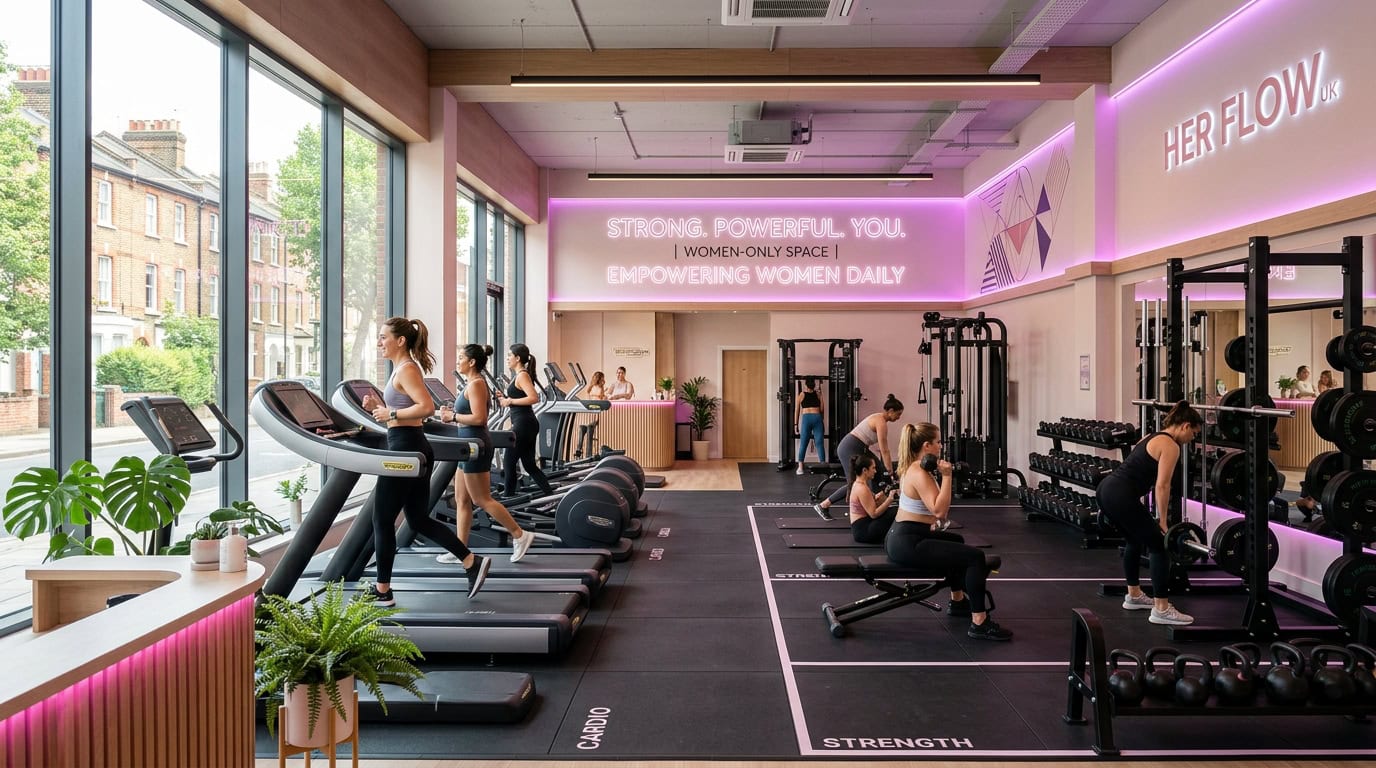
    Why Women-Only Gyms Are on the Rise Across the UK

    If you have ever walked into a gym and felt like every pair of eyes was on you, you are far from alone. Research from Sport England consistently shows that women are less likely than men to feel comfortable in traditional gym environments, and that discomfort is one of the biggest barriers to regular exercise. (see Sport England Active Lives survey. According to NHS physical activity guidelines

    Over the past few years a growing number of women-only gyms and fitness studios have opened across the UK to solve exactly that problem. From dedicated strength-training facilities in Manchester to women-focused boutique studios in London, the landscape is changing fast.

    In this guide we explore what women-only gyms offer, why they are growing so quickly, and how to find one near you.

    What Makes a Women-Only Gym Different?

    Women-only gyms share some things with mainstream facilities — free weights, cardio machines, stretching areas — but the experience is deliberately different from the moment you walk through the door.

    A comfortable, judgement-free atmosphere. The most common reason women choose these gyms is simple: they want to work out without feeling watched, judged, or self-conscious. Removing that pressure can transform exercise from an anxiety-inducing chore into something you actually look forward to.

    Equipment and programming designed for women. Many women-only gyms stock lighter dumbbells, resistance bands, and machines with smaller grip sizes. Class timetables often focus on strength training for women, pelvic floor health, pre- and post-natal fitness, and hormonal-cycle-based programming — topics rarely covered in mixed-gym environments.

    Female coaching staff. Having a female personal trainer or coach can make a real difference, particularly for women who are new to strength training or returning after a break. Female coaches bring personal understanding of the physical and emotional challenges women face in fitness.

    Community and support. Women-only gyms tend to foster strong communities. Group classes become social events, members encourage one another, and the overall vibe is collaborative rather than competitive.

    The Numbers Behind the Trend

    The growth is not just anecdotal. According to the Fitness Industry Association, women now make up over 50 percent of all gym members in the UK for the first time. But while overall female membership has grown, retention rates in mixed gyms still lag behind men’s — and that gap is exactly where women-only spaces are stepping in.

    Social media has also played a role. Instagram and TikTok accounts run by female coaches and gym owners have demystified weight training, nutrition, and recovery for millions of UK women, creating demand for spaces where they can put that knowledge into practice without intimidation.

    Types of Women-Only Fitness Spaces

    Not every women-only facility looks the same. Here are the main categories you will find in the UK:

    Dedicated women-only gyms. These are full-service gyms that cater exclusively to female members. They usually offer a complete range of equipment, personal training, and group classes. Examples can be found in most major UK cities.

    Women-only sections within larger gyms. Some big-chain gyms and leisure centres offer women-only zones or women-only session times. These can be a good starting point if you want the equipment variety of a large facility with the option of a more private space.

    Boutique fitness studios. Smaller, class-focused studios specialising in areas like Pilates, barre, spin, or HIIT often run women-only classes. These tend to have a strong community feel and are ideal if you prefer guided workouts over solo training.

    Personal training studios. Some female personal trainers operate out of private studios that only accept female clients. This is a great option if you want one-to-one coaching in a completely private setting.

    Common Myths About Women-Only Gyms

    Myth: They are only for beginners. In reality, many women-only gyms are equipped for serious strength training, Olympic lifting, and functional fitness. Experienced lifters choose them for the atmosphere, not because they need an easier workout.

    Myth: They exclude men to make a political statement. Women-only gyms exist to create comfort, not division. Most are simply responding to clear market demand — women are asking for these spaces, and the fitness industry is listening.

    Myth: They are more expensive. Pricing varies, but many women-only gyms are competitively priced, and some are actually cheaper than premium mixed-gym chains because they have smaller footprints and lower overheads.

    How to Find a Women-Only Gym Near You

    Finding the right gym comes down to location, budget, and the type of training you enjoy. Here are a few practical steps:

    1. Search a fitness directory. Platforms like GymPal let you search for gyms by type, location, and speciality, making it easy to find women-only or women-focused facilities in your area. You can check facilities, read reviews, and contact gyms directly — all in one place.

    2. Check local leisure centres. Many council-run leisure centres offer women-only sessions or have women-only areas. These are often the most affordable option.

    3. Ask in local Facebook groups. Community groups for your town or city are a goldmine for honest gym recommendations from other women.

    4. Book a trial session. Most gyms offer a free or low-cost taster session. Take advantage of this to see if the atmosphere, equipment, and community feel right for you before committing.

    What to Look For When You Visit

    When you tour a women-only gym, keep these points in mind:

    • Equipment range: Does it have what you need, whether that is a squat rack, a reformer Pilates bed, or a spin studio?
    • Class timetable: Are classes scheduled at times that work for you?
    • Coaching qualifications: Are the trainers properly certified, and do they have experience relevant to your goals?
    • Cleanliness and maintenance: Is the equipment well maintained and the space clean?
    • Community feel: Do members seem welcoming? Is the staff friendly and approachable?

    Making the Most of Your Membership

    Once you have found the right gym, here are some tips to help you settle in and get results:

    Start with a programme. Whether you are a beginner or an experienced lifter, having a structured programme keeps you focused and prevents wasted sessions. Ask the gym staff or a personal trainer to help you build one.

    Be consistent. Three good sessions a week will always beat one perfect session followed by a week off. Consistency beats intensity every time.

    Do not be afraid to ask questions. Women-only gyms thrive on community. The person next to you is probably happy to spot you, answer a question, or share a tip.

    Track your progress. Keep a simple log of your workouts — weights lifted, reps completed, how you felt. Seeing progress on paper is incredibly motivating.

    Ready to Find Your Perfect Gym?

    The UK fitness scene has never been more welcoming to women, and the range of women-only options is growing every month. Whether you want to lift heavy, join group classes, or simply exercise in a space where you feel completely at ease, there has never been a better time to start.

    Use GymPal to search for gyms near you, compare facilities, and find the women-only fitness space that fits your goals and your lifestyle. Your perfect workout environment could be just around the corner.

  • Gym Etiquette 101: The Unwritten Rules Every UK Gym-Goer Should Know

    Gym Etiquette 101: The Unwritten Rules Every UK Gym-Goer Should Know

    Walking into a gym for the first time can feel like stepping into a different world. There are machines you have never used, people who look like they were born doing deadlifts, and a whole set of social rules that nobody ever seems to explain out loud. Whether you have just signed up for your first membership or you are returning after a long break, understanding basic gym etiquette will make your experience — and everyone else’s — far more enjoyable. (see ukactive State of the UK Fitness Industry report. According to Sport England Active Lives survey

    Here is your straightforward guide to the unwritten rules of the gym, from re-racking your weights to respecting personal space on the gym floor.

    1. Always Re-Rack Your Weights

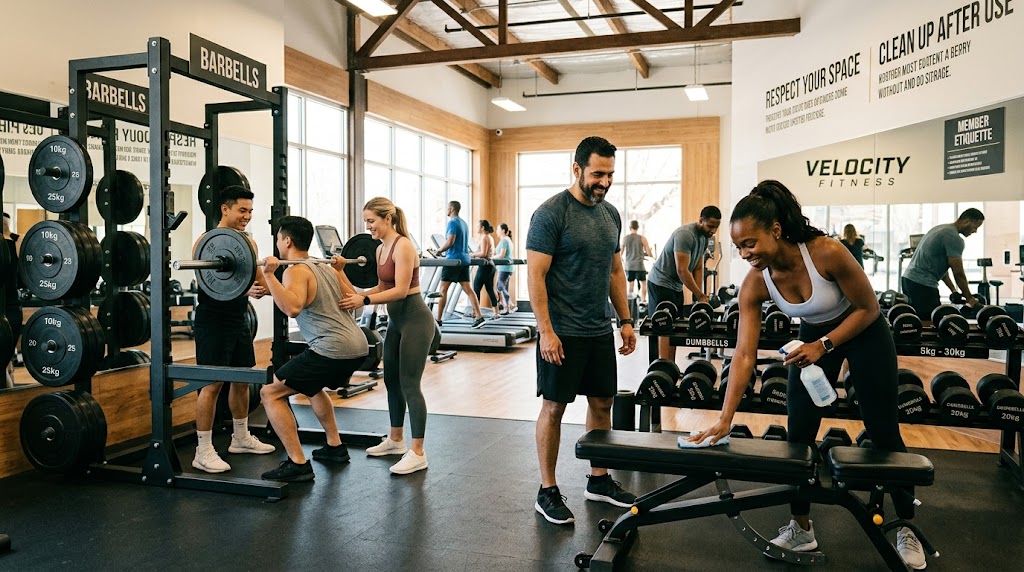
    This is arguably the number one rule of gym etiquette, and it is the one most frequently ignored. When you finish using dumbbells, plates, or any other equipment, put it back where it belongs. Leaving weights scattered across the floor is not just inconsiderate — it is a genuine safety hazard. Nobody should have to search the entire gym for a matching pair of 10 kg dumbbells because someone could not be bothered to return them.

    If you are unsure where something goes, ask a member of staff. They would far rather point you in the right direction than tidy up after you.

    2. Wipe Down Equipment After Use

    Nobody wants to sit in a puddle of someone else’s sweat. Most gyms provide paper towels and antibacterial spray stations throughout the floor. A quick wipe-down of the bench, seat, or handles after you finish a set takes seconds but makes a huge difference to the next person.

    This is not just about politeness — it is basic hygiene. Shared equipment is a breeding ground for bacteria, and a small effort from everyone keeps the whole gym cleaner and safer.

    3. Do Not Hog Equipment During Peak Hours

    If the gym is busy, avoid camping out on a single piece of equipment for an extended period. Doing five sets of bench press followed by ten minutes of scrolling on your phone while sitting on the bench is a sure way to frustrate fellow members.

    If someone is waiting, offer to let them work in between your sets. This is standard practice and shows respect for other people’s time. You can also plan your workouts for quieter times of day if you prefer a more leisurely pace.

    4. Respect Personal Space

    Gyms can get crowded, especially in the evenings and during the January rush. Even so, try to maintain a reasonable distance from others when possible. Do not set up your mat right next to someone when there is plenty of space elsewhere, and avoid walking directly in front of someone mid-lift.

    On that note, never stand between a lifter and the mirror. Many people use mirrors to check their form, and blocking their view mid-rep is a major faux pas.

    5. Keep Phone Calls Off the Gym Floor

    Taking a quick photo of your form or using a fitness tracking app is perfectly fine. Having a full-blown phone conversation while sitting on a machine someone is waiting for is not. If you need to take a call, step into the lobby, the changing rooms, or anywhere off the training floor.

    Loud speakerphone conversations are particularly unpopular. Keep your phone on silent and save the catch-ups for after your session.

    6. Be Mindful with Strong Scents

    A quick spray of deodorant is always appreciated, but dousing yourself in perfume or cologne before a workout is overwhelming in a warm, enclosed space. Strong scents can trigger headaches or allergic reactions in others, and they mix poorly with the environment of a busy gym floor.

    Equally, make sure you are wearing clean gym kit. Reusing the same unwashed top for a week is something your fellow gym-goers will definitely notice. See also: How to Create a Gym Induction Process That Reduces Early Can.

    7. Do Not Offer Unsolicited Advice

    You might have the best intentions, but approaching a stranger to correct their form or suggest a different exercise is usually unwelcome. Unless someone is in immediate danger of injuring themselves, it is best to leave the coaching to the personal trainers on staff.

    If someone asks for your opinion or a spot, by all means help out. But unprompted advice can come across as condescending, especially to newer gym-goers who may already feel self-conscious.

    8. Follow the Gym’s Specific Rules

    Every gym has its own set of posted rules. Some prohibit deadlifting on certain platforms, others ask that you do not drop weights, and many have time limits on cardio machines during peak hours. Take a few minutes to read the signage or ask about any specific policies when you join.

    These rules exist for good reason — usually safety, equipment maintenance, or fairness to all members. Following them keeps the gym running smoothly for everyone.

    9. Use Changing Rooms Considerately

    Changing rooms are shared spaces. Do not spread your belongings across an entire bench, lock up your valuables in the provided lockers, and clean up after yourself in the showers. If your gym has a sauna or steam room, follow the posted rules about towels, footwear, and time limits.

    Thoughtfulness in the changing rooms sets the tone for the whole facility. A little consideration goes a long way.

    10. Remember That Everyone Started Somewhere

    If you are new to the gym and worried about being judged, here is a reassuring truth: the vast majority of people are focused on their own workout, not yours. Most regular gym-goers respect anyone who turns up and puts in effort, regardless of their fitness level.

    If you are a seasoned lifter, remember what it felt like to be a beginner. A friendly nod or a simple “all yours” when you finish with a piece of equipment can make a newcomer feel welcome.

    Finding the Right Gym for You

    Part of having a positive gym experience is finding a gym where you feel comfortable. Factors like location, opening hours, equipment range, and atmosphere all play a part. A gym that feels intimidating on day one might become your second home after a few weeks — or you might decide it is not the right fit, and that is perfectly fine.

    If you are still exploring your options, GymPal makes it easy to search for gyms across the UK, compare facilities, and read genuine reviews from other members. Whether you are looking for a budget-friendly chain, a boutique studio, or a fully equipped independent gym, GymPal helps you find the right match for your goals and your budget.

    The Bottom Line

    Good gym etiquette is really just common courtesy applied to a shared space. Re-rack your weights, wipe down your equipment, be aware of the people around you, and treat the gym as you would want others to. Follow these simple principles and you will quickly find that the gym is a far more welcoming place than you might have expected.

    Now get out there and enjoy your workout. You have earned it.