Blog

  • How to Build a Gym Brand That Attracts the Right Members — Positioning, Visual Identity and Tone

    How to Build a Gym Brand That Attracts the Right Members — Positioning, Visual Identity and Tone

    Why Brand Matters More for Independent Gyms Than for Chains

    A gym chain has brand built in — the logo, the colours, the standardised fit-out, the national advertising. Members know what they are getting before they walk through the door. An independent gym has none of this by default. Every design decision is made individually, every communication written from scratch, every member interaction shaped by whoever happens to be working that day., a community character (the gym where regulars train together and socialise), a physical characteristic (the only fully equipped outdoor training space in the area), or a values commitment (we never upsell, we never pressure, we focus on long-term health not short-term aesthetics).

    What do you stand for?

    The values that inform how you run the gym — how you treat members, what you will and will not do commercially, what kind of place this is. Values are not decorative; they drive decisions. A gym that stands for inclusivity makes hiring decisions, programming decisions, and community decisions differently from one that stands for competitive performance. Knowing your values makes those decisions faster and more consistent.

    Visual Identity: Consistency Over Sophistication

    Most independent gym owners either over-invest in visual brand (spending thousands on a logo and brand guidelines before they have a viable business) or under-invest (using a generic free logo, inconsistent colours, and whatever font is the Word default). Neither extreme is right.

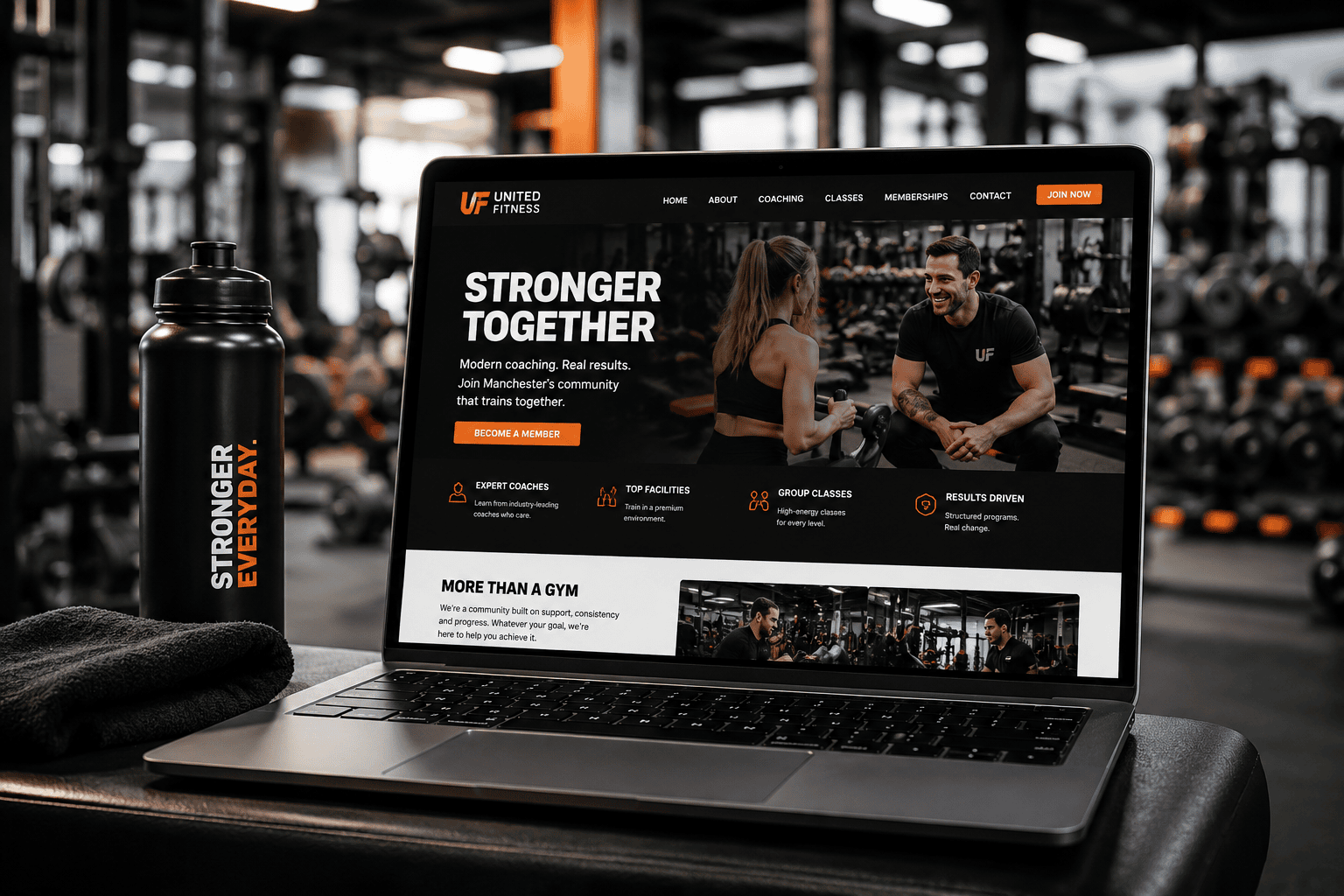
    The principle that matters most for visual brand is not sophistication — it is consistency. A simple, clean logo applied consistently across your sign, your website, your social media, your merchandise, your staff uniforms, and your member communications creates a more professional impression than an elaborate logo used inconsistently. Members who see your branding in multiple contexts — your gym floor, your Instagram, a branded water bottle at the supermarket — build familiarity and recognition that matters at the margin when they recommend you to someone.

    The minimum viable visual identity

    • Logo: A clean wordmark (your gym name in a distinctive but readable font) is sufficient for most independent gyms. A simple icon works if it is genuinely distinctive; a generic dumbbell or silhouette icon adds nothing. If you do not have a logo, tools like Canva (free) allow you to create a clean wordmark without design experience. For a more considered logo, a freelance designer on a platform like Fiverr or Dribbble can produce a good result for £100–300.
    • Two or three brand colours: Choose colours that reflect your gym’s character — not because colour theory determines success, but because consistent use of the same colours across all touchpoints creates visual coherence. Pick your palette and use it everywhere.
    • One or two fonts: A heading font and a body font. Use them consistently in every document, social post, and communication.

    Document these choices simply — a one-page brand guide with your logo file, hex colour codes, and font names — and share it with anyone who creates content for your gym (staff, contractors, photographers). Consistency requires that more than one person knows the rules.

    Tone of Voice: How Your Gym Sounds

    Your gym’s tone of voice is how you communicate — in your social media, your emails, your signage, your staff conversations. Like visual brand, the key is consistency. A gym that sounds serious and expert on Instagram but uses jokey emojis in text messages and formal corporate language in emails does not have a coherent brand.

    Tone of voice should reflect your positioning. A gym positioned as a welcoming, inclusive space for all levels sounds warm, encouraging, and non-intimidating — it avoids jargon, assumes nothing about fitness knowledge, celebrates all progress regardless of scale. A gym positioned for serious athletes sounds knowledgeable, precise, and performance-focused — it references technique and programming with expertise, and its community language is shared by people who take training seriously.

    Two practical tests: read your last 10 social posts and last 5 member emails aloud. Do they sound like a consistent person or organisation? Would the same person write both? If not, you have a tone inconsistency worth addressing.

    Applying Brand Consistently Across Touchpoints

    Brand is only coherent when it is experienced consistently. The touchpoints where independent gyms most often break brand consistency:

    • Signage vs online presence — a professional, well-designed sign on the gym exterior undermined by a low-quality website or inconsistent social media is a disconnect that prospective members notice.
    • Staff communications vs official communications — WhatsApp messages from staff using informal language versus newsletters in a different tone create inconsistency. Brief staff on tone expectations and provide simple templates.
    • Member-generated content vs gym content — when members tag your gym in their posts, the visual character of the content reflects on your brand. Influence this gently by creating an attractive gym environment worth photographing, having a consistent hashtag, and sharing the best member content.

    Brand and Price Power

    The commercial case for brand investment is straightforward: members who feel they belong to a distinctive, well-positioned gym with a coherent identity are less price-sensitive than members who see their gym as a generic service. A gym with strong brand can charge — and hold — higher membership prices than an equivalent gym with weak brand, because the membership is not purely a transaction for access to equipment. It is participation in something.

    This is the most direct financial return on brand investment: price resistance. Members who love their gym’s identity, feel it represents something they want to be associated with, and see their membership as part of their identity rather than just a monthly cost do not cancel when a cheaper option appears nearby. Building that feeling is a long-term project — but it starts with knowing what you stand for and expressing it consistently.

    GymPal helps UK fitness-seekers find independent gyms that match what they are looking for. Claim your free GymPal listing and show your brand — your positioning, your values, your community — to the members who are already looking for exactly what you offer.

  • How to Use Email Automation to Onboard New Gym Members and Reduce Early Churn

    How to Use Email Automation to Onboard New Gym Members and Reduce Early Churn

    Why the First 60 Days Determine Whether a Member Stays or Leaves

    Gym membership churn follows a predictable pattern. Members who cancel do so disproportionately in the first 60–90 days of joining. The reason is almost always the same: they joined with motivation, found the transition to regular training harder than expected, and the gym did not provide enough structure or connection in the early weeks to help them through it. They drifted away quietly, and the gym never noticed until they cancelled.

Setting Up the Sequence in Mailchimp

In Mailchimp, automated sequences are called “Customer Journeys” (paid plans) or a basic “Welcome Email” automation (free plan).

  1. Go to Automations → Customer Journeys → Create Journey
  2. Set the trigger: “Subscribes to audience” — this fires when a new member is added to your Mailchimp list
  3. Add a series of “Send email” steps with time delays: immediately (Day 1), +2 days (Day 3), +4 days (Day 7), +7 days (Day 14), +16 days (Day 30), +30 days (Day 60)
  4. Write each email in the editor, using Mailchimp’s merge tags to personalise with the member’s first name
  5. Activate the journey

To keep your Mailchimp list current, connect it to your gym management software via a Zapier integration that adds new members automatically when they join.

Setting Up in Gym Management Software

Several gym platforms include native email automation:

  • Glofox: Automated messages under Settings → Automations. Trigger on new member sign-up; configure message timing and content.
  • TeamUp: Automated emails under Settings → Automated Emails. Limited compared to dedicated email tools but sufficient for a basic welcome sequence.
  • ClubRight: Email automation in the Marketing module.

Native platform automations are less flexible than Mailchimp or Kit in terms of design and targeting, but they require no integration work — new members are already in the system.

Personalisation: Simple but Effective

The most impactful personalisation for a gym onboarding sequence is using the member’s first name and, where possible, referencing their stated goal (weight loss, strength, general fitness, specific sport). Most gym platforms capture this at sign-up. Even a basic “Hi [First name]” and “Since you mentioned you’re working on [Goal]…” makes emails feel written for a specific person rather than broadcast to a list.

Measuring Whether It Is Working

Track two metrics over 90 days for members who went through the sequence versus a control period before you had automation:

  1. 30-day retention rate: Percentage of new members still active at 30 days. Baseline for most independent gyms without structured onboarding is 60–75%; with a good sequence, targeting 80–85%.
  2. 90-day retention rate: The metric that reflects true habit formation. Industry benchmark for independent gyms is approximately 50–65%; strong onboarding can push this toward 70–75%.

A sequence that improves 90-day retention by 10 percentage points on a gym with 30 new members per month retains 3 additional members per month who would otherwise have left. At £45/month average membership value and 12 months of retention, that is £1,620/month in retained revenue from automation that cost almost nothing to build.

GymPal helps UK gym-seekers discover independent gyms. Claim your free GymPal listing — and start the relationship with new members well before they even walk through your door.

  • Managing Your Gym’s Finances Without an Accountant — What Small Gym Owners Can Do Themselves

    Managing Your Gym’s Finances Without an Accountant — What Small Gym Owners Can Do Themselves

    What Financial Management Actually Means for a Small Gym

    Financial management for an independent gym is not the same as accountancy. An accountant prepares statutory accounts, files your tax return, and handles regulatory compliance. Financial management is different — it is the ongoing practice of understanding what your money is doing, whether the business is healthy, and where problems are developing before they become crises. The former requires professional expertise; much of the latter can and should be done by the gym owner. According to GOV.UK guidance on running a business

    This guide covers the financial accounts and metrics worth monitoring monthly, which bookkeeping software works best for gyms, basic tasks you can handle in-house, and the specific situations where a professional accountant earns their fee many times over.

    The Five Numbers Every Gym Owner Should Know Each Month

    1. Membership revenue

    The total collected from active memberships in the month. Not billed — collected. Membership fees that are overdue or in payment failure should not appear here until they are received. Tracking actual collection against expected billing reveals your payment failure rate, which is a key health metric for any subscription business. According to ukactive State of the UK Fitness Industry report

    2. Total revenue

    Membership revenue plus ancillary (PT, classes, retail, facility add-ons). The difference between total revenue and membership revenue tells you how much your ancillary income contributes — and whether it is growing.

    3. Gross profit

    Total revenue minus direct costs: instructor fees, PT staff wages (if employed), class music licensing, any direct costs attributable to specific revenue streams. Gross profit reveals whether your core business activity is commercially viable before overhead is applied.

    4. EBITDA (or operating profit)

    Gross profit minus overhead: rent, rates, utilities, insurance, software, admin, marketing, management wages. EBITDA — earnings before interest, tax, depreciation, and amortisation — is the most useful operating health metric for a gym, because it shows the cash-generative performance of the business before financing and accounting adjustments. A consistently positive EBITDA means the business is operationally viable; negative EBITDA means you are spending more running the business than you are generating from it.

    5. Cash balance and runway

    The actual balance in your business bank account, and how many months of fixed costs it represents at current levels. A gym with £15,000 in the bank and £8,000/month in fixed costs has approximately 1.9 months of runway. That is not a comfortable position. A gym with £40,000 in the bank and the same fixed costs has 5 months of runway — meaningful cushion against a slow membership month or an unexpected cost.

    Bookkeeping Software: Which Is Best for Gyms

    Xero

    The most widely used cloud accounting platform for UK small businesses with a professional accountant relationship. Xero’s strength is its integrations — it connects with most UK bank accounts via open banking, with Stripe and GoCardless for payment reconciliation, and with many gym management platforms. The dashboard gives you a real-time view of income, expenses, and cash. Pricing: from approximately £15/month (Starter) to £30/month (Standard), plus your accountant’s access fee if applicable. If you have or plan to have a professional accountant, Xero is the easiest platform for them to work with and many accountants will insist on it.

    QuickBooks

    The main alternative to Xero. Comparable in functionality for most gym use cases; marginally more user-friendly for owners managing their own books without accounting training. Similar pricing to Xero. If you do not have an accountant and are managing entirely in-house, QuickBooks is marginally easier to set up and use. If you have an accountant, ask which they prefer — most prefer either Xero or QuickBooks, and giving them the platform they work in daily saves time and cost.

    FreeAgent

    A good option for sole traders and small limited companies who want something simpler and cheaper. Less powerful than Xero or QuickBooks but covers the essentials: invoicing, expense tracking, bank reconciliation, VAT returns. Costs approximately £19/month. Worth considering if your gym’s financial complexity is low (straightforward revenue, few staff, no complex inventory) and you want to manage everything yourself without an accountant.

    Spreadsheets

    A detailed spreadsheet can substitute for bookkeeping software for a very small gym with simple finances. The limitation is that spreadsheets require manual data entry, do not reconcile with your bank automatically, and are harder to share with an accountant if you need professional support later. Use spreadsheets as a stopgap in the very early stages; move to dedicated software as soon as your revenue and costs warrant it (typically once you have 50+ members or are employing anyone).

    Bank Reconciliation: The Most Important Monthly Task

    Bank reconciliation means matching every transaction in your bookkeeping software to the corresponding entry in your bank statement, and ensuring there are no unexplained differences. This is the task that catches errors, flags unrecorded costs, and ensures your reported profit reflects reality rather than what you think happened.

    In Xero and QuickBooks, open banking connections import your bank transactions automatically; reconciliation is the process of assigning each imported transaction to the correct account (membership revenue, rent, utilities, etc.). For a typical independent gym, monthly reconciliation should take 30–60 minutes once your accounts are properly set up and your chart of accounts is configured for your business type.

    If reconciliation reveals unexplained differences, do not ignore them or force them to balance with a miscellaneous entry. Unexplained differences are almost always errors that cost you money if left uncorrected — usually uncategorised expenses that should be accounted for differently, or revenue that was received but not recorded.

    Tracking Membership Revenue: Failed Payments Matter

    Monthly direct debit or card payment failure rates are a leading indicator of financial and member health that many gym owners do not track closely enough. In a typical gym, 3–5% of monthly payment attempts will fail in any given month. Failures above 8% suggest systemic issues — outdated card details, members letting memberships lapse passively, or direct debit setup problems.

    Most gym management software shows payment failure reports. Review these weekly and have a clear process for chasing failed payments: automated retry, followed by a personal message if the retry also fails. Unpaid memberships left unaddressed represent lost revenue that compounds; a member who has not paid for two months is effectively a free member who is also depressing your average revenue per member metric.

    VAT Returns (If Registered)

    If you are VAT-registered, you must file a VAT return quarterly (or monthly if you have opted for monthly filing). Most bookkeeping platforms generate the VAT return figures directly from your categorised transactions — the quarterly VAT return in Xero or QuickBooks takes 15 minutes if your bookkeeping is current. If your bookkeeping has lapsed and you are trying to reconstruct three months of transactions before a filing deadline, that task takes significantly longer. Staying current is the solution.

    Making Tax Digital (MTD) for VAT requires VAT-registered businesses to maintain digital records and submit returns via compatible software. Xero, QuickBooks, and FreeAgent are all MTD-compatible; a manual spreadsheet is not.

    Payroll: When to Handle In-House vs Outsource

    Payroll for 1–4 staff is manageable in-house with payroll software (Xero Payroll, QuickBooks Payroll, or a standalone tool like Brightpay). Once you have 5+ employees, or if you have complex payroll scenarios (part-time staff on variable hours, statutory pay calculations), outsourcing payroll to a payroll bureau or accountant for £20–50/month is usually worth the cost in time saved and error avoided. HMRC is less forgiving of payroll errors than of basic bookkeeping mistakes — fines and late payment penalties apply.

    When You Genuinely Need an Accountant

    The tasks described above — monthly bookkeeping, bank reconciliation, VAT returns, basic payroll — can be handled in-house with the right tools. The following situations genuinely benefit from professional accountant input:

    • Setting up your business structure — sole trader vs limited company decision, particularly at the point where profits justify limited company benefits
    • Year-end accounts and corporation tax return — legally complex, and errors are costly
    • VAT registration and first return — the initial setup and classification of your revenue streams for VAT is worth getting right with professional guidance
    • Applying for finance — bank-ready accounts, financial projections, and business plan support are areas where a good accountant adds significant value
    • Significant financial decision — taking on a lease, buying equipment on finance, taking a partner, exiting the business
    • If HMRC contacts you — a tax enquiry or inspection requires professional representation

    A good small business accountant for a single-location independent gym typically costs £800–2,000/year for year-end accounts, corporation tax filing, and a quarterly review. That cost is almost always recovered in legitimate tax efficiencies and avoided errors. The question is not whether to have an accountant — it is which tasks are worth paying an accountant’s hourly rate for and which you can manage competently in-house.

    GymPal helps UK gym-seekers find independent gyms. Claim your free GymPal listing — another channel contributing to the revenue that makes these numbers work.

  • How to Write a Gym Member Newsletter That People Actually Read

    How to Write a Gym Member Newsletter That People Actually Read

    Why Most Gym Newsletters Fail — and What a Good One Looks Like

    Most gym email newsletters look the same: a header with the gym logo, a list of class schedule changes, a promotion for a PT package, and a footer with contact details. Members open the first one, skim it, and stop opening subsequent ones within two months. The unsubscribe rate creeps up; the open rate creeps down; the newsletter becomes a cost centre with no measurable return.

  • Long articles — a newsletter is not a blog post; links to your blog are fine, but the newsletter itself should be scannable in 2 minutes
  • Purely promotional content — a newsletter that is entirely offers and calls to action trains members to mentally mark it as spam
  • Length, Format and Frequency

    Length

    Aim for a 3–5 minute read. In practice, this is roughly: member spotlight (150 words), training tip (100 words), what’s on (100 words), owner’s note (75 words), one offer (50 words). Total: approximately 500 words of actual content plus your visual structure. Members who want more can follow your blog and social media; the newsletter should respect their inbox and their time.

    Format

    Clean, simple design. Your gym’s brand colours and logo, clear section headings, readable font size, mobile-optimised (more than half of your members will read it on a phone). Avoid design that looks like a flyer — newsletters that look like they were created by a human for other humans perform better than those that look like advertising.

    Frequency

    Monthly is the sweet spot for most independent gyms. Fortnightly is possible if you have enough content; weekly is only sustainable if newsletter production is someone’s explicit responsibility and there is consistently enough genuine content to fill it. A monthly newsletter that is genuinely good is more valuable than a weekly newsletter that is mostly filler.

    Platforms: Which Email Tool Is Right for a Small Gym

    Mailchimp

    The most widely used option for small businesses. Free up to 500 contacts / 1,000 emails/month; paid plans from ~£10/month for larger lists. Good template library, basic automation, reasonable analytics. The right choice for most gyms with lists under 500 members who want something they can set up themselves in an afternoon.

    Kit (formerly ConvertKit)

    Better automation and segmentation than Mailchimp at the same price tier. Cleaner interface. More appropriate for gyms that want to send different content to different member segments (new members vs long-term members vs lapsed members). Free up to 1,000 subscribers.

    Klaviyo

    More powerful automation and analytics than either of the above; better for gyms that integrate their email platform with their membership software (Klaviyo has native integrations with many gym platforms). More complex to set up; overkill for most independent gyms with straightforward needs.

    Integrated gym platform email

    Many gym management platforms (Glofox, TeamUp, ClubRight) include built-in email functionality. The advantage is that member data is already there; the limitation is that these tools are typically less sophisticated as email platforms than dedicated tools. For basic operational emails (booking confirmations, class reminders), use your gym platform. For a newsletter with proper design and analytics, a dedicated email tool is worth the minor overhead of maintaining the list in two places.

    Segmentation: The One Segmentation Worth Doing

    Once you have a newsletter running consistently, one segmentation is worth implementing: separate your active members from your lapsed (cancelled or frozen) members. Active members get the standard newsletter; lapsed members get a modified version — the same content, but with a specific rejoining offer in the offer section. This captures the segment most likely to re-engage at the moment their interest is highest (when the newsletter reminds them what they are missing), without cluttering the standard newsletter with win-back messaging that active members do not need.

    Metrics: What to Track

    Track these monthly. A declining open rate over 3 months signals a content problem; a spike in unsubscribes after a specific send tells you something about what did not land. Both are fixable once you can see them.

    GymPal connects UK fitness-seekers with independent gyms. Claim your free GymPal listing — and share it in your next newsletter as an easy way for members to refer a friend.

  • How to Create and Sell Gym Membership Gift Cards — A Practical Guide for UK Gym Owners

    How to Create and Sell Gym Membership Gift Cards — A Practical Guide for UK Gym Owners

    Gift Memberships: Revenue You Are Currently Leaving on the Table

    A gym membership is an excellent gift. It is practical, health-positive, personal, and something many recipients would not buy for themselves but genuinely want. Yet most independent gyms either do not offer gift memberships at all, or offer them so quietly that existing members never think to buy one. The result is lost revenue from Christmas, birthdays, Valentine’s Day, and Mother’s Day — occasions when friends and family of your existing members are actively looking for meaningful gift ideas.. The less obvious benefit is new member acquisition: the recipient of a gym gift membership is a prospective member you did not have to advertise to, who arrives with a pre-existing positive disposition (someone who knows them thought this gym was right for them), and who has a sunk cost (the gift) that motivates them to use the membership.

    Recipients of gift memberships convert to ongoing paying members at higher rates than cold-acquired members — they were introduced by someone who already knows and trusts the gym, and the social connection (their friend/partner/parent is a member) provides exactly the kind of community anchor that drives retention. Gift memberships are therefore both a revenue mechanism and a referral channel.

    Gift Membership Formats

    Time-based gifts

    The simplest format: 1 month, 3 months, or 12 months of standard membership access, purchasable as a gift at your standard membership rate. Clear, easy to understand, and easy to price. The limitation is that the purchaser must choose a specific tier if you have multiple membership options.

    Value-based (monetary) gift cards

    A gift card for a specific monetary value (£50, £100, £200) that the recipient can apply to any membership tier or service. More flexible than time-based gifts — the recipient chooses exactly what they want. Works well in gyms with multiple membership tiers and ancillary services (PT, classes, nutrition). The downside is slightly more administrative complexity, particularly if your membership software does not handle credit-based gift cards natively.

    Experience gifts

    A specific service rather than a membership: “One month of personal training (2 sessions/week)”, “A 6-week beginner programme”, “A nutrition consultation plus 4-week plan”. These carry higher price points than standard membership gifts (£150–300+) and are appropriate for Mother’s Day, significant birthdays, and Christmas when the purchaser wants to give something distinctive. They also function as upsell vehicles — a recipient who receives a personal training gift and values the experience becomes a PT client after the gift period.

    Physical vs digital gifts

    Both work; the right choice depends on your operation:

    • Physical gift cards — a printed card in an envelope, optionally with a small branded gift bag. More giftable; works well at Christmas when something physical matters. Requires printing and stock management.
    • Digital gift codes — emailed directly to the purchaser or recipient. Zero fulfilment cost; immediate delivery. Works well for last-minute gifts and purchasers who prefer digital. Many people now prefer digital gifting.

    Offering both gives purchasers the choice. A simple approach: sell gift codes online (via your website or membership platform), and offer to print a physical card for collection or posting for purchasers who prefer it.

    Setting Up Gift Memberships in Common UK Gym Platforms

    Glofox

    Glofox supports gift vouchers via the member app and web portal. Configure gift voucher amounts and membership types in Settings → Store. Recipients redeem via the standard sign-up flow using their gift code. Contact Glofox support if the feature is not visible in your account — it may require activation.

    TeamUp

    TeamUp supports gift cards through its Vouchers feature (Settings → Vouchers). You can set fixed monetary amounts or specific membership periods. The system generates unique redemption codes. Recipients apply the code at checkout when purchasing a membership.

    ClubRight

    ClubRight includes a gift voucher module. Contact ClubRight support to enable it if you have not used it before; configuration is straightforward once active.

    Manual / low-tech approach

    If your platform does not support gift codes, or you prefer a manual approach: take payment from the purchaser (cash, card, bank transfer), issue a signed gift letter or physical card, and process the recipient’s membership manually when they present it. This works perfectly well for lower volumes — most small gyms sell fewer than 50 gift memberships per year, and manual processing is entirely manageable at that scale.

    Pricing and Terms

    Keep pricing straightforward: gift memberships at your standard rates, with no special discount. Discounting gift memberships devalues them as gifts and trains buyers to wait for promotions. If anything, a modest premium on gift card pricing (standard membership + £5–10) can be justified for the giftable packaging, convenience, and experience value — and is broadly accepted by gift purchasers who are used to paying a small premium for gifting convenience in other contexts.

    Terms to set clearly:

    • Expiry: A gift code that never expires creates an administrative liability; one that expires in 12 months from purchase is standard and fair. Make the expiry date visible on the gift card or code email.
    • Transferability: Most gym gift memberships are non-transferable once the recipient has activated them. State this clearly.
    • Refunds: Gift card refunds are not required under UK consumer law (the Consumer Contracts Regulations apply to the original purchaser, not the recipient). Set a clear policy — typically no refunds after the membership has been activated.
    • Activation window: Allow recipients a reasonable window to activate (e.g., 3 months from purchase) before the membership period begins running. A recipient who receives a Christmas gift but cannot start until February should not lose time from their membership.

    Seasonal Promotion Strategy

    Christmas (November–December)

    The primary gift membership season. Begin promoting from mid-November across social media, email, and in-gym signage. “Give the gift of fitness” messaging resonates. Offer both physical and digital options; promote digital for last-minute purchasers in the week before Christmas.

    Valentine’s Day (January–February)

    Couple’s angle: “Train together” messaging for couples memberships or partner gift cards. Works particularly well if your gym has a social/community character where partners training together is a genuine experience.

    Mother’s Day (March)

    One of the highest-converting occasions for gym gift cards. “Give Mum the gift of time for herself” is a strong angle. Promote 2–3 weeks before Mothering Sunday (mid-March in the UK). PT packages and experience gifts (rather than just gym membership) perform well for this occasion — they feel more thoughtful than a standard membership.

    Birthdays (year-round)

    Keep gift cards available and promoted year-round in your gym and on your website. A banner or card display at reception, a footer mention in your newsletter, and a permanent “Gift a Membership” page on your website means members who are buying a birthday gift for someone have the option in front of them whenever they need it.

    Making the Most of New Gift Recipients

    When a gift recipient activates their membership, treat their onboarding with extra care. They are new, they may be uncertain about whether they will enjoy it, and they have a particular reason to become a regular member — the person who gave them the gift is likely someone they see regularly and who will ask how it is going. A warm induction, a brief goals conversation, and an introduction to the gym community at the point of activation converts gift recipients into long-term members at higher rates than standard new member onboarding alone.

    GymPal connects UK gym-seekers with independent gyms. Claim your free GymPal listing — and when a gift recipient searches for your gym before activating their membership, make sure they find a compelling profile.

  • How to Get More Google Reviews for Your Gym — and Why They Matter for Local SEO

    How to Get More Google Reviews for Your Gym — and Why They Matter for Local SEO

    Why Google Reviews Are Now Foundational to Local Gym Marketing

    When someone searches “gym near me” or “gym in [your town]”, Google’s local results — the map pack at the top of the page — display three businesses. The ranking factors for that map pack include proximity, relevance, and prominence. Reviews feed directly into prominence: a gym with 120 reviews averaging 4.8 stars consistently outranks one with 12 reviews at 4.5 stars, regardless of which gym is actually better.: “If you ever have a spare minute, a Google review really helps us — it only takes 30 seconds.” Hand them a card with the QR code to your review link.

  • By text/WhatsApp: “Hi [Name], hope your training is going well. If you have a moment, we’d really appreciate a Google review — it helps people in [Town] find us. [Link]”
  • By email: Automated 30-day new member email: “You’ve completed your first month with us — we hope it’s been a good one. If you’d like to share your experience, we’d be grateful for a Google review. [Link]”
  • The QR code or direct link is essential. Asking without providing the link relies on the member to navigate to Google, find your listing, and click through — most will not. A direct link that opens the review form immediately reduces friction to almost zero.

    Automating Review Requests Through Gym Management Software

    Manual review requests are inconsistent — you ask enthusiastically for a week, then forget, then feel guilty, then start again. The most reliable approach is an automated trigger built into your membership management workflow:

    Once automated, review requests run continuously without requiring any ongoing attention. A gym that set this up once 12 months ago and has been gathering 4–6 reviews per month since has 50–70 reviews it did not have before — at no additional cost.

    Responding to Reviews: Both Positive and Negative

    Positive reviews

    Respond to every positive review. A brief, personal response — acknowledging the specific thing the reviewer mentioned, thanking them by name — signals to prospective members reading the reviews that there is a real, engaged person behind the gym. Generic responses (“Thanks for your review!”) are better than nothing but miss the opportunity. “Sarah — so pleased you hit that 5K milestone! See you at parkrun this weekend.” is the kind of response that makes prospective members want to be part of your community.

    Negative reviews

    Negative reviews are inevitable. How you respond to them is one of the most watched signals for prospective members — many people specifically read negative reviews to see how the business reacts. The right response:

    1. Thank the reviewer for taking the time to share their feedback
    2. Acknowledge the experience without being defensive: “I’m sorry to hear your visit didn’t meet your expectations.”
    3. Take the conversation offline: “I’d really like to understand what happened — please contact me directly at [email/phone] so I can make this right.”
    4. Do not argue publicly — even if the review is factually incorrect, a public argument makes you look worse than the original negative review.

    A negative review that has received a thoughtful, professional response from the gym owner often converts a hesitant prospective member better than no negative reviews at all — because it demonstrates that problems are taken seriously and handled well.

    Fake or malicious reviews

    If you receive a review that you believe is from someone who was never a member, or that contains demonstrably false claims, you can flag it for removal through Google Business Profile. Go to the review, click the three-dot menu, and select “Report review”. Include as much specific detail as possible about why it violates Google’s policies. Removal is not guaranteed, but Google does remove reviews that clearly violate their guidelines (fake reviews, off-topic content, spam). Do not respond aggressively to suspected fake reviews while waiting for removal — respond professionally, briefly, and take the conversation offline as you would with any negative review.

    A Simple Review-Building System

    Three steps that, implemented consistently, compound over time:

    1. Set up the automated 30-day new member email with your direct Google review link. Takes 30 minutes to configure; runs indefinitely.
    2. Brief staff to ask in person after visible positive moments, with review QR code cards at reception.
    3. Respond to every review within 48 hours — positive with a personal response, negative with a professional one.

    A gym running this system consistently will build 40–80 reviews per year at negligible cost. Over three years, this compounds into a review profile that is difficult for competitors to match and that delivers a sustained local SEO and conversion advantage.

    GymPal gives UK gym-seekers a dedicated directory to find and compare independent gyms. Claim your free GymPal listing and ensure your review-backed reputation is visible to everyone searching for a gym in your area.

  • Gym Insurance in the UK — What You Actually Need and What You Can Skip

    Gym Insurance in the UK — What You Actually Need and What You Can Skip

    Getting Insurance Right — Without Overpaying or Being Underprotected

    Gym insurance is one of the least exciting aspects of running a fitness business and one of the most important to get right. The wrong insurance leaves you financially exposed in a claim; the right insurance package, properly structured, means a member injury, a flooded changing room, or a period of forced closure does not threaten the business you have built. insurance covers claims against you for bodily injury or property damage suffered by third parties — gym members, visitors, and members of the public — as a result of your negligence. If a member slips on a wet floor, is injured by equipment you failed to maintain, or trips on a hazard on your premises, your PL insurer covers the resulting claim up to your policy limit.

    Coverage level: Most UK gym insurance policies offer PL cover at £2m, £5m, or £10m. For most independent gyms, £5m is the appropriate level. Personal injury claims, particularly those involving serious or permanent injuries, can result in awards well above £1m when future loss of earnings, care costs, and rehabilitation are included. The premium difference between £2m and £5m coverage is typically small; the financial exposure difference is substantial. If you run high-risk activities (combat sports, gymnastics, climbing), £10m is worth considering.

    What affects your PL premium: The nature of your gym’s activities, your annual turnover, and your claims history. A gym offering standard gym floor access will pay less than one running combat sports classes. Expect to pay £500–2,000/year for PL as a single-location independent gym, depending on these factors.

    Employers’ Liability Insurance: A Legal Requirement

    If you have any employees — even part-time reception staff or employed (not self-employed) instructors — employers’ liability (EL) insurance is a legal requirement in the UK. It covers claims by employees who suffer injury or illness as a result of their work. The statutory minimum coverage is £5m.

    Failure to hold EL insurance when you have employees can result in a fine of up to £2,500 per day. Your insurer will issue an EL certificate; you are required to display it or make it available to employees.

    Self-employed contractors working in your gym are not covered by your EL policy — they must hold their own insurance. Do not assume that your EL policy covers everyone who works in your building.

    Professional Indemnity: For Gyms Offering Advice and Coaching

    Professional indemnity (PI) insurance covers claims arising from advice or services you have provided that the client alleges caused them loss or harm. For a gym that employs PTs or provides nutritional guidance, PI insurance protects against claims that a training programme caused an injury, or that dietary advice was negligent.

    Individual personal trainers who work in your gym as employees are covered by your PI policy. Self-employed PTs renting your floor are responsible for their own PI cover — require proof of insurance before allowing them to work in your gym. A PT working from your premises without PI insurance creates a reputational and potentially legal risk for your business if something goes wrong with their client.

    PI insurance for a single-location independent gym typically costs £300–800/year depending on the nature and volume of professional services provided.

    Equipment Insurance: Contents and Breakdown

    Gym equipment is expensive to replace. Equipment insurance typically covers two things:

    • Accidental damage and theft (contents insurance): Covers damage to or loss of your equipment from accidental causes, fire, flood, or theft. Ensure your policy covers equipment at its replacement value, not its current market value — depreciated second-hand value is significantly lower than what you would need to spend to replace functioning commercial equipment.
    • Equipment breakdown: Covers the cost of repair or replacement when equipment fails mechanically. Treadmills, cross-trainers, and bikes are expensive to repair; a single major cardio machine failure can cost £500–2,000 to fix. Breakdown cover is particularly valuable for gyms with a large cardio fleet.

    Before taking equipment breakdown insurance, check whether your equipment service contract already includes repair coverage — some manufacturer or maintenance contracts cover parts and labour, making separate breakdown insurance redundant.

    Business Interruption Insurance: Protecting Revenue When You Cannot Trade

    Business interruption (BI) insurance covers lost revenue and ongoing fixed costs if your gym is forced to close due to an insured event — a fire, flood, or other damage to your premises. The coverage period is the time needed to restore trading, typically 12–24 months in gym policies.

    For gyms with high fixed costs (rent, staff, loan repayments), even a short period of forced closure can be financially catastrophic. A gym that cannot trade for 3 months while flood damage is repaired will lose its membership base and face significant re-acquisition costs on reopening. BI insurance covers the gap.

    Key policy considerations: the maximum indemnity period (how many months of lost revenue the policy covers) and the trigger events (does it cover pandemic closures? Most policies explicitly exclude this post-COVID). Ensure the declared revenue figure is accurate — BI payouts are based on your declared turnover, and under-declaring to reduce premiums results in under-payment in a claim.

    Building Insurance: Yours or Your Landlord’s?

    If you own your gym premises, you need building insurance. If you lease, the building insurance is typically the landlord’s responsibility — but check your lease. Some commercial leases require the tenant to arrange building cover. Your lease will specify which party is responsible.

    If you lease and your landlord holds building insurance, do not assume this covers your fit-out and improvements. Bespoke gym fit-out (flooring, rubber matting, equipment fixtures, studio fit-out) is typically your property even in leased premises and requires its own coverage within your contents policy.

    What You Can Often Skip

    • Legal expenses insurance — covers legal costs in disputes. Sometimes offered as an add-on; assess whether you already have access to legal advice through a trade association membership (ukactive, UK Active membership, Federation of Small Businesses) before paying for standalone cover.
    • Cyber insurance — worth considering if you hold significant member personal and payment data. For gyms with basic membership software and standard data holdings, a standard business insurance cyber extension may be sufficient rather than standalone cyber cover.
    • Key person insurance — covers loss of revenue if a key individual (often the owner) is unable to work. Relevant for sole-operator gyms that are entirely dependent on one person; less critical for gyms with a management team.

    How to Compare Policies Without Getting Lost

    Gym insurance is a specialist product — standard business insurance brokers often lack the fitness industry knowledge to structure it correctly. Specialist brokers (Howden, Markel, Protectivity, Ripe) understand gym-specific risks and can place cover with insurers who have genuine claims experience in the sector.

    When comparing quotes, check:

    • PL coverage limit (confirm £5m minimum)
    • Whether activities you actually offer are explicitly covered (combat sports, gymnastics, high-intensity classes may require endorsement)
    • Equipment cover basis (replacement value vs indemnity value)
    • Business interruption maximum indemnity period
    • Exclusions — the exclusions section of a policy reveals what the insurer is not willing to cover; read it before buying
    • Excess — the amount you pay per claim; a lower premium with a £2,000 excess is not better value if you have several small claims per year

    A combined gym insurance package covering PL, EL, PI, contents, equipment, and BI from a specialist insurer typically costs £1,500–4,000/year for a single-location independent gym, depending on size, turnover, and activities. This is the cost of operating responsibly — a single uninsured PL claim can cost more than a decade of premiums.

    GymPal helps UK gym-seekers find well-run independent gyms. Claim your free GymPal listing and show prospective members the professional operation you run.

  • How to Run Fitness Classes Profitably — Pricing, Scheduling and Instructor Management

    How to Run Fitness Classes Profitably — Pricing, Scheduling and Instructor Management

    The Class Profitability Problem — and Why Most Gym Owners Do Not Spot It

    A full class feels like success. Twenty people working hard, instructor delivering well, members enjoying themselves. But full classes and profitable classes are not the same thing. A class that runs at full capacity with a low per-head rate, an overpriced instructor, and a time slot that prevents higher-value gym floor use can be losing money while looking like one of your gym’s best sessions. command higher fees.

  • Room/floor cost: The opportunity cost of using your studio or gym floor for a class rather than open gym access. If your gym floor has 40 members generating £1.50/hour per member in membership value during a class slot, and the class uses half the floor, the opportunity cost is 20 × £1.50 = £30/hour.
  • Music licensing: PRS and PPL licences cover class music at your gym annually; allocate a per-session cost (typically £0.50–1.50 per session depending on your licence and session volume).
  • Administration: Booking management, class scheduling software, communication — a small per-session allocation.
  • Total cost per session for a typical class: £30–70. Now model revenue.

    At 15 attendees paying £8/class: £120 revenue. Cost £50. Gross profit: £70. Margin: 58%.
    At 8 attendees paying £8/class: £64 revenue. Cost £50. Gross profit: £14. Margin: 22%.
    At 4 attendees paying £8/class: £32 revenue. Cost £50. Loss: £18.

    The minimum viable attendance — the number of attendees at which a class breaks even — is the single most important number for class programme profitability. Calculate it for every class format before scheduling.

    Pricing Structures: Three Models

    Classes included in membership

    The most common model for independent gyms. Classes are included in the monthly membership fee, with no per-class charge. The benefit is simplicity and member satisfaction — included classes feel generous and remove friction from trying new sessions. The risk is that popular classes create capacity problems, and the cost of running them is embedded in membership pricing rather than allocated to actual users.

    If you use this model, ensure your membership fee actually reflects the cost of the class programme. A gym running 30 classes per week at an average instructor cost of £35/class is spending £1,050/week — £4,550/month — on instructor fees alone. If this cost is not reflected in your membership pricing, your class programme is a cross-subsidy from the gym floor, and it may not be one you have consciously chosen.

    Pay-per-class

    Members pay for each class they attend, either as a one-off or via a class pack (5-class or 10-class pack at a discount). This model ties revenue to actual usage, reduces the fixed cost risk of low-attendance classes, and makes the profitability of each session transparent. The downside is friction — booking a class and paying for it is a higher commitment than simply showing up, which can reduce attendance.

    Pay-per-class pricing for UK independent gyms typically ranges from £6–12/class, with packs offering 15–25% discount. Specialist formats (reformer Pilates, spin, martial arts) command the upper end of this range and above.

    Tiered membership with class access

    A base membership (gym floor only) at a lower price, and a premium membership that includes classes. This is increasingly common as it makes the value of the class programme visible and allows members to self-select their level of commitment. The pricing differential between tiers (typically £10–20/month) should reflect the marginal cost of class access. If you run 30 classes per week and your class-included tier has 150 members, the class cost per included-class-member is approximately £4,550 ÷ 150 = £30/month — your premium tier uplift should be at least this to avoid subsidy.

    Scheduling: Avoiding Gym Floor Cannibalisation

    Timetabling classes without thinking about when gym floor demand is highest is a common and costly mistake. A class in your main studio that uses the free weights area at 6pm on a Tuesday may be your most attended session — and simultaneously your most disruptive to members who want to use that space for their own training during peak hour.

    Principles for scheduling that serves both class and open gym users:

    Managing Freelance Instructors

    Contracts and status

    Most gym class instructors are genuinely self-employed — they set their own rates, work for multiple gyms, and are responsible for their own tax. Ensure you have a written service agreement that specifies: fee per session, session schedule, cancellation notice requirements on both sides, what happens if they cannot attend, liability coverage requirements (they must carry their own public liability insurance), and the relationship is not one of employment. Review the section on employed vs self-employed in the context of your specific arrangement if there is any doubt.

    Cancellation and cover arrangements

    A class that is cancelled with less than 24 hours notice creates significant member frustration — particularly for members who have specifically come to the gym for that class. Establish a cover arrangement before you need it: an agreed network of qualified instructors who can cover at short notice, ideally already briefed on your class formats and gym culture. Some gyms pay instructors a small standby fee to be available for cover on specific days.

    Your instructor contract should require a minimum notice period for planned absences (typically 7 days) and specify whether and how cancellation fees apply. An instructor who frequently cancels at short notice is a reputational and operational liability regardless of how good they are when they do show up.

    Briefing and standards

    Freelance instructors need a briefing on your gym’s standards and culture even if they have extensive experience elsewhere. What music volume is appropriate, how to handle member questions about other gym services, your class format expectations, how to report equipment problems or incidents. This is a one-off investment in alignment that prevents problems later.

    Which Class Formats Retain Members vs Acquire Them

    Not all class formats serve the same business function:

    When to Cut a Class

    A class that consistently attracts fewer attendees than its minimum viable attendance should be cut or restructured. The emotional difficulty of cutting a class — instructors who have built relationships, regular attendees who will be disappointed — is real but should not override the financial reality. Signs a class should be reviewed:

    When cutting a class, give members adequate notice (minimum 4 weeks), offer alternative sessions that serve similar needs, and acknowledge the disappointment directly. “We’re making a difficult decision to close this class” is better than a last-minute announcement. The members who attended will respect honest communication and are more likely to stay and try alternatives than members who feel they were given no warning.

    Building a Class Programme That Pays Its Way

    A profitable class programme is one where every session has a calculated minimum viable attendance, is scheduled in a slot that does not conflict with peak gym floor use, is run by an instructor under a clear written agreement with a cover arrangement in place, and is reviewed monthly against actual attendance. Classes above this threshold contribute to profit; classes below it should be improved or cut. Applied consistently, this framework turns your class programme from a potential cost centre into a genuine revenue driver.

    GymPal connects UK gym-seekers with independent gyms. Claim your free GymPal listing and give your class programme the visibility it deserves with prospective members in your area.

  • How to Use TikTok to Grow Your Gym — What Actually Works for UK Independent Gyms

    How to Use TikTok to Grow Your Gym — What Actually Works for UK Independent Gyms

    Why TikTok Is Different — and Why That Matters for Small Gyms

    Instagram and Facebook reward accounts with large existing followings. An independent gym with 200 followers gets its posts seen by 200 people; a chain with 50,000 gets seen by 50,000. The algorithm amplifies existing reach. TikTok works the opposite way. is what generates engagement, not the scale of the transformation.

    Always get explicit consent before filming and posting member content. A simple verbal confirmation on camera (“Are you happy for us to share this?”) followed by a written consent note is good practice. Members who consent are typically delighted — being featured creates a sense of recognition and often drives them to share the content themselves.

    Workout tips and “did you know” content

    Short, practical tips — “Stop doing X, start doing Y” or “The one thing most people get wrong about [exercise]” — perform consistently well because they are genuinely useful and short enough to watch multiple times. This format establishes your gym’s staff as knowledgeable and trustworthy. A PT demonstrating a common technique error and the correct form in 30 seconds provides more value to a fitness-interested viewer than most gym marketing content.

    Behind-the-scenes and day-in-the-life

    The human side of running a gym is genuinely interesting to people who have never thought about what happens before 6am when your early morning regulars arrive. Opening the gym at 5:30am, preparing for a class, equipment maintenance, the Saturday morning rush. This content builds authenticity and makes your gym feel like a real, specific place run by real people — which is precisely the contrast with the anonymous chain gym experience that many of your target members are trying to escape.

    Staff and owner personality content

    TikTok rewards personality. The gym owner who appears on camera, is clearly knowledgeable, clearly loves what they do, and has a distinct voice and perspective builds a following that a faceless brand account never does. This is uncomfortable for many gym owners who do not consider themselves content creators — but even occasional genuine, unscripted content from the owner typically outperforms polished promotional posts.

    Trending sounds and formats

    TikTok’s algorithm gives a modest boost to content that uses currently trending sounds. Applying a trending sound to gym-relevant content (a training montage, a day-in-the-life, a before/after reveal) can significantly increase reach. You do not need to force a trend that does not fit your content — watch what is trending weekly and apply the sounds that work naturally. The content still needs to be good; the trending sound is a reach amplifier, not a substitute for substance.

    What to avoid

    • Overly promotional content (“Join our gym, we’re great”) generates almost no organic reach on TikTok. Save promotions for Instagram Stories and Facebook ads.
    • Low-quality video. TikTok does not require professional production, but shaky, dark, or inaudible video loses viewers in the first second. Film in good natural light, use a phone gimbal or rest your phone against something stable, and ensure audio (voice or music) is clear.
    • Posting without any text overlay or caption. Text on screen increases watch time because viewers follow along — which is an engagement signal the algorithm rewards.

    Posting Frequency and Content Batching

    TikTok growth requires consistency. Accounts that post once every two weeks do not build momentum. A realistic starting target for a busy gym owner: 3–4 posts per week. This sounds demanding but is manageable with content batching — dedicating one period per week (an hour on a Sunday evening, or a 30-minute session mid-week after close) to filming 3–4 short videos that are then scheduled or posted across the week.

    Use TikTok’s built-in scheduling feature (or a tool like Later or Buffer) to schedule posts for optimal times (typically early morning 7–9am, lunchtime 12–2pm, and evening 7–9pm) rather than posting in real time.

    Converting TikTok Views Into Local Gym Members

    The gap between a TikTok view (global) and a gym membership (local, within 5 miles) requires deliberate bridging. Strategies that work:

    Location signals in every video

    Mention your location naturally in videos: “Here at our gym in [Town]”, “if you’re in [Town] and looking for a gym”, “come and train with us in [Town]”. Add your town as a text overlay. This trains the algorithm to show your content to people who have searched for or engaged with content related to your area, and it tells viewers explicitly where you are.

    Location tag and bio

    Tag your location in every video. Set your bio to include your town and a link to your website or a free trial offer. A viewer who checks your profile should immediately know where you are and how to visit.

    Local hashtags

    Include your town and regional hashtags: #[YourTown]Gym, #[YourTown]Fitness, #[County]Gym. These have smaller audiences than #gym or #fitness but are searched by people specifically looking for local fitness content.

    Direct response CTA in popular videos

    When a video is gaining traction, post a response video or add a comment: “If you’re local to [Town] and this resonates, we have a free week trial — link in bio.” Converting momentum from a viral moment into local sign-ups requires acting quickly when you have attention.

    Realistic Expectations and the Compounding Effect

    TikTok growth for a local independent gym is rarely sudden. A realistic 6-month journey: 0 to 500 followers, with occasional videos reaching 5,000–20,000 views, generating perhaps 3–8 direct gym enquiries from local viewers who found you through the platform. That is not huge — but it is 3–8 warm leads who would not otherwise have known you existed, at zero advertising cost. Over 12 months, with consistent posting, the compounding effect of a growing follower base, accumulated content, and improving production quality tends to generate meaningfully more reach and more leads.

    The gym owners who benefit most from TikTok are those who commit to it as a 12-month channel rather than trying it for 6 weeks and concluding it does not work. Consistency, genuine personality, and useful content will build an audience over time that no paid campaign can replicate in terms of warmth and trust.

    GymPal gives UK fitness-seekers a dedicated way to find independent gyms. Claim your free GymPal listing so every TikTok viewer who searches for your gym finds a complete, professional profile.

  • How to Train and Manage Gym Reception Staff — First Impressions and Member Retention

    How to Train and Manage Gym Reception Staff — First Impressions and Member Retention

    Why Reception Is Your Most Important Member Touchpoint

    Every member who walks into your gym passes through reception. Every prospective member who calls or visits for the first time encounters your front desk before they encounter anything else. The quality of that interaction — whether warm and knowledgeable, or distracted and transactional — sets the tone for everything that follows. ensures they can represent your gym accurately and confidently from day one.

    Week one: product and operations

    • Full tour of the gym, including equipment names and uses, changing room layout, any restricted areas
    • Membership tiers: pricing, inclusions, contract terms, freeze and cancellation policy
    • Class timetable: what each class involves, who it is suitable for, how to book
    • Staff introductions: who the PTs are, what they specialise in, how to refer members to them naturally
    • Membership software: how to check in members, process new sign-ups, look up accounts, handle payments
    • Opening and closing procedures: a documented checklist for every routine task
    • Emergency procedures: first aid kit location, AED location, who to call in a medical emergency

    Week two: service scenarios

    • Shadowing experienced staff through common scenarios: showing a prospective member around, handling a membership enquiry, managing a complaint, directing a first-day member
    • Role-play: a prospective member calls asking about prices. A member asks to cancel. A visitor complains about queue for equipment. Practice matters more than theory here.
    • Feedback sessions: brief daily debrief on what went well and what to work on

    Briefing Reception on Membership Sales — Without Making It Feel Like Sales

    The most common mistake in briefing reception on converting prospective members is framing it as a sales task. “Try to get them to sign up” creates an awkward dynamic that both the receptionist and the prospective member feel. The better frame: reception’s job is to help prospective members make a good decision. If the gym is right for them, they will join.

    Practical briefing points:

    • Always offer a tour — a guided tour, even a 5-minute one, converts at significantly higher rates than handing someone a price list. A tour creates personal connection, allows the prospective member to visualise using the gym, and gives the receptionist the opportunity to understand what the visitor is looking for.
    • Ask one question early — “What brings you in today? What are you hoping to achieve?” This question transforms the conversation from information delivery into a consultation. The answer also tells you exactly what to show them and which membership option to highlight.
    • Know the current offer — reception staff should always know the current joining incentive and be able to state it naturally: “If you join today, we’re currently waiving the joining fee.” Not a hard sell — just a useful fact.
    • Capture details if they do not join — “Can I take your name and number? I’ll send over our membership details so you have them to hand.” A lead captured today can be converted in a follow-up call this week.

    Handling Complaints and Difficult Members at the Desk

    Reception staff are the first point of contact for member complaints — whether about equipment, cleanliness, other members, class cancellations, or billing errors. A well-handled complaint retains a member; a poorly handled one creates a negative review and a cancellation.

    Train reception staff in a simple complaint response framework:

    1. Listen fully — do not interrupt, do not get defensive, do not offer solutions before the member has finished explaining. The act of being heard reduces the emotional temperature significantly.
    2. Acknowledge — “I completely understand why that was frustrating. I’m sorry that happened.” Acknowledgement is not admission of fault; it is the recognition that the member’s experience matters.
    3. Resolve or escalate — if you can fix it (the locker is broken, the class was cancelled with no notice, the billing was wrong), fix it on the spot and follow up to confirm it is resolved. If it requires the manager’s decision, say so clearly: “I’m going to flag this to [name] today and they’ll be in touch by [time].” Then do it.
    4. Follow up — a brief message to the member after the issue is resolved: “Just wanted to let you know we’ve fixed [issue]. Thanks for letting us know.” This closes the loop and often converts an unhappy member into an appreciative one.

    Opening and Closing Procedures: The Non-Negotiable Checklists

    Opening and closing procedures should be documented, displayed at the desk, and signed off daily. This is not bureaucracy — it is the mechanism by which standards are maintained when the owner is not present. Typical gym opening checklist items:

    • Equipment check: all machines functioning, no visible damage or hazards
    • Changing rooms: clean, stocked (soap, toilet paper, hand towels if provided)
    • Gym floor: clean, equipment in correct positions, free weights racked
    • Reception: desk clean and organised, computer logged in, membership software open
    • Safety: AED checked, first aid kit stocked, emergency procedures visible
    • Signage: class timetable current, any special notices displayed

    Closing procedures mirror the opening in reverse, with additions for security (locking equipment, securing the building, setting alarms) and end-of-day admin (reconciling any cash, noting any maintenance issues for the morning team).

    How Front-Desk Quality Drives Retention

    The correlation between reception quality and member retention is strong and underestimated. Members who feel known — whose name is remembered, whose progress is noticed, who receive a genuine “welcome back” rather than a mechanical check-in beep — feel a social connection to the gym that makes leaving psychologically costly. This is precisely the retention mechanism that independent gyms have over budget chains, and it is almost entirely delivered through the people at your front desk.

    A simple practice with significant impact: brief reception staff at the start of each week on notable member milestones — who is approaching their one-year anniversary, who just had a personal best, who has been absent for two weeks and might benefit from a check-in message. This information is available in your membership software; turning it into action requires only a 10-minute weekly briefing. The members who receive that attention stay longer and refer more friends than those who do not.

    GymPal connects UK fitness-seekers with independent gyms. Claim your free GymPal listing and ensure that when prospective members find you online, the same quality experience they get at the desk is reflected in your public profile.