Blog

  • How to Create a Gym Cancellation Policy That Protects Revenue Without Damaging Relationships

    How to Create a Gym Cancellation Policy That Protects Revenue Without Damaging Relationships

    The Tension at the Heart of Every Gym Cancellation Policy

    A cancellation policy needs to do two contradictory things at once: protect the gym’s revenue from members who cancel impulsively and then regret it, while not creating the impression that the gym prioritises money over member relationships. Get this balance wrong in either direction — too permissive, or too punitive — and the policy costs you more than it saves. According to Citizens Advice consumer rights guidance

    A policy that is too permissive (cancel anytime, instant effect, no notice required) leaves the gym exposed to impulsive cancellations that a brief conversation or a short cooling-off period would have reversed. A policy that is too restrictive (90-day notice, cancellation fees, aggressive enforcement) generates resentment, bad reviews, and the reputation that the gym traps members — a reputation that has a measurable effect on new member acquisition.

    This guide covers how to design a cancellation policy that is commercially sound, legally compliant in the UK, and communicated in a way that maintains the member relationship even through the cancellation process.

    UK Legal Context: What Your Policy Must Comply With

    UK consumer protection law applies to gym membership contracts and sets limits on what a cancellation policy can require. Key considerations:

    • The Consumer Rights Act 2015 requires that contract terms are fair and transparent. Terms that create a significant imbalance in the parties’ rights to the detriment of the consumer may be unenforceable — including excessively long notice periods or disproportionate cancellation fees.
    • Cooling-off rights under the Consumer Contracts Regulations 2013 give consumers the right to cancel a contract within 14 days if it was entered into online or by phone without visiting the gym. Members who signed up through your website or app have a statutory 14-day cancellation right regardless of your policy.
    • Notice periods: A 30-day notice period is standard and generally considered fair. A 60-day notice period is defensible for ongoing monthly contracts. A 90-day notice period for a standard monthly rolling membership is likely to be considered unfair under consumer law and is commercially damaging even if it were enforceable.
    • Fixed-term contracts: Members on a fixed annual contract who cancel early may be liable for the remaining term, but the CRA requires that this is clearly stated at the point of sale and that the terms are proportionate.

    Take legal advice if you are introducing a new policy or changing an existing one, particularly around early termination charges for fixed-term contracts. According to Consumer Rights Act 2015 guidance

    The Components of a Sound Cancellation Policy

    Notice period

    30 days is the standard and commercially optimal notice period for monthly rolling memberships. It gives the gym one additional billing cycle after notice is given, it is widely understood by members as reasonable, and it is clearly fair under consumer law. Some gyms use a “calendar month” notice (notice given on any day is effective from the end of the following calendar month) — this can effectively extend the notice period to up to 60 days if given at the start of a month, which is commercially useful but needs to be clearly communicated at sign-up to be enforceable.

    Notice method

    Define clearly how notice must be given: email to a specific address, in writing at reception, or via your membership management system’s cancellation portal. Do not accept cancellations verbally or via WhatsApp — not because these are invalid, but because they create disputes about whether notice was given and when. A written record protects both parties.

    Medical and compassionate exceptions

    Your policy should explicitly state the circumstances under which the normal notice period can be waived: serious illness or injury (with medical evidence), bereavement, redundancy or significant financial hardship, or relocation beyond a defined distance from the gym. These exceptions are fair, legally sound, and — crucially — the occasions on which waiving the notice period costs you the least, because these members are genuinely unable to use the gym and would generate resentment and possibly legal challenge if held to a notice period.

    Early termination on fixed-term contracts

    If you offer discounted annual or 12-month contracts, define the early termination charge clearly: typically the equivalent of one to three months’ fees, or the remaining term minus a defined discount. This must be clearly disclosed at sign-up. A charge that is clearly disclosed and proportionate is enforceable; one buried in terms and conditions or disproportionate to the benefit the member received is not.

    Communicating the Policy: At Sign-Up and at Cancellation

    At sign-up

    The cancellation policy should be clearly summarised (not just present in full terms and conditions) at the point of joining. “Your membership is a rolling monthly contract. To cancel, give 30 days written notice by emailing [address]. Exceptions apply for medical reasons — see our full terms for details.” A one-paragraph plain English summary that the member reads and acknowledges at sign-up is far more effective — commercially and legally — than a buried clause they have never read.

    At cancellation

    When a member gives notice, acknowledge it immediately in writing with: confirmation that notice has been received, the date it was received, the last billing date, and the last day of membership. This clarity prevents disputes about when the notice period ends and demonstrates that the gym is handling the process professionally. Leaving a member uncertain about whether their cancellation was received is a common cause of billing disputes and negative reviews.

    The Cancellation Conversation: Your Final Retention Opportunity

    Before processing the cancellation administratively, every cancellation request should prompt a personal conversation — a brief, genuine check-in to understand what is driving the decision and whether there is anything the gym can do. Not a hard retention pitch: a human conversation.

    “Before I process this — can I ask what has prompted the decision? I want to make sure we understand what has not been working for you.” This question does two things: it occasionally surfaces a solvable problem (a scheduling conflict, an equipment issue, a billing error) that a resolution would address, and it signals to the member that the gym cares about their experience even as they leave.

    Members whose cancellation is handled with genuine care — a proper conversation, clear administration, and no punitive experience — often return. Members who feel trapped, ignored, or processed are lost permanently and are disproportionately likely to leave a negative review.

    GymPal helps UK fitness-seekers find independent gyms. Claim your free GymPal listing — and give the members who find you every reason to join with confidence, knowing the gym they are joining treats them fairly from the first day to the last.


  • How to Offer Nutrition Coaching at Your Gym Without Hiring a Full-Time Nutritionist

    How to Offer Nutrition Coaching at Your Gym Without Hiring a Full-Time Nutritionist

    Why Nutrition Coaching Is an Untapped Revenue Stream for Most Independent Gyms

    The majority of gym members who are working toward a body composition goal — fat loss, muscle gain, improved performance — are not achieving it at the rate they could because their training is not supported by appropriate nutrition. They know exercise; they are less confident about food. A gym that can offer credible nutrition guidance alongside training does two things simultaneously: it delivers better member outcomes (which drives retention and referrals), and it creates an additional revenue stream that requires no extra floor space and relatively low operational overhead. can use it. “Nutritionist” is not a protected title, but reputable nutrition qualifications (ANutr or RNutr with the Association for Nutrition) carry professional standards.

    What a gym and its staff can legitimately offer:

    • General healthy eating guidance based on publicly available nutritional information
    • Evidence-based advice on nutrition for exercise performance (pre-workout fuelling, protein intake for muscle maintenance, hydration)
    • Goal-aligned nutrition frameworks (a calorie and protein target for a member working toward fat loss or muscle gain, based on standard formulations)
    • Signposting to evidence-based resources, meal planning frameworks, and tracking tools

    What requires a qualified and registered practitioner:

    • Clinical nutrition advice for medical conditions (diabetes, eating disorders, kidney disease, food allergies beyond standard guidance)
    • Therapeutic dietary interventions
    • Anything that could be characterised as medical dietary prescription

    Train your coaches in the distinction and establish a clear referral pathway to a registered dietitian or nutritionist for any member whose needs exceed the gym’s scope. This protects the gym and the member.

    Model 1: Nutrition Add-On to Personal Training

    The simplest model: PTs with a nutrition qualification (Level 3 or 4 Award in Nutrition for Exercise and Health, or equivalent) include basic nutrition coaching within their PT packages or as a paid add-on.

    What this looks like in practice:

    • Initial nutrition assessment at the start of a PT block — current eating patterns, goals, obstacles
    • A personalised calorie and macronutrient target based on the member’s goal and activity level
    • A simple meal template or meal planning framework (not a rigid diet plan) that the member can follow flexibly
    • Weekly check-ins on nutrition progress alongside training progress

    Pricing: £20–40 per month as an add-on to a PT block, or included in premium PT packages. This model requires minimal operational infrastructure and works well for PTs who already have strong client relationships.

    Model 2: Self-Employed Nutritionist Renting Space

    A self-employed registered nutritionist (RNutr or ANutr) renting consulting space at your gym provides genuinely qualified nutrition services to your members while generating rental income for the gym. This model allows you to offer a more comprehensive nutrition service than your PTs can provide without taking on an employed nutritionist’s salary and overhead.

    The arrangement:

    • The nutritionist rents a consulting room or meeting space for a fixed number of sessions per week (e.g., Tuesdays and Thursdays, 2pm–6pm)
    • They see members as their own clients — you provide the referral pipeline, they provide the service
    • You can negotiate a preferential member rate that is lower than their standard external rate, as the rental arrangement and referral volume benefits them
    • Your marketing lists nutrition coaching as an available service at your gym

    This model works particularly well for gyms near sports medicine practices or university campuses where qualified nutritionists are available and looking for clinical space.

    Model 3: Group Nutrition Workshops

    Nutrition workshops — 60–90 minute sessions covering a specific topic — create revenue, add member value, and work as an acquisition tool for members interested in nutrition support but not yet ready to invest in one-to-one coaching.

    Workshop topics that perform well at independent gyms:

    • “Eating for Fat Loss Without Counting Every Calorie” — high demand, practical, immediately actionable
    • “Protein: How Much You Actually Need and the Easiest Ways to Hit Your Target”
    • “Nutrition for Strength Training — What to Eat Before and After Sessions”
    • “The Truth About Supplements — What Works, What Doesn’t, and What Is a Waste of Money”

    Pricing: £15–25 per person per workshop. Run monthly; offer member pricing and a slightly higher external rate to capture local interest from non-members. A workshop that sells 15 tickets at £20 generates £300 for 90 minutes and introduces the gym to non-member prospects.

    Workshops should be delivered by a qualified coach or the self-employed nutritionist if you have one. They should be evidence-based and positioned as practical education, not sales events for supplements or meal plans.

    Model 4: Digital Nutrition Resources as a Member Benefit

    The lowest-cost nutrition offering: a library of practical, evidence-based nutrition resources available to all members as part of their membership. Recipe guides, meal planning templates, calorie and protein calculators, and a curated reading list cost relatively little to produce and add genuine perceived value to membership.

    This model does not deliver the personalisation that drives real behaviour change, but it differentiates the gym from budget chains that offer nothing, and it provides a foundation that upsells naturally into one-to-one coaching or workshops for interested members.

    Building a Nutrition Service That Supports Retention

    Whichever model you choose, the retention effect of nutrition coaching is driven by two things: members who are achieving results stay, and members who are receiving personalised attention feel valued. Both effects are strongest when nutrition coaching is integrated into the member journey — offered at induction, built into PT packages, and referenced at the 90-day check-in — rather than presented as a separate product for sale.

    Frame nutrition coaching as part of what your gym does to help members achieve their goals, not as an upsell. The member who understands that your gym supports both training and nutrition is more loyal than one who sees these as separate and unrelated services.

    GymPal helps UK fitness-seekers find independent gyms. Claim your free GymPal listing — and show prospective members that your gym offers more than equipment: it offers the full support they need to actually reach their goals.

  • How to Build a Gym Community That Members Feel Proud to Be Part Of

    How to Build a Gym Community That Members Feel Proud to Be Part Of

    Why Community Is the Independent Gym’s Most Durable Competitive Advantage

    Budget chains compete on price and convenience. Online fitness platforms compete on variety and accessibility. Independent gyms cannot win on either dimension. What they can build — and what no budget chain or app can replicate — is a community: a specific group of people who know each other, encourage each other, and feel a genuine sense of belonging to something beyond a monthly direct debit. According to Sport England Active Lives survey

    Members with strong community ties cancel at a fraction of the rate of isolated members. They refer friends. They defend the gym to critics. They come back after a freeze period. They tolerate a price increase without complaint. Community is not a soft benefit — it is the most commercially significant retention and advocacy driver an independent gym can build. This guide covers how to build it deliberately rather than hoping it emerges on its own.

    Participation in physical activity continues to grow across the UK. According to Sport England’s Active Lives survey, millions of adults are now meeting the recommended activity guidelines.

    Community Does Not Happen Automatically

    The common assumption is that community forms naturally when enough members occupy the same space. This is not true. A 400-member gym where most members arrive with headphones, complete their session, and leave without speaking to anyone has 400 isolated members, not a community. Physical proximity is a necessary condition for community; it is not sufficient.

    Community requires deliberate design: structures that create connection opportunities, a culture that signals warmth and welcome, and staff behaviour that models the norms you want members to adopt. None of this happens by accident.

    The Structural Elements That Create Connection Opportunities

    Group experiences

    The most reliable community-building structures in a gym are group experiences — classes, challenges, partner training sessions, and events where members participate together and share a common experience. A member who has completed a 6-week fitness challenge alongside 20 other people knows those people; a member who trains alone every day for six months knows nobody.

    Design your programming calendar to include at least two group events per month — a challenge, a social workout, a community morning — that create participation opportunities beyond the standard timetable.

    Communication channels that enable member-to-member interaction

    A WhatsApp group for challenge participants, a member-only Facebook group, or an in-app community feed creates the spaces where connections formed in the gym extend beyond it. Members who interact outside the gym — sharing progress, encouraging each other, planning to come in at the same time — have a qualitatively different relationship with the gym than those whose contact is limited to the gym floor.

    Moderate these groups lightly: encourage coaches and staff to participate, keep the tone positive and inclusive, and address any negativity quickly. But do not over-manage — a community that feels controlled by the business is not a community.

    Member-facing events

    Quarterly social events — a charity workout, a team competition, a social breakfast or drinks after a Saturday class — create the “third places” where friendships that started in the gym deepen. These events do not need to be elaborate or expensive; they need to happen consistently and feel genuinely welcoming rather than corporate.

    Staff Behaviour: The Culture Comes From the Team

    The community culture of a gym is primarily set by how staff behave with members. A team that learns member names, asks follow-up questions about previous conversations (“Did you try that class you were thinking about?”), and treats members as individuals rather than check-in numbers creates an environment where members feel seen. Members who feel seen become community members rather than customers.

    Specific behaviours to model and train:

    • Introduce members to each other when there is a natural connection: “Have you two met? You’re both training for [similar goal]…” — these introductions often create lasting gym friendships
    • Celebrate member achievements publicly (with permission) — on the gym board, in the newsletter, on social media — so the community knows who the community is
    • Create rituals that mark membership — a “100th visit” acknowledgement, a challenge completion certificate, a mention in the newsletter — that give members reference points they share with each other

    Onboarding New Members Into the Community

    A new member who joins a gym with a strong community does not automatically join the community. They are an outsider to existing social networks, unsure of the norms, and potentially intimidated by the familiarity they observe among established members. The induction process should explicitly facilitate community entry, not just facility orientation.

    • Introduce new members to one or two existing members at induction — “Let me introduce you to [Name], who has a similar goal and often trains at this time of day.” A single genuine introduction is worth more than fifty encouraging social media posts.
    • Invite new members to the next community event or challenge starting soon — “We have a 6-week challenge starting next Monday. A lot of new members find it a great way to meet people while working toward a specific goal. Want me to put you on the list?”
    • Include the member WhatsApp group in the welcome pack — with explicit permission to join rather than being added without consent

    Measuring Community Strength

    Community is harder to measure than churn rate, but there are useful proxies:

    • Event attendance rate: What percentage of members attend community events? A gym with 20% event participation rate has a stronger community than one with 5%.
    • Referral rate from existing members: Members with strong community ties refer at significantly higher rates than isolated members. A rising referral rate correlates with strengthening community.
    • Retention differential between class-attending and non-class-attending members: Members who attend classes retain better partly because classes build community. This differential tells you how much community is already driving retention.

    GymPal helps fitness-seekers across the UK discover independent gyms. Claim your free GymPal listing — and show every prospective member searching in your area the community they could belong to.

  • How to Prepare Your Gym for January — the Ops and Marketing Playbook for Peak Season

    How to Prepare Your Gym for January — the Ops and Marketing Playbook for Peak Season

    January Is the Most Important Month in the Gym Calendar — Are You Ready for It?

    January is when gyms see their highest new member volume of the year. A busy budget chain might add 500 members in January; an independent gym in a mid-sized town can realistically add 30–80 new members in the first three weeks. That is a significant commercial opportunity — but only for gyms that have prepared for it. A gym that is caught off-guard by January surge, with inadequate staffing, an unprepared induction process, and marketing that launches on the 2nd of January, will acquire fewer members than its potential and retain fewer of those it does acquire. when new member enquiries and sign-ups are heaviest.

    Equipment and facility readiness

    Service any equipment that has been functioning but below standard before January. A treadmill that works but has a worn belt is fine for a quiet December; it is a complaint waiting to happen in a packed January. Deep clean the changing rooms and gym floor in the last week of December — first impressions matter disproportionately to new members in their first two weeks.

    Booking system capacity

    Review your class booking system’s capacity settings. January class demand will exceed normal levels. Consider adding one extra session of your most popular classes for January and February specifically, and communicate this proactively to existing members who may feel their access is being diluted by new joiners.

    Onboarding Preparation: Converting January Joiners Into Long-Term Members

    January joiners have above-average churn if not well-onboarded. They join on a motivational peak that fades in weeks if the gym does not actively convert it into a habit. The 30-day and 60-day retention of your January cohort is primarily determined by the quality of your induction process and your follow-up in January and February.

    • Pre-schedule your 30-day check-in conversations for all January joiners — book them at the point of joining, not 30 days later
    • Run a January challenge specifically designed for new members — a 4-week attendance challenge with a modest prize creates accountability and community for exactly the group most likely to drop off
    • Assign a coach or key staff member to each new January member as a named contact — not just “the gym team”, a specific person the member can message with questions

    After January: Setting Up February for Retention

    The second week of February is typically when January joiners who have not built a habit start to drift. Plan your February retention intervention in advance:

    • A personal check-in message the week of February 10th to all January new members who have not visited in the past 10 days
    • A February challenge that extends the January momentum for those who engaged with it
    • A membership review offer — “You’ve been with us a month. How are you finding it? Want to come in and update your programme?”

    GymPal helps UK fitness-seekers discover independent gyms. Claim your free GymPal listing — and make sure that every person searching for a new gym in January finds a well-presented, complete profile that gives them every reason to choose you.

  • How to Use TikTok to Grow Your Gym Audience and Attract Younger Members

    How to Use TikTok to Grow Your Gym Audience and Attract Younger Members

    Why TikTok Is Worth Attention for Independent Gyms in 2025

    TikTok’s fitness content is enormous and highly engaged. Millions of people search TikTok for workout ideas, gym recommendations, technique advice, and fitness motivation — including people who are specifically searching “gym in [their town]” or “best gym near me”. The platform’s local search functionality has improved significantly, and for a gym willing to invest consistent effort in short video content, TikTok offers something Instagram no longer does easily: genuine organic reach to people who do not yet follow you. and build their gym’s presence among an audience that spends more time on TikTok than on any other social platform. It covers the content approach, posting cadence, and community management practices that produce real results — as opposed to the approach of posting a few videos and expecting algorithmic miracles.

    How TikTok Is Different From Instagram for Gym Content

    Understanding the platform’s dynamics before creating content saves a significant amount of wasted effort.

    • Discovery is algorithm-driven, not follower-driven: On Instagram, a post primarily reaches your existing followers. On TikTok, every video is served to a test audience first — people who do not follow you — and if it performs well (completion rate, shares, comments), it is served to progressively larger audiences. This means a gym with 200 TikTok followers can reach 50,000 people with a single well-performing video. The downside is that poor-performing videos reach almost no one. Quality and completion rate are everything.
    • Vertical short video is the primary format: 15–60 second vertical videos. Unlike Instagram Reels (which can be more polished), TikTok content works best when it is casual, direct, and immediate — not heavily produced.
    • Sound and text overlays are expected: Most TikTok content includes voiceover or on-screen text. Watching without sound is common; your content should be comprehensible with the sound off.
    • Trends are a genuine discoverability mechanism: Participating in trending sounds, formats, or challenges can significantly boost reach. This requires monitoring what is trending and finding a relevant angle for a gym — often playful, not forced.

    Content Formats That Work for Gyms on TikTok

    Quick technique tips

    15–30 second videos demonstrating correct form for a specific exercise, with common mistakes. “Stop doing this with your deadlift” outperforms “how to deadlift” — addressing a mistake creates more curiosity and engagement than a straightforward tutorial. These videos build credibility with serious fitness enthusiasts and are highly shareable.

    Gym tour and environment content

    “What £50/month gets you at an independent gym vs a budget chain” — a comparison format that showcases your facility while tapping into a content category people are actively searching. Walk-through tours of your gym, equipment features, changing facilities, and atmosphere are genuinely useful to prospective members deciding whether to visit.

    Behind the scenes

    Opening the gym at 5:30am, restocking weights, preparing for a packed Saturday class — the unglamorous reality of running a gym connects with people who appreciate authenticity over polished marketing. Coaches and staff who are willing to appear on camera build a human connection that drives follows and, eventually, memberships.

    Member results and stories

    With permission, short videos featuring member achievements — first pull-up, a new PB, completing their first fitness challenge — are compelling content that your existing members will share to their networks. The authenticity of real member progress is more persuasive than any transformation marketing.

    Responding to comments with videos

    TikTok allows you to respond to a comment with a new video. When a viewer asks “does your gym have X?” or “what are your membership prices?”, responding with a video reply creates additional content and signals to the algorithm that your videos generate engagement worth amplifying.

    Posting Frequency and Consistency

    TikTok rewards consistency more than volume. Three to five videos per week, posted consistently, outperforms ten videos in the first week followed by nothing for a month. The algorithm needs time to learn your content category and audience; consistency gives it that signal.

    A sustainable creation workflow:

    • Batch-film 5–8 short clips once per week during a 30–45 minute session — before opening, after closing, or during a quiet midday period
    • Use TikTok’s native editing tools (text, captions, trending sounds) rather than a separate editing app — native content tends to perform better
    • Schedule posts via TikTok’s built-in scheduling feature for consistent timing throughout the week

    Converting TikTok Audience Into Local Members

    TikTok reach is global by default; your membership catchment is local. Converting a TikTok audience into actual gym members requires making the local connection explicit:

    • Include your location in your bio and in video descriptions where relevant
    • Use location-based hashtags: #[TownName]Gym, #[City]Fitness alongside broader fitness hashtags
    • Mention your location in voiceovers: “We’re a small independent gym in [Town]…” gives context to local viewers and filters your audience toward people who could actually visit
    • Include a clear CTA in your bio with a link to your website or a free trial booking page — TikTok’s algorithm serves your content to local audiences when local signals are present

    GymPal helps UK fitness-seekers find independent gyms. Claim your free GymPal listing — so that when a prospective member finds your TikTok and searches for more information, they find a professional listing to confirm their interest.

  • How to Run a Gym Without Being There Every Day — Systems and Delegation for Gym Owners

    How to Run a Gym Without Being There Every Day — Systems and Delegation for Gym Owners

    The Trap Most Independent Gym Owners Fall Into

    Most independent gym owners open their gym because they love fitness, coaching, or community — not because they want to work 70-hour weeks being the only person who knows how the booking system works, the only person who can handle a difficult member conversation, and the only person whose presence is required for the gym to function. But that is where many end up, because they built a gym that runs on their personal effort rather than on systems and a capable team. According to ukactive State of the UK Fitness Industry report

    Running a gym without being there every day is not about abdicating responsibility — it is about building a business that can deliver consistent quality regardless of who is on shift. This guide covers the systems, the people, and the handoffs that make it possible.

    The First Diagnostic: What Only You Can Do

    Before you can delegate effectively, you need an honest inventory of what is currently dependent on your personal presence or knowledge. For one week, note every task that required your involvement — not just the tasks you did, but the ones that could only proceed because you were there.

    Common categories that emerge from this exercise:

    • Decisions that staff escalate to you because there is no documented standard
    • Member interactions that require manager-level authority (cancellation negotiations, billing disputes, complaints)
    • Operational tasks that only you know how to do (specific software functions, supplier relationships, maintenance procedures)
    • Information that only exists in your head (the code for the boiler override, what the service contractor’s number is, how to handle a specific type of booking error)

    Each item on this list is a dependency — a single point of failure that prevents the gym from running smoothly in your absence. The goal is to systematically eliminate each one.

    Building the Operations Manual: Eliminating Knowledge Dependencies

    An operations manual does not need to be a formal document. It needs to be a collection of clear, specific instructions that a competent staff member could follow without asking you. The format can be a shared Google Drive folder, a Notion workspace, or a simple printed binder at the front desk.

    What to document first (in order of frequency of need):

    1. How to handle the most common member queries and complaints — the specific responses to the top 10 questions your team escalates to you
    2. Opening and closing procedures — every step, in order, including what to check and what to do if something is wrong
    3. Software procedures — how to process a new membership, how to handle a payment failure, how to book a class, how to update a member record
    4. Supplier and contractor contacts — who to call for what, account numbers, and the standard procedure for each type of issue
    5. Emergency procedures — fire evacuation, first aid kit locations, who to contact for serious incidents

    Each procedure should be written by the person who currently does it — often you — and then tested by someone who has never done it. The gaps that emerge when someone else follows your instructions are exactly the gaps that cause problems when you are not there.

    Identifying and Developing a Lead Operator

    Systems alone are insufficient. Someone needs to own the gym’s day-to-day operation in your absence and have the authority to make decisions within defined parameters. This person — a senior coach, a head receptionist, or an operations manager depending on your gym’s size — needs to be developed intentionally, not just handed a list of tasks.

    The development path for a lead operator:

    • Shadow first: Have them observe how you handle the situations they will need to handle independently — difficult member conversations, staff scheduling issues, supplier negotiations. Narrate your thinking as you go.
    • Handle with supervision: They manage the situation; you are available by phone if needed. They make the call; you debrief afterwards.
    • Handle independently: Full authority for defined categories of decision. You review outcomes in your regular catch-up, not in real time.

    Define the boundaries explicitly: what decisions can they make independently, what decisions require a brief message to you before acting, and what situations require you to return or attend in person. Clear boundaries reduce both over-escalation (everything comes to you) and under-escalation (they handle something that genuinely needed your input).

    The Weekly Rhythm That Keeps You Informed Without Being Present

    A gym owner who has successfully built systems and developed a lead operator can maintain oversight through a simple weekly rhythm rather than daily presence:

    • Daily brief summary: A brief written or voice note from the lead operator — not a detailed report, just the things that were different from normal. Takes 3 minutes to send; takes 2 minutes to read.
    • Weekly data review: 15–20 minutes reviewing the key metrics from your gym management software — member count, attendance, new joins, cancellations, and any payment failures. Numbers tell you the health of the business without requiring you to be present.
    • Weekly one-to-one with the lead operator: A 30-minute conversation covering what worked, what did not, what needs a decision from you, and what is coming up next week. This is your primary oversight mechanism and should not be skipped.

    GymPal supports independent UK gym owners with resources and a free listing directory. Claim your free GymPal listing — so the members you attract keep finding a consistent, well-run experience whether you are on the gym floor or not. According to Sport England Active Lives survey

  • How to Deal With a Gym Equipment Breakdown Without Losing Members

    How to Deal With a Gym Equipment Breakdown Without Losing Members

    Why Equipment Failures Are a Retention Risk, Not Just an Operational Inconvenience

    A broken treadmill is an inconvenience. A broken treadmill that stays broken for three weeks, with no communication to members and no explanation on the gym floor, is a retention risk. Members do not cancel because equipment breaks — equipment breaks everywhere, in every gym. Members cancel because they feel the gym does not care enough to communicate clearly, act promptly, or acknowledge the inconvenience. The way you handle a breakdown tells members more about your gym than the breakdown itself. According to Sport England Active Lives survey

    This guide covers how to manage equipment failures operationally, how to communicate with members through them, and how to prevent the small incidents that could accelerate a cancellation from becoming exactly that.

    The Immediate Response: The First 30 Minutes

    When a piece of equipment fails or is identified as unsafe, the response in the first 30 minutes sets the tone for the entire incident.

    Take it out of service immediately

    Any equipment that is broken, unsafe, or producing unexpected behaviour should be taken out of service the moment the fault is identified — not left in use until the end of the session, not left for the next shift to deal with. A clear sign (“Out of service — being repaired”) placed on or next to the equipment, and where appropriate a physical barrier, is sufficient to prevent use. According to NHS physical activity guidelines

    Do not leave ambiguous notices (“Please ask a member of staff before using”). Either the equipment is safe or it is not. If it is not, take it out of service clearly.

    Log the fault immediately

    Create a fault log entry with the date, time, equipment description, nature of the fault, and who identified it. This record is important for: insurance purposes if a member is subsequently injured, warranty claims, service contractor scheduling, and tracking recurring faults on specific equipment.

    Contact the service contractor

    For equipment under service contract (most cardio equipment and significant strength kit should be), contact the contractor immediately with the fault details and request a response time. Most service contracts specify a response window — 24 hours for major faults, 48–72 hours for minor ones. Get a specific expected repair date in writing.

    Communicating With Members: The Standard Most Gyms Miss

    Members who walk into the gym and find equipment out of service without any explanation are more likely to feel negative about it than members who received a brief communication in advance. The communication does not need to be elaborate — it needs to be prompt, honest, and specific.

    For significant equipment (major cardio piece, power rack, primary strength station)

    • A brief WhatsApp or app notification to all members within 2–4 hours of the fault being confirmed: “[Equipment] is currently out of service. We have contacted [Contractor] and expect it to be repaired by [date]. We apologise for the inconvenience — [alternative equipment or temporary arrangement].”
    • An in-gym notice at the entry point listing any current out-of-service equipment, updated daily

    For minor equipment (one treadmill of several, a single dumbbell set, a cable attachment)

    In-gym signage is sufficient. A brief reference in the next member communication or newsletter if the fault extends beyond a week.

    When repairs are delayed

    If a repair takes longer than initially communicated, update members with the new expected date and an honest explanation. “The part is on backorder — we expect the repair by [new date]” is honest and appreciated. Silence in the face of ongoing absence is what generates negative reviews and cancellation conversations.

    Temporary Arrangements That Demonstrate Care

    For extended outages of popular equipment, proactive temporary arrangements turn a potential complaint into a demonstration of commitment to member experience:

    • Equipment loan or hire: For a month-long major equipment outage, hiring a temporary replacement (many equipment suppliers offer short-term hire) is a meaningful gesture for a gym where that equipment is heavily used
    • Alternative programming: A brief document or whiteboard post from the coaching team: “While the [equipment] is being repaired, here are alternative exercises for the same muscle groups” — this adds value and shows that the team is thinking about the member’s training
    • Membership credit for extended significant outages: For outages longer than 2 weeks of equipment that forms a significant part of what members pay for, offering a small credit (£5–10) acknowledges the impact without treating it as a legal liability. The gesture matters more than the amount.

    Preventive Maintenance: Reducing the Frequency of Breakdowns

    Most gym equipment failures are predictable and preventable. A basic preventive maintenance programme costs little and significantly reduces the frequency and severity of breakdowns.

    • Daily opening check: A 10-minute check of all major equipment at gym opening — noting any unusual sounds, loose fittings, display issues, or wear. Logged in a simple daily check sheet. Issues caught early are cheaper to repair and less disruptive than complete failures.
    • Member fault reporting: A simple way for members to report faults — a QR code linking to a fault report form, a dedicated WhatsApp number, or a fault log book at reception. Many faults are first noticed by members; making reporting easy captures them before they become failures.
    • Annual service contracts: Major cardio equipment (treadmills, rowers, bikes) and weight stack machines should be under annual service contracts that include periodic preventive maintenance visits. The cost is typically £200–500 per machine per year; the avoided emergency repair costs and member goodwill lost to extended outages typically exceed this significantly.
    • Consumable replacement schedule: Treadmill belts, cable machine cables, upholstery, grip tape — these wear predictably and should be replaced on a schedule before they fail, not after. A simple calendar reminder for each consumable’s expected lifespan keeps replacements planned rather than reactive.

    GymPal helps UK fitness-seekers find independent gyms. Claim your free GymPal listing — and show every prospective member who finds you that this is the kind of gym that looks after its equipment and its members.

  • How to Use Member Testimonials and Case Studies to Market Your Gym Authentically

    How to Use Member Testimonials and Case Studies to Market Your Gym Authentically

    Why Testimonials From Real Members Are Your Most Effective Marketing Asset

    Prospective gym members are exposed to fitness marketing constantly — transformation photos, before-and-afters, motivational headlines. The result is a high degree of scepticism. When a gym publishes its own claims (“best coaching in the area”, “results guaranteed”), the prospect assigns them the same credibility as any self-promotional advertising — low. When a real member describes their actual experience in their own words, the credibility is fundamentally different. Testimonials and case studies convert because they are social proof, not self-promotion. — lowest friction, often produces the most natural language

  • WhatsApp or text message — casual, immediate, requires no special platform
  • Google review — highest credibility (publicly attributed, on a trusted platform), but requires a Google account and a few clicks
  • Written form — highest quality control but lowest conversion rate

Offering multiple formats and letting the member choose produces the most responses. Always follow up once if they said yes but have not sent it — life intervenes; a brief “just a reminder — whenever suits you” is appropriate and appreciated.

What Makes a Testimonial Persuasive

The testimonials that convert prospective members share specific characteristics:

  • Specific outcome: “I lost 2 stone” or “I ran my first 10K” is more persuasive than “I got so much fitter.” Numbers and named achievements are credible; vague improvements are not.
  • Addressed to the sceptical objection: “I was nervous coming in as a complete beginner — I’ve never been a gym person — but [staff member name] made me feel completely comfortable from day one.” This testimonial directly addresses the objection many prospective members have and is more valuable than generic praise.
  • Attribution with a photo: A testimonial attributed to “[Name], member since [year]” with a genuine photo of the person is far more credible than an anonymous quote. Always ask for permission to use name and photo, and let the member see and approve the final version before publishing.

Writing a Case Study: The Structure That Works

A case study is more effective when it follows a narrative arc that the prospective member can see themselves in:

  1. The situation before: Who is this person, what was their goal, and what had they tried before (or what had held them back from trying)? “Sarah is a 42-year-old teacher who had struggled to maintain any exercise routine since having her second child…”
  2. What changed: What specifically did the gym do or offer that was different? “Her PT designed a programme that worked around a 45-minute window three times a week…”
  3. The result: Specific, measurable outcome over a defined period. “After four months, Sarah had lost 11kg, her resting heart rate had dropped from 74 to 62, and she was consistently hitting the gym three times a week.”
  4. The member’s words: A direct quote that summarises the experience emotionally, not just factually.

Keep case studies to 300–500 words. Longer case studies lose the reader before they reach the outcome. Publish one per month on your blog and share a summary on social media.

Where to Use Testimonials and Case Studies

  • Website homepage: Three to five testimonials near the top of the page — the single highest-ROI placement
  • Membership page: One or two testimonials directly next to the pricing, addressing the value-for-money question
  • Social media: A photo with a brief testimonial quote performs well on Instagram and Facebook; member milestone posts are highly shareable
  • Google Business Profile: Encourage members to post reviews directly on Google — these are the highest-credibility testimonials because they are independently verified and publicly visible
  • Sales conversations: When a prospective member is undecided, sharing a relevant case study (“Let me show you what we did with a member who had a similar goal”) is a powerful conversion tool
  • Email marketing: Including one member story per newsletter maintains the emotional connection and demonstrates ongoing results

GymPal helps UK fitness-seekers find independent gyms. Claim your free GymPal listing — and give every prospective member who finds you online the same quality of social proof that convinces walk-ins to join.

  • How to Get More Gym Members From Local Partnerships With Physios, Employers and Sports Clubs

    How to Get More Gym Members From Local Partnerships With Physios, Employers and Sports Clubs

    Why Local Partnerships Are an Underused Acquisition Channel for Independent Gyms

    Most independent gym owners think about member acquisition in terms of advertising — Instagram posts, Google ads, flyers through letterboxes. These channels work, but they share a common limitation: you are paying to reach people who have no prior relationship with your gym and no existing reason to trust it. Local partnerships work differently. They put your gym in front of people who already have a relationship with a business or organisation they trust — and that trust partially transfers to the recommendation. According to Sport England Active Lives survey

    A physiotherapy practice that refers recovering patients to your gym for supervised exercise is not just generating enquiries; it is generating warm, pre-qualified enquiries from people whose physio has told them your gym is the right next step. A company that includes your gym in their employee benefits package is generating members who have zero acquisition cost and above-average retention because their employer is paying. A sports club that trains at your facility three evenings per week is generating revenue and members simultaneously. According to NHS physical activity guidelines

    This guide covers the three most effective local partnership types for independent gyms and how to build each one.

    Partnership Type 1: Healthcare and Physiotherapy Referrals

    Physiotherapists, sports medicine doctors, osteopaths, and chiropractors regularly treat patients who have recovered sufficiently to return to exercise — but need a supervised, appropriate environment to do so. They need somewhere they can send those patients with confidence that the gym will not undo their recovery work. An independent gym with trained staff and a genuine coaching culture is a far better referral destination for a physio than a budget chain where nobody knows who the patient is or what their limitations are.

    Building the relationship

    Identify the physiotherapy practices within a 10-minute walk or drive of your gym. Visit them in person — do not cold email. Ask to speak with the practice owner or lead physio. Your opening is straightforward: “I run [Gym Name] on [street] and I wanted to introduce myself. We work with a lot of members who are returning to exercise after injury or surgery, and I’d like to build a proper relationship so we can support each other’s patients and clients.”

    Offer a tour of your gym. Offer a complimentary visit for any physio who wants to see the facility and assess whether it is appropriate for their patients. Make it easy for them to feel confident in the referral.

    What to offer

    • A named contact (ideally a certified PT with injury rehabilitation experience) at your gym who the physio’s staff can contact with specific patient needs
    • A patient onboarding process that involves reading the physio’s discharge notes and designing an appropriate initial programme accordingly
    • Regular feedback to the physio on the patient’s progress if the patient consents — this closes the clinical loop and makes the relationship more professional
    • A modest referral incentive: some gyms offer a discounted membership to physio staff (who may then use the gym themselves, strengthening the relationship), or a small commission per referral. Check that commission arrangements comply with any professional body guidance for the physio’s specific profession.

    Partnership Type 2: Employer Wellness Programmes

    Corporate gym memberships — where an employer pays for staff to access your gym — generate a fundamentally different type of member: one whose membership cost is covered, who has been introduced to the gym via their employer rather than cold marketing, and who benefits from the implicit social proof of colleagues also attending. Churn rates for corporate members are typically lower than for individual members, and the acquisition cost is effectively zero beyond the initial relationship-building.

    Identifying target employers

    Focus on office-based businesses within a realistic commute of your gym — companies whose employees could actually use the gym before work, during lunch, or after work. Professional services firms, tech companies, law practices, marketing agencies, and financial services businesses are the most common buyers of gym benefits because they compete for staff on quality-of-life perks and have the budget to fund them.

    The approach

    LinkedIn is the most effective channel for initial outreach to HR managers and office managers. In person, local business networking events — chamber of commerce events, BID meetings, business breakfast groups — are valuable for the same reason: they put you in front of decision-makers in a context that is already about business relationships.

    The corporate offer structure

    • Minimum 5–10 staff to qualify for corporate pricing
    • 10–15% discount on standard membership rate
    • Monthly invoicing to the employer rather than individual direct debits
    • Flexible start dates and the ability to add or remove members quarterly
    • A free trial period (2–4 weeks for 5 staff) to demonstrate the value before commitment

    Partnership Type 3: Sports Clubs and Community Organisations

    Local sports clubs — football teams, running clubs, cycling groups, martial arts clubs, rugby teams — often need access to gym facilities for strength and conditioning work, and they have their own member communities who may be interested in individual gym membership alongside their club training.

    Facility hire arrangements

    A sports club that hires your gym during off-peak hours (early weekday mornings, mid-morning, Sunday afternoons) generates direct revenue from periods when the gym would otherwise be underutilised. Structure these arrangements as block bookings with a minimum term (3 months minimum is standard) and a clear rate per session.

    The secondary benefit: club members who train at your gym through the club arrangement will often convert to individual memberships once they are familiar with the facility and staff. Making club members feel welcome — not like corporate clients cordoned off from the main membership — accelerates this conversion.

    Running clubs and fitness groups

    Running clubs, bootcamp groups, and similar fitness communities that meet outdoors often need indoor space for winter months or for strength and conditioning sessions. Offering a seasonal facility arrangement or a club-rate group membership can convert an outdoor fitness community into a year-round relationship with your gym.

    Managing Partnerships: The Follow-Through That Makes Them Durable

    The most common reason local partnerships fail is neglect after the initial agreement. A physio who referred three patients and received no follow-up communication about how those patients got on will not refer a fourth. An employer who signed up with ten staff and then heard nothing from the gym for six months will not renew and will not add more staff.

    Allocate one hour per month to partnership relationship management: a brief check-in message to each active partner, an update on any relevant changes at the gym (new classes, new equipment, a new PT who specialises in relevant work), and a genuine enquiry about how the relationship is working from their end. Partners who feel the relationship is maintained and valued continue to refer; those who feel forgotten quietly stop.

    GymPal helps fitness-seekers across the UK find independent gyms. Claim your free GymPal listing — and give every patient, employee, or club member who looks you up online a complete, professional profile that confirms the recommendation they received.

  • How to Train Your Gym Reception Staff to Improve Member Experience and Drive Upsells

    How to Train Your Gym Reception Staff to Improve Member Experience and Drive Upsells

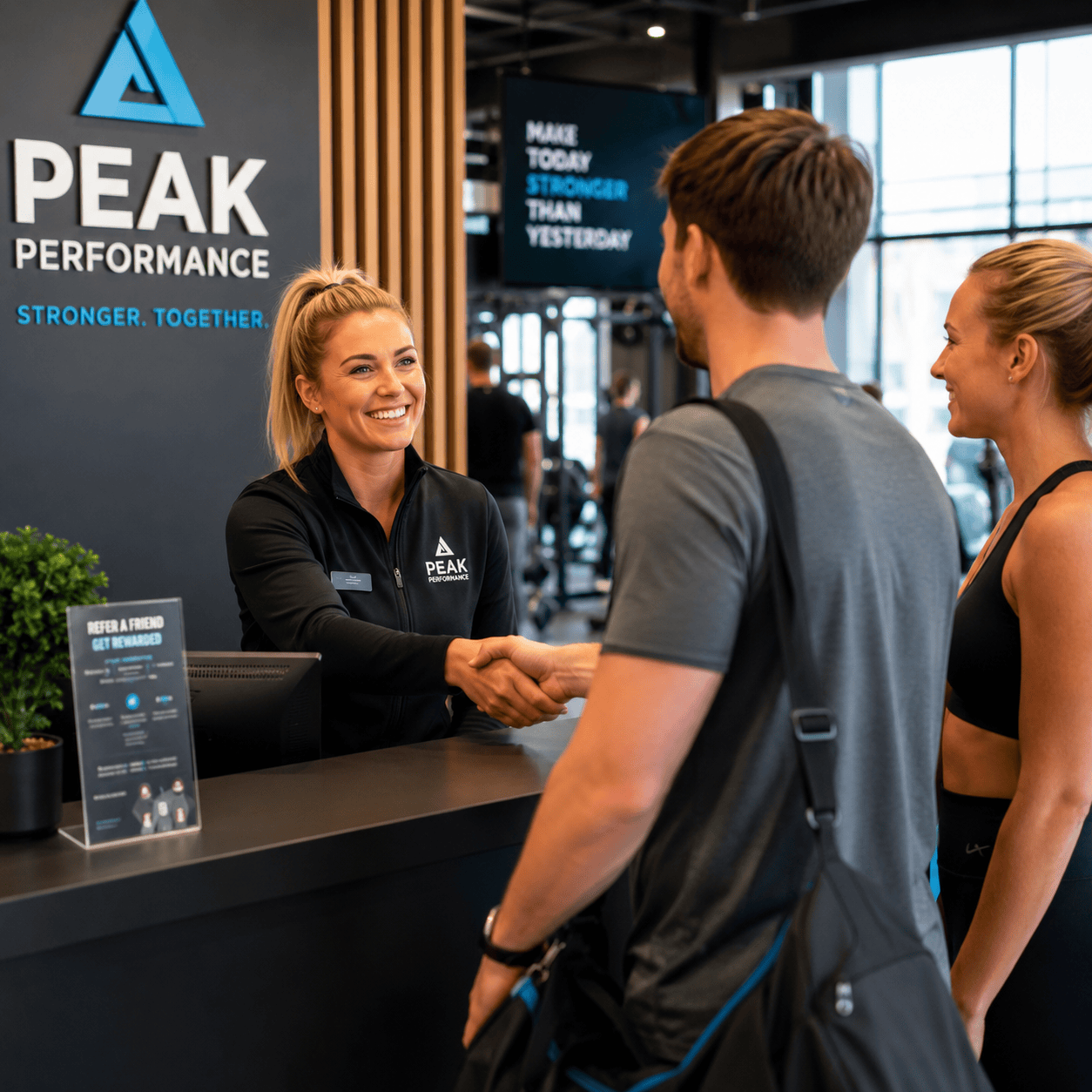
    Why Reception Staff Are Your Most Commercially Important Team Members

    In most independent gyms, the person on reception has the most member interactions of anyone in the building — more than the PTs, more than the class instructors, more than the gym owner. Every member who walks in is greeted by a reception staff member. Every prospective member who enquires is handled by a reception staff member. Every cancellation request, every billing query, every complaint arrives at reception first. According to ukactive State of the UK Fitness Industry report

    This makes reception staff the single greatest lever for member experience and commercial performance in a gym — and yet most independent gyms provide minimal training beyond how to operate the booking system and process payments. This guide covers what reception staff training should include, how to run it, and how to set the standards that turn a reception desk from an administrative function into a retention and revenue asset.

    The Three Functions of a Gym Reception Role

    Before designing training, be clear about what the role actually requires. A well-trained gym receptionist performs three distinct functions simultaneously:

    1. Operational function: Check-ins, booking management, payment processing, class registration, membership administration. This is what most training covers.
    2. Member experience function: Every interaction at the desk is a touchpoint that affects how a member feels about the gym. Warmth, attentiveness, remembering names and details, acknowledging regulars, making new members feel welcome — these behaviours are not natural to everyone and need to be trained and reinforced.
    3. Commercial function: Enquiry conversion (turning a prospect who walks in or calls into a member), retention conversations (handling cancellation requests), and natural upsell (introducing PT, classes, and add-ons at appropriate moments). Most reception staff are not trained for this function at all — and the gym loses revenue as a result every day.

    Member Experience Training: The Standards That Matter

    Name recognition

    Greeting a regular member by name is the most impactful low-cost retention behaviour a gym can implement. It signals that the member is known and valued, not anonymous. This requires reception staff to actively learn member names — a discipline, not a natural talent. Practical approaches: reviewing the membership photo in the system during quiet periods, connecting names to faces at check-in, and making a deliberate effort with new members in their first month. According to Sport England Active Lives survey

    The 10-second greeting standard

    Every member who enters the gym should be acknowledged within 10 seconds of arrival — verbally, with eye contact, not a wave from across the room while continuing another task. This standard applies even when the desk is busy. A brief “hi [Name], with you in a second” is sufficient; silence or being ignored is not.

    New member identification and attention

    New members in their first month should receive a slightly elevated level of attention — an extra check-in question (“How are you finding it so far?”), a proactive offer of help (“Have you managed to try any of the classes yet?”). Reception staff should be able to identify new members from the system and have a brief instinct to engage rather than just process.

    Handling difficult conversations with calm and care

    Members bring difficult conversations to reception: complaints about equipment, frustration with other members, billing disputes, emotional reactions to a bad session. Reception staff need to be trained to de-escalate, listen without interrupting, acknowledge the feeling before addressing the substance, and know which issues to handle themselves versus escalate to the manager. This requires role-play practice — not a briefing document.

    Enquiry Conversion: Turning Walk-Ins and Calls Into Members

    Every prospective member who contacts the gym is a warm lead — they have already taken the initiative to reach out. The conversion rate on these enquiries is largely determined by how the reception desk handles them. A well-handled enquiry converts a significant proportion into bookings; a poorly handled one loses them in under 60 seconds.

    The enquiry script framework

    Do not use a script — use a framework. A script makes staff sound robotic; a framework gives them a structure to navigate within naturally:

    1. Welcome and qualify: “What brings you to [Gym Name]?” or “What are you looking for in a gym?” — understand their goal before describing the gym
    2. Connect the gym to their goal: Describe your gym in terms of what it does for their specific objective, not as a feature list
    3. Offer a specific next step: “The best way to see if we’re right for you is to come in for a tour — I can book that right now. Does this week work?” A specific offer with a concrete booking beats “feel free to pop in anytime”
    4. Handle the price question directly: When they ask about cost, state it clearly and then anchor to value immediately: “Monthly memberships start from £X. That includes [specific things]. Want to come in and see it before you decide?”

    The follow-up discipline

    Every enquiry that does not book immediately should have a follow-up. Reception staff should log the name, contact, and next step for every enquiry that does not convert on the call or walk-in — and follow up within 24–48 hours. This discipline alone significantly increases conversion rates from warm leads.

    Natural Upsell: The Moments That Create Revenue

    Upselling does not require a pushy sales approach — it requires attentiveness to the moments when a member is ready for more. Reception staff are well-positioned to identify and act on these moments because they see every member interaction.

    Upsell moments and responses:

    • New member completing first month: “How are you finding it? If you’re enjoying it, it might be worth booking a session with one of our PTs — they can put together a proper programme for you. Want me to check availability?” This is a warm offer, not a cold pitch.
    • Member asking about a specific class they have not tried: “That’s a great class — I can book you in right now. It’s included in your membership.” Removing friction to class trial is an upsell to higher engagement, which drives retention.
    • Member enquiring about a goal: “You mentioned you want to work on [goal] — our PT [Name] specialises in exactly that. We do a free 30-minute consultation if you want to chat to them about it.”

    The key principle: the upsell offer should be framed as solving a problem the member has expressed, not as a product to be sold. Reception staff who listen actively for expressed needs rather than waiting for a scripted upsell moment are far more effective.

    Running Effective Reception Training

    • Role-play is non-negotiable: Written standards for how to handle an enquiry are useful; practising them aloud with a manager or peer is essential. The first time a staff member uses a new approach should not be in front of a live prospect or member.
    • Monthly standard reviews: A brief monthly team conversation — “what worked well, what was difficult, what do we need to do better” — keeps standards alive rather than letting them fade after the initial training.
    • Observation and feedback: Managers or owners should occasionally observe reception interactions (without interfering) and provide specific feedback afterwards. “I noticed you handled that difficult conversation really well — the way you listened before responding worked perfectly” reinforces positive behaviours as much as correcting issues.
    • Track enquiry conversion: Log every walk-in and phone enquiry and whether it converted to a booked tour or membership. Review monthly. If conversion is below 40%, the enquiry handling process needs work.

    GymPal helps UK fitness-seekers find independent gyms. Claim your free GymPal listing — and make sure that when a prospective member finds you and walks through the door, they meet a reception team trained to make them feel like the right place to stay.