Category: Gym Types & Specialities

  • Functional Fitness Gyms UK: Train Smarter, Move Better

    Functional Fitness Gyms UK: Train Smarter, Move Better

    There’s a quiet revolution happening in gyms up and down the UK. While the treadmill rows and chest-press machines haven’t gone anywhere, a growing number of people are stepping away from isolated, machine-based training and into a very different kind of workout — one built around how the human body actually moves.

    Functional fitness gyms are everywhere now, from converted railway arches in Manchester to purpose-built studios in South London. They look different to your standard leisure centre gym. They sound different — kettlebells, boxes, barbells, ropes. And they train you differently too. Instead of targeting a single muscle in a fixed plane of motion, every exercise here serves a purpose: to make you stronger, more mobile, and more capable in real life.

    If you’ve been curious about what functional training actually involves, whether it’s right for you, and how to find a quality gym near you, this guide covers everything you need to know.

    What Is Functional Fitness? (And Why It’s Not Just CrossFit)

    Functional fitness is training that mirrors natural human movement patterns — pushing, pulling, squatting, hinging, rotating, carrying. The goal isn’t to look good in a mirror (though that often follows). It’s to build a body that performs well in everyday life and holds up over time.

    Think about the movements you do every day: bending to pick something up, climbing stairs, carrying shopping, throwing something overhead. Most traditional gym machines don’t prepare you for any of those. A leg press, for instance, has you pushing horizontally in a fixed position — completely unlike any real-world load pattern. A kettlebell deadlift, on the other hand, teaches you exactly how to lift something heavy off the floor without blowing out your back.

    CrossFit is probably the most famous version of functional training, and there’s plenty of overlap between the two — but they’re not identical. CrossFit uses functional movements but structures them into competitive, high-intensity workouts (WODs) with a specific community culture and methodology. Functional fitness gyms take a broader approach. Some focus on strength and conditioning. Others prioritise movement quality, injury resilience, or athletic development. You’ll find kettlebell studios, strongman gyms, gymnastics-based studios, and general functional training spaces that don’t fit neatly into any single category.

    What they share: compound movements, free weights, and training that transfers directly to performance outside the gym.

    What to Expect Inside a Functional Fitness Gym

    Walk into a functional fitness gym and the layout itself tells you something. There won’t be rows of cardiovascular machines or banks of resistance equipment. Instead, expect open floor space — a lot of it. That space is the point. It’s where movement happens.

    Equipment varies by gym but typically includes:

    • Kettlebells — the cornerstone of many functional programmes, excellent for swings, presses, carries, and cleans
    • Barbells and bumper plates — for deadlifts, squats, cleans, and overhead work
    • Pull-up rigs and gymnastics rings — bodyweight pulling work that builds real upper-body strength
    • Plyometric boxes — for jumping, stepping, and explosive lower-body training
    • Battle ropes, slam balls, sandbags — conditioning tools that build power and grip
    • Assault bikes and rowers — short-burst conditioning rather than long steady-state cardio

    Classes are common in functional gyms. Coaches typically lead sessions of 8–15 people through a structured workout with a warm-up, skill or strength component, then a conditioning finisher. The coaching-to-client ratio is tighter than a standard gym class, which means you get corrected when your form is off — and that feedback matters enormously when you’re moving under load.

    Open gym sessions are also available at most spaces, giving you time to work through your own programme with the equipment available.

    Functional Fitness vs Traditional Gym Training: Key Differences

    If you’ve spent years training on machines or following a classic bodybuilding split, the shift to functional training can feel jarring at first. Here’s where the philosophies diverge:

    Multi-joint vs single-joint movements. A bicep curl isolates one muscle. A pull-up works your biceps, lats, rhomboids, traps, core, and grip simultaneously. Functional training almost always prioritises the latter — more muscles working together, more energy burned, more real-world carryover.

    Movement quality vs weight lifted. In a functional gym, a coach will pull you up on poor squat mechanics before they let you add another 10kg. The philosophy is that moving well comes before moving heavy. This emphasis on technique reduces injury risk and produces more durable strength over time.

    Conditioning alongside strength. Traditional gym programmes often separate cardio and weights into different sessions or even different days. Functional training usually integrates both — a workout might include heavy barbell work followed by a metabolic conditioning piece that leaves your lungs burning. This mirrors how athletic performance actually works.

    Community and accountability. Walk into most functional fitness gyms and you’ll notice the culture. People know each other’s names. Coaches track your progress. There’s a shared goal of getting better, not just getting through. For many people, this social element is what keeps them coming back after the initial motivation fades.

    The Best Types of Functional Fitness Training in the UK

    Functional training isn’t one-size-fits-all. Across the UK you’ll find several distinct strands, each with its own emphasis and community:

    Kettlebell studios. Gyms like Kettlebell Kings in London and independent studios across Birmingham, Leeds, and Edinburgh have built entire programmes around the kettlebell. It’s a remarkably versatile tool — the Turkish get-up alone will challenge your mobility, stability, and strength in ways that years of machine training won’t. Classes are usually small, technique-focused, and accessible to all fitness levels.

    Strength and conditioning (S&C) gyms. These spaces borrow heavily from athletic training methodology. You’ll find barbell work — primarily the squat, deadlift, and press — combined with conditioning work, mobility practice, and accessory movements. Bristol, Manchester, and Glasgow all have excellent independent S&C gyms that take a serious, coach-led approach to building athletic capacity.

    Gymnastics-based training. Inspired partly by CrossFit but often more focused on bodyweight mastery, these gyms teach handstands, muscle-ups, ring work, and bar skills alongside weighted movements. The Gymnastics Model, popular in London and Edinburgh, emphasises body control and motor patterns as the foundation of all fitness.

    HIIT with a functional foundation. Not all HIIT classes in the UK are functional — plenty rely on treadmills and static bikes. But the best ones incorporate kettlebell swings, sled pushes, battle ropes, and compound movements that make the conditioning work carry over into genuine physical capability.

    Hybrid functional gyms. Many newer gym spaces blur all the lines above — they’re part CrossFit box, part strength gym, part movement studio. They offer barbell-based strength classes, kettlebell skills sessions, yoga or mobility work, and open gym time. If you’re someone who doesn’t want to be pigeonholed into one training style, these spaces offer genuine variety.

    How to Find a Functional Fitness Gym Near You

    This is where it gets practical. The UK has a growing number of excellent functional training spaces, but they’re not always easy to find — many are small independents without huge marketing budgets, operating out of industrial units or standalone buildings away from the high street.

    GymPal lists gym facilities across the UK, including functional training spaces, CrossFit boxes, kettlebell studios, and strength gyms — searchable by location. It’s worth running a search for your area before assuming the only options are the national chains.

    When you do find a gym that looks promising, most will offer a free or low-cost trial session. Functional fitness gyms almost universally encourage you to try before you commit, because they know the experience speaks for itself. Book a class, show up five minutes early, and tell the coach you’re new. Any good functional gym will spend time on your mechanics before loading you up.

    According to Sport England’s Active Lives survey, adults who train in structured, coached environments are significantly more likely to maintain consistent activity levels over time — which aligns with what functional gyms deliver: accountability, progression tracking, and community.

    What to Look For Before You Join

    Not all functional fitness gyms are equal. A kettlebell hanging from a hook and some floor space doesn’t make a functional gym any more than a treadmill makes a marathoner. Before you commit to a membership, ask these questions:

    Are the coaches qualified? Look for Level 3 personal training qualifications as a baseline, plus specialist credentials — kettlebell certifications (StrongFirst, RKC), CrossFit trainer levels, British Weightlifting coaching awards, or equivalent. Good coaching is the single biggest differentiator between a functional gym that transforms people and one that just keeps them busy.

    How are beginners onboarded? Any serious functional gym will have a structured intro course or foundations programme for new members. This ensures you learn the foundational movement patterns — the hinge, the squat, the press — before you join regular classes. If a gym will let you walk straight into an advanced class on day one, that’s a red flag.

    Is programming structured and progressive? Random workout selection (sometimes called “muscle confusion”) is a marketing gimmick. Sound functional training should follow a structured programme with planned progressions over weeks and months. Ask how the programming works and whether there’s logic behind it.

    Does the community feel right? You’ll know within one session whether the vibe works for you. The best functional gyms are welcoming to all ability levels — competitive athletes train alongside complete beginners, and nobody gets left behind. If the atmosphere feels cliquey or intimidating, trust your gut.

    If you’re not sure where to start with technique — particularly for barbell-based movements — working with a personal trainer for even a handful of sessions before joining group classes can save months of reinforcing bad habits.

    Is Functional Training Right for You?

    The honest answer is: probably yes, for most people. If you’re in your twenties and want to build athletic performance, functional training develops the strength, speed, and movement quality that machine-based training rarely touches. If you’re in your forties or fifties and starting to notice that bending, lifting, and carrying are harder than they used to be, functional training builds the real-world capacity to change that. If you’re returning from injury and want to move without pain, the movement-quality emphasis of most functional gyms provides a structured path back.

    The caveat: if you have specific aesthetic goals — competitive bodybuilding, for instance — a dedicated functional gym probably isn’t the best primary training environment. But for the vast majority of people who want to be genuinely fit, strong, and capable for the long haul, functional training offers something that rows of machines simply can’t.

    Start Your Search Today

    The best functional fitness gym for you is out there — it might be a kettlebell studio five minutes from your house, a CrossFit box on the edge of town, or a hybrid strength-and-conditioning space you’ve driven past a hundred times without realising what goes on inside.

    GymPal makes it easy to find gyms, studios, and training spaces across the UK — search by location and filter by facility type to find the functional training environment that fits your goals. Give it one trial session. Most people never look back.

  • Aqua Fitness UK: The Pool Workouts That Go Way Beyond Swimming Lengths

    Aqua Fitness UK: The Pool Workouts That Go Way Beyond Swimming Lengths

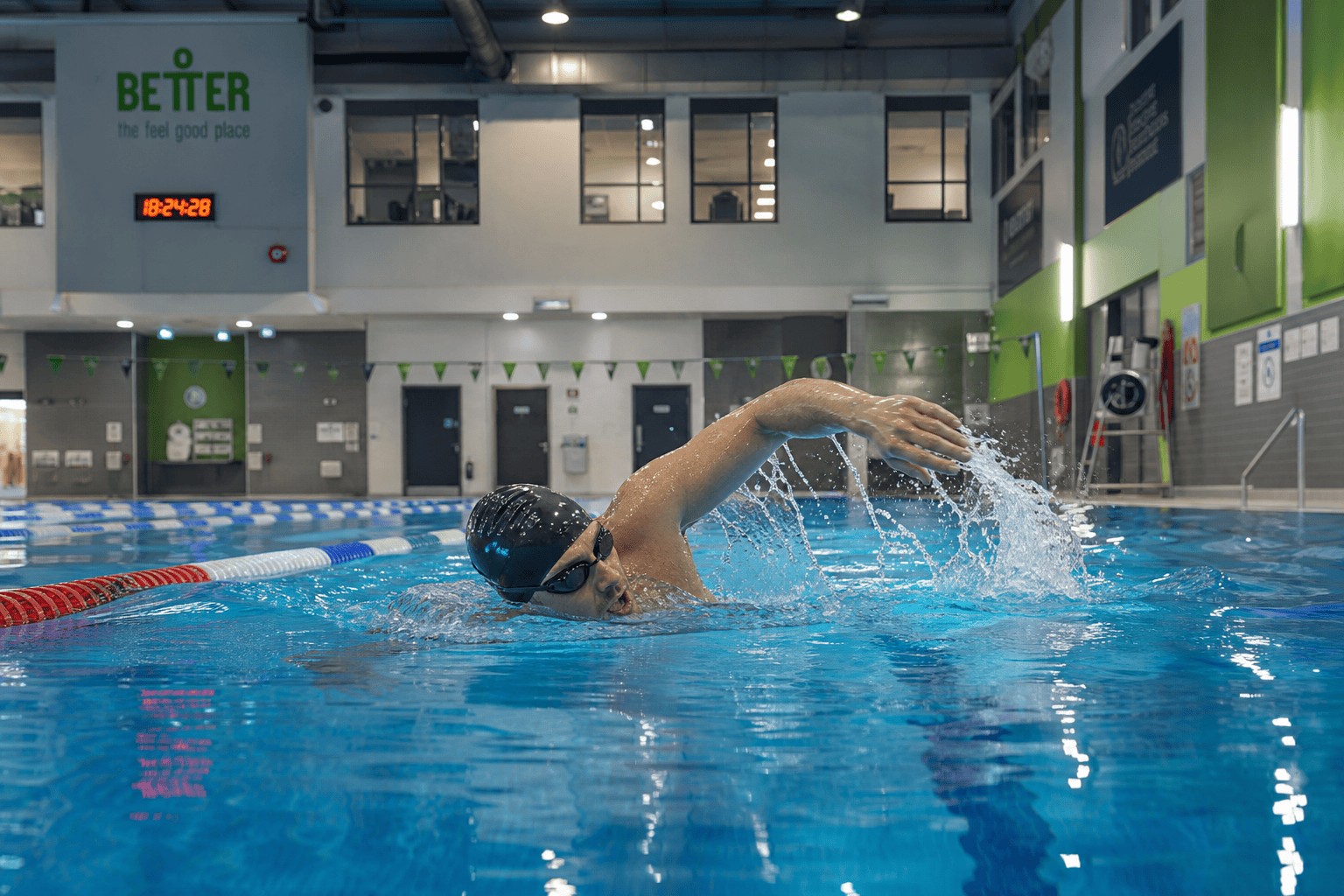
    Most people walk past the pool on the way to the gym floor without a second glance. Swimming lengths isn’t everyone’s thing — it can feel repetitive, technical, or just a bit lonely staring at the black line on the bottom of the pool. But what if the pool itself was the gym?

    Aqua fitness has exploded across UK leisure centres and health clubs over the past few years, and for good reason. These classes use water’s natural resistance to torch calories, build strength, and protect your joints in ways a treadmill simply can’t match. Whether you’re coming back from injury, looking for a new challenge, or just fancy something different on a Wednesday morning, there’s a water workout for you.

    This guide covers everything you need to know about aqua fitness in the UK — from the different class types to what to wear, how to find sessions near you, and why your local pool might just become your favourite place to train.

    What Is Aqua Fitness (And What It Isn’t)?

    Aqua fitness is an umbrella term for any structured exercise that takes place in water — typically a pool — where the movements are driven by resistance rather than buoyancy. You don’t need to be a strong swimmer. In most aqua classes, you’re standing in water between waist and chest height and the swimming part is entirely optional.

    What makes water training unique is physics. Water is roughly 800 times denser than air, meaning every movement you make encounters resistance in all directions. Push forward, you push against water. Pull back, same again. This 360-degree resistance means your muscles work harder through a fuller range of motion than they would doing the same movement on land — often without you realising how hard you’re working until the next day.

    The hydrostatic pressure of the water also supports your body weight (reducing impact by up to 90% compared to land), keeps your heart rate naturally lower than equivalent land exercise, and can actually improve circulation. For anyone with arthritis, recovering from surgery, or managing chronic pain, this makes aqua fitness genuinely transformative rather than just a nice alternative.

    The Main Types of Aqua Fitness Classes in the UK

    Walk into any large UK leisure centre and you’ll likely see a packed timetable of pool classes. Here’s what each one actually involves:

    Aqua Aerobics

    The classic. Aqua aerobics classes typically run 45–60 minutes and follow a structured cardio format — jumping jacks, jogging in place, kicks, punches, and high knees, all performed to upbeat music. An instructor on the poolside leads the session and adjusts the intensity throughout. These classes suit all ages and abilities, and the music tends to be cheerfully loud. Don’t let the “older demographic” stereotype put you off — a decent aqua aerobics instructor will leave you properly puffed.

    Aqua HIIT

    Think everything you know about HIIT training in the UK — short bursts of maximum effort followed by brief recovery — translated into the pool. The water resistance makes every interval substantially harder than its land equivalent, while the buoyancy protects your joints from the pounding that comes with standard HIIT. Sessions typically run 30–45 minutes and are genuinely intense. These classes are increasingly common at private gyms and health clubs with pools.

    Aqua Jogging

    Exactly what it sounds like. Using a buoyancy belt (provided by the facility) around your waist, you run in deep water without touching the bottom. It’s a favourite cross-training tool for injured runners — you maintain your cardiovascular fitness and running mechanics while completely eliminating impact. Some UK running clubs book pool lanes for group aqua jogging sessions during injury recovery periods.

    Hydrospinning

    Submerged cycling on specially designed waterproof bikes anchored to the pool floor. Hydrospinning is the aqua fitness equivalent of an indoor cycling class — the same music-driven intervals and instructor-led intensity, but with the added resistance and cooling effect of the water. You’ll typically be submerged from the waist down. It’s increasingly available at higher-end health clubs and spa facilities, and it’s a surprisingly exhilarating workout once you get past the novelty of pedalling in a pool.

    Aqua Yoga and Aqua Pilates

    Slower, more mindful sessions that use the water’s support to take traditional yoga and Pilates movements into a new dimension. The instability of moving water engages your core constantly, while the support makes deep stretches more accessible. These classes are particularly popular with older participants and those managing mobility issues, but they challenge everyone’s balance and body awareness.

    Aqua Therapy / Hydrotherapy

    Distinct from general aqua fitness, hydrotherapy sessions are clinically led — usually by physiotherapists — and designed for rehabilitation from specific injuries or conditions. Many NHS trusts and private physio practices offer hydrotherapy, and some gyms with pools run supervised therapeutic sessions. If you’re recovering from a knee replacement, hip surgery, or managing a chronic condition, ask your GP or physio whether hydrotherapy would be appropriate.

    The Real Fitness Benefits of Training in Water

    Aqua fitness punches above its weight when it comes to measurable health outcomes — and the evidence for this is well-established in UK fitness and physiotherapy communities.

    Cardio without the impact. Your heart and lungs work just as hard in water as on land, but your knees, hips, ankles, and spine absorb a fraction of the force. This makes aqua fitness one of the few genuinely sustainable cardio options for people with osteoarthritis, joint problems, or post-injury limitations.

    Whole-body muscle engagement. Because water resists movement in every direction, you recruit stabilising muscles that are largely dormant during machine-based gym work. Your core, in particular, works constantly to keep you upright and balanced against the current.

    Calorie burn that surprises people. A 60-minute aqua aerobics class burns between 400–600 calories depending on intensity and body weight — comparable to a moderate cycling session. Aqua HIIT can push that higher. The water keeps you cool so you don’t feel like you’re working as hard as you are.

    Mental health benefits. There’s growing evidence that exercising in water has a measurably positive effect on mood and anxiety. The sensory experience of warm water, combined with the social nature of group classes, makes aqua fitness one of the more enjoyable forms of structured exercise people actually stick to.

    According to Sport England’s Active Lives research, regular aquatic exercise is associated with reduced risk of chronic illness, improved mental wellbeing, and stronger long-term adherence to physical activity compared to many land-based alternatives.

    If you’re already a regular swimmer, adding aqua fitness classes to your routine offers a completely different stimulus — one that complements rather than duplicates your lane swimming. And if you’ve been swimming lengths as your main form of exercise, the world of pool-based fitness in the UK goes much further than you might have explored.

    Who Is Aqua Fitness Right For?

    The short answer: almost everyone. But there are some groups for whom it’s particularly well-suited.

    Beginners and those returning to exercise. If the thought of a gym floor feels intimidating, a pool class is one of the most welcoming environments in fitness. The water hides your effort level from others (no one can see you gasping), the social atmosphere of group classes takes the pressure off, and the instructor paces the session for the whole group.

    People managing injuries or chronic conditions. Aqua fitness is routinely recommended by UK physiotherapists for people with arthritis, back pain, fibromyalgia, and post-surgical recovery. Always clear new exercise with your GP or physio first, and let your class instructor know about any conditions before you start.

    Older adults. Balance, coordination, bone health, and cardiovascular fitness — aqua fitness addresses all of them. Many UK leisure centres run dedicated 50+ aqua sessions, and the social aspect of these classes is an underrated part of their appeal.

    Pregnant women. Aquatic exercise is one of the most recommended forms of exercise during pregnancy in the UK. The water supports the body weight, reduces the risk of overheating, and keeps impact to zero. Many leisure centres run dedicated antenatal aqua sessions.

    Serious athletes looking for cross-training. Aqua jogging and aqua HIIT are increasingly used by competitive runners, cyclists, and footballers as injury-prevention and active recovery tools. The cardiovascular load is genuine while the recovery demand is substantially lower than equivalent land training.

    What to Bring and What to Expect at Your First Class

    Walking into your first aqua fitness class is low-stakes — here’s what to know so you’re not caught out.

    What to wear. A standard swimsuit or swim shorts work fine. Women often prefer a secure-fitting one-piece or a swimsuit with a built-in top for active movement. Avoid any swimwear that’s too loose — it creates a parachute effect in water that’s more awkward than it sounds. Goggles aren’t usually needed as you won’t be putting your head under.

    What the facility provides. Most UK leisure centres provide pool noodles, floats, resistance dumbbells, and buoyancy belts as part of the class. You don’t need to bring anything beyond your swimwear and a towel. Some hydrospinning classes may have specific footwear requirements — worth checking in advance.

    Water temperature. Most UK pools run at 28–30°C for fitness classes — warmer than open water swimming but comfortable for sustained exercise. Hydrotherapy pools are often warmer (32–34°C). If the temperature matters to you for health reasons, call ahead to check.

    The vibe. Most aqua fitness classes are genuinely friendly and unpretentious. Don’t worry about keeping up perfectly at first — the instructor will offer modifications, and nobody in the class can see your feet anyway. Give it two or three sessions before you decide whether it’s for you.

    After the class. You might not feel like you’ve worked hard while you’re in the water — the cooling effect masks exertion. Don’t be surprised if your legs are more tired than expected the next morning. This is normal and means it’s working.

    How to Find Aqua Fitness Classes Near You in the UK

    Your best starting point is your nearest council leisure centre. Most local authority pools run aqua aerobics on their weekly timetable, typically in the mornings and early evenings when the lanes are less busy. Class memberships are often significantly cheaper than gym-only memberships and usually include unlimited pool access alongside the classes.

    Private health clubs with pools — particularly the larger chains and independent health clubs — are increasingly adding aqua HIIT and hydrospinning to their timetables as demand grows. If you’re looking for a gym with pool and spa access, many health club memberships include all pool-based classes as standard.

    GymPal makes it easy to find swimming pools and aqua fitness venues near you across the UK. Search for pools and aquatic venues on GymPal to see what’s available in your area, compare facilities, and find contact details for booking your first session.

    When you’re evaluating a venue, ask specifically:

    • How many aqua classes are on the weekly timetable?
    • Are classes included in the membership or charged separately?
    • What’s the pool temperature for fitness classes?
    • Is equipment (noodles, floats, dumbbells) provided?
    • Do they run any specialist sessions (aqua HIIT, hydrospinning, antenatal)?

    Aqua Fitness in the UK: The Verdict

    If you’ve never tried aqua fitness, it’s one of those workouts that consistently surprises people. The assumption going in is that it’s easy or only for certain demographics. The reality is that a well-run aqua class is a genuine full-body workout that gets your heart rate up, challenges your muscles in ways the gym floor doesn’t, and leaves you feeling both worked and refreshed rather than beaten up.

    The joint-friendly nature means it’s accessible to almost anyone — and the social, music-driven atmosphere of group pool classes makes it one of those rare forms of exercise that people actually look forward to. That’s the real secret to long-term fitness: finding something you’ll still be doing in six months. For a lot of UK gym-goers, aqua fitness turns out to be exactly that.

    Ready to take the plunge? Search for gyms and leisure centres with pools on GymPal and find your nearest aqua fitness class today.

  • HIIT Classes UK: What to Expect and Where to Find the Best Sessions Near You

    HIIT Classes UK: What to Expect and Where to Find the Best Sessions Near You

    If you’ve been looking for a workout that actually shifts the needle — burns calories, builds fitness fast, and fits into a busy schedule — HIIT has probably come up. High-Intensity Interval Training is one of the most popular group fitness formats in UK gyms right now, and for good reason. It delivers serious results in a short time window without requiring hours on the treadmill.

    But if you’ve never tried a HIIT class before, it can feel a bit daunting. What actually happens in one? How hard is it? Will you be completely out of your depth? And where do you even find a good class near you? This guide answers all of that — so you can walk through the door knowing exactly what to expect.

    What Is HIIT, Exactly?

    HIIT stands for High-Intensity Interval Training. The idea is simple: you alternate between short bursts of intense effort and brief rest (or lower-intensity) periods. A typical interval might be 40 seconds of hard work followed by 20 seconds of rest, repeated across multiple exercises for 30–45 minutes.

    The “high intensity” part is key. During the work intervals, you’re pushing hard — not a comfortable jog, but an effort level where holding a conversation becomes genuinely difficult. That intensity is what makes HIIT so effective at improving cardiovascular fitness, burning calories, and building muscular endurance.

    What sets HIIT apart from steady-state cardio is something called EPOC — Excess Post-Exercise Oxygen Consumption. After a HIIT session, your body continues to burn calories at an elevated rate for hours as it recovers. Some research suggests this “afterburn” effect can add meaningful calorie expenditure on top of what you burned during the session itself.

    What Happens in a UK HIIT Class?

    HIIT classes vary between gyms and instructors, but most follow a similar format. You’ll start with a 5-10 minute warm-up to get the joints moving and the heart rate elevated before the main work begins. The main block typically uses circuit-style stations or timed intervals — think burpees, kettlebell swings, box jumps, battle ropes, dumbbell thrusters, and squat variations. You finish with a cool-down and stretch.

    Most UK gym HIIT classes run 30–45 minutes, though some studios offer 20-minute express sessions and others go the full hour. Class sizes range from around 8 to 20 participants, and a good instructor will offer modifications for every exercise so you can scale up or down based on your fitness level.

    The format has absorbed elements from a few different training styles. You’ll notice similarities to outdoor and indoor bootcamp sessions, which share the same interval-based structure and group energy — though HIIT classes tend to be more tightly programmed and studio-based. Some gyms run their HIIT sessions under branded names like F45, Barry’s Bootcamp, or their own in-house format.

    How Hard Is It Really?

    This is the question most first-timers ask, and the honest answer is: it depends on you. HIIT is designed to be scalable. The intensity target is relative to your own fitness level — you’re working hard relative to your capacity, not competing against the person next to you.

    That said, your first class will likely be tough. Even fit people often find their first HIIT session surprisingly hard, because the format pushes you into effort zones you might not regularly train at. Your legs may ache the next day. That’s normal. By your third or fourth session, you’ll have a much better sense of how to pace yourself.

    If you’re new to group exercise generally, it’s worth knowing that the group setting itself can feel intimidating — but gym anxiety is extremely common, and most HIIT classes are genuinely welcoming of beginners. Instructors at reputable UK gyms are used to people at all fitness levels walking through the door, and a good class creates an atmosphere where everyone is focused on their own effort rather than judging yours.

    How Does HIIT Compare to Other Popular Class Formats?

    HIIT sits in a useful middle ground between steady-state cardio and pure strength training. Compared to yoga or Pilates, it’s significantly more cardiovascular — you’ll get your heart rate up in a way a mobility class won’t. Compared to a weights session, it’s more aerobic but typically lighter on absolute strength development.

    The closest relatives are CrossFit and bootcamp. CrossFit shares DNA with HIIT — both use timed, high-intensity work intervals and similar movement patterns — but CrossFit tends to place greater emphasis on Olympic lifting and barbell work, has a distinct community culture, and operates through dedicated CrossFit-affiliated boxes rather than mainstream gym timetables.

    HIIT is the more accessible entry point for most people. You don’t need to learn complex lifting technique to get a great workout, and classes are available at almost every major gym chain in the UK.

    What to Wear and Bring

    For a HIIT class you want:

    • Trainers with lateral support — running shoes aren’t ideal because HIIT involves a lot of lateral movement, jumping, and agility work. Cross-trainers or gym shoes (Nike Metcon, Reebok Nano, New Balance Minimus) are far better suited.
    • Moisture-wicking kit — you will sweat. Avoid cotton. Lightweight shorts or leggings with a breathable top work well.
    • A water bottle — you’ll need it. Some studios provide water but don’t count on it.
    • A towel — for equipment and your own comfort. Many UK gyms require you to bring one.
    • Arrive 5 minutes early — this gives you time to get set up, introduce yourself to the instructor, and mention any injuries or limitations before the session starts.

    How Much Do HIIT Classes Cost in the UK?

    The cost varies significantly depending on where you train:

    • Budget gym chains (PureGym, The Gym Group, JD Gyms): HIIT classes are included in monthly membership, typically £20–35/month. These are some of the most accessible options in the UK.
    • Mid-tier gyms (David Lloyd, Virgin Active, Nuffield Health): Classes included in membership, ranging from £50–100+/month depending on the club and location.
    • Boutique studios (F45, Barry’s, independent studios): Pay-per-class models are common, typically £12–25 per class, with class packs and memberships available. London prices sit at the higher end.
    • Leisure centres: Often the most affordable option, with classes from £5–10 each or included in a membership from around £30–50/month.

    If you’re trying HIIT for the first time, many gyms offer a free trial session or a discounted first class. It’s worth taking these up before committing to a membership or class pack.

    How Often Should You Do HIIT?

    HIIT is demanding on the body, and more isn’t always better. The NHS physical activity guidelines recommend adults get at least 75 minutes of vigorous activity per week — HIIT counts as vigorous. In practice, 2–3 HIIT sessions per week works well for most recreational gym-goers, with rest or lower-intensity training on the days in between. Doing HIIT every day significantly increases injury risk and reduces the quality of each session.

    A balanced weekly schedule might include 2 HIIT sessions alongside a strength session, a yoga or Pilates class for mobility, and at least one full rest day. This gives you the intensity-driven cardiovascular benefits of HIIT while still allowing your body to recover and adapt.

    Finding HIIT Classes Near You

    HIIT is now offered at the vast majority of UK gyms, from budget chains to boutique studios. Most gyms display their class timetables online, and many allow non-members to book a trial class before joining.

    The quickest way to find HIIT classes near you is to search on GymPal — the UK’s fitness venue finder. GymPal lists thousands of gyms and studios across the country, so you can filter by location, gym type, and facilities to find venues offering HIIT in your area. Whether you’re in a city centre or a smaller town, you’ll quickly see what’s available on your doorstep.

    When you find a gym that looks good, check whether HIIT classes are included in their standard membership or charged separately. Boutique studios often run HIIT under branded formats — F45 and Barry’s Bootcamp are the two most widely recognised in the UK — while independent gyms and chains offer their own versions under names like “HIIT Circuit,” “Cardio Blast,” or “Interval Training.”

    Tips for Getting the Most Out of Your HIIT Class

    Don’t skip the warm-up. HIIT is intense enough that going in cold increases injury risk. Even if you arrive a little late, do a few dynamic movements before joining the main session.

    Eat smart beforehand. A light meal or snack 60–90 minutes before your session works well for most people. A heavy meal right before HIIT is a recipe for discomfort.

    Focus on form, not speed. Especially in your first few classes, it’s better to perform each exercise correctly at a slightly lower intensity than to thrash through at full effort with poor technique. A good instructor will demonstrate form before each exercise — watch carefully.

    Track your progress. HIIT is one of the training styles where progress is highly visible over weeks. What leaves you gasping in week one will feel manageable by week six. A simple training diary noting which class you attended and how you felt is enough to see meaningful improvement.

    Listen to your body. HIIT is meant to be hard, but there’s a difference between productive discomfort and pain. If something hurts (sharp joint pain, not muscle burn), stop and speak to the instructor.

    Is HIIT Right for You?

    HIIT suits most healthy adults looking to improve cardiovascular fitness, lose fat, or add variety to their training. It’s particularly well-suited to people with limited time who want to get the maximum return from 30–45 minutes of exercise.

    It’s less suitable if you’re recovering from injury, dealing with joint problems, or are completely new to exercise — in those cases, a lower-impact starting point (swimming, walking, or guided gym induction) may be more appropriate before progressing to high-intensity work. If you have any health conditions, it’s worth speaking to your GP before starting a HIIT programme.

    For the majority of gym-goers, though, adding a couple of well-run HIIT sessions into a weekly schedule is one of the most effective changes you can make to your fitness routine. The sessions are short, the results are real, and — once you’ve done a few — genuinely addictive.

    Ready to find a HIIT class near you? Search GymPal to discover gyms and studios across the UK offering high-intensity training in your area.

  • Martial Arts Gyms UK: Your Complete Guide to Muay Thai, BJJ, Judo and MMA

    Martial Arts Gyms UK: Your Complete Guide to Muay Thai, BJJ, Judo and MMA

    If you’ve been grinding through the same treadmill sessions and machine circuits for months, you’re not alone — and you’re probably a bit bored. Martial arts training offers something most gym routines simply can’t: genuine engagement. Every session demands your full concentration, your body, and yes, a bit of your ego.

    Across the UK, martial arts gyms and academies have never been more accessible. Whether you’re drawn to the striking power of Muay Thai, the tactical ground game of Brazilian jiu-jitsu (BJJ), the Olympic tradition of Judo, or the all-encompassing challenge of MMA, there’s almost certainly a club within easy reach of where you live. This guide explains what each discipline involves, what to expect as a complete beginner, what it costs, and how to find the right gym for you.

    You don’t need to want to compete. Most people who train martial arts never set foot in a competition. They train because it builds fitness that actually transfers to real life — endurance, strength, coordination, and mental resilience — and because it’s simply far more enjoyable than another solo session in a weights room.

    Why UK Martial Arts Gyms Are Seeing Record Growth

    The UK martial arts scene has transformed over the past decade. The global rise of the UFC drove a wave of interest in BJJ and MMA from around 2015 onwards, while Muay Thai — long popular in London, Manchester, and Glasgow — expanded steadily into smaller towns and suburbs. Judo and Karate gained fresh audiences following increased Olympic exposure at Tokyo 2020 and Paris 2024.

    The result is a martial arts landscape that’s broader and more accessible than ever. Today, you’ll find dedicated Muay Thai gyms in market towns, BJJ academies attached to CrossFit boxes, and MMA facilities with classes running seven days a week at beginner-friendly times. Many mainstream gym chains now include boxing and martial arts zones in their layouts, which has exposed a new generation of gym-goers to the basics.

    According to Sport England’s Active Lives research, participation in combat and martial arts activities has grown consistently among adults aged 18–35, and women now represent a significant and growing share of martial arts class participants across the country — a shift from a decade ago when most clubs were overwhelmingly male.

    The appeal, ultimately, is the same for everyone: martial arts training gives you a reason to show up that goes beyond aesthetics or habit. When a training partner is relying on you for pad work or sparring, skipping class feels different.

    Muay Thai: The UK’s Favourite Striking Art

    Muay Thai — sometimes called Thai boxing — is a striking martial art that uses punches, kicks, elbows, and knee strikes. That’s eight points of contact compared to boxing’s two, which is where its nickname “the art of eight limbs” comes from. It’s both a competitive sport and one of the most physically demanding fitness workouts available.

    What a typical UK class looks like: Classes usually run 60–90 minutes and follow a recognisable format. You’ll start with skipping rope and shadow boxing to warm up, then move into pad rounds — pairing up with a partner, one person striking while the other holds pads. Bag work follows, then conditioning circuits. Full-contact sparring is generally kept optional and is reserved for more experienced students.

    Why it works for fitness: A single Muay Thai class burns between 500 and 900 calories depending on intensity and body weight. You’ll develop cardiovascular endurance quickly, build leg and core strength through kicks and knee strikes, and improve your coordination in ways that cardio machines simply don’t replicate. The technical focus — learning combinations, timing, and footwork — also means your brain is as engaged as your body.

    Cost in the UK: Monthly unlimited membership at a dedicated Muay Thai gym typically runs £55–£90. In London and major city centres, expect the upper end; many clubs outside the M25 charge significantly less. Drop-in sessions are usually available at £8–£15 each. Most gyms include wraps and loan you gloves for your first few sessions while you find your feet.

    Respected UK Muay Thai clubs include: KO Thai Boxing in Manchester, London Fight Factory, Thai Kickboxing Academy Birmingham, TKB Gym in Glasgow, and Base Bristol. These aren’t the only options — there are hundreds of quality clubs nationwide, and GymPal can help you find local ones with verified listings.

    Brazilian Jiu-Jitsu: The Ground Game That Changes Everything

    Brazilian jiu-jitsu (BJJ) is a grappling martial art focused on taking opponents to the ground, controlling them, and submitting them via chokes and joint locks. Unlike striking arts, BJJ doesn’t rely on power or aggression — it favours technique, positioning, and patience. A skilled smaller practitioner can genuinely control a bigger opponent, which gives it a unique appeal.

    What training involves: Classes typically open with drilling — practising specific techniques repeatedly with a partner — before moving into “rolling,” which is live sparring from the ground. Rolling is full resistance but with submissions applied slowly and safely; you tap to signal you’re caught. It’s genuinely exhausting and relentlessly technical.

    BJJ has a belt system running white → blue → purple → brown → black. Reaching blue belt typically takes two to three years of consistent training. The progress is visible, measured, and deeply motivating — and the community at most BJJ gyms is famously welcoming to beginners.

    The fitness case: An hour of rolling is one of the most complete physical workouts available — combining cardiovascular endurance with muscular strength, grip strength, flexibility, and problem-solving. The physical demands are substantial, but they’re self-regulating: you go as hard as your training partner and your body allow.

    If you’re drawn to combat sports more broadly, it’s worth knowing that many practitioners combine BJJ with a striking art. [Boxing gyms across the UK](https://askgympal.co.uk/blog/boxing-gyms-uk-best-workout/) often integrate striking fundamentals that complement BJJ’s ground game — a combination that forms the foundation of MMA.

    UK BJJ costs: Unlimited BJJ membership generally runs £60–£100/month. A significant number of UK BJJ academies operate out of multi-discipline gyms, so a membership may also include access to wrestling, no-gi grappling, and sometimes MMA sessions.

    Judo, Karate and Traditional Martial Arts in the UK

    Judo and Karate have deep roots in the UK, with organised clubs in virtually every town across England, Scotland, Wales, and Northern Ireland. Both disciplines are Olympic sports with structured gradings and competition pathways, but both are equally accessible as non-competitive training pursuits.

    Judo: A throwing and grappling art, Judo focuses on off-balancing opponents and throwing them to the mat, followed by ground control and submission. It’s extraordinarily dynamic — elite Judo throws are some of the most spectacular athletic actions in any sport — and builds explosive strength, coordination, and balance. UK Judo clubs tend to be community-run and notably affordable, with sessions often costing £5–£8 per class or £25–£40/month.

    Karate: Karate encompasses multiple styles (Shotokan, Kyokushin, Goju-ryu, and others), each with slightly different emphases on striking, kata (forms practice), and sparring. Kyokushin in particular is a full-contact style with a ferocious reputation for conditioning. Many UK towns have established Karate clubs with long lineages, and prices are typically among the most affordable in martial arts — £25–£50/month is common.

    Krav Maga and self-defence systems: Cities like London, Manchester, and Edinburgh have a strong showing of Krav Maga and reality-based self-defence clubs, which attract people specifically interested in practical self-defence rather than sport competition. Classes are typically structured, beginner-friendly, and focused on situational awareness alongside physical technique.

    MMA: The Complete Martial Arts Workout

    Mixed martial arts (MMA) combines striking, wrestling, and ground fighting into one training system. You don’t need to be working towards a cage fight to benefit from MMA training — many practitioners simply want a varied, complete programme that develops all aspects of physical fitness simultaneously.

    A typical MMA class might include pad work standing, wrestling takedowns and clinch work, and ground-based BJJ or submission wrestling — often all within a single session. It’s demanding, varied, and never boring.

    The social accountability that makes [bootcamp classes so effective for many UK gym-goers](https://askgympal.co.uk/blog/bootcamp-classes-uk-guide-2/) operates identically in MMA training — when your partner is expecting you for sparring or drilling, you show up. That consistency is one of the most underrated drivers of long-term fitness progress.

    UK MMA gym costs: Expect to pay £60–£100/month for an MMA-focused facility with comprehensive class timetables. Most quality MMA gyms in the UK now offer structured beginner programmes specifically designed for people with no prior martial arts experience — you don’t need to know anything walking through the door.

    Well-regarded UK MMA facilities include: SBG Ireland UK facilities, Next Generation Manchester, Team Kaobon Liverpool, and Rough House MMA London. London, Manchester, Liverpool, and Leeds have strong clusters of quality clubs; regional cities across Scotland, Wales, and the Midlands are increasingly well-served too.

    How to Choose Your First Martial Arts Gym

    The best martial arts gym is the one you’ll actually attend. Here’s what to look for beyond the headline discipline:

    Beginner provision: Look for gyms that run dedicated beginner programmes or foundations classes, not just open sessions where experience levels are mixed. A good gym separates beginners long enough to build confidence and basic safety awareness.

    Qualified coaches: In Muay Thai and BJJ specifically, check the credentials of the lead coaches. For BJJ, a black belt from a recognised lineage is meaningful. For Muay Thai, look for coaches with competitive experience in Thailand or recognised UK shows, or qualifications from a body like the British Thai Boxing Council.

    Trial sessions: Most quality UK martial arts gyms offer a free or heavily discounted trial session. Take it. How you feel in the first class — the culture, the coaching style, the mix of people — tells you most of what you need to know.

    Supplementary individual coaching: Some practitioners supplement their group training with one-to-one technical sessions. If you’re considering that route, [finding a personal trainer with a combat sports background](https://askgympal.co.uk/blog/how-to-find-personal-trainer-uk/) can accelerate your development in the early months considerably.

    Using GymPal to find options: GymPal lists hundreds of martial arts gyms, clubs, and academies across the UK — from Muay Thai gyms in Edinburgh to BJJ academies in Cardiff. You can search martial arts venues near you on GymPal and filter by discipline, location, and facilities to shortlist your options quickly.

    What to Expect in Your First Month

    The first month of martial arts training is almost universally humbling — and almost universally positive. Here’s an honest picture of what to expect:

    You’ll be terrible, and that’s fine. Everyone is. The experienced students at your gym were exactly where you are. The culture at most martial arts clubs in the UK is notably supportive of beginners — more so, anecdotally, than many mainstream gyms.

    You’ll be exhausted. Martial arts uses muscles in unfamiliar patterns and keeps your heart rate elevated for sustained periods. The first few weeks will feel more tiring than they do once your body adapts.

    You’ll get better faster than you expect. The learning curve in martial arts is steep early on — technique improvements are visible week-to-week in a way that isn’t always the case with weight training progress.

    What to bring: Comfortable workout clothes, hand wraps (usually available to buy at the gym), and water. Most clubs loan gloves to beginners. For BJJ, a gi (training uniform) becomes necessary fairly quickly; entry-level gis cost £40–£80 from UK suppliers like Scramble or Fuji.

    Finding Martial Arts Gyms Near You

    The UK has martial arts clubs of every kind within reach of most towns and cities. Whether you’re after an Olympic sport like Judo with roots in your local community, a purpose-built Muay Thai gym, or a modern MMA facility with a full weekly timetable, the options are there.

    GymPal makes finding them straightforward. Our listings cover martial arts gyms, boxing clubs, BJJ academies, and traditional martial arts clubs across the UK — all with verified information, contact details, and where available, member reviews. Search martial arts venues near you on GymPal and take that first step.

    The hardest part of starting martial arts training isn’t the sparring. It’s walking through the door the first time. Everything after that tends to take care of itself.

  • Bootcamp Classes UK: The Group Workout That Gets Real Results

    Bootcamp Classes UK: The Group Workout That Gets Real Results

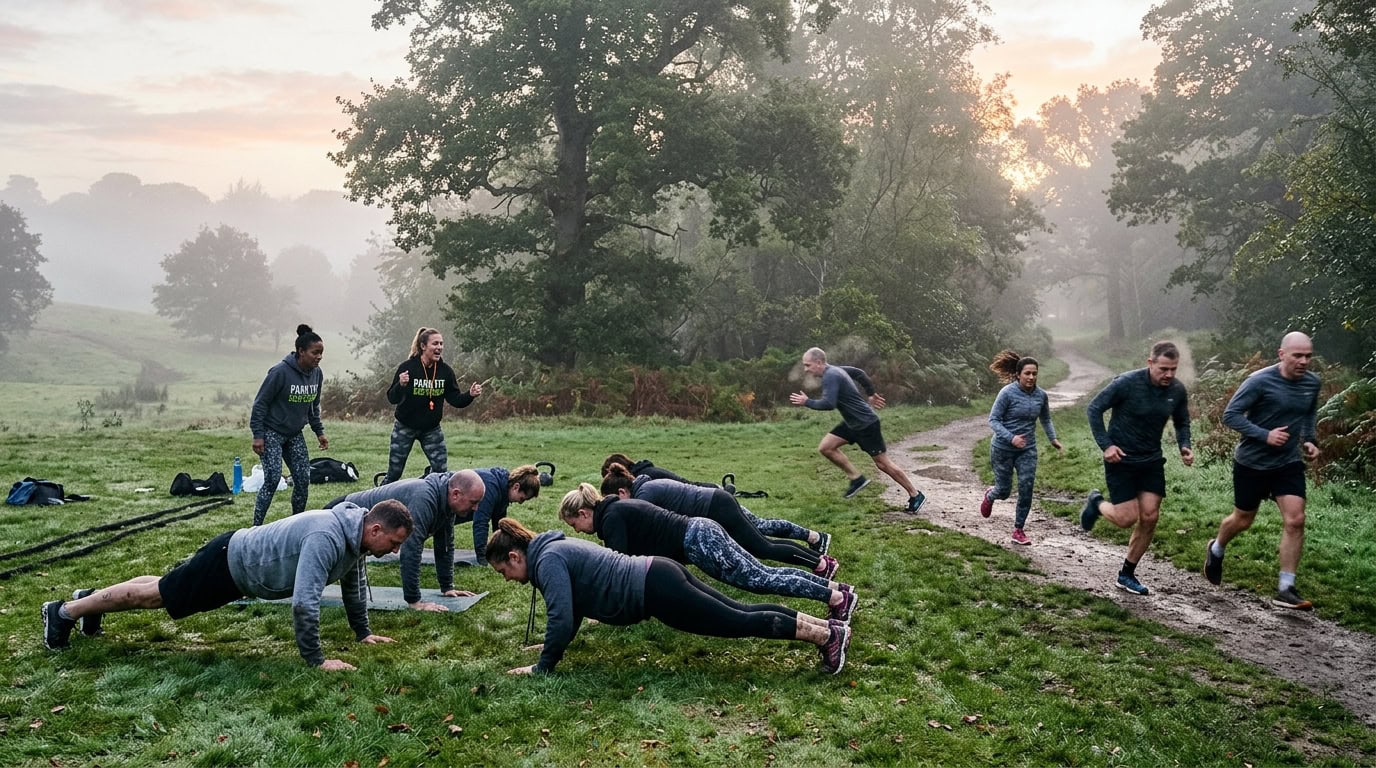
    There’s something about being outside at 6:30am, breathless in the damp British air, doing burpees alongside a dozen strangers who quickly feel like teammates, that you simply can’t replicate on a treadmill.

    Bootcamp classes have been part of the UK fitness scene for years — but they’ve surged in popularity as more people seek variety, community, and results that go beyond what a gym membership alone can deliver. Whether it’s a Saturday morning session in the park, a weekday evening class on the seafront, or a purpose-built indoor circuit, bootcamps are everywhere right now.

    This guide covers what to expect from a UK bootcamp class, how much they typically cost, who they suit best, and how to find a great one near you.

    What Is a Bootcamp Class?

    The word “bootcamp” gets used loosely, but in a fitness context it typically means a structured group workout session led by a qualified instructor. Sessions are usually high-intensity, mixing cardiovascular exercise with resistance work — think sprints, press-ups, squats, kettlebells, and bodyweight circuits, often in rapid succession.

    The military-inspired name is no accident. Early bootcamp classes borrowed the intensity and discipline of armed forces training, though modern sessions are far more inclusive and adaptive. You’re just as likely to find a Saturday morning park bootcamp in Harrogate as you are an intense indoor circuit class in Manchester’s Northern Quarter.

    What sets bootcamps apart from standard gym classes is the combination of cardio, strength, and mental grit — all in a group setting where the energy of those around you drives you harder than you’d ever push yourself alone.

    What Happens in a Typical Session?

    Sessions usually last between 45 and 60 minutes and follow a similar structure:

    Warm-up (5–10 minutes) — Light jogging, dynamic stretching, and mobility work to raise your heart rate and get your joints moving.

    Main circuit (30–40 minutes) — The instructor rotates you through a series of stations or exercises. These might include bodyweight movements (press-ups, squats, lunges, burpees), resistance exercises (kettlebell swings, medicine ball slams, battle ropes), and cardio bursts (sprints, box jumps, skipping). Work intervals are typically 30–45 seconds with short rests in between.

    Cool-down (5–10 minutes) — Static stretching and a gentle wind-down to support recovery and reduce next-day soreness.

    Group sizes vary from six or eight people in smaller bespoke sessions up to 30 or 40 in large park bootcamp programmes. The social element is a major part of the appeal — there’s a camaraderie in suffering together that keeps people coming back week after week.

    How Much Do Bootcamp Classes Cost in the UK?

    Pricing varies depending on location, format, and whether the class is indoors or outdoors:

    • Drop-in sessions: £8–£15 per class
    • Monthly membership (unlimited classes): £40–£80 per month
    • Block bookings (8–12 sessions): £60–£120
    • Corporate or private group bootcamp: £150–£400 per session

    Outdoor park-based bootcamps tend to be cheaper than indoor equivalents, partly because overhead costs are lower. Some councils and community organisations also offer subsidised or free sessions in public parks — particularly in larger cities like Sheffield, Birmingham, and Cardiff.

    Compared to a standard gym membership, a quality bootcamp programme with two to three sessions per week can deliver excellent value — especially when you factor in the coaching, community, and variety that’s baked in from day one.

    Is a Bootcamp Class Right for You?

    Bootcamps suit people who get bored easily on gym equipment, thrive in social and group environments, want a coached session without the cost of a one-to-one arrangement, or are looking for a mix of cardio and strength in a single hit. They’re particularly good if you want to train outdoors at least part of the time and want the accountability that comes with showing up to a scheduled class.

    They’re not just for the super-fit. Good instructors adapt exercises on the fly — offering lower-impact options for people with injuries or lower fitness levels. That said, bootcamps are generally more physically demanding than yoga or Pilates, so some baseline fitness is helpful.

    If you have specific training goals or rehabilitation needs, it’s worth knowing that a personal trainer who designs bespoke programmes around your individual requirements can be an excellent bridge before you move into group bootcamp sessions — they’ll build your foundation so you get more from every class.

    Outdoor vs Indoor Bootcamp: What’s the Difference?

    Outdoor bootcamps happen in parks, playing fields, beaches, or car parks. They’re particularly popular in spring and summer but run year-round across the UK — British weather notwithstanding. The lack of equipment is often deliberate: a skilled bootcamp instructor can run an entire session using only bodyweight, a few cones, and natural terrain.

    Popular outdoor bootcamp programmes include BM|Fitness (formerly British Military Fitness), with sessions running in parks across London, Manchester, Leeds, Edinburgh, and beyond. Local independent operators run brilliant sessions in Roundhay Park in Leeds, Victoria Park in Bristol, Kelvingrove Park in Glasgow, and dozens of town parks across England, Wales, and Scotland.

    Indoor bootcamps use gym floors, studios, or purpose-built functional training spaces. They tend to incorporate more equipment — barbells, plyometric boxes, resistance bands, battle ropes — and can run whatever the forecast. Many gyms now offer bootcamp-style classes as part of their timetable, including dedicated functional fitness areas built exactly for this kind of training.

    How Bootcamp Compares to Other High-Intensity Group Workouts

    A question that often comes up: is bootcamp just CrossFit with a different name? Not exactly, though there’s genuine overlap. CrossFit in the UK follows a licensed methodology with standardised workouts (WODs), Olympic lifting, and gymnastic movements, all tracked for performance improvement over time. It’s highly structured and deliberately competitive. Bootcamp is more varied and informal — the instructor has creative freedom, and the focus is typically on general fitness and consistency rather than performance benchmarks.

    Bootcamp is also distinct from spin, yoga, and Pilates in that it’s full-body, high-intensity, and usually blends aerobic and resistance training into the same session. It sits closest to HIIT classes in terms of format but with more variety and a much stronger outdoor tradition.

    What to Look for in a Good Bootcamp Provider

    Not all bootcamps are created equal. Here’s what to check before committing:

    Instructor qualifications — Look for a Level 2 or Level 3 Personal Trainer qualification, ideally with additional outdoor fitness or group exercise training. Any reputable operator should be happy to share credentials on request.

    Class size — Smaller groups (under 15) mean more coaching attention per person. Larger groups can still work well, but ask how many coaches are present during the session.

    Safety and first aid — Outdoor sessions in particular should have a qualified first aider present. Ask about this before you book, especially for park-based sessions in more remote locations.

    Trial sessions — Most bootcamps offer a free or discounted first class. Take it. Chemistry with the coach and the group matters enormously to whether you’ll stick with it.

    Progress tracking — The better programmes track your results over weeks and months, not just throw you into a circuit and send you home. Look for operators who take a baseline assessment and revisit it periodically.

    Insurance and liability — Legitimate operators carry public liability insurance. If you’re ever unsure, ask to see proof. It’s a basic standard, not an awkward request.

    Building Your Week Around Bootcamp

    Two or three bootcamp sessions per week is plenty for most people, particularly when you’re starting out. Your body needs recovery time — especially if sessions are high-intensity — so resist the temptation to go every day in the first fortnight.

    A well-rounded week might look like this: two bootcamp sessions (say Tuesday and Saturday), one active recovery day with a long walk or gentle swim, and two complete rest days. If you want to add an extra training day, a boxing session mid-week is an excellent complement — the footwork, coordination, and upper-body conditioning balance beautifully against the lower-body-heavy circuits that many bootcamps favour.

    Nutrition and sleep matter as much as the sessions themselves. You won’t get the results you want from three hard bootcamps a week if you’re running on five hours of sleep and skipping breakfast.

    The Health Benefits Are Backed Up

    Bootcamp-style training delivers measurable benefits across multiple fitness dimensions simultaneously. You’re building cardiovascular endurance, muscular strength and endurance, coordination, agility, and — arguably the most underrated benefit — mental resilience. Showing up in the rain, finishing a set when your legs are burning, and doing it week after week builds consistency that crosses over into every area of life.

    The UK fitness sector is at record levels. According to the UK Health and Fitness Market Report 2026 by ukactive, 18% of the UK population now holds a fitness club membership, with visits up 10% year on year. Group fitness classes — bootcamp among them — are a major driver of that growth as people increasingly seek coached, social experiences over solitary treadmill sessions.

    Finding a Bootcamp Class Near You

    The UK bootcamp market is fragmented. Unlike gym chains, most bootcamp providers are local businesses or sole traders — which means they’re often hard to find through a Google search alone. You can spend an hour scrolling Instagram and still not know who’s running the best session in your postcode.

    GymPal lists bootcamp providers across the UK alongside gyms, studios, and fitness venues of every type. You can filter by location and class type to find quality outdoor and indoor bootcamp sessions near you — far quicker than trawling through Facebook groups and local notice boards.

    It’s also worth checking community leisure centre timetables, local council park event programmes, and Parkrun — which, while not strictly bootcamp, attracts a similar community-minded, no-excuses fitness crowd and is completely free to join.

    The Bottom Line

    Bootcamp classes are one of the most versatile, sociable, and cost-effective ways to get seriously fit in the UK. They strip away the noise of a commercial gym floor and replace it with purpose, community, and a coach who won’t let you skip a rep.

    Whether you’re a complete beginner looking to build a real fitness habit, or a regular gym-goer who wants more variety and accountability, there’s a bootcamp out there that fits. The hard part isn’t the session itself — it’s finding the right one and turning up for the first time.

    Search bootcamp classes near you on GymPal and book a taster session this week. Your future self will thank you at the end of the first circuit.

  • Women-Only Gyms UK: Why They Work and How to Find One Near You

    Women-Only Gyms UK: Why They Work and How to Find One Near You

    Walking into a gym for the first time — or returning after a long break — can feel genuinely intimidating. For many women, the free weights section in particular feels like an invisible barrier: dominated by men, loaded with unspoken social rules, and about as welcoming as a Tuesday morning in January. If that sounds familiar, you’re not imagining it.

    Women-only gyms exist precisely to solve this. And they’re not a fringe concept anymore — they’re a growing, thriving part of the UK fitness landscape, from dedicated female-only clubs to women-only sessions at mainstream gyms. Whether you’re brand new to exercise or just fed up with the vibe at your current gym, there may be a better fit waiting for you.

    This guide covers everything you need to know: what women-only gyms actually are, why they work so well for so many people, what to look for (and watch out for), and how to track down the best option near you.

    What Is a Women-Only Gym?

    The term covers quite a range of setups, and it’s worth knowing the difference before you start looking.

    Fully dedicated women-only clubs — the entire facility is female-only, all the time. These range from national chains (Curves, Anytime Fitness women-only branches) to well-loved independents. You’ll find everything from basic cardio suites to fully kitted-out strength training floors, depending on the gym.

    Women-only areas within mixed gyms — a cordoned-off section of the gym, typically featuring cardio machines and lighter weights, reserved exclusively for women. Common in leisure centres and some mid-market chains. The size and quality of these areas varies enormously.

    Female-only session times — mixed gyms designating specific time slots as women-only. Particularly common in areas with more religiously diverse communities, where this arrangement meets a real practical need. Sessions are usually clearly advertised on the timetable.

    Boutique female-majority studios — not technically women-only, but so heavily skewed female that they function that way in practice. Many Pilates studios, yoga spaces, and barre classes fall into this category. The atmosphere can be just as welcoming as a dedicated women’s club, even without the formal designation.

    The Real Benefits (They Go Beyond “Feeling Comfortable”)

    Comfort matters — but if that were the whole story, women-only gyms would just be a nice-to-have. The deeper reason they work is that they change what women actually do when they train.

    You’ll use the whole gym. In a mixed environment, women disproportionately avoid the free weights area. According to ukactive research on active participation, women are significantly less likely to engage in strength training than men — and social environment is one of the biggest factors. Remove that dynamic, and the squat rack suddenly becomes accessible. Women in female-only spaces lift heavier, try new equipment, and push harder, because there’s no performance anxiety in the room.

    The programming is built around you. Women-only gyms design their class timetables, their coaching approach, and often their equipment layout around what female members actually want — strength without bulk, postpartum recovery, peri-menopausal fitness, hormonal health awareness. That specificity is something a general-purpose mainstream gym almost never delivers.

    The community is different. Ask anyone who’s made the switch, and they’ll tell you the same thing: the social energy in women-only spaces is just different. Less performance, more encouragement. Whether that’s a trainer who asks how you’re doing, or just the general lack of people staring at their reflection in the mirror, the cumulative effect on your consistency is real.

    It lowers the barrier to starting. If self-consciousness has kept you away from gyms entirely, removing that specific obstacle matters enormously. It’s not a weakness — it’s a practical reality for a lot of people, and a good women-only gym solves it directly.

    What Types of Training Do Women-Only Gyms Cover?

    This has changed a lot over the last ten years. Early women-only gyms were often light on proper strength equipment — rows of step machines and light dumbbells, not much else. That model still exists, but the better ones now offer full fitness facilities.

    Depending on the gym, you might find:

    • Full free weights areas with barbells, dumbbells up to heavy weights, and power racks
    • Functional training zones — kettlebells, battle ropes, sleds, plyometric boxes
    • Studio classes: HIIT, circuit training, dance fitness, spin
    • Mind-body classes: yoga, Pilates, stretch and mobility sessions
    • Cardio equipment: treadmills, bikes, rowing machines, cross-trainers
    • Personal training services, often with female PTs available

    If strength training is your primary goal, check before you join. Some women-only gyms are still heavily cardio-focused, and if you want a barbell programme, you’ll want to see the weights floor before you sign up.

    What to Look For When Choosing One

    Not all women-only gyms are equal. These are the things worth checking before you commit.

    Equipment range and condition. Do they have a proper free weights section? What’s the heaviest dumbbell available? Is there a power rack or squat cage? The condition of the kit tells you a lot about how seriously they take their members.

    Class timetable depth and variety. If classes are part of why you’re joining, count how many are scheduled per week and whether the times are realistic for your life. A strong timetable covering strength, cardio, and recovery is a good indicator of an active, well-managed gym. If you’re considering a class-based fitness route, Pilates is often an excellent starting point — the technique transfers well to general strength work, and most women-only gyms offer beginner-friendly Pilates sessions.

    Changing facilities. Women-only gyms often prioritise their changing rooms and showers more than mainstream clubs — but quality still varies. Check them before you sign anything.

    Contract terms. Rolling monthly contracts are the norm now. If a gym is pushing a 12-month minimum with penalties for leaving, that’s worth pushing back on. Plenty of good options won’t lock you in.

    The vibe on the floor. Spend ten minutes in the gym before you commit. Who’s there? What’s the age range? Is it the kind of place you’d genuinely want to come to three times a week? A good gym should feel welcoming from the moment you walk in.

    Working With a Personal Trainer in a Women-Only Setting

    Many women-only gyms employ female personal trainers, or can refer you to one — which for a lot of people is a significant draw. Whether it’s about communication style, understanding of female physiology, or simply feeling more comfortable discussing body goals with another woman, the trainer relationship can make or break your results.

    If you’re thinking about hiring a PT alongside your gym membership, it’s worth knowing what qualifications to look for and what questions to ask upfront. Knowing how to find a good personal trainer in the UK — Level 3 PT qualification as the baseline, relevant specialisms like pre/postnatal or menopause fitness — means you’ll find someone genuinely suited to your goals rather than just whoever’s available.

    The Honest Trade-Offs

    Women-only gyms are a genuinely excellent choice for a lot of people. But being honest about the trade-offs helps you decide whether they’re right for you specifically.

    They’re often smaller. Dedicated women-only facilities tend to be more compact than large mainstream gyms. At peak times — typically early morning and early evening — that can mean waiting for machines or equipment. If you prefer off-peak training, it’s less of an issue.

    Equipment depth can be limited. Some women-only gyms, particularly older circuits-based models, still have relatively limited free weights and no barbell setup. If heavy strength training is your priority, check before you join.

    Pricing. Independent women-only gyms often price slightly above the budget-gym baseline. You’re paying for environment and community as much as equipment — which is a fair trade for a lot of people, but worth factoring into your budget.

    Availability is patchy. Depending on where you live, a dedicated women-only gym might simply not be nearby. In smaller towns and rural areas, you’re more likely to find women-only sessions at mixed facilities than a dedicated club. That’s still worth looking for — it might be exactly what you need.

    How to Find a Women-Only Gym Near You

    The most direct approach is to search specifically for women’s gyms or female-only fitness venues in your area. GymPal covers women’s gyms, female-only studios, and gender-specific sessions across the UK — search by location and you’ll see what’s available nearby with opening times, facilities, and contact details.

    If there’s no dedicated women-only gym close to you, it’s worth asking your nearest mainstream gym or leisure centre whether they offer female-only session times. Many do, especially in areas with diverse communities, and they’re not always prominently advertised.

    Most gyms — whether women-only or mixed — will offer a free trial session or a day pass. Take advantage of it. No amount of reading reviews online gives you the same information as walking in, looking around, and seeing how it feels in person. That visit will tell you more than anything else.

    Making the Right Call

    Women-only gyms work because they remove a specific, real obstacle that stops a lot of women from training consistently. It’s not about mixed gyms being unwelcoming — most aren’t — it’s about finding the environment where you’ll actually show up, week after week.

    If comfort, community, and a space that’s genuinely designed for you matters to your consistency, a women-only gym is absolutely worth trying. Search GymPal to find women’s gyms and female-only fitness studios near you, and if in doubt, book a trial session. The worst case is you rule one out — the best case is you find exactly the environment you’ve been missing.

  • CrossFit UK: What to Expect, What It Costs, and Whether It’s Right for You

    CrossFit UK: What to Expect, What It Costs, and Whether It’s Right for You

    If you’ve ever walked past a CrossFit box and heard the sound of barbells crashing and people cheering each other on, you’ve probably had one of two reactions: “That looks brilliant” or “That looks absolutely terrifying.” Usually both at once.

    CrossFit has built one of the most passionate fitness communities in the UK over the past 15 years — but it’s also one of the most misunderstood. People assume it’s only for ex-athletes, that you’ll injure yourself in week one, or that the membership costs more than a car payment. Some of that reputation is fair. Most of it isn’t.

    This guide is for anyone curious about CrossFit but not sure where to start. We’ll cover what actually happens in a session, what it costs across the UK, how to tell a great box from a dodgy one, and whether CrossFit is the right fit for your goals — or whether something else might suit you better.

    What Exactly Is CrossFit — and What’s a “Box”?

    CrossFit is a strength and conditioning programme built around constantly varied, high-intensity functional movements. That’s the official line. In practice, it means every session is different: one day you might be doing barbell squats and rope climbs, the next it’s rowing, handstand push-ups, and 400-metre runs. No two workouts are the same week to week.

    A “box” is simply the CrossFit word for a gym. The name comes from the fact that early CrossFit gyms were often set up in bare warehouse spaces — literal boxes — rather than plush health clubs. Most UK boxes still have that industrial feel: rubber flooring, rigs, kettlebells, pull-up bars, and rowing machines rather than rows of treadmills in front of flatscreen TVs.

    The workout itself is called a WOD — Workout of the Day. Every box follows a daily WOD, programmed by the head coach. You turn up, warm up as a group, learn the movements, then do the WOD together. The whole session typically runs 60 minutes.

    What Actually Happens in a CrossFit Session?

    If you’ve never set foot in a box before, here’s what a standard session looks like:

    • Warm-up (10–15 mins): Dynamic stretching, light movement, and activation exercises led by the coach as a group.
    • Skill or strength work (15–20 mins): Practising a specific movement — Olympic lifting technique, a barbell complex, or a gymnastics skill like muscle-ups. This is where technical development happens over months.
    • The WOD (10–25 mins): The main event. Typically time-capped or scored by reps completed. Could be a 10-minute AMRAP (as many rounds as possible), a classic 21-15-9 descending rep scheme, or a set of intervals.
    • Cool-down and chat (5–10 mins): Stretching, recovery work, and — crucially — talking to your fellow members. This social element is a genuine part of the CrossFit experience, not an afterthought.

    The group format is central to CrossFit’s appeal. Unlike a traditional gym where you wander in, plug in your earphones, and quietly do your own thing, CrossFit sessions are communal. People cheer each other through the last reps. Coaches know your name. That sense of accountability and shared effort is what keeps most CrossFitters coming back.

    It shares DNA with outdoor and indoor bootcamp fitness — that group accountability, coached intensity, and satisfaction of finishing something hard together — except CrossFit’s programming is more structured and the barbell work adds a strength dimension most bootcamps lack.

    Is CrossFit Suitable for Beginners?

    The honest answer: yes, if you pick the right box. The slightly more complicated answer: it depends on how that box coaches and scales its workouts.

    One of CrossFit’s foundational principles is scalability — every movement can be modified to suit any fitness level. Can’t do a pull-up? You use a resistance band or do ring rows instead. Can’t overhead squat with load? You practise the movement with a PVC pipe first. A well-run box will never expect a first-timer to keep pace with someone who’s been training for five years.

    Most reputable UK boxes require new members to complete a foundations or onboarding course before joining regular classes. These sessions — usually 2–4 hours spread over a week — teach you the core movements safely before you’re dropped into a live WOD. This is genuinely important: CrossFit uses technically demanding barbell lifts (cleans, snatches, overhead squats) that take time to learn correctly.

    When evaluating a box, ask: How do you handle someone who’s never touched a barbell before? A good coach will walk you through their onboarding process with enthusiasm. A red flag is any box that waves you straight into group classes with no assessment or foundations work.

    If technical barbell movements genuinely intimidate you, a few sessions with a strength-focused personal trainer before you start CrossFit can build the confidence and motor patterns that make your first weeks in a box far more enjoyable.

    How Much Does CrossFit Cost in the UK?

    Here’s where CrossFit’s reputation for expense is largely justified — though the reasons are legitimate.

    The average CrossFit membership in the UK costs between £70 and £150 per month, with most boxes landing around £80–£100. In London, prices run higher — some boxes charge £150–£184 per month for unlimited sessions. Outside major cities, particularly in the north and midlands, £70–£85 is more typical.

    Compare that to a budget gym at £20–£25 per month and CrossFit looks eye-watering. But the comparison isn’t quite fair. What you’re paying for with CrossFit is:

    • Coached group sessions — a qualified coach present throughout every class
    • Daily programming — no need to design your own workouts; it’s all planned for you
    • Specialist equipment — barbells, lifting platforms, rigs, rowers, ski ergs
    • Small class sizes — typically 8–20 people, not 50
    • A built-in community — arguably the most powerful retention tool in fitness

    Most boxes also charge a one-off foundations course fee for new members — usually £30–£80 — so factor that into your first-month budget. Some boxes offer drop-in rates (typically £15–£25 per class) for visitors who want to try before committing. A single drop-in is worth doing before you sign up.

    What to Look for in a UK CrossFit Box

    Not all boxes are created equal. The CrossFit affiliation model means any gym that pays an annual licence fee can call itself a CrossFit box — so quality varies considerably. Here’s what separates a great box from a mediocre one:

    Coaching qualifications: Your head coach should hold at least a CrossFit Level 2 Trainer certificate. Level 1 is the baseline; Level 2 indicates someone who has genuinely invested in developing their coaching. Look for coaches who actively correct movement and offer alternatives — not just cheerleaders shouting encouragement.

    Class size limits: Any box cramming 30+ people into a session without multiple coaches is cutting corners on safety. Smaller classes mean more individual attention and a lower risk of unnoticed poor form.

    Beginner-friendly culture: Visit and watch a class if you can. Are experienced members patient with newcomers? Do coaches acknowledge everyone regardless of ability? A toxic “elite only” atmosphere doesn’t disappear after the first month.

    Structured programming: Does the box follow a clearly periodised programme that builds over months? Or is it just random WODs strung together? Better boxes explain their programming philosophy openly and with evident thought behind it.

    Facilities and hygiene: The space should be clean and well-organised. Rubber bumper plates for barbell work, solid flooring, and enough equipment so members aren’t queuing for a single rower mid-WOD are basic standards.

    According to ukactive’s research on physical activity retention, coached group exercise is consistently one of the strongest drivers of long-term gym membership retention — which helps explain why CrossFit members tend to stick around far longer than the average gym-goer.

    CrossFit vs Traditional Gym: Which Is Right for You?

    CrossFit isn’t the right choice for everyone, and that’s absolutely fine. Here’s a rough guide to who tends to thrive where:

    CrossFit suits you if:

    • You get bored doing the same workout every week
    • Accountability and community are what keep you consistent
    • You want to build both strength and cardiovascular fitness simultaneously
    • You enjoy being pushed hard by a coach and a group
    • You like measurable progress — times, weights, rep counts

    A traditional gym suits you if:

    • You prefer training at your own pace, on your own schedule
    • You have specific goals (bodybuilding, marathon prep) that need targeted, solo programming
    • Budget is a genuine constraint — a good budget gym at £25/month absolutely can get you fit
    • You’re an experienced lifter who knows exactly how to programme their own sessions

    There’s a compelling middle ground too: boxing and martial arts gyms offer a similar community-driven, coached experience to CrossFit — often at lower cost — with conditioning benefits that genuinely rival a well-programmed WOD.

    How to Find a CrossFit Box Near You

    There are over 600 CrossFit-affiliated boxes in the UK, spread across every major city and most sizeable towns. Finding one near you is straightforward — search GymPal for gyms in your area to browse local boxes with contact details, facilities information, and direct links to each box’s website.

    Once you’ve shortlisted two or three boxes near you, do the following before committing:

    • Request a free introductory session or class observation — most boxes will say yes
    • Ask about their onboarding process for complete beginners
    • Check Google and social media reviews specifically for comments on coaching quality and community feel
    • Confirm the head coach’s CrossFit certification level

    The right box will make you feel welcome from the first conversation. The wrong one will make you feel like you haven’t earned your place yet — and that feeling rarely improves.

    The Bottom Line

    CrossFit is expensive compared to a standard gym membership. It demands more technical skill and physical effort than a treadmill-and-machines routine. And yes, the WODs are hard by design.

    But for the right person — someone who thrives with structure, community, and variety — CrossFit can be genuinely transformative. The blend of strength, conditioning, and technical skill development is one of the most comprehensive approaches to fitness you’ll find in a single 60-minute session. And the community you find at a good box is the kind that keeps you showing up on the days you’d normally talk yourself out of it.

    Go watch a class. Do the foundations course. Give it a genuine go. And when you’re ready to find your nearest box, GymPal makes it easy to find and compare gyms across the UK — CrossFit boxes included.

  • Boxing Gyms UK: Why Getting in the Ring Is the Best Workout You’re Not Doing

    Boxing Gyms UK: Why Getting in the Ring Is the Best Workout You’re Not Doing

    Boxing has always carried a certain reputation. Dark gyms, leather headguards, the smell of sweat and ambition. But something has shifted. Walk into a boxing gym in Manchester, Bristol, or Edinburgh today and you’re as likely to find an accountant or teacher as you are a competitive fighter — and that’s entirely the point.

    Boxing and combat sports have become one of the fastest-growing fitness categories in the UK. A 60-minute boxing session burns anywhere from 500 to 800 calories, builds functional strength from your feet to your fingertips, and does something no treadmill ever could: it demands your complete mental focus. There’s no drifting off mid-round. Every jab and combination pulls you back into the present.

    Whether you want to spar, just work the pads, or simply try something completely different, here’s everything you need to know about boxing gyms in the UK — and why your first visit might be the best fitness decision you make this year.

    Why the UK Has Fallen in Love With Boxing Fitness

    The numbers tell the story clearly. England Boxing — the sport’s national governing body — has reported steady growth in participation over the past five years, with particularly strong increases among women and adults over 35 who are discovering boxing fitness for the very first time. White-collar boxing events, where office workers train for charity bouts over 8 to 12 weeks, have spread from London to Leeds, Liverpool, Newcastle, and beyond. Commercial boxing studios have opened across cities from Glasgow to Cardiff, bringing the sport into the high street.

    Part of this growth is down to the workout itself. Boxing training is relentlessly varied: you skip rope, hit the heavy bag, drill combinations on the pads with a coach, and move constantly. Your heart rate doesn’t plateau. Your brain doesn’t switch off. And the techniques — jab, cross, hook, uppercut, slip, roll — take weeks and months to master properly, which means there’s always a clear next thing to improve.

    But a large part of boxing’s appeal is the community it creates. These gyms tend to attract people who are serious about their training but are remarkably welcoming to newcomers. Walk in, work hard, and you’ll fit in fine regardless of your fitness background or experience level.

    What Actually Happens at a Beginner Boxing Class

    The single biggest barrier for most people is the assumption that boxing gyms are intimidating. The good ones simply aren’t. Most beginner sessions follow a fairly consistent structure that eases you in without throwing you directly into the deep end.

    Warm-up (10–15 minutes): Expect skipping, footwork drills, and shadow boxing. Don’t worry if you can’t skip yet — everyone starts somewhere, and rope coordination comes faster than you’d expect. The point at this stage is to raise your heart rate and loosen your joints, not to perform perfectly.

    Technique work: Good coaches break down the basics methodically. You’ll work on your stance, your guard, and the fundamental jab-cross combination before anything more complex is introduced. The best gyms spend the first few sessions purely on fundamentals, because a solid technical base makes everything that follows far more effective — and far safer.

    Bag and pad work: This is where the real workout happens. You’ll spend time hitting the heavy bag or working the pads with a coach or training partner, stringing combinations together under instruction. It’s physically harder than it looks, and genuinely more satisfying than almost anything else you’ll do in a gym.

    Conditioning: Press-ups, core work, burpees, and circuits — boxing gyms don’t shy away from old-school fitness. Most sessions close with a conditioning round that will challenge your legs and lungs in equal measure.

    Sparring — actual contact with another person — comes later, and only when you and your coach both feel you’re genuinely ready. Many people train at boxing gyms for months, sometimes years, without ever sparring. That is completely normal, and any decent gym will never pressure you into it.

    The Different Types of Boxing Gym in the UK

    Not every boxing gym is the same, and knowing which type suits your goals will save you a wasted trial session or the wrong membership.

    Traditional boxing clubs are affiliated with England Boxing or the equivalent governing bodies in Scotland, Wales, and Northern Ireland. They focus on the sport: technique, fitness, and competition when you’re ready for it. These clubs are often community-run, affordable, and brilliant if you want to eventually spar or compete at amateur level.

    Fitness boxing studios are the newer breed: commercial venues where boxing is repackaged as a group fitness class with loud music, choreographed combinations, and a premium price tag. If you want the calorie burn without the technicalities of the sport, these work well — but you won’t emerge a better boxer.

    MMA and combat sports gyms combine boxing with Muay Thai, wrestling, and Brazilian jiu-jitsu. These are excellent if you want to cross-train across disciplines, though sessions can be more intense than pure boxing. If you’ve come from high-intensity group training like UK bootcamp fitness classes, the physical demands of an MMA gym will feel very familiar — the structure is similar, even if the skills are different.

    White-collar boxing programmes are run by promoters who take complete beginners and train them over 8–12 weeks before putting them in a charity bout. These have become popular across the UK and are an excellent way to get structure, accountability, and a real goal to work towards — whether you ever want to fight competitively or not.

    Beyond Boxing: Kickboxing, Muay Thai, and BJJ

    If you want to explore combat sports more broadly, the UK has a thriving martial arts scene that goes well beyond the boxing ring.

    Muay Thai (Thai boxing) adds kicks, knees, and elbows to the striking toolkit and is widely taught at gyms across the UK. It’s a demanding full-body workout and a technically rich discipline — sessions tend to be intense, but most clubs are genuinely welcoming to beginners. Many Thai boxing coaches are among the best instructors you’ll find anywhere in the fitness industry.

    Brazilian jiu-jitsu (BJJ) has grown enormously in the UK over the last decade, driven partly by the rise of MMA. It’s a grappling art focused on ground fighting and submissions — no striking involved — which makes it surprisingly accessible and surprisingly addictive. You will use muscles you didn’t know you had.

    Kickboxing sits somewhere between boxing and Muay Thai and is offered as a standalone class at many UK gyms. It makes a good entry point if you’re not yet sure which direction you want to go.

    One thing all of these disciplines share is a serious demand on your body. Combat sports place real stress on your joints, shoulders, hips, and connective tissue. Pairing boxing or martial arts with yoga classes focused on mobility and flexibility is something most experienced combat sports practitioners recommend — coaches included. Hip openers and shoulder stretches make a measurable difference to your performance and your recovery.

    Kit List: What You Actually Need Before Your First Session

    One of the most common misconceptions about boxing is that you need to invest heavily in kit before you even start. You don’t. Here’s the honest breakdown:

    Hand wraps (from £5–£10, essential): These protect your wrists and knuckles and are non-negotiable. Most gyms will have a spare pair you can borrow for a first session, but once you’re going regularly, buy your own and learn to wrap before you arrive. There are clear tutorial videos online and it takes about a week of practice to get right.

    Boxing gloves (from £20–£60, essential): Many gyms will lend you gloves for a trial session. Once you’re training regularly, 12oz gloves work well for most adults for bag and pad work; 14oz if you’re on the heavier side. Brands like Adidas, Venum, and Lonsdale are reliable at the mid-range price point.

    Gumshield (only if sparring): Not needed for fitness-only training. If you ever spar, a boil-and-bite mouthguard from any sports retailer is fine to start with. A custom-fitted one from a dentist is better if you’re sparring regularly.

    Gym kit: Shorts or joggers, a t-shirt, and trainers or dedicated boxing boots. Don’t overthink this for your first session — anything you’d wear to a fitness class is fine.

    After a hard boxing session, recovery matters more than most people realise. If you’re training two or three times a week, finding a gym with spa or sauna facilities nearby for post-session recovery can make a genuine difference to how quickly your shoulders and forearms recover between sessions.

    How to Find a Boxing Gym Near You in the UK

    Finding a good boxing gym is less straightforward than finding a standard gym — not all clubs have polished websites or active social media accounts. Many of the best in the country are community-run and listed only on England Boxing’s official club finder or on local Facebook groups.

    According to England Boxing, there are more than 800 registered clubs across England alone. Add the networks in Scotland, Wales, and Northern Ireland, and there is almost certainly a boxing club within a reasonable distance of wherever you are in the UK.

    GymPal lists over 600 boxing and martial arts venues across the UK — from traditional amateur clubs in Liverpool and Newcastle to commercial boxing studios in London, Birmingham, and Manchester. You can search by postcode, filter by gym type, and compare facilities without needing to sign up for anything.

    The practical approach: book a trial session at two or three gyms before committing to a membership. Pay attention to how coaches engage with beginners, whether the equipment is well-maintained, and whether the existing members seem engaged and welcoming. A great boxing gym feels like a community, not just a facility.

    Search boxing gyms and martial arts clubs near you at askgympal.co.uk/boxing-martial-arts — free, no sign-up required.

    The Hardest Part Is Walking Through the Door

    Boxing isn’t just for fighters. It’s one of the most complete workouts available — cardiovascular fitness, functional strength, coordination, and mental focus all in a single session — and the UK fitness scene has never made it more accessible to beginners.

    Whether you’re after a new challenge, a workout that genuinely holds your attention, or just want to know what it feels like to throw a solid combination after a long week, a boxing gym might be exactly what you’ve been looking for. The hardest part is simply walking through the door for the first time. After that, you’ll wonder why it took you so long.

    Find boxing gyms, kickboxing clubs, and martial arts venues across the UK at askgympal.co.uk — the UK’s free fitness venue finder.

  • Yoga Classes UK: How to Find the Right Style for You

    Yoga Classes UK: How to Find the Right Style for You

    Walk into almost any gym or leisure centre in the UK today and you’ll find a yoga class on the timetable. What was once seen as a niche activity for the particularly flexible has become one of the most popular fitness choices in the country — and for good reason. Yoga offers something that few other workouts can match: genuine physical challenge combined with mental calm.

    The problem is that “yoga” isn’t just one thing. There are dozens of styles, from sweat-drenched hot yoga sessions to slow, meditative yin classes, and choosing the wrong one for your goals can put you off entirely. If your first class was a gruelling Ashtanga session when you just wanted something to ease stress, or a drowsy restorative session when you wanted a proper workout, it’s easy to write yoga off as not for you.

    This guide breaks down the main yoga styles available across the UK, explains what each one actually does for your body, and helps you figure out which suits your fitness goals — so you can walk into your first (or next) class with confidence.

    Why Yoga Has Taken Over UK Gyms and Studios

    Yoga participation in the UK has grown steadily for over a decade, and it now attracts millions of regular practitioners. According to the NHS, yoga improves flexibility, strength, and mental wellbeing — which helps explain why it’s become a mainstream fixture in gyms and leisure centres rather than a specialist pursuit.

    Part of yoga’s appeal is its scalability. A 25-year-old training for a half marathon and a 65-year-old recovering from a hip replacement can both benefit from yoga — they just need different styles. It’s also relatively affordable compared to personal training, and requires no specialist equipment beyond a mat and comfortable clothes.

    Yoga has also transformed the group exercise timetable at UK gyms. Where aerobics once dominated, yoga classes now regularly fill to capacity, particularly midweek mornings and weekend afternoons. Dedicated yoga studios have sprung up in almost every UK town and city too, offering specialist classes for every level and goal.

    The Main Styles of Yoga Explained

    Before you book your first class, it helps to know what you’re actually signing up for. Here’s a plain-English breakdown of the most common yoga styles you’ll find across the UK:

    Hatha Yoga

    Hatha is the most widely taught style and the best entry point for beginners. Classes are slower-paced, focusing on holding individual poses (asanas) for several breaths while working on alignment. It’s physical enough to build genuine strength and flexibility, but accessible enough that you won’t feel completely lost on day one. If a class just says “yoga” on the gym timetable with no further description, it’s almost certainly Hatha.

    Vinyasa Flow

    Vinyasa links poses together in flowing sequences, moving in time with the breath. It’s more dynamic than Hatha and will raise your heart rate. If you want yoga that genuinely feels like exercise, Vinyasa is usually the answer. Classes vary considerably depending on the teacher — some are almost meditative in pace, others are properly sweaty and demanding.

    Ashtanga

    Ashtanga follows a fixed sequence of poses that never changes, working through a primary, secondary, and advanced series. It’s one of the more demanding styles — physically and mentally — and builds serious strength over time. Most Ashtanga beginners’ classes in the UK focus on the primary series only, which is still a significant challenge. If you like structure and respond well to a clear progression, Ashtanga suits that mindset well.

    Yin Yoga

    Yin involves holding poses for anywhere between two and five minutes, targeting the connective tissue — ligaments, fascia, and joints — rather than the muscles. It’s the opposite of fast-paced, and often surprisingly difficult in a different way: staying still and breathing through discomfort is harder than it sounds. Yin is excellent for deep flexibility, joint health, and genuine stress relief.

    Hot Yoga

    Hot yoga is practised in a heated room, typically 35–42°C. The heat allows for deeper muscle relaxation and produces a serious sweat. Bikram is the original version — a set 26-pose sequence in a 40°C room — but many studios now offer their own hot yoga variations with different sequences. The first few sessions can feel overwhelming. Hydration beforehand is non-negotiable.

    Restorative Yoga

    Restorative yoga uses props — blocks, bolsters, blankets — to fully support the body in passive poses held for long periods. The goal is complete nervous system relaxation, not physical effort. It’s not a workout in the conventional sense, but it’s deeply beneficial for stress recovery, burnout, and managing chronic pain. If you’re going through a demanding period at work or dealing with a health issue, restorative yoga can be genuinely therapeutic.

    Power Yoga

    Power yoga is a gym-friendly adaptation of Ashtanga, stripped of the spiritual elements and increased in intensity. It’s designed to build strength and endurance, and classes often look more like bodyweight circuits than traditional yoga. If you lift weights or do cardio and want to add yoga without feeling like you’re slowing down, Power yoga bridges that gap effectively.

    Matching Your Yoga Style to Your Goals

    Knowing the styles is useful — but working out which one is actually right for you depends on what you want from your training.

    • Stress and anxiety relief: Yin, Restorative, or Hatha. Slow-paced classes that emphasise breathing and stillness have the biggest impact on your nervous system.
    • Flexibility and mobility: Yin and Hatha. Holding poses for longer allows connective tissue time to release. A single weekly Yin class can make a noticeable difference within a month.
    • Building functional strength: Ashtanga, Power, and Vinyasa. These styles use your bodyweight in genuinely demanding ways — plank holds, chaturangas, and balance work that require real upper body and core strength.
    • Cardiovascular fitness and calorie burn: Hot Yoga and Vinyasa. The elevated heart rate brings yoga closer to cardio, particularly in heated sessions.
    • Athletic recovery: Yin and Restorative. If you’re already training hard — running, cycling, or attending high-intensity classes — adding yoga helps you recover faster and reduces injury risk. It complements demanding training well, much like how UK bootcamp fitness classes work best when balanced with genuine recovery sessions in your weekly programme.
    • General wellbeing: Hatha or Vinyasa. These versatile styles give you a bit of everything — strength, flexibility, breathing practice, and mental calm — which is why they dominate gym timetables.

    Where to Find Yoga Classes in the UK

    Once you’ve narrowed down which style appeals, the next step is finding a class you can actually get to regularly. In the UK, you have three main options:

    Dedicated Yoga Studios

    Yoga studios offer the most variety of styles and typically have the most experienced teachers. In cities like London, Manchester, Bristol, Leeds, and Edinburgh, you’ll find studios specialising in specific styles — Ashtanga Mysore-style sessions, yin-focused studios, and premium hot yoga spaces. Drop-in classes typically cost £10–£18, with monthly memberships ranging from £50–£100 depending on the city and studio. Most studios offer a new-member introductory pass — a week or month of unlimited classes at a discounted rate — which is the smartest way to try several styles before committing.

    Gym Yoga Classes

    Most mid-to-large gyms in the UK include yoga on their group exercise timetable, either included in membership or at a small surcharge. The style is usually Hatha or Vinyasa, and quality varies considerably depending on the instructor. The upside: it’s convenient if you’re already a member, and it’s a practical way to try yoga without paying studio prices. GymPal’s UK venue finder lets you search gyms by location and compare what classes are included, so you can find a membership that covers yoga without having to ring round.

    Leisure Centres and Council Gyms

    Local council-run leisure centres often offer yoga classes at very affordable prices — sometimes £4–£6 a session. The classes are beginner-friendly and typically use accessible styles like Hatha. If budget is a factor, this is the best place to start. It’s the same logic that makes low-impact activities like swimming at your local pool such practical options — affordable, accessible, and often overlooked in favour of pricier alternatives.

    What to Look for in a Yoga Instructor

    The quality of your experience depends enormously on the teacher. Here’s what to check before you commit to a class or studio:

    Qualifications: Look for Yoga Alliance UK registration (RYT 200 or above) or membership of the British Wheel of Yoga (BWY), the UK’s largest governing body for yoga. Both indicate the teacher has completed structured training rather than just a weekend workshop.

    Experience with beginners: Some teachers are excellent with advanced students but don’t adapt well for people who’ve never practised before. Check the class description — a class labelled “all levels” or “beginners welcome” should offer modifications for poses you’re not ready for yet.

    Class size: Smaller classes (under 12 people) allow for individual feedback and adjustments. Larger gym classes of 20+ are fine once you know the basics, but if you’re just starting out, a smaller class means the teacher can see what you’re actually doing and correct alignment before it becomes a habit.

    Teaching style: Yoga teachers have distinct personalities that come through in their classes. Some are warm and nurturing, others precise and demanding. Try a few different teachers before concluding that a particular style isn’t for you — often it’s the teacher, not the style itself, that makes or breaks the experience.

    What to Expect at Your First Class

    First yoga classes can feel intimidating, especially if everyone else seems to know exactly what they’re doing. Here’s what will actually happen.

    You’ll start lying down or seated, with a focus on breathing and settling into the space. The teacher will guide you through a sequence of poses with verbal cues and demonstrations. Good teachers will offer modifications — easier versions of poses — and will actively encourage you to use them. Not being able to do everything perfectly on day one isn’t a problem; it’s the point.

    Classes typically run 60–90 minutes. You’ll end in savasana — lying flat on your back in complete stillness for five to ten minutes. This isn’t optional padding; the rest allows your nervous system to integrate the session. Skipping it is the yoga equivalent of leaving the gym before your cooldown.

    What to bring: a yoga mat (studios often hire these for £1–£2 if you don’t own one), a water bottle, comfortable clothes you can move freely in, and bare feet. Avoid a large meal in the two hours before class.

    One thing worth knowing: yoga studios and gym yoga classes are typically non-competitive, welcoming spaces. The atmosphere in a well-run studio tends to be genuinely supportive — it often becomes part of the weekly social fabric of the area in the same way that the best local gyms build a real sense of community around fitness in their neighbourhood.

    Find Yoga Classes Near You

    The only way to know if yoga works for you is to try it — and the only way to find the right style is to experiment a little. Most studios and gyms offer introductory rates specifically designed to let you sample different classes before committing to a membership.

    Start with one class a week. Add more as your confidence builds. Within a month, you’ll have a clear sense of which styles suit you, which teachers you respond to, and whether yoga is something worth making a regular fixture in your routine.

    If you’re not sure where to start, GymPal covers gyms, yoga studios, and leisure centres across the UK — search by location to find venues offering yoga near you, compare what’s included in membership, and get started without the legwork.

  • Swimming for Fitness UK: Why Your Pool Is Your Best Gym

    Swimming for Fitness UK: Why Your Pool Is Your Best Gym

    There are over 12.5 million adults in the UK who swim at least once a year. That makes it one of the most popular physical activities in the country — yet somehow, the pool still gets overlooked when people are planning their fitness routine. Most people think of swimming as something you did in school, or something your nan does on a Tuesday morning. They are wrong. Dead wrong.

    Swimming is, without question, one of the most complete full-body workouts you can do. It builds strength, improves cardiovascular fitness, burns serious calories, and goes incredibly easy on your joints. Whether you are recovering from an injury, training for your first triathlon, or just looking for a way to get fit without dreading every session, the pool has something for you.

    And the good news? The UK is packed with places to swim — from local leisure centres charging a fiver a session to stunning outdoor lidos and world-class aquatic facilities. This guide covers everything you need to know to make the pool your secret fitness weapon.

    Why Swimming Delivers a Better Workout Than You Think

    Let us be straight with you: a solid 45-minute swim will burn somewhere between 400 and 700 calories, depending on your pace and stroke. That is comparable to an hour on a treadmill — but without the pounding on your knees and hips that puts so many people off running.

    What makes swimming genuinely special as a fitness tool is the muscle coverage. Every major muscle group is engaged in the water. Your lats, shoulders, and triceps pull you through each stroke. Your core stabilises your entire body position. Your legs kick continuously, working your glutes, hamstrings, and quads in a way that feels deceptively gentle but absolutely is not.

    According to Swim England’s key statistics, regular swimming can reduce the risk of serious long-term conditions including heart disease and type 2 diabetes by up to 40 per cent. It also improves lung capacity, lowers blood pressure, increases bone strength, and — because the water provides natural resistance — builds lean muscle mass without loading your joints.

    For anyone with a bad back, dodgy knees, or recovering from injury, swimming is often the first exercise a physio will recommend. The buoyancy of water reduces effective body weight by around 90 per cent, meaning you can work hard with almost zero impact. But do not mistake gentle for easy — water resistance is roughly 800 times denser than air. Every movement requires real effort.

    UK Swimming Venues: More Options Than You Probably Realise

    One of the biggest barriers people cite when it comes to swimming is access — but the UK actually has a remarkably dense network of swimming facilities if you know where to look.

    Council leisure centres are the backbone of recreational swimming in Britain. Almost every town has at least one, and session prices are typically affordable — often between £4 and £8 for an adult swim. Places like Ponds Forge International Sports Centre in Sheffield, Crystal Palace National Sports Centre in London, and Manchester Aquatics Centre are world-class facilities that anyone can book into for a casual lane swim.

    Private health clubs and gyms frequently include pools as part of their membership offer. Virgin Active, David Lloyd, and Nuffield Health all run pools across England, Wales, and Scotland. Membership prices are higher, but if you are already planning to use a gym regularly, a pool-inclusive club can be excellent value.

    Outdoor lidos and open-water spots have seen a huge resurgence in popularity over the last five years. London has Serpentine Lido, Tooting Bec Lido, and the Parliament Hill Lido. Bristol has Clifton Lido. The Outdoor Swimming Society maps hundreds of wild swimming spots across the UK, from coastal coves in Cornwall to river pools in the Yorkshire Dales. There is something about cold open water that unlocks a kind of primal fitness motivation that a chlorinated pool simply cannot match.

    Finding a venue near you has never been easier. GymPal lists swimming facilities across the UK — search by postcode, town, or region to find pools, lidos, and leisure centres with pool access near you.

    Building a Swimming Fitness Plan That Actually Works

    The number one mistake beginners make is turning up at the pool, swimming until they are exhausted, and then wondering why they dread going back. Swimming looks effortless when you watch elite swimmers glide through the water. It is not. Without solid technique, even a short swim can leave you gasping and going nowhere fast.

    Here is a sensible framework to build your swimming fitness from scratch:

    Beginners (0–4 weeks)

    • Aim for two sessions per week, 20–30 minutes each
    • Focus on front crawl or breaststroke — get comfortable in the water first
    • Rest between lengths — it is completely fine to swim one length, pause, then go again
    • Consider a single swim lesson to correct your technique early — it pays dividends forever

    Intermediate (4–12 weeks)

    • Increase to three sessions per week, 30–45 minutes each
    • Introduce interval sets: swim 100m at effort, rest 30 seconds, repeat
    • Mix strokes: front crawl for cardio, breaststroke for recovery lengths, backstroke to work different muscle groups
    • Use a pull buoy between your legs to isolate upper body on some lengths

    Advanced (3 months+)

    • Target 2,000–3,000 metres per session
    • Follow structured training programmes (Swim England and SwimTrek both publish free plans)
    • Add strength work on land — shoulder, back, and core conditioning complements pool training significantly
    • Consider joining a masters swimming club — the social element massively increases adherence

    Aqua Aerobics and Group Classes: Swimming That Does Not Feel Like Training

    Lane swimming is not for everyone, and that is absolutely fine. If the idea of swimming up and down in a straight line for 45 minutes sounds like mild torture, aqua aerobics might be your way in.

    Aqua aerobics classes — sometimes called aqua fit or water aerobics — are offered at the vast majority of UK leisure centres and pool-equipped gyms. They are typically 45 minutes of instructor-led exercise in the shallow end of the pool, involving jumping, squatting, lunging, and resistance work using the water. The water provides between four and 42 times more resistance than air (depending on movement speed), making it an extraordinarily effective workout that genuinely does not feel like hard work while you are doing it.

    The social atmosphere of a group class is also a powerful motivator. If you enjoy the energy of group exercise — the music, the instructor, the camaraderie — aqua aerobics scratches exactly that itch. It is also one of the few exercise formats that attracts a genuinely mixed age group, which can be refreshing. For those who also enjoy high-intensity land training, UK bootcamp fitness classes offer another high-energy group option worth pairing with your pool sessions.

    Other pool-based classes to look out for include:

    • Aqua Zumba — dance-based cardio in the water, enormous fun and a serious calorie burn
    • Aqua cycling — stationary bikes submerged in a pool, now available at specialist studios in London, Manchester, and Birmingham
    • Adult swimming lessons — if you cannot swim confidently, this is the best fitness investment you will ever make

    Most leisure centres post their class timetables online. When choosing a facility, look for one that runs multiple aqua classes across different times of the day — a well-structured pool class timetable with good coverage across mornings, lunchtimes, and evenings makes it far easier to build swimming into a realistic weekly routine.

    The Mental Health Case for Getting in the Water

    Ask anyone who swims regularly why they keep going, and within ten seconds the conversation will shift from calories and cardio to how it makes them feel. There is something about the water that is genuinely therapeutic in a way that differs from almost any other exercise.

    Research backs this up comprehensively. Over half of UK adults who swim cite stress relief as a primary motivator. Studies show that three to five moderate-intensity swimming sessions per week over four to sixteen weeks leads to a statistically significant reduction in depression symptoms. The rhythm of swimming — the repetitive stroke cycle, the muffled sound underwater, the full sensory immersion — produces what researchers call a meditative state, quieting the mind in a way that is genuinely difficult to replicate on land.

    Cold water swimming takes this even further. The shock of cold water triggers a flood of dopamine and noradrenaline — the same neurochemicals that many antidepressants target. The open-water swimming community in the UK has grown dramatically for precisely this reason, with wild swimming clubs springing up around reservoirs, rivers, and coastlines from the Highlands to the Jurassic Coast. You do not need to swim in a frozen lake to access the benefits — even ending a warm shower with thirty seconds of cold water has measurable effects on mood and alertness.

    What You Actually Need to Get Started

    One of swimming’s other great virtues is how little kit it requires. Compare the upfront cost to cycling, running (decent shoes are not cheap), or any racquet sport. Swimming asks for remarkably little.

    Essential kit for pool swimming:

    • Goggles — non-negotiable. A decent pair costs £15–£30 and lasts years. Speedo Biofuse and TYR Special Ops are solid mid-range options.
    • Swimsuit or swim shorts — board shorts create drag; a proper swim brief or jammers (knee-length race shorts) will make you noticeably faster and more comfortable
    • Swim cap — often required in lane sessions and for open water. Keeps hair out of your face and reduces drag.
    • Towel — a microfibre travel towel dries faster and packs far smaller than a standard bath towel

    Useful extras as you progress:

    • Pull buoy — foam float held between your legs; isolates your upper body stroke for targeted arm and shoulder work
    • Kickboard — held out front while kicking; isolates leg work
    • Fins — for kick drills; they make technique work feel far more manageable
    • Waterproof fitness tracker — swim-enabled versions of Garmin and Apple Watch automatically count lengths and track pace, which is genuinely motivating

    For open-water swimming, add a tow float (a bright inflatable bag that clips to your waist, making you visible to boats — mandatory at most organised open-water events) and a wetsuit if you plan to swim beyond late summer in UK waters.

    Find Your Perfect Pool With GymPal

    The UK has a genuinely impressive variety of swimming facilities — but finding the right one for your goals, location, and budget takes time if you are searching venue by venue. GymPal makes it easy.

    Search by your postcode or town at askgympal.co.uk/swimming to browse pools, leisure centres with pool access, health clubs, and outdoor venues near you. Each listing includes opening hours, pricing, and facilities so you can find a spot that fits your schedule and budget before you even unpack your swim bag.

    Whether you are after a quiet lane swim at 6am before work, a Saturday morning aqua aerobics class, or an outdoor lido to enjoy on a summer afternoon, GymPal has you covered.

    Start Swimming This Week

    Swimming asks very little of you to begin. You do not need to be fit. You do not need expensive kit. You do not need to be a fast or confident swimmer. You just need to show up at the pool and get in the water.

    The first few sessions will feel harder than you expect — swimming uses muscles and movement patterns that most adults never access in daily life or in a conventional gym. Stick with it for three or four sessions and you will feel the difference. By session eight or ten, you will understand why so many people who start swimming never stop.

    Your local pool is ready. All you need to do is book a lane.