Category: Gym Types & Specialities

  • Obstacle Course Racing UK: Your Guide to Mud Runs

    Obstacle Course Racing UK: Your Guide to Mud Runs

    Mud runs used to be a niche pursuit for ex-forces types and adrenaline junkies. Not anymore. Tough Mudder, Spartan Race and a growing string of smaller UK-based obstacle events now sell out fields from Cheshire to Kent every year, and the start lines are packed with first-timers, office teams and entire families rather than just seasoned athletes.

    If you’ve ever watched a mate’s Instagram Reel of them crawling under barbed wire covered head to toe in mud and thought “actually, that looks brilliant,” you’re not alone. Obstacle course racing (OCR) has become one of the fastest-growing participation sports in the UK precisely because it’s forgiving to beginners while still being genuinely tough — there’s a distance and difficulty level for almost everyone, and you don’t need to be able to run a fast 10K to have a great day out.

    This guide covers what UK obstacle racing actually involves, what the big events cost, how to train for your first one without injuring yourself, how to stay safe on the day, and what to pack for race morning.

    What Is Obstacle Course Racing?

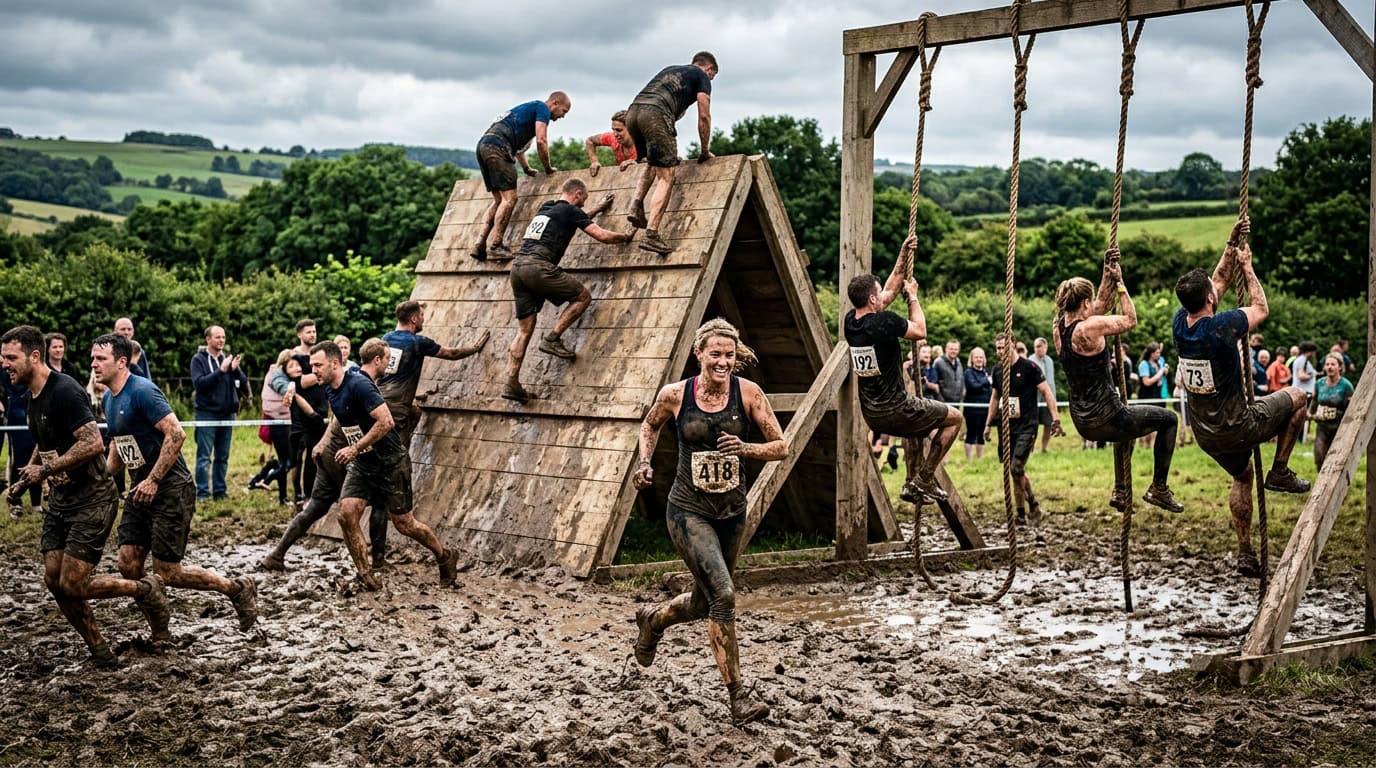
    OCR combines trail running with physical obstacles — walls, monkey bars, rope climbs, cargo nets, water crossings and, depending on the event, the odd electric shock wire. The two biggest names in the UK are Tough Mudder and Spartan Race, and they take slightly different approaches.

    Tough Mudder is built around teamwork rather than timing chips. Courses typically run 5K to 15K with obstacles like greased quarterpipes, ice-water plunges and the infamous Electroshock Therapy finish line, and events take place across the country from Manchester to London South. Spartan Race, by contrast, is competitive by design, with age-group rankings and a structured race ladder: Sprint (roughly 5K, beginner-friendly), Super (around 10K with more obstacles), and Beast (closer to half-marathon distance for the seriously committed). Burpees are the standard penalty for a failed obstacle on Spartan courses, so grip strength and upper-body endurance matter more than raw speed.

    Most obstacles fall into a handful of categories: grip and hang (monkey bars, rings, rope traverses), carry and drag (sandbag carries, tyre drags, log carries), climb and vault (walls of varying heights, cargo nets, A-frames), and water or mud immersion, which is as much a mental challenge as a physical one when it’s a chilly UK morning. Understanding which category you’re weakest in makes it much easier to target your training rather than just running more miles.

    Beyond the big two, plenty of smaller UK operators run local mud runs and army-style assault courses at a fraction of the cost, which are a sensible way to try the format before committing to a headline event.

    Picking Your First Race

    For a first attempt, a Tough Mudder 5K or a Spartan Sprint is the sensible entry point — both are designed to be completable by a reasonably fit beginner, with obstacles that can usually be bypassed if you genuinely can’t do them. Entry prices vary by event and how early you book, but expect to pay somewhere in the £70–£130 range for a Sprint-length race, rising well past £200 for the longer Beast and Ultra distances. Season or “Trifecta” passes that bundle several races together can work out cheaper if you’re planning to make a habit of it.

    Racing with a team is worth considering for your first go. Tough Mudder in particular leans into this — obstacles like the Berlin Walls are genuinely easier with a leg-up from a teammate, and having people to laugh with in the mud pit takes the edge off the nerves. If you’re doing a Spartan event solo, don’t be shy about asking a stranger for a hand over a wall; the OCR community is famously supportive, and helping each other over obstacles is part of the culture rather than an exception to it. Most events also let you defer or transfer your place if something comes up, so check the terms before you book.

    How to Train for a Mud Run

    You don’t need to be able to deadlift a small car, but you do need a base level of aerobic fitness plus functional strength — the ability to pull, push, carry and climb, not just run in a straight line. The NHS’s physical activity guidelines for adults recommend at least 150 minutes of moderate aerobic activity a week plus two strength sessions, and that’s a solid baseline to be hitting before you sign up for anything longer than a 5K obstacle course.

    A simple 8–10 week block works well for most beginners. A typical week might look like: one steady 30–40 minute run, one hill or interval session (since UK courses are rarely flat), two functional strength sessions, and one longer weekend session that mixes running with bodyweight circuits to simulate racing while fatigued. Functional sessions should include farmer’s carries, pull-ups or assisted pull-ups, sled pushes, box step-ups and grip work like dead hangs — grip endurance is the single most common reason people fall off obstacles, so don’t neglect it in favour of just logging running miles.

    If you enjoy short, intense circuit-style training, a HYROX-style training block crosses over neatly with OCR prep, since both sports reward the same blend of running and functional strength under fatigue. In the final two weeks before your event, taper the volume right down so you turn up to the start line fresh rather than fried — this is the stage most beginners skip, and it’s usually why they feel flat on race day.

    Is Obstacle Racing Safe? Injury Prevention Tips

    OCR has a reputation for being extreme, but the vast majority of finishers walk away with nothing worse than bruises and a mild case of hypothermia by the finish line. The injuries that do happen are usually preventable: shoulder strains from monkey bars attempted with cold, untrained muscles, ankle rolls on uneven ground, and grazed knees from crawling obstacles.

    A proper warm-up before your wave starts matters more than people expect, particularly in cold conditions — mobilise your shoulders, hips and ankles rather than just standing around chatting. Listen to the marshals stationed at each obstacle; they’re there for a reason and will pull you off something if it’s not safe for you to attempt. And be honest with yourself about which obstacles to skip. Every major UK event allows you to bypass an obstacle you’re not confident with, usually for a small time penalty or a set of burpees, and that’s always the smarter choice over forcing a fall from height.

    Where to Train in the UK

    Not every gym has the kind of kit you need for OCR-specific work — sled tracks, rope climbs, monkey bar rigs — but functional fitness studios and CrossFit-style boxes usually do, and they’re becoming easier to find outside major cities. Outdoor sessions are another great option: joining an outdoor bootcamp gets you used to training in mud, wind and rain, which is exactly the environment you’ll be racing in come event day. If you’re not sure what’s available near you, you can search for gyms with functional training zones and outdoor classes using GymPal, which lists facilities and class types across the UK so you can find somewhere that actually has the equipment your training plan needs.

    What to Wear and Bring on Race Day

    Cotton is the enemy — it soaks up water, gets heavy and chafes. Go for synthetic or merino base layers, compression tights or shorts, and old trainers you’re happy to retire afterwards (trail shoes with decent grip are ideal, since UK mud fields get genuinely slippery). If your event has an early start, layer up for the wait in the holding pen and be prepared to strip down before you actually begin — you’ll warm up fast once you’re moving.

    Pack a dry base layer, a warm top and a towel for the car, plus bin bags to sit on the driver’s seat and protect the boot — you will be muddier than you think possible. A refillable water bottle, some energy chews for longer distances, sun cream in summer, and blister plasters round out a sensible kit list. Leave the jewellery, the good watch and anything you’re not prepared to lose in a bog at home.

    Recovery After Your Race

    Obstacle racing is brutal on the joints and grip in particular, so don’t skip the cool-down just because you’re freezing and desperate for a hot shower. A short walk, some light stretching and rehydration go a long way, and the days that follow matter as much as the race itself. Good rest and recovery habits — sleep, protein intake and active recovery sessions rather than total inactivity — will get you back to training faster and reduce the risk of the nagging shoulder or ankle niggles that put people off signing up again.

    Your First Mud Run

    Obstacle course racing rewards effort over talent — nobody finishes a Tough Mudder or Spartan Sprint looking graceful, and that’s rather the point. Pick an entry-level distance, give yourself two to three months to build a functional base, warm up properly, and get comfortable training outdoors before race day arrives. Whether you’re after a one-off bucket-list challenge or a new training obsession, GymPal’s gym finder can help you track down functional fitness facilities, bootcamps and outdoor classes near you to get race-ready.

  • Women-Only Gyms UK: Why They’re Booming in 2026

    Women-Only Gyms UK: Why They’re Booming in 2026

    Walk into a growing number of UK gyms right now and you’ll notice something: a dedicated women-only floor, a female-only class timetable, or an entire club that simply doesn’t admit men. This isn’t a niche trend anymore. Women-only gyms and women-only sessions are opening in high streets, retail parks and council leisure centres from Bradford to Brighton, and waiting lists at some of the busiest ones stretch for weeks.

    If you’ve ever cancelled a gym visit because you didn’t fancy being the only woman on the weights floor, or you’ve simply never set foot in one because the idea felt intimidating, this shift is worth understanding. It’s changing where and how a huge number of UK women choose to train.

    This guide covers why women-only gyms are growing so fast, what you can actually expect once you’re inside one, how they differ from mixed gyms that just run the odd “ladies’ hour”, and how to find the right one near you.

    The Rise of Women-Only Gyms in the UK

    The numbers behind this trend are hard to ignore. Sport England’s Active Lives Adult Survey has tracked a persistent activity gap between men and women for years, and gym anxiety specific to mixed-sex weights areas is consistently cited as one of the biggest barriers women report. Sport England’s own This Girl Can campaign was built directly off research showing that fear of judgement, not lack of motivation, keeps many women out of the gym altogether.

    Operators have responded. Chains like Contours Women’s Health Clubs have quietly built one of the largest women-only networks in the country, and mainstream leisure trusts such as GLL’s Better centres and Everyone Active now run dedicated women-only gym and swim sessions in dozens of towns, particularly in areas with large South Asian and Muslim communities in Bradford, Birmingham, Blackburn and parts of London where cultural and religious considerations make single-sex facilities essential rather than a nice-to-have. Independent boutique studios focused on strength training, Pilates and barre for women have opened in almost every major UK city over the last two years.

    Why Women Are Choosing Single-Sex Gym Spaces

    Ask women who’ve switched and the same reasons come up again and again: feeling watched, feeling judged on technique, or simply not wanting to navigate a crowded free-weights area dominated by men. This isn’t the same as general nervousness about starting a fitness routine, though the two often overlap. If unfamiliar equipment and busy gym floors already make you anxious, working through practical strategies for beating gymtimidation alongside choosing a single-sex environment can make that first month far less daunting.

    There’s also a safety and comfort dimension that shouldn’t be understated. Several women-only clubs report that members who’d previously avoided evening workouts entirely now train later because they feel safer in a space without men present, particularly for those training alone after dark in winter months.

    Beyond anxiety and safety, plenty of women simply prefer the culture. Women-only gyms tend to build community around shared goals rather than competition, and class timetables lean heavily towards strength, conditioning and mobility work rather than the bodybuilding-focused programming that dominates some mixed clubs.

    What to Expect From a Women-Only Gym or Studio

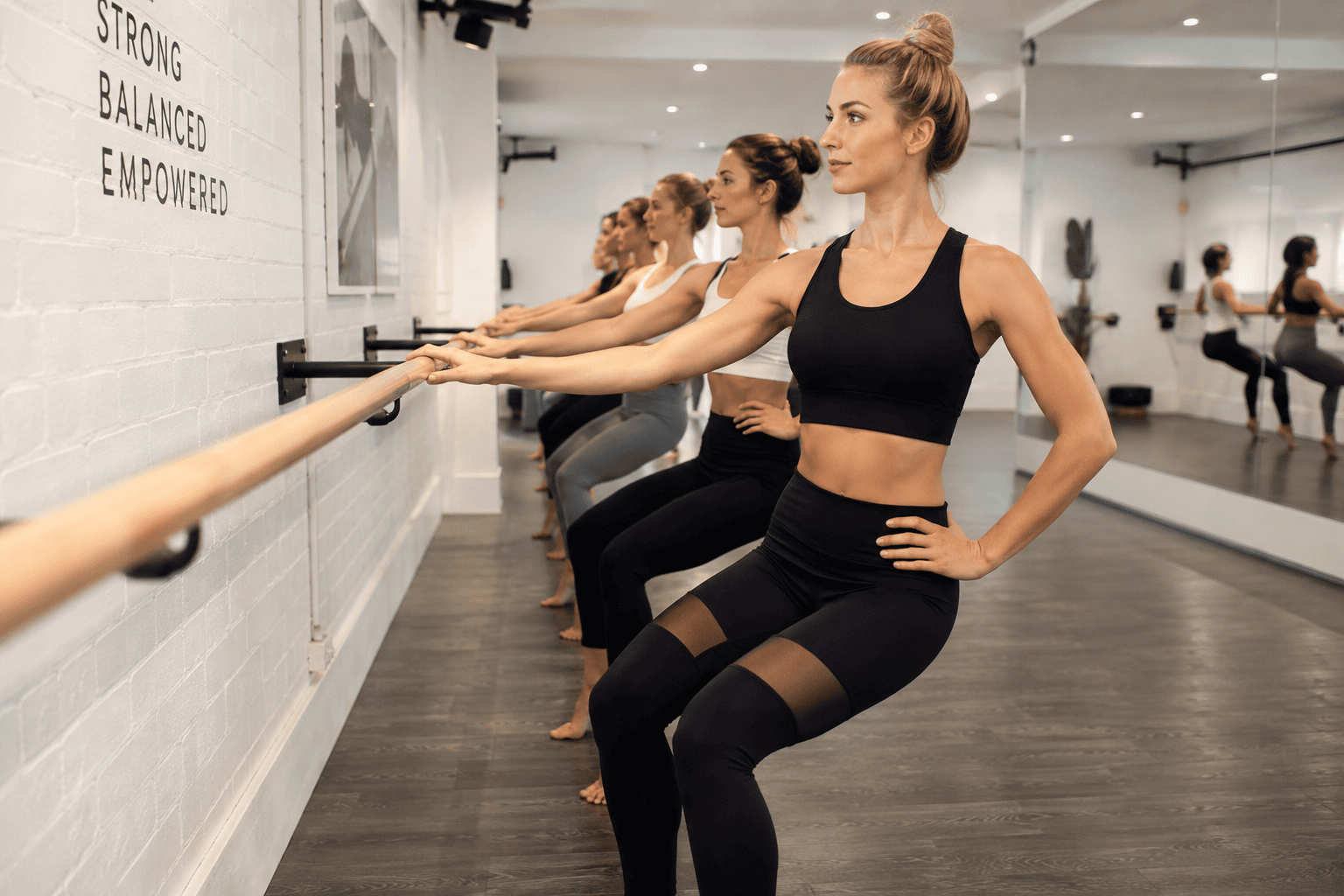
    Facilities vary a lot depending on whether you’re looking at a full women-only club or a boutique studio. A club like Contours typically offers a circuit-style resistance and cardio setup designed to be completed in 30 minutes, aimed at time-poor members who want an efficient session without a lengthy induction. Boutique studios lean more towards small-group classes: strength circuits, reformer Pilates, and barre-style workouts that blend ballet-inspired movement with isometric holds. If barre is new to you, it’s worth reading up on what a typical barre class involves and what it costs before booking your first session, since pricing and format differ significantly from a standard gym class.

    Free weights areas in women-only gyms are usually smaller than in a big mixed-sex chain, but staff-to-member ratios tend to be higher, and inductions are often more thorough. Expect female personal trainers and instructors as standard, changing rooms that don’t require communal showering if that’s a concern for you, and a generally slower, more patient pace to group classes aimed at building confidence rather than pushing intensity from week one.

    Women-Only Gyms vs Women-Only Sessions: What’s the Difference

    It’s worth separating two things that get lumped together. A genuine women-only gym, like Contours, is single-sex all the time — men simply aren’t members. A women-only session, on the other hand, is a set of hours at an otherwise mixed-sex gym or leisure centre reserved exclusively for women, often once or twice a week.

    Council-run leisure centres are the biggest providers of the second model. Many Better and Everyone Active sites run women-only gym floor and swim sessions, usually early evening or weekend slots, precisely because full single-sex membership isn’t commercially viable for every location but demand for some female-only time clearly exists. These sessions are typically included in a standard leisure centre membership rather than costing extra, which makes them one of the cheapest ways to try a single-sex environment before committing to a dedicated women-only club.

    The Cost Question: Are Women-Only Gyms More Expensive?

    Pricing sits roughly in line with mid-market mixed gyms rather than budget chains. Expect to pay somewhere between £25 and £45 a month for a dedicated women-only club membership, depending on region and whether classes are included, with boutique barre and Pilates studios often charging per-class or via a credit system starting around £15–£20 per session if you’re not on a monthly plan. Council women-only sessions are usually the most affordable route in since they’re folded into standard leisure centre membership, which can run as little as £20–£30 a month in many areas.

    Before signing anything, it’s worth working through the same due diligence you’d apply to any gym contract — checking notice periods, freeze policies and what’s actually included in the price rather than assuming it matches a big mixed-sex chain.

    How to Find the Right Women-Only Gym Near You

    Availability still varies enormously by region. Cities like London, Manchester, Birmingham and Glasgow have several genuine women-only clubs plus boutique studios, while smaller towns might only offer council-run women-only sessions rather than a dedicated club. Searching by facility type on GymPal is the quickest way to filter for women-only gyms and classes near your postcode rather than scrolling through generic gym listings that don’t specify.

    Once you’ve found a shortlist, treat the visit like you would any other gym decision. Many of the same fundamentals from a general gym choice checklist still apply here — opening hours, contract length, cleanliness, and whether the equipment matches what you actually want to do — on top of the women-only-specific questions below.

    Questions to Ask Before You Join

    A few things are worth confirming before you commit to a women-only club or studio, since “women-only” can mean quite different things in practice:

    Ask whether the club is genuinely women-only at all times or only during certain hours, whether male staff (maintenance, reception, personal trainers) ever have floor access during opening hours, what the changing room and shower setup actually looks like, and whether class timetables are fixed or rotate seasonally. If you’re specifically drawn to single-sex training for religious or cultural reasons, it’s also worth asking directly whether instructors and reception staff are exclusively female, since policies differ even among clubs that market themselves as women-only.

    For Gym Owners: Is It Worth Adding Women-Only Hours?

    If you run a mixed-sex gym or leisure centre, this trend is also a commercial opportunity worth taking seriously. Blocking out a few quiet hours a week for women-only access is one of the lowest-cost ways to open your doors to a segment of local demand you’re currently missing entirely — particularly in areas with significant Muslim or South Asian populations, where single-sex provision often isn’t optional for a meaningful share of potential members, it’s the difference between them joining at all or not.

    The operational lift is smaller than owners often assume. You don’t need to close the whole site or hire new female-only staff overnight — many gyms start with one or two off-peak evening slots, staffed by whichever female team members are already on the rota, and expand only once demand proves out. What matters more is communicating the policy clearly: confirming whether male staff retain any floor or reception access during those hours, and making sure changing facilities genuinely support privacy, since a poorly-defined “women-only hour” that still has male maintenance staff wandering through will undo the trust you’re trying to build fast.

    Marketing these sessions well matters just as much as running them. Local community groups, mosques, GP surgeries and school parent networks are often far more effective at spreading the word than social media ads, since word of mouth carries more weight for members who’ve been put off gyms before. Making sure your listing on GymPal clearly flags women-only sessions is also worth doing — it’s exactly the kind of filter women in your area are actively searching for, and a listing that doesn’t mention it is an easy way to lose a member to the club down the road that does.

    Final Thoughts

    Women-only gyms aren’t a passing fad — they’re a direct response to a well-documented confidence and safety gap that’s kept a huge number of women out of fitness spaces for years. Whether that means joining a dedicated club like Contours, booking into a council-run women-only session, or trying a boutique barre or Pilates studio, there’s now more genuine choice across the UK than at any point before.

    The best next step is simply seeing what’s actually available where you live, since provision still varies a lot by region. Search GymPal for women-only gyms, classes and sessions near you, compare a few options, and go and visit before you commit to anything.

  • Padel UK: The Fastest-Growing Racket Sport and Where to Play

    Padel UK: The Fastest-Growing Racket Sport and Where to Play

    Five years ago, most people in the UK had never heard of padel. Now it’s the fastest-growing sport in the country, with new courts appearing at gyms, tennis clubs and dedicated venues from Aberdeen to Truro almost every month. If you’ve walked past a set of glass-walled courts you didn’t recognise, or seen friends posting about a “padel session” instead of their usual gym class, this is what all the fuss is about.

    Padel is a racket sport that sits somewhere between tennis and squash, played in doubles on a court roughly a third the size of a tennis court, enclosed by glass and mesh walls that are very much part of the game. It’s easy to pick up, brutally addictive once you do, and — unlike a lot of racket sports — genuinely welcoming to complete beginners from the first session.

    This guide covers what padel actually involves, why it’s grown so quickly across the UK, what it costs to play, and how to find a court and get started without feeling completely lost in your first game.

    What Is Padel and How Does It Differ From Tennis or Squash?

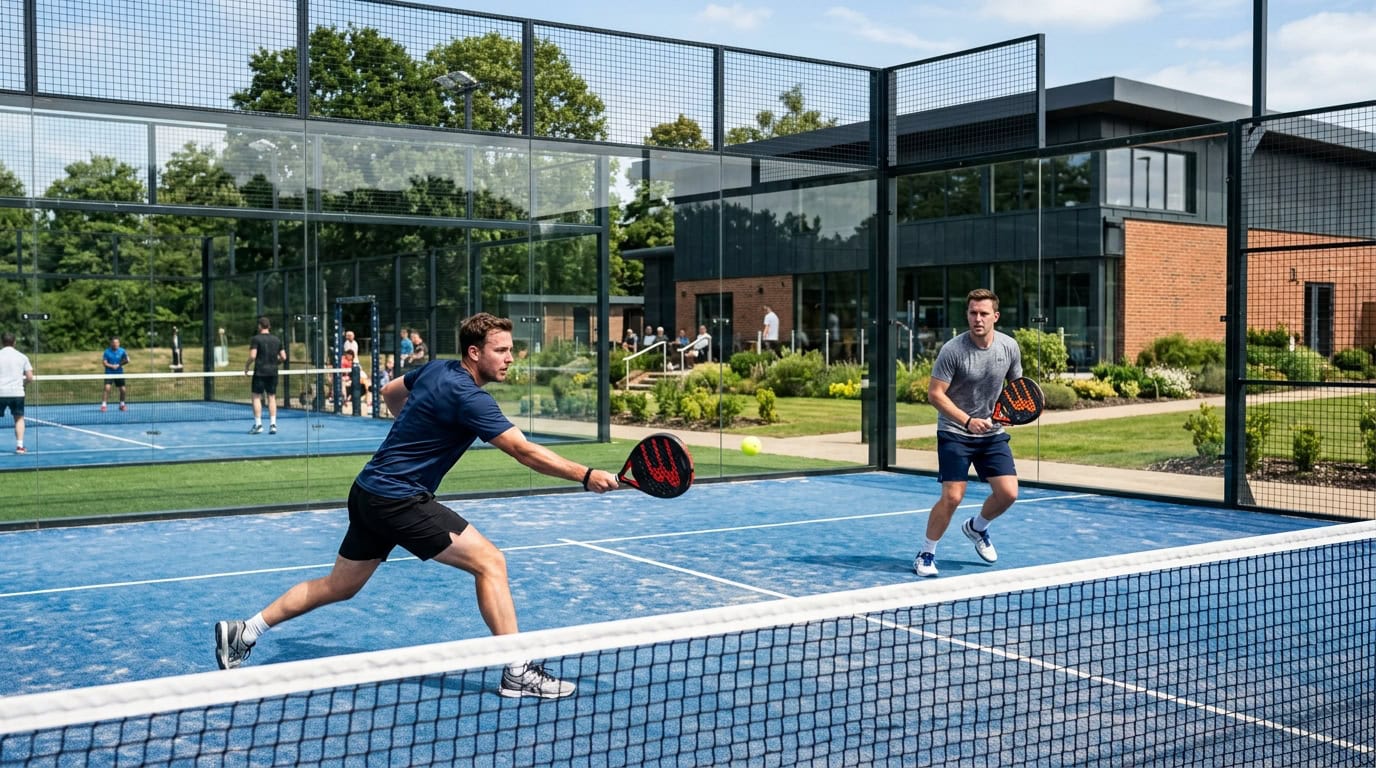
    Padel is played in pairs on an enclosed court about 20 metres by 10 metres, roughly a third the size of a tennis court. You serve underarm, the ball can bounce off the surrounding glass and mesh walls during play, and points are scored exactly as in tennis — 15, 30, 40, game. Rackets are solid, stringless paddles with holes through the face, and the ball is a slightly depressurised tennis ball that bounces lower and slower.

    The smaller court and the walls change the game completely. Because the ball stays in play longer and rallies bounce back off the glass rather than ending dead, points tend to be longer and more tactical than tennis, with less reliance on a powerful serve or a booming forehand. That’s a big part of why it’s so beginner-friendly — you can have a genuinely competitive, enjoyable game in your first hour without needing years of technique behind you.

    Squash players often pick it up fastest, since the wall-play instincts transfer almost directly, but plenty of complete beginners with no racket sport background at all get comfortable within a couple of sessions too. Because it’s always doubles, there’s also less court to cover individually than in singles tennis or squash, which makes it far more forgiving on the knees and lungs — a genuine plus if your usual exercise is weights or low-impact classes rather than anything cardio-heavy.

    Why Padel Has Exploded Across the UK

    The growth numbers are hard to overstate. According to the Lawn Tennis Association, which now governs padel development in Britain, the sport has gone from roughly 400,000 players in 2024 to 860,000 players by early 2026, with court numbers rising just as fast as demand for weekend and evening slots continues to outstrip supply in most cities.

    Part of the appeal is social rather than purely athletic. Padel is almost always played as doubles, which makes it naturally sociable in a way that solo gym sessions or one-on-one tennis aren’t — a lot of players describe it as feeling more like a get-together with friends that happens to involve exercise. Gyms and leisure operators have noticed too, and it’s now common to see padel courts bolted onto existing health clubs as a way of pulling in members who’d never normally set foot in a squash court.

    The sport’s profile has also been helped along by high-profile investment and media coverage — several Premier League footballers and other well-known names have put money into UK padel venues over the past couple of years, and televised Premier Padel tournaments have given the sport a level of visibility that most new activities take a decade to build. Local councils have taken notice too, with a growing number of leisure centres converting underused tennis or squash courts into padel courts to meet demand rather than building from scratch.

    What It Actually Costs to Play

    Court hire typically runs somewhere between £24 and £48 per hour depending on location and time slot, usually split between four players, which works out at roughly £6 to £12 each for a session — comparable to a decent group exercise class once you divide it up. Peak evening and weekend slots at popular venues get booked up fast, so early mornings and weekday afternoons tend to be both cheaper and easier to book.

    Some venues sell padel as a pay-and-play add-on with no commitment beyond the court fee, while others fold it into a wider membership alongside gym access, similar to the tiered pricing you’ll see covered in our breakdown of UK gym membership prices. If you’re already paying for a gym membership elsewhere, it’s worth checking whether padel is included or discounted before booking pay-and-play rates separately, since a bundled membership can work out considerably cheaper if you plan to play regularly.

    Rackets can be hired for a few pounds at most venues, so there’s no need to buy your own equipment until you’re sure you’ll keep playing. Balls are usually provided or available to buy cheaply on site.

    Your First Session: What to Expect

    Turning up to any new sport for the first time comes with a bit of nervous energy, and padel is no exception — you’re stepping onto a court you’ve never played on, with rules you’re still learning, in front of whoever else happens to be at the venue that evening. It’s worth remembering that almost everyone at a padel court was a beginner within the last couple of years, given how new the sport still is in the UK, so there’s far less of a gap between “regulars” and “newcomers” than you’d find at an established tennis club.

    If new environments generally make you anxious, the same advice in our guide to beating gym anxiety applies just as well here — booking an off-peak slot, going with a friend rather than joining strangers, and accepting that your first few games will involve a lot of missed shots into the glass will take most of the pressure off. Most venues also run beginner taster sessions or introductory coaching for exactly this reason, and they’re worth booking before your first proper game if you can.

    Finding a Court Near You

    Because padel has grown so quickly, availability varies a lot by area — some towns have several venues with plenty of free slots, while others have a single court that’s booked solid weeks in advance. It’s worth checking a few different venues within reasonable travelling distance rather than assuming the nearest one will have space when you want it.

    The same checklist that applies when picking any gym is just as relevant here. Our guide to choosing the right gym in the UK covers things like opening hours, contract terms and location that matter just as much for a venue you’re booking for padel as one you’re joining for regular training, and it’s worth a read before you commit to a membership built around it.

    Independent padel clubs, tennis centres that have added courts, and leisure centres run by local councils all tend to price and book very differently, so it’s worth comparing a few options rather than settling for whichever venue happens to come up first in a search. Some clubs also run ladder leagues and social mixers for members, which are worth asking about if you’re keen to play regularly without having to organise three other players every single week yourself.

    Padel Etiquette and Tips for Improving Quickly

    A few unwritten rules make padel more enjoyable for everyone. Let the ball bounce off the back or side glass before you play it where possible — trying to volley everything early is a common beginner habit that actually gives away easy points. Call the score clearly before each point so nobody’s arguing over it later, and if a ball from a neighbouring court rolls onto yours, stop play immediately rather than carrying on through it.

    The fastest way to improve isn’t power, it’s positioning. Standing close to the net as a team, letting the walls do more of the work than you’d expect, and communicating constantly with your partner about who’s taking which ball will get you playing competent, enjoyable padel far quicker than trying to smash winners from the back of the court.

    Getting Started

    Padel’s rise in the UK shows no sign of slowing down, and unlike a lot of fitness trends, it’s genuinely as much fun for a complete beginner as it is for someone who’s been playing for years. A pair of trainers, a hired racket and a booked court is all you need to try it — there’s no long build-up or expensive kit list standing between you and your first game.

    If you’re weighing up whether to add padel to your regular training routine, GymPal’s gym search makes it easy to find local venues with courts, compare what’s included, and see how it fits alongside whatever else you’re already doing for fitness.

  • Outdoor Bootcamps UK: What to Expect and What They Cost

    Outdoor Bootcamps UK: What to Expect and What They Cost

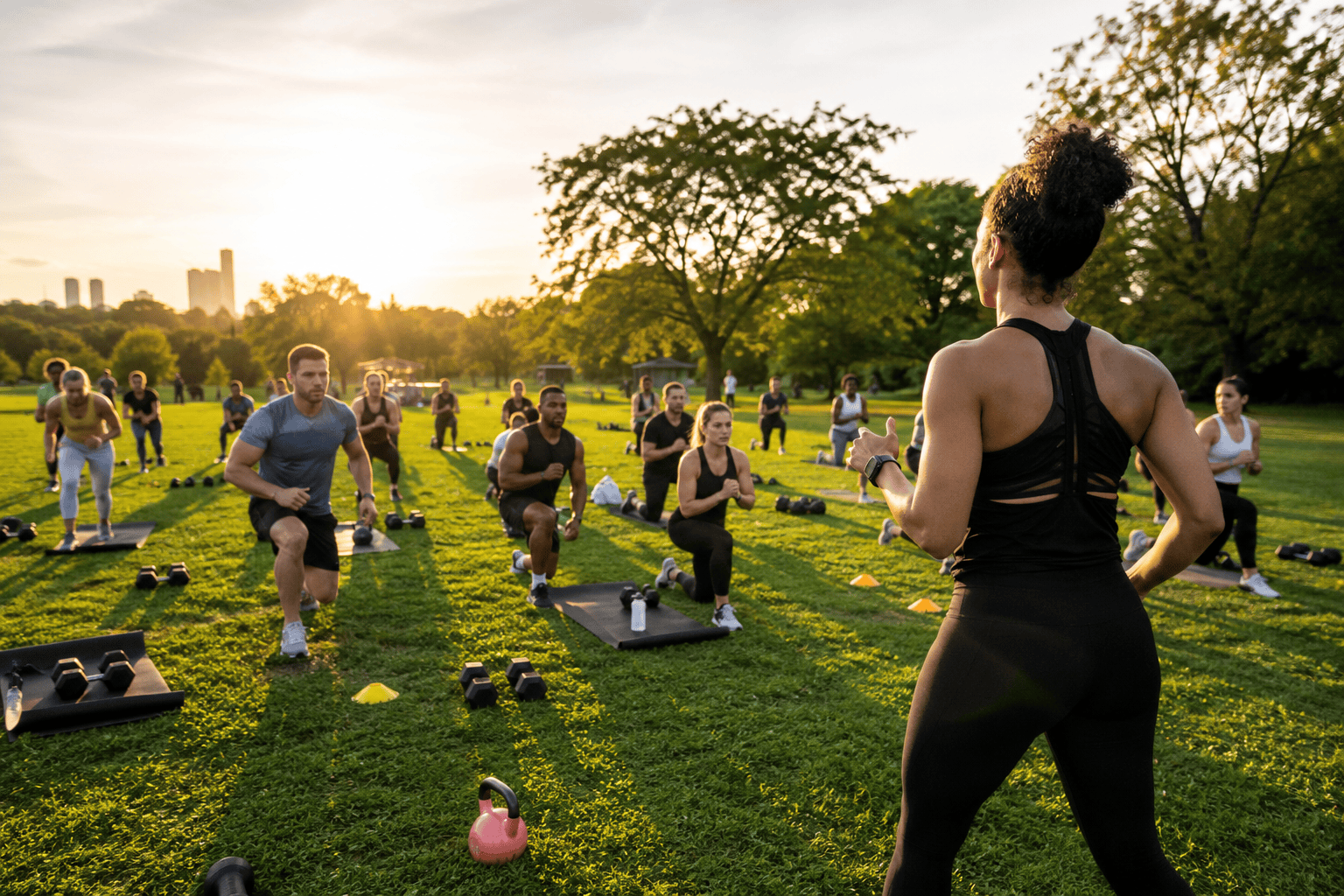
    If your idea of exercise doesn’t involve a squat rack, a bootcamp might be exactly what you’re after. Outdoor fitness bootcamps have quietly become one of the fastest-growing ways Brits are getting fit, blending military-inspired drills, circuit training and a healthy dose of mud with the kind of group energy a solo treadmill session just can’t match. You’ll find sessions running in parks from Bristol to Bradford, usually before work, at lunchtime, or on weekend mornings when everyone else is still in bed.

    But bootcamps aren’t for everyone, and they’re not all run the same way. Some are polished, well-insured operations with qualified instructors and progressive programming. Others are a bloke with a whistle and a bag of cones. Before you hand over your card details for a block booking, it’s worth knowing what you’re actually signing up for.

    This guide covers what a typical session looks like, who actually runs them, what it costs across the UK, what to bring, and how to spot a bootcamp that’s actually worth your time and money.

    What Actually Happens at a Bootcamp Session

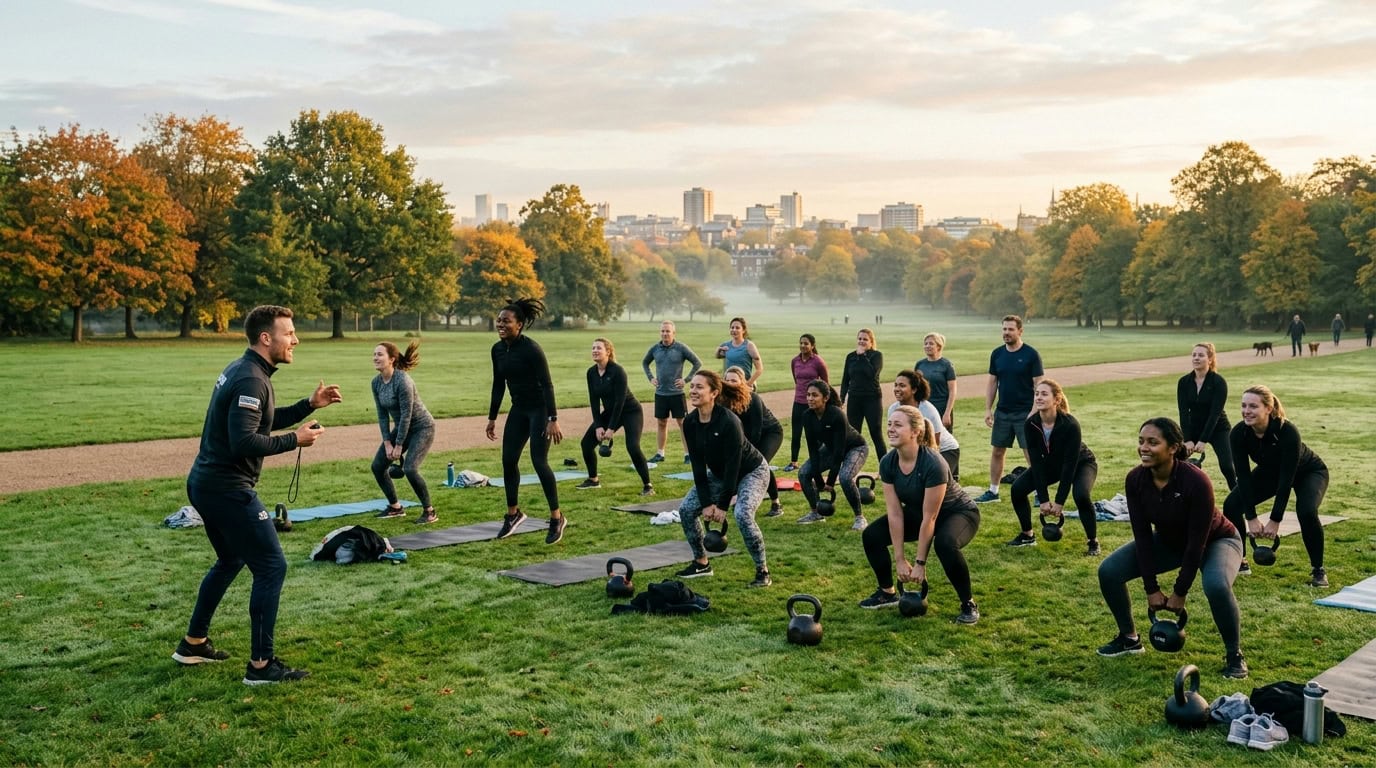
    A standard UK bootcamp runs 45 to 60 minutes and follows a circuit format: a warm-up, several rounds of exercises performed in stations or intervals, and a cool-down. Expect a mix of bodyweight moves (press-ups, burpees, lunges), kettlebells or sandbags, sprint intervals, and partner drills like resistance-band rows or tyre flips if the venue has the kit. Good instructors scale everything up or down depending on who’s turned up that day, so a total beginner and a half-marathon runner can train side by side without either of them being short-changed.

    A typical circuit might rotate through six or eight stations: box jumps or step-ups, battle rope waves, sandbag carries, resistance-band rows, sprint shuttles between cones, and a core finisher like plank holds or mountain climbers. Instructors usually run 30-to-45-second work intervals with short rests, so the whole session feels less like “exercise” and more like it’s over before you’ve had time to dread it. Some operators build in a running warm-up loop around the park first, both to raise the heart rate and to make use of the space before the equipment-based stations start.

    Who Actually Runs Bootcamps in the UK

    The bootcamp scene in the UK ranges from national franchises to independent local operators. British Military Fitness (BMF) is probably the best-known name, running instructor-led outdoor sessions in parks across London, Manchester, Birmingham and beyond, with a format built around military-style circuit drills. Alongside the big franchises, most towns have at least one independent PT or small team running park-based bootcamps, often advertised through local Facebook groups or word of mouth rather than glossy marketing. Some gyms and studios also run “bootcamp” as an indoor class format using the same interval-and-circuit structure without the mud, which is worth knowing if you like the training style but not the British weather.

    Independent operators are often cheaper and more flexible than franchises, but the quality varies far more — which is exactly why checking qualifications and insurance (covered further down) matters more here than it would when signing up to a well-established chain.

    Most sessions are held outdoors year-round, rain or shine, which is part of the appeal but also the catch — you will get wet, muddy and cold at some point between October and March. Some operators move indoors to a sports hall or gym studio during the worst of winter, so it’s worth asking about their wet-weather policy before you commit to a multi-week pass.

    How Much Do UK Bootcamps Cost

    Pricing varies more than you’d expect for what’s essentially a park and some cones. As a rough guide across the UK in 2026:

    • Pay-as-you-go drop-in: £8–£15 per session
    • Weekly membership (2–3 sessions a week): £30–£55 per month
    • Unlimited monthly membership: £60–£100 per month
    • Block bookings (6–12 weeks, common for “transformation” style camps): £120–£300 upfront

    London and the South East sit at the top end of that range, while sessions in smaller towns and cities across the North and Midlands tend to land closer to £8–£12 a session. Many operators also offer a free trial session, which is worth taking up before you commit to anything longer than a single class — it’s the fastest way to judge coaching quality and group size.

    Bootcamp vs Gym: Which Suits You Better

    Bootcamps and traditional gyms solve different problems, and plenty of people end up doing both. A gym gives you control — train at 6am or 9pm, follow your own programme, and skip the small talk. A bootcamp gives you structure, accountability and a coach shouting your name when you want to stop three burpees early, which for a lot of people is the difference between a habit that sticks and a gym membership that quietly lapses in February.

    If you’re drawn to the high-intensity, no-equipment-needed style of training but want the option of doing it indoors when the weather turns, it’s worth comparing bootcamps against HIIT classes, which run on a similar interval-based format but happen in a studio with more consistent programming week to week.

    What to Wear and Bring

    Because most bootcamps happen outdoors regardless of season, kit matters more here than at your average gym class. A few essentials:

    • Trail or off-road trainers with decent grip — road running shoes slip on wet grass and mud
    • Layers you can strip off once you’ve warmed up, rather than one thick coat
    • A waterproof outer layer for autumn and winter sessions — this isn’t optional if you’re training through a British winter
    • A towel and a change of clothes for the drive or walk home, especially if there’s no changing facility on site
    • A reusable water bottle — most parks don’t have taps nearby

    Gloves are worth packing between November and February too, particularly if kettlebells or battle ropes are part of the programme — cold hands and heavy grip work don’t mix well.

    Injury Prevention and Staying Safe Outdoors

    Bootcamp injuries usually come from two things: uneven ground and going too hard, too soon. Grass hides tree roots, rabbit holes and uneven camber that a treadmill never will, so a proper ankle warm-up and a scan of the terrain before any sprint drill is worth the extra thirty seconds. Beginners are also the most likely group to push through fatigue in a group setting purely because everyone else seems to be coping fine — a good instructor will actively check in on new faces rather than assuming silence means everything’s fine.

    If you’re returning from a long break or managing an existing niggle, it’s worth having a quiet word with the instructor before the session starts rather than during the middle of a circuit. Most reputable operators will happily scale exercises down or suggest a lower-impact alternative on the spot — box step-ups instead of jump squats, or a plank hold instead of full burpees, for example.

    Finding a Reputable, Well-Run Bootcamp

    Not every bootcamp is run to the same standard, so a bit of due diligence before you pay for a block booking saves both money and injuries. Check that instructors hold a recognised qualification (Level 2 or 3 Gym Instructor/Personal Trainer as a minimum) and that the operator carries public liability insurance — any legitimate business will confirm this without hesitation if you ask. It’s also worth watching a session from the sidelines first: a well-run camp keeps group sizes manageable enough that the coach can actually see and correct everyone’s form, rather than just shouting motivational phrases from the front.

    If bodyweight training is what draws you to bootcamps in the first place, it’s worth reading up on calisthenics training as well, since many of the same movement patterns — press-ups, pull-ups, squats — form the backbone of most bootcamp programming, just with a coach and a group around you instead of a solo session in the park. GymPal’s directory is a straightforward way to compare bootcamps, ratings and prices in your area at askgympal.co.uk before you commit to anything.

    Bootcamp Fitness Tests and Challenges

    Plenty of bootcamp operators build towards a periodic fitness test or timed challenge — think a set circuit against the clock, repeated every 6 to 8 weeks so members can track progress. It’s a genuinely useful way to see improvement that the mirror doesn’t always show. If you enjoy that competitive, benchmark-driven side of training, it’s worth also looking at HYROX, the UK’s fastest-growing fitness race, which has become a natural next step for a lot of bootcamp regulars who want a bigger event to train towards.

    According to the NHS’s physical activity guidelines for adults, most people should aim for at least 150 minutes of moderate activity or 75 minutes of vigorous activity a week, plus strength work on two or more days — a twice-weekly bootcamp habit gets you a long way towards both targets in one go.

    Is a Bootcamp Right for You?

    Bootcamps work best for people who thrive on group energy, need a coach to push them past the point they’d normally stop, and don’t mind training outdoors in all weathers. If you’d rather train at your own pace, indoors, on your own schedule, a standard gym membership is probably the better fit — though there’s nothing stopping you from doing both.

    Either way, the best way to find out is to turn up to a free trial session near you. Search GymPal to compare bootcamps, gyms and fitness classes in your area, check real reviews, and book a taster before you commit to a membership.

  • HYROX UK: What It Is, What It Costs, How to Train

    HYROX UK: What It Is, What It Costs, How to Train

    If you’ve noticed a queue forming for the sled at your local gym, or spotted a “HYROX Training” class suddenly appear on the timetable, you’re not imagining it. HYROX has gone from a niche fitness event that barely registered outside Germany to the fastest-growing mass-participation fitness race in the UK, with sold-out arenas in London, Manchester, Glasgow and Birmingham and waiting lists for some gym-based training programmes.

    It’s part race, part strength test, and part community event — and it’s changing what people expect from a gym membership. Where CrossFit boxes and F45 studios paved the way for competitive group training, HYROX has given people something even simpler to aim for: a fixed, standardised event with a finish time you can actually compare against your mates, your PB, or a stranger in Sheffield.

    This guide covers exactly what HYROX involves, what it costs to enter and train for in the UK, and how to actually prepare for one without wrecking your knees in the process.

    What Is HYROX, Exactly?

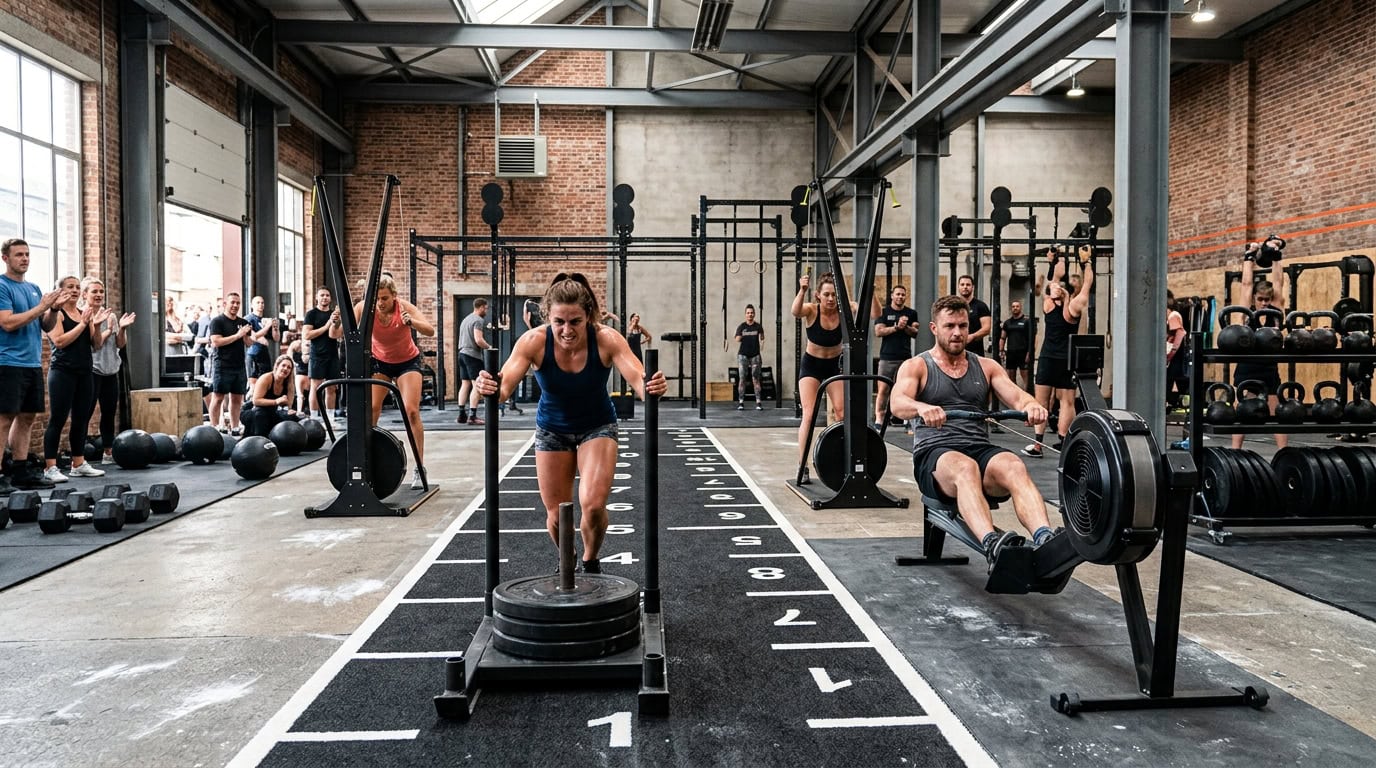
    HYROX is a fitness race with a fixed format that never changes, regardless of which city or country you compete in. Every athlete runs 8 x 1km, alternating each run with a functional movement station. The eight stations are: SkiErg, sled push, sled pull, burpee broad jumps, rowing, farmers carry, sandbag lunges, and wall balls.

    That’s the entire appeal — because the format is identical everywhere, your finishing time actually means something. A 75-minute HYROX in Leeds is directly comparable to a 75-minute HYROX in Berlin. There’s no judging, no subjective scoring, just a clock. Competitors can enter as individuals, in doubles, or as part of a relay team, and there are separate divisions for open, pro, and age-group categories, so a complete beginner and a seasoned athlete can both toe the same start line without it being pointless for either of them.

    The UK season now runs from roughly September through to June, with events held at major arenas in London, Manchester, Glasgow, Birmingham and Nottingham. Doubles is the most popular format for first-timers, since you can split some of the station load with a training partner and it takes the edge off the running for anyone who isn’t yet confident going the full distance solo. Plenty of gym-based training groups exist purely to pair beginners up for their first doubles entry.

    Why Is HYROX Exploding in UK Gyms?

    Three things have converged to make HYROX the UK’s fitness obsession of the moment. First, it gives people a concrete goal with a date attached, which is a far stronger motivator than “get fitter” ever was. Second, it’s genuinely achievable — you don’t need to be able to do a muscle-up or run a sub-20-minute 5K to finish one, just to train consistently for a few months. Third, gyms figured out that HYROX-specific classes fill a gap between traditional weights training and pure cardio, and members were willing to pay for it.

    Independent gyms and budget chains alike have responded by installing sleds, SkiErgs and wall ball targets, and building dedicated “hybrid training” or “HYROX prep” classes into their timetables. If you’re hunting for a gym that’s kitted out for this kind of training, GymPal’s gym directory lets you filter by facilities so you can check for sleds, rowers and functional training rigs before you commit to a membership.

    HYROX vs CrossFit vs F45: What’s the Actual Difference?

    People often lump HYROX in with other functional fitness formats, but the training style is genuinely different. If you’ve tried a CrossFit WOD, you’ll know the workouts change daily and often mix Olympic lifting with gymnastics movements — brilliant for building broad, unpredictable fitness, but it doesn’t map directly onto a single event you’re training towards.

    HYROX training, by contrast, is entirely specific. You’re not guessing what today’s session involves — you’re building the exact engine and strength endurance needed to run eight kilometres and push a sled while your legs are already screaming. That specificity is exactly why so many CrossFit athletes and F45 regulars have started cross-training for HYROX alongside their usual sessions: it fills a gap their existing programming doesn’t cover, particularly around sustained running under fatigue.

    What Does HYROX Training Actually Cost in the UK?

    Race entry is the first cost to budget for. A standard individual open-division entry typically runs from around £120 to £160 depending on how early you book and which UK city you enter (London and Manchester events sell out fastest and tend to sit at the higher end). Doubles and relay entries are usually cheaper per head.

    Training costs vary far more. If your existing gym already has the right kit, you might pay nothing extra beyond your normal membership — many PureGym, The Gym Group and independent sites now have sleds and rowers on the main gym floor. Dedicated HYROX-prep classes at specialist studios typically cost between £15 and £25 per session if you’re paying pay-as-you-go, or you can expect to pay £70–£120 a month for unlimited access at a studio built specifically around hybrid training. Compression gear, grip tape and decent trainers with lateral stability will add another £80–£150 as a one-off cost, though none of it is compulsory to get started.

    How to Train for Your First HYROX

    Most coaches recommend a minimum of 10–12 weeks of dedicated preparation if you’re coming from a general fitness background, longer if running isn’t already part of your routine. The training splits roughly into three pillars: running capacity, strength endurance on the eight stations, and — crucially — the ability to run well with fatigued legs, which is a completely different skill from running fresh.

    A sensible weekly structure looks like two to three running sessions (mixing easy aerobic runs with interval work), two strength-endurance sessions built around the actual HYROX stations, and one longer “simulation” session every couple of weeks where you run and push through a shortened version of the full race. If your gym doesn’t run dedicated HYROX classes yet, a well-structured HIIT class that combines cardio intervals with functional movements is a solid substitute for the strength-endurance stations, and it’s a sensible way to build the base fitness a first race demands before you commit to anything more specialist.

    Build the running volume gradually rather than all at once, and don’t neglect strength work in the process — the sled stations punish anyone who’s only ever trained on a treadmill.

    Common Beginner Mistakes to Avoid

    The single biggest mistake is treating race day as a strength competition rather than a pacing problem. Athletes who sprint the first two kilometres and attack the sled push at full effort almost always fall apart by station five. Going out 10–15 seconds per kilometre slower than you think you need to is nearly always the faster overall strategy.

    The second mistake is neglecting running altogether. It’s tempting to spend all your gym time on the flashy functional stations because they feel more like “training,” but running makes up roughly half the total time on the clock for most finishers, so undertrained legs will cost you more than a slow sled push ever will. The NHS’s physical activity guidelines for adults recommend at least 150 minutes of moderate aerobic activity plus two strength sessions a week as a baseline, and hitting that consistently for a few months beforehand will get most beginners a long way towards being race-ready. Finally, don’t skip a proper warm-up on race day — cold hip flexors and a stiff lower back going straight into burpee broad jumps is a fast route to a pulled muscle.

    Why UK Gym Owners Are Paying Attention Too

    It isn’t just members chasing race times — independent gym owners have noticed that HYROX-curious members tend to train more often and stick around longer than the average membership, simply because they have a date on the calendar to work towards. A few sleds, a couple of SkiErgs and a wall ball rack is a relatively modest kit investment compared to a full CrossFit rig, which makes adding a “hybrid” or “HYROX prep” class one of the more affordable ways for a small independent gym to compete with the bigger budget chains on programming rather than price.

    Members who are training for a specific event are also far easier to keep engaged month to month, since the class itself becomes the retention tool — nobody wants to fall behind their training group two months out from race day. For gyms already running functional fitness or bootcamp-style sessions, layering in HYROX-specific pacing and station work is often a small tweak to existing programming rather than a wholesale change.

    Finding the Right Gym to Train For HYROX

    You don’t need to join a specialist studio to prepare properly, but you do need consistent access to a sled, a rower or SkiErg, and space to do farmers carries and sandbag work. Before signing up anywhere, it’s worth checking whether the gym runs functional fitness or hybrid-style classes, or whether you’ll be building your own programme on the main floor.

    GymPal’s gym search makes it easy to compare facilities, opening hours and class timetables at gyms near you, so you can find somewhere properly set up for HYROX-style training rather than discovering the sled is permanently out of action once you’ve already signed a contract.

    The Bottom Line

    HYROX has succeeded where a lot of fitness trends fail because it gives people something concrete to train towards without demanding elite-level skill to take part. Whether you’re chasing a sub-70-minute finish or just want a reason to actually stick to a training plan through a British winter, it’s one of the more sensible fitness crazes to have taken over UK gyms in years. Find a gym with the right kit, respect the running as much as the stations, and give yourself more time to prepare than you think you need — your first finish line will feel very well earned.

  • Calisthenics UK: Build Strength With Just Your Body Weight

    Calisthenics UK: Build Strength With Just Your Body Weight

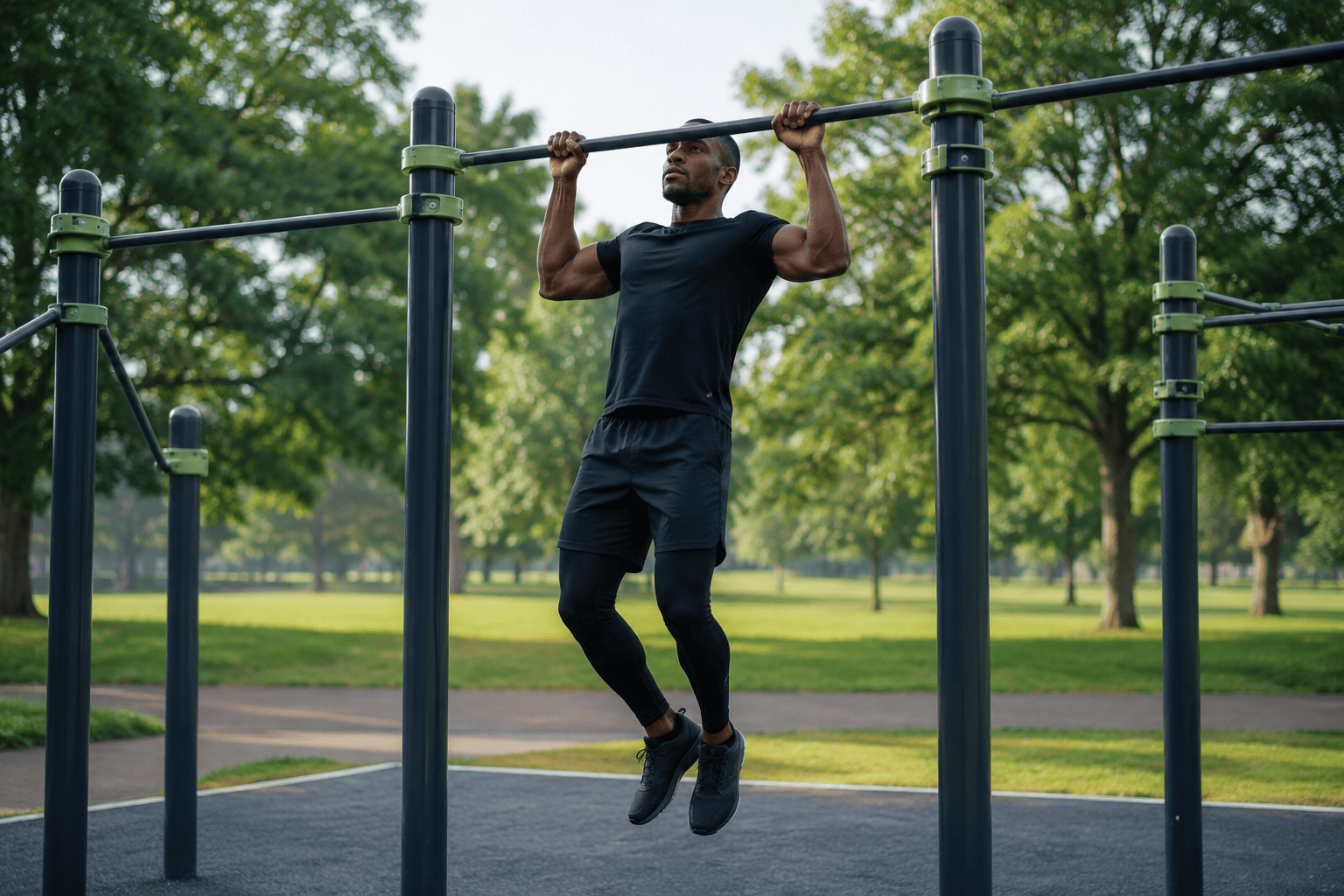
    There’s a fitness movement quietly taking over parks, playgrounds, and warehouse gyms across Britain — and it doesn’t involve a single dumbbell or cable machine. Calisthenics, the art of using your own bodyweight as resistance, has exploded in popularity across the UK. From outdoor rigs in London’s Victoria Park to dedicated calisthenics studios in Manchester and Glasgow, more and more people are discovering that the best gym equipment they’ll ever use is the one they were born with.

    But calisthenics is more than a budget alternative to the gym. It’s a complete training system that builds functional strength, flexibility, and body control in ways that traditional weightlifting often can’t match. The movements — pull-ups, dips, handstands, muscle-ups, levers — are visually impressive, deeply satisfying to master, and enormously effective at building muscle and athletic performance.

    This guide covers everything you need to know about getting started with calisthenics in the UK: what it is, why it’s worth doing, the best exercises to begin with, how to progress, and where to find calisthenics-friendly spaces near you.

    What Is Calisthenics?

    Calisthenics (pronounced “cal-is-then-ics”) comes from the Greek words for “beauty” and “strength.” At its core, it’s physical training that uses your bodyweight instead of external weights. Think of it as the opposite of going to a weights room — there’s no barbell to load, no machine to adjust. Just you, gravity, and a bar to hang from.

    The range of exercises is enormous. At the beginner end, you’ve got push-ups, squats, and lunges — movements most people are familiar with. As you progress, you unlock more demanding skills: dips, pull-ups, pistol squats, and handstand push-ups. At the elite end sits the stuff that makes gym-goers stop and stare: the human flag, the planche, the front lever, and the muscle-up.

    What makes calisthenics different from simply “doing press-ups in your living room” is the structured skill progression. You’re always working toward the next level — adding reps, increasing difficulty, or mastering a new movement. That progression keeps training engaging in a way that mindlessly adding weight to a barbell often doesn’t. You’re not just getting stronger; you’re genuinely developing new physical skills.

    Why Calisthenics Is Booming in the UK

    A decade ago, calisthenics in the UK was a niche pursuit — the domain of gymnastics coaches and people who trained in parks because they couldn’t afford a gym. Today, it’s mainstream. Search for calisthenics on YouTube and you’ll find British content creators with millions of followers. Dedicated calisthenics parks have sprung up in cities from Bristol to Edinburgh. And specialist calisthenics gyms — often called “street workout gyms” or “movement gyms” — are opening across the country.

    Several factors are driving this. First, cost. A calisthenics workout requires nothing more than a bar — and many parks have them for free. In a period when gym memberships, personal training sessions, and group classes have all risen in price, zero-cost outdoor training has real appeal.

    Second, accessibility. You can train alone, in silence, with no membership card, no locker, and no induction session. For the growing number of people who find traditional gym environments uncomfortable — the kind of anxiety that can stop someone from ever walking through the door — training outside with your own bodyweight is often the gateway back into fitness. The feeling of gymtimidation is very real, and calisthenics removes that barrier entirely by shifting training to an environment where the rules are entirely your own.

    Third, and perhaps most importantly: results. Despite carrying none of the prestige of heavy barbell training, calisthenics builds serious muscle. A well-executed pull-up recruits the same latissimus dorsi, biceps, and rear deltoids as a cable row. Dips load the triceps and pectorals effectively. Ring push-ups create chest muscle activation that flat bench press often can’t match. The science is clear: bodyweight resistance training produces comparable hypertrophy to free weight training when progressive overload is applied systematically.

    The Best Calisthenics Exercises for Beginners

    If you’re new to calisthenics, resist the urge to attempt a muscle-up in the first week. The foundation is a small set of compound movements that build the strength and body awareness you’ll need for more advanced skills later.

    Push-ups — The foundational pushing movement. Start with regular push-ups; if those are too hard, use an elevated surface. Once you can do 3 sets of 20 with good form, progress to diamond push-ups or archer push-ups.

    Dead hangs and scapular pulls — Before you attempt a pull-up, spend time simply hanging from a bar and learning to control your shoulder blades. Scapular pulls — depressing your shoulder blades while hanging, without bending your elbows — are the single most important precursor to a proper pull-up. They also protect your shoulders.

    Bodyweight rows — If pull-ups aren’t possible yet, horizontal rows under a low bar or using gymnastics rings are the best way to build pulling strength. They train the same muscles in a less demanding position and progress quickly.

    Squats and split squats — Lower body strength tends to advance faster in calisthenics. Standard bodyweight squats progress to Bulgarian split squats, then eventually to pistol squats — single-leg squats that test strength, balance, and mobility simultaneously.

    Dips — On parallel bars, dips are one of the most effective upper body pushing exercises in all of calisthenics. Keep your torso upright to bias the triceps, or lean forward slightly for more chest involvement. If full dips aren’t possible yet, bench dips let you build the required strength.

    Hollow body hold — This is the core of calisthenics, literally and figuratively. The slightly curved, arms-extended body position is the foundation of skills like the front lever, planche, and muscle-up. Spend a few minutes every session working this hold and you’re building the right movement patterns from the very start.

    How to Progress: The First Six Months

    The most common mistake beginners make is trying to skip ahead. Calisthenics rewards patience and systematic progression above almost everything else. Here’s a simple framework for your first six months:

    Months 1–2: Build a foundation. Three sessions per week, roughly 45 minutes each. Focus entirely on push-up progressions, scapular work, bodyweight rows, and squats. Aim for 3–4 sets of each exercise, pushing close to failure. Add a hollow body hold at the end of each session.

    Months 3–4: Begin pull-up work. If you can do 5 or more pull-ups, move them to a central part of your programme. If not, continue with negatives (jumping to the bar and lowering yourself slowly over 3–5 seconds) and assisted variations. Introduce dips once your push-up foundation is solid.

    Months 5–6: Begin skill work alongside strength training. The L-sit — a controlled static hold with legs parallel to the ground — is an excellent first skill that develops hip flexors and triceps simultaneously. Handstand work against a wall can also begin here, starting with face-to-wall holds to develop shoulder stability and body alignment.

    By the end of six months of consistent training, most people are genuinely surprised by how much their physique has changed — and how much stronger they feel in everyday activities like carrying shopping, climbing stairs, or picking things up. Calisthenics develops real-world strength in a way that machine-based gym training often doesn’t.

    Calisthenics Parks, Gyms, and Outdoor Rigs in the UK

    One of the best things about calisthenics is that you can do it almost anywhere. But having access to quality equipment genuinely accelerates progress — and the UK now has more options than ever.

    Outdoor calisthenics parks: These have proliferated across UK cities over the past five years. Look for parks with outdoor fitness equipment — pull-up bars, dip bars, and sometimes more advanced structures like monkey bars and parallel bars. London has excellent provision, with permanent rigs at Clapham Common, Hackney Marshes, and several parks in East London. Birmingham’s Cannon Hill Park, Leeds’ Woodhouse Moor, Manchester’s Platt Fields Park, and Glasgow’s Kelvingrove Park all have usable setups. Many councils have added these facilities following Sport England’s investment in outdoor physical activity infrastructure.

    Dedicated calisthenics gyms: A new breed of gym has emerged specifically for bodyweight and calisthenics training. These spaces typically feature high-quality gymnastics rings, wall bars, parallettes, and coaching from experienced practitioners. They’re small, focused, and usually very welcoming to beginners. Cities including London, Manchester, Bristol, Leeds, and Glasgow now have at least one dedicated calisthenics gym. Monthly membership typically runs between £40 and £80, which compares favourably with larger chain gyms.

    Standard gyms with functional training areas: Many traditional gyms have added functional training zones in recent years — spaces with pull-up rigs, dip stations, and gymnastics rings that work perfectly for calisthenics training. Functional fitness gyms across the UK tend to be particularly well-equipped for bodyweight work, often offering rig space, rings, and open floor alongside the usual barbell setup.

    Outdoor bootcamp and movement classes: If you want some structure and coaching to kickstart your calisthenics journey, many outdoor bootcamp classes in the UK incorporate substantial bodyweight work — push-ups, burpees, dips on benches, and squat variations — and provide a community-based entry point while you build your solo practice.

    GymPal lets you search for gyms and fitness spaces near you across the UK, including functional training centres and specialist movement gyms that cater to calisthenics enthusiasts.

    Calisthenics and Weight Loss: What to Expect

    A question that comes up constantly: is calisthenics effective for weight loss? The honest answer is yes — but the mechanism might be different from what you expect.

    Calisthenics isn’t primarily a calorie-burning activity the way a long run or spin session might be. But it builds lean muscle mass, and muscle mass raises your resting metabolic rate. A person carrying more muscle burns more calories at rest, throughout the day, even when sitting at a desk. Over months and years, that compounds significantly.

    The more immediate effect is compositional. People who do calisthenics consistently tend to lose body fat and gain muscle simultaneously, particularly in the first year. The lean, defined look that many gym-goers chase is essentially this combination — and calisthenics is remarkably effective at producing it without the need for extensive cardio or restrictive dieting.

    The NHS recommends at least 150 minutes of moderate-intensity activity per week for adults, alongside muscle-strengthening activities on two or more days. A well-structured calisthenics programme covers both elements — the movement builds cardiovascular endurance and the resistance elements strengthen muscles — which is one reason it’s increasingly recommended by health professionals.

    Is Calisthenics Right for You?

    Calisthenics works for almost anyone — but it’s particularly well-suited to certain kinds of people.

    If you’re someone who’s been put off joining a traditional gym — whether that’s anxiety about using equipment correctly, uncertainty about what to do, or simply finding the environment uncomfortable — then training outside with your bodyweight, or in a small specialist calisthenics gym with a welcoming community, can be a genuine turning point.

    If you already train but feel stuck or bored with the same machines and routines, calisthenics provides an entirely new category of challenges and skills to pursue. The planche, the human flag, the muscle-up — these are goals that can sustain motivation for years without requiring any additional kit or gym upgrades.

    If you’re time-pressed or travel frequently for work, calisthenics is the most portable form of strength training that exists. All you need is a bar — and in most UK towns, there’s one in the local park.

    And if you’re starting completely from scratch, calisthenics offers one of the most accessible and lowest-cost ways to begin building strength, coordination, and physical confidence. It scales from absolute beginner to elite athlete without ever requiring you to change gyms or buy new equipment.

    Your First Steps This Week

    Here’s what to do to get started right now:

    1. Find a local bar. Walk to your nearest park and see if there’s a pull-up bar or outdoor fitness rig. Most towns and cities now have at least one. GymPal can help you find gyms and outdoor fitness spaces near you.
    2. Test your baseline. How many push-ups can you do with good form? Can you hang from a bar for 30 seconds? Can you do a deep bodyweight squat with your heels flat? These are your starting points — and they’ll look very different in six months.
    3. Follow a structured programme. Apps like Calisthenics Ally and coaches on YouTube such as Tom Merrick provide free, well-structured beginner programmes. Don’t improvise from day one — a programme keeps you progressing efficiently.
    4. Be patient with skills. The advanced movements take months or years to develop. That’s not a warning; it’s part of the appeal. You’re building something real and lasting.
    5. Consider an introductory session. Many calisthenics gyms offer one-off coaching sessions or beginner workshops. An hour with an experienced coach can save you months of inefficient practice and ingrained bad habits.

    The Bottom Line

    Calisthenics is one of the most complete, sustainable, and accessible forms of strength training available to UK gym-goers. It doesn’t require expensive equipment, a monthly membership, or any prior experience. Done consistently, it produces real muscle, genuine athleticism, and a set of physical skills that are deeply satisfying to develop over time.

    Whether you start in your local park, in a dedicated movement gym, or simply on your living room floor, the key is consistency and progressive challenge. Start where you are, build systematically, and trust the process — because in six months, you’ll barely recognise what your body is capable of.

    GymPal lists gyms, functional fitness centres, and outdoor spaces right across the UK. Search your area on GymPal to find a calisthenics-friendly spot near you and get started today.

  • Aqua Aerobics UK: Why Water Workouts Are Having a Major Moment

    Aqua Aerobics UK: Why Water Workouts Are Having a Major Moment

    You’ve probably walked past the aqua aerobics class at your local leisure centre a hundred times. Maybe you’ve glanced through the window, seen a group of people bouncing around in the shallow end, and moved on without giving it a second thought. That, it turns out, would be a mistake — because aqua aerobics is one of the most effective and underrated workouts available in the UK, and it’s quietly winning over a much wider audience than most people expect.

    The old stereotype — that water workouts are only for older adults doing gentle movement — is well past its sell-by date. Modern aqua aerobics classes are properly challenging, high-energy sessions that burn significant calories, build real muscular endurance, and offer cardiovascular conditioning you’d struggle to match on a treadmill. The fact that they do all of this without grinding your joints is a bonus, not a compromise.

    Whether you’re coming back from injury, looking for a lower-impact addition to your training, or simply trying something new, here’s everything you need to know about aqua aerobics in the UK — what it involves, what it costs, who it’s for, and how to find your nearest class.

    What Exactly Is Aqua Aerobics?

    Aqua aerobics — also called water aerobics or aqua fitness — is a form of aerobic exercise performed in a swimming pool, typically in the shallow end so you don’t need to know how to swim. You’ll follow a class led by an instructor on poolside, working through a sequence of movements that get your heart rate up, strengthen your muscles, and improve your flexibility — all while your body is submerged in water.

    The water provides natural resistance in every direction, which means your muscles work harder than they would doing the same movements on land. At the same time, buoyancy supports up to 90% of your body weight, removing the joint impact that makes high-intensity exercise tough for many people. It’s this combination — serious workout, minimal stress on joints — that makes aqua aerobics so effective and so accessible.

    Classes usually run for 45–60 minutes and are held in leisure centres, hotel pools, and dedicated aquatic fitness studios across the UK. You don’t need to be a confident swimmer; most sessions stay in chest-to-waist-depth water throughout.

    Why Aqua Aerobics Is Booming Right Now

    Aqua aerobics has quietly shaken off its “just for older adults” reputation and is attracting a much wider crowd. Here’s what’s driving the surge in UK participation.

    It’s genuinely hard work

    The buoyancy illusion fools first-timers every time. You step into the pool thinking it’ll be easy, and ten minutes in you’re working harder than you expected. Water resistance is roughly 12 times greater than air resistance, so even slow movements recruit significant muscle effort. A 60-minute aqua aerobics class burns between 400 and 600 calories depending on intensity and your body weight — comparable to a brisk jog, without any of the impact.

    It’s perfect for injury recovery and chronic conditions

    The NHS recommends aquatic exercise for people managing arthritis, lower back pain, and joint conditions because the water eliminates the compressive forces that make land-based exercise painful. According to Swim England’s Aqua Fitness programme, regular water-based exercise improves cardiovascular fitness, muscular strength, and flexibility while reducing the risk of exercise-related injury — a combination that’s difficult to find in any other single activity.

    Beyond rehabilitation, aqua aerobics suits anyone who finds high-impact workouts hard on their knees, hips, or back. That includes postnatal women returning to exercise, people carrying extra weight who find floor-based classes uncomfortable, and older adults who want to stay active without risking falls or joint flare-ups.

    The social element hits different

    There’s something about exercising in a group in a pool that creates a different kind of atmosphere to a gym floor. Classes tend to be relaxed, chatty, and fun — participants are there because they enjoy it, not because they feel obligated. Many UK leisure centres report that aqua aerobics classes have some of the highest retention rates of any group fitness format, with regulars attending weekly for years.

    What to Expect in Your First Aqua Aerobics Class

    If you’ve never tried a water fitness class before, here’s what the session will typically look like.

    Warm-up (5–10 minutes): You’ll start with gentle movements to get the blood flowing — walking laps through the water, shoulder rolls, and some light leg swings. The resistance of the water means even this warming-up phase is working your body.

    Main set (35–45 minutes): The instructor will lead you through sequences of movements that target your cardiovascular system and major muscle groups. Expect jogging on the spot, jumping jacks (called “tuck jumps” in water), cross-country ski movements, punching and kicking motions, and a lot of core engagement. Many classes use foam pool noodles, dumbbells, or resistance gloves to add extra intensity.

    Cool-down and stretch (5–10 minutes): The session ends with slower movements and stretches to bring your heart rate down. The warm water makes this stretch section more effective than a chilly gym studio — your muscles relax far more easily.

    Wear a swimsuit rather than gym kit, and bring a towel and a drink of water. Despite being in a pool, you’ll still sweat and need to stay hydrated. Most venues have changing facilities, and many have a pool café or juice bar nearby.

    How Much Do Aqua Aerobics Classes Cost in the UK?

    Costs vary significantly depending on where you go, but aqua aerobics is generally one of the most affordable group fitness options available. If you’re weighing this up against a standard gym membership, it’s worth comparing your full UK gym membership costs for 2026 — aqua fitness is often included in local authority leisure centre memberships at no extra charge.

    • Local authority leisure centres: £4–£8 per drop-in class, or included in memberships from £25–£45/month
    • Private leisure clubs (David Lloyd, Nuffield, Virgin Active): Included in memberships from £60–£120/month
    • Specialist aqua fitness studios: £12–£20 per session, with block booking discounts typically bringing it to £9–£15
    • Hotel pools: Varies widely; often £8–£15 per session for non-members

    The most accessible entry point is your local council-run leisure centre. Almost every town in the UK has one, and they’re required to offer affordable classes to the community. Many run concession rates for over-60s, people on Universal Credit, or those with disabilities — often reducing the drop-in price to £2–£4.

    Is Aqua Aerobics the Same as Swimming for Fitness?

    Not quite. While both take place in a pool, they use the water very differently. If you’ve been drawn to swimming for fitness, you’ll know that lane swimming focuses on cardiovascular endurance through repetitive strokes — it’s rhythmic, meditative, and highly technique-dependent. Aqua aerobics, by contrast, is about performing structured exercise movements while standing or moving through the water. You don’t need any swimming technique at all.

    The two complement each other well. Some UK leisure centre regulars swim lengths two or three times a week and attend aqua aerobics once a week, getting cardiovascular endurance from their lane sessions and muscular conditioning and social engagement from the aqua class. Others start with aqua aerobics because it’s lower pressure than swimming — there’s no technique to learn, no need to put your face in the water, and no requirement to keep pace with other swimmers.

    Who Is Aqua Aerobics Best Suited For?

    Honestly? More people than you’d think. The format particularly suits:

    • People returning from injury — especially knee, hip, back, and ankle issues
    • Postnatal women — aqua aerobics is often cleared earlier in recovery than floor-based exercise
    • Older adults — fall risk is virtually eliminated, and the social aspect is genuinely valuable
    • People with arthritis, fibromyalgia, or MS — warm water reduces pain and stiffness during exercise
    • Beginners who find gym floors intimidating — there’s no pressure to perform, and you’re partially hidden by the water
    • Runners and cyclists — as a cross-training option to maintain fitness during injury or rest periods
    • Anyone who genuinely enjoys water — motivation is half the battle, and if the pool is your happy place, this is your workout

    It’s not the best primary training method if your goals are building significant muscle mass, training for a specific sport, or achieving very high cardiovascular outputs. But as a regular component of a varied fitness routine, or as a standalone activity if land-based exercise is difficult, it’s genuinely excellent. If you’re looking for other gentle but effective low-impact formats, Pilates is another brilliant low-impact option that pairs very well with aqua aerobics as a weekly combination.

    Tips for Getting the Most Out of Aqua Aerobics

    Push against the water, don’t just float through it. The resistance only works if you apply force. Engage your core, keep movements controlled and deliberate, and match the instructor’s energy rather than just going through the motions.

    Try a few different instructors. Like any group fitness format, the quality of the session depends heavily on the person leading it. A great aqua aerobics instructor brings energy, clear cueing, good music, and adapts movements for different abilities in the class. If your first session feels flat, try another time slot or venue before writing it off.

    Go regularly. Once a week won’t move the needle much. Two to three sessions a week will deliver noticeable improvements in cardiovascular fitness, muscle tone, and joint mobility within six to eight weeks.

    Stay hydrated. You don’t feel yourself sweating in water, but you are. Bring a water bottle poolside and sip before and after the session.

    Ask about different class formats. Some popular aqua aerobics formats you might see on the timetable include Aquafit, Hydro Aerobics, AquaSpin (water-based cycling using submerged bikes), and Deep Water Running. Don’t assume all aqua classes are the same — they can vary quite a bit in intensity and approach.

    How to Find Aqua Aerobics Classes Near You

    GymPal makes it easy to find aquatic fitness venues across the UK — browse swimming and aquatic fitness venues near you to find local pools and leisure centres running water fitness classes. You can check facilities, find contact details, and book directly.

    When you find a venue, it’s worth asking a few questions before your first visit:

    • What’s the water temperature? Aqua aerobics works best in pools heated to 28–32°C. Cooler pools are fine for lane swimming but can be uncomfortable for slower aqua movements.
    • Is the class suitable for non-swimmers? (Almost always yes, but worth confirming)
    • Is equipment provided, or do you need to bring anything?
    • Can you drop in for a single session, or do you need to book in advance?
    • Are there multiple class levels? Some venues offer beginners, intermediate, and advanced sessions.

    Most UK leisure centres post their class timetables online, and many allow you to book via app or web portal. Your local council website is usually the quickest way to find what’s on at your nearest leisure centre.

    The Bottom Line

    Aqua aerobics is one of those workouts that defies its own reputation. It’s harder than it looks, more effective than most people assume, and genuinely enjoyable in a way that keeps people coming back for years. If you’ve been putting off trying it because you assumed it wasn’t for you, it might be time to reconsider.

    Find your nearest aquatic fitness venue on GymPal, check the timetable, and give it a go. You might be surprised how good a proper water workout can feel — and how much you want to go back.

  • HIIT Classes UK: What to Expect, What It Costs, and How to Find One Near You

    HIIT Classes UK: What to Expect, What It Costs, and How to Find One Near You

    Walk into any UK gym or fitness studio right now and you’ll find it: a room full of people doing burpees, box jumps and battle ropes to thumping music, looking like they’re one minute from collapse — and absolutely loving it. HIIT classes have become one of the most popular group fitness formats in Britain, and for very good reason.

    They deliver real results in a short amount of time, they require zero equipment knowledge, and the group energy makes you push harder than you ever would alone on a treadmill. Yet if you’ve never tried one, the prospect can feel genuinely intimidating. What actually goes on in there? Do you need to already be fit? Will everyone be staring at you when you’re gasping after the first set?

    This guide covers everything you need to walk into your first HIIT class in the UK feeling prepared rather than panicked — what to expect, what you’ll pay, and how to find the right class near you.

    What Actually Happens in a HIIT Class?

    HIIT — short for High Intensity Interval Training — is built around short bursts of hard effort followed by brief rest periods. That structure is what makes it so effective: you push your cardiovascular system hard, recover just enough to go again, and repeat. A typical class runs 30 to 45 minutes, which is a huge part of the appeal. You’re not slogging through an hour on the treadmill. You’re working smarter.

    The format varies between studios, but the core structure stays the same: work intervals followed by rest intervals. A typical UK HIIT class looks something like this:

    • Warm-up (5 minutes): Dynamic stretching, light cardio, mobility work to prime your body and reduce injury risk.
    • Main workout (25–35 minutes): Multiple rounds of exercises performed at high intensity. A common format is 40 seconds of work followed by 20 seconds of rest, cycling through eight to ten different movements per round.
    • Cool-down (5 minutes): Static stretches to bring your heart rate down and begin recovery.

    The exercises themselves vary by studio and instructor. Expect bodyweight movements (burpees, jump squats, mountain climbers), plyometrics (box jumps, lateral bounds), and sometimes kit-based exercises using dumbbells, kettlebells, resistance bands or rowing machines.

    F45 classes use functional training circuits with a mix of cardio and resistance. Barry’s Bootcamp — which has UK studios in London, Manchester and Edinburgh — splits sessions between treadmill sprints and floor work. Your local gym’s HIIT class might be simpler, but equally effective. The common thread is this: you’re expected to work at 80–90% of your maximum effort during work intervals. If you feel fine at the end of a work period, you weren’t pushing hard enough.

    How Fit Do You Need to Be?

    Here’s the honest answer: you don’t need to be fit to start HIIT. You need to be fit enough to walk through the door.

    HIIT classes are designed to be scalable. Every exercise has a lower-impact modification. Can’t do a burpee yet? Step out instead of jumping. Can’t do jump squats? Do regular squats. Can’t keep up with the pace? Slow down slightly. Good instructors make this explicit at the start of every class.

    What you will find hard — especially in your first few sessions — is the cardiovascular intensity. Your lungs and heart will be working harder than you’re used to, and that’s genuinely uncomfortable. That discomfort is temporary and it’s the mechanism by which HIIT works. Within three or four sessions, your body adapts remarkably quickly.

    A few sensible rules for session one:

    • Don’t go all-out. Aim for a 7/10 effort, not 10/10. You don’t know the exercises yet and your body needs time to learn the movements properly.
    • Tell your instructor it’s your first time. They’ll watch your form and offer modifications without you needing to ask.
    • Eat something beforehand. Not a full meal — a banana or small snack about an hour before works well. Running on empty in a high-intensity class is miserable.
    • Drink during rest intervals. The sessions are short but the sweat output is significant.

    If you have any underlying health conditions — particularly cardiac or orthopaedic — check with your GP before starting a high-intensity programme. The NHS recommends that adults aim for 75 minutes of vigorous activity per week, and HIIT counts towards that target. Two or three HIIT sessions per week easily gets you there.

    What Does a HIIT Class Cost in the UK?

    Pricing varies considerably depending on where you go. Understanding your options helps you find something that fits both your schedule and your budget — and there’s a much wider range than most people realise.

    Gym-based HIIT classes are the most affordable route. If you’re already a member at PureGym, The Gym Group, or JD Gyms, HIIT classes are typically included at no extra charge. These chains run at roughly £20–£35 per month, which — as the breakdown of UK gym membership costs in 2026 makes clear — represents genuinely strong value for unlimited group fitness sessions.

    Boutique HIIT studios charge a premium. Expect to pay:

    • Drop-in class: £18–£30
    • Monthly class pack (8–12 classes): £80–£150
    • Unlimited monthly membership: £100–£200

    Studios like F45 and Barry’s Bootcamp sit at the top of that range in UK cities. The production quality is higher — better equipment, pumping sound systems, instructors who perform as much as they coach — but you’re paying for that experience.

    Online and hybrid options have expanded significantly since 2020. Apps like Les Mills On Demand (£17.99/month) and popular YouTube channels from UK-based trainers offer solid HIIT workouts you can do at home. These lack the group energy that makes in-studio HIIT so effective, but they’re a useful low-commitment starting point.

    For most people beginning their HIIT journey, the smart move is to use your existing gym membership first. Once you know you genuinely enjoy the format, then consider whether upgrading to a boutique studio is worth the extra spend.

    HIIT vs Bootcamp: What’s the Difference?

    People often use HIIT and bootcamp interchangeably. They’re not quite the same thing, and knowing the difference helps you choose the right class.

    HIIT is a training methodology built on precise work-to-rest ratios. It’s primarily cardiovascular, though modern HIIT classes increasingly blend in resistance work. The defining characteristic is structured intervals: tracked work and rest periods, often displayed on-screen or called out by the instructor.

    Bootcamp is a broader group fitness style inspired by military training. It tends to involve longer, more varied work periods, less strict timing, and sometimes outdoor settings. The goal is general conditioning and functional fitness rather than heart rate manipulation specifically.

    In practice, many bootcamp sessions use HIIT principles — and many HIIT classes use bootcamp-style exercises. If you’re drawn to the results-focused, high-energy atmosphere of both, they’re more complementary than competing. The evidence on bootcamp training for weight loss suggests the calorie burn and metabolic effects overlap significantly with HIIT. The format that suits you depends on whether you prefer the structured timing of interval training or the more varied, instinctive feel of bootcamp.

    Both work. The best one is the one you’ll actually keep turning up for.

    Getting the Most From Your First Few Sessions

    HIIT is effective, but it’s also demanding. Here’s how to get results without getting injured or burning out early on.

    Don’t train HIIT every day. Two to three sessions per week is the sweet spot for most people. Your body needs recovery time between intense sessions — that’s when the adaptation actually happens. Fill the gaps with lower-intensity movement: a walk, a swim, or yoga gives you active recovery without adding physiological stress.

    Prioritise form before intensity. In your first few sessions, focus on getting movements right before going as fast or heavy as possible. A controlled burpee is more valuable than a fast, sloppy one — and in high-intensity environments, poor form is how people pick up avoidable injuries.

    Track how you feel, not just what you did. One of the genuinely satisfying things about HIIT is how quickly you improve. Your first session might feel absolutely horrific. By week four, you’ll be going harder during the rest breaks than you were during work intervals three weeks ago. Keeping a brief note after each session — even just a 1–10 effort rating — lets you see that progress clearly.

    Fuel and recover properly. Post-session nutrition matters. HIIT depletes muscle glycogen significantly. Eating something with protein and carbohydrates within 30–60 minutes of finishing helps recovery and reduces next-day soreness.

    If you want personalised guidance on exercise form or a programme built specifically around your goals, working with a personal trainer in the UK can make a substantial difference — especially in those early sessions when technique matters most.

    How to Find a HIIT Class Near You

    The UK has an enormous range of HIIT options — from national gym chains with classes included in membership to boutique studios, independent fitness spaces, and outdoor formats. The challenge is knowing what’s available near you and how to compare what’s on offer.

    GymPal is the UK’s largest fitness venue finder, with thousands of gyms, studios, bootcamp venues and fitness spaces you can search by location. Whether you’re after a budget gym with HIIT classes included, a premium studio with state-of-the-art equipment, or something closer to home, GymPal makes it straightforward to compare your options and find somewhere worth joining.

    When you’re evaluating a studio or gym, look for:

    • Class size: Smaller classes (under 20 people) mean more instructor attention and better form feedback — important when you’re starting out.
    • Instructor qualifications: A good HIIT instructor should hold a Level 3 Personal Training qualification or an accredited group fitness certification.
    • Free trial: Most boutique studios offer a first class free or heavily discounted. Use it. Don’t commit to a membership without trying the class first.
    • Timetable flexibility: HIIT’s 30–45 minute format is one of its biggest selling points. Check that the schedule has slots that genuinely fit your week before you sign up.

    The Bottom Line

    HIIT classes work — the evidence is solid, the format is time-efficient, and the group energy makes you push harder than most people ever manage training alone. You don’t need to be fit to start; you just need to show up and be willing to feel uncomfortable for half an hour.

    The UK has no shortage of options, from budget-friendly gym HIIT classes included in a basic membership to premium boutique experiences that turn exercise into an event. Start with what’s accessible and affordable, build the habit, and upgrade when it makes sense.

    Search for gyms and fitness studios near you on GymPal — find HIIT classes, bootcamps, and group fitness venues across the UK, all in one place.

  • Barre Classes UK: What to Expect, What It Costs, and Whether It’s Worth It

    Barre Classes UK: What to Expect, What It Costs, and Whether It’s Worth It

    If you’ve scrolled past “barre” on a gym timetable and wondered what on earth it involves, you’re not alone. The name suggests something to do with ballet — and you’d be right — but barre classes aren’t just for retired dancers or those who spent their childhood in a tutu. They’re one of the fastest-growing fitness formats in the UK, and for good reason.

    Barre is a full-body workout that combines elements of ballet, Pilates, and yoga. Classes are low-impact but surprisingly intense — you’ll spend a lot of time holding positions at a horizontal bar while your legs shake in ways you didn’t think possible. The movements are small and controlled, targeting muscles that traditional gym work often misses entirely.

    Whether you’re looking for a gentler alternative to bootcamp, something to complement your strength training, or simply a fresh challenge, this guide covers everything you need to know before your first session — from what happens in the room to how much it’ll cost across the UK.

    What Actually Happens in a Barre Class?

    Walk into any barre studio across the UK and you’ll likely find a horizontal bar fixed to a mirrored wall, a sprung or cushioned floor, and a group of people warming up with light weights or resistance bands. The atmosphere is calm but focused — less like a gym floor, more like a dance studio with fitness-class energy.

    A typical class runs for 45–60 minutes and follows a loosely consistent structure:

    • Warm-up (5–10 minutes): Light cardio and dynamic stretching to prepare joints and raise the heart rate
    • Upper body work (10 minutes): Tricep dips, press-ups, and small weighted arm movements — think 1–2kg dumbbells held for longer than feels reasonable
    • Barre work (20–25 minutes): The core of the session. You’ll use the barre for balance while working through plié squats, arabesques, relevés, and the infamous “seat work” targeting the glutes
    • Core section (10 minutes): Mat-based abdominal work, often influenced by Pilates principles
    • Cool-down and stretch (5–10 minutes): Deep work for the hips, hamstrings, and thoracic spine

    What surprises most first-timers is the intensity of the isometric holds. You’re not jumping, sprinting, or lifting heavy — but holding a plié at 90 degrees for three minutes will make your legs burn in a way that running doesn’t come close to replicating. The small, sustained movements create genuine muscular fatigue, and you’ll often find yourself shaking well before the exercise changes.

    Instructors cue everything to music, and sessions have a rhythm to them — more choreographed than a standard gym class, but nowhere near as technically demanding as an actual ballet lesson. No prior dance experience is needed or expected.

    Barre vs Pilates vs Yoga: What’s Actually Different?

    These three disciplines get lumped together constantly, but each has a genuinely distinct focus.

    Pilates centres on deep core stabilisation. Movement ranges are small and controlled, with particular attention to the muscles that support the spine and pelvis. If you’ve ever tried reformer Pilates, you’ll know the emphasis on alignment and spinal articulation — it’s methodical, deliberate, and highly effective for postural correction.

    Yoga prioritises flexibility, breathwork, and mindfulness. While you’ll definitely build strength — especially in the upper body and core — yoga is fundamentally about range of motion and the mind-body connection. The pacing is different, the intention is different, and the spiritual dimension (depending on the style) is unique to it.

    Barre sits somewhere in between. It has Pilates’ attention to alignment and small-range movements, yoga’s emphasis on mind-muscle connection, and its own distinct element: sustained, low-movement muscle fatigue at the barre. Sessions also tend to have considerably more energy — pumping playlist over ambient music, quicker transitions, and a slightly cardio-adjacent finish.

    If you’re trying to decide between the three: want core stability and posture? Pilates. Want flexibility and stress relief? Yoga. Want to feel your thighs tremble in a completely new way while listening to Beyoncé? Barre.

    How Much Do Barre Classes Cost in the UK?

    Pricing varies significantly depending on whether you’re going to a dedicated barre studio or a general gym with barre on the timetable.

    Dedicated barre studios — like Barrecore (London, with studios in Chelsea, Fitzrovia, and Chiswick), The Barre Class (Edinburgh), or Frame (London) — typically charge:

    • £18–£28 per drop-in class
    • £90–£160/month for unlimited membership packages
    • Introductory offers around £30–£50 for the first two weeks unlimited

    Independent studios and boutique gyms offering barre as part of a wider timetable:

    • Often included in standard gym membership (£30–£60/month)
    • Drop-in rates of £10–£18 if you’re not a member

    Leisure centres — a significantly more affordable option. Many local authority gyms in Birmingham, Leeds, Sheffield, Bristol, and Manchester now include barre variants on their class schedules as part of a general membership (£25–£45/month).

    Online barre is widely available too, with platforms like Alo Moves and YouTube channels offering subscription content from around £10/month — useful for home practice, though you’ll miss the instructor corrections that matter most when you’re starting out.

    What to Wear to Your First Barre Class

    Barre has a few specific kit requirements that set it apart from most gym classes.

    Grip socks are almost universally required. They prevent sliding during mat work and on polished studio floors. Most studios sell them for £8–£15 if you arrive without them — it’s worth buying a pair to keep in your gym bag regardless.

    Fitted, stretchy clothing works best. Leggings or fitted joggers with a vest or long-sleeved top are ideal. Avoid baggy clothing — instructors need to see your alignment and positioning to give accurate corrections, and loose fabric masks whether your hips are square or your knees are tracking correctly.

    What not to wear: Running trainers. Barre is done in socks or flat ballet-style shoes, not thick-soled trainers. And resist the urge to bring a full gym bag onto the studio floor — most studios have lockers in a separate changing area.

    The Health Benefits of Barre: What the Research Shows

    Barre enthusiasts talk about improved posture, stronger core, better balance, and increased flexibility — and the research broadly supports these claims.

    A 2018 study in the Journal of Strength and Conditioning Research found that barre participants showed significant improvements in balance, muscular endurance, and lower-body flexibility over an eight-week period — results comparable to those seen in Pilates groups. The low-impact nature makes it particularly suitable for people returning from injury, those in later stages of pregnancy, or anyone for whom high-impact exercise is problematic.

    According to Sport England’s Active Lives data, women remain underrepresented in gym-based strength and conditioning activities. Formats like barre — which don’t require prior experience, heavy equipment, or a particular body type — consistently show higher engagement among women who wouldn’t otherwise identify as “gym people.”

    That said, barre is not a complete fitness solution in isolation. It builds impressive muscular endurance and flexibility, but cardiovascular conditioning requires additional aerobic work. And if building muscle mass is a primary goal, pairing barre with some form of strength training for women will deliver significantly better results than barre alone.

    What to Look for in a Good Barre Class

    Not all barre classes are equal. If your first experience is poorly taught, you might write off the format before it’s had a fair chance.

    Signs of a quality class:

    • Small class sizes — more than 20 people and individual form corrections become impossible
    • Proper alignment instruction — a good instructor will talk you through neutral spine, anterior pelvic tilt, and exactly where you should feel each exercise
    • Modifications at every level — every movement should have an easier and harder variation; if the instructor assumes everyone can do the same thing, find a different class
    • A real cool-down — barre loads muscles in unusual ranges of motion; skipping the stretch is a reliable route to next-day soreness in places you didn’t know existed

    Things to be wary of:

    • Studios growing class sizes to 25–30 to offset rent costs — quality drops sharply past 18
    • Instructors with online-only certifications who haven’t learned hands-on corrections
    • Classes labelled “barre-inspired” that are really aerobics classes with a ballet soundtrack

    How to Find Barre Classes Near You in the UK

    Dedicated barre studios are concentrated in London, Manchester, Edinburgh, Brighton, and Bristol, but smaller UK towns are increasingly well-served by independent studios and leisure centres expanding their timetables.

    The simplest way to find barre classes nearby is to search on GymPal — you can filter by fitness type across thousands of UK venues, compare prices, and see what’s available in your area without ringing round every studio in town.

    Don’t overlook leisure centres. Local authority gyms often charge a fraction of what boutique barre studios do, and the class quality can be genuinely high — especially in cities where councils have invested in broader fitness programming. If you’re in Yorkshire, the Midlands, or the North West, many leisure trusts run excellent group exercise timetables for under £40/month all-in.

    Is Barre Worth Trying?

    For most people: yes — with realistic expectations about what it does and doesn’t deliver.

    Barre is an excellent choice if you want a low-impact workout that genuinely challenges your muscular endurance; if you’re working on posture and flexibility; if you find high-intensity classes hard on your joints; or if you simply want a change from the weights floor. It’s not the right primary format if cardiovascular fitness or significant muscle mass are your main goals — for those, you’ll need to supplement.

    The first class is almost always harder than expected. The shake is very real. But it’s also oddly satisfying, and most people who try barre find themselves back the following week. Give it three or four sessions before making a judgement — the first one is mostly spent figuring out which way to face.

    Use GymPal to find barre studios and fitness venues across the UK — filter by class type, location, and price to find the right fit without the guesswork.

    Adam Hall writes about fitness venues, class types, and UK gym culture for GymPal.

  • Outdoor Bootcamp Classes UK: Your Guide to Getting Fit in the Fresh Air

    Outdoor Bootcamp Classes UK: Your Guide to Getting Fit in the Fresh Air

    There’s something about exercising outdoors that changes the whole experience. The fresh air hits different. The scenery shifts with the seasons. And if it’s raining — well, that’s just character building.

    Outdoor bootcamp classes have been growing steadily across the UK for years, and right now they’re genuinely booming. From early morning sessions in your local park to weekend beach circuits in Cornwall and Scarborough, there’s a class for almost every fitness level, location, and schedule.

    Whether you’re a complete beginner looking for a low-commitment way to start exercising, or a regular gym-goer wanting to mix things up with something more sociable — this guide covers everything you need to know about outdoor bootcamp in the UK.

    What Is an Outdoor Bootcamp Class?

    An outdoor bootcamp is a structured group fitness session held outside — typically in a park, on a beach, or in open green space. Sessions usually last 45–60 minutes and combine bodyweight exercises, circuit training, partner drills, and interval work to give you a full-body workout without a single piece of gym equipment (except the odd resistance band or sandbag).

    Unlike gym classes where everything is fixed and predictable, outdoor bootcamps use the environment creatively — stairs for step-ups, benches for tricep dips, slopes for sprint intervals, and open grass for burpees (yes, there will always be burpees). The constantly changing layout keeps your body and mind engaged in a way that a treadmill simply can’t match.

    Most sessions are run by a qualified personal trainer or fitness coach and cap group size at around 10–20 people, so you still get individual attention despite the group setting.

    The Real Benefits of Training Outdoors

    The case for outdoor training goes well beyond “it’s nice when the weather’s good.”

    Research consistently shows that exercising in natural environments — sometimes called “green exercise” — delivers mental health benefits beyond what indoor training provides. Reduced cortisol, improved self-esteem, and a greater sense of wellbeing are all well-documented effects. According to Sport England’s Active Lives survey, outdoor recreational activity remains one of the most popular forms of physical activity in England — and the psychological benefits of being outside are a big part of why.

    Physically, outdoor training adds a layer of challenge that’s hard to replicate inside. Variable terrain engages your stabilising muscles more than flat gym floors. Wind resistance makes every movement slightly harder. And the unpredictability of the environment — a slope here, a wet patch there — keeps your nervous system firing in ways that repetitive indoor machines don’t trigger.

    Many people also find that outdoor sessions fly by because there’s simply more to look at and engage with. That means more effort without the psychological grind of watching the clock.

    How Much Do Outdoor Bootcamp Classes Cost?

    One of the biggest selling points of outdoor bootcamp is the price point. Without a building to rent or equipment to maintain, providers can often charge significantly less than an equivalent studio class.

    Here’s a rough UK-wide guide:

    • Drop-in session: £8–£15 per class
    • Monthly unlimited pass: £40–£75/month
    • Block booking (8–10 sessions): £60–£110

    London and major city providers tend to sit at the upper end of those ranges. Smaller towns and suburban areas are often considerably more affordable. Many operators run a free or discounted trial session for new members — worth taking advantage of before committing to anything longer-term.

    For context, this compares favourably against most gym memberships, particularly if you’re only training twice a week and don’t need access to weights or swimming pools. The pay-as-you-go format also suits people whose schedules aren’t consistent week to week.

    What to Expect at Your First Session

    What to Wear

    Dress in layers — UK weather is unpredictable even in summer, and a session that starts in drizzle can end in sunshine (or vice versa). A moisture-wicking base layer, a light waterproof jacket, and a pair of trainers with decent grip are the essentials. Avoid cotton — it gets cold and heavy when wet. Bring gloves for anything from October to April. Your hands will genuinely thank you.

    What Exercises to Expect

    Most outdoor bootcamp sessions follow a similar structure: a dynamic warm-up, a main circuit block (usually 3–4 rounds of timed intervals), and a cool-down stretch. Within that framework, you’ll typically encounter:

    • Bodyweight circuits: press-ups, squats, lunges, burpees
    • Sprint or shuttle intervals across marked distances
    • Partner exercises: ball passes, relay races, wheelbarrow challenges
    • Core work: planks, leg raises, mountain climbers
    • Occasional kit-based exercises: kettlebells, resistance bands, sandbags

    Will You Keep Up?

    Almost certainly. Good bootcamp coaches structure sessions so beginners can participate alongside more experienced athletes — exercises usually have modifications, and the timed format means you work at your own pace within the same drill. The outdoor environment also tends to feel less intimidating than a gym floor for newcomers; there’s no mirror to stare at you, no rows of equipment you’re not sure how to use. If [gym anxiety](https://askgympal.co.uk/blog/gym-anxiety-uk-how-to-overcome-gymtimidation/) has held you back from indoor training, the park setting is often a much gentler way to start.

    The Different Types of Outdoor Bootcamp in the UK

    Park Bootcamps

    The most common format — sessions in public parks and recreation grounds, usually early morning (6am–7am) or early evening (6pm–7:30pm) to catch the commuting crowd. Most towns have at least one park bootcamp provider, and quality varies considerably. Ask for a trial session and check whether the coach holds a recognised PT qualification (REPs, CIMSPA, or equivalent) before committing.

    Beach Bootcamps

    Popular along the south coast, in Cornwall, around Brighton and Bournemouth, and up to Scarborough and the Yorkshire coast. Running and jumping on sand increases the intensity of every exercise naturally — your legs will know about it the next morning. Beach bootcamps typically run from April through September, with some hardy operators going year-round.

    Military-Style Outdoor Training

    A step up in intensity from standard park bootcamps, these sessions draw on army physical training principles — carrying equipment, covering longer distances, and pushing through obstacle-style challenges. They’re genuinely demanding and not the right starting point for complete beginners. But if you want a sense of what’s involved, military fitness bootcamp sessions in the UK offer a serious full-body challenge for those who want to find out what they’re really made of.

    Sunrise and Seasonal Programmes

    Many bootcamp operators run seasonal programmes — winter circuits designed for the cold, summer sunrise sessions on the beach, or autumn 8-week challenges that tie in with the post-summer fitness push in September and October. These structured programmes often deliver better results than open-ended drop-in attendance because they build progression into the sessions.

    How to Choose a Good Outdoor Bootcamp Provider

    Not all outdoor bootcamp operators are created equal. Here’s what to look for:

    Qualified coaches: Your instructor should hold a Level 2 or Level 3 fitness qualification and be registered with a recognised body such as CIMSPA (Chartered Institute for the Management of Sport and Physical Activity). REPs-registered coaches meet the same standard. Don’t be afraid to ask.

    Proper warm-up and cool-down: A coach who skips these is cutting corners in ways that increase your injury risk. The warm-up should take at least 8–10 minutes; the cool-down and stretch should run for 5–8 minutes minimum.

    Progressive structure: The best outdoor bootcamps increase challenge over time rather than running the same session every week. Look for coaches who talk about progression, periodisation, and adapting workouts to the group’s improving fitness.

    Small enough groups: Above 20 people, the quality of individual coaching drops sharply. If a session looks like it’s running 30+ people with a single coach, the instruction will be thin.

    Communication: Good operators send session reminders, notify you of location changes (weather can force a switch), and have clear cancellation policies. Poor communication early on usually signals poor organisation throughout.

    Outdoor Bootcamp vs Gym: Which Is Right for You?

    The honest answer is that they serve different purposes, and many people use both.

    A gym is the better choice if you want access to weight machines, barbells, a swimming pool, or specialist equipment for sport-specific training. Outdoor bootcamp wins on cost, community, and cardiovascular conditioning — particularly if your goal is general fitness, fat loss, or getting moving after a period of inactivity.

    For weight loss specifically, the combination of high-intensity intervals, bodyweight resistance, and the accountability of a group session is a genuinely effective formula. Bootcamp training for weight loss consistently produces real results for people who show up consistently — not because bootcamp is magic, but because the format makes it far easier to sustain effort than solo training.

    If you’re unsure which to try first, a free trial at a local outdoor bootcamp is a lower-risk way to test whether group training suits you before taking on a gym contract.

    How to Find Outdoor Bootcamp Classes Near You

    Finding good local sessions used to mean scouring Facebook groups, local noticeboards, and flyposted flyers at park gates. That’s still worth doing — many smaller operators are hyperlocal and don’t have big online presences — but there are faster ways to get a shortlist.

    GymPal’s UK bootcamp directory lists outdoor and indoor bootcamp providers across the country with location filtering, so you can narrow your search to your town or postcode. Each listing shows what the provider offers, contact details, and where available, pricing and class schedules.

    Beyond GymPal, try searching Facebook for “[your town] bootcamp” — local Facebook groups are where many smaller operators post their weekly schedules and special offers. Parkrun is also worth knowing about if you’re after the social running element without the full bootcamp commitment.

    Tips for Making It Stick

    The biggest predictor of results from outdoor bootcamp — or any exercise — is consistency. Here’s how to make it easier to keep showing up:

    1. Start with two sessions per week. Three is fine if you’re fit, but two done consistently will deliver more than three done sporadically.
    2. Eat something light beforehand. A banana, a small bowl of oats, or a handful of nuts 45–60 minutes before the session will give you far more energy than going empty.
    3. Give it 4–6 sessions before you judge. Your first two sessions will be the hardest. Fitness improves fast once your body adapts.
    4. Get the right kit from day one. Wet feet in the wrong trainers will kill your motivation faster than sore legs. Decent waterproof layers and grippy shoes make a genuine difference.
    5. Tell your coach about injuries. A good coach will modify exercises to work around them rather than just telling you to push through.

    The Bottom Line

    Outdoor bootcamp classes offer something that no gym machine can replicate: genuine community, fresh air, constantly varied training, and a price point that doesn’t require a twelve-month commitment. Whether you’re starting from scratch or looking to shake up a routine that’s gone stale, finding a local class is one of the most effective things you can do for your fitness in 2026.

    Use GymPal’s bootcamps directory to find sessions near you — search by location, see what’s available, and reach out to local providers. Most will let you try before you commit. Getting started is the hardest part; the rest follows.