Tag: UK fitness

  • Padel UK: The Fastest-Growing Racket Sport and Where to Play

    Padel UK: The Fastest-Growing Racket Sport and Where to Play

    Five years ago, most people in the UK had never heard of padel. Now it’s the fastest-growing sport in the country, with new courts appearing at gyms, tennis clubs and dedicated venues from Aberdeen to Truro almost every month. If you’ve walked past a set of glass-walled courts you didn’t recognise, or seen friends posting about a “padel session” instead of their usual gym class, this is what all the fuss is about.

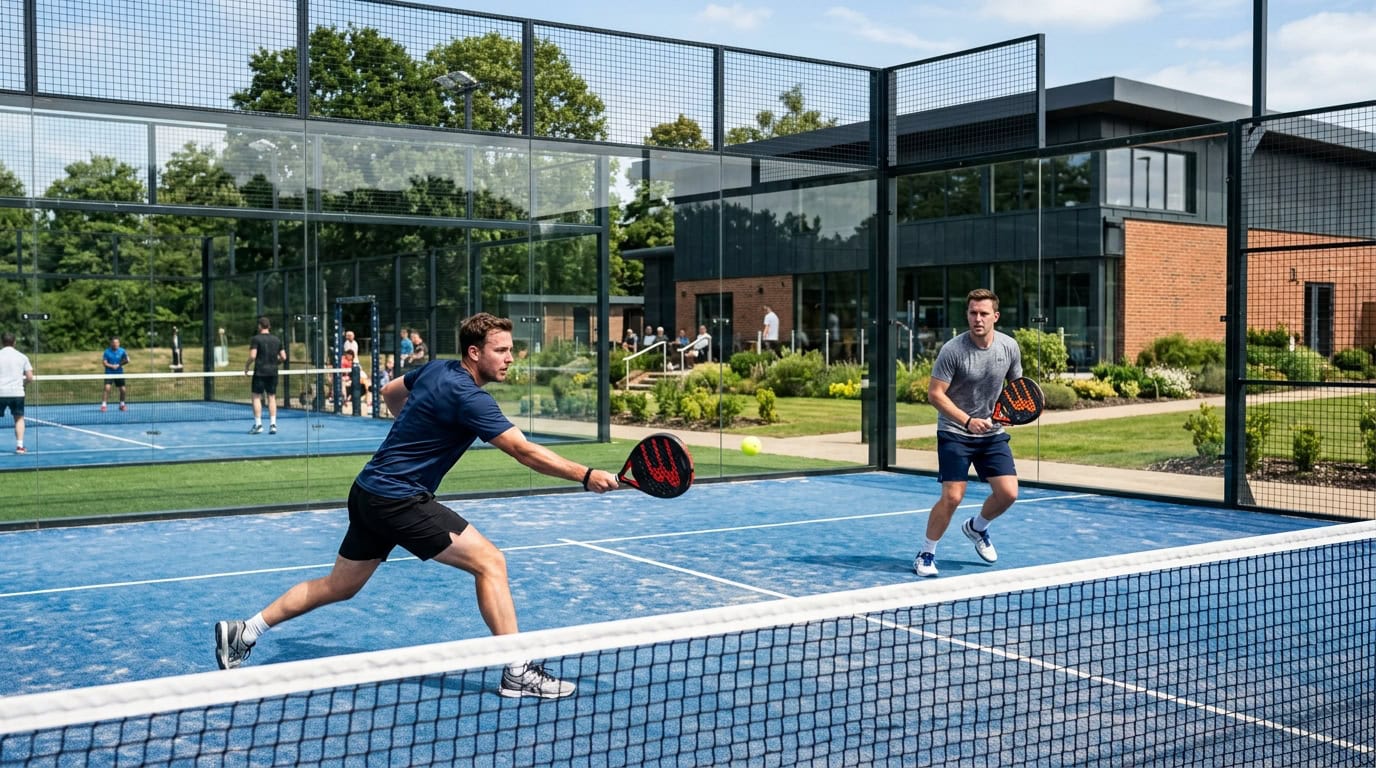
    Padel is a racket sport that sits somewhere between tennis and squash, played in doubles on a court roughly a third the size of a tennis court, enclosed by glass and mesh walls that are very much part of the game. It’s easy to pick up, brutally addictive once you do, and — unlike a lot of racket sports — genuinely welcoming to complete beginners from the first session.

    This guide covers what padel actually involves, why it’s grown so quickly across the UK, what it costs to play, and how to find a court and get started without feeling completely lost in your first game.

    What Is Padel and How Does It Differ From Tennis or Squash?

    Padel is played in pairs on an enclosed court about 20 metres by 10 metres, roughly a third the size of a tennis court. You serve underarm, the ball can bounce off the surrounding glass and mesh walls during play, and points are scored exactly as in tennis — 15, 30, 40, game. Rackets are solid, stringless paddles with holes through the face, and the ball is a slightly depressurised tennis ball that bounces lower and slower.

    The smaller court and the walls change the game completely. Because the ball stays in play longer and rallies bounce back off the glass rather than ending dead, points tend to be longer and more tactical than tennis, with less reliance on a powerful serve or a booming forehand. That’s a big part of why it’s so beginner-friendly — you can have a genuinely competitive, enjoyable game in your first hour without needing years of technique behind you.

    Squash players often pick it up fastest, since the wall-play instincts transfer almost directly, but plenty of complete beginners with no racket sport background at all get comfortable within a couple of sessions too. Because it’s always doubles, there’s also less court to cover individually than in singles tennis or squash, which makes it far more forgiving on the knees and lungs — a genuine plus if your usual exercise is weights or low-impact classes rather than anything cardio-heavy.

    Why Padel Has Exploded Across the UK

    The growth numbers are hard to overstate. According to the Lawn Tennis Association, which now governs padel development in Britain, the sport has gone from roughly 400,000 players in 2024 to 860,000 players by early 2026, with court numbers rising just as fast as demand for weekend and evening slots continues to outstrip supply in most cities.

    Part of the appeal is social rather than purely athletic. Padel is almost always played as doubles, which makes it naturally sociable in a way that solo gym sessions or one-on-one tennis aren’t — a lot of players describe it as feeling more like a get-together with friends that happens to involve exercise. Gyms and leisure operators have noticed too, and it’s now common to see padel courts bolted onto existing health clubs as a way of pulling in members who’d never normally set foot in a squash court.

    The sport’s profile has also been helped along by high-profile investment and media coverage — several Premier League footballers and other well-known names have put money into UK padel venues over the past couple of years, and televised Premier Padel tournaments have given the sport a level of visibility that most new activities take a decade to build. Local councils have taken notice too, with a growing number of leisure centres converting underused tennis or squash courts into padel courts to meet demand rather than building from scratch.

    What It Actually Costs to Play

    Court hire typically runs somewhere between £24 and £48 per hour depending on location and time slot, usually split between four players, which works out at roughly £6 to £12 each for a session — comparable to a decent group exercise class once you divide it up. Peak evening and weekend slots at popular venues get booked up fast, so early mornings and weekday afternoons tend to be both cheaper and easier to book.

    Some venues sell padel as a pay-and-play add-on with no commitment beyond the court fee, while others fold it into a wider membership alongside gym access, similar to the tiered pricing you’ll see covered in our breakdown of UK gym membership prices. If you’re already paying for a gym membership elsewhere, it’s worth checking whether padel is included or discounted before booking pay-and-play rates separately, since a bundled membership can work out considerably cheaper if you plan to play regularly.

    Rackets can be hired for a few pounds at most venues, so there’s no need to buy your own equipment until you’re sure you’ll keep playing. Balls are usually provided or available to buy cheaply on site.

    Your First Session: What to Expect

    Turning up to any new sport for the first time comes with a bit of nervous energy, and padel is no exception — you’re stepping onto a court you’ve never played on, with rules you’re still learning, in front of whoever else happens to be at the venue that evening. It’s worth remembering that almost everyone at a padel court was a beginner within the last couple of years, given how new the sport still is in the UK, so there’s far less of a gap between “regulars” and “newcomers” than you’d find at an established tennis club.

    If new environments generally make you anxious, the same advice in our guide to beating gym anxiety applies just as well here — booking an off-peak slot, going with a friend rather than joining strangers, and accepting that your first few games will involve a lot of missed shots into the glass will take most of the pressure off. Most venues also run beginner taster sessions or introductory coaching for exactly this reason, and they’re worth booking before your first proper game if you can.

    Finding a Court Near You

    Because padel has grown so quickly, availability varies a lot by area — some towns have several venues with plenty of free slots, while others have a single court that’s booked solid weeks in advance. It’s worth checking a few different venues within reasonable travelling distance rather than assuming the nearest one will have space when you want it.

    The same checklist that applies when picking any gym is just as relevant here. Our guide to choosing the right gym in the UK covers things like opening hours, contract terms and location that matter just as much for a venue you’re booking for padel as one you’re joining for regular training, and it’s worth a read before you commit to a membership built around it.

    Independent padel clubs, tennis centres that have added courts, and leisure centres run by local councils all tend to price and book very differently, so it’s worth comparing a few options rather than settling for whichever venue happens to come up first in a search. Some clubs also run ladder leagues and social mixers for members, which are worth asking about if you’re keen to play regularly without having to organise three other players every single week yourself.

    Padel Etiquette and Tips for Improving Quickly

    A few unwritten rules make padel more enjoyable for everyone. Let the ball bounce off the back or side glass before you play it where possible — trying to volley everything early is a common beginner habit that actually gives away easy points. Call the score clearly before each point so nobody’s arguing over it later, and if a ball from a neighbouring court rolls onto yours, stop play immediately rather than carrying on through it.

    The fastest way to improve isn’t power, it’s positioning. Standing close to the net as a team, letting the walls do more of the work than you’d expect, and communicating constantly with your partner about who’s taking which ball will get you playing competent, enjoyable padel far quicker than trying to smash winners from the back of the court.

    Getting Started

    Padel’s rise in the UK shows no sign of slowing down, and unlike a lot of fitness trends, it’s genuinely as much fun for a complete beginner as it is for someone who’s been playing for years. A pair of trainers, a hired racket and a booked court is all you need to try it — there’s no long build-up or expensive kit list standing between you and your first game.

    If you’re weighing up whether to add padel to your regular training routine, GymPal’s gym search makes it easy to find local venues with courts, compare what’s included, and see how it fits alongside whatever else you’re already doing for fitness.

  • What to Wear to the Gym: A UK Beginner’s Kit Guide

    What to Wear to the Gym: A UK Beginner’s Kit Guide

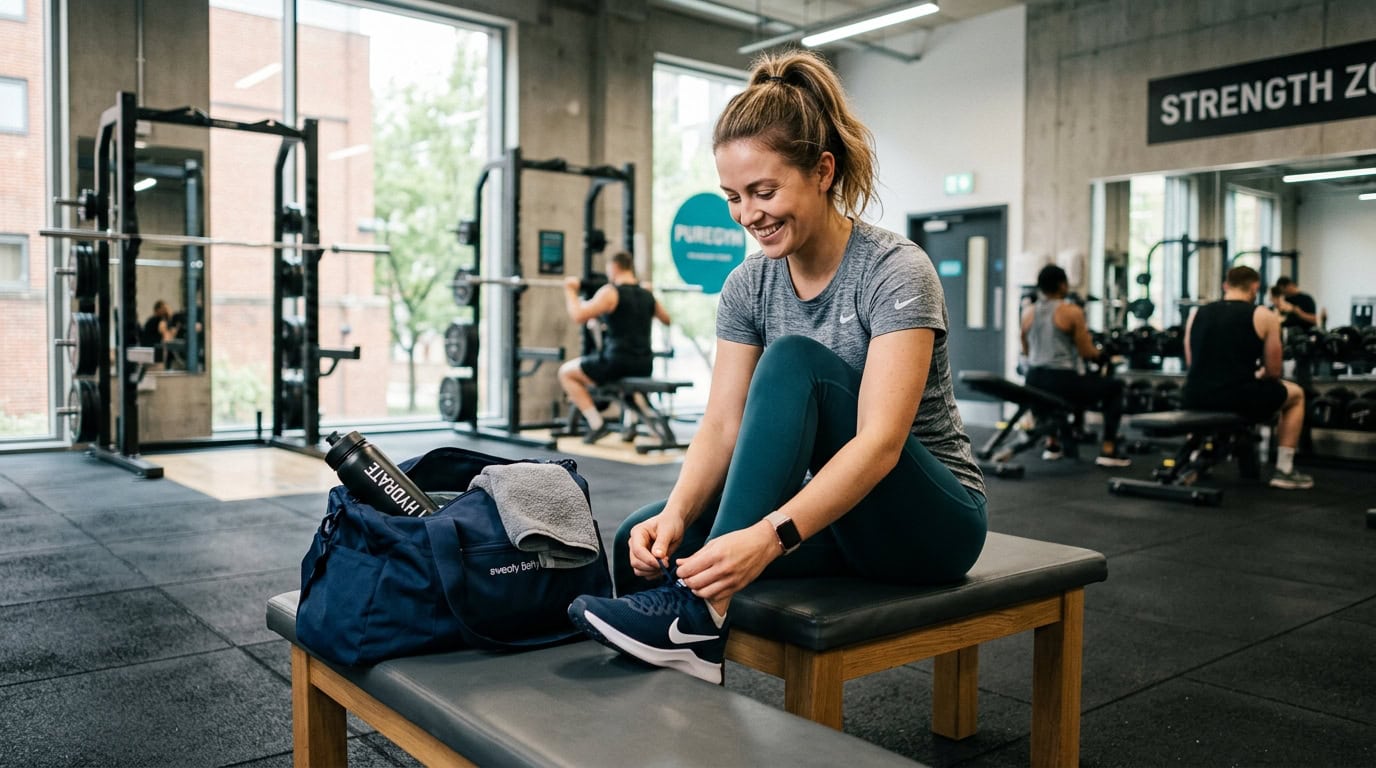
    You’ve booked your first gym session, sorted your membership, and now you’re staring into your wardrobe wondering if your old school PE kit still counts. It doesn’t. Turning up in the wrong gear is one of the fastest ways to feel out of place on your first visit — and one of the easiest things to fix before you even walk through the door.

    The good news is that gym kit doesn’t need to be expensive or complicated. You need a handful of items that do their job well, fit properly, and won’t leave you self-conscious mid-set. This guide breaks down exactly what to wear, what to pack, and what you can safely skip when you’re just starting out at a UK gym.

    Whether you’ve joined a budget chain, a boutique studio, or your local council leisure centre, the basics below will see you right for almost any type of session. None of it requires guesswork or a big spend up front — just a bit of planning before your first visit so you can walk in focused on the workout rather than worrying about what you’ve got on.

    Tops: Breathable Over Baggy

    A cotton t-shirt feels like the obvious choice, but cotton soaks up sweat and stays wet, which gets uncomfortable fast once you’re twenty minutes into a session. Look for tops made from polyester, nylon, or blended “technical” fabrics — they’re designed to wick moisture away from your skin and dry much faster between sets.

    Fit matters more than brand. A top that’s too loose can catch on gym equipment (cable machines and pull-up bars are the usual culprits), while something too tight restricts movement during stretches and overhead lifts. A relaxed, fitted t-shirt or vest is the safest starting point. Layering with a lightweight zip-up is handy for cold car parks and warm-up walks to the gym, since most UK gym floors run warm once the heating and body heat from other members kick in.

    Bottoms, Socks and Trainers: Getting the Basics Right

    For weights and general gym floor work, joggers or leggings with a bit of stretch give you full range of motion for squats, lunges, and floor exercises. Shorts work just as well and tend to be cooler if you run hot during cardio. The main thing to avoid is anything with loose drawstrings that could get caught in machines, or jeans-style denim that restricts your hips and knees. If your gym runs group classes, check whether the studio has specific requirements — some Pilates and yoga studios ask for fitted (not baggy) bottoms so instructors can check your form and alignment properly.

    Trainers are the single most important piece of gym kit, and it’s where beginners most often get it wrong. Running shoes have soft, cushioned soles built for forward motion — they’re not ideal for lifting weights, where you want a flatter, more stable base under your feet. Fashion trainers, meanwhile, often lack the grip and support needed for lateral movements in classes. For general gym use covering weights, cardio machines, and classes, a cross-training shoe is the best all-rounder. You don’t need to spend a fortune; a well-reviewed pair from a sports retailer in the £40-£70 range will comfortably last a year or more of regular use. Getting this right early also matters for injury prevention — the NHS’s guidance on gym safety flags appropriate footwear as one of the simplest ways to avoid strains and slips on gym floors.

    Don’t overlook socks. Thin cotton socks bunch up inside trainers and cause blisters within a single session, especially once your feet start sweating on cardio machines. Sports socks made from a cotton-polyester blend, ideally with some cushioning at the heel and ball of the foot, are worth the extra couple of pounds. If you’re planning to use a leisure centre gym that’s attached to a swimming pool, pack a separate pair of flip-flops for the changing room floor and showers — most UK leisure centres strongly recommend this for hygiene reasons.

    Budget Breakdown: What a Starter Kit Actually Costs

    One of the biggest myths about gym kit is that you need to spend big to get started. Here’s a realistic breakdown for outfitting yourself from scratch at a UK sports retailer:

    • Two technical t-shirts or vests — £10-£20 each
    • One pair of leggings or joggers, plus a pair of shorts — £15-£25 each
    • Cross-training trainers — £40-£70
    • Sports socks (multipack) — £8-£12 for five pairs
    • Gym bag — £15-£25, or use something you already own
    • Water bottle and padlock — £5-£10 combined

    All told, you’re looking at roughly £110-£180 for a complete starter kit, and that’s before any sales or own-brand ranges, which can bring it down further. Compare that to a typical monthly membership and it’s a small one-off cost relative to what you’ll spend on the gym itself over a year. Own-brand ranges from the major UK sports retailers are perfectly good quality for beginners — you don’t need premium branded kit to get a proper workout in.

    Matching Kit to the Type of Session

    Not every visit calls for the same outfit. If you’re spending most of your time on cardio machines, breathable, lightweight kit and trainers with good cushioning will keep you comfortable over longer sessions. Strength training on the weights floor benefits from flatter-soled trainers and slightly looser bottoms that won’t restrict your hips during squats and deadlifts. Group classes vary the most — HIIT and circuit classes need kit that copes with fast direction changes, while studio-based classes like Pilates or barre often work best in fitted layers so instructors can see your form. If you’re not sure what a class involves before you book, a quick call to the gym or a look at the class description on their booking system will usually tell you.

    What Goes in Your Gym Bag (and What You Can Skip)

    Beyond what you’re wearing, a few extras make your first few sessions run smoother:

    • A water bottle — most UK gyms have refill stations, so you don’t need to buy drinks on site.
    • A small towel — many gyms require one for hygiene reasons, especially on shared benches and mats.
    • A padlock — if your gym uses coin-free lockers, you’ll usually need your own lock.
    • Deodorant and a spare top — useful if you’re heading straight from the gym to work or elsewhere.
    • Headphones — not essential, but they help if you’re feeling a bit self-conscious and want to focus inward rather than on who’s watching. Plenty of people walking in for the first time feel that way, and it fades fast once you’ve settled into a routine — our guide to beating gymtimidation has more on that if nerves are holding you back from booking your first visit.

    It’s just as useful to know what you can leave off the shopping list. Lifting gloves, wrist wraps, resistance bands, and gym-specific supplements can all wait — most gyms provide the equipment you need to get started, and specialist kit is far easier to choose once you know which exercises you actually enjoy. The same goes for a top-of-the-range gym bag or a smartwatch; a rucksack you already own will do the job just fine for the first month. Technical fabrics do need slightly different laundry care to hold up, though: wash on cold or lukewarm, skip the fabric softener (it clogs the fibres that wick moisture away), and air dry where possible rather than tumble drying, which breaks down the elastane in leggings over time.

    If you’re still weighing up which gym to join in the first place, it’s worth sorting that before you start buying kit around a specific type of workout. Our checklist for choosing a gym in the UK covers what to check on a tour, from equipment condition to class timetables, so you don’t end up with kit suited to a gym that isn’t right for you.

    Settling In Once You’re Kitted Out

    Once you’ve got the basics sorted, the rest comes down to confidence rather than kit. New members often worry about looking out of place, but most regulars are far too focused on their own session to notice what anyone else is wearing. Knowing a few of the unwritten rules helps too — our guide to UK gym etiquette covers things like re-racking weights and wiping down machines, which are the small habits that help you blend in from day one.

    Give yourself a couple of sessions to work out what actually suits your body and your workout style before buying anything else. Kit preferences are personal, and what works for the person on the next treadmill might not work for you.

    Final Thoughts

    Getting dressed for the gym isn’t complicated once you strip it back to the basics: breathable layers, bottoms that let you move, and trainers built for the gym floor rather than the pavement. Everything else is optional extras you can add as you go.

    If you haven’t found your gym yet, search GymPal to compare facilities, opening hours, and membership prices near you, so you can walk in on day one already feeling like you belong.

  • Outdoor Bootcamps UK: What to Expect and What They Cost

    Outdoor Bootcamps UK: What to Expect and What They Cost

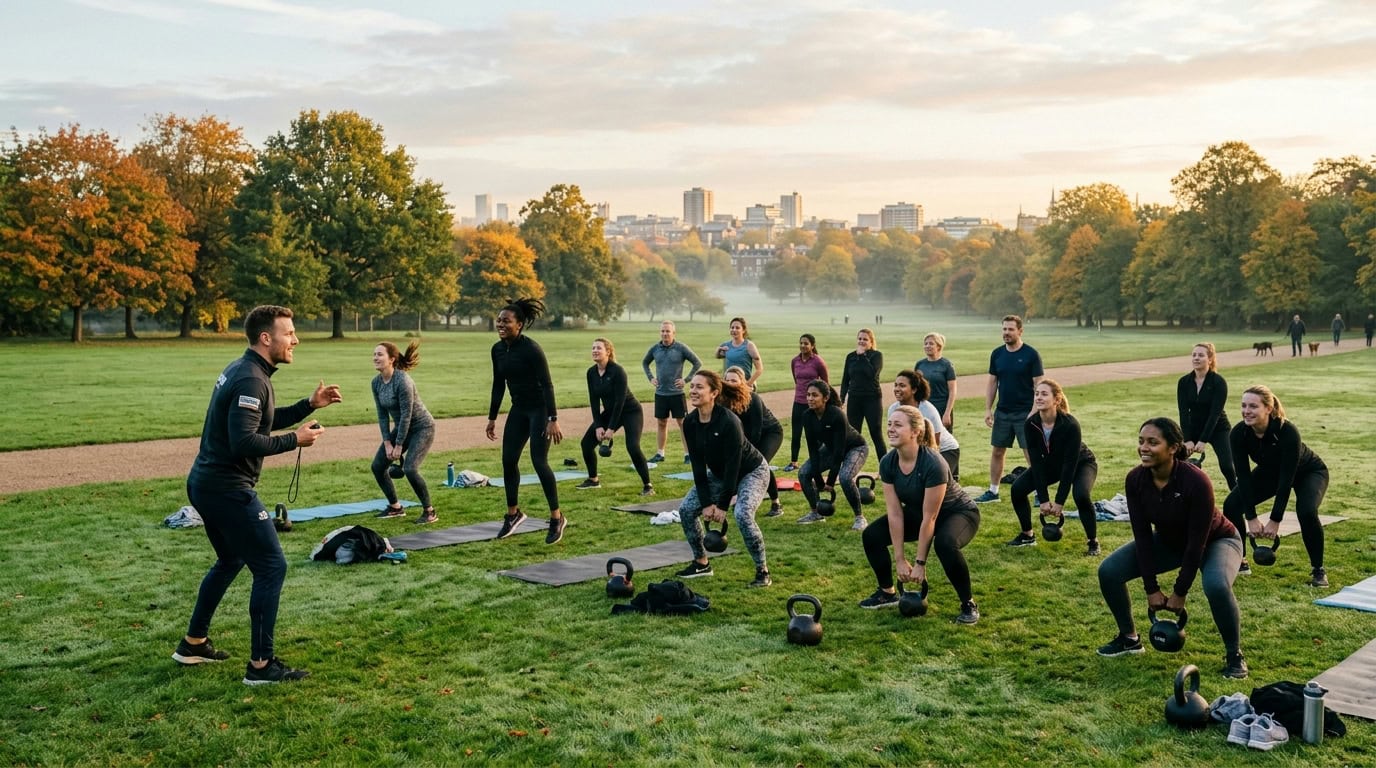
    If your idea of exercise doesn’t involve a squat rack, a bootcamp might be exactly what you’re after. Outdoor fitness bootcamps have quietly become one of the fastest-growing ways Brits are getting fit, blending military-inspired drills, circuit training and a healthy dose of mud with the kind of group energy a solo treadmill session just can’t match. You’ll find sessions running in parks from Bristol to Bradford, usually before work, at lunchtime, or on weekend mornings when everyone else is still in bed.

    But bootcamps aren’t for everyone, and they’re not all run the same way. Some are polished, well-insured operations with qualified instructors and progressive programming. Others are a bloke with a whistle and a bag of cones. Before you hand over your card details for a block booking, it’s worth knowing what you’re actually signing up for.

    This guide covers what a typical session looks like, who actually runs them, what it costs across the UK, what to bring, and how to spot a bootcamp that’s actually worth your time and money.

    What Actually Happens at a Bootcamp Session

    A standard UK bootcamp runs 45 to 60 minutes and follows a circuit format: a warm-up, several rounds of exercises performed in stations or intervals, and a cool-down. Expect a mix of bodyweight moves (press-ups, burpees, lunges), kettlebells or sandbags, sprint intervals, and partner drills like resistance-band rows or tyre flips if the venue has the kit. Good instructors scale everything up or down depending on who’s turned up that day, so a total beginner and a half-marathon runner can train side by side without either of them being short-changed.

    A typical circuit might rotate through six or eight stations: box jumps or step-ups, battle rope waves, sandbag carries, resistance-band rows, sprint shuttles between cones, and a core finisher like plank holds or mountain climbers. Instructors usually run 30-to-45-second work intervals with short rests, so the whole session feels less like “exercise” and more like it’s over before you’ve had time to dread it. Some operators build in a running warm-up loop around the park first, both to raise the heart rate and to make use of the space before the equipment-based stations start.

    Who Actually Runs Bootcamps in the UK

    The bootcamp scene in the UK ranges from national franchises to independent local operators. British Military Fitness (BMF) is probably the best-known name, running instructor-led outdoor sessions in parks across London, Manchester, Birmingham and beyond, with a format built around military-style circuit drills. Alongside the big franchises, most towns have at least one independent PT or small team running park-based bootcamps, often advertised through local Facebook groups or word of mouth rather than glossy marketing. Some gyms and studios also run “bootcamp” as an indoor class format using the same interval-and-circuit structure without the mud, which is worth knowing if you like the training style but not the British weather.

    Independent operators are often cheaper and more flexible than franchises, but the quality varies far more — which is exactly why checking qualifications and insurance (covered further down) matters more here than it would when signing up to a well-established chain.

    Most sessions are held outdoors year-round, rain or shine, which is part of the appeal but also the catch — you will get wet, muddy and cold at some point between October and March. Some operators move indoors to a sports hall or gym studio during the worst of winter, so it’s worth asking about their wet-weather policy before you commit to a multi-week pass.

    How Much Do UK Bootcamps Cost

    Pricing varies more than you’d expect for what’s essentially a park and some cones. As a rough guide across the UK in 2026:

    • Pay-as-you-go drop-in: £8–£15 per session
    • Weekly membership (2–3 sessions a week): £30–£55 per month
    • Unlimited monthly membership: £60–£100 per month
    • Block bookings (6–12 weeks, common for “transformation” style camps): £120–£300 upfront

    London and the South East sit at the top end of that range, while sessions in smaller towns and cities across the North and Midlands tend to land closer to £8–£12 a session. Many operators also offer a free trial session, which is worth taking up before you commit to anything longer than a single class — it’s the fastest way to judge coaching quality and group size.

    Bootcamp vs Gym: Which Suits You Better

    Bootcamps and traditional gyms solve different problems, and plenty of people end up doing both. A gym gives you control — train at 6am or 9pm, follow your own programme, and skip the small talk. A bootcamp gives you structure, accountability and a coach shouting your name when you want to stop three burpees early, which for a lot of people is the difference between a habit that sticks and a gym membership that quietly lapses in February.

    If you’re drawn to the high-intensity, no-equipment-needed style of training but want the option of doing it indoors when the weather turns, it’s worth comparing bootcamps against HIIT classes, which run on a similar interval-based format but happen in a studio with more consistent programming week to week.

    What to Wear and Bring

    Because most bootcamps happen outdoors regardless of season, kit matters more here than at your average gym class. A few essentials:

    • Trail or off-road trainers with decent grip — road running shoes slip on wet grass and mud
    • Layers you can strip off once you’ve warmed up, rather than one thick coat
    • A waterproof outer layer for autumn and winter sessions — this isn’t optional if you’re training through a British winter
    • A towel and a change of clothes for the drive or walk home, especially if there’s no changing facility on site
    • A reusable water bottle — most parks don’t have taps nearby

    Gloves are worth packing between November and February too, particularly if kettlebells or battle ropes are part of the programme — cold hands and heavy grip work don’t mix well.

    Injury Prevention and Staying Safe Outdoors

    Bootcamp injuries usually come from two things: uneven ground and going too hard, too soon. Grass hides tree roots, rabbit holes and uneven camber that a treadmill never will, so a proper ankle warm-up and a scan of the terrain before any sprint drill is worth the extra thirty seconds. Beginners are also the most likely group to push through fatigue in a group setting purely because everyone else seems to be coping fine — a good instructor will actively check in on new faces rather than assuming silence means everything’s fine.

    If you’re returning from a long break or managing an existing niggle, it’s worth having a quiet word with the instructor before the session starts rather than during the middle of a circuit. Most reputable operators will happily scale exercises down or suggest a lower-impact alternative on the spot — box step-ups instead of jump squats, or a plank hold instead of full burpees, for example.

    Finding a Reputable, Well-Run Bootcamp

    Not every bootcamp is run to the same standard, so a bit of due diligence before you pay for a block booking saves both money and injuries. Check that instructors hold a recognised qualification (Level 2 or 3 Gym Instructor/Personal Trainer as a minimum) and that the operator carries public liability insurance — any legitimate business will confirm this without hesitation if you ask. It’s also worth watching a session from the sidelines first: a well-run camp keeps group sizes manageable enough that the coach can actually see and correct everyone’s form, rather than just shouting motivational phrases from the front.

    If bodyweight training is what draws you to bootcamps in the first place, it’s worth reading up on calisthenics training as well, since many of the same movement patterns — press-ups, pull-ups, squats — form the backbone of most bootcamp programming, just with a coach and a group around you instead of a solo session in the park. GymPal’s directory is a straightforward way to compare bootcamps, ratings and prices in your area at askgympal.co.uk before you commit to anything.

    Bootcamp Fitness Tests and Challenges

    Plenty of bootcamp operators build towards a periodic fitness test or timed challenge — think a set circuit against the clock, repeated every 6 to 8 weeks so members can track progress. It’s a genuinely useful way to see improvement that the mirror doesn’t always show. If you enjoy that competitive, benchmark-driven side of training, it’s worth also looking at HYROX, the UK’s fastest-growing fitness race, which has become a natural next step for a lot of bootcamp regulars who want a bigger event to train towards.

    According to the NHS’s physical activity guidelines for adults, most people should aim for at least 150 minutes of moderate activity or 75 minutes of vigorous activity a week, plus strength work on two or more days — a twice-weekly bootcamp habit gets you a long way towards both targets in one go.

    Is a Bootcamp Right for You?

    Bootcamps work best for people who thrive on group energy, need a coach to push them past the point they’d normally stop, and don’t mind training outdoors in all weathers. If you’d rather train at your own pace, indoors, on your own schedule, a standard gym membership is probably the better fit — though there’s nothing stopping you from doing both.

    Either way, the best way to find out is to turn up to a free trial session near you. Search GymPal to compare bootcamps, gyms and fitness classes in your area, check real reviews, and book a taster before you commit to a membership.

  • HYROX UK: What It Is, What It Costs, How to Train

    HYROX UK: What It Is, What It Costs, How to Train

    If you’ve noticed a queue forming for the sled at your local gym, or spotted a “HYROX Training” class suddenly appear on the timetable, you’re not imagining it. HYROX has gone from a niche fitness event that barely registered outside Germany to the fastest-growing mass-participation fitness race in the UK, with sold-out arenas in London, Manchester, Glasgow and Birmingham and waiting lists for some gym-based training programmes.

    It’s part race, part strength test, and part community event — and it’s changing what people expect from a gym membership. Where CrossFit boxes and F45 studios paved the way for competitive group training, HYROX has given people something even simpler to aim for: a fixed, standardised event with a finish time you can actually compare against your mates, your PB, or a stranger in Sheffield.

    This guide covers exactly what HYROX involves, what it costs to enter and train for in the UK, and how to actually prepare for one without wrecking your knees in the process.

    What Is HYROX, Exactly?

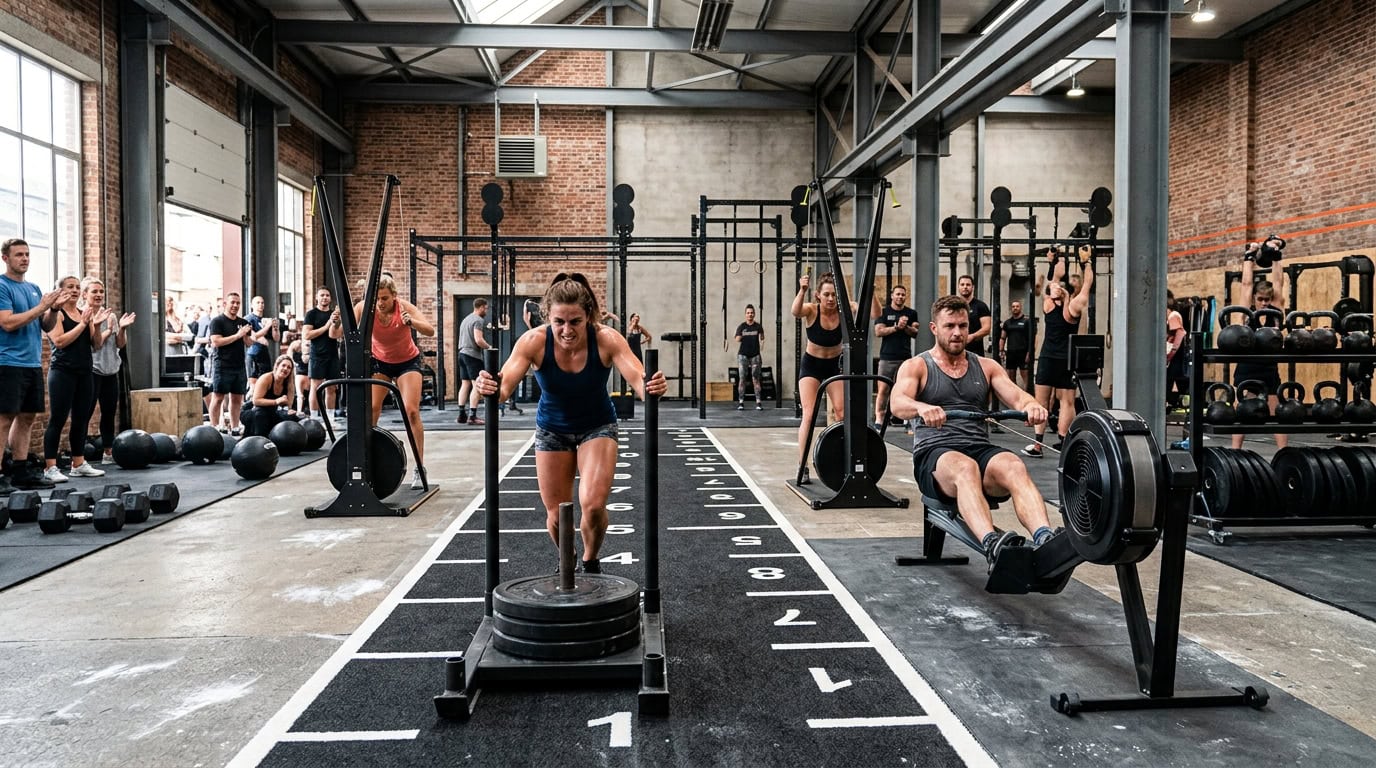
    HYROX is a fitness race with a fixed format that never changes, regardless of which city or country you compete in. Every athlete runs 8 x 1km, alternating each run with a functional movement station. The eight stations are: SkiErg, sled push, sled pull, burpee broad jumps, rowing, farmers carry, sandbag lunges, and wall balls.

    That’s the entire appeal — because the format is identical everywhere, your finishing time actually means something. A 75-minute HYROX in Leeds is directly comparable to a 75-minute HYROX in Berlin. There’s no judging, no subjective scoring, just a clock. Competitors can enter as individuals, in doubles, or as part of a relay team, and there are separate divisions for open, pro, and age-group categories, so a complete beginner and a seasoned athlete can both toe the same start line without it being pointless for either of them.

    The UK season now runs from roughly September through to June, with events held at major arenas in London, Manchester, Glasgow, Birmingham and Nottingham. Doubles is the most popular format for first-timers, since you can split some of the station load with a training partner and it takes the edge off the running for anyone who isn’t yet confident going the full distance solo. Plenty of gym-based training groups exist purely to pair beginners up for their first doubles entry.

    Why Is HYROX Exploding in UK Gyms?

    Three things have converged to make HYROX the UK’s fitness obsession of the moment. First, it gives people a concrete goal with a date attached, which is a far stronger motivator than “get fitter” ever was. Second, it’s genuinely achievable — you don’t need to be able to do a muscle-up or run a sub-20-minute 5K to finish one, just to train consistently for a few months. Third, gyms figured out that HYROX-specific classes fill a gap between traditional weights training and pure cardio, and members were willing to pay for it.

    Independent gyms and budget chains alike have responded by installing sleds, SkiErgs and wall ball targets, and building dedicated “hybrid training” or “HYROX prep” classes into their timetables. If you’re hunting for a gym that’s kitted out for this kind of training, GymPal’s gym directory lets you filter by facilities so you can check for sleds, rowers and functional training rigs before you commit to a membership.

    HYROX vs CrossFit vs F45: What’s the Actual Difference?

    People often lump HYROX in with other functional fitness formats, but the training style is genuinely different. If you’ve tried a CrossFit WOD, you’ll know the workouts change daily and often mix Olympic lifting with gymnastics movements — brilliant for building broad, unpredictable fitness, but it doesn’t map directly onto a single event you’re training towards.

    HYROX training, by contrast, is entirely specific. You’re not guessing what today’s session involves — you’re building the exact engine and strength endurance needed to run eight kilometres and push a sled while your legs are already screaming. That specificity is exactly why so many CrossFit athletes and F45 regulars have started cross-training for HYROX alongside their usual sessions: it fills a gap their existing programming doesn’t cover, particularly around sustained running under fatigue.

    What Does HYROX Training Actually Cost in the UK?

    Race entry is the first cost to budget for. A standard individual open-division entry typically runs from around £120 to £160 depending on how early you book and which UK city you enter (London and Manchester events sell out fastest and tend to sit at the higher end). Doubles and relay entries are usually cheaper per head.

    Training costs vary far more. If your existing gym already has the right kit, you might pay nothing extra beyond your normal membership — many PureGym, The Gym Group and independent sites now have sleds and rowers on the main gym floor. Dedicated HYROX-prep classes at specialist studios typically cost between £15 and £25 per session if you’re paying pay-as-you-go, or you can expect to pay £70–£120 a month for unlimited access at a studio built specifically around hybrid training. Compression gear, grip tape and decent trainers with lateral stability will add another £80–£150 as a one-off cost, though none of it is compulsory to get started.

    How to Train for Your First HYROX

    Most coaches recommend a minimum of 10–12 weeks of dedicated preparation if you’re coming from a general fitness background, longer if running isn’t already part of your routine. The training splits roughly into three pillars: running capacity, strength endurance on the eight stations, and — crucially — the ability to run well with fatigued legs, which is a completely different skill from running fresh.

    A sensible weekly structure looks like two to three running sessions (mixing easy aerobic runs with interval work), two strength-endurance sessions built around the actual HYROX stations, and one longer “simulation” session every couple of weeks where you run and push through a shortened version of the full race. If your gym doesn’t run dedicated HYROX classes yet, a well-structured HIIT class that combines cardio intervals with functional movements is a solid substitute for the strength-endurance stations, and it’s a sensible way to build the base fitness a first race demands before you commit to anything more specialist.

    Build the running volume gradually rather than all at once, and don’t neglect strength work in the process — the sled stations punish anyone who’s only ever trained on a treadmill.

    Common Beginner Mistakes to Avoid

    The single biggest mistake is treating race day as a strength competition rather than a pacing problem. Athletes who sprint the first two kilometres and attack the sled push at full effort almost always fall apart by station five. Going out 10–15 seconds per kilometre slower than you think you need to is nearly always the faster overall strategy.

    The second mistake is neglecting running altogether. It’s tempting to spend all your gym time on the flashy functional stations because they feel more like “training,” but running makes up roughly half the total time on the clock for most finishers, so undertrained legs will cost you more than a slow sled push ever will. The NHS’s physical activity guidelines for adults recommend at least 150 minutes of moderate aerobic activity plus two strength sessions a week as a baseline, and hitting that consistently for a few months beforehand will get most beginners a long way towards being race-ready. Finally, don’t skip a proper warm-up on race day — cold hip flexors and a stiff lower back going straight into burpee broad jumps is a fast route to a pulled muscle.

    Why UK Gym Owners Are Paying Attention Too

    It isn’t just members chasing race times — independent gym owners have noticed that HYROX-curious members tend to train more often and stick around longer than the average membership, simply because they have a date on the calendar to work towards. A few sleds, a couple of SkiErgs and a wall ball rack is a relatively modest kit investment compared to a full CrossFit rig, which makes adding a “hybrid” or “HYROX prep” class one of the more affordable ways for a small independent gym to compete with the bigger budget chains on programming rather than price.

    Members who are training for a specific event are also far easier to keep engaged month to month, since the class itself becomes the retention tool — nobody wants to fall behind their training group two months out from race day. For gyms already running functional fitness or bootcamp-style sessions, layering in HYROX-specific pacing and station work is often a small tweak to existing programming rather than a wholesale change.

    Finding the Right Gym to Train For HYROX

    You don’t need to join a specialist studio to prepare properly, but you do need consistent access to a sled, a rower or SkiErg, and space to do farmers carries and sandbag work. Before signing up anywhere, it’s worth checking whether the gym runs functional fitness or hybrid-style classes, or whether you’ll be building your own programme on the main floor.

    GymPal’s gym search makes it easy to compare facilities, opening hours and class timetables at gyms near you, so you can find somewhere properly set up for HYROX-style training rather than discovering the sled is permanently out of action once you’ve already signed a contract.

    The Bottom Line

    HYROX has succeeded where a lot of fitness trends fail because it gives people something concrete to train towards without demanding elite-level skill to take part. Whether you’re chasing a sub-70-minute finish or just want a reason to actually stick to a training plan through a British winter, it’s one of the more sensible fitness crazes to have taken over UK gyms in years. Find a gym with the right kit, respect the running as much as the stations, and give yourself more time to prepare than you think you need — your first finish line will feel very well earned.

  • Wild Swimming UK: The Complete Beginner’s Guide

    Wild Swimming UK: The Complete Beginner’s Guide

    There’s a moment, just as you lower yourself into a cool British river or lake for the first time, when your body decides it absolutely does NOT want to be there. Your breathing quickens. Your skin prickles. Your brain fires off a rapid series of complaints. And then — if you hold your nerve — something extraordinary happens. Your body adapts, your breathing slows, and you feel more alive than you have in months.

    Wild swimming — swimming in natural, unchlorinated bodies of water — has exploded in popularity across the UK. From the Lake District to the Cornish coast, the Scottish lochs to the chalk streams of Hampshire, more Britons are trading the chlorinated lane for open water than at any point in living memory. You don’t need to be a cold-water zealot or an endurance athlete to get started. You just need the right kit, a solid understanding of safety, and the courage to get your feet wet.

    This guide covers everything you need to know before taking the plunge — what wild swimming actually is, why it’s worth the discomfort, how to stay safe, what to wear, and where to find the best spots across the UK.

    What Is Wild Swimming (and How Is It Different from Pool Swimming)?

    Wild swimming is any swimming that takes place in natural, outdoor water: lakes, rivers, reservoirs, the sea, and even waterfalls and quarry pools. It’s deliberately unstructured — no lane ropes, no chlorine, no turning at the wall. Just you, the water, and whatever the British weather decides to throw at you that morning.

    The term is sometimes used interchangeably with “open water swimming,” though open water tends to refer to organised events in natural water — triathlons, charity swims, sporting competitions — while wild swimming usually means self-led dips out in the countryside or along the coast.

    The practical differences from pool swimming are significant:

    • Temperature: UK wild swimming water ranges from around 4°C in winter to 20°C in a warm August. Even in peak summer, most UK lakes sit at 14–18°C — considerably colder than the 28°C of your local leisure centre pool.
    • Currents and hazards: Rivers can carry strong flows; tides complicate sea swimming; underwater obstacles exist where you can’t see them.
    • No lifeguard: You are entirely responsible for your own safety. This isn’t scary — it’s just a fact that changes how you prepare.
    • Mental challenge: Cold water shock is a real physiological response, not just discomfort. Understanding it before you get in is non-negotiable.

    The Health Benefits: Why Wild Swimming Is Worth the Cold

    Wild swimming’s popularity isn’t just cultural. According to Sport England’s Active Lives research, swimming remains one of the most participated-in physical activities in the UK — and the shift to outdoor, natural water has accelerated dramatically over recent years as people chase benefits that go beyond fitness.

    The physical gains are substantial. A single open water session combines full-body cardiovascular effort with the extra metabolic demand of cold water acclimatisation — your body burns additional calories simply maintaining its core temperature. The low-impact nature of swimming means it’s suitable for people recovering from injury, managing joint pain, or returning to exercise after a long break.

    The mental health case is even more compelling. Research has documented cases where regular cold water swimming significantly reduced symptoms of depression and anxiety. The combination of cold water, natural surroundings, and physical exertion produces a powerful cocktail of endorphins, adrenaline, and dopamine that many wild swimmers describe as more intense than any gym-based high. Even a 10-minute dip in a Derbyshire reservoir can reset stress levels in a way that an hour of indoor cardio rarely manages.

    Regular cold water exposure is also linked to better sleep, potentially improved immune function, and enhanced cardiovascular conditioning. Wild swimmers frequently cite sleep quality as one of the biggest unexpected payoffs — the body’s post-swim recovery process seems to promote deeper, more restorative rest. And for anyone who already knows that [swimming for fitness](https://askgympal.co.uk/blog/swimming-for-fitness-uk/) is one of the most efficient full-body workouts available, the open water version simply turns the intensity dial up a notch.

    Essential Safety: What Every Beginner Must Know Before Getting In

    Wild swimming is genuinely safe when approached correctly — and genuinely dangerous when it isn’t. The Royal National Lifeboat Institution responds to thousands of UK water incidents every year, and the majority involve people who underestimated conditions or went in without preparation. These rules are non-negotiable:

    Never swim alone as a beginner. Bring a friend, join an organised group (more on that below), or at minimum tell someone exactly where you’re going and when you’ll be back.

    Cold water shock is the biggest killer. When you enter cold water quickly, your body gasps involuntarily — and if your face is underwater, that gasp can drown you within seconds. Always enter slowly: wade in up to your chest before submerging your face, giving your body several minutes to adapt. Never jump or dive into cold water you haven’t acclimatised to.

    Know your exit before you enter. Survey the bank, shore or pool edge before you get in. Slippery rocks and steep banks are much harder to judge once you’re cold, breathless, and your hands have gone numb.

    Check water quality before you go. Pollution in UK rivers and coastal waters is a serious concern. The Environment Agency’s Swimfo database rates water quality at designated bathing spots across England — check it before swimming anywhere new. Avoid spots near farm drainage outflows, sewage overflows, or immediately after heavy rainfall.

    Carry a tow float. A brightly coloured inflatable tow float clips around your waist and keeps you visible to boats and other water users. It provides a rest aid and dramatically increases your visibility. They cost £15–25 and are non-negotiable once you swim regularly.

    Know when to get out. Shivering in the water is your body’s warning sign. When serious, uncontrollable shivering starts, get out. Hypothermia is a risk even in August if you push past your body’s tolerance.

    What to Wear: A Wild Swimming Kit Guide

    You don’t need a great deal of expensive kit to start — but the wrong choices (or no kit at all) make an already cold experience genuinely miserable. Here’s what’s worth investing in from day one:

    Wetsuit (recommended for most UK waters): A 3mm or 4mm full wetsuit won’t eliminate the cold — you’ll still feel it vividly — but it buys you significantly more time in the water before your body starts shutting down. Many outdoor activity centres near popular swimming spots offer wetsuit hire if you don’t want to buy before you know you’re committed.

    Swim hat: A neoprene swimming hat or thick silicone cap is essential — you lose a disproportionate amount of body heat through your head. Many experienced wild swimmers double up with a standard latex cap underneath for extra insulation.

    Open water goggles: Standard pool goggles often leak in choppy conditions or when diving. Open water-specific goggles have a wider sealing surface and UV tinting for bright outdoor conditions.

    Changing robe: Possibly the most impactful UK wild swimming innovation of the last decade. A thick changing robe lets you strip off and dress in a car park, on a beach, or beside a reservoir without freezing in the process. They run £90–200, but virtually every regular wild swimmer in the country uses one. The post-swim warmth they provide is genuinely transformative.

    Neoprene gloves and socks: Optional in summer, close to essential when the water drops below 12°C. Cold hands lose motor function quickly — neoprene gloves can extend a comfortable swim by 15–20 minutes in colder conditions.

    Where to Wild Swim in the UK: The Best Areas to Explore

    The UK is genuinely blessed with wild swimming opportunities. Here are some of the most celebrated areas, from beginner-friendly lakes to more adventurous coastal spots:

    Lake District, Cumbria: Windermere, Ullswater, and Coniston Water are the most accessible entry points, but dozens of smaller tarns reward those willing to walk. The Lakes offer some of the finest freshwater swimming in Europe — clear water, relatively easy access points, and well-established swimming communities at nearly every main body of water.

    Dartmoor, Devon: The River Dart has carved out a series of pools and gorges that attract swimmers from across the country. Spitchwick Common on the East Dart is one of England’s most popular wild swimming spots — accessible, well-signed, and stunning in warm weather.

    Peak District, Derbyshire: Ladybower Reservoir and the River Derwent are the headline acts, though access can vary — always check landowner permissions carefully before getting in. The Monsal Trail area also has river pools worth exploring.

    Scottish Lochs: Loch Lomond, Loch Morlich near Aviemore, and countless Highland lochs offer spectacular swims. Scottish water temperatures are unforgiving even in August, so a wetsuit here moves from optional to essential.

    Cornwall and Devon coasts: Sea swimming along the South West Coast Path puts iconic coves and beaches within reach. Water quality is generally better in the far west, away from larger towns. The Fal Estuary and Helford River are particular favourites for those who prefer calmer water.

    Thames Valley: The upper Thames around Wallingford, Abingdon, and Lechlade has a long wild swimming tradition. The region is also home to some excellent [outdoor lidos](https://askgympal.co.uk/blog/outdoor-lidos-uk-guide-open-air-pools/) if you want the open-air experience with the reassurance of lifeguards and a designated swimming area.

    Joining a Wild Swimming Group: The Fastest Route to Confidence

    The quickest route to confident, safe wild swimming is joining a local group. The UK has thousands of them — most are free to join and operate through Facebook, Meetup, or WhatsApp. Swim England affiliated open water clubs exist in most counties and run organised sessions with appropriate safety provision.

    Experienced members carry the local knowledge that no guide can replicate: where the good entry points are, which sections of river to avoid after rain, where currents run strongest, and which spots are worth the trek. That accumulated knowledge is worth more than any kit purchase.

    Wild swimming communities are also famously welcoming and social — one of the sport’s underrated draws. Groups typically meet year-round, including on grey January mornings when the water is at its coldest and the post-swim euphoria is at its most extreme. The shared misery (and shared triumph) creates a particular kind of friendship.

    If you’re brand new to swimming altogether — rather than just new to open water — building your confidence in a pool first is absolutely the right move. [Adult swimming lessons](https://askgympal.co.uk/blog/adult-swimming-lessons-uk/) are far more widely available than most people assume, with most leisure centres running beginner courses for adults at around £50–80 for a six-session block. The technique and water confidence you gain transfers directly to open water.

    Understanding Afterdrop: The Danger People Don’t Expect

    Afterdrop catches beginners out regularly and is the most misunderstood phenomenon in cold water swimming. Here’s what happens: when you exit cold water, your core temperature continues to fall for up to 40 minutes after you’ve left the water, as cold blood from your extremities recirculates to your core. This is why you can feel fine immediately after a swim and then feel dramatically worse 20 minutes later — sometimes frighteningly so.

    The practical implication is counterintuitive: warm up before you get dressed. Get into your changing robe, have a hot drink, and let your body temperature stabilise before you start dressing or driving. Never rush straight into a car and drive home immediately after a cold water swim — sit, warm up, and wait for the afterdrop to pass.

    Eating something before your swim also matters more than most beginners realise. Your blood sugar affects how quickly your body can generate heat in recovery — going into cold water on an empty stomach slows your warming time and increases risk during the afterdrop phase.

    Ready to Get Started? Find Swimming Venues Near You

    Wild swimming spots require research, careful water quality checks, and good local knowledge. For organised, structured swimming — outdoor pools, lidos, leisure centre pools where you can build fitness and technique before heading outdoors — GymPal searches thousands of UK swimming venues, filterable by location and facility type, so you can find the right option wherever you are in the country.

    Whether you’re looking for a pool to build your swimming base, an outdoor lido for the open-air experience with lifeguard cover, or an aquatics centre with coaching on offer, GymPal covers the full range of UK swimming facilities. Start there, build your confidence, and then take it outside.

    The cold water is waiting. And it’s worth every second of the discomfort.