Tag: Mental Health

  • Gym Motivation When the Clocks Go Back: A UK Guide

    Gym Motivation When the Clocks Go Back: A UK Guide

    Here’s a date to put in your diary that has nothing to do with payday: Sunday 25 October. That’s when the clocks go back in the UK, and with it goes an hour of daylight you were relying on to get your training done. One week you’re finishing a 6pm session in daylight, the next you’re fumbling for your keys in the dark at half four.

    It’s not just in your head. Gym check-in data across the UK shows a consistent dip in attendance through late October and November, right as New Year’s resolutioners are still months away from flooding the car park. The people who keep training through this stretch aren’t more disciplined than everyone else — they’ve just built a routine that doesn’t depend on daylight to work.

    This guide covers exactly how to do that: shifting your schedule before the clocks change rather than after, making the dark mornings and evenings work in your favour, fuelling a body that would rather stay under the duvet, and building a winter routine sturdy enough to survive a wet Tuesday in November.

    None of what follows requires a New Year’s-style overhaul. It’s a handful of small, boring adjustments made now, while you’ve still got daylight to plan by, rather than in a panic once the evenings have already caught you out.

    Why Motivation Drops the Moment the Clocks Go Back

    The clock change itself is only an hour, but the psychological effect is bigger than that. Suddenly it’s dark on the walk to the gym and dark on the walk home. Your body’s natural cortisol and melatonin rhythms shift with the reduced daylight, which is part of why so many of us feel sluggish and less motivated to move in winter — not weak-willed, just biologically nudged towards hibernating on the sofa.

    There’s also a simple logistics problem. A lot of people train around work, which means early mornings or after-work evenings — exactly the windows that go dark first. If your routine only works when it’s light outside, the clock change quietly breaks it. The fix isn’t more willpower. It’s redesigning the routine so darkness doesn’t get a vote.

    Temperature plays a part too. It’s not just darker, it’s colder, and getting changed out of warm layers into gym kit in an unheated hallway at 6am is a genuinely bigger barrier than most training plans admit. Understanding that the resistance you feel isn’t laziness — it’s a predictable combination of biology, temperature and logistics — makes it much easier to plan around rather than just try to power through with gritted teeth.

    Shift Your Session Times Before the Clocks Change, Not After

    The single biggest mistake people make is waiting until the mornings are already dark to think about adjusting their schedule. By then you’re reacting, and reacting is exhausted, demotivated decision-making at 6am in the cold.

    Instead, treat late October the way you’d treat any other training reset. If you found a routine that worked after summer, the same structured approach applies here — in fact a lot of the groundwork in our September gym reset guide holds up just as well for a winter restart, particularly the bit about anchoring sessions to existing habits rather than willpower alone. Look at your diary for the first week of November and pre-book your sessions like you’d book a dentist appointment. If your gym does classes, book onto three for the week ahead right now — a class with your name against it is far harder to skip than a vague intention to “go later.”

    If your usual slot is a pre-work run or an evening outdoor session, this is also the moment to scout an indoor backup. Plenty of GymPal-listed gyms and leisure centres run 24-hour access or early-opening slots specifically because this is when demand for indoor, lit, weatherproof training spikes.

    Make the Dark Mornings and Evenings Work For You

    You don’t have to fight the dark — you can just plan around it properly. A few practical swaps make a bigger difference than they sound like they should:

    • Move outdoor sessions to lunchtime. If you run or walk outside, midday is the only UK daylight window that doesn’t move much through winter. A 20-minute lunch loop keeps the habit alive without needing a head torch.
    • Invest in proper visibility kit. A decent head torch and a reflective gilet cost less than one month of a typical gym membership and remove the single biggest excuse for skipping an outdoor session.
    • Use daylight, even brief daylight, deliberately. Ten minutes outside at lunch does more for your mood and alertness than staying under office lighting all day.
    • Consider a SAD lamp if mornings genuinely floor you. Seasonal low mood is common and well documented, and regular exercise is one of the things the NHS specifically recommends alongside light therapy for managing seasonal affective disorder — so keeping your training going through winter isn’t just about fitness, it’s doing real work for your mental health too.

    None of this requires a personality transplant. It requires deciding, once, how you’re going to handle the dark — rather than relitigating it every single morning when the alarm goes off.

    Fuelling a Body That Would Rather Stay Under the Duvet

    What you eat and drink before a dark, cold session matters more in winter than it does in June, mostly because your body is working harder to keep itself warm before it even starts exercising. A few adjustments help:

    • Don’t train fully fasted on the coldest mornings. A small carbohydrate snack 30–45 minutes beforehand — a banana, a slice of toast — gives you enough readily available energy that the session doesn’t feel twice as hard as it needs to.
    • Warm drinks work as a psychological cue, not just a comfort. A warm squash or herbal tea before an early session can make the idea of leaving the house feel less brutal, and hydration matters just as much in winter as summer even though you feel thirsty less often.
    • Protein at your next meal matters more when sessions are shorter or less frequent. If winter naturally trims your training volume, keeping protein intake consistent helps you hold onto strength and muscle through the leaner weeks rather than losing ground you’ll have to rebuild in spring.

    None of this needs to be precise or tracked to the gram. The goal is simply removing friction — a body that’s warm, fuelled and hydrated finds a dark 6am session a lot more manageable than one that’s running on empty.

    Reframe Rest as Part of the Plan, Not a Failure

    One reason people abandon training in winter is that they treat every missed session as proof the plan isn’t working, then quietly stop altogether. Winter is exactly the time to build in deliberate rest rather than accidental rest. A planned recovery day feels completely different to a guilt-ridden skipped session, even though the training outcome is often identical.

    If you’ve never properly separated the two, it’s worth reading through our guide to rest and recovery, which covers how sleep, deload weeks and genuine rest days actually support consistency rather than undermine it. Colder weather also means more soft-tissue niggles if you skip your warm-up, so budget an extra five minutes for mobility work before anything explosive.

    The gym-goers who train consistently right through to March aren’t the ones who never miss a session — they’re the ones who never let one missed session turn into three.

    Find Your People: Training Is Easier When You’re Not Doing It Alone in the Dark

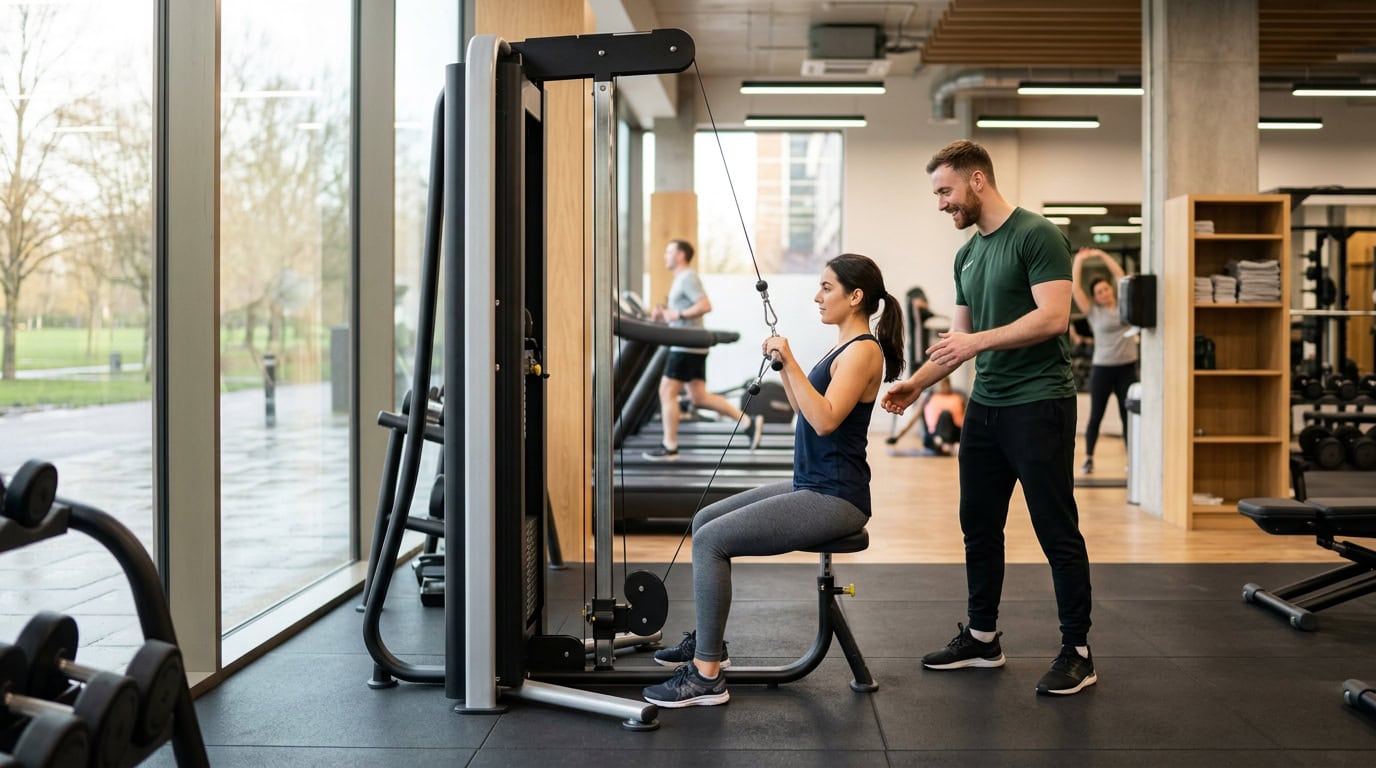
    Solo motivation is hardest precisely when conditions are worst, which is why winter is the best time of year to train with other people. A class, a running club, or even just a gym buddy who expects you to show up removes the decision entirely — you’re not deciding whether to train, you’re just turning up because someone’s waiting.

    If running outdoors in the dark feels daunting on your own, building the habit somewhere lit and social first can make a real difference — our Couch to 5K guide is written with exactly that kind of gradual, low-pressure build-up in mind, and plenty of people shift it onto a treadmill for the darkest months before heading back outside in spring.

    If your current gym doesn’t have the class timetable, opening hours, or atmosphere that suits a winter routine, it’s worth checking what else is nearby. Use GymPal to search gyms in your area by opening hours and facilities, so you can find somewhere that’s properly lit, open early, and actually convenient for a 6am November session rather than a June one.

    Build a Winter Routine You Can Actually Stick To

    Pull it together into something concrete before 25 October arrives:

    1. Pick your two or three fixed training slots for the week ahead and book them in like appointments.
    2. Identify one daylight window (usually lunchtime) you can protect for anything outdoors.
    3. Buy or dig out proper visibility kit if you’re training outside in the dark at all.
    4. Line up a training partner, class, or club for at least one session a week.
    5. Plan your rest days in advance, so they’re a decision, not a default.

    None of this is complicated, and that’s rather the point. The routines that survive a UK winter are boring, repeatable ones, not ambitious ones. Sort your schedule now, before the clocks actually change, and you’ll be one of the people still training in January rather than starting again from scratch.

    Ready to find a gym that fits a winter routine — early opening, well-lit, close to home? Search GymPal to compare gyms, classes and facilities near you and lock in your training before the dark mornings do it for you.

  • Couch to 5K UK: The Complete Beginner’s Guide

    Couch to 5K UK: The Complete Beginner’s Guide

    Nine weeks. Three runs a week. Zero experience required. Couch to 5K has quietly become one of the biggest fitness phenomena in the UK, with millions of downloads of the NHS app and a cult following that spans total beginners, post-injury returners, and anyone who’s tried “getting into running” a dozen times before and given up by week two.

    What makes it different isn’t the distance — 5km is hardly a marathon. It’s the structure. Instead of telling you to “just go for a run” and watching you burn out in seven minutes, Couch to 5K builds you up in small, unglamorous increments: walk, then jog a bit, then walk, then jog a bit more. By week nine, most people who stick with it are running the full 5km without stopping, often to their own surprise.

    If you’ve bounced off running before, or you’re starting completely from scratch, here’s what the programme actually involves, what to expect week by week, and how to set yourself up to finish it rather than quietly deleting the app in week three.

    What Couch to 5K Actually Is

    Couch to 5K (often shortened to C25K) was developed in the US in the 1990s and has since been adopted and heavily promoted by the NHS, which produces a free app and podcast-style audio coaching to go with it. It’s a structured nine-week running plan aimed squarely at people who’ve never run before, or haven’t run in years.

    Each week has three sessions, with a rest day (or cross-training day) between each one. The sessions alternate walking and jogging in increasing intervals — week one might be a minute of jogging followed by ninety seconds of walking, repeated eight times, while by week five or six you’re jogging for much longer continuous stretches. There’s no pace target. The entire point is time on your feet at a conversational effort, not speed.

    You don’t need a gym membership, a running club, or any equipment beyond decent trainers. That’s part of why it’s stuck around: the barrier to entry is almost nothing, which matters enormously if intimidation is what’s stopped you from exercising before.

    Week-by-Week: What Actually Happens to Your Body

    The early weeks feel deceptively easy, and that’s intentional. Weeks one and two are mostly walking with short jogging bursts, which lets your tendons, ligaments and joints adapt gradually — these tissues take far longer to strengthen than your cardiovascular system does, and most running injuries in beginners happen because people ramp up too fast for their connective tissue to keep pace with their improving fitness.

    By weeks three and four, the jogging intervals stretch out and the walking breaks shrink. This is usually where people notice their breathing getting easier even as the running gets longer — a sign your cardiovascular system is adapting quickly, which tends to outpace strength gains in the first month.

    Weeks five to seven are where the plan gets its reputation: week five typically includes a first continuous 20-minute run, which feels like a genuine milestone after a month of run-walk intervals. Weeks eight and nine consolidate that into a full 30-minute continuous run, which for most people covers somewhere around 5km depending on pace.

    Plenty of people need to repeat a week, and that’s completely normal — the plan is a guide, not a exam. Repeating week four twice isn’t failure, it’s just pacing yourself correctly.

    Getting Past the Mental Barrier

    The physical side of Couch to 5K is genuinely gentle. The bigger obstacle for most beginners is psychological — self-consciousness about running slowly, worrying about being seen, or the general anxiety that keeps people from starting any new fitness habit in public. That mental hurdle is worth taking seriously rather than pushing through on willpower alone, and a lot of the same thinking behind beating gym anxiety applies directly here — running somewhere quiet, going at off-peak times, and remembering that nobody else is watching you nearly as closely as it feels like they are.

    It also helps to reframe what “success” looks like. The goal in week one isn’t to look like a runner — it’s to complete the session. Some of the walking intervals will still feel hard, and that’s fine. The people who finish the programme aren’t the fittest ones at the start; they’re the ones who showed up for session two even though session one felt awkward.

    Kit, Terrain and Timing

    You genuinely don’t need much. A pair of proper running trainers — not old gym pumps — makes the biggest difference to comfort and injury risk, and it’s worth getting fitted at a specialist running shop if you can, since gait and foot shape vary a lot. Beyond that, breathable layers and a decent pair of socks cover most of what you need for a UK autumn or winter start.

    Flat, soft-ish surfaces are kinder on your joints than pavement — a local park, towpath or playing field is ideal if you have one nearby. Early morning or early evening sessions tend to be quieter and cooler, which matters more than people expect once you’re a few weeks in and the sessions get longer.

    Many people choose to start Couch to 5K in September or January, but honestly, the best time to start is whenever you can commit to three sessions a week for nine weeks without a major disruption in the middle. A programme interrupted for a fortnight by a work trip or illness is harder to pick back up than most people expect.

    Recovery Matters More Than People Think

    Because the running itself feels manageable, it’s tempting to treat rest days as optional, especially once you’re a few weeks in and feeling stronger. That’s usually a mistake. Your muscles adapt during a run, but the actual strengthening — in tendons, ligaments and bone density — happens in the 24 to 48 hours afterwards, which is exactly why the plan builds rest days into every single week rather than leaving them to chance.

    Basic recovery habits like getting enough sleep, staying hydrated, and doing some light stretching after each run make a real difference to how you feel going into the next session, and they’re a big part of why some people breeze through the programme while others get knocked back by nagging shin or knee niggles. If something hurts sharply rather than just feeling like normal muscle fatigue, that’s worth resting properly for rather than pushing through.

    What to Do After Week Nine

    Finishing Couch to 5K is a genuine achievement, and a lot of people hit a bit of a flat spot afterwards simply because the structure disappears — no more app telling you what to do three times a week. This is the point where it’s worth deciding what you actually want next: sticking with outdoor running (parkrun on a Saturday morning is a natural next step, and it’s free), joining a running club for pace and company, or moving some of that newfound cardio fitness indoors.

    If you’re leaning towards the gym side of things — maybe to add strength training alongside your running, or to have a treadmill option for bad weather — it’s worth taking your time over the decision rather than signing up to the first place with a decent September offer. Working through a proper checklist before you commit covers things like contract length, off-peak access and whether they actually have decent cardio kit, which matters more once running has become a habit rather than an experiment.

    Common Mistakes That Derail the Plan

    The single biggest reason people drop out isn’t lack of motivation — it’s going too hard too soon. Trying to run faster than the “conversational” pace the programme is built around, or skipping ahead a week because a session felt easy, is the fastest way to end up with shin splints or a knee niggle by week five. The plan is deliberately conservative for a reason.

    The second most common mistake is treating a missed session as a reason to quit entirely rather than just picking up where you left off. Life gets in the way — illness, work, weather, whatever it is. Missing a run doesn’t undo the previous six weeks of adaptation. Repeating a session or nudging the whole plan back by a few days costs you nothing in the long run.

    Finally, plenty of beginners obsess over pace and distance from day one, checking a running watch mid-interval to see how slow they’re going. Couch to 5K isn’t designed around pace at all, and comparing your week-one jog to someone else’s parkrun time is a good way to talk yourself out of a programme that’s working exactly as intended.

    Is Couch to 5K Actually Worth It?

    For total beginners, yes, overwhelmingly. According to Sport England’s Active Lives survey, activity levels drop off sharply among adults who’ve never established a regular exercise habit, and programmes like Couch to 5K work precisely because they remove the two biggest barriers — not knowing where to start, and doing too much too soon. The structure does the thinking for you; all you have to do is turn up.

    It’s not a fast route to fitness, and it’s not meant to be. But nine weeks from now, “I don’t really run” could quite easily have become “I’ve just done my first 5K” — and for a huge number of people every year, that’s exactly what happens.

    Ready to Take It Further?

    Once running becomes part of your routine, the next step for a lot of people is finding somewhere to train on rest days, build some strength alongside the cardio, or simply have a backup plan for filthy weather. GymPal makes it easy to search and compare gyms, studios and fitness facilities across the UK, so you can find the right fit once you’re ready for what comes after week nine.

  • Gymtimidation: How to Beat Gym Anxiety in the UK

    Gymtimidation: How to Beat Gym Anxiety in the UK

    You’ve packed your kit bag three times this week and taken it out of the car twice. Sound familiar? If the thought of walking onto a gym floor makes your stomach drop, you’re not being dramatic and you’re definitely not alone. It’s got a name now: gymtimidation. And it stops more people from getting fit than dodgy weather or a packed diary ever could.

    A recent UK fitness industry survey found that 56% of gym-goers admit to some form of gym-related anxiety, and the number climbs even higher among people who haven’t joined at all. Women are more than three times as likely as men to report feeling intimidated, and the 25-34 age group struggles the most, with the majority saying they simply don’t know how the equipment works or what they’re supposed to be doing.

    The good news is that gymtimidation is entirely beatable, and it usually only takes a handful of visits before the fear fades. Here’s how to get through the door, actually enjoy the session, and keep coming back.

    None of this is about toughening up or forcing yourself through discomfort. Most of the anxiety comes from a genuinely fixable gap between what you know and what a gym expects you to already know — how the machines work, where things go, what the unspoken rules are. Close that gap before you walk in and the nerves shrink dramatically.

    What Gymtimidation Actually Is (and Why It’s So Common)

    Gymtimidation isn’t a clinical term, but it describes something very real: the social anxiety that kicks in when you’re exercising in front of strangers who look like they know exactly what they’re doing. Surveys on the subject consistently point to the same trigger — around four in five people who feel intimidated say it’s specifically about being watched while they work out, not the exercise itself.

    Add in unfamiliar machines, gym-floor jargon, and the fear of using something wrong, and it’s easy to see why so many people quietly cancel plans to go. None of this means you’re unfit for the gym. It means the environment is unfamiliar, and unfamiliar things are always a bit uncomfortable until you’ve done them a few times.

    Reading the Room Before You Even Join

    A huge chunk of gym anxiety comes down to picking the wrong gym in the first place. A cavernous free-weights warehouse full of competitive lifters is a very different environment to a small community studio, and neither is objectively “better” — but one will suit your confidence levels far more than the other right now. Working through a proper gym selection checklist before you sign anything means you can filter for things like off-peak quiet hours, beginner-friendly staff, and induction sessions, rather than just picking whatever’s closest to home.

    It’s also worth visiting in person at the time of day you’d actually train. A gym that feels calm at 10am on a Tuesday can feel like a completely different building at 6pm, and there’s no shame in choosing quieter hours while you find your feet.

    Sort Your Kit So One Less Thing Feels Unfamiliar

    Nerves multiply when you’re also worrying about whether you’re wearing the right thing. Turning up in the wrong trainers, without a towel, or unsure whether you need your own padlock adds friction that has nothing to do with fitness. Getting your gym kit sorted in advance means you can walk in looking and feeling like you belong there, which does more for your confidence than any pep talk.

    Pack the same bag every time until it becomes automatic. Water bottle, trainers, a lock for the locker, headphones charged. Removing the small decisions leaves more headspace for the actual workout.

    Learn the Unwritten Rules Before Day One

    Most gym anxiety isn’t about lifting the wrong weight — it’s about accidentally breaking a rule nobody told you about. Not wiping down a bench, hovering near someone’s set, or not knowing where to put dumbbells back can feel mortifying in the moment, even though every single regular gym-goer has done exactly the same thing at some point. Spending ten minutes with a guide to gym etiquette before your first session removes most of that risk, and it means you’ll spot the few genuine faux pas to avoid rather than guessing.

    It’s also worth remembering that most people at the gym are far too focused on their own session to be scrutinising yours. That sounds like a cliché, but it holds up — the “everyone’s watching me” feeling is almost always louder in your head than it is in reality.

    Practical Ways to Build Confidence, Session by Session

    A few habits make a genuine difference in the first month:

    • Book the induction. Nearly every UK gym offers a free induction or equipment walkthrough for new members. Take it, even if you’ve trained before — it’s a guilt-free way to ask questions and get shown exactly how the kit works.
    • Go at off-peak times. Weekday mornings and early afternoons tend to be far quieter than the 6-8pm rush. A quieter gym floor means fewer eyes, more space, and more time with the equipment.
    • Have a plan before you arrive. Deciding what you’re doing in advance — even just three exercises scribbled on your phone — stops the awkward standing-around-looking-lost feeling that fuels anxiety.
    • Start with machines, not free weights. Machines guide your form and feel far less exposed than a barbell in the middle of the floor. You can graduate to free weights once you’re comfortable.
    • Bring a mate for the first few visits. Having someone alongside you, even if you’re both beginners, cuts the self-consciousness dramatically.

    None of these require any extra fitness. They just remove the friction points that make new gym-goers quit in week two.

    Group Classes and Beginner Programmes Are Built for This

    If the open gym floor feels like too big a leap, a class is often the gentler way in. Every studio-format session — spin, HIIT, beginner strength circuits, aqua aerobics — starts with an instructor telling everyone exactly what to do, when to do it, and how to modify it. There’s no ambiguity about whether you’re doing it “right,” because the whole room is following the same instructions at the same time. It also removes the awkward wondering-what-to-do-next feeling entirely, since the class structure does that thinking for you.

    Many UK gyms and leisure centres now run dedicated “beginner” or “back to fitness” weeks, particularly around September and January, with slower-paced versions of their usual classes and staff briefed to expect first-timers. It’s worth asking at reception whether anything like this is running, since it’s a low-pressure way to get several sessions of instructor-led practice before you’re expected to navigate the free weights area solo. Small-group personal training sessions work the same way — you get direct coaching without the one-to-one spotlight of a private PT session, at a fraction of the cost.

    What to Do If the Anxiety Doesn’t Fade

    For the vast majority of people, gymtimidation eases naturally within three to five visits as the environment becomes familiar. But if you’re still dreading every session weeks in, or you find yourself cancelling plans specifically to avoid the gym, it’s worth being honest with a member of staff about it. Most UK gyms and leisure centres have dealt with this before and can offer a quieter corner to start in, a buddy system, or extra time with an instructor — you just have to ask, which is often the hardest part.

    The Mental Health Side Nobody Talks About

    Gym anxiety is a form of social anxiety, and it’s worth treating it that way rather than just “pushing through.” According to the mental health charity Mind, regular physical activity can reduce your risk of depression by up to 30%, but that only works if you can actually get through the door in the first place. If gym anxiety is tipping into something that affects your wider wellbeing — not just nerves before a session — it’s worth talking to your GP or a mental health professional rather than assuming it’s something you should white-knuckle through alone.

    For most people, though, gymtimidation genuinely does fade with exposure. The third visit is nearly always easier than the first, and by visit ten most people can’t remember what they were nervous about.

    Finding a Gym That Actually Fits You

    The single biggest lever you have over gym anxiety is choosing the right environment in the first place. A women’s-only studio, a quiet local leisure centre, or a small independent gym with a strong beginner culture can make an enormous difference compared with a huge, high-energy chain that isn’t the right fit for where you are right now. This is exactly the kind of thing GymPal is built for — search by location and read what real members say about the atmosphere, class sizes, and how welcoming a gym actually is for beginners, so you can walk in already knowing it’s the right room for you.

    The Bottom Line

    Gymtimidation is common, it’s got nothing to do with your fitness level, and it almost always gets better with a bit of preparation and a few visits under your belt. Pick a gym that suits your confidence level, sort your kit in advance, learn the basic etiquette, and take the free induction. Do those four things and you’ll have removed most of what makes that first session feel so daunting — and you might even enjoy it.

  • Wild Swimming UK: The Complete Beginner’s Guide

    Wild Swimming UK: The Complete Beginner’s Guide

    There’s a moment, just as you lower yourself into a cool British river or lake for the first time, when your body decides it absolutely does NOT want to be there. Your breathing quickens. Your skin prickles. Your brain fires off a rapid series of complaints. And then — if you hold your nerve — something extraordinary happens. Your body adapts, your breathing slows, and you feel more alive than you have in months.

    Wild swimming — swimming in natural, unchlorinated bodies of water — has exploded in popularity across the UK. From the Lake District to the Cornish coast, the Scottish lochs to the chalk streams of Hampshire, more Britons are trading the chlorinated lane for open water than at any point in living memory. You don’t need to be a cold-water zealot or an endurance athlete to get started. You just need the right kit, a solid understanding of safety, and the courage to get your feet wet.

    This guide covers everything you need to know before taking the plunge — what wild swimming actually is, why it’s worth the discomfort, how to stay safe, what to wear, and where to find the best spots across the UK.

    What Is Wild Swimming (and How Is It Different from Pool Swimming)?

    Wild swimming is any swimming that takes place in natural, outdoor water: lakes, rivers, reservoirs, the sea, and even waterfalls and quarry pools. It’s deliberately unstructured — no lane ropes, no chlorine, no turning at the wall. Just you, the water, and whatever the British weather decides to throw at you that morning.

    The term is sometimes used interchangeably with “open water swimming,” though open water tends to refer to organised events in natural water — triathlons, charity swims, sporting competitions — while wild swimming usually means self-led dips out in the countryside or along the coast.

    The practical differences from pool swimming are significant:

    • Temperature: UK wild swimming water ranges from around 4°C in winter to 20°C in a warm August. Even in peak summer, most UK lakes sit at 14–18°C — considerably colder than the 28°C of your local leisure centre pool.
    • Currents and hazards: Rivers can carry strong flows; tides complicate sea swimming; underwater obstacles exist where you can’t see them.
    • No lifeguard: You are entirely responsible for your own safety. This isn’t scary — it’s just a fact that changes how you prepare.
    • Mental challenge: Cold water shock is a real physiological response, not just discomfort. Understanding it before you get in is non-negotiable.

    The Health Benefits: Why Wild Swimming Is Worth the Cold

    Wild swimming’s popularity isn’t just cultural. According to Sport England’s Active Lives research, swimming remains one of the most participated-in physical activities in the UK — and the shift to outdoor, natural water has accelerated dramatically over recent years as people chase benefits that go beyond fitness.

    The physical gains are substantial. A single open water session combines full-body cardiovascular effort with the extra metabolic demand of cold water acclimatisation — your body burns additional calories simply maintaining its core temperature. The low-impact nature of swimming means it’s suitable for people recovering from injury, managing joint pain, or returning to exercise after a long break.

    The mental health case is even more compelling. Research has documented cases where regular cold water swimming significantly reduced symptoms of depression and anxiety. The combination of cold water, natural surroundings, and physical exertion produces a powerful cocktail of endorphins, adrenaline, and dopamine that many wild swimmers describe as more intense than any gym-based high. Even a 10-minute dip in a Derbyshire reservoir can reset stress levels in a way that an hour of indoor cardio rarely manages.

    Regular cold water exposure is also linked to better sleep, potentially improved immune function, and enhanced cardiovascular conditioning. Wild swimmers frequently cite sleep quality as one of the biggest unexpected payoffs — the body’s post-swim recovery process seems to promote deeper, more restorative rest. And for anyone who already knows that [swimming for fitness](https://askgympal.co.uk/blog/swimming-for-fitness-uk/) is one of the most efficient full-body workouts available, the open water version simply turns the intensity dial up a notch.

    Essential Safety: What Every Beginner Must Know Before Getting In

    Wild swimming is genuinely safe when approached correctly — and genuinely dangerous when it isn’t. The Royal National Lifeboat Institution responds to thousands of UK water incidents every year, and the majority involve people who underestimated conditions or went in without preparation. These rules are non-negotiable:

    Never swim alone as a beginner. Bring a friend, join an organised group (more on that below), or at minimum tell someone exactly where you’re going and when you’ll be back.

    Cold water shock is the biggest killer. When you enter cold water quickly, your body gasps involuntarily — and if your face is underwater, that gasp can drown you within seconds. Always enter slowly: wade in up to your chest before submerging your face, giving your body several minutes to adapt. Never jump or dive into cold water you haven’t acclimatised to.

    Know your exit before you enter. Survey the bank, shore or pool edge before you get in. Slippery rocks and steep banks are much harder to judge once you’re cold, breathless, and your hands have gone numb.

    Check water quality before you go. Pollution in UK rivers and coastal waters is a serious concern. The Environment Agency’s Swimfo database rates water quality at designated bathing spots across England — check it before swimming anywhere new. Avoid spots near farm drainage outflows, sewage overflows, or immediately after heavy rainfall.

    Carry a tow float. A brightly coloured inflatable tow float clips around your waist and keeps you visible to boats and other water users. It provides a rest aid and dramatically increases your visibility. They cost £15–25 and are non-negotiable once you swim regularly.

    Know when to get out. Shivering in the water is your body’s warning sign. When serious, uncontrollable shivering starts, get out. Hypothermia is a risk even in August if you push past your body’s tolerance.

    What to Wear: A Wild Swimming Kit Guide

    You don’t need a great deal of expensive kit to start — but the wrong choices (or no kit at all) make an already cold experience genuinely miserable. Here’s what’s worth investing in from day one:

    Wetsuit (recommended for most UK waters): A 3mm or 4mm full wetsuit won’t eliminate the cold — you’ll still feel it vividly — but it buys you significantly more time in the water before your body starts shutting down. Many outdoor activity centres near popular swimming spots offer wetsuit hire if you don’t want to buy before you know you’re committed.

    Swim hat: A neoprene swimming hat or thick silicone cap is essential — you lose a disproportionate amount of body heat through your head. Many experienced wild swimmers double up with a standard latex cap underneath for extra insulation.

    Open water goggles: Standard pool goggles often leak in choppy conditions or when diving. Open water-specific goggles have a wider sealing surface and UV tinting for bright outdoor conditions.

    Changing robe: Possibly the most impactful UK wild swimming innovation of the last decade. A thick changing robe lets you strip off and dress in a car park, on a beach, or beside a reservoir without freezing in the process. They run £90–200, but virtually every regular wild swimmer in the country uses one. The post-swim warmth they provide is genuinely transformative.

    Neoprene gloves and socks: Optional in summer, close to essential when the water drops below 12°C. Cold hands lose motor function quickly — neoprene gloves can extend a comfortable swim by 15–20 minutes in colder conditions.

    Where to Wild Swim in the UK: The Best Areas to Explore

    The UK is genuinely blessed with wild swimming opportunities. Here are some of the most celebrated areas, from beginner-friendly lakes to more adventurous coastal spots:

    Lake District, Cumbria: Windermere, Ullswater, and Coniston Water are the most accessible entry points, but dozens of smaller tarns reward those willing to walk. The Lakes offer some of the finest freshwater swimming in Europe — clear water, relatively easy access points, and well-established swimming communities at nearly every main body of water.

    Dartmoor, Devon: The River Dart has carved out a series of pools and gorges that attract swimmers from across the country. Spitchwick Common on the East Dart is one of England’s most popular wild swimming spots — accessible, well-signed, and stunning in warm weather.

    Peak District, Derbyshire: Ladybower Reservoir and the River Derwent are the headline acts, though access can vary — always check landowner permissions carefully before getting in. The Monsal Trail area also has river pools worth exploring.

    Scottish Lochs: Loch Lomond, Loch Morlich near Aviemore, and countless Highland lochs offer spectacular swims. Scottish water temperatures are unforgiving even in August, so a wetsuit here moves from optional to essential.

    Cornwall and Devon coasts: Sea swimming along the South West Coast Path puts iconic coves and beaches within reach. Water quality is generally better in the far west, away from larger towns. The Fal Estuary and Helford River are particular favourites for those who prefer calmer water.

    Thames Valley: The upper Thames around Wallingford, Abingdon, and Lechlade has a long wild swimming tradition. The region is also home to some excellent [outdoor lidos](https://askgympal.co.uk/blog/outdoor-lidos-uk-guide-open-air-pools/) if you want the open-air experience with the reassurance of lifeguards and a designated swimming area.

    Joining a Wild Swimming Group: The Fastest Route to Confidence

    The quickest route to confident, safe wild swimming is joining a local group. The UK has thousands of them — most are free to join and operate through Facebook, Meetup, or WhatsApp. Swim England affiliated open water clubs exist in most counties and run organised sessions with appropriate safety provision.

    Experienced members carry the local knowledge that no guide can replicate: where the good entry points are, which sections of river to avoid after rain, where currents run strongest, and which spots are worth the trek. That accumulated knowledge is worth more than any kit purchase.

    Wild swimming communities are also famously welcoming and social — one of the sport’s underrated draws. Groups typically meet year-round, including on grey January mornings when the water is at its coldest and the post-swim euphoria is at its most extreme. The shared misery (and shared triumph) creates a particular kind of friendship.

    If you’re brand new to swimming altogether — rather than just new to open water — building your confidence in a pool first is absolutely the right move. [Adult swimming lessons](https://askgympal.co.uk/blog/adult-swimming-lessons-uk/) are far more widely available than most people assume, with most leisure centres running beginner courses for adults at around £50–80 for a six-session block. The technique and water confidence you gain transfers directly to open water.

    Understanding Afterdrop: The Danger People Don’t Expect

    Afterdrop catches beginners out regularly and is the most misunderstood phenomenon in cold water swimming. Here’s what happens: when you exit cold water, your core temperature continues to fall for up to 40 minutes after you’ve left the water, as cold blood from your extremities recirculates to your core. This is why you can feel fine immediately after a swim and then feel dramatically worse 20 minutes later — sometimes frighteningly so.

    The practical implication is counterintuitive: warm up before you get dressed. Get into your changing robe, have a hot drink, and let your body temperature stabilise before you start dressing or driving. Never rush straight into a car and drive home immediately after a cold water swim — sit, warm up, and wait for the afterdrop to pass.

    Eating something before your swim also matters more than most beginners realise. Your blood sugar affects how quickly your body can generate heat in recovery — going into cold water on an empty stomach slows your warming time and increases risk during the afterdrop phase.

    Ready to Get Started? Find Swimming Venues Near You

    Wild swimming spots require research, careful water quality checks, and good local knowledge. For organised, structured swimming — outdoor pools, lidos, leisure centre pools where you can build fitness and technique before heading outdoors — GymPal searches thousands of UK swimming venues, filterable by location and facility type, so you can find the right option wherever you are in the country.

    Whether you’re looking for a pool to build your swimming base, an outdoor lido for the open-air experience with lifeguard cover, or an aquatics centre with coaching on offer, GymPal covers the full range of UK swimming facilities. Start there, build your confidence, and then take it outside.

    The cold water is waiting. And it’s worth every second of the discomfort.

  • Cold Water Therapy UK: Why Ice Baths Are Worth the Freeze

    Cold Water Therapy UK: Why Ice Baths Are Worth the Freeze

    The post-gym routine used to be straightforward: stretch, shower, grab a protein shake. Now, if you visit a well-equipped UK gym or leisure spa, you might notice something different — a queue of perfectly sane people voluntarily lowering themselves into what looks like a chest freezer filled with icy water. Welcome to cold water therapy, one of the biggest fitness recovery trends to hit Britain in years.

    Whether it’s a polished plunge pool at a premium health club, a repurposed wheelie bin behind a CrossFit box, or a lake in November, cold water immersion is no longer the preserve of elite athletes or hardcore open water swimmers. Everyday gym-goers across the UK are using it to speed up recovery, boost mood, and add a genuinely bracing edge to their fitness routine.

    But does it actually work? And how do you get started safely? Let’s get into it.

    What Is Cold Water Therapy?

    Cold water therapy — also called cold water immersion (CWI) or cold hydrotherapy — is the deliberate exposure of the body to cold water for health and recovery benefits. Temperatures typically range from 10°C to 15°C for beginners, dropping as low as 5°C to 8°C for more experienced practitioners.

    There are several forms it can take:

    • Ice baths: a container of cold water (usually 10–15°C) you sit in for 5–15 minutes after training
    • Cold plunge pools: permanent installations at gyms, spas, and leisure centres — typically deeper, better maintained, and temperature-controlled
    • Cold showers: the entry-level version, and better than nothing
    • Wild or open water swimming: rivers, lakes, and sea in the UK, which rarely exceed 15°C even in summer

    All of them create the same core physiological response. When cold water hits your skin, your body constricts blood vessels near the surface and redirects circulation to your vital organs. When you warm back up, those vessels dilate — effectively giving your cardiovascular system a meaningful workout without a single squat.

    The Science Behind the Freeze

    Cold water therapy has been used for centuries — Hippocrates prescribed cold baths, Victorian hydrotherapy was a booming industry, and elite sports coaches have been dunking athletes in ice baths for decades. What’s changed is that the science is finally catching up with the intuition.

    Several well-documented effects make the practice compelling for gym-goers:

    Reduced muscle soreness. Cold immersion causes vasoconstriction, which limits inflammation in worked muscles. Research shows a meaningful reduction in delayed onset muscle soreness (DOMS) when cold immersion is used within 30–60 minutes of intense exercise — particularly useful if you train on consecutive days.

    Improved mood and mental resilience. Cold water triggers a significant release of noradrenaline, dopamine, and endorphins. The result is a sharp, clear-headed alertness that many practitioners describe as better than espresso. Regular cold water exposure has also been linked to reduced anxiety and improved ability to manage stress — a meaningful bonus for anyone using training as a pressure valve.

    Faster perceived recovery. Whether the benefit is purely physiological or partly psychological is still debated in the research. But if you feel better and train harder the next day, the outcome is the same. High-volume athletes — those doing five or more sessions a week — tend to see the most pronounced benefit.

    Potential metabolic effects. Cold exposure activates brown adipose tissue (brown fat), which generates heat by burning energy. The effect is real but modest — cold therapy is not a weight-loss strategy on its own, but it does complement an active training programme.

    One nuance worth knowing: cold water therapy may blunt some long-term muscle hypertrophy adaptations if done immediately after strength training. If your primary goal is maximum muscle gain, consider saving the ice bath for rest days or waiting a few hours after your session rather than jumping straight in post-lift.

    Cold Water Therapy at UK Gyms and Spas

    You don’t need to order a plunge pool kit from Amazon or fill your back garden with bags of ice. Many UK gyms and wellness venues already have cold water infrastructure — you just need to know where to look.

    Health clubs with wet-side facilities are your best starting point. Larger chains — David Lloyd, Bannatyne, and Virgin Active — typically include cold plunge pools alongside saunas and steam rooms as part of their spa suite. These are usually maintained at a consistent 10–12°C and are far more reliable than DIY alternatives.

    Specialist recovery studios are growing rapidly across UK cities. Dedicated contrast-therapy venues (alternating between hot sauna and cold plunge) have opened in London, Manchester, Edinburgh, Leeds, Bristol, and Birmingham. Sessions typically run from £20–£45 and are built around structured protocols. It’s an excellent environment for first-timers — the staff know what they’re doing and the facilities are purpose-built for safe, repeatable sessions.

    CrossFit boxes and functional fitness gyms often have cold water setups available after class. The high-intensity nature of CrossFit training makes it one of the best use cases for structured recovery — a well-equipped CrossFit box in the UK will frequently include ice tubs, mobility tools, and foam rollers as part of the post-class offering.

    For a broader picture of what UK gym-spas offer — from hydrotherapy pools to sauna suites — the range of gym spa facilities across the UK varies enormously by price point and region, and knowing what’s available helps you choose the right venue for how you train and recover.

    Use GymPal’s UK gym and spa directory to find venues near you — filter by location, facility type, and budget to discover gyms with cold plunge pools, sauna suites, and dedicated recovery areas across the country.

    Ice Baths vs Cold Showers vs Plunge Pools: What’s the Difference?

    Cold showers are where most people start — and they shouldn’t be dismissed. Ending your normal shower with 30–90 seconds of cold water activates many of the same physiological pathways in a manageable, daily format. It’s less powerful than full immersion but far more sustainable as a daily habit, especially if you’re new to the practice.

    DIY ice baths give you full-body immersion with more control over temperature. The classic approach involves a wheelie bin, a bag of ice from a petrol station, and about seven minutes of teeth-gritting commitment. Temperature is harder to regulate and the experience is more raw — which, for many practitioners, is part of the appeal.

    Cold plunge pools at gyms and spas maintain consistent temperatures, are hygienically filtered, and allow you to build your protocol safely over time. They’re usually paired with a sauna or steam room, enabling contrast therapy (alternating heat and cold) — which many practitioners find more effective than cold immersion alone.

    Open water swimming takes things furthest. The UK has thousands of outdoor swimming spots — from supervised lidos and lake venues (Hampstead Heath Ponds in London, Salford Quays in Greater Manchester, Windermere in the Lake District) to wild locations across Devon, Snowdonia, and the Scottish Highlands. The combination of cold exposure with the full-body demands of swimming as a fitness discipline makes it one of the most complete workouts available — as demanding mentally as it is physically.

    How to Start Cold Water Therapy Safely

    Cold water therapy is very safe for healthy adults when approached progressively. That said, a few sensible rules apply.

    Go gradually. Don’t start at 8°C on day one. Begin with cooler showers (around 18–20°C) and work your way down over several weeks. Your body adapts — and that adaptation process is itself part of the benefit.

    Keep sessions short at first. One to three minutes is more than sufficient when starting out. You don’t need to sit in an ice bath for 20 minutes — 5–10 minutes at the right temperature is the established sweet spot for most recovery applications. Longer is not always better.

    Never swim alone in open water. If you’re heading to wild swimming spots, always go with at least one other person. The RNLI’s guidance is clear that cold water shock can cause involuntary gasping and cardiac stress within seconds of entering cold water — even in fit, healthy adults. Swim at supervised venues wherever possible, especially if you’re new to open water.

    Check with your GP if you have heart or circulatory conditions. Cold water immersion raises blood pressure acutely and places real demand on your cardiovascular system. People with hypertension, heart disease, Raynaud’s syndrome, or other circulatory conditions should get medical clearance before starting.

    Warm up slowly afterwards. Resist the urge to jump straight into a hot shower — let your body re-warm naturally for a few minutes first. Dry clothes, a warm drink, and five quiet minutes are all you need.

    Who Benefits Most from Cold Water Therapy?

    The short answer: anyone who trains regularly and wants to recover faster. But some groups see the clearest gains:

    High-frequency trainers — those doing five or more sessions a week, or training involving heavy compound lifts, long runs, or back-to-back high-intensity classes — benefit most from the accelerated recovery. When rest time is compressed, anything that reduces DOMS and restores readiness the next day has real training value.

    Endurance athletes — runners, cyclists, triathletes — often find cold immersion helps them sustain training blocks without accumulating excessive fatigue. It’s especially useful during high-mileage or high-volume training phases, where recovery is the limiting factor.

    People managing stress and mental load. The mood-lifting, anxiety-reducing effects of regular cold exposure are increasingly recognised. The spike in noradrenaline and dopamine after a plunge produces a clarity and calm that most practitioners describe as genuinely distinctive — not just a placebo. It’s not a replacement for professional mental health support, but as part of an active lifestyle it offers real, daily value.

    Anyone who wants to build mental toughness. This is harder to quantify but widely reported. Choosing to step into cold water every morning — when everything in you is saying don’t — builds a form of discipline that transfers to training and to life in a way that little else does.

    Find Cold Water Therapy Near You

    Cold water therapy is most effective as a consistent routine, not an occasional novelty. That means finding a venue that makes it easy — a gym or spa with a plunge pool that’s on your route, at a price that works, and open at the times you actually train.

    Browse GymPal’s UK spa and wellness gym listings to find venues near you with cold plunge pools, sauna suites, and contrast therapy facilities — covering hundreds of UK towns and cities, from Aberdeen to Plymouth.

    Cold, clear, and genuinely life-changing once it becomes a habit. Give it three weeks of consistent practice and you’ll understand exactly why half the gym is now queuing for the plunge pool.

  • How to Stay Motivated When You Don’t Feel Like Going to the Gym

    How to Stay Motivated When You Don’t Feel Like Going to the Gym

    We’ve all been there. Your alarm goes off, your gym bag is packed, and yet somehow the sofa feels like it’s been glued to your back. Skipping one session turns into two, then a week, and before you know it your membership is collecting more dust than your running shoes. If this sounds familiar, you’re not alone — and you’re certainly not beyond help.

    Motivation is not a personality trait — it’s a feeling. And like all feelings, it comes and goes. Research shows that the average person’s motivation to exercise fluctuates significantly day to day, and relying on willpower alone is one of the most common reasons people quit the gym within the first three months.

    The fitness industry often sells us the idea that if we just “want it enough,” we’ll always feel like training. That’s a myth. The people who maintain long-term gym habits aren’t necessarily more motivated than you — they’ve simply built systems that work regardless of how they feel on any given day.

    7 Practical Strategies to Keep Yourself Going

    1. Start Ridiculously Small

    The biggest mistake new gym-goers make is setting the bar too high. Telling yourself “I’m going to train for an hour, five days a week” when you’ve been inactive for months is a recipe for burnout. Instead, commit to just 15 minutes. Walk through the gym doors, do a quick warm-up, and if you still want to leave after that, you can. Most of the time, once you’re there and moving, you’ll carry on. The hardest part is always showing up.

    2. Schedule It Like a Work Meeting

    If you wouldn’t skip a meeting with your boss, don’t skip your gym session with yourself. Block out time in your calendar and treat it as non-negotiable. Many UK gyms now open early and close late — 24-hour gyms are becoming increasingly popular for exactly this reason, giving you no excuse to miss a session regardless of your schedule.

    3. Find Your “Why” (and Write It Down)

    vague goal like “get fit” won’t carry you through the days when motivation is zero. You need a specific, personal reason. Maybe it’s keeping up with your kids, managing stress, or feeling confident on holiday. Write it down and put it somewhere you’ll see it daily — on your fridge, as your phone wallpaper, or inside your gym bag.

    4. Pair It With Something You Enjoy

    Exercise doesn’t have to mean grinding through workouts you hate. If you love music, create a playlist you only listen to at the gym. If you’re social, join group classes or find a gym buddy who’ll hold you accountable. If you’re competitive, track your progress and celebrate personal bests. The more enjoyable you make the experience, the less you’ll need to rely on pure discipline.

    5. Use the “Two-Day Rule”

    Missing one gym session is fine — life happens. But commit to never missing two days in a row. This simple rule prevents short breaks from becoming long-term abandonment. It’s forgiving enough to be sustainable but firm enough to keep you on track.

    6. Prepare the Night Before

    Decision fatigue is real. If you have to decide what to wear, what exercises to do, and what to pack every morning, you’re adding friction to an already difficult process. Lay out your gym clothes, prepare your bag, and even plan your workout the night before. When the alarm goes off, everything should be ready to go — no thinking required.

    7. Choose a Gym That Fits Your Lifestyle

    Sometimes the problem isn’t you — it’s the gym. If your gym is a 30-minute drive away, has limited opening hours, or feels intimidating, you’ve already stacked the odds against yourself. Using a platform like GymPal, you can search thousands of UK gyms by location, price, facilities, and reviews to find one that actually suits your needs. A gym that’s convenient, welcoming, and well-equipped makes showing up dramatically easier. Whether you need a budget-friendly option or something more specialist, there’s a gym out there that fits.

    What to Do When You’ve Fallen Off the Wagon

    First, stop beating yourself up. Guilt is one of the worst motivators. Second, don’t try to make up for lost time by going twice as hard — that leads to injury and burnout. Simply start again with your smallest possible session. A 20-minute walk on the treadmill counts. A few stretches and a shower counts. The goal is to rebuild the habit, not to punish yourself for breaking it.

    Remember: fitness is a lifelong pursuit, not a 30-day challenge. There will be peaks and troughs, and the most successful gym-goers are simply the ones who keep coming back after the troughs.

    Ready to Find the Right Gym?

    If motivation is a struggle partly because your current gym doesn’t feel right, it might be time for a change. GymPal lists over 10,000 UK gyms, health clubs, and fitness studios — from independent boutique studios to large chain gyms. You can compare prices, read real reviews, check facilities, and even claim your free listing if you’re a gym owner. Finding a gym you actually look forward to visiting is half the battle.

  • Why Rest Days Are Non-Negotiable: The Science Behind Recovery and Muscle Growth

    Why Rest Days Are Non-Negotiable: The Science Behind Recovery and Muscle Growth

    If you’re hitting the gym five, six or even seven days a week and wondering why your progress has stalled, the answer might not be more training — it might be more rest. Rest days are one of the most underrated elements of any fitness programme, yet they’re essential for muscle repair, injury prevention, and long-term motivation. and testosterone (repair)

  • Reduces systemic inflammation built up from repeated training
  • Consolidates neuromuscular adaptations — your nervous system literally “learns” the movements

Skip the rest and you’re essentially tearing down without ever rebuilding.

How Many Rest Days Do You Need?

There’s no single answer, but most UK-based fitness professionals recommend at least one to two full rest days per week. Here’s a rough guide based on training intensity:

  • Beginners (0–6 months): 2–3 rest days per week. Your body is adapting to entirely new stresses.
  • Intermediate (6–24 months): 1–2 rest days per week, with at least one deload week every 6–8 weeks.
  • Advanced (2+ years): 1 rest day per week minimum, plus scheduled deload periods. Even elite athletes programme recovery.

If you’re consistently feeling fatigued, sore for days on end, or seeing your performance plateau, that’s your body telling you to ease off.

Active Recovery vs. Full Rest

Not all rest days need to mean sitting on the sofa. Active recovery — light movement that gets blood flowing without taxing your muscles — can actually speed up the repair process. Good options include:

  • A brisk 20–30 minute walk
  • Gentle yoga or mobility stretching
  • Swimming at a relaxed pace
  • Light cycling
  • Foam rolling and targeted stretching

The key is keeping your heart rate low and avoiding anything that leaves you sore afterwards. Think of it as lubricating the joints and flushing out waste products, not burning calories.

Signs You’re Not Resting Enough

Overtraining syndrome is real and can set your progress back by weeks or months. Watch out for these warning signs:

  • Persistent soreness — muscles that never fully recover between sessions
  • Stalled strength gains — you can’t increase your weights or reps despite consistent effort
  • Poor sleep — ironically, overtraining can disrupt the very sleep you need for recovery
  • Mood changes — irritability, lack of motivation, or feeling “flat”
  • Frequent illness — a suppressed immune system is a classic overtraining symptom
  • Elevated resting heart rate — check yours first thing in the morning; a rise of 5–10 bpm can indicate inadequate recovery

If more than two of these sound familiar, schedule a full week of reduced training or complete rest.

Nutrition on Rest Days Matters Too

A common mistake is slashing calories on rest days because you’re not burning as much. Don’t. Your body needs protein, carbohydrates and healthy fats to repair tissue and replenish energy stores. In fact, your protein requirements remain just as high on rest days as they do on training days.

Aim for:

  • 1.6–2.2g of protein per kg of bodyweight spread across meals
  • Plenty of hydrating fluids — water, herbal teas, electrolyte drinks if you sweat heavily
  • Complex carbohydrates like oats, sweet potatoes and brown rice to refuel glycogen
  • Anti-inflammatory foods — oily fish, berries, leafy greens, nuts and seeds

Making Rest Work for Your Schedule

The best rest day is the one you actually take. Plan your week so that rest days are built into your routine rather than something you squeeze in when you feel broken. A popular split for UK gym-goers training four days a week looks like this:

  • Monday: Upper body
  • Tuesday: Lower body
  • Wednesday: Rest or active recovery
  • Thursday: Push / pull
  • Friday: Full body or cardio
  • Saturday: Rest
  • Sunday: Rest or light activity

The exact split matters less than the consistency. Pick something sustainable and stick with it for at least eight weeks before reassessing.

Find the Right Gym for a Balanced Programme

A good rest day strategy only works if your training days are equally well-planned. That starts with choosing a gym that suits your goals, schedule and budget. Whether you need 24-hour access for early-morning sessions, a well-equipped free weights area, or recovery facilities like a sauna and stretch zone, GymPal makes it easy to search and compare gyms across the UK.

GymPal lists thousands of fitness facilities — from budget-friendly chains to boutique studios — with details on equipment, opening hours, pricing and member reviews. It’s the quickest way to find a gym that fits your life, so you can train hard on your training days and actually enjoy your rest days.

The Bottom Line

Rest isn’t laziness — it’s where the magic happens. Every personal trainer, physio and sports scientist worth listening to will tell you the same thing: you don’t get fitter while you train, you get fitter while you recover from training. So next time you feel guilty about skipping a session, remember that your rest day might be the most productive thing you do all week.

Train hard, recover harder, and use tools like GymPal to find the perfect gym for your fitness journey.

  • Gym Buddy or Go Solo: Should You Train With a Partner?

    Gym Buddy or Go Solo: Should You Train With a Partner?

    Some people swear by training with a partner. Others prefer the focus and freedom of going solo. The truth is, both approaches work — but they suit different personalities, goals, and situations. Here’s how to decide what’s right for you.

    The Case for a Gym Buddy

    Accountability

    The number one benefit. When someone is waiting for you at the gym, you go. Research consistently shows that people who train with a partner have higher attendance rates than solo trainers. It’s harder to hit snooze when your friend is already in the car park. and with a partner for 1-2 sessions (accountability and heavy lifts). This gives you the best of both worlds.

    Whatever you choose, the most important thing is consistency. Find what works for you and stick with it. Search for gyms with a welcoming community on GymPal.

  • How to Stay Consistent at the Gym When Life Gets Busy: A Practical Guide

    How to Stay Consistent at the Gym When Life Gets Busy: A Practical Guide

    We have all been there. You start the year with the best intentions, hit the gym three or four times a week, and then life happens. Work gets demanding, the kids need picking up, social events pile up, and before you know it, your gym bag is gathering dust in the corner of your bedroom.

    Killer 1: All-or-Nothing Thinking

    This is the single biggest reason people fall off the wagon. The thought process goes like this: if I cannot do my full 60-minute workout, there is no point going at all. So you skip the session entirely.

    The fix: Adopt the minimum viable workout mindset. A 15-minute session is infinitely better than zero minutes. If you only have time for three sets of squats and a quick walk on the treadmill, do exactly that. Something always beats nothing.

    Killer 2: No Fixed Schedule

    Training whenever you feel like it sounds flexible and appealing, but in practice it means you rarely go. Without a fixed time in your calendar, the gym always loses to whatever else comes up.

    The fix: Treat your gym sessions like work meetings. Put them in your calendar and protect that time. If someone asks if you are free at 6pm on Tuesday, the answer is no, you have a prior commitment. You do not need to explain what that commitment is.

    Killer 3: Unrealistic Expectations

    Setting a goal of training five or six days a week when you are new to exercise or have a demanding job is a recipe for burnout. You start strong, miss a couple of sessions, feel guilty, and then give up entirely.

    The fix: Start with a sustainable baseline. For most people, two to three sessions per week is realistic and achievable. You can always add a fourth session once the habit is established. Building up is motivating; cutting back feels like failure.

    Killer 4: Friction in the Process

    If getting to the gym requires packing your bag the night before, driving 30 minutes in traffic, finding parking, and navigating a crowded changing room, you have built in too much friction. Each extra step is a reason to skip.

    The fix: Reduce friction wherever possible. Pack your bag the night before and put it by the door. Choose a gym close to your home or workplace. Keep a set of gym clothes at work. The fewer decisions you need to make before a session, the more likely you are to go.

    Killer 5: Boredom and Lack of Progress

    Doing the same three exercises on the same three machines for months on end is a fast track to losing motivation. If you are bored, you will find excuses not to go.

    The fix: Mix things up regularly. Try a new class, switch from machines to free weights, follow a structured programme with progressive overload, or try a completely different gym environment. GymPal makes it easy to find different gyms in your area, so you can try a new spot when your current routine feels stale.

    A Practical Framework for Busy People

    Step 1: Define Your Non-Negotiable Sessions

    Pick two days per week that are your guaranteed training days. These are non-negotiable, rain or shine. For most people, a Tuesday evening and a Saturday morning works well because they bookend the working week.

    Anything beyond those two sessions is a bonus. If you manage a third session, great. If life gets in the way and you only do two, you have still hit your minimum.

    Step 2: Create a Transition Ritual

    A transition ritual is a small habit that signals to your brain that it is time to train. It could be putting on your gym playlist as soon as you finish work, making a pre-workout coffee, or even just changing into your gym clothes the moment you walk through the front door.

    The key is that the ritual should be automatic and take less than five minutes. Once the ritual starts, momentum takes over and you are far more likely to follow through.

    Step 3: Have a Backup Plan for Short Weeks

    Sometimes a genuine emergency comes up and you miss a session. That is fine, as long as you have a plan for how to handle it. Options include:

    • Do a short home workout instead. Bodyweight squats, press-ups, and a plank take 15 minutes and keep the habit alive.
    • Shift the session to another day in the same week. If you miss Tuesday, go on Thursday instead.
    • Combine activities. Walk or cycle to work instead of driving. Take the stairs. Do a stretching routine before bed. It all counts.

    The rule is simple: never let a missed session turn into a missed week.

    Step 4: Track Your Progress Visually

    Use a wall calendar, a habit tracker app, or a simple tick sheet. Every time you complete a session, mark it with a big visible tick or cross. The satisfaction of seeing a chain of consecutive sessions is surprisingly powerful motivation to keep going.

    Do not break the chain. And if you do break it, start a new chain immediately rather than waiting for Monday or the start of next month.

    Step 5: Find an Accountability Partner

    Having someone who expects you at the gym is one of the most effective consistency tools available. This could be a training partner, a friend you text before each session, or even a personal trainer.

    If you are looking for a personal trainer who can keep you accountable, our guide to finding the right PT in the UK covers everything you need to know.

    What to Do When You Have Missed Multiple Weeks

    If life has genuinely derailed your routine for a few weeks, do not beat yourself up. It happens to everyone. Here is how to get back on track:

    1. Do not try to make up for lost time. Your first session back should be easy. A light full-body workout or a 20-minute walk on the treadmill. The goal is to rebuild the habit, not to punish yourself.
    2. Schedule your next session before you leave the gym. While you are still feeling good from the workout, book your next one in your calendar.
    3. Remove the guilt. A gap in training does not erase your previous progress. Your muscles have memory, your cardiovascular fitness will come back faster than it took to build originally, and you already know how to train.
    4. Review what went wrong. Were you doing too many sessions? Was the gym too far away? Were you bored? Fix the root cause before restarting.

    Finding the Right Gym Makes Consistency Easier

    The gym you choose has a massive impact on how often you go. If your gym is inconveniently located, overcrowded at the times you want to train, or lacks the equipment you enjoy using, you are fighting an uphill battle.

    GymPal helps you find gyms near you with real reviews, detailed facility information, and honest pricing. Whether you need a gym close to your office for lunchtime workouts or a 24-hour facility for early morning sessions, you can search and compare options in minutes.

    Visit askgympal.co.uk to find a gym that fits your lifestyle, not the other way around.

    The Bottom Line

    Consistency is not about being perfect. It is about showing up often enough that skipping a session feels unusual rather than normal. Set a realistic minimum, protect your training time, reduce friction, and forgive yourself when life gets in the way. The gym will always be there when you are ready to come back.

  • How to Overcome Gym Anxiety: A Practical Guide for Beginners

    How to Overcome Gym Anxiety: A Practical Guide for Beginners

    Gym Anxiety Is Completely Normal

    You are not alone. Studies suggest that up to 50% of people experience some form of gym anxiety, and for many, it is the single biggest barrier to starting an exercise routine. The feeling has a name — gymtimidation — and it is more common than you might think.

  • Knowing where everything is and how it works removes a major source of anxiety.

    3. Have a Plan Before You Arrive

    Walking into a gym without a plan is a recipe for anxiety. You end up wandering around, feeling lost, and eventually leaving early. Write your workout down before you go — even if it is just three exercises. When you know exactly what you are doing, you can walk in with purpose and get straight to work.

    Need a starting programme? Our beginner workout programme guide includes two complete workouts you can take straight to the gym floor.

    4. Wear What Makes You Comfortable

    There is no dress code for the gym. Wear whatever makes you feel comfortable and confident. If that means a baggy t-shirt and tracksuit bottoms, wear that. If you prefer shorts and a vest, go for it. No one is judging your outfit — they are too busy worrying about their own.

    5. Use Headphones

    A simple pair of headphones is one of the most effective anxiety-reduction tools available. Music or a podcast creates a personal bubble that reduces self-consciousness and makes you feel less exposed. It also signals to others that you are focused on your workout, which reduces unwanted interaction.

    6. Start With Machines, Not Free Weights

    Resistance machines have clear instructions, fixed movement paths, and adjustable seats. They are designed to be beginner-friendly and are much less intimidating than the free weight area. Start here for your first few sessions. As your confidence grows, you can gradually introduce free weights.

    7. Focus on Your Own Workout

    This is easier said than done, but it gets easier with practice. Before each session, remind yourself: everyone here is focused on their own goals. No one is analysing your form, counting your reps, or judging your body. The occasional glance is normal — it is not judgement. People look around gyms. It means nothing.

    8. Bring a Friend

    If possible, go with someone who already goes to the gym. A friend provides emotional support, practical guidance, and a distraction from anxious thoughts. If you do not have a gym-going friend, many gyms run buddy-matching programmes or group classes where you can meet people in a structured, low-pressure environment.

    9. Consider Group Classes

    Classes are surprisingly effective for reducing anxiety. In a class, everyone is following the same instructions, which means you are not standing out by doing your own thing. The instructor provides structure and guidance, and the group setting creates a sense of shared purpose. Start with beginner-friendly classes like body conditioning, yoga, or a gentle circuit.

    10. Celebrate Small Wins

    Overcoming gym anxiety is not a one-time event — it is a process. Celebrate the small victories: walking through the door, completing your first workout, trying a new machine, going during a busier time. Each one is progress, and each one deserves recognition.

    What to Do When Anxiety Hits Mid-Workout

    Sometimes anxiety shows up even when you have prepared. Here is what to do when it happens:

    Choosing the Right Gym for Anxiety

    The gym you choose makes a big difference. Some environments are more anxiety-friendly than others:

    When you are researching gyms, look for these qualities. GymPal lets you filter UK gyms by type, read member reviews that often mention atmosphere and friendliness, and compare options before you visit. Finding the right gym environment can make overcoming anxiety significantly easier.

    How Long Does It Take to Feel Comfortable?

    Most people report that gym anxiety reduces significantly after 3-5 consistent visits. By week three or four, the gym starts to feel familiar rather than intimidating. By month two, many people wonder what they were worried about.

    The key is consistency. Going once every two weeks keeps the gym feeling new and unfamiliar. Going three times a week accelerates the adaptation process dramatically.

    The Bottom Line

    Gym anxiety is real, common, and completely manageable. It is not a sign of weakness or a reason to avoid exercise. It is simply your brain responding to a new, unfamiliar environment — and like any new environment, it becomes familiar with exposure and practice.

    You do not need to feel confident before you go to the gym. You just need to go. Confidence builds from the inside out, one session at a time. Start small, be kind to yourself, and remember: every single person in that gym was a beginner once.


    Ready to take the first step? Search GymPal to find a welcoming gym near you. Filter by type, read member reviews about atmosphere and friendliness, and claim a free trial to visit without commitment. Your future self will thank you.