Tag: Gym Owners

  • How to Turn Your Gym Into a Local Authority on Google: An SEO Primer for UK Gym Owners

    How to Turn Your Gym Into a Local Authority on Google: An SEO Primer for UK Gym Owners

    Why Local SEO Matters for Gyms

    When someone in your town searches for “gym near me,” “best gym in [your city],” or “personal training near me,” there are typically only three to five spots on the first page of Google that matter — the local pack. If your gym is not in those results, you are invisible to the people most likely to join. is the process of making your gym rank higher in these local search results. It is not about gaming the system — it is about making sure Google understands who you are, where you are, and what you offer, so it can match you with the right people.

    This guide covers the practical steps any UK gym owner can take to improve local search visibility without hiring an agency.

    Step 1: Optimise Your Google Business Profile

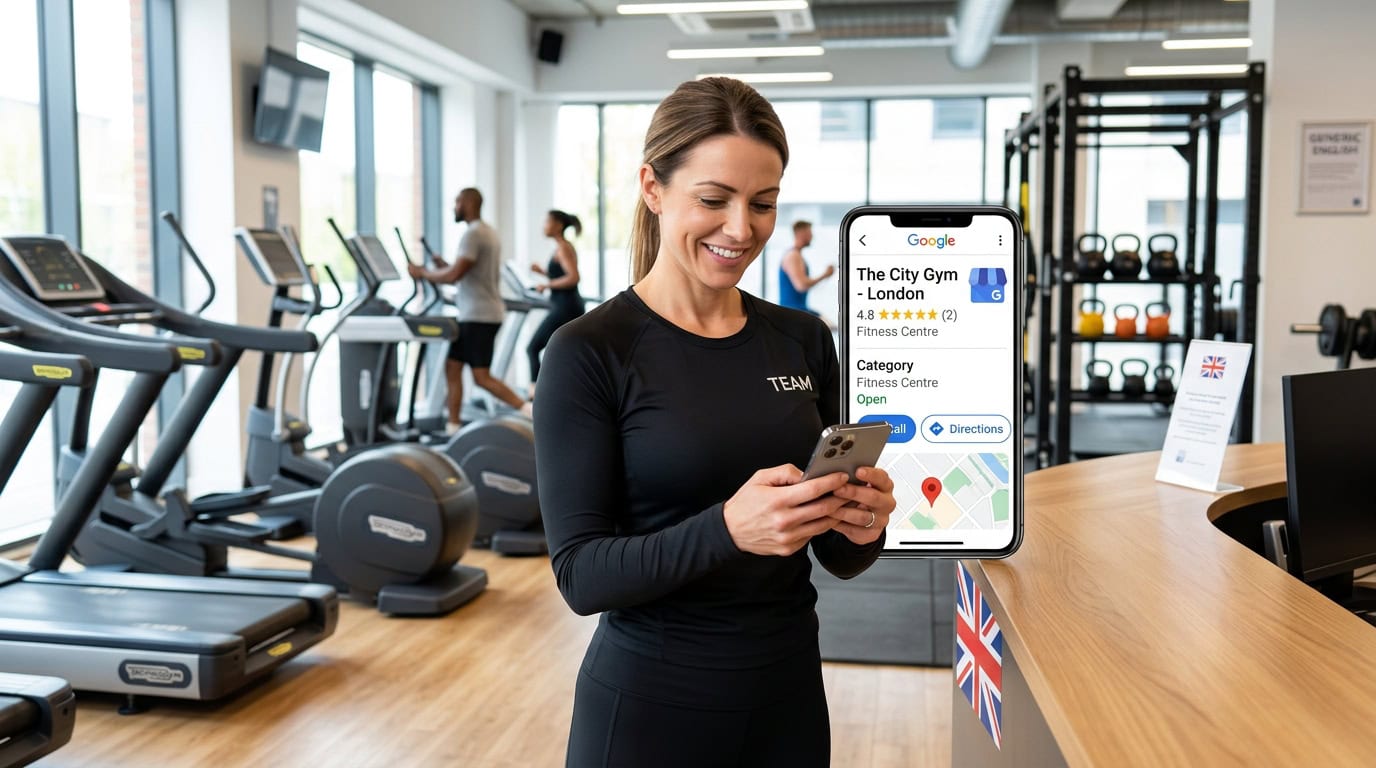
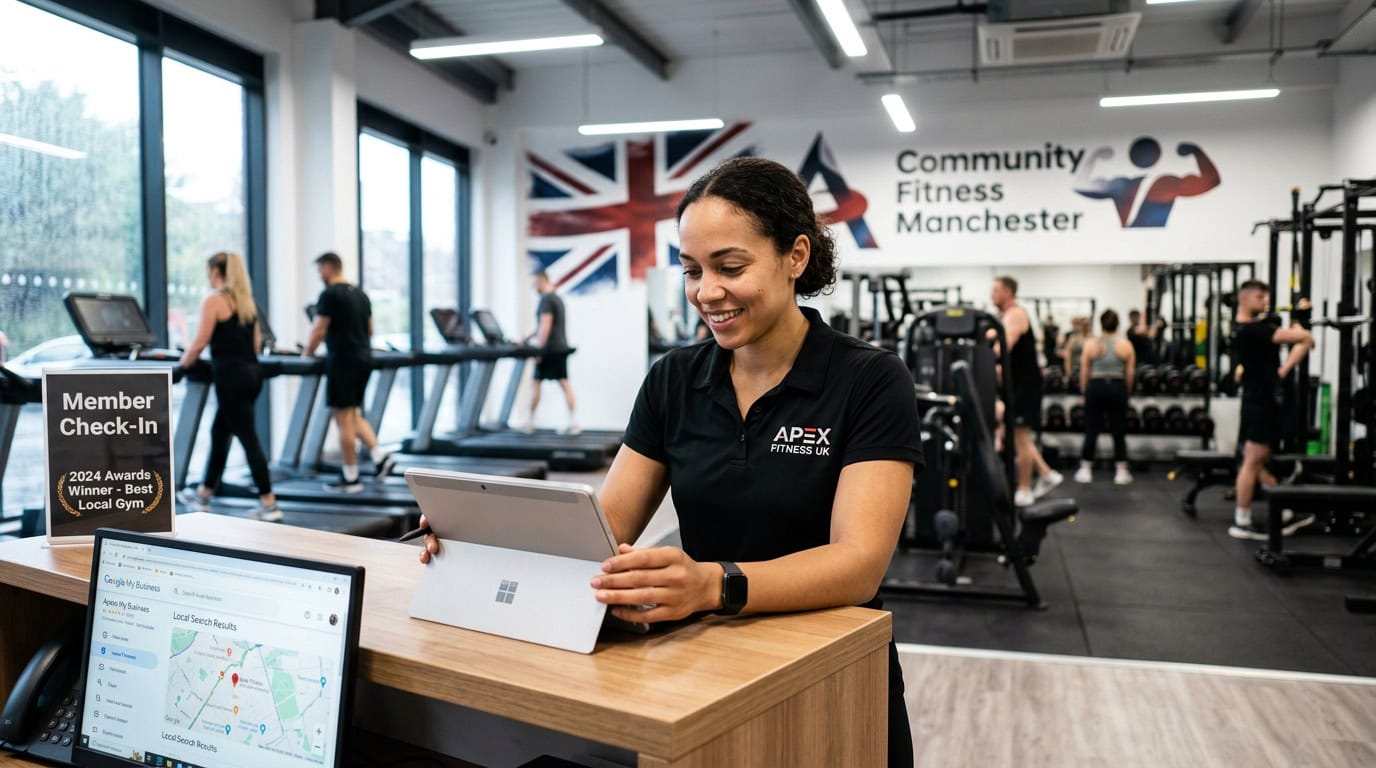
    Your Google Business Profile (GBP) is the single most important factor in local rankings. If you have not claimed and optimised yours, do that first. Our full guide covers the details, but here are the key points for SEO:

    • Primary category: Set to “Gym” or “Fitness centre”
    • Secondary categories: Add “Personal trainer,” “Weight loss centre,” “Yoga studio” as appropriate
    • Description: Include your location and key services naturally (e.g. “independent gym in Bristol offering strength training, personal training, and group fitness classes”)
    • Photos: Upload at least 15-20 high-quality photos. Google rewards active profiles.
    • Posts: Publish weekly updates (offers, events, news)
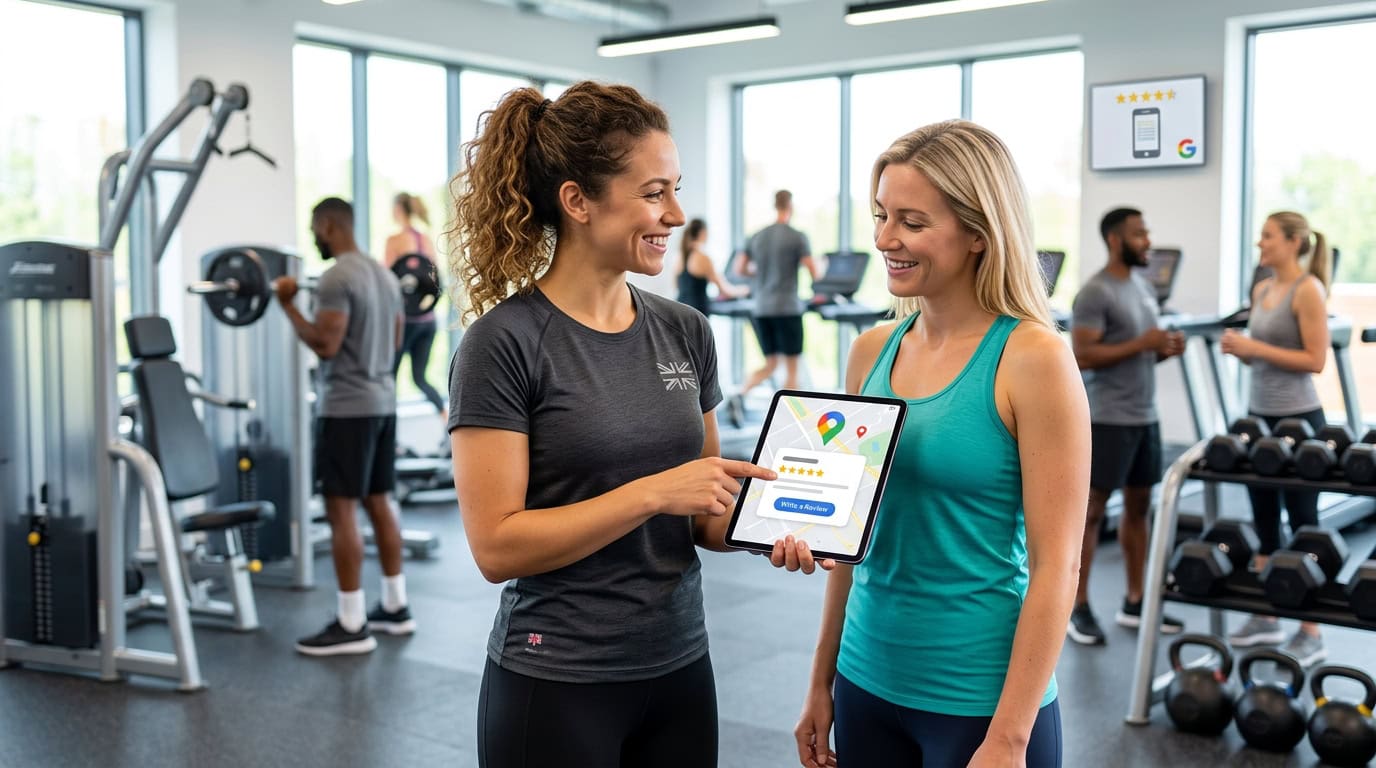
    • Reviews: Actively ask for and respond to reviews

    Step 2: Make Sure Your NAP Is Consistent Everywhere

    NAP stands for Name, Address, and Phone number. Google uses NAP consistency as a trust signal. If your gym name, address, or phone number is different on your website, Google Business Profile, Facebook page, GymPal listing, and local directories, Google gets confused and may rank you lower.

    Audit your NAP across these platforms:

    • Google Business Profile
    • Your website
    • Facebook page
    • Instagram profile
    • Yelp / Trustpilot
    • GymPal listing
    • Any local directory listings (Thomson Local, Yell, etc.)

    Make sure your name is formatted identically everywhere (e.g. always “Ironhouse Gym Bristol” — not “Ironhouse Gym” on one platform and “Ironhouse Gym, Bristol” on another).

    Step 3: Build Location Pages on Your Website

    If your website has separate pages for different services or locations, each page should be optimised for local search. Even if you have a single location, your key pages should include:

    • Your city or area name in the page title (e.g. “Personal Training in Bristol | Ironhouse Gym”)
    • Your full address and a Google Map embed
    • Your phone number
    • Local keywords naturally woven into the content (e.g. “Our Bristol gym offers…”)

    Create dedicated pages for your key services that people search for:

    • /personal-training-[your-city]
    • /group-classes-[your-city]
    • /free-trial-[your-city]

    Step 4: Collect and Manage Reviews

    Google reviews are a top-three local ranking factor. But they also influence click-through rate — a gym with 4.8 stars and 80 reviews will get significantly more clicks than one with 3.5 stars and 12 reviews, even if ranked lower.

    Review strategy:

    • Ask every new member for a Google review after their first week
    • Ask after positive experiences (hitting a milestone, great class)
    • Make it easy with a direct review link sent via text or email
    • Respond to every review — positive and negative

    Aim for at least 5-10 new reviews per month. Over 6 months, that builds a significant body of social proof.

    Step 5: Get Listed on Relevant Directories

    Being listed on fitness and local directories provides two benefits: backlinks (which improve your website’s authority) and additional places for potential members to find you.

    Priority listings:

    • GymPal — UK fitness-specific directory with high intent audience
    • Yelp UK
    • Trustpilot
    • Thomson Local
    • Yell.com
    • Bark.com (if you offer personal training)

    For each listing, use identical NAP information and include a link back to your website where possible.

    Step 6: Create Local Content

    Content that references your local area signals relevance to Google. Blog posts, pages, and resources that include local keywords help you rank for location-based searches. Ideas include:

    • “Best running routes in [your city]”
    • “A guide to healthy eating in [your area]”
    • “Gym etiquette tips for our [your city] members”
    • “Why we opened our gym in [your neighbourhood]”
    • “Local fitness events in [your city] this month”

    This content does not need to be long or complex. Even 500-800 words per post, published monthly, can make a significant difference over time.

    Step 7: Technical SEO Basics for Your Website

    You do not need to be a developer to handle the basics:

    • Mobile-friendly: Google indexes mobile-first. If your site is not mobile-friendly, it will not rank well.
    • Fast loading: Aim for pages to load in under 3 seconds. Compress images and use a fast hosting provider.
    • SSL certificate: HTTPS is a ranking signal. Your site should have it (most website builders include it free).
    • Schema markup: Add LocalBusiness schema to your site. This helps Google understand your business information. Most website builders have plugins or built-in tools for this.
    • Sitemap: Submit an XML sitemap to Google Search Console. This helps Google find and index all your pages.
    • Google Search Console: Set this up (it is free) to monitor your indexing, search performance, and any technical issues.

    Step 8: Track Your Progress

    SEO is a long-term investment. You will not see results overnight, but you should see measurable improvement within 3-6 months. Track these metrics:

    Metric How to Track Target
    Google Maps ranking Search for “gym near me” from different locations Top 3 local pack
    Organic website traffic Google Analytics (free) Growing month on month
    Google Business Profile views GBP Insights dashboard Growing month on month
    Phone calls from GBP GBP Insights dashboard Growing month on month
    Direction requests GBP Insights dashboard Growing month on month
    Review count and rating GBP and manual tracking 4.5+ stars, 50+ reviews
    Keyword rankings Google Search Console or Ubersuggest (free) Top 10 for target keywords

    How GymPal Supports Your SEO Strategy

    Your GymPal listing contributes to your SEO in several ways:

    • A backlink to your website (improves domain authority)
    • A presence on a domain with existing SEO authority for fitness-related searches
    • Additional reviews and social proof that reinforce your reputation
    • Visibility to a fitness-specific audience with high purchase intent

    Combined with a strong Google Business Profile and well-optimised website, a GymPal listing completes your local search presence.

    The Bottom Line

    Local SEO is not complicated — but it does require consistency. The gym owners who rank highest in local search are not necessarily the ones with the biggest budgets or the best websites. They are the ones who have claimed their profiles, built consistent citations, collected reviews steadily, and published local content regularly.

    Start with the quick wins: claim and optimise your Google Business Profile, audit your NAP consistency, and start asking for reviews. Then build from there. Over 3-6 months, these small, consistent actions will compound into significantly better local visibility and more enquiries through your door.


    Boost your local search visibility by claiming your free GymPal listing. It takes minutes, provides a valuable backlink, and puts your gym in front of thousands of UK fitness seekers. One more place for Google to find you — and one more channel for members to discover you.


    Is your gym listed on GymPal? Over 10,000 UK fitness businesses are in our directory. Claim your free listing in 5 minutes — and start getting discovered by local fitness seekers today.

  • Why Your UK Gym Needs a Website (And Exactly What It Should Include)

    Why Your UK Gym Needs a Website (And Exactly What It Should Include)

    In 2025, a Website Is Non-Negotiable

    It is surprising how many independent UK gyms still operate without a proper website. Some rely entirely on a Facebook page. Others have a single-page site that has not been updated since 2019. And some have nothing at all — just a Google Business Profile and word of mouth.

Do not bury this in paragraphs of text. Use a clear headline, a supporting subheading, and a button. Example: “Independent Gym in Bristol | Strength Training, Classes, and Community | Book Your Free Trial”

2. Pricing

People want to know how much it costs. Hiding your prices until after a tour or phone call creates friction and mistrust. Display your membership options clearly:

What to Show Why
Monthly membership price (from) Sets expectations immediately
Tiered options (basic, standard, premium) Shows there is a plan for every budget
What is included in each tier Helps prospects compare value
PT session prices Captures prospects interested in coaching
Free trial or day pass offer Reduces the barrier to visiting

3. Class Timetable

Your class timetable is one of the most visited pages on any gym website. Make it:

  • Easy to find (link in the main navigation)
  • Up to date (update it weekly or use scheduling software that syncs automatically)
  • Mobile-friendly (most people will view it on their phone)
  • Clear about class types, durations, and difficulty levels

4. Facilities and Equipment

Showcase what makes your gym special. Include:

  • High-quality photos of your gym (not stock images)
  • A list of key equipment and training areas
  • Unique facilities: sauna, pool, climbing wall, specialist equipment, turf strip, sled track
  • Changing room and shower photos
  • Free parking, bike racks, or transport links

5. About Us / Our Story

People choose independent gyms because they want a personal connection. Tell your story:

  • Why you opened the gym
  • Your fitness philosophy and approach
  • Your team — photos, names, qualifications, and specialisms
  • What makes your community different

6. Testimonials and Social Proof

Nothing sells your gym like real members talking about their experience. Include:

  • Written testimonials with names (and photos if possible)
  • Before and after photos (with permission)
  • Google review snippets and your overall rating
  • A link to your GymPal profile where prospects can read more reviews

7. Contact Information and Location

Make it effortless to get in touch and find you:

  • Phone number (visible on every page)
  • Email address
  • Full postal address
  • Embedded Google Map
  • Opening hours (including bank holidays)
  • Contact form
  • Links to your social media profiles

8. Free Trial or Day Pass Sign-Up

Your primary call to action should be to get people through the door. Make it easy to claim a free trial or book a tour:

  • A prominent button on every page
  • A simple form (name, email, phone — nothing more)
  • Instant confirmation via email or text

How to Build Your Gym Website

Option 1: DIY Website Builders (Recommended for Most)

You do not need a web developer. Modern website builders make it possible to create a professional gym website in a few hours:

Platform Cost Best For
Wix £15–25/month Easiest drag-and-drop builder, great templates
Squarespace £15–30/month Beautiful design, excellent for visual businesses
WordPress £5–15/month (hosting) Maximum flexibility, larger ecosystem of plugins
Webflow £14–25/month More advanced design control

For most independent gyms, Squarespace or Wix is the best starting point. Both offer gym-specific templates, are easy to update, and include hosting. You can have a professional site live within a weekend.

Option 2: Hire a Local Web Designer

If you have a budget of £500–2,000, a local web designer can create a custom site tailored to your gym. The advantage is a unique design that perfectly reflects your brand. The disadvantage is cost and the need to go back to the designer for most updates.

Option 3: Gym-Specific Website Platforms

Some platforms are built specifically for gyms and include integrated features like class booking, membership management, and payment processing:

  • Glofox: All-in-one gym management with a built-in website
  • TeamUp: Class booking and management with a website builder
  • Exercise.com: Full gym management platform with custom website

These cost more (£80–200/month) but eliminate the need for separate booking and payment systems.

Website Must-Haves: The Technical Checklist

Beyond content, your website needs to meet basic technical standards:

  • Mobile responsive: Over 60% of visitors will be on their phone. Test your site on mobile before launching.
  • Fast loading: Pages should load in under 3 seconds. Compress images and avoid heavy elements.
  • SSL certificate: Your site must use HTTPS (shown with a padlock in the browser). This is essential for security and Google rankings.
  • Clear navigation: Visitors should find any page within 2 clicks from the homepage.
  • SEO basics: Include your location and key services in page titles and headings (e.g. “Bristol Gym | Strength Training and Personal Training”).
  • Google Analytics: Install GA4 (free) to track visitor behaviour and understand what drives enquiries.

Your Website and GymPal: Better Together

Your website and your GymPal listing serve complementary purposes:

  • Your website is your full online home — detailed, branded, and under your control
  • Your GymPal listing puts you in front of a fitness-specific audience actively comparing gyms
  • Link from your website to your GymPal profile to show additional reviews and comparisons
  • Link from your GymPal profile to your website for full information and trial sign-ups

Together, they cover both branded search (people who know your name) and discovery search (people who are just looking for a gym).

The Bottom Line

Your gym website is your 24/7 salesperson. It works while you sleep, answers questions while you are training clients, and converts prospects into visitors while you are running classes. Not having one — or having a bad one — is literally leaving members on the table.

You do not need to spend thousands or hire an agency. A simple, well-structured Squarespace or Wix site with the essentials listed above will outperform a flashy custom site that lacks clear information. Focus on answering your prospect’s questions, making it easy to get started, and keeping everything up to date.


Already have a website? Make sure it works harder for you by also listing on GymPal. Your free listing puts your gym in front of thousands of UK fitness seekers actively comparing options — driving traffic back to your website and people through your doors.


Is your gym listed on GymPal? Over 10,000 UK fitness businesses are in our directory. Claim your free listing in 5 minutes — and start getting discovered by local fitness seekers today.

  • How to Create a Profitable Personal Training Programme at Your UK Gym

    How to Create a Profitable Personal Training Programme at Your UK Gym

    Personal Training Is a Revenue Goldmine Most Gyms Ignore

    If your gym only generates revenue from memberships, you are leaving money on the table. Personal training (PT) is one of the highest-margin services a gym can offer, with typical session rates of £30–75 per hour and profit margins of 60–80% after trainer costs. According to NHS exercise guidelines

    Yet many independent UK gyms treat PT as an afterthought — a service that exists in the corner if anyone asks about it. The gyms that treat PT as a core business pillar generate significantly more revenue per square foot, have higher member retention, and create a coaching culture that sets them apart from budget chains. According to CIMSPA professional standards for fitness professionals

    Here is how to build a personal training programme that generates real revenue for your gym.

    Step 1: Decide on Your PT Business Model

    There are three main ways to structure personal training at your gym. Each has different revenue implications:

    Model How It Works Your Revenue Best For
    In-house employed PTs You hire trainers as employees, set rates, and manage bookings Full session revenue minus wages and NI Gyms that want full control over quality and customer experience
    Licensee/rental model PTs pay you a weekly or monthly fee to train clients at your gym Fixed rental income regardless of how many sessions they do Gyms that want predictable income with minimal management
    Revenue share PTs keep a percentage of each session (typically 50-70%) Percentage of each session sold Gyms that want to incentivise PTs to sell while sharing risk

    The right model depends on your gym size, management capacity, and goals. Many gyms start with the licensee model for simplicity, then move to revenue share or employed PTs as the programme grows.

    Step 2: Recruit and Vet Quality Trainers

    Your PT programme is only as good as your trainers. A bad PT damages your gym’s reputation. Here is how to find and keep good ones:

    Minimum Requirements

    • Level 3 Personal Trainer qualification (recognised by CIMSPA or REPs)
    • Public liability insurance
    • First aid certificate
    • Professional, approachable demeanour

    Where to Find PTs

    • Post on your social media and website
    • Contact local personal training course providers — newly qualified PTs are often looking for gym bases
    • Ask your existing members — some may be qualified or studying towards their PT qualification
    • LinkedIn and fitness industry job boards

    Vetting Process

    • Check their qualifications and insurance certificates
    • Observe them deliver a sample session (either with you or a willing member)
    • Ask about their specialisms, target client base, and availability
    • Get references from previous gyms or clients

    Step 3: Price Your PT Services Competitively

    UK PT session rates vary significantly by location and trainer experience:

    Session Type Typical Price Range
    Single 1-to-1 session (60 min) £30–75
    Single 1-to-1 session (45 min) £25–55
    Block of 5 sessions £135–335 (5-10% discount)
    Block of 10 sessions £250–650 (10-15% discount)
    Small group training (2-4 people) £15–25 per person per session
    Group class (6-12 people) £8–15 per person per session

    London and the South East command the highest rates. Northern England, Scotland, and Wales tend to be at the lower end. Research what other gyms in your area charge and position yourself competitively.

    Step 4: Create a Sales Funnel for PT

    PT will not sell itself. You need a system to convert interested members into paying clients:

    The Free Taster Session

    The single most effective PT sales tool is a complimentary 30-minute taster session. Offer this to every new member during their induction. The format is simple:

    1. Assessment (10 min): Understand their goals, fitness history, and any injuries or limitations
    2. Mini-workout (15 min): Put them through 3-4 exercises relevant to their goals
    3. Recommendation (5 min): Explain how PT can help them achieve their goals faster, share success stories, and present your packages

    The taster session is not a hard sell. It is a value-first approach that demonstrates your PT’s expertise. Conversion rates for well-delivered taster sessions typically range from 30-50%.

    Visibility and Promotion

    • Introduce your PTs in new member welcome packs
    • Feature PTs and client success stories on your social media
    • Display PT availability and pricing on a noticeboard in the gym
    • Include PT information in your email newsletter
    • Offer PT as an add-on during membership sign-up conversations

    Step 5: Offer Packages, Not Just Single Sessions

    Single sessions have high drop-off rates. Packages create commitment and generate upfront cash flow. Offer tiered packages:

    Package What It Includes Price Point
    Starter 3 sessions + basic programme £90–180
    Transformation 10 sessions + nutrition guidance + progress tracking £280–650
    12-Week Programme 24 sessions + full programme + nutrition plan + weekly check-ins £600–1,400
    Group Training 8 small-group sessions (2-4 people) £100–200 per person

    The 12-week programme is the most profitable option. It creates a structured journey, locks in revenue, and delivers measurable results that generate testimonials and referrals.

    Step 6: Track Performance and Hold PTs Accountable

    Without tracking, you have no idea whether your PT programme is profitable. Monitor these metrics monthly:

    Metric Why It Matters
    Total PT sessions delivered Overall programme volume
    Revenue per PT per month Individual trainer performance
    Client retention rate Are clients staying beyond the first block?
    New client acquisition How many new clients each PT is bringing in
    Client results and testimonials Social proof for marketing and referrals
    PT utilisation rate Hours booked vs hours available

    Share these metrics with your PTs. Trainers who understand their numbers are more motivated to improve them.

    Step 7: Create a Referral Culture

    PT clients who get results become your best advocates. Build referral incentives into your PT programme:

    • Offer existing clients a free session for every new client they refer who signs up for a package
    • Ask successful clients for written or video testimonials (with their permission)
    • Feature client transformations on social media (with before/after photos where appropriate)

    A single client transformation story shared on Instagram can generate more PT enquiries than any paid advertisement.

    How This Ties Into Your Wider Gym Strategy

    A strong PT programme benefits your entire gym:

    • Members with PTs retain at significantly higher rates (80%+ vs 50-70% for non-PT members)
    • PTs act as floor coaches, improving the experience for all members
    • Client success stories provide marketing content for your gym
    • PT revenue can offset the cost of additional staff or facility improvements

    Combined with a strong online presence — including your GymPal listing, Google reviews, and social media — a PT programme transforms your gym from a facility into a service business with multiple revenue streams.

    The Bottom Line

    Personal training is not an optional extra for independent gyms — it is a core revenue stream that can add thousands of pounds per month to your bottom line. The investment required is minimal: recruit qualified trainers, create a simple sales funnel, offer structured packages, and track your numbers.

    Start with one good trainer and a free taster session offer. Prove the concept, measure the results, and scale from there. Within three to six months, a well-run PT programme can be generating more profit per hour than any other aspect of your gym business.


    Want to attract more members who are interested in personal training? Claim your free GymPal listing and highlight your PT services, trainer profiles, and client success stories. Reach thousands of UK fitness seekers who are ready to invest in expert guidance.


    Is your gym listed on GymPal? Over 10,000 UK fitness businesses are in our directory. Claim your free listing in 5 minutes — and start getting discovered by local fitness seekers today.

  • How to Compete With Budget Gym Chains: Strategies for Independent UK Gym Owners

    How to Compete With Budget Gym Chains: Strategies for Independent UK Gym Owners

    The David and Goliath Reality

    PureGym has over 300 locations in the UK. The Gym Group is expanding rapidly. JD Gyms is opening new sites every month. These chains have national brand recognition, slick marketing, and price points that independent gym owners simply cannot match on a per-month basis. with a coach

  • Specialist classes: Olympic lifting, mobility, pre/post-natal, youth fitness
  • Structured programmes (beginner courses, 8-week transformation challenges)
  • Seasonal programming tied to member goals (New Year, summer, pre-winter)
  • Coaching and Support

    Facilities

    Strategy 3: Own Your Local Identity

    Chains are faceless and generic. Independent gyms have character, personality, and local roots. Use that.

    Strategy 4: Master Your Online Presence

    Strategy 5: Get Your Pricing Right

    Strategy 6: Deliver an Experience, Not Just a Facility

    The ultimate differentiator is how people feel when they walk through your door. Budget chains provide access to equipment. Independent gyms can provide an experience:

    The One Thing to Remember

    PureGym members leave PureGym at a rate of 30-50% per year. They are not loyal to the brand — they are loyal to convenience and price. When they have a bad experience (crowded gyms, broken equipment, impersonal service), they look for alternatives.

    Your job is to be the alternative they find. When a frustrated chain member searches for gyms near them and discovers your gym — with its glowing reviews, community atmosphere, and genuine coaching — the choice becomes clear.

    The Bottom Line

    Independent gyms do not need to compete with chains on their terms. You compete on yours: community, coaching, character, and experience. These are things that chains cannot replicate at scale.

    Focus on being the gym that people love, not the gym that is cheapest. Build a community that members feel proud to belong to. Deliver an experience that makes people look forward to their next session. Do those things consistently, and you will never need to worry about the chain down the road again.


    Make sure potential members can find you when they search for alternatives to the big chains. Claim your free GymPal listing and showcase what makes your independent gym different. Facilities, reviews, pricing, and a compelling description — all in one place for fitness seekers who are ready to make a switch.


    Is your gym listed on GymPal? Over 10,000 UK fitness businesses are in our directory. Claim your free listing in 5 minutes — and start getting discovered by local fitness seekers today.

  • 5 Email Marketing Campaigns Every UK Gym Owner Should Be Sending

    5 Email Marketing Campaigns Every UK Gym Owner Should Be Sending

    5 Email Marketing Campaigns Every UK Gym Owner Should Be Sending Free up to 300 emails/day SMS + email combined ActiveCampaign From £29/month Advanced automation and segmentation ConvertKit Free up to 1,000 subscribers Content-focused, simple tagging

    For most gyms, Mailchimp or MailerLite is the best starting point. Both offer free tiers generous enough to get started, and you can upgrade as your list grows.

    Campaign 1: The Welcome Sequence for New Members

    When someone joins your gym, they are at their most enthusiastic — and most receptive to communication. A welcome sequence capitalises on that momentum and reduces early drop-off.

    How It Works

    Set up an automated series of 3–5 emails triggered when a new member joins:

    Email Timing Content
    Welcome Immediately Thank them for joining, confirm their membership details, set expectations for their first visit, include a link to book an induction
    Getting started Day 2 Share a beginner guide to your gym (equipment map, class timetable, etiquette tips), introduce key staff members
    First week check-in Day 7 Ask how their first week went, remind them about classes, offer help if they have questions
    30-day milestone Day 30 Celebrate their consistency, share a quick workout tip, encourage them to book a free PT session or attend a class
    Community invite Day 45 Invite them to your WhatsApp group, Facebook group, or upcoming member event

    Why It Works

    Members who receive a welcome sequence are significantly more likely to form a habit and stay beyond the first three months. You are guiding them through the critical onboarding period with structured, helpful communication.

    Campaign 2: The Re-Engagement Win-Back

    The single biggest predictor of cancellation is declining attendance. A re-engagement campaign targets members who have gone quiet before they cancel.

    How It Works

    Set up an automation triggered when a member has not checked in for 14 days:

    Email Timing Tone
    We miss you 14 days inactive Friendly check-in: noticed we have not seen you recently, everything okay, here is what you are missing this week
    We can help 21 days inactive Supportive offer: offer a free PT session, programme review, or class recommendation to help them get back on track
    Last chance 28 days inactive Soft urgency: offer a membership freeze or modified plan if they are struggling with cost or time

    Why It Works

    Many members simply fall out of habit and need a gentle nudge. These emails show that you notice when someone is missing and that you care enough to reach out. A well-timed re-engagement email can recover 15–25% of at-risk members.

    Campaign 3: The Lead Nurture Sequence

    Not everyone who visits your website or claims a free trial is ready to join immediately. A lead nurture sequence builds trust and provides value over time, so when they are ready, your gym is top of mind.

    How It Works

    Triggered when someone signs up for your email list (newsletter, free guide download, or trial registration but no-show):

    Email Timing Content
    Deliver the value Immediately Send whatever they signed up for (guide, checklist, or trial reminder)
    Social proof Day 3 Share a member transformation story or testimonial
    Behind the scenes Day 7 Show what makes your gym different — community, coaching, facilities
    FAQ and objection handling Day 10 Address common concerns: cost, commitment, intimidation, time
    Offer Day 14 Invite them to claim a free trial, attend an open day, or book a tour with a time-limited incentive

    Why It Works

    Most people need 5–7 touchpoints before making a purchasing decision. A nurture sequence provides those touchpoints automatically, building trust and addressing objections before the prospect even speaks to you.

    Campaign 4: The Referral Programme Promotion

    Your existing members are your best marketing channel. They already love your gym, and a personal recommendation is the most trusted form of marketing. But they need a nudge to actually refer someone.

    How It Works

    Send a monthly or quarterly email to your entire member list promoting your referral programme. The email should:

    • Thank them for being a member
    • Explain the referral offer clearly (e.g. give a friend a free 3-day trial, if they join you both get your next month half price)
    • Make sharing easy — include a unique referral link or a pre-written message they can forward
    • Show social proof: share how many members joined through referrals last month

    Why It Works

    Referred members convert at higher rates, stay longer, and are more engaged than members acquired through paid advertising. A simple referral programme costs almost nothing to run and can become your most reliable source of new members.

    Campaign 5: The Monthly Newsletter

    A regular newsletter keeps your gym in members minds even when they are not thinking about fitness. It also provides value to your broader email list (non-members who have not yet joined).

    What to Include

    Keep it short, scannable, and valuable. A good monthly gym newsletter includes:

    • Gym news: New equipment, class changes, staff updates
    • Member spotlight: A short feature on a member achievement or transformation
    • Fitness tip: One actionable piece of advice (exercise, nutrition, or recovery)
    • Upcoming events: Class launches, social events, competitions
    • Offer or incentive: A reason to visit or bring a friend

    Why It Works

    Consistency builds trust. A monthly newsletter shows that your gym is active, engaged, and focused on its members. It also gives you a regular touchpoint with your entire email list, including people who have not yet joined.

    Email Marketing Best Practices for Gyms

    • Segment your list. Send different emails to active members, inactive members, leads, and former members. One-size-fits-all emails perform significantly worse.
    • Personalise subject lines. Using a recipient name can increase open rates by up to 26%.
    • Keep it concise. Most people scan emails in under 15 seconds. Use short paragraphs, bullet points, and clear calls to action.
    • Mobile optimise. Over 60% of emails are opened on mobile. Test your emails on a phone before sending.
    • Do not over-email. Two to four emails per month is the sweet spot for most gyms.
    • Track your metrics. Monitor open rates, click-through rates, and unsubscribes. Aim for open rates above 25% and click-through rates above 3%.
    • Include an unsubscribe link. This is a legal requirement under UK GDPR and the Privacy and Electronic Communications Regulations (PECR).

    Building Your Email List

    If your list is small, here is how to grow it quickly:

    • Add an email opt-in to your GymPal profile and website
    • Collect emails during gym inductions and sign-ups
    • Run a competition (win a free month — enter with your email)
    • Create a free downloadable resource (a 10-minute home workout guide for busy people)
    • Add a sign-up link to your Instagram bio

    The Bottom Line

    Email marketing is not flashy, but it is effective. For the cost of a free Mailchimp account and a couple of hours per month, you can build automated campaigns that retain members, re-engage lapsed ones, and convert leads into paying members. No other marketing channel offers that level of return on investment.

    Start with the welcome sequence. It is the easiest to set up, delivers immediate value, and provides the template for building more campaigns over time. Your members — and your revenue — will thank you.


    Want to reach more potential members? Claim your free GymPal listing and put your gym in front of thousands of UK fitness seekers. Include your email sign-up link in your profile to grow your list while you attract new visitors.


    Is your gym listed on GymPal? Over 10,000 UK fitness businesses are in our directory. Claim your free listing in 5 minutes — and start getting discovered by local fitness seekers today.

  • How to Run a Successful Free Trial at Your UK Gym (And Convert Trialists Into Members)

    How to Run a Successful Free Trial at Your UK Gym (And Convert Trialists Into Members)

    How to Run a Successful Free Trial at Your UK Gym 20–30% Free personal training session Gyms that want to showcase coaching quality 40–55%

    The longer the trial, the higher the conversion — but also the higher the risk of tyre-kickers. For most independent gyms, a 3-day pass strikes the best balance between commitment and accessibility.

    Promote Your Trial Effectively

    A great trial offer is useless if nobody knows about it. Make your trial visible everywhere:

    • Google Business Profile: Add a booking button linking to your trial signup
    • Website: A prominent call-to-action above the fold on every page
    • Instagram and social media: Regular Stories and Reels promoting the trial
    • GymPal listing: Mention your free trial in your GymPal profile description
    • Local partnerships: Offer trial passes through local businesses, workplaces, and community groups
    • Referral programme: Give existing members free trial passes to give to friends

    The signup process should be frictionless. Ideally, someone should be able to claim their trial in under 60 seconds. Ask for the minimum information: name, email, and phone number. You can collect more details when they visit.

    The Trial Experience: Day One

    The first impression is everything. How you handle a trialist on their first visit largely determines whether they will return for day two. Here is a step-by-step process:

    1. Welcome Them Personally

    Do not just point them at a sign-in screen. Greet them by name, introduce yourself, and make them feel expected. A simple “Hi [Name], great to meet you — we’ve been looking forward to your visit” sets a completely different tone than “Sign in over there.””

    2. Give a Proper Tour

    Walk them through the entire gym. Explain what each area is for, what equipment is available, and how busy it gets at different times. Highlight things that differentiate you from competitors. A tour shows that you are proud of your facility and that you care about their experience.

    3. Understand Their Goals

    Ask why they are looking for a gym. Listen carefully. Common goals include weight loss, building strength, improving fitness, stress relief, and social connection. Tailor your tour and recommendations to their specific goals.

    4>Offer a Quick Orientation

    For beginners, the gym floor can be overwhelming. Offer a 10–15 minute orientation covering the basics: how the cardio machines work, where the free weights are, and how to adjust the pin-loaded equipment. This alone can be the difference between someone feeling confident and someone feeling lost.

    5. Introduce Them to Staff and Members

    If your gym has a strong community, show it off. Introduce them to a coach or friendly regular. The social connection factor is a powerful conversion driver — people join gyms where they feel they will belong.

    6. Follow Up Before They Leave

    Before they walk out the door, give them something concrete: a class timetable, a printed welcome guide, or a recommendation for their next session. Say something like: “I’d love to see you back for our HIIT class on Wednesday at 6pm — it’s a great way to meet some of the regulars.””

    During the Trial: Stay Connected

    If your trial spans multiple days, do not wait for the trialist to come to you. Be proactive:

    • Day 1 evening: Send a quick text or email: “Great having you in today, [Name]. How was your first session? Any questions about anything?””
    • Day 2: If they have not returned, send a gentle nudge: “Hey [Name], just checking in — remember your trial is active until [date]. We’d love to see you back. Got any questions about classes or equipment?””
    • During visits: Greet them by name, ask how their session is going, and offer help. Small interactions compound into a sense of belonging.

    Converting Trialists Into Members

    The conversion conversation should feel natural, not pushy. Here is how to approach it:

    Timing Matters

    The best time to discuss membership is during or after their final trial session, when they have just finished a workout and are feeling positive. Do not ambush them at reception before they have even broken a sweat.

    Ask, Do Not Tell

    Instead of launching into a sales pitch, ask questions:

    • “How has your trial experience been so far?”
    • “Is there anything that would have made your experience better?”
    • “Can you see yourself training here regularly?”

    If the answers are positive, transition naturally: “Brilliant — I’d love to talk you through our membership options so we can keep that momentum going.””

    Offer a Trialist Incentive

    Creating urgency without pressure is key. Consider:

    • Same-day signup discount: 10–20% off their first month if they join on the final trial day
    • No joining fee: Waive the joining fee for trialists who sign up within 48 hours
    • Free PT session: Include a complimentary personal training session with their first month
    • Buddy discount: If they sign up with a friend, both get a discount

    Frame it as a reward for trying the gym, not a hard sell.

    Remove Friction

    Make the signup process as easy as the trial signup. Digital forms, card payments, and instant access — no one wants to fill out a paper form and wait for a direct debit to process.

    What to Do If They Do Not Sign Up

    Not every trialist will convert, and that is okay. Handle it gracefully:

    • Thank them genuinely for trying the gym
    • Ask for feedback — understanding why they did not join helps you improve
    • Offer to stay in touch — add them to an email list for events, open days, and future promotions
    • Leave the door open — “You are welcome back anytime. We run promotions throughout the year if the timing is not right just now.””

    Many people who do not convert immediately will rejoin months later when their circumstances change — if you handled the trial well and left a positive impression.

    Track Your Trial Performance

    Measure these metrics to continuously improve your trial process:

    Metric How to Track Target
    Trial signups per month Website analytics + CRM Growing month on month
    Trial attendance rate Check-in system Above 70%
    Conversion rate CRM (trialists who join / total trialists) Above 35%
    Average time to convert CRM (days between first visit and signup) Within 3 days
    Re-activation rate CRM (trialists who join within 6 months) Above 10%

    The Bottom Line

    Free trials are not a marketing gimmick — they are the single most effective way to convert interested prospects into paying members. The difference between a trial that converts and one that does not comes down to experience, not price.

    Invest in making your trial feel personal, welcoming, and structured. Train your staff to treat every trialist like a potential long-term member — because they are. Follow up, remove friction, and handle rejection gracefully. Over time, a well-run trial programme becomes your most reliable source of new members.


    Want more people discovering your gym and claiming your free trial? Claim your free GymPal listing and put your gym in front of thousands of UK fitness seekers actively searching for their next gym. Include your trial offer in your profile to convert browsers into visitors.


    Is your gym listed on GymPal? Over 10,000 UK fitness businesses are in our directory. Claim your free listing in 5 minutes — and start getting discovered by local fitness seekers today.

  • Why Every UK Gym Owner Needs a Google Business Profile (And How to Optimise It)

    Why Every UK Gym Owner Needs a Google Business Profile (And How to Optimise It)

    Why Every UK Gym Owner Needs a <a href="https://askgympal.co.uk/blog/google-business-profile-get-more-local-gym-members/" target="_blank" rel="dofollow" >Google Business</a> Profile. Google penalises this. Keep it clean: “Joe’s Gym.”

    Address and Service Area

    Your physical address helps Google determine which local searches to show you for. If you serve a wider area (e.g. a mobile PT or outdoor fitness company), set your service area radius as well.

    Phone Number and Website

    Use a dedicated business phone number if possible — not a personal mobile. Link to your website, or if you do not have one, link to your GymPal listing or booking page.

    Business Hours

    Be accurate and keep them updated. If your hours change for bank holidays or seasonal schedules, update them. Incorrect hours frustrate potential members and can lead to negative reviews.

    Business Description

    You get 750 characters. Use them wisely. Include:

    • What your gym offers (facilities, classes, personal training)
    • What makes you different (community, specialist equipment, expert coaches)
    • Your location and who you serve
    • A call to action

    Example: “Independent gym in the heart of Bristol offering strength training, functional fitness, and group classes. Friendly community atmosphere with expert coaching. Free trial available — come and see why our members stay. Open 6am–10pm weekdays, 8am–6pm weekends.”

    Photos and Videos

    This is one of the most underutilised features. Businesses with photos receive 42% more direction requests on Google Maps and 35% more clicks to their website. Upload:

    • Exterior and interior shots of your gym
    • Equipment and training areas
    • Classes in action (with member permission)
    • Your team
    • Member events and achievements

    Aim for at least 10–15 high-quality photos. Add new photos regularly — Google rewards active profiles.

    Services

    List your key services with descriptions and prices where possible:

    • Monthly membership (from £XX)
    • Personal training (from £XX/session)
    • Group classes (included in membership)
    • Induction programme (free/fee)

    The Reviews Factor: Why It Matters and How to Get Them

    Google reviews are one of the top three ranking factors for local search. Your star rating and review count directly influence whether someone clicks on your profile or scrolls past to a competitor.

    Quick wins for getting more reviews:

    • Ask at the right time — after a positive experience (hitting a milestone, great class, membership renewal)
    • Make it easy — create a direct review link and share it via text, email, or QR code
    • Train staff to ask — front desk and coaches should feel comfortable requesting reviews
    • Respond to every review — positive and negative. This shows Google (and potential members) that you are active and engaged

    For a deeper dive on review strategy, check out our guide on getting more Google reviews for your UK gym.

    Google Posts: Your Free Mini-Adverts

    Google Business Profiles include a “Posts” feature that lets you publish updates directly to your profile — similar to social media posts but appearing in Google search results. Use them for:

    • New class announcements
    • Membership offers and free trials
    • Member success stories
    • Seasonal promotions (New Year, summer fitness challenges)
    • Event promotion (open days, charity workouts)

    Each post can include an image, text, and a call-to-action button (Book, Sign Up, Learn More). Posts expire after seven days, so post regularly — aim for at least one per week.

    Insights: Understanding Your Local Performance

    Google provides free analytics for your Business Profile. Track these metrics monthly:

    Metric What It Tells You
    Searches (direct vs discovery) How many people found you by name vs. by searching for gyms in your area
    Website clicks How many people visited your website from your profile
    Direction requests How many people asked Google for directions to your gym
    Phone calls How many people called directly from your profile
    Photos views How many people looked at your photos

    Direction requests and phone calls are your strongest indicators of purchase intent. If these are low, review your profile completeness, photos, and reviews.

    Google Business Profile vs Gym Directory Listings

    Your Google Business Profile and your GymPal listing serve different but complementary purposes:

    Google Business Profile GymPal
    Primary local search discovery Targeted fitness audience actively comparing gyms
    Shows in Google Maps and “near me” searches Advanced filtering by facilities, price, type
    General audience Fitness-specific audience with high intent
    Free to use Free listing available
    Limited gym-specific features Class schedules, facility details, member reviews, direct enquiries

    Having both gives you maximum coverage. Google captures the general local search traffic, while GymPal captures the fitness-specific audience who are actively comparing their options and ready to make a decision.

    Common Mistakes to Avoid

    • Leaving the profile incomplete — every empty field is a missed opportunity
    • Using stock photos — real photos of your gym always outperform generic stock images
    • Ignoring reviews — unresponded reviews, especially negative ones, damage trust
    • Keyword stuffing the business name — this can get your profile suspended
    • Not posting regularly — inactive profiles rank lower in local search
    • Duplicate listings — having multiple listings for the same location confuses Google and splits your reviews

    The Bottom Line

    Your Google Business Profile is free, it works 24/7, and it reaches people at the exact moment they are looking for a gym in your area. There is no excuse for not having one — and there is no excuse for not keeping it updated.

    Spend an hour this week claiming or auditing your profile. Fill in every section, upload fresh photos, ask three members for reviews, and publish your first Google Post. These small actions compound over time into a steady stream of local enquiries that cost you nothing.


    Already claimed your Google Business Profile? Take the next step and list your gym on GymPal to reach a fitness-focused audience actively comparing gyms in your area. Free listing, real member reviews, and direct enquiries — set up takes minutes.


    Is your gym listed on GymPal? Over 10,000 UK fitness businesses are in our directory. Claim your free listing in 5 minutes — and start getting discovered by local fitness seekers today.

  • How to Reduce Gym Member Churn: 9 Retention Strategies That Actually Work

    How to Reduce Gym Member Churn: 9 Retention Strategies That Actually Work

    How to Reduce Gym Member Churn: 9 Retention Strategies

  • Social events — BBQs, charity workouts, Christmas parties
  • Private Facebook or WhatsApp groups for members
  • Buddy programmes pairing new members with regulars
  • Celebrating member milestones (100th visit, first pull-up, personal best)
  • The goal is to make leaving your gym feel like leaving a group of friends, not just cancelling a subscription.

    4. Offer Flexible Membership Options

    Not everyone can commit to a 12-month contract. Offering flexibility reduces the number of members who leave because they feel trapped or cannot afford it. Consider:

    Members who feel they have options are more likely to stay than those who feel locked in.

    5. Invest in Your Staff

    Your team is the face of your gym. Members who feel recognised and welcomed by staff are significantly more likely to stay. Train your team to:

    High staff turnover is a retention killer. Invest in your team’s development, pay fairly, and create a positive working environment. Happy staff create happy members.

    6. Keep Your Equipment Clean and Updated

    Nothing signals “we do not care” faster than broken equipment, dirty changing rooms, or out-of-order signs that stay up for weeks. Establish a maintenance schedule and stick to it:

    Members notice when a gym is well maintained — and they notice when it is not.

    7. Gather and Act on Member Feedback

    Most members who leave never tell you why — they simply cancel. Implement regular feedback mechanisms:

    The key is not just collecting feedback but acting on it visibly. When members see their suggestions implemented, it builds loyalty and trust.

    8. Diversify Your Class Offering

    Members who attend classes churn at significantly lower rates than those who only use the gym floor. Classes provide structure, social connection, and accountability — three things that drive habit formation.

    Regularly review your class timetable based on attendance data and member requests. Consider adding:

    9. Make It Easy to Stay, Not Hard to Leave

    This sounds counterintuitive, but it works. Gyms that make cancellation difficult breed resentment and negative reviews. Gyms that handle cancellation gracefully often retain members who were simply testing the waters — and they gain positive word of mouth.

    When a member cancels, respond with:

    Members who leave on good terms are far more likely to rejoin in the future than those who leave frustrated.

    Retention Metrics to Track

    Measure what matters. These are the key numbers to monitor monthly:

    Metric How to Calculate Target
    Monthly churn rate (Cancellations / Total members) x 100 Below 5%
    Annual retention rate % of members still active after 12 months Above 60%
    Average member lifetime 1 / Annual churn rate Above 2 years
    Attendance frequency Average visits per member per month Above 8
    Net Promoter Score (NPS) % Promoters − % Detractors Above 40

    How Being Listed on GymPal Helps Retention

    Retention is not just about what happens inside your gym — it is also about your visibility and reputation outside it. A strong online presence on platforms like GymPal reinforces your members’ decision to stay. When current members see positive reviews and a polished profile, it validates their choice. When they share their gym with friends on a platform that makes it easy to find and compare, it strengthens their identity as a member of your community.

    If your gym is not yet listed, claim your free GymPal listing to boost your visibility and give existing members another reason to recommend you.

    The Bottom Line

    Member retention is not one strategy — it is a system. It requires attention to onboarding, community, staff, facilities, communication, and flexibility. The good news is that most of these strategies cost very little to implement. What they require is consistency and genuine care for your members’ experience.

    Start with the easiest wins: track attendance, reach out to members who go quiet, and build a proper onboarding process. These three changes alone can reduce your churn by 10–15% within six months.


    Want to strengthen your gym’s online presence and attract members who stick around? Claim your free GymPal listing and join thousands of UK gyms building their reputation with fitness seekers across the country.


    Is your gym listed on GymPal? Over 10,000 UK fitness businesses are in our directory. Claim your free listing in 5 minutes — and start getting discovered by local fitness seekers today.

  • How to Use Instagram to Fill Your UK Gym With New Members

    How to Use Instagram to Fill Your UK Gym With New Members

    How to Use <a href="https://askgympal.co.uk/blog/instagram-grow-gym-membership-without-paid-ads/" target="_blank" rel="dofollow" >Instagram</a> to Fill Your UK Gym With New <a href="https://askgympal.co.uk/blog/gym-renovation-refurbishment-without-losing-members/" target="_blank" rel="dofollow" >Members</a>

  • Bio: Three lines maximum. Who you are, where you are, what makes you different. Include a call to action.
  • Link: Use a link-in-bio tool (Linktree, Later, or Beacons) to direct people to your free trial signup, pricing page, or website
  • Story highlights: Create covers for Tours, Classes, Results, Member Reviews, and FAQs
  • Think of it this way: if someone stumbles across your profile, can they understand within five seconds what your gym is, where it is, and how to join? If not, your profile needs work.

    The Content Strategy That Actually Works

    Most gym Instagram accounts make the same mistake: posting only motivational quotes and stock fitness images. That content gets scrolled past. Here is what actually drives engagement and sign-ups:

    1. Behind-the-Scenes Content

    People want to see the real gym — not curated stock photos. Post content that shows the authentic experience:

    This type of content builds trust. It shows potential members what it is actually like to be part of your community.

    2. Member Transformation Stories

    Nothing sells a gym like real results. Ask willing members to share their journey — their starting point, what training at your gym has done for them, and a before-and-after photo. These posts consistently generate the highest engagement and are the most shared.

    Always get written permission before posting member content. A simple message or form is enough.

    3. Educational Content

    Position your coaches as experts. Short form video content performing well right now includes:

    Educational content gets saved and shared — both of which boost your reach in Instagram’s algorithm.

    4. Class Previews and Timetable Teasers

    Give people a reason to visit. Post short clips of your classes in action — a HIIT session, a spin class, a yoga flow. Add text overlay with the class name, day, and time. This is particularly effective in Instagram Stories, where you can add a direct link to book.

    5. Community and Culture Posts

    Show that your gym is more than equipment and floorspace:

    This content appeals to people looking for a gym community — and that is a growing market in the UK.

    Reels, Carousels, and Stories: What to Post Where

    Different content formats serve different purposes. Here is how to allocate your effort:

    Format Best For Frequency
    Reels Reach and discovery — tutorials, workouts, transformations 3–4 per week
    Carousels Education and saves — tips, guides, myth-busting 1–2 per week
    Stories Engagement and urgency — daily life, polls, class updates Daily (3–5 frames)
    Single posts Brand aesthetics — gym photos, announcements 1–2 per week

    Reels are your primary growth engine. Instagram actively pushes Reels to non-followers, which means every Reel is an opportunity to reach someone who has never heard of your gym. Focus here first.

    Hashtags and Discovery: A UK-Focused Approach

    Do not spam 30 generic hashtags hoping for the best. Use a targeted strategy:

    Instagram now recommends using 3–5 highly relevant hashtags rather than the old maximum of 30. Quality over quantity.

    Converting Followers Into Members

    Followers do not pay the rent — members do. Here is how to turn your Instagram audience into paying members:

    Add a Clear Call to Action in Every Post

    Every post should answer the question: “What do I want someone to do after seeing this?” Common CTAs include:

    Use Instagram Ads Strategically

    You do not need a huge budget. Even £5–10 per day on a well-targeted ad can drive free trial sign-ups. Target by:

    Boost your best-performing organic posts rather than creating separate ad content. If a Reel got high engagement from locals, put a small budget behind it with a “Free Trial” CTA.

    Respond to Every DM and Comment

    When someone comments on your post or sends a DM, they are showing interest. Respond quickly and helpfully. Many gym owners lose potential members simply by being slow to reply. Aim to respond to DMs within two hours during business hours.

    How GymPal Complements Your Instagram Strategy

    Instagram is great for awareness, but it is not the only place potential members look. People searching for “gyms near me” on Google are further down the funnel — they are ready to make a decision. That is where being listed on a fitness directory makes a difference.

    GymPal puts your gym in front of thousands of UK fitness seekers who are actively comparing gyms in your area. Combined with a strong Instagram presence, you cover both discovery channels: social media for inspiration and search for decision-making.

    If your gym is not yet listed, claim your free listing on GymPal — it takes minutes and gives you another channel to attract members who are ready to join.

    Measuring What Matters

    Do not obsess over follower count. These are the metrics that actually indicate whether your Instagram is driving business:

    Metric Why It Matters
    Saves per post High saves = content people find valuable (algorithm boost)
    Shares per post Shares extend your reach to new audiences
    DMs received Direct inquiries = warm leads
    Link clicks (bio) People visiting your website or trial page
    Story replies Engagement from your most active audience
    Free trial sign-ups from Instagram The ultimate conversion metric — track this with UTM links

    Use a free UTM link (Google’s URL builder) in your bio to track exactly how many website visits and trial sign-ups come from Instagram.

    The Bottom Line

    Instagram is not a luxury for UK gym owners — it is a necessity. The platform gives you direct access to your local community, and with a consistent content strategy focused on authenticity, education, and community, you can build an audience that translates into real members.

    Start with what you have. Film a Reel on your phone today. Share a member story. Post a class timetable update to Stories. Small, consistent actions on Instagram compound over weeks and months into a steady stream of new enquiries.


    Looking for more ways to get discovered by local fitness seekers? Claim your free GymPal listing and appear in front of thousands of UK gym-goers actively searching for their next gym. Pair it with your Instagram strategy for maximum visibility.


    Is your gym listed on GymPal? Over 10,000 UK fitness businesses are in our directory. Claim your free listing in 5 minutes — and start getting discovered by local fitness seekers today.

  • How to Get More Google Reviews for Your UK Gym (And Why They Matter More Than You Think)

    How to Get More Google Reviews for Your UK Gym (And Why They Matter More Than You Think)

    How to Get More Google Reviews for Your UK Gym carry more weight

    If your profile is thin in any of these areas, you are losing potential members before they even see your website.

    Seven Proven Strategies to Generate More Reviews

    1. Ask at the Right Moment

    Timing is everything. The best time to ask for a review is when a member is feeling positive about their experience. Natural trigger points include:

    • After they hit a personal milestone (first pull-up, completing a programme)
    • At the end of their first month (they have enough experience to give meaningful feedback)
    • After a positive interaction with staff (a great class, helpful PT session)
    • When they renew their membership

    A simple, genuine request works best: “Hey, really glad you are enjoying the gym. If you have a spare minute, a Google review would mean a lot to us — it helps other people find us too.”

    2. Make It Ridiculously Easy

    Do not make members search for your Google Business Profile. Create a direct review link and put it everywhere:

    • QR codes on reception desks and changing room mirrors
    • A link in your email signature
    • Automated SMS or email after key milestones
    • A button on your website

    You can generate your direct link by searching for your gym on Google Maps, clicking “Share,” then copying the URL. Add /reviews to the end of your Google Business Profile URL for a direct review prompt.

    3. Train Your Staff to Ask

    Your front desk team and personal trainers have more face-to-face contact with members than anyone. Brief them on the importance of reviews and give them a simple script. Make it part of the culture, not a KPI. When a member thanks a trainer for a great session, the natural response should include a gentle ask.

    4. Run a Review Drive (Without Incentives)

    Google’s policies prohibit incentivising reviews with discounts or freebies. However, you can absolutely run a time-limited “review drive” using legitimate channels:

    • Announce it on your social media channels
    • Put up signage in the gym
    • Send an email to your member database explaining why reviews matter

    Frame it around community: “Help us grow so we can invest more in the equipment and facilities you love.” People respond to that.

    5. Reply to Every Single Review

    This is non-negotiable. Replying to reviews — both positive and negative — signals that you are an active, engaged business. For positive reviews, thank the member and reference something specific they mentioned. For negative reviews, acknowledge the concern, explain how you are addressing it, and invite them to discuss it privately.

    Bonus: responding to reviews actually improves your local SEO ranking, which means your gym shows up higher in “near me” searches.

    6. Leverage Your Social Proof Across Platforms

    Google is the primary review platform, but do not neglect others. Facebook, Trustpilot, and fitness-specific platforms all contribute to your overall online presence. Embed review snippets on your website. Share standout reviews on Instagram Stories. The more visible your reputation, the more trustworthy you appear.

    This is where being listed on fitness directories gives you another advantage. A presence on GymPal, for example, puts your gym in front of people actively searching for fitness options in your area — and your Google reviews reinforce the decision to visit.

    7. Create a System, Not a One-Off Push

    The most successful gyms treat review generation as an ongoing process, not a quarterly campaign. Build it into your operations:

    • Add “ask for review” to your onboarding checklist for new members
    • Include review requests in your monthly member email
    • Track your review count and average rating monthly
    • Celebrate review milestones with your team

    Reviews and Directory Listings: A Powerful Combination

    Google reviews and directory listings like GymPal work together to build a complete online presence. Here is how:

    Channel Role
    Google Business Profile Primary discovery engine — shows up in Maps and local search
    Fitness directories (e.g. GymPal) Targeted audience — people specifically looking for gyms, with filters for facilities, location, and price
    Social media Brand building and community engagement
    Your website Conversion hub — where browsers become visitors

    If your gym is not yet listed on GymPal, you are missing out on a growing audience of UK fitness seekers. Claim your free listing — it takes minutes and puts you in front of thousands of potential members who are ready to find their next gym.

    How to Handle Negative Reviews

    No gym is immune to negative feedback. The odd one- or two-star review is actually normal and can even enhance credibility (perfect five-star ratings with hundreds of reviews look suspicious). What matters is how you handle it.

    • Respond within 24 hours — speed shows you care
    • Stay professional — never get defensive or argumentative
    • Acknowledge the issue — validate their experience
    • Offer a resolution — invite them to contact you directly
    • Follow up — if the issue is resolved, a positive update can transform a negative review into a redemption story

    Prospective members read your negative reviews as much as your positive ones. They are looking to see whether you are the kind of business that listens and improves.

    Track Your Progress

    Set up a simple monthly review of your Google Business Profile metrics:

    • Total number of reviews
    • Average star rating
    • Number of new reviews this month
    • Response rate and average response time
    • Top keywords mentioned in reviews

    Free tools like Google’s own Business Profile dashboard provide all of this data. Review it monthly and adjust your approach based on what is working.

    The Bottom Line

    In an industry where the big chains dominate search results with sheer scale, independent UK gyms have a genuine competitive advantage: authenticity. Your members are not anonymous numbers — they are people who chose your gym for a reason. Channel that loyalty into reviews, and you will build an online reputation that no marketing budget can buy.

    Start today. Ask one member. Share one QR code. Reply to one review. Small, consistent actions compound into a reputation that drives new members through your door.


    Already listed on GymPal? Make sure your profile is up to date with your latest facilities, class schedule, and contact details. Not listed yet? Claim your free GymPal listing and reach thousands of UK fitness seekers looking for exactly what you offer.


    Is your gym listed on GymPal? Over 10,000 UK fitness businesses are in our directory. Claim your free listing in 5 minutes — and start getting discovered by local fitness seekers today.