Tag: Gym Marketing

  • How to Prepare Your Gym for the September Membership Surge

    How to Prepare Your Gym for the September Membership Surge

    If you run a gym in the UK, you already know that January isn’t the only month that matters. September brings its own rush — kids go back to school, holidays end, evenings start drawing in, and suddenly thousands of people who spent August on the beach or in the beer garden decide it’s time to sort themselves out. For independent gyms and studios, that’s a second bite at the New Year’s resolution cherry, and it’s one a lot of owners under-prepare for.

    The problem is that September sneaks up fast. You’re still dealing with summer’s quieter class attendance and skeleton staff rotas, and then in the space of two or three weeks enquiries triple. Gyms that treat September like any other month leave memberships on the table. Gyms that plan for it properly can turn the autumn reset into one of their strongest quarters of the year.

    It’s a pattern that plays out the same way in gyms from Leeds to Bristol to Southampton every year: quiet through most of August, a trickle of enquiries in the last week as the “back to school” adverts start, then a proper wave from the first Monday of September through to mid-October. If your systems, staff and offers aren’t ready for that wave before it arrives, you’ll spend the month firefighting instead of converting.

    Here’s how to get your gym ready for the surge before it hits, not after.

    Why September Rivals January for New Sign-Ups

    It’s not just anecdotal. Fitness participation across England has been climbing steadily, with 15.3 million adults now taking part in fitness activities — an increase of 921,000 on the previous year, according to Sport England’s Active Lives survey. A good chunk of that growth lands in the autumn months, as routines reset after the school holidays and people look for structure again before Christmas creeps up.

    Unlike January, September enquiries tend to be less impulsive and more committed — people aren’t riding a resolution high, they’re consciously rebuilding a routine they let slip over summer. That makes them a genuinely valuable cohort if you can convert them properly, because they’re less likely to vanish by half-term than a typical 1 January sign-up.

    There’s a second driver too: parents. Once the school run becomes part of the daily routine again, a lot of mums and dads suddenly have a predictable window mid-morning or after drop-off that they didn’t have during the summer holidays. If your gym has traditionally been quiet between 9am and midday, September and October are usually when that changes — so it’s worth planning your daytime class mix with that audience specifically in mind.

    Get Your Class Timetable Ready Before the Rush

    Nothing kills a promising September enquiry faster than a class that’s already full or a timetable that still looks like it’s built for August’s quiet patch. Before the surge hits, review which sessions sold out last fine autumn and make sure you’ve got the instructor cover to add capacity if demand spikes again this year.

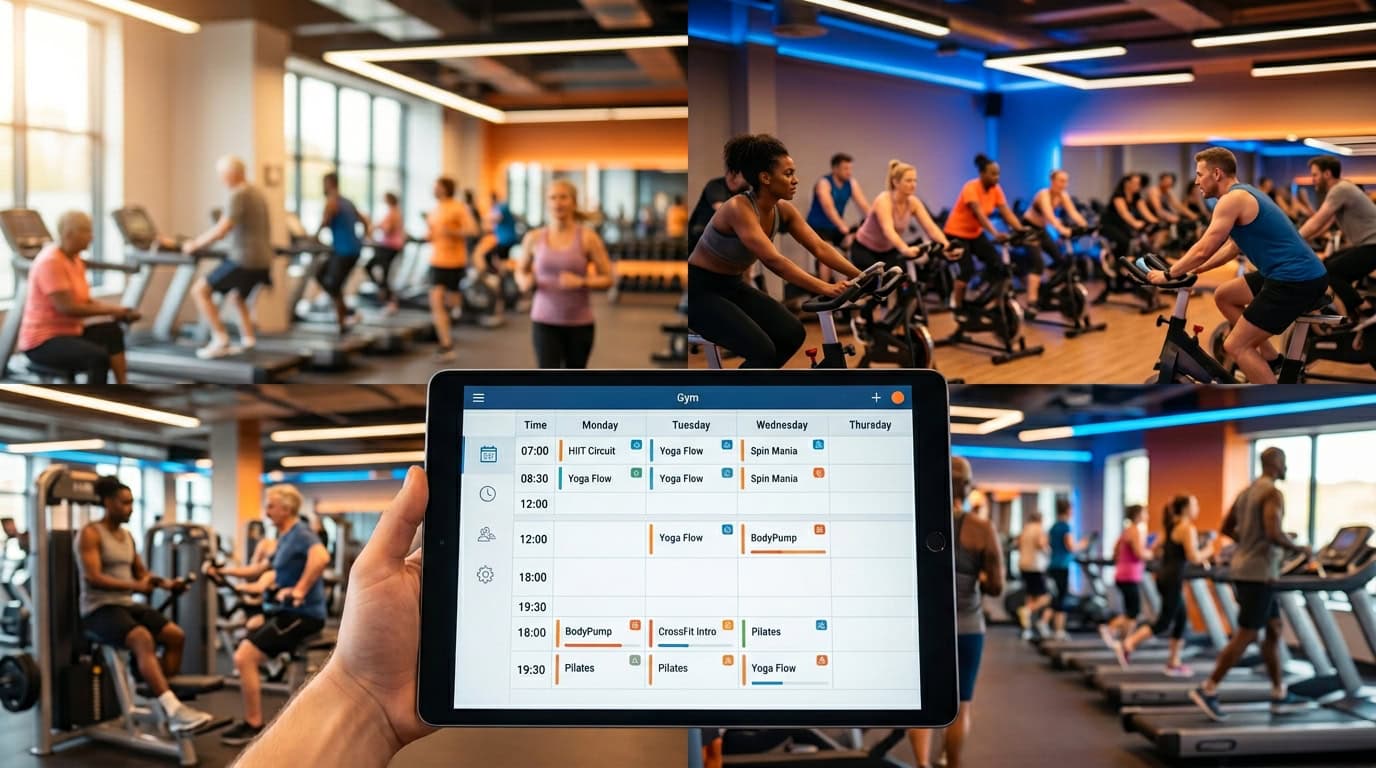
    If you haven’t touched your schedule since summer, now’s the time. A well-planned gym class timetable that matches instructor availability to genuine demand will stop you either turning people away or paying for empty classes. Popular early-morning and 6pm slots fill first as commuters and parents settle back into routine, so weight your rota towards those windows for the first few weeks of term.

    It’s also worth checking your booking system can handle a wait list. A full class with a visible queue signals popularity to a hesitant new member; an app that just says “unavailable” loses them to the gym down the road.

    Don’t forget equipment either. If your cardio machines or squat racks were due maintenance over the quieter summer weeks, get it done in the final days of August. There’s nothing that undermines a new member’s first impression faster than half the treadmills carrying an “out of order” sign during their first proper session.

    Turn September Enquiries Into Long-Term Members

    Getting people through the door is only half the job — the real value of the September surge is in how many of those new joiners are still training in November. A shaky first fortnight is where most of the drop-off happens, so this is the moment to tighten up your onboarding rather than leave it to chance.

    A structured induction does more than tick a compliance box. Gyms with a proper gym induction process in place consistently see fewer cancellations in the first 90 days, because new members actually know how to use the equipment and feel like part of the place rather than a stranger with a fob. Book every September joiner in for a session with a trainer or coach within their first week — even 20 minutes makes a measurable difference to whether they come back a second time.

    Follow up by text or WhatsApp a few days after their first visit too. A simple “how did your first session go, anything you need help with?” costs nothing and catches the members who are one bad experience away from cancelling before Christmas even arrives.

    It’s worth putting a number on this. If your gym typically loses 15-20% of new joiners inside the first month, even a modest improvement to that figure from better onboarding is worth far more over a year than most single marketing campaigns — because you keep paying for those members’ monthly fees rather than paying again to replace them.

    Multiply Your Intake With Referrals, Not Just Ads

    September is expensive for paid advertising — every gym, PT and studio in the country is bidding for the same “back to fitness” searches, so your cost per lead climbs just as demand does. This is the month to lean on your existing members instead.

    Your current membership base has friends and colleagues who are also feeling that September reset urge. A well-timed gym referral scheme that actually rewards both sides — not just a discount buried in the small print — can bring in members at a fraction of what you’d spend chasing cold traffic. Run it as a specific “bring a mate back to fitness” campaign through September and October rather than a generic year-round offer; the seasonal framing makes it feel timely rather than like background noise.

    Price the Offer to Reward Commitment, Not Just Sign-Ups

    It’s tempting to slash your joining fee to nothing and hope volume makes up for it, but a heavily discounted September deal can attract exactly the kind of impulsive sign-up that cancels by November. A better approach is to keep the joining fee modest — say £15-£25 rather than waived entirely — but add genuine value on top: a free session with a trainer, a guest pass for the referral scheme above, or a locked-in rate for anyone who commits to a 6 or 12-month term.

    If you run tiered membership pricing, September is also a sensible time to nudge people towards your mid-tier plan rather than your cheapest one. Someone re-committing to fitness after a summer off is more receptive to paying for classes or off-peak perks than someone dragged in by a January ad, so don’t undersell what you offer just because it’s not 1 January.

    Staff Up Before You Need To, Not After

    The gyms that struggle most in September are the ones still running on summer holiday cover when the rush hits. If your reception desk is understaffed during peak enquiry hours, or your floor is short a coach during the after-work rush, you’ll lose sign-ups to poor first impressions no matter how good your facilities are.

    Map out your busiest historical September weeks and make sure your rota reflects it at least two weeks in advance — not the week it happens. Brief your whole team, not just sales staff, on any September offers or promotions running, because a confused answer at the front desk is enough to send a hesitant enquirer elsewhere. If you’re a smaller independent gym without a dedicated sales role, this is worth doing yourself for the first fortnight so you can see exactly where enquiries are dropping off.

    Consider extending your peak-hours cover for the first four to six weeks of term specifically, then scaling back once the initial wave settles into a steady routine. It’s a short-term cost, but a member who has a good, unrushed experience with staff in their first few visits is far more likely to still be training in the new year than one who felt like a number on a busy front desk.

    A lot of September’s demand starts as a search rather than a walk-in — people comparing options near home or their new commute before committing. Make sure your listing is accurate and complete wherever people are likely to look, including opening hours, class types and current offers, so you’re not losing enquiries simply because your information is out of date. You can claim your GymPal listing in a few minutes if you haven’t already, which keeps your gym visible to people actively searching for a new place to train in your area.

    The Bottom Line

    September rewards preparation more than almost any other month on the gym calendar. Sort your timetable and staffing before the enquiries land, tighten up your induction so new joiners actually stick around past half-term, and use referrals to bring in members without burning your marketing budget on inflated autumn ad costs. Do that, and the September surge stops being something that happens to your gym and starts being something you plan for and profit from.

  • Gyms with Spas UK: Find Health Clubs with Pools, Saunas and Wellness Facilities

    Gyms with Spas UK: Find Health Clubs with Pools, Saunas and Wellness Facilities

    There’s a gym membership, and then there’s a gym spa membership. If you’ve ever finished a tough training session and wished you could slip straight into a sauna, or spend Saturday morning swimming laps before a long soak in a hot tub, you’re already thinking about the right category.

    Gyms with spa facilities — often called health clubs — offer significantly more than a weights room and a row of treadmills. Think heated pools, steam rooms, saunas, plunge pools, and sometimes full treatment rooms and relaxation lounges. They’re less about banging out quick sessions and more about building a lifestyle around movement and recovery.

    The catch? They’re not all created equal, and the price difference between a budget gym and a full-service health club can be significant. This guide breaks down what to look for, which UK chains deliver, what it actually costs, and how to find the right spa gym near you.

    What Actually Makes a Gym a “Spa Gym”?

    The term gets used loosely, so it helps to know what you’re comparing. A proper gym spa will typically include at least some of the following:

    Core facilities:

    • An indoor heated swimming pool (often 20–25 metres)
    • Sauna (dry, infrared, or Himalayan salt)
    • Steam room
    • Jacuzzi or hot tub

    Premium additions:

    • Ice bath or cold plunge pool
    • Treatment rooms for massage and therapies
    • Relaxation lounge or quiet zone
    • Wellness classes (yoga, guided meditation, aqua fitness)
    • Salt room or halotherapy suite

    The minimum benchmark for calling somewhere a spa gym is usually a pool plus at least a sauna or steam room. Anything below that and you’re really just looking at a gym with a warm shower.

    It’s also worth noting the difference between a health club and a gym with spa bolt-on. A health club is built around the full wellness experience from the start — the layout, the facilities, the class timetable, and the membership price all reflect that. A gym with a sauna added as an afterthought can feel quite different in practice.

    The Big UK Health Club Chains Worth Knowing

    These are the main chains to consider if you’re after proper spa facilities across the UK.

    David Lloyd Clubs

    David Lloyd is widely regarded as the gold standard for gym spa facilities in the UK. Every club includes at minimum a whirlpool, sauna, and steam room. Larger clubs feature a dedicated Spa Retreat with more comprehensive treatment facilities, relaxation areas, and private treatment rooms.

    David Lloyd has clubs in Birmingham, Brighton, Cambridge, Manchester, Bristol, Reading, Edinburgh, and many more. Membership prices typically start at around £60–80 per month depending on location, with premium tiers for full spa access and family memberships running higher.

    Village Hotel Health & Wellness Clubs

    Village Health & Wellness Clubs have 34 locations across the UK, covering Liverpool, Leeds, Solihull, Swindon, Cardiff, Coventry, and more. Each club includes a heated pool, sauna, steam room, and a whirlpool spa. Their Cardiff and Coventry sites have Himalayan Salt Saunas — worth seeking out if you’re a sauna enthusiast. Village memberships tend to be more competitively priced than David Lloyd, making them solid value at the mid-premium tier.

    Bannatyne Health Clubs

    With over 70 clubs across the UK, Bannatyne has strong coverage in Scotland, the North East, and the Midlands. Most clubs offer pool and spa facilities, though they vary by location — always worth checking exactly what a specific club includes before signing up. Bannatyne also runs its own spa treatment brand, so some locations have more comprehensive wellbeing offerings than others.

    Third Space (London)

    If you’re in London and the budget allows for it, Third Space gyms are a tier above. Marylebone has an 18-metre pool, sauna, and steam room. Mayfair features a Himalayan sea-salt walled sauna. Two new locations — Moorgate and Paternoster — opened in 2026. Memberships are premium-priced (often £150–250 per month in central London), but the facilities are genuinely world-class.

    Nuffield Health

    Nuffield Health operates over 110 fitness and wellbeing centres nationwide, with a particular focus on evidence-based wellness programming. Their premium centres include pools, saunas, and physiotherapy services. As a charity, Nuffield takes a more purposeful approach to health outcomes, which often translates into a slightly different atmosphere than the commercial chains.

    What Does a Spa Gym Membership Cost in the UK?

    Here’s a rough breakdown by tier:

    Club TypeMonthly Cost (Approx.)
    Budget gym (no spa)£20–40
    Mid-range with pool£40–60
    Village / Bannatyne£55–80
    David Lloyd£70–120
    Third Space London£150–250
    Hotel health club£80–160

    A few things significantly affect the price:

    • Location: London and South East clubs cost considerably more than equivalent clubs in the North, Midlands, or Scotland
    • Joining fees: Many chains charge a one-off joining fee of £20–100, often waived during promotional periods
    • Peak vs off-peak: Some clubs offer cheaper memberships restricting usage to off-peak hours — worth it if you work flexible hours
    • Family memberships: Often better value if a partner or children will also use the facilities
    • Corporate memberships: Many employers have negotiated rates with major chains — worth checking through HR before paying full price

    If you’re weighing up spa gym costs against a standard gym, budget gyms like PureGym, The Gym Group, and JD Gyms show just how wide the price gap is — but they offer no spa facilities. The decision really comes down to how much you’ll use the extras.

    The Recovery Case for Spa Gyms

    Spa facilities aren’t just a nice-to-have — there’s a genuine case for building recovery into your training routine, and the science increasingly backs it.

    Regular sauna use has been linked to improved cardiovascular function, reduced muscle soreness, better sleep quality, and lower stress markers. Steam rooms support respiratory health and improve circulation. According to ukactive’s 2026 UK Health and Fitness Market Report, health clubs are increasingly being used as “hubs that support recovery services” alongside traditional exercise — with 12.2 million people now holding gym memberships across the UK.

    Cold water exposure is another recovery method gaining mainstream traction. Cold water therapy at UK gyms — from plunge pools to contrast bathing circuits — has measurable benefits for reducing delayed onset muscle soreness (DOMS) and improving mood and alertness post-workout. The best spa gyms offer both heat and cold in one session, which is arguably the most effective recovery combination available without specialist equipment.

    And if your spa gym has a pool, you’ve got zero-impact active recovery on tap. Pool workouts and aqua fitness are perfect between heavy training days — gentle on the joints, genuinely effective for cardiovascular fitness, and surprisingly enjoyable once you’re in.

    Beyond the Big Chains: Hotel Gyms and Independent Health Clubs

    The big chains get most of the attention, but there’s a broader ecosystem worth knowing about.

    Hotel Health Clubs

    Hotel health clubs are often underutilised by non-guests. Four and five-star hotels frequently have strong pools, saunas, and steam rooms — and many offer external memberships giving full access to the hotel spa without staying overnight. In London, places like Crowne Plaza Docklands offer heated pool, hot tub, sauna, steam room, and gym access. Similar setups exist at Marriott, Hilton, Hyatt, and Radisson properties across the UK, often with significantly better facilities than standalone gyms at comparable prices.

    Leisure Centres with Spa Suites

    These vary wildly by council and operator, but some leisure centres run by Places Leisure, Everyone Active, or GLL (Better Leisure) have genuinely comprehensive spa and wellness suites. Prices are often subsidised and significantly lower than private health clubs — worth checking what your local council operates before committing to a premium membership.

    Boutique Wellness Studios

    A growing number of boutique studios — particularly in London, Manchester, Bristol, and Edinburgh — are adding saunas, cold plunge pools, and contrast bathing facilities to their offering. These are typically smaller and more intimate than large health clubs, with a focus on community and guided recovery sessions rather than self-directed spa use. Prices can be high, but the experience is usually more personalised.

    What to Check Before You Sign Up

    Don’t just rely on the headline facilities list. Before committing to a spa gym membership, it’s worth checking these details in person:

    1. Pool size and temperature — A 10-metre pool used as a family splash zone on weekends is not the same as a 25-metre lap pool. Ask what the temperature is maintained at, too.
    2. Booking requirements — Some clubs require you to book pool and spa sessions in advance, especially at peak times. Find out how far ahead you need to book.
    3. Maintenance schedules — Saunas and steam rooms require regular deep cleaning. Ask how often facilities are serviced and whether there are regular closure periods.
    4. Opening hours — Spa facilities often close earlier than the main gym floor. Check the specific hours for the pool, sauna, and steam room rather than just the gym’s overall opening times.
    5. Contract terms — Minimum contract lengths, cancellation policies, and notice periods vary considerably between chains. Some require up to three months’ notice to cancel.
    6. Trial pass — Most good health clubs offer a one-day trial or guest pass. Use it on a Saturday morning — the busiest time — to get a realistic picture of how crowded the facilities get.

    How to Find a Spa Gym Near You

    The easiest way to find gyms with spa facilities near you is to use GymPal’s spa and wellness venue search — it filters venues by facility type, so you can quickly see which health clubs in your area have pools, saunas, and spa access without trawling through individual chain websites.

    GymPal lists spa and wellness venues across the UK, covering everything from David Lloyd and Village to independent hotel health clubs and boutique wellness studios. You can filter by location, read venue details, and identify options worth visiting for a trial before committing.

    The Bottom Line

    A spa gym membership costs more than a budget gym — that’s unavoidable. But if you train consistently and want to invest in recovery as well as performance, the facilities justify the price. Saunas, steam rooms, and pools are tools, not luxuries; they make training more sustainable and recovery faster, which means you can do more and feel better doing it.

    If you’re currently at a no-frills gym and wondering whether it’s worth upgrading, try a day pass at your nearest David Lloyd, Village, or Bannatyne first. You’ll know within a couple of visits whether the extra spend makes sense for your lifestyle.

    And if you’re starting from scratch — or looking to switch — browse spa gyms near you on GymPal and find somewhere that actually matches how you want to train and recover.

  • Why Every UK Gym Owner Needs a Strong Online Listing in 2026

    Why Every UK Gym Owner Needs a Strong Online Listing in 2026

    The UK fitness industry has bounced back strongly since 2020, with over 10 million gym memberships active across the country. But while footfall is recovering, the way people find their gym has changed forever. If your gym isn’t visible online — really visible — you’re already losing potential members to competitors who are. that make high-impact exercise painful or contraindicated. Rowing, cycling, swimming (if you have a pool), and strength training are all low-impact options. A gym that prominently features low-impact alternatives, and that can advise members on training around joint issues, removes a major barrier to joining for this demographic.

    Social fitness

    Loneliness and social isolation are significant issues for many people over 60, particularly those who are retired. A gym with a strong social culture — where members know each other, conversations happen between sets, and a coffee after a class is normal — offers something many older adults cannot get from a budget chain. Marketing the social element of your gym explicitly is highly effective with this audience.

    Group exercise classes scaled for older adults

    Classes specifically designed for or welcoming to older adults — yoga, Pilates, gentle conditioning, aqua aerobics if available — are consistently high-attendance when promoted to the right audience. If your standard classes feel intense or intimidating, a dedicated “55+” class on the timetable gives older prospects a clear, risk-free entry point.

    How to Adapt Your Marketing Language and Imagery

    The fastest way to signal to older adults that your gym is not for them is to show only young people in your marketing. The fastest way to signal that it is for them is to show people who look like them, doing things they want to do.

    Imagery

    Include photos and videos featuring members in their 50s, 60s, and 70s. Not as a token addition to your marketing, but as a genuine representation of your membership. Older adults doing strength training, stretching, attending classes, socialising after a session — this imagery does the targeting for you. Any prospect in that demographic who sees themselves represented in your marketing will feel more confident about enquiring.

    Language

    Avoid: language that implies the gym is only for the fit and young (“get shredded”, “push your limits”, “elite performance”). Include: language that emphasises progress at any level, the social environment, the supportive coaches, and the health outcomes that matter to this demographic (“move better”, “stay strong as you age”, “feel confident in your body at any age”, “a gym that works with your life, not against it”).

    Specific channels for reaching older adults

    • Facebook — far more effective than Instagram for the 55+ demographic. Many older adults use Facebook daily; fewer use Instagram. Organic posts and paid ads on Facebook targeted at the 55+ age group in your local area reach this demographic efficiently.
    • Local community channels — community Facebook groups, local newspapers (still read by this demographic), parish newsletters, community centre noticeboards. Older adults are more likely to discover local businesses through these channels than through SEO or Instagram.
    • GP and health service relationships — many GP surgeries, NHS social prescribing link workers, and Age UK branches actively refer patients to community fitness activities. A letter or visit to local GP practices introducing your gym’s older adult offering, with a clear referral pathway, can generate a consistent stream of motivated, health-driven new members.
    • Word of mouth from existing older members — ask your current older adult members if they would be willing to bring a friend for a free session. This demographic’s social networks are often geographically concentrated; one active referrer can generate multiple new members.

    Training Your Staff to Be Genuinely Inclusive

    The best marketing is undermined by a poor first experience. Train your team explicitly on working with older adult members:

    • Do not make assumptions about what someone can or cannot do based on age. Ask about goals and any physical considerations; do not presume limitation.
    • Induction sessions for older adults should be longer and more thorough than the standard offering. They are more likely to have specific health considerations, are learning equipment that may be unfamiliar, and will benefit from more time with a coach before feeling confident on the gym floor.
    • Check in consistently in the early weeks. An older adult who struggles with a piece of equipment and is too polite to ask for help will quietly stop coming. Proactive coach check-ins in the first month prevent this.
    • Celebrate progress that matters to this demographic. Getting back to a daily walk, carrying shopping without pain, completing a first fitness class — these are meaningful achievements that deserve the same recognition as a 100kg deadlift.

    An Underserved Audience Ready to Join the Right Gym

    There are thousands of adults over 50 in your local area who want to be more active, who are looking for a gym that does not feel hostile or irrelevant to them, and who will stay for years once they find the right place. Most gyms are not speaking to them at all. The independent gym that positions itself as genuinely welcoming to older adults — through its programming, its marketing, its staff culture, and its community — picks up a segment that budget chains consistently fail to serve.

    GymPal helps UK gym-seekers of all ages find the right independent gym. Claim your free GymPal listing and make sure the 50+ gym-seekers in your area can find a gym built for them.

  • How Independent Gyms in the UK Can Compete with Big Chains: A Practical Guide

    How Independent Gyms in the UK Can Compete with Big Chains: A Practical Guide

    If you run an independent gym in the UK, you already know the feeling. A new budget chain opens down the road with a £9.99 monthly deal, shiny kit, and a marketing budget that could fund your business for a year. Meanwhile, you’re working out how to hold on to the members you’ve got. and respond to every piece of feedback. Members who feel heard stay longer.

  • Track attendance: If a regular member stops coming, reach out. A simple “Haven’t seen you in a while — everything OK?” can save a membership.

6. Partner with Local Businesses

Your local community is full of potential partners: physiotherapists, sports clubs, healthy cafes, and even other small businesses looking for cross-promotion. Offer corporate membership discounts to nearby offices. Sponsor a local sports team. Host a charity event. Every connection strengthens your position as the local fitness hub.

The Bottom Line

Independent gyms cannot outspend the chains. But you can out-care them, out-community them, and out-specialise them. The gyms that thrive are the ones that lean into what makes them different rather than trying to copy the big players.

If you are an independent gym owner looking to increase your visibility and connect with people searching for fitness services in your area, claim your free listing on GymPal. With over 10,000 businesses already listed, it is a straightforward way to get discovered by local fitness seekers without spending a penny on advertising.


Is your gym listed on GymPal? Over 10,000 UK fitness businesses are in our directory. Claim your free listing in 5 minutes — and start getting discovered by local fitness seekers today.

  • HIIT, Spin, Yoga or Weights? How to Pick the Right Gym Class for Your Goals

    HIIT, Spin, Yoga or Weights? How to Pick the Right Gym Class for Your Goals

    Walking into a gym for the first time is overwhelming enough. Walking in and seeing a timetable packed with acronyms — HIIT, LBT, CXWorx — can make you want to turn straight back round.

    Choosing the right gym class shouldn’t feel like sitting an exam. Whether you want to lose weight, build strength, reduce stress, or simply find a workout you actually enjoy, there’s a class for you. The trick is matching the class to your goals — not the other way round.

    In this guide, we’ll break down the most popular gym class types available in the UK, explain who each one is best suited to, and help you figure out where to start. We’ll also show you how to use GymPal to find gyms near you that offer the classes you want.

    Know Your Goals First

    Before picking a class, ask yourself what you actually want to achieve:

    • Fat loss and cardiovascular fitness — you want to get your heart rate up and burn calories
    • Strength and muscle tone — you want to build lean muscle and get stronger
    • Flexibility and recovery — you want to move better, reduce stiffness, or complement other training
    • Mental wellbeing and stress relief — you want exercise that calms your mind as much as your body
    • Social motivation — you want the energy of a group to keep you showing up

    Most people want a combination of these. The good news? Many classes tick several boxes at once.

    HIIT Classes — The Calorie Crusher

    What it is: High-Intensity Interval Training alternates between short bursts of all-out effort and brief recovery periods. A typical class lasts 30–45 minutes.

    Best for: Fat loss, cardiovascular fitness, time-pressed gym-goers.

    What to expect: Burpees, sprints, kettlebell swings, box jumps, and bodyweight exercises. You’ll be working at 80–95% of your maximum heart rate during the intense intervals.

    Who should think twice: Complete beginners with no exercise background might want to build a base fitness level first. If you have joint problems, check with the instructor about modifications.

    GymPal tip: Many UK gyms now offer HIIT classes under different names — Metafit, Tabata, Sprint, or simply “HIIT.” Use GymPal to search for gyms in your area and check their class timetables before you commit to a membership.

    Spin Classes — Low Impact, High Intensity

    What it is: Indoor cycling on stationary bikes, typically led by an instructor who controls the pace, resistance, and intervals. Classes range from 30 to 60 minutes.

    Best for: Cardiovascular fitness, lower-body endurance, calorie burning without joint stress.

    What to expect: You’ll adjust your bike’s resistance to simulate hills, sprints, and flat roads. Most classes are set to high-energy music. Some studios, like Les Mills RPM or Peloton-style classes, add structured programming.

    Who should think twice: If you have lower back issues or knee problems, make sure the bike is set up correctly — most instructors will help you with this before the class starts.

    Yoga Classes — Strength Meets Stillness

    What it is: A range of classes from gentle stretching (Hatha, Yin) to athletic, sweat-inducing flows (Vinyasa, Ashtanga, Power Yoga). According to NHS guide to yoga

    Best for: Flexibility, core strength, stress relief, recovery, and mental focus.

    What to expect: Depending on the style, you might hold poses for several minutes (Yin), flow dynamically between postures (Vinyasa), or work in a heated room (Hot Yoga/Bikram). Most classes end with a few minutes of guided relaxation.

    Who should think twice: If you’re looking for a pure calorie burn, yoga alone won’t match HIIT or spin. But as a complement to other training, it’s invaluable for injury prevention and mobility.

    Pilates — Core Strength and Posture

    What it is: A low-impact method focusing on core stability, posture, alignment, and controlled movement. Mat Pilates uses bodyweight; Reformer Pilates uses a sliding carriage with springs.

    Best for: Core strength, back pain relief, posture correction, postnatal recovery.

    What to expect: Small, precise movements that target deep stabilising muscles. It doesn’t look exhausting, but you’ll feel it the next day. Reformer classes tend to be more intense and are increasingly popular across UK gyms.

    Body Pump and Strength Classes — Build Lean Muscle

    What it is: Barbell-based group strength training (Les Mills BodyPump is the most common format). You work through a full-body routine set to music, using adjustable weights.

    Best for: Muscle tone, strength endurance, bone density, metabolic boost.

    What to expect: Squats, lunges, chest presses, dead rows, shoulder presses, and core work — all done with a barbell in a group setting. The instructor demonstrates each track and encourages you to choose your own weight.

    Who should think twice: If you want to build maximum strength or muscle size, you’ll eventually need to move to the free weights area. But BodyPump is an excellent starting point and a great way to learn proper form.

    Circuit Training — All-Round Fitness

    What it is: Rotating through a series of exercise stations with minimal rest. Each station targets a different muscle group or fitness component.

    Best for: Total-body conditioning, fat loss, variety, all fitness levels.

    What to expect: You might do 30–60 seconds at each station — press-ups, lunges, battle ropes, box steps, rowing machine — then move to the next. Classes are usually 45 minutes and scale to different ability levels.

    Dance Fitness — Fun That Doesn’t Feel Like Exercise

    What it is: Zumba, Dance Fit, Clubbercise, and similar classes that combine dance routines with cardio exercise.

    Best for: Cardiovascular fitness, coordination, mood boosting, anyone who finds traditional gym workouts boring.

    What to expect: Follow-along dance routines set to upbeat music. No dance experience required — it’s about moving, not performing. You’ll burn anywhere from 300–600 calories per session.

    Boxing and Combat Classes — Stress-Busting Conditioning

    What it is: Group fitness classes based on boxing techniques — pads, bags, and bodyweight drills. Think Boxercise, Boxx, or gym-specific boxing fitness classes.

    Best for: Cardiovascular fitness, upper-body conditioning, stress relief, coordination.

    What to expect: A mix of punching combinations, pad work, footwork drills, and bodyweight exercises. Most classes don’t involve any contact — you’ll work on bags or with a partner holding pads.

    How to Choose the Right Class for You

    Here’s a quick reference to help you decide:

    Your Goal Best Classes to Start With
    Lose weight / burn fat HIIT, Spin, Circuit Training
    Build strength / tone up BodyPump, Circuit Training, Pilates
    Improve flexibility / reduce pain Yoga, Pilates
    Reduce stress / mental health Yoga, Boxing, Dance Fitness
    Get started as a beginner Circuit Training, Spin, Dance Fitness
    Train with an injury Spin (low impact), Pilates, Yoga (with modifications)

    Mixing Classes for Balanced Fitness

    The best approach for most people is a combination:

    • 2–3 cardio-focused classes per week (HIIT, spin, or boxing)
    • 1–2 strength classes (BodyPump, circuit training)
    • 1 flexibility/recovery session (yoga or Pilates)

    This balance gives you the cardiovascular benefits of aerobic training, the metabolic boost of strength work, and the injury prevention that comes from regular mobility practice.

    Finding the Right Gym for Your Class Schedule

    Not every gym offers every class — and class timetables vary enormously. Before you sign up for a membership, check that the gym actually runs the classes you want at times you can attend.

    GymPal makes this easy. You can search for gyms in your area, filter by the facilities and classes they offer, and compare timetables side by side. Whether you’re looking for a gym with a dedicated spin studio, one that offers Reformer Pilates, or simply a place with a packed HIIT timetable, GymPal helps you find the right fit without the guesswork.

    Final Tips for Your First Class

    • Arrive 10 minutes early — introduce yourself to the instructor and let them know you’re new
    • Don’t go all-out on day one — pace yourself and learn the format first
    • Wear comfortable, breathable clothing and proper trainers (flat soles for weights, cushioned for HIIT)
    • Bring a water bottle — most classes will have water fountains but you’ll want your own supply
    • Don’t compare yourself to anyone — everyone in that room was a beginner once

    The best gym class is the one you’ll actually go to. Start with whatever sounds fun, give it a few sessions to get comfortable, and don’t be afraid to try something new. Your perfect workout is out there — and GymPal can help you find it.

  • How to Get More Google Reviews for Your UK Gym (Without Begging)

    How to Get More Google Reviews for Your UK Gym (Without Begging)

    Google reviews can make or break your gym’s online reputation. When someone in your area searches for “gyms near me,” the first thing they see after your name is your star rating. A gym with 4.8 stars and dozens of reviews will almost always win over a gym with 2.3 stars and a handful of complaints — even if your facilities are superior.

    This is step zero. If you don’t have a verified Google Business Profile, nobody can leave you a review. Head to business.google.com, claim your listing, and fill out every detail: opening hours, photos, services, facilities, and a compelling description.

    If your gym is listed on GymPal, you can claim and enhance your listing there too — it’s another place potential members will find you when searching for gyms in your area. The more complete your online presence, the more trustworthy you appear.

    2. Create a Seamless Review Process

    The biggest barrier to getting reviews is friction. If a member has to search for your gym, find the right listing, and figure out how to leave a review, most of them simply won’t bother.

    Instead, give them a direct link. You can find your review URL by searching for your gym on Google, clicking the “Write a review” button, and copying the URL that appears. Then:

    • Add it to your email signature — every email you send becomes a subtle invitation
    • Create a QR code — place it at reception, on lockers, and near the exit
    • Add it to your website — a simple “Love our gym? Leave us a review” button in the footer
    • Text it to new members — include it in your welcome message after their first week

    The easier you make it, the more reviews you’ll get. Period.

    3. Time Your Ask Strategically

    The key to getting positive reviews is asking at the right moment — when your member is feeling great about their experience. Some prime windows:

    • After a personal training milestone — they just hit a PB or completed a programme
    • After their first month — they’re past the initial soreness and starting to see results
    • After a class they loved — catch them while the endorphins are flowing
    • When they renew their membership — they’ve already committed, so they clearly value your gym

    A quick “Really glad you’re part of our community — if you have a spare minute, a Google review helps us a lot” is all it takes. No pressure, no guilt.

    4. Train Your Team to Mention Reviews Naturally

    Your reception staff and personal trainers have dozens of positive interactions with members every single day. A brief mention during these moments is far more effective than any marketing campaign.

    Train your team to naturally weave review requests into conversation. For example:

    • When a member compliments the gym: “That means a lot! If you ever get a chance to drop that in a Google review, it really helps us out.”
    • At the end of a great PT session: “Cracking session today. If you’re happy with your progress, a quick review on Google helps others find us.”

    The key is authenticity. If it sounds scripted, it feels like begging. If it sounds genuine, it feels like a friend recommending something they believe in.

    5. Respond to Every Single Review

    This is where most gyms fall down. Responding to reviews — both positive and negative — shows that you’re engaged and that you care about member feedback.

    For positive reviews, keep it brief and personal: “Thanks so much, Sarah! Really glad you’re enjoying the classes. See you next week!” This encourages others to leave reviews because they can see someone actually reads them.

    For negative reviews, stay professional and constructive. Acknowledge the issue, explain what you’re doing about it, and invite the person to discuss it further offline. Potential members read negative reviews too, and how you respond says more about your gym than the review itself.

    6. Run a Monthly Review Drive

    Once a month, run a focused push for reviews. This could be:

    • A social media post asking members to share their experience
    • An email to your member base with a direct review link
    • A noticeboard announcement in the gym
    • A small incentive — enter reviewers into a monthly prize draw (check Google’s guidelines on incentives, and keep it optional — never make reviews conditional)

    The monthly cadence keeps your review velocity up without being annoying. Google also values recency, so regular new reviews help more than a burst followed by silence.

    7. Showcase Your Reviews On-Premises

    Print your best reviews and display them in the gym. A “Wall of Love” near the entrance or changing rooms serves a dual purpose: it boosts morale for existing members and reminds new visitors that real people love your gym.

    Make sure to include the reviewer’s first name and star rating. Seeing that others have taken the time to write something positive creates social proof that encourages even more reviews.

    8. Leverage Your Online Directory Listings

    Beyond Google, make sure your gym is listed on fitness directories where potential members are actively searching. GymPal is one such platform — with over 10,000 gyms already listed, it’s where fitness seekers go to find and compare gyms in their area.

    Claiming your listing on GymPal is free and takes minutes. You can add photos, update your facilities, and respond to enquiries directly. A complete, active listing on platforms like GymPal complements your Google presence and gives you another channel to attract members who might never find you through search alone.

    Common Mistakes to Avoid

    • Don’t buy reviews. Google actively removes fake reviews and can penalise your Business Profile. It’s not worth the risk.
    • Don’t incentivise specific ratings. “Leave us 5 stars for a free protein shake” violates Google’s review policies. If you offer incentives, make them for any honest review.
    • Don’t ignore negative reviews. Unanswered criticism looks worse than the criticism itself.
    • Don’t review your own business. This is an obvious one, but Google will remove self-reviews and may flag your entire profile.
    • Don’t copy-paste responses. If every reply to a positive review is identical, it looks robotic. Mix it up.

    The Bottom Line

    Getting more Google reviews isn’t about tricks or gimmicks — it’s about making it easy for satisfied members to share their experience, and showing that you value their feedback when they do. A steady stream of genuine reviews builds trust, improves your search visibility, and ultimately drives more people through your doors.

    Start with the basics: claim your Google Business Profile, create a direct review link, and train your team to mention reviews naturally. From there, build a monthly rhythm and watch your star rating climb.

    And if you haven’t already, list your gym on GymPal to reach even more fitness seekers in your area. It’s free, and it takes less than five minutes.


    Is your gym listed on GymPal? Over 10,000 UK fitness businesses are in our directory. Claim your free listing in 5 minutes — and start getting discovered by local fitness seekers today.

  • How to Create an Effective Gym Class Timetable That Keeps Members Coming Back

    How to Create an Effective Gym Class Timetable That Keeps Members Coming Back

    Why Your Class Timetable Is Your Most Underrated Marketing Tool

    Most UK gym owners spend hours tweaking their Facebook ads, redesigning their website, and chasing Google reviews. Meanwhile, their class timetable — the one thing members look at every single week — gets a quick update once a quarter and is promptly forgotten. sent via email or posted in your gym’s WhatsApp group can reveal what members actually want versus what you think they want.

    Ask things like:

    • Which classes would you like to see more of?
    • What times work best for you to attend classes?
    • Are there any classes you’ve stopped attending? Why?
    • Would you attend early morning or late evening classes if we offered them?

    Step 2: Choose the Right Mix of Class Types

    A balanced timetable offers variety while avoiding the trap of trying to be everything to everyone. The goal is to cover the main fitness categories that appeal to your specific member base.

    The core class categories

    Most successful UK gyms build their timetable around these pillars:

    • Cardio/HIIT: Spin, circuit training, HIIT, BoxFit — high energy, calorie burn, appeals to members focused on weight loss and fitness gains
    • Strength: Body Pump, kettlebells, functional training — attracts members who want to build muscle and get stronger
    • Mind-body: Yoga, Pilates, stretching — popular with members managing stress, improving flexibility, or recovering from injury
    • Dance/entertainment: Zumba, dance fitness, aerobics — fun, social, lower barrier to entry for beginners
    • Specialist: CrossFit, Olympic lifting, martial arts — attracts dedicated niches and creates strong community bonds

    The right ratio depends on your gym

    A boutique yoga studio doesn’t need HIIT classes. A strength-focused gym doesn’t need Zumba. Match your class mix to your membership and your brand identity. If 60% of your members are over 45, you’ll want more low-impact options. If you’re near a university, high-intensity classes and evening slots will perform better.

    As a general rule for mixed gyms: aim for roughly 30% cardio, 25% strength, 25% mind-body, and 20% variety or specialist classes. Adjust based on your data.

    Step 3: Master the Art of Time Slot Placement

    When you place a class matters as much as what class it is. The same HIIT session will fill up at 6:30am and sit half-empty at 2:00pm on a Tuesday.

    The golden time slots

    These are the windows where class demand is consistently highest across most UK gyms:

    • Early morning (6:00–7:30am): Popular with working professionals before their commute. Best for high-energy formats — HIIT, spin, circuit training. Keep these to 30–45 minutes so people can shower and leave.
    • Mid-morning (9:30–11:00am): Favoured by parents after school drop-off, freelancers, and retirees. Yoga, Pilates, and lighter formats work well here.
    • Lunchtime (12:00–1:30pm): Office workers on their break. Keep these classes short (30 minutes) and high-intensity — members want maximum results in minimum time.
    • Evening (5:30–7:30pm): The busiest window. This is where you put your flagship classes and most popular instructors. Offer a mix of formats to capture different preferences.
    • Late evening (7:30–9:00pm): Smaller but loyal audience. Good for wind-down classes like yoga or stretching, or specialist sessions for dedicated members.

    Avoid class conflicts

    Never schedule two popular classes at the same time. If your Tuesday 6pm spin class is always full, don’t put your equally popular HIIT class against it. You’ll split your audience and create two half-empty rooms instead of one packed one and a waiting list for the next.

    Stagger intensity throughout the day

    Think about the member journey. An early morning HIIT class followed by a lunchtime yoga session makes sense. Two back-to-back high-intensity classes in the same time slot cannibalise each other. Give members reasons to attend multiple classes per week by varying the intensity and format.

    Step 4: Staff Your Classes Strategically

    Your instructors make or break your timetable. The same class format with two different instructors can have wildly different attendance figures.

    Match instructors to time slots

    • Morning slots: High-energy, motivational instructors who can get people fired up at 6am
    • Mid-morning: Patient, welcoming instructors who create a comfortable environment for less confident members
    • Evening: Charismatic, community-focused instructors who can manage larger groups and keep energy high

    Build instructor consistency

    Members build relationships with specific instructors. If your popular Thursday yoga teacher is replaced by a different instructor every other week, attendance will drop. Wherever possible, keep the same instructor on the same class week after week.

    Invest in instructor development

    Send your instructors on courses, encourage them to get additional qualifications, and let them suggest new class formats. Instructors who feel invested in will deliver better classes, and better classes mean better retention.

    Step 5: Seasonal and Quarterly Refreshes

    A timetable that never changes gets stale. Members lose interest, attendance plateaus, and new prospects see the same old schedule every time they visit.

    The quarterly review

    Every 12 weeks, review your timetable with fresh eyes:

    • Which classes consistently fill up? Consider adding extra sessions.
    • Which classes have declining numbers? Either refresh the format, change the instructor, move the time slot, or replace it entirely.
    • Are there gaps in your schedule? If there’s demand for a Saturday morning class you don’t offer, test it.
    • What’s trending? If Pilates Reformer or sound bath meditation is gaining popularity in your area, consider trialling it.

    Seasonal adjustments

    UK gym habits shift with the seasons. In January, you’ll see a surge in beginners — add more introductory-level classes. In summer, outdoor fitness and early morning classes gain popularity. In the lead-up to Christmas, members are busier — shorter, more intensive lunchtime classes can maintain engagement when evening attendance drops.

    The “new class” launch playbook

    When introducing a new class format, don’t just slot it in and hope for the best:

    1. Run a free taster session — let members try it without commitment
    2. Promote it heavily — in-gym posters, social media, email, and in other classes
    3. Put your best instructor on it — first impressions matter
    4. Give it 4–6 weeks before deciding whether to keep it
    5. Ask for feedback — survey attendees after the first month

    Step 6: Make Your Timetable Easy to Find and Use

    The best timetable in the world is useless if members can’t find it or don’t know what’s on.

    Digital presence

    • Website: Your timetable should be front and centre on your website, not buried three clicks deep. Make it mobile-friendly — most members check it on their phone.
    • Booking system: Use a platform like Mindbody, GymCatch, or TeamUp that lets members book, cancel, and see real-time availability.
    • Social media: Post your weekly timetable every Sunday evening on Instagram Stories and in your Facebook group.

    In-gym visibility

    • Physical timetable boards: Large, clear, well-lit displays near the entrance and in the changing rooms.
    • TV screens: Digital displays showing today’s classes and any changes or cancellations.
    • Printed schedules: Pocket-sized timetables at reception for members who prefer physical copies.

    Communication is key

    If a class is cancelled or an instructor changes, tell members immediately. A last-minute cancellation with no communication is one of the fastest ways to lose trust. Use WhatsApp groups, push notifications from your booking app, and email to keep everyone informed.

    Step 7: Track What Matters and Iterate

    You can’t improve what you don’t measure. Track these key metrics for every class on your timetable:

    • Average attendance: How many people show up per session?
    • Capacity utilisation: What percentage of available spots are filled?
    • Booking rate: How far in advance do members book? Classes that book out days in advance have high demand.
    • No-show rate: If you have a booking system, track how often members book but don’t show up.
    • Retention correlation: Do members who attend classes regularly stay longer than those who only use the gym floor?

    Use this data to make informed decisions about what to keep, change, or drop. Never remove a popular class based on a hunch — let the numbers guide you.

    How GymPal Supports Your Class Strategy

    A great timetable drives attendance, and attendance drives results. But getting new members through the door in the first place is the other half of the equation.

    Listing your gym on GymPal ensures that when people in your area search for fitness options, your gym shows up with accurate class information, facilities, and direct contact details. A well-optimised GymPal listing works alongside your timetable strategy — it brings people in, and your classes keep them there.

    If you haven’t claimed your listing yet, it takes just a few minutes. Get started here and make sure your gym is visible to the thousands of people searching for fitness options in your area every month.

    Quick-Reference Timetable Checklist

    Area Key Actions
    Audience research Pull 12-week attendance data; survey members on preferences
    Class mix Cover cardio, strength, mind-body, and variety; match to member base
    Time slots Prioritise 6–7:30am, 9:30–11am, 12–1:30pm, 5:30–7:30pm
    Instructor placement Match energy to time slot; keep consistent instructors
    Quarterly refresh Review attendance, add new formats, drop underperformers
    Visibility Mobile-friendly website, booking system, in-gym displays
    Measurement Track attendance, booking rate, no-shows, retention correlation

    A great timetable isn’t set-and-forget — it’s a living document that evolves with your membership. Start with the data, build around your members’ actual habits, review regularly, and don’t be afraid to experiment. Your members — and your retention rate — will thank you for it.


    Is your gym listed on GymPal? Over 10,000 UK fitness businesses are in our directory. Claim your free listing in 5 minutes — and start getting discovered by local fitness seekers today.

  • How to Build a Referral Programme That Actually Works for Your UK Gym

    How to Build a Referral Programme That Actually Works for Your UK Gym

    Word of mouth is still the most powerful marketing tool for independent gyms in the UK. When a member recommends your gym to a friend, that referral converts at a significantly higher rate than any paid advert. Yet most gym owners either have no referral system at all, or they have one that is so complicated that nobody uses it. or a free supplement sample pack. The key is keeping the reward relevant to your price point.

    Personal Training Studio

    For PT-focused gyms, offer a free session for both the referrer and the new client when the new client purchases a block of sessions. This is powerful because the free session serves as a sales opportunity for the PT to convert the referred friend into a paying client.

    How to Launch Your Referral Programme in 7 Days

    1. Day 1: Decide on your offer. Pick one clear two-sided reward. Write it in one sentence.
    2. Day 2: Create your referral cards or set up your digital tracking system. Keep it simple.
    3. Day 3: Brief your team. Explain the programme, how to track it, and how to talk about it with members.
    4. Day 4: Design your in-gym signage. One poster at reception, one at the entrance, and a mention on your digital screens if you have them.
    5. Day 5: Write an email to your member database announcing the programme. Include the offer, how it works, and a call to action.
    6. Day 6: Post about it on social media. Share it in your member Facebook group or WhatsApp community if you have one.
    7. Day 7: Launch. Start promoting it in every member interaction from this day forward.

    How GymPal Helps Amplify Your Referrals

    Getting found online is half the battle. When your existing members refer friends, those friends will almost certainly search for your gym online before visiting. Having a strong, verified presence on GymPal means those referred prospects find accurate information, positive reviews, and professional photos when they look you up.

    If you have not claimed your gym on GymPal yet, it takes less than five minutes. A complete profile with updated facilities, class timetable, and member reviews gives your referred leads even more confidence to sign up. Visit askgympal.co.uk to claim or update your listing today.

    Ready to Turn Your Members Into Your Best Marketing Channel?

    A well-designed referral programme is one of the highest-returning investments you can make as a gym owner. It costs very little to run, it rewards your most loyal members, and it brings in new sign-ups who are more likely to stick around. Start simple, promote it consistently, and watch it grow.

    And make sure your online presence matches the quality of your in-gym experience. Claim your GymPal listing today and ensure every referral who looks you up finds a gym they cannot wait to join.


    Is your gym listed on GymPal? Over 10,000 UK fitness businesses are in our directory. Claim your free listing in 5 minutes — and start getting discovered by local fitness seekers today.

  • How to Host a Successful Open Day at Your UK Gym and Turn Visitors Into Members

    How to Host a Successful Open Day at Your UK Gym and Turn Visitors Into Members

    An Open Day Is Your Highest-Converting Sales Event

    No marketing tactic converts at a higher rate than an in-person visit. When someone walks through your gym doors, sees the equipment, meets the team, and experiences the atmosphere, the decision to join becomes significantly easier. An open day amplifies this by creating a dedicated event that attracts multiple prospects at once.

    Choose Your Theme and Angle

    A generic “open day” is fine, but a themed event generates more interest and gives people a specific reason to attend. Ideas:

    • Free trial day: “Try every class for free” — the most compelling offer
    • Grand opening / relaunch: “See our new equipment/training area/renovation”
    • Fitness challenge launch: “Sign up for our 8-week transformation challenge”
    • Community open day: “Free workouts, food, and prizes — bring the family”
    • Charity workout: “Train for a cause — all proceeds to [local charity]”

    The best open days combine a compelling theme with a genuine reason to visit.

    Set a Date and Time

    • Saturdays are best — people have more free time and are more likely to bring family
    • 10am–2pm gives you a 4-hour window with good attendance across peak hours
    • Avoid clashing with major local events, sports fixtures, or bank holidays
    • Check what competitor gyms are doing and choose a different date

    Set Goals

    Define what success looks like before the event:

    Metric Realistic Target
    Visitors through the door 30–80
    Free trial sign-ups 15–25
    Paid membership conversions 5–15
    Email list sign-ups 20–40
    Social media content captured 20+ photos and 3-5 videos

    Create a Budget

    An open day does not need to be expensive. Typical costs:

    Item Cost
    Marketing (Facebook/Instagram ads) £50–100
    Refreshments (water, fruit, snacks) £30–60
    Branded materials (signage, printed guides) £20–40
    Prizes or giveaways £20–50
    Additional staff hours £100–200
    Total £250–£480

    If 10 of those visitors convert to members at £35/month, you generate £4,200 in annual recurring revenue from a £480 investment. The ROI is clear.

    Promotion Phase (2-3 Weeks Before)

    Online Promotion

    • Create a Facebook event page with full details, photos, and a registration link
    • Run Facebook and Instagram ads targeting your local area (5–10 mile radius), aged 18-50, with interests in fitness, gym, and weight loss
    • Post about the open day on your Instagram Stories and feed at least 3 times per week leading up to the event
    • Update your Google Business Profile with a post about the open day
    • Share the event in local Facebook groups and community pages
    • Update your GymPal listing description to mention the event

    In-Gym Promotion

    • Display posters and flyers in the gym 3 weeks before
    • Mention the open day in every class during the 2 weeks prior
    • Ask current members to bring friends (offer a referral incentive — “bring a friend and you both get a free PT session”)
    • Create a countdown on social media in the final week

    Local Promotion

    • Deliver flyers to local businesses, cafes, and sports clubs
    • Partner with local physios, nutritionists, or meal prep companies to cross-promote
    • Contact local newspapers and community Facebook groups for event listings

    Preparation Phase (1 Week Before)

    Prepare Your Gym

    • Deep clean the entire facility — this is your first impression
    • Set up clear signage for each area (reception, free weights, cardio, classes, stretching)
    • Prepare a welcome station at the entrance with sign-in sheets, name badges, and event programmes
    • Set up a refreshment area with water, fruit, and light snacks
    • Test all equipment to ensure nothing is broken
    • Prepare demo/taster class schedules and display them prominently

    Prepare Your Team

    • Brief all staff on the event schedule, goals, and their specific roles
    • Assign greeters to welcome visitors, sign them in, and give them a tour
    • Assign coaches to run demo classes and answer questions on the gym floor
    • Have someone dedicated to managing sign-ups and payments
    • Assign someone to take photos and videos throughout the day

    Prepare Materials

    • Printed event programmes (schedule of classes and activities)
    • Sign-up forms for free trials and memberships (have both paper and digital options)
    • Pricing sheets with your membership options and any open-day-only offers
    • Branded name badges for visitors
    • QR codes linking to your website, free trial sign-up, and social media

    Open Day Schedule

    Structure your day to keep visitors engaged and moving through a natural journey:

    Time Activity Purpose
    10:00 Doors open, welcome and sign-in Capture visitor data
    10:15 Facility tour (guided groups of 8-10) Show the full gym and build comfort
    10:45 Demo class 1 (e.g. HIIT taster) Experience the workout
    11:15 Refreshments and Q&A Informal conversations, answer questions
    11:30 Demo class 2 (e.g. yoga or mobility) Show variety of offerings
    12:00 Open gym floor with floor coaches Visitors try equipment freely
    12:30 Prize draw / giveaway Incentivise sign-ups before lunch
    12:45 Final sign-up push with open-day offer Convert interest while it is fresh
    13:00 Close

    The Open Day Offer

    Create urgency with a time-limited offer available only to open day attendees:

    • “Sign up today and get your first month half price”
    • “Join today and receive a free PT session + joining fee waived”
    • “Free 7-day pass for everyone who attends — come back anytime this week”

    Present this offer at the end of the event when visitors are most engaged. Have sign-up sheets and a payment system ready to go.

    After the Open Day: The Follow-Up

    The open day does not end when the doors close. Follow-up is where conversions happen:

    Within 24 Hours

    • Send a thank-you email to everyone who signed in: “Great meeting you at our open day! Here is what you missed / your free pass is attached.”
    • Include a link to claim their free trial or the open-day offer
    • Attach 3-5 photos from the day so they can relive the experience

    Within 48 Hours

    • Send a personalised text or email to anyone who showed strong interest but did not sign up
    • Post a recap video and photo carousel on social media with a CTA for anyone who could not attend

    Within 7 Days

    • Call or email anyone who claimed a free trial but has not yet visited
    • Post testimonials from open day attendees on social media

    Capturing Content

    Your open day generates marketing material that lasts for months. Assign someone to:

    • Take photos of the gym looking busy and welcoming
    • Record short video clips of classes in action (people smiling, working hard, cheering)
    • Ask attendees for a quick video testimonial (30 seconds, phone quality is fine)
    • Capture candid moments — these feel more authentic than posed shots

    Use this content in your follow-up emails, social media, and website for months afterwards.

    The Bottom Line

    An open day is the most effective way to convert interested prospects into paying members. It removes barriers, builds trust through personal interaction, and creates urgency through time-limited offers. The investment is modest, the preparation is straightforward, and the return can be significant.

    Plan it well, promote it consistently, deliver a great experience, and follow up relentlessly. That is the formula for an open day that fills your gym with new members.


    Want more people discovering your gym before your next open day? Claim your free GymPal listing to reach thousands of UK fitness seekers in your area. Pair directory visibility with your open day promotion for maximum impact.


    Is your gym listed on GymPal? Over 10,000 UK fitness businesses are in our directory. Claim your free listing in 5 minutes — and start getting discovered by local fitness seekers today.

  • How to Turn Your Gym Into a Local Authority on Google: An SEO Primer for UK Gym Owners

    How to Turn Your Gym Into a Local Authority on Google: An SEO Primer for UK Gym Owners

    Why Local SEO Matters for Gyms

    When someone in your town searches for “gym near me,” “best gym in [your city],” or “personal training near me,” there are typically only three to five spots on the first page of Google that matter — the local pack. If your gym is not in those results, you are invisible to the people most likely to join. is the process of making your gym rank higher in these local search results. It is not about gaming the system — it is about making sure Google understands who you are, where you are, and what you offer, so it can match you with the right people.

    This guide covers the practical steps any UK gym owner can take to improve local search visibility without hiring an agency.

    Step 1: Optimise Your Google Business Profile

    Your Google Business Profile (GBP) is the single most important factor in local rankings. If you have not claimed and optimised yours, do that first. Our full guide covers the details, but here are the key points for SEO:

    • Primary category: Set to “Gym” or “Fitness centre”
    • Secondary categories: Add “Personal trainer,” “Weight loss centre,” “Yoga studio” as appropriate
    • Description: Include your location and key services naturally (e.g. “independent gym in Bristol offering strength training, personal training, and group fitness classes”)
    • Photos: Upload at least 15-20 high-quality photos. Google rewards active profiles.
    • Posts: Publish weekly updates (offers, events, news)
    • Reviews: Actively ask for and respond to reviews

    Step 2: Make Sure Your NAP Is Consistent Everywhere

    NAP stands for Name, Address, and Phone number. Google uses NAP consistency as a trust signal. If your gym name, address, or phone number is different on your website, Google Business Profile, Facebook page, GymPal listing, and local directories, Google gets confused and may rank you lower.

    Audit your NAP across these platforms:

    • Google Business Profile
    • Your website
    • Facebook page
    • Instagram profile
    • Yelp / Trustpilot
    • GymPal listing
    • Any local directory listings (Thomson Local, Yell, etc.)

    Make sure your name is formatted identically everywhere (e.g. always “Ironhouse Gym Bristol” — not “Ironhouse Gym” on one platform and “Ironhouse Gym, Bristol” on another).

    Step 3: Build Location Pages on Your Website

    If your website has separate pages for different services or locations, each page should be optimised for local search. Even if you have a single location, your key pages should include:

    • Your city or area name in the page title (e.g. “Personal Training in Bristol | Ironhouse Gym”)
    • Your full address and a Google Map embed
    • Your phone number
    • Local keywords naturally woven into the content (e.g. “Our Bristol gym offers…”)

    Create dedicated pages for your key services that people search for:

    • /personal-training-[your-city]
    • /group-classes-[your-city]
    • /free-trial-[your-city]

    Step 4: Collect and Manage Reviews

    Google reviews are a top-three local ranking factor. But they also influence click-through rate — a gym with 4.8 stars and 80 reviews will get significantly more clicks than one with 3.5 stars and 12 reviews, even if ranked lower.

    Review strategy:

    • Ask every new member for a Google review after their first week
    • Ask after positive experiences (hitting a milestone, great class)
    • Make it easy with a direct review link sent via text or email
    • Respond to every review — positive and negative

    Aim for at least 5-10 new reviews per month. Over 6 months, that builds a significant body of social proof.

    Step 5: Get Listed on Relevant Directories

    Being listed on fitness and local directories provides two benefits: backlinks (which improve your website’s authority) and additional places for potential members to find you.

    Priority listings:

    • GymPal — UK fitness-specific directory with high intent audience
    • Yelp UK
    • Trustpilot
    • Thomson Local
    • Yell.com
    • Bark.com (if you offer personal training)

    For each listing, use identical NAP information and include a link back to your website where possible.

    Step 6: Create Local Content

    Content that references your local area signals relevance to Google. Blog posts, pages, and resources that include local keywords help you rank for location-based searches. Ideas include:

    • “Best running routes in [your city]”
    • “A guide to healthy eating in [your area]”
    • “Gym etiquette tips for our [your city] members”
    • “Why we opened our gym in [your neighbourhood]”
    • “Local fitness events in [your city] this month”

    This content does not need to be long or complex. Even 500-800 words per post, published monthly, can make a significant difference over time.

    Step 7: Technical SEO Basics for Your Website

    You do not need to be a developer to handle the basics:

    • Mobile-friendly: Google indexes mobile-first. If your site is not mobile-friendly, it will not rank well.
    • Fast loading: Aim for pages to load in under 3 seconds. Compress images and use a fast hosting provider.
    • SSL certificate: HTTPS is a ranking signal. Your site should have it (most website builders include it free).
    • Schema markup: Add LocalBusiness schema to your site. This helps Google understand your business information. Most website builders have plugins or built-in tools for this.
    • Sitemap: Submit an XML sitemap to Google Search Console. This helps Google find and index all your pages.
    • Google Search Console: Set this up (it is free) to monitor your indexing, search performance, and any technical issues.

    Step 8: Track Your Progress

    SEO is a long-term investment. You will not see results overnight, but you should see measurable improvement within 3-6 months. Track these metrics:

    Metric How to Track Target
    Google Maps ranking Search for “gym near me” from different locations Top 3 local pack
    Organic website traffic Google Analytics (free) Growing month on month
    Google Business Profile views GBP Insights dashboard Growing month on month
    Phone calls from GBP GBP Insights dashboard Growing month on month
    Direction requests GBP Insights dashboard Growing month on month
    Review count and rating GBP and manual tracking 4.5+ stars, 50+ reviews
    Keyword rankings Google Search Console or Ubersuggest (free) Top 10 for target keywords

    How GymPal Supports Your SEO Strategy

    Your GymPal listing contributes to your SEO in several ways:

    • A backlink to your website (improves domain authority)
    • A presence on a domain with existing SEO authority for fitness-related searches
    • Additional reviews and social proof that reinforce your reputation
    • Visibility to a fitness-specific audience with high purchase intent

    Combined with a strong Google Business Profile and well-optimised website, a GymPal listing completes your local search presence.

    The Bottom Line

    Local SEO is not complicated — but it does require consistency. The gym owners who rank highest in local search are not necessarily the ones with the biggest budgets or the best websites. They are the ones who have claimed their profiles, built consistent citations, collected reviews steadily, and published local content regularly.

    Start with the quick wins: claim and optimise your Google Business Profile, audit your NAP consistency, and start asking for reviews. Then build from there. Over 3-6 months, these small, consistent actions will compound into significantly better local visibility and more enquiries through your door.


    Boost your local search visibility by claiming your free GymPal listing. It takes minutes, provides a valuable backlink, and puts your gym in front of thousands of UK fitness seekers. One more place for Google to find you — and one more channel for members to discover you.


    Is your gym listed on GymPal? Over 10,000 UK fitness businesses are in our directory. Claim your free listing in 5 minutes — and start getting discovered by local fitness seekers today.