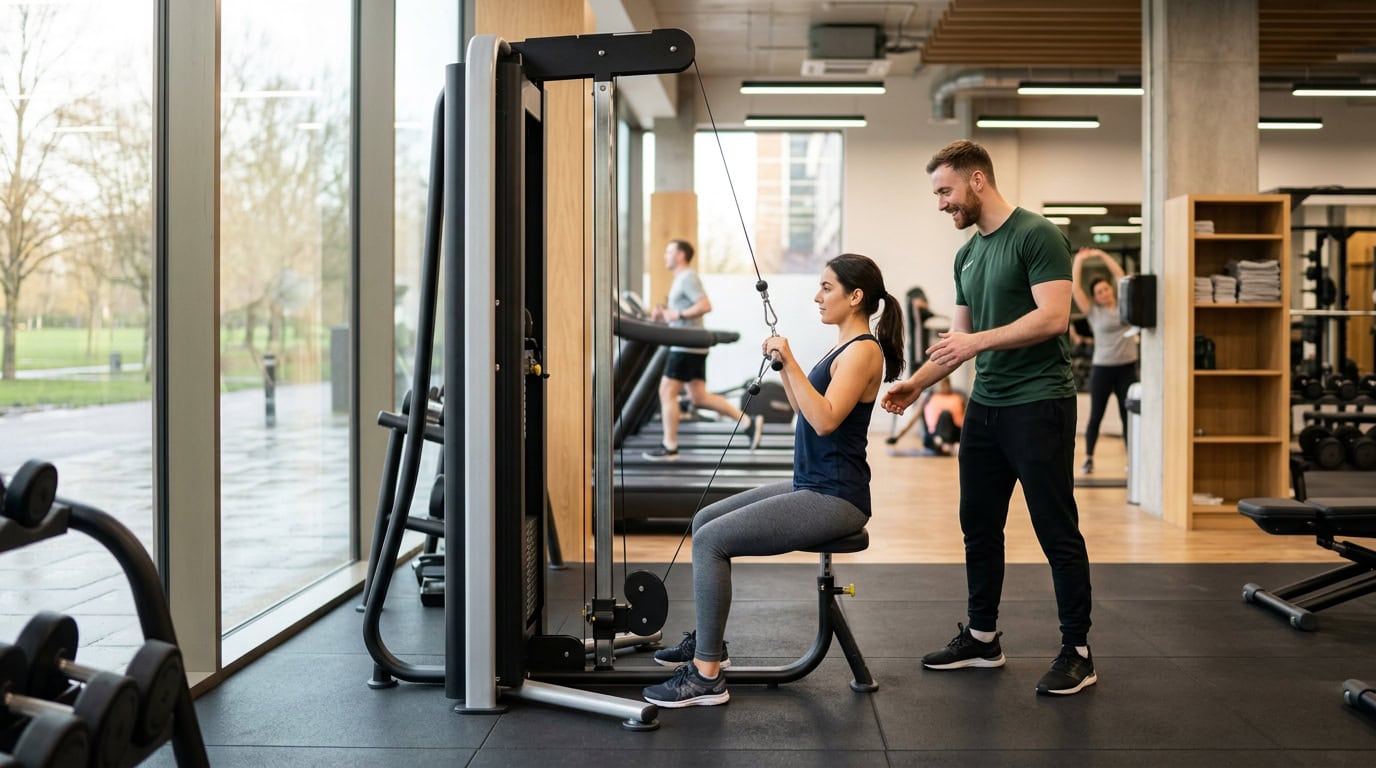
Tag: Gym Anxiety

  • Gymtimidation: How to Beat Gym Anxiety in the UK

    Gymtimidation: How to Beat Gym Anxiety in the UK

    You’ve packed your kit bag three times this week and taken it out of the car twice. Sound familiar? If the thought of walking onto a gym floor makes your stomach drop, you’re not being dramatic and you’re definitely not alone. It’s got a name now: gymtimidation. And it stops more people from getting fit than dodgy weather or a packed diary ever could.

    A recent UK fitness industry survey found that 56% of gym-goers admit to some form of gym-related anxiety, and the number climbs even higher among people who haven’t joined at all. Women are more than three times as likely as men to report feeling intimidated, and the 25-34 age group struggles the most, with the majority saying they simply don’t know how the equipment works or what they’re supposed to be doing.

    The good news is that gymtimidation is entirely beatable, and it usually only takes a handful of visits before the fear fades. Here’s how to get through the door, actually enjoy the session, and keep coming back.

    None of this is about toughening up or forcing yourself through discomfort. Most of the anxiety comes from a genuinely fixable gap between what you know and what a gym expects you to already know — how the machines work, where things go, what the unspoken rules are. Close that gap before you walk in and the nerves shrink dramatically.

    What Gymtimidation Actually Is (and Why It’s So Common)

    Gymtimidation isn’t a clinical term, but it describes something very real: the social anxiety that kicks in when you’re exercising in front of strangers who look like they know exactly what they’re doing. Surveys on the subject consistently point to the same trigger — around four in five people who feel intimidated say it’s specifically about being watched while they work out, not the exercise itself.

    Add in unfamiliar machines, gym-floor jargon, and the fear of using something wrong, and it’s easy to see why so many people quietly cancel plans to go. None of this means you’re unfit for the gym. It means the environment is unfamiliar, and unfamiliar things are always a bit uncomfortable until you’ve done them a few times.

    Reading the Room Before You Even Join

    A huge chunk of gym anxiety comes down to picking the wrong gym in the first place. A cavernous free-weights warehouse full of competitive lifters is a very different environment to a small community studio, and neither is objectively “better” — but one will suit your confidence levels far more than the other right now. Working through a proper gym selection checklist before you sign anything means you can filter for things like off-peak quiet hours, beginner-friendly staff, and induction sessions, rather than just picking whatever’s closest to home.

    It’s also worth visiting in person at the time of day you’d actually train. A gym that feels calm at 10am on a Tuesday can feel like a completely different building at 6pm, and there’s no shame in choosing quieter hours while you find your feet.

    Sort Your Kit So One Less Thing Feels Unfamiliar

    Nerves multiply when you’re also worrying about whether you’re wearing the right thing. Turning up in the wrong trainers, without a towel, or unsure whether you need your own padlock adds friction that has nothing to do with fitness. Getting your gym kit sorted in advance means you can walk in looking and feeling like you belong there, which does more for your confidence than any pep talk.

    Pack the same bag every time until it becomes automatic. Water bottle, trainers, a lock for the locker, headphones charged. Removing the small decisions leaves more headspace for the actual workout.

    Learn the Unwritten Rules Before Day One

    Most gym anxiety isn’t about lifting the wrong weight — it’s about accidentally breaking a rule nobody told you about. Not wiping down a bench, hovering near someone’s set, or not knowing where to put dumbbells back can feel mortifying in the moment, even though every single regular gym-goer has done exactly the same thing at some point. Spending ten minutes with a guide to gym etiquette before your first session removes most of that risk, and it means you’ll spot the few genuine faux pas to avoid rather than guessing.

    It’s also worth remembering that most people at the gym are far too focused on their own session to be scrutinising yours. That sounds like a cliché, but it holds up — the “everyone’s watching me” feeling is almost always louder in your head than it is in reality.

    Practical Ways to Build Confidence, Session by Session

    A few habits make a genuine difference in the first month:

    • Book the induction. Nearly every UK gym offers a free induction or equipment walkthrough for new members. Take it, even if you’ve trained before — it’s a guilt-free way to ask questions and get shown exactly how the kit works.
    • Go at off-peak times. Weekday mornings and early afternoons tend to be far quieter than the 6-8pm rush. A quieter gym floor means fewer eyes, more space, and more time with the equipment.
    • Have a plan before you arrive. Deciding what you’re doing in advance — even just three exercises scribbled on your phone — stops the awkward standing-around-looking-lost feeling that fuels anxiety.
    • Start with machines, not free weights. Machines guide your form and feel far less exposed than a barbell in the middle of the floor. You can graduate to free weights once you’re comfortable.
    • Bring a mate for the first few visits. Having someone alongside you, even if you’re both beginners, cuts the self-consciousness dramatically.

    None of these require any extra fitness. They just remove the friction points that make new gym-goers quit in week two.

    Group Classes and Beginner Programmes Are Built for This

    If the open gym floor feels like too big a leap, a class is often the gentler way in. Every studio-format session — spin, HIIT, beginner strength circuits, aqua aerobics — starts with an instructor telling everyone exactly what to do, when to do it, and how to modify it. There’s no ambiguity about whether you’re doing it “right,” because the whole room is following the same instructions at the same time. It also removes the awkward wondering-what-to-do-next feeling entirely, since the class structure does that thinking for you.

    Many UK gyms and leisure centres now run dedicated “beginner” or “back to fitness” weeks, particularly around September and January, with slower-paced versions of their usual classes and staff briefed to expect first-timers. It’s worth asking at reception whether anything like this is running, since it’s a low-pressure way to get several sessions of instructor-led practice before you’re expected to navigate the free weights area solo. Small-group personal training sessions work the same way — you get direct coaching without the one-to-one spotlight of a private PT session, at a fraction of the cost.

    What to Do If the Anxiety Doesn’t Fade

    For the vast majority of people, gymtimidation eases naturally within three to five visits as the environment becomes familiar. But if you’re still dreading every session weeks in, or you find yourself cancelling plans specifically to avoid the gym, it’s worth being honest with a member of staff about it. Most UK gyms and leisure centres have dealt with this before and can offer a quieter corner to start in, a buddy system, or extra time with an instructor — you just have to ask, which is often the hardest part.

    The Mental Health Side Nobody Talks About

    Gym anxiety is a form of social anxiety, and it’s worth treating it that way rather than just “pushing through.” According to the mental health charity Mind, regular physical activity can reduce your risk of depression by up to 30%, but that only works if you can actually get through the door in the first place. If gym anxiety is tipping into something that affects your wider wellbeing — not just nerves before a session — it’s worth talking to your GP or a mental health professional rather than assuming it’s something you should white-knuckle through alone.

    For most people, though, gymtimidation genuinely does fade with exposure. The third visit is nearly always easier than the first, and by visit ten most people can’t remember what they were nervous about.

    Finding a Gym That Actually Fits You

    The single biggest lever you have over gym anxiety is choosing the right environment in the first place. A women’s-only studio, a quiet local leisure centre, or a small independent gym with a strong beginner culture can make an enormous difference compared with a huge, high-energy chain that isn’t the right fit for where you are right now. This is exactly the kind of thing GymPal is built for — search by location and read what real members say about the atmosphere, class sizes, and how welcoming a gym actually is for beginners, so you can walk in already knowing it’s the right room for you.

    The Bottom Line

    Gymtimidation is common, it’s got nothing to do with your fitness level, and it almost always gets better with a bit of preparation and a few visits under your belt. Pick a gym that suits your confidence level, sort your kit in advance, learn the basic etiquette, and take the free induction. Do those four things and you’ll have removed most of what makes that first session feel so daunting — and you might even enjoy it.

  • Women-Only Gyms UK: Why They’re Booming in 2026

    Women-Only Gyms UK: Why They’re Booming in 2026

    Walk into a growing number of UK gyms right now and you’ll notice something: a dedicated women-only floor, a female-only class timetable, or an entire club that simply doesn’t admit men. This isn’t a niche trend anymore. Women-only gyms and women-only sessions are opening in high streets, retail parks and council leisure centres from Bradford to Brighton, and waiting lists at some of the busiest ones stretch for weeks.

    If you’ve ever cancelled a gym visit because you didn’t fancy being the only woman on the weights floor, or you’ve simply never set foot in one because the idea felt intimidating, this shift is worth understanding. It’s changing where and how a huge number of UK women choose to train.

    This guide covers why women-only gyms are growing so fast, what you can actually expect once you’re inside one, how they differ from mixed gyms that just run the odd “ladies’ hour”, and how to find the right one near you.

    The Rise of Women-Only Gyms in the UK

    The numbers behind this trend are hard to ignore. Sport England’s Active Lives Adult Survey has tracked a persistent activity gap between men and women for years, and gym anxiety specific to mixed-sex weights areas is consistently cited as one of the biggest barriers women report. Sport England’s own This Girl Can campaign was built directly off research showing that fear of judgement, not lack of motivation, keeps many women out of the gym altogether.

    Operators have responded. Chains like Contours Women’s Health Clubs have quietly built one of the largest women-only networks in the country, and mainstream leisure trusts such as GLL’s Better centres and Everyone Active now run dedicated women-only gym and swim sessions in dozens of towns, particularly in areas with large South Asian and Muslim communities in Bradford, Birmingham, Blackburn and parts of London where cultural and religious considerations make single-sex facilities essential rather than a nice-to-have. Independent boutique studios focused on strength training, Pilates and barre for women have opened in almost every major UK city over the last two years.

    Why Women Are Choosing Single-Sex Gym Spaces

    Ask women who’ve switched and the same reasons come up again and again: feeling watched, feeling judged on technique, or simply not wanting to navigate a crowded free-weights area dominated by men. This isn’t the same as general nervousness about starting a fitness routine, though the two often overlap. If unfamiliar equipment and busy gym floors already make you anxious, working through practical strategies for beating gymtimidation alongside choosing a single-sex environment can make that first month far less daunting.

    There’s also a safety and comfort dimension that shouldn’t be understated. Several women-only clubs report that members who’d previously avoided evening workouts entirely now train later because they feel safer in a space without men present, particularly for those training alone after dark in winter months.

    Beyond anxiety and safety, plenty of women simply prefer the culture. Women-only gyms tend to build community around shared goals rather than competition, and class timetables lean heavily towards strength, conditioning and mobility work rather than the bodybuilding-focused programming that dominates some mixed clubs.

    What to Expect From a Women-Only Gym or Studio

    Facilities vary a lot depending on whether you’re looking at a full women-only club or a boutique studio. A club like Contours typically offers a circuit-style resistance and cardio setup designed to be completed in 30 minutes, aimed at time-poor members who want an efficient session without a lengthy induction. Boutique studios lean more towards small-group classes: strength circuits, reformer Pilates, and barre-style workouts that blend ballet-inspired movement with isometric holds. If barre is new to you, it’s worth reading up on what a typical barre class involves and what it costs before booking your first session, since pricing and format differ significantly from a standard gym class.

    Free weights areas in women-only gyms are usually smaller than in a big mixed-sex chain, but staff-to-member ratios tend to be higher, and inductions are often more thorough. Expect female personal trainers and instructors as standard, changing rooms that don’t require communal showering if that’s a concern for you, and a generally slower, more patient pace to group classes aimed at building confidence rather than pushing intensity from week one.

    Women-Only Gyms vs Women-Only Sessions: What’s the Difference

    It’s worth separating two things that get lumped together. A genuine women-only gym, like Contours, is single-sex all the time — men simply aren’t members. A women-only session, on the other hand, is a set of hours at an otherwise mixed-sex gym or leisure centre reserved exclusively for women, often once or twice a week.

    Council-run leisure centres are the biggest providers of the second model. Many Better and Everyone Active sites run women-only gym floor and swim sessions, usually early evening or weekend slots, precisely because full single-sex membership isn’t commercially viable for every location but demand for some female-only time clearly exists. These sessions are typically included in a standard leisure centre membership rather than costing extra, which makes them one of the cheapest ways to try a single-sex environment before committing to a dedicated women-only club.

    The Cost Question: Are Women-Only Gyms More Expensive?

    Pricing sits roughly in line with mid-market mixed gyms rather than budget chains. Expect to pay somewhere between £25 and £45 a month for a dedicated women-only club membership, depending on region and whether classes are included, with boutique barre and Pilates studios often charging per-class or via a credit system starting around £15–£20 per session if you’re not on a monthly plan. Council women-only sessions are usually the most affordable route in since they’re folded into standard leisure centre membership, which can run as little as £20–£30 a month in many areas.

    Before signing anything, it’s worth working through the same due diligence you’d apply to any gym contract — checking notice periods, freeze policies and what’s actually included in the price rather than assuming it matches a big mixed-sex chain.

    How to Find the Right Women-Only Gym Near You

    Availability still varies enormously by region. Cities like London, Manchester, Birmingham and Glasgow have several genuine women-only clubs plus boutique studios, while smaller towns might only offer council-run women-only sessions rather than a dedicated club. Searching by facility type on GymPal is the quickest way to filter for women-only gyms and classes near your postcode rather than scrolling through generic gym listings that don’t specify.

    Once you’ve found a shortlist, treat the visit like you would any other gym decision. Many of the same fundamentals from a general gym choice checklist still apply here — opening hours, contract length, cleanliness, and whether the equipment matches what you actually want to do — on top of the women-only-specific questions below.

    Questions to Ask Before You Join

    A few things are worth confirming before you commit to a women-only club or studio, since “women-only” can mean quite different things in practice:

    Ask whether the club is genuinely women-only at all times or only during certain hours, whether male staff (maintenance, reception, personal trainers) ever have floor access during opening hours, what the changing room and shower setup actually looks like, and whether class timetables are fixed or rotate seasonally. If you’re specifically drawn to single-sex training for religious or cultural reasons, it’s also worth asking directly whether instructors and reception staff are exclusively female, since policies differ even among clubs that market themselves as women-only.

    For Gym Owners: Is It Worth Adding Women-Only Hours?

    If you run a mixed-sex gym or leisure centre, this trend is also a commercial opportunity worth taking seriously. Blocking out a few quiet hours a week for women-only access is one of the lowest-cost ways to open your doors to a segment of local demand you’re currently missing entirely — particularly in areas with significant Muslim or South Asian populations, where single-sex provision often isn’t optional for a meaningful share of potential members, it’s the difference between them joining at all or not.

    The operational lift is smaller than owners often assume. You don’t need to close the whole site or hire new female-only staff overnight — many gyms start with one or two off-peak evening slots, staffed by whichever female team members are already on the rota, and expand only once demand proves out. What matters more is communicating the policy clearly: confirming whether male staff retain any floor or reception access during those hours, and making sure changing facilities genuinely support privacy, since a poorly-defined “women-only hour” that still has male maintenance staff wandering through will undo the trust you’re trying to build fast.

    Marketing these sessions well matters just as much as running them. Local community groups, mosques, GP surgeries and school parent networks are often far more effective at spreading the word than social media ads, since word of mouth carries more weight for members who’ve been put off gyms before. Making sure your listing on GymPal clearly flags women-only sessions is also worth doing — it’s exactly the kind of filter women in your area are actively searching for, and a listing that doesn’t mention it is an easy way to lose a member to the club down the road that does.

    Final Thoughts

    Women-only gyms aren’t a passing fad — they’re a direct response to a well-documented confidence and safety gap that’s kept a huge number of women out of fitness spaces for years. Whether that means joining a dedicated club like Contours, booking into a council-run women-only session, or trying a boutique barre or Pilates studio, there’s now more genuine choice across the UK than at any point before.

    The best next step is simply seeing what’s actually available where you live, since provision still varies a lot by region. Search GymPal for women-only gyms, classes and sessions near you, compare a few options, and go and visit before you commit to anything.

  • Gym Anxiety: How to Overcome Gymtimidation and Feel Confident Working Out

    Gym Anxiety: How to Overcome Gymtimidation and Feel Confident Working Out

    If the thought of walking into a gym makes your stomach flip, you are not alone. Studies suggest that around half of all UK adults experience some form of gym anxiety — that uneasy feeling that everyone is watching, judging, or miles ahead of you in fitness. (see NHS exercise and mental wellbeing guidance. According to NHS exercise guidelines

    It even has a name: “gymtimidation”. And it is one of the biggest barriers stopping people from starting — or sticking with — a fitness routine.

    The good news? Gym anxiety is entirely normal, usually unfounded, and absolutely manageable. Here is how to beat it.

    Why Gym Anxiety Happens

    Gym anxiety usually stems from a handful of common worries:

    • Fear of being judged: Worrying that people will stare at you because you are new, using equipment wrong, or not as fit as others.
    • Not knowing what to do: Walking in without a plan feels overwhelming. Machines look complicated. Free weights areas can feel like exclusive clubs.
    • Comparing yourself to others: Social media has warped what “normal” fitness looks like. Comparing your day one to someone else’s year five is a losing game.
    • Feeling out of place: Maybe you think gyms are not “for you” — that you need to be in shape before you can show up.

    None of these reflect reality. Most gym-goers are focused on their own workout and genuinely uninterested in what anyone else is doing.

    8 Practical Ways to Overcome Gym Anxiety

    1. Visit Before You Sign Up

    Most UK gyms offer a free tour or trial pass. Use it. Walking through the space when there is no pressure to work out helps you learn the layout, see the equipment, and get a feel for the atmosphere. You can use GymPal to find gyms near you, read reviews, and compare facilities before you ever set foot inside.

    2. Go at Off-Peak Hours

    Gyms are busiest between 5pm and 8pm on weekdays. If your schedule allows, try early morning, late evening, or mid-morning on weekends. Fewer people means less pressure, more equipment availability, and a calmer environment to find your feet.

    3. Have a Plan Before You Walk In

    One of the biggest anxiety triggers is standing in the middle of the gym not knowing what to do next. Spend five minutes before each visit writing down your exercises, sets, and reps. Even a simple three-exercise circuit is better than wandering aimlessly. There are plenty of free beginner programmes online, or ask the gym staff for an induction — it is usually free.

    4. Start With Machines, Then Progress

    Resistance machines are more intuitive than free weights because they guide your movement path. Start with leg press, chest press, lat pulldown, and seated row. Once you build confidence and basic strength, you can transition to dumbbells and barbells at your own pace.

    5. Wear What Makes You Comfortable

    You do not need designer gymwear. Wear whatever lets you move freely and feel like yourself. A comfortable t-shirt and joggers are perfectly fine. The right gear is whatever gets you through the door.

    6. Use Headphones

    Headphones are the universal gym signal for “I am in my own world.” They help create a personal bubble, block out background noise, and let you focus on your workout and your music. They also make you feel less self-conscious about sounds — whether that is heavy breathing or the clank of weights.

    7. Remember Everyone Was a Beginner Once

    That person bench pressing 100kg? They started somewhere too. The regulars you see are not judging you — most of them remember what it felt like to be new. In fact, the gym community in the UK is generally friendly and supportive. If you are unsure about an exercise or a machine, ask a member of staff. That is literally what they are there for.

    8. Bring a Friend

    Having a workout partner instantly halves the anxiety. You have someone to talk to, someone to figure out equipment with, and someone who makes the whole experience feel less daunting. If your friends are not into fitness, consider a group class — the structured format and social element can be a great way to ease in.

    What Gym Owners Can Do to Help

    If you run a gym, you should know that gymtimidation is costing you members. Here are a few things that make a real difference:

    • Clear signage and instructions on every machine
    • Proper inductions for all new members, not just those who ask
    • A welcoming culture — train staff to approach and assist newcomers
    • Beginner-friendly sessions or zones where new members feel safe
    • List your gym on GymPal so potential members can find you, see your facilities, and feel prepared before their first visit. Claim your free listing at askgympal.co.uk

    The Bottom Line

    Gym anxiety is real, but it is also temporary. Every time you go, it gets a little easier. The hardest part is walking through the door that first time — and after that, it is just one workout at a time.

    Ready to find a gym where you feel at home? GymPal lists thousands of UK gyms, studios, and fitness centres with reviews, facilities, and pricing to help you choose the right fit. Because the best gym is the one you actually go to.

  • Gym Anxiety: How to Feel Confident Walking Into Any Gym

    Gym Anxiety: How to Feel Confident Walking Into Any Gym

    Walking into a gym for the first time (or the fiftieth) can be genuinely nerve-wracking. You might worry that everyone’s watching you, that you don’t know what you’re doing, or that you simply don’t “belong” there. If any of that sounds familiar, you’re far from alone — gym anxiety is one of the most common reasons people avoid exercise altogether. (see NHS exercise and mental wellbeing guidance. According to NHS exercise guidelines

    The good news? It gets easier, and there are practical things you can do right now to feel more confident walking through those doors.

    Why Gym Anxiety Is So Common

    A 2023 survey by Mindbody found that nearly half of UK adults have felt intimidated at the gym at some point. The most common triggers? Feeling like everyone else is fitter, not knowing how to use equipment, and worrying about being judged.

    Here’s the thing: almost everyone feels this way at first. Even the person bench-pressing 100kg in the corner was once a nervous beginner. Gym confidence isn’t something you’re born with — it’s something you build.

    8 Practical Tips to Overcome Gym Anxiety

    1. Visit Before You Sign Up

    Most gyms offer a free tour or day pass. Use it. Walk around, see the layout, check out the changing rooms. Familiarity kills anxiety faster than anything else. If a gym won’t let you look around before joining, that’s a red flag.

    2. Go During Off-Peak Hours

    Your first few sessions don’t need to be at 6 PM on a Monday. Try mid-morning, late evening, or weekend afternoons when the gym is quieter. Fewer people means less pressure and more space to figure out the equipment at your own pace.

    3. Have a Plan

    Anxiety loves uncertainty. Walk in knowing exactly what you’re going to do — even if it’s just “20 minutes on the treadmill and some stretches.” Write it down on your phone if you need to. A plan gives you purpose and stops you wandering around feeling lost.

    4. Start With What You Know

    There’s no rule that says you have to use the complicated machines right away. If the treadmill or exercise bike feels safe, start there. Build your confidence with familiar movements before branching out.

    5. Wear Whatever Makes You Comfortable

    You don’t need designer gymwear. Wear whatever you feel good in — oversized t-shirt, joggers, whatever. The gym isn’t a fashion show. Most people are too focused on their own workout to notice what anyone else is wearing.

    6. Use Headphones

    Headphones are the universal “I’m in my own world” signal. Put on a playlist or podcast and create your own bubble. It helps block out the noise and makes the whole experience feel more personal and less performative.

    7. Book an Induction

    Nearly every gym in the UK offers a free induction when you join. Take it. A staff member will show you around, explain how the equipment works, and help you feel at home. It’s literally their job to make you feel welcome.

    8. Remember: Nobody Is Watching You

    This is the biggest truth about gyms. Everyone is focused on their own workout. The person you think is judging you is actually just trying to remember how many reps they’ve done. Once you internalise this, gym anxiety loses a lot of its power.

    Choosing a Gym That Helps With Anxiety

    Not all gyms are created equal when it comes to beginner-friendliness. Here’s what to look for:

    • Friendly staff: Good gyms have approachable team members who say hello and offer help without being pushy.
    • Women-only areas: Many gyms now offer dedicated women’s sections — PureGym, David Lloyd, and local independents often have these.
    • Beginner classes: Classes labelled “intro,” “basics,” or “beginner” are great low-pressure entry points.
    • Clean, well-maintained spaces: A gym that looks after its facility usually looks after its members too.

    Use GymPal to find beginner-friendly gyms near you. You can filter by facilities like women-only areas, read reviews from other members, and compare the vibe before you commit.

    For Gym Owners: How to Make New Members Feel Welcome

    If you run a gym, tackling gym anxiety isn’t just kind — it’s good business. Anxious beginners are the people most likely to cancel within the first month. Here’s how to keep them:

    • Proper inductions: Don’t rush them. Spend 30 minutes showing new members around and explaining the basics.
    • Buddy systems: Pair new members with existing ones for their first few visits.
    • Clear signage: Label equipment zones clearly so newcomers don’t feel lost.
    • Beginner-only sessions: Dedicated time slots for new members remove the intimidation factor entirely.
    • Follow up: A quick message after their first week shows you care and helps build loyalty.

    Make sure your GymPal listing highlights these features — beginners actively search for welcoming gyms, and you want to show up when they do.

    The Bottom Line

    Gym anxiety is real, but it’s also temporary. Every visit gets a little easier. Start small, go at your own pace, and remember that every single person in that gym was once a beginner too. Find a gym that makes you feel welcome on GymPal and take that first step. You’ve got this.

  • How to Overcome Gym Anxiety: A Practical Guide for Beginners

    How to Overcome Gym Anxiety: A Practical Guide for Beginners

    Gym Anxiety Is Completely Normal

    You are not alone. Studies suggest that up to 50% of people experience some form of gym anxiety, and for many, it is the single biggest barrier to starting an exercise routine. The feeling has a name — gymtimidation — and it is more common than you might think.

Knowing where everything is and how it works removes a major source of anxiety.

3. Have a Plan Before You Arrive

Walking into a gym without a plan is a recipe for anxiety. You end up wandering around, feeling lost, and eventually leaving early. Write your workout down before you go — even if it is just three exercises. When you know exactly what you are doing, you can walk in with purpose and get straight to work.

Need a starting programme? Our beginner workout programme guide includes two complete workouts you can take straight to the gym floor.

4. Wear What Makes You Comfortable

There is no dress code for the gym. Wear whatever makes you feel comfortable and confident. If that means a baggy t-shirt and tracksuit bottoms, wear that. If you prefer shorts and a vest, go for it. No one is judging your outfit — they are too busy worrying about their own.

5. Use Headphones

A simple pair of headphones is one of the most effective anxiety-reduction tools available. Music or a podcast creates a personal bubble that reduces self-consciousness and makes you feel less exposed. It also signals to others that you are focused on your workout, which reduces unwanted interaction.

6. Start With Machines, Not Free Weights

Resistance machines have clear instructions, fixed movement paths, and adjustable seats. They are designed to be beginner-friendly and are much less intimidating than the free weight area. Start here for your first few sessions. As your confidence grows, you can gradually introduce free weights.

7. Focus on Your Own Workout

This is easier said than done, but it gets easier with practice. Before each session, remind yourself: everyone here is focused on their own goals. No one is analysing your form, counting your reps, or judging your body. The occasional glance is normal — it is not judgement. People look around gyms. It means nothing.

8. Bring a Friend

If possible, go with someone who already goes to the gym. A friend provides emotional support, practical guidance, and a distraction from anxious thoughts. If you do not have a gym-going friend, many gyms run buddy-matching programmes or group classes where you can meet people in a structured, low-pressure environment.

9. Consider Group Classes

Classes are surprisingly effective for reducing anxiety. In a class, everyone is following the same instructions, which means you are not standing out by doing your own thing. The instructor provides structure and guidance, and the group setting creates a sense of shared purpose. Start with beginner-friendly classes like body conditioning, yoga, or a gentle circuit.

10. Celebrate Small Wins

Overcoming gym anxiety is not a one-time event — it is a process. Celebrate the small victories: walking through the door, completing your first workout, trying a new machine, going during a busier time. Each one is progress, and each one deserves recognition.

What to Do When Anxiety Hits Mid-Workout

Sometimes anxiety shows up even when you have prepared. Here is what to do when it happens:

  • Pause. Stop what you are doing. Take five slow, deep breaths. Focus on the physical sensation of breathing.
  • Ground yourself. Look around and name five things you can see, four things you can hear, three things you can feel. This interrupts the anxiety spiral.
  • Move to a quieter area. If the main gym floor feels overwhelming, move to a stretching area, the changing room, or grab some water.
  • Remind yourself why you are here. You came to the gym to improve your health. That takes courage. You have already done the hardest part by showing up.
  • It is okay to leave early. If the anxiety is overwhelming, leaving after 10 minutes is still better than not going at all. You can build up gradually.

Choosing the Right Gym for Anxiety

The gym you choose makes a big difference. Some environments are more anxiety-friendly than others:

  • Smaller, independent gyms often have a more personal, less intimidating atmosphere than large chain gyms
  • Women-only gyms provide a comfortable environment for women who feel self-conscious in mixed gyms
  • Gyms with clear equipment labels and beginner-friendly layouts reduce the fear of looking lost
  • Gyms with good off-peak hours give you the option to train when it is quieter
  • Gyms with welcoming staff who greet you and are available to help make a huge difference

When you are researching gyms, look for these qualities. GymPal lets you filter UK gyms by type, read member reviews that often mention atmosphere and friendliness, and compare options before you visit. Finding the right gym environment can make overcoming anxiety significantly easier.

How Long Does It Take to Feel Comfortable?

Most people report that gym anxiety reduces significantly after 3-5 consistent visits. By week three or four, the gym starts to feel familiar rather than intimidating. By month two, many people wonder what they were worried about.

The key is consistency. Going once every two weeks keeps the gym feeling new and unfamiliar. Going three times a week accelerates the adaptation process dramatically.

The Bottom Line

Gym anxiety is real, common, and completely manageable. It is not a sign of weakness or a reason to avoid exercise. It is simply your brain responding to a new, unfamiliar environment — and like any new environment, it becomes familiar with exposure and practice.

You do not need to feel confident before you go to the gym. You just need to go. Confidence builds from the inside out, one session at a time. Start small, be kind to yourself, and remember: every single person in that gym was a beginner once.


Ready to take the first step? Search GymPal to find a welcoming gym near you. Filter by type, read member reviews about atmosphere and friendliness, and claim a free trial to visit without commitment. Your future self will thank you.

  • The Mental Health Benefits of Regular Exercise: What the Science Actually Says

    The Mental Health Benefits of Regular Exercise: What the Science Actually Says


    The Mental Health Benefits of Regular Exercise

    Exercise stimulates the production of BDNF, a protein that supports the growth of new brain cells and strengthens existing neural connections. Harvard Medical School describes BDNF as “Miracle-Gro for the brain.” It plays a crucial role in learning, memory, and emotional regulation.

    Cortisol Reduction

    While exercise temporarily raises cortisol (the stress hormone), regular physical activity actually lowers baseline cortisol levels over time. This means chronic exercisers are less reactive to everyday stressors.

    Reduced Inflammation

    Chronic inflammation is increasingly linked to depression and other mental health conditions. Exercise reduces systemic inflammation, which may explain some of its antidepressant effects.

    Exercise and Specific Mental Health Conditions

    Depression

    A landmark review by the Cochrane Collaboration (covering 39 trials and 2,326 participants) found that exercise is moderately effective in reducing symptoms of depression, with effects comparable to psychotherapy and pharmacotherapy for mild to moderate cases. The Royal College of Psychiatrists recommends exercise as part of a comprehensive treatment approach.

    Importantly, the benefits are dose-responsive: more exercise generally leads to greater improvements, but even small amounts make a difference.

    Anxiety

    A meta-analysis published in the Journal of Anxiety Disorders found that exercise significantly reduces anxiety symptoms across all populations studied. Both aerobic exercise (running, cycling, swimming) and resistance training have been shown to be effective.

    For people with generalised anxiety disorder, regular exercise can reduce worry, improve sleep quality, and increase emotional resilience. The effects are often felt within the first few weeks of starting a routine.

    Stress

    Exercise is one of the fastest ways to reduce acute stress. A brisk 20-minute walk can lower cortisol levels and improve mood within hours. For chronic stress, regular exercise builds resilience — your body becomes more efficient at regulating its stress response over time.

    Sleep

    Poor sleep and mental health problems form a vicious cycle. Exercise helps break it. Research from the Journal of Clinical Sleep Medicine shows that regular physical activity improves sleep quality, reduces the time it takes to fall asleep, and decreases insomnia symptoms. Better sleep, in turn, improves mood, cognitive function, and emotional regulation.

    Self-Esteem and Confidence

    Regular exercise improves body image, self-efficacy, and sense of achievement. These are not superficial benefits — low self-esteem is a risk factor for depression and anxiety, and exercise directly addresses it through visible progress, skill development, and goal achievement.

    How Much Exercise Do You Need for Mental Health Benefits?

    The good news is that you do not need to train like an athlete to experience mental health benefits. Here is a practical breakdown:

    Duration/Intensity Mental Health Benefit
    10 minutes of brisk walking Immediate mood improvement and stress reduction
    30 minutes of moderate exercise Significant anxiety reduction lasting several hours
    3 sessions per week Noticeable improvement in depression symptoms within 4–6 weeks
    150 minutes per week (NHS guideline) Optimal mental health protection and resilience
    300 minutes per week Maximum benefit — additional improvements taper off beyond this

    The most important factor is consistency. Three 30-minute sessions per week, sustained over months, will deliver far more benefit than an occasional intense session.

    Which Type of Exercise Is Best for Mental Health?

    Different activities offer different mental health benefits. The best exercise for mental health is the one you will actually do consistently, but here is what the research suggests:

    Exercise Type Mental Health Strengths
    Running / Jogging Strongest evidence for depression reduction; rhythmic, meditative quality
    Swimming Low impact, calming water environment; good for anxiety
    Yoga Combines physical movement with mindfulness; excellent for stress and anxiety
    Weight Training Builds self-efficacy and confidence; emerging evidence for depression
    Group Classes Social connection reduces isolation; accountability and routine
    Walking (especially outdoors) Accessible to everyone; nature exposure adds additional mental health benefits
    Martial Arts Discipline, focus, and confidence; stress release through controlled exertion

    A well-rounded routine that combines cardiovascular exercise, strength training, and flexibility work (like yoga or stretching) will give you the broadest mental health benefits.

    The Social Factor: Why Your Gym Community Matters

    Loneliness and social isolation are significant risk factors for depression and anxiety in the UK. A gym membership can be a powerful antidote — not because of the equipment, but because of the people.

    Research from the American Journal of Preventive Medicine found that team sports and group fitness activities are associated with better mental health outcomes than individual exercise. The combination of physical activity and social connection creates a synergistic effect that is greater than either alone.

    When choosing a gym, consider the community aspect. Gyms with group classes, social events, and a friendly atmosphere provide mental health benefits that go beyond the workout itself. If you are looking for a gym that values community, GymPal can help you find UK gyms with strong member communities and a welcoming atmosphere.

    Practical Tips for Using Exercise to Support Mental Health

    • Start small. A 10-minute walk is infinitely better than doing nothing. Build gradually.
    • Schedule it. Treat exercise like an appointment. Put it in your calendar and protect that time.
    • Find activities you enjoy. If you hate running, do not run. Swim, cycle, lift, dance, or climb instead. Enjoyment drives consistency.
    • Exercise outdoors when possible. Green exercise (physical activity in nature) has additional mental health benefits beyond indoor exercise alone.
    • Combine exercise with social connection. Join a class, find a gym buddy, or join a running club.
    • Be patient. Mental health benefits accumulate over weeks, not days. Give it at least four to six weeks before judging the impact.
    • Seek professional help if needed. Exercise is a powerful tool, but it is not a replacement for professional mental health treatment. If you are struggling, speak to your GP or contact the Samaritans on 116 123.

    The Bottom Line

    The evidence is clear and it is compelling: regular exercise is one of the most effective things you can do for your mental health. It reduces symptoms of depression and anxiety, lowers stress, improves sleep, boosts self-esteem, and builds resilience. It is free, accessible, and has no negative side effects when done sensibly.

    You do not need to become a fitness enthusiast to benefit. You just need to move regularly, find activities you enjoy, and make it part of your routine. Your brain will thank you for it.


    Looking for a gym that supports your mental and physical wellbeing? Search GymPal to find UK gyms with yoga classes, swimming pools, welcoming communities, and flexible membership options. Your journey to better mental health starts with a single step.


  • Gym Anxiety: How to Overcome the Fear of Working Out in Public

    Gym Anxiety: How to Overcome the Fear of Working Out in Public

    If the thought of walking into a gym makes your stomach flip, you’re far from alone. Gym anxiety — sometimes called “gymtimidation” — affects millions of people in the UK. In fact, research suggests that up to 50% of people feel intimidated by the gym environment at some point, and it’s one of the most common reasons people put off starting their fitness journey., mid-afternoon (2pm–4pm on weekdays), and late evenings tend to be quieter. Weekends are generally busier, so if possible, stick to weekday visits.

    3. Book an Induction

    Most UK gyms offer a free induction session when you join. This is a guided tour of the equipment with a member of staff who shows you how everything works. It’s designed for beginners, so there’s absolutely no shame in asking for one — even if you’ve been a member for a while.

    4. Wear What Makes You Comfortable

    You don’t need the latest designer activewear to have a good workout. Wear whatever makes you feel comfortable and confident. Many people start in loose-fitting clothes and gradually shift to more fitted gym wear as their confidence grows.

    5. Bring Headphones

    A good pair of headphones is your best friend at the gym. Music or podcasts create a personal bubble, help you focus, and reduce the feeling that everyone is watching you. Noise-cancelling headphones are particularly effective for blocking out the gym environment.

    6. Start Small and Build Up

    You don’t need to do an hour-long intense workout on your first visit. Start with 20–30 minutes and focus on getting comfortable in the space. Gradually increase the duration and intensity as your confidence grows. Consistency matters more than intensity in the early days.

    7. Consider a Small or Boutique Gym

    Large commercial gyms can feel overwhelming. Independent gyms, boutique studios, and specialist fitness centres often have a more intimate, community feel. They’re typically less crowded, and the staff often have more time to help newcomers feel at home. You can explore local options on GymPal — the UK’s fitness directory lets you browse gyms in your area, read what others say, and find one that suits your vibe.

    8. Remember: Everyone Was a Beginner Once

    Every single person at the gym — including the most muscular person lifting the heaviest weights — started exactly where you are now. Nobody is born knowing how to use a cable machine. Everyone had their first day, and everyone felt nervous. You belong there just as much as anyone else.

    When to Consider a Personal Trainer

    If your anxiety feels unmanageable, a few sessions with a personal trainer can make a world of difference. They’ll guide you through exercises, correct your form, and give you the confidence to train independently. Many gyms offer introductory PT sessions at a reduced rate. If you’re looking for a trainer, GymPal can help you find local gyms with personal training services.

    Signs Your Gym Anxiety Is Improving

    Progress isn’t always obvious, but here are some signs you’re heading in the right direction:

    • You no longer dread going to the gym the night before
    • You’re comfortable asking staff questions
    • You’ve tried a new piece of equipment without overthinking it
    • You stop worrying about what other people think mid-workout
    • You actually start looking forward to your gym sessions

    Final Thoughts

    Gym anxiety is a barrier, but it’s a temporary one. Every time you show up, you’re proving to yourself that you’re stronger than your doubts. Start small, be patient with yourself, and remember — the hardest part is always walking through the door.

    Ready to find a gym that feels right for you? Search Gyms on GymPal to discover local fitness options, read reviews, and find your perfect fit. Your fitness journey starts with a single step — and we’re here to help you take it.