Category: UK Fitness Scene

  • Gym Motivation When the Clocks Go Back: A UK Guide

    Gym Motivation When the Clocks Go Back: A UK Guide

    Here’s a date to put in your diary that has nothing to do with payday: Sunday 25 October. That’s when the clocks go back in the UK, and with it goes an hour of daylight you were relying on to get your training done. One week you’re finishing a 6pm session in daylight, the next you’re fumbling for your keys in the dark at half four.

    It’s not just in your head. Gym check-in data across the UK shows a consistent dip in attendance through late October and November, right as New Year’s resolutioners are still months away from flooding the car park. The people who keep training through this stretch aren’t more disciplined than everyone else — they’ve just built a routine that doesn’t depend on daylight to work.

    This guide covers exactly how to do that: shifting your schedule before the clocks change rather than after, making the dark mornings and evenings work in your favour, fuelling a body that would rather stay under the duvet, and building a winter routine sturdy enough to survive a wet Tuesday in November.

    None of what follows requires a New Year’s-style overhaul. It’s a handful of small, boring adjustments made now, while you’ve still got daylight to plan by, rather than in a panic once the evenings have already caught you out.

    Why Motivation Drops the Moment the Clocks Go Back

    The clock change itself is only an hour, but the psychological effect is bigger than that. Suddenly it’s dark on the walk to the gym and dark on the walk home. Your body’s natural cortisol and melatonin rhythms shift with the reduced daylight, which is part of why so many of us feel sluggish and less motivated to move in winter — not weak-willed, just biologically nudged towards hibernating on the sofa.

    There’s also a simple logistics problem. A lot of people train around work, which means early mornings or after-work evenings — exactly the windows that go dark first. If your routine only works when it’s light outside, the clock change quietly breaks it. The fix isn’t more willpower. It’s redesigning the routine so darkness doesn’t get a vote.

    Temperature plays a part too. It’s not just darker, it’s colder, and getting changed out of warm layers into gym kit in an unheated hallway at 6am is a genuinely bigger barrier than most training plans admit. Understanding that the resistance you feel isn’t laziness — it’s a predictable combination of biology, temperature and logistics — makes it much easier to plan around rather than just try to power through with gritted teeth.

    Shift Your Session Times Before the Clocks Change, Not After

    The single biggest mistake people make is waiting until the mornings are already dark to think about adjusting their schedule. By then you’re reacting, and reacting is exhausted, demotivated decision-making at 6am in the cold.

    Instead, treat late October the way you’d treat any other training reset. If you found a routine that worked after summer, the same structured approach applies here — in fact a lot of the groundwork in our September gym reset guide holds up just as well for a winter restart, particularly the bit about anchoring sessions to existing habits rather than willpower alone. Look at your diary for the first week of November and pre-book your sessions like you’d book a dentist appointment. If your gym does classes, book onto three for the week ahead right now — a class with your name against it is far harder to skip than a vague intention to “go later.”

    If your usual slot is a pre-work run or an evening outdoor session, this is also the moment to scout an indoor backup. Plenty of GymPal-listed gyms and leisure centres run 24-hour access or early-opening slots specifically because this is when demand for indoor, lit, weatherproof training spikes.

    Make the Dark Mornings and Evenings Work For You

    You don’t have to fight the dark — you can just plan around it properly. A few practical swaps make a bigger difference than they sound like they should:

    • Move outdoor sessions to lunchtime. If you run or walk outside, midday is the only UK daylight window that doesn’t move much through winter. A 20-minute lunch loop keeps the habit alive without needing a head torch.
    • Invest in proper visibility kit. A decent head torch and a reflective gilet cost less than one month of a typical gym membership and remove the single biggest excuse for skipping an outdoor session.
    • Use daylight, even brief daylight, deliberately. Ten minutes outside at lunch does more for your mood and alertness than staying under office lighting all day.
    • Consider a SAD lamp if mornings genuinely floor you. Seasonal low mood is common and well documented, and regular exercise is one of the things the NHS specifically recommends alongside light therapy for managing seasonal affective disorder — so keeping your training going through winter isn’t just about fitness, it’s doing real work for your mental health too.

    None of this requires a personality transplant. It requires deciding, once, how you’re going to handle the dark — rather than relitigating it every single morning when the alarm goes off.

    Fuelling a Body That Would Rather Stay Under the Duvet

    What you eat and drink before a dark, cold session matters more in winter than it does in June, mostly because your body is working harder to keep itself warm before it even starts exercising. A few adjustments help:

    • Don’t train fully fasted on the coldest mornings. A small carbohydrate snack 30–45 minutes beforehand — a banana, a slice of toast — gives you enough readily available energy that the session doesn’t feel twice as hard as it needs to.
    • Warm drinks work as a psychological cue, not just a comfort. A warm squash or herbal tea before an early session can make the idea of leaving the house feel less brutal, and hydration matters just as much in winter as summer even though you feel thirsty less often.
    • Protein at your next meal matters more when sessions are shorter or less frequent. If winter naturally trims your training volume, keeping protein intake consistent helps you hold onto strength and muscle through the leaner weeks rather than losing ground you’ll have to rebuild in spring.

    None of this needs to be precise or tracked to the gram. The goal is simply removing friction — a body that’s warm, fuelled and hydrated finds a dark 6am session a lot more manageable than one that’s running on empty.

    Reframe Rest as Part of the Plan, Not a Failure

    One reason people abandon training in winter is that they treat every missed session as proof the plan isn’t working, then quietly stop altogether. Winter is exactly the time to build in deliberate rest rather than accidental rest. A planned recovery day feels completely different to a guilt-ridden skipped session, even though the training outcome is often identical.

    If you’ve never properly separated the two, it’s worth reading through our guide to rest and recovery, which covers how sleep, deload weeks and genuine rest days actually support consistency rather than undermine it. Colder weather also means more soft-tissue niggles if you skip your warm-up, so budget an extra five minutes for mobility work before anything explosive.

    The gym-goers who train consistently right through to March aren’t the ones who never miss a session — they’re the ones who never let one missed session turn into three.

    Find Your People: Training Is Easier When You’re Not Doing It Alone in the Dark

    Solo motivation is hardest precisely when conditions are worst, which is why winter is the best time of year to train with other people. A class, a running club, or even just a gym buddy who expects you to show up removes the decision entirely — you’re not deciding whether to train, you’re just turning up because someone’s waiting.

    If running outdoors in the dark feels daunting on your own, building the habit somewhere lit and social first can make a real difference — our Couch to 5K guide is written with exactly that kind of gradual, low-pressure build-up in mind, and plenty of people shift it onto a treadmill for the darkest months before heading back outside in spring.

    If your current gym doesn’t have the class timetable, opening hours, or atmosphere that suits a winter routine, it’s worth checking what else is nearby. Use GymPal to search gyms in your area by opening hours and facilities, so you can find somewhere that’s properly lit, open early, and actually convenient for a 6am November session rather than a June one.

    Build a Winter Routine You Can Actually Stick To

    Pull it together into something concrete before 25 October arrives:

    1. Pick your two or three fixed training slots for the week ahead and book them in like appointments.
    2. Identify one daylight window (usually lunchtime) you can protect for anything outdoors.
    3. Buy or dig out proper visibility kit if you’re training outside in the dark at all.
    4. Line up a training partner, class, or club for at least one session a week.
    5. Plan your rest days in advance, so they’re a decision, not a default.

    None of this is complicated, and that’s rather the point. The routines that survive a UK winter are boring, repeatable ones, not ambitious ones. Sort your schedule now, before the clocks actually change, and you’ll be one of the people still training in January rather than starting again from scratch.

    Ready to find a gym that fits a winter routine — early opening, well-lit, close to home? Search GymPal to compare gyms, classes and facilities near you and lock in your training before the dark mornings do it for you.

  • Couch to 5K UK: The Complete Beginner’s Guide

    Couch to 5K UK: The Complete Beginner’s Guide

    Nine weeks. Three runs a week. Zero experience required. Couch to 5K has quietly become one of the biggest fitness phenomena in the UK, with millions of downloads of the NHS app and a cult following that spans total beginners, post-injury returners, and anyone who’s tried “getting into running” a dozen times before and given up by week two.

    What makes it different isn’t the distance — 5km is hardly a marathon. It’s the structure. Instead of telling you to “just go for a run” and watching you burn out in seven minutes, Couch to 5K builds you up in small, unglamorous increments: walk, then jog a bit, then walk, then jog a bit more. By week nine, most people who stick with it are running the full 5km without stopping, often to their own surprise.

    If you’ve bounced off running before, or you’re starting completely from scratch, here’s what the programme actually involves, what to expect week by week, and how to set yourself up to finish it rather than quietly deleting the app in week three.

    What Couch to 5K Actually Is

    Couch to 5K (often shortened to C25K) was developed in the US in the 1990s and has since been adopted and heavily promoted by the NHS, which produces a free app and podcast-style audio coaching to go with it. It’s a structured nine-week running plan aimed squarely at people who’ve never run before, or haven’t run in years.

    Each week has three sessions, with a rest day (or cross-training day) between each one. The sessions alternate walking and jogging in increasing intervals — week one might be a minute of jogging followed by ninety seconds of walking, repeated eight times, while by week five or six you’re jogging for much longer continuous stretches. There’s no pace target. The entire point is time on your feet at a conversational effort, not speed.

    You don’t need a gym membership, a running club, or any equipment beyond decent trainers. That’s part of why it’s stuck around: the barrier to entry is almost nothing, which matters enormously if intimidation is what’s stopped you from exercising before.

    Week-by-Week: What Actually Happens to Your Body

    The early weeks feel deceptively easy, and that’s intentional. Weeks one and two are mostly walking with short jogging bursts, which lets your tendons, ligaments and joints adapt gradually — these tissues take far longer to strengthen than your cardiovascular system does, and most running injuries in beginners happen because people ramp up too fast for their connective tissue to keep pace with their improving fitness.

    By weeks three and four, the jogging intervals stretch out and the walking breaks shrink. This is usually where people notice their breathing getting easier even as the running gets longer — a sign your cardiovascular system is adapting quickly, which tends to outpace strength gains in the first month.

    Weeks five to seven are where the plan gets its reputation: week five typically includes a first continuous 20-minute run, which feels like a genuine milestone after a month of run-walk intervals. Weeks eight and nine consolidate that into a full 30-minute continuous run, which for most people covers somewhere around 5km depending on pace.

    Plenty of people need to repeat a week, and that’s completely normal — the plan is a guide, not a exam. Repeating week four twice isn’t failure, it’s just pacing yourself correctly.

    Getting Past the Mental Barrier

    The physical side of Couch to 5K is genuinely gentle. The bigger obstacle for most beginners is psychological — self-consciousness about running slowly, worrying about being seen, or the general anxiety that keeps people from starting any new fitness habit in public. That mental hurdle is worth taking seriously rather than pushing through on willpower alone, and a lot of the same thinking behind beating gym anxiety applies directly here — running somewhere quiet, going at off-peak times, and remembering that nobody else is watching you nearly as closely as it feels like they are.

    It also helps to reframe what “success” looks like. The goal in week one isn’t to look like a runner — it’s to complete the session. Some of the walking intervals will still feel hard, and that’s fine. The people who finish the programme aren’t the fittest ones at the start; they’re the ones who showed up for session two even though session one felt awkward.

    Kit, Terrain and Timing

    You genuinely don’t need much. A pair of proper running trainers — not old gym pumps — makes the biggest difference to comfort and injury risk, and it’s worth getting fitted at a specialist running shop if you can, since gait and foot shape vary a lot. Beyond that, breathable layers and a decent pair of socks cover most of what you need for a UK autumn or winter start.

    Flat, soft-ish surfaces are kinder on your joints than pavement — a local park, towpath or playing field is ideal if you have one nearby. Early morning or early evening sessions tend to be quieter and cooler, which matters more than people expect once you’re a few weeks in and the sessions get longer.

    Many people choose to start Couch to 5K in September or January, but honestly, the best time to start is whenever you can commit to three sessions a week for nine weeks without a major disruption in the middle. A programme interrupted for a fortnight by a work trip or illness is harder to pick back up than most people expect.

    Recovery Matters More Than People Think

    Because the running itself feels manageable, it’s tempting to treat rest days as optional, especially once you’re a few weeks in and feeling stronger. That’s usually a mistake. Your muscles adapt during a run, but the actual strengthening — in tendons, ligaments and bone density — happens in the 24 to 48 hours afterwards, which is exactly why the plan builds rest days into every single week rather than leaving them to chance.

    Basic recovery habits like getting enough sleep, staying hydrated, and doing some light stretching after each run make a real difference to how you feel going into the next session, and they’re a big part of why some people breeze through the programme while others get knocked back by nagging shin or knee niggles. If something hurts sharply rather than just feeling like normal muscle fatigue, that’s worth resting properly for rather than pushing through.

    What to Do After Week Nine

    Finishing Couch to 5K is a genuine achievement, and a lot of people hit a bit of a flat spot afterwards simply because the structure disappears — no more app telling you what to do three times a week. This is the point where it’s worth deciding what you actually want next: sticking with outdoor running (parkrun on a Saturday morning is a natural next step, and it’s free), joining a running club for pace and company, or moving some of that newfound cardio fitness indoors.

    If you’re leaning towards the gym side of things — maybe to add strength training alongside your running, or to have a treadmill option for bad weather — it’s worth taking your time over the decision rather than signing up to the first place with a decent September offer. Working through a proper checklist before you commit covers things like contract length, off-peak access and whether they actually have decent cardio kit, which matters more once running has become a habit rather than an experiment.

    Common Mistakes That Derail the Plan

    The single biggest reason people drop out isn’t lack of motivation — it’s going too hard too soon. Trying to run faster than the “conversational” pace the programme is built around, or skipping ahead a week because a session felt easy, is the fastest way to end up with shin splints or a knee niggle by week five. The plan is deliberately conservative for a reason.

    The second most common mistake is treating a missed session as a reason to quit entirely rather than just picking up where you left off. Life gets in the way — illness, work, weather, whatever it is. Missing a run doesn’t undo the previous six weeks of adaptation. Repeating a session or nudging the whole plan back by a few days costs you nothing in the long run.

    Finally, plenty of beginners obsess over pace and distance from day one, checking a running watch mid-interval to see how slow they’re going. Couch to 5K isn’t designed around pace at all, and comparing your week-one jog to someone else’s parkrun time is a good way to talk yourself out of a programme that’s working exactly as intended.

    Is Couch to 5K Actually Worth It?

    For total beginners, yes, overwhelmingly. According to Sport England’s Active Lives survey, activity levels drop off sharply among adults who’ve never established a regular exercise habit, and programmes like Couch to 5K work precisely because they remove the two biggest barriers — not knowing where to start, and doing too much too soon. The structure does the thinking for you; all you have to do is turn up.

    It’s not a fast route to fitness, and it’s not meant to be. But nine weeks from now, “I don’t really run” could quite easily have become “I’ve just done my first 5K” — and for a huge number of people every year, that’s exactly what happens.

    Ready to Take It Further?

    Once running becomes part of your routine, the next step for a lot of people is finding somewhere to train on rest days, build some strength alongside the cardio, or simply have a backup plan for filthy weather. GymPal makes it easy to search and compare gyms, studios and fitness facilities across the UK, so you can find the right fit once you’re ready for what comes after week nine.

  • September Gym Reset UK: How to Restart Your Fitness

    September Gym Reset UK: How to Restart Your Fitness

    January gets all the credit for fresh starts, but ask any UK gym manager and they’ll tell you a quieter truth: September is the real reset button. The kids are back at school, the summer holidays are over, evenings are drawing in, and suddenly there’s a routine-shaped gap in everyone’s week just waiting to be filled.

    If you’ve spent the last few months skipping sessions for barbecues, staycations and long light evenings outdoors, you’re not alone — and you’re not starting from zero either. This is the perfect moment to rebuild the habit properly, without the manic, all-or-nothing energy that usually sinks New Year’s resolutions by February.

    Here’s how to make the most of the September reset, whether you’re getting back into a routine you’ve done before or walking into a gym for the very first time.

    Why September Rivals January for Fresh Starts

    September has structural advantages that January simply doesn’t. The weather is still mild enough for an evening run or an outdoor session if the gym feels daunting on day one. Work and school routines snap back into a predictable shape, which makes it far easier to slot in a consistent gym time. And crucially, you’re not trying to keep a resolution alive through the darkest, coldest, most demotivating stretch of the British calendar — you’re building the habit while the evenings are still relatively light and the nights haven’t drawn in properly yet.

    The data backs this up. Sport England’s Active Lives Adult Survey consistently shows activity levels dip over the summer months as routines loosen, then climb again once autumn term structure returns — a pattern gyms across the country plan their September marketing around for exactly this reason. Membership desks get busier, classes fill up faster, and there’s a genuine buzz of other people starting alongside you, which takes some of the pressure off if you’re nervous about walking in solo.

    There’s also a psychological advantage that doesn’t get talked about enough. January resolutions carry the weight of a whole year’s expectations — “this is the year I finally get fit” — which is exactly the kind of pressure that makes people quit the moment they miss a session. A September reset feels lower-stakes. It’s just “getting back into it,” not a grand life overhaul, and that framing alone makes it easier to keep going when week three inevitably gets busy.

    Shake Off the Summer Layoff Without Overdoing It

    The biggest mistake people make with any reset — September or January — is trying to make up for lost time in the first week. If you’ve had six or eight weeks away from regular training, your body has lost some conditioning, and going straight back to your old weights or your old pace is a fast route to a strain that sets you back even further than the layoff already has.

    Start at roughly 60-70% of what you were doing before the break, and give yourself two to three sessions to feel out where you actually are, not where you remember being. If you were squatting 80kg in June, don’t assume you can still do it in September — check with something lighter first and build back up over a couple of weeks. Sleep, hydration and proper cooldowns matter more in week one than they do once you’re back in the swing of things, and getting into good habits around rest and recovery from the outset will do more for your long-term consistency than any amount of extra intensity early on. Muscles and joints that are allowed to adapt gradually keep you training; muscles that get hammered on day two often keep you on the sofa for a fortnight, which defeats the entire point of the reset.

    This is also a sensible moment to check your kit. Trainers that were fine for a summer of occasional five-a-side games might not have the support you need for three gym sessions a week, and a worn-out pair is one of the more common, entirely preventable causes of shin and knee niggles in the first month back.

    New to the Gym? Here’s How to Walk In With Confidence

    If this September reset is your actual first go at gym membership, rather than a return to an old habit, the nerves are completely normal — and completely manageable. Most of what feels intimidating about a gym floor is unfamiliarity, not difficulty. You don’t know where things are kept, you’re not sure how the machines work, and you’re convinced everyone is watching you, when in reality almost nobody is paying attention to anyone but themselves — everyone’s headphones are in and their focus is on their own session.

    A few practical fixes make a huge difference here. Book an induction if your gym offers one — most UK gyms, from budget chains to independent studios, include this free with membership, and it’s the fastest way to learn where everything is and how the equipment actually works. Go at an off-peak time for your first few visits, typically mid-morning or early afternoon on weekdays, so the floor is quieter and you’ve got space to figure things out without an audience. And if the anxiety is genuinely holding you back from going at all, it’s worth reading up on beating gym intimidation before your first session, because a bit of preparation goes a long way toward making that first walk through the door feel manageable rather than mortifying.

    It’s also worth remembering that staff want you to succeed. A gym that retains members is a gym that stays in business, so most instructors and front-desk staff are genuinely happy to answer a question about how a machine works or where the free weights are kept — asking isn’t an admission of failure, it’s exactly what that induction session exists for.

    Build a Routine That Actually Sticks This Time

    The reason most fitness resets fail isn’t lack of motivation — it’s a plan that was never realistic in the first place. Five sessions a week sounds great on 1 September and falls apart by the 20th once work gets busy again and the diary fills up with everything that got postponed over summer. Two or three sessions you can genuinely commit to, at times that fit your actual week, beat an ambitious schedule you abandon within a month.

    Pick fixed days rather than “whenever I’ve got time” — Tuesday and Thursday evenings plus a Saturday morning, for example — and treat them the same way you’d treat a meeting you can’t move. Blocking the time out in a calendar, rather than leaving it as a vague intention, is a small change that makes a disproportionate difference to whether the habit survives October. If accountability has been your sticking point in previous attempts, working with a personal trainer for even a handful of sessions can help you build a structured programme and correct form early, which makes the whole habit far less likely to fall apart when motivation dips in a few weeks’ time, as it inevitably will for everyone at some point.

    Tracking progress, even loosely, helps too. You don’t need a spreadsheet — a simple note of what you lifted or how far you ran each session is usually enough to show you’re moving forward on the weeks when motivation is low and it doesn’t feel like it.

    Common September Reset Mistakes to Avoid

    A few patterns show up again and again in people whose September motivation fizzles out by Halloween. The first is signing a long contract at the first gym you walk into out of enthusiasm, without checking the class timetable, opening hours or cancellation terms actually suit your life — cancelling a gym membership in the UK isn’t always as simple as people expect, so it’s worth reading the small print before you sign rather than after. The second is copying someone else’s programme wholesale rather than building one that fits your own schedule and starting point. And the third is treating one missed session as a reason to quit entirely, rather than just going again the next scheduled day — consistency over months matters far more than perfection in any single week.

    Weather is a smaller but real factor too. As the evenings shorten through September and October, an outdoor-only routine gets harder to maintain, so building at least some indoor sessions into the mix now — rather than waiting until it’s dark at 5pm and motivation has already dropped — sets you up much better for the winter months ahead.

    Finding the Right Gym for Your September Reset

    None of the above matters much if you’re training somewhere that doesn’t actually suit you — too far from home, too pricey for what you use, or missing the classes and equipment you actually want. This is exactly the kind of decision worth getting right before you sign a 12-month contract, rather than three months into a membership you’re already dreading and trying to find a way out of.

    Budget chains across the UK typically run from around £20 to £30 a month, mid-range gyms with a fuller class timetable sit closer to £35 to £50, and boutique studios in cities like London, Manchester or Bristol can run higher again depending on what’s included. Price alone shouldn’t decide it, though — a cheap gym you never visit because it’s a 25-minute drive away is worse value than a slightly pricier one five minutes from home that you’ll actually use three times a week.

    GymPal lets you search and compare gyms, studios and fitness venues across the UK by location, price and facilities, so you can see what’s actually nearby before committing to anything. Whether you’re after a straightforward budget gym, a boutique studio with a strong class timetable, or somewhere with a pool for your recovery days, it’s worth spending twenty minutes comparing options rather than defaulting to whichever gym happens to have the flashiest September advert.

    Make September the Reset That Actually Lasts

    September has everything January promises and rarely delivers: better weather, a natural routine reset, and the shared momentum of everyone else getting back into gear at the same time. Start a little lighter than you think you need to, be honest about what schedule you can realistically keep, and lean on the resources — whether that’s a trainer, a class timetable, or a bit of research into the right gym for you — that make the habit easier to stick to rather than harder.

    Get the first few weeks right and there’s no reason this reset needs to fade out by half term. Search askgympal.co.uk to find a gym near you and make this the September that actually sticks.

  • Swimming for Fitness UK: The Low-Impact Workout That Gets Serious Results

    Swimming for Fitness UK: The Low-Impact Workout That Gets Serious Results

    Ask most people to name the UK’s most popular sport and they’ll guess football, running, or maybe cycling. But swimming consistently ranks in the top three physical activities across Britain — and yet it remains weirdly underrated as a serious fitness tool. Most people think of it as something kids do on a Saturday morning, or what you do on holiday when you’ve had one too many drinks and feel like moving.

    Here’s the truth: swimming is one of the most effective full-body workouts you can do. It builds cardiovascular fitness, develops genuine muscular strength, torches calories, and — unlike running or high-impact classes — it’s virtually injury-proof. The water supports your body weight, which means your joints get a proper break while your muscles do all the work.

    Whether you’re a complete novice who can barely manage a length without stopping, or someone who used to swim competitively and wants to get back in the water, this guide covers everything you need to know about using your local pool as a proper fitness venue — not just a recreational splash.

    Why Swimming Delivers Results That Surprise People

    The first thing most regular swimmers will tell you is that they didn’t expect it to be this hard. There’s a common misconception that swimming is gentle — and it absolutely can be, for recovery or rehabilitation. But push yourself in the pool and you’ll discover a workout that challenges your cardiovascular system, your core, your shoulders, your legs, and your lungs simultaneously.

    A 30-minute swim at moderate intensity burns between 200 and 350 calories for the average adult, depending on stroke and effort level. Butterfly and front crawl burn the most; breaststroke is more forgiving but still substantial. What makes swimming particularly effective for body composition is the muscle engagement: every stroke recruits your lats, deltoids, chest, core, and legs in a coordinated pattern that free weights simply can’t replicate.

    Swimming also provides an excellent cardiovascular challenge without the cortisol spike that comes from high-intensity land training. If you’re already doing three or four tough sessions a week — lifting, bootcamps, or running — pool work is the ideal active recovery tool that still moves the needle on your fitness without grinding your body down.

    For older adults, people recovering from injury, or those with joint conditions like arthritis, the buoyancy benefit is enormous. The water supports around 90% of your body weight, which means your knees, hips, and ankles barely know you’re exercising — even when your lungs and muscles absolutely do.

    Getting in the Water: What Your First Few Sessions Actually Look Like

    If you haven’t swum for fitness before (or not for a while), the first session can be a humbling experience — and that’s totally normal. Most people discover that swimming fitness is almost entirely separate from general cardiovascular fitness. You can run a 10K and still feel completely gassed after two lengths of front crawl. The reason is technique: inefficient swimming wastes enormous amounts of energy battling the water rather than moving through it.

    Start with these realistic expectations for your first month:

    • Week 1–2: Focus on technique over distance. Do one length, rest, repeat. Don’t worry about lane etiquette — use the slow lane and go at your own pace. 20 minutes in the water is a great first session.
    • Week 3–4: Work up to continuous swimming. Try 2 lengths, rest 30 seconds, repeat. Mix strokes if you get bored — breaststroke is easier to sustain at first.
    • Month 2 onwards: Start measuring distance. A 1km swim (40 lengths in a standard 25m pool) is an excellent milestone that most recreational swimmers can reach within 6–8 weeks of consistent training.

    One practical tip: book a technique session with a swimming instructor before you commit to a routine. Even a single 45-minute lesson can transform your front crawl efficiency, making every subsequent swim more effective and more enjoyable. Most leisure centres in the UK offer adult swimming lessons for around £8–£15 per session, and many include them in membership packages.

    Speaking of which, UK gym and leisure centre membership prices vary enormously depending on whether you join a council-run facility, a budget chain, or a private health club — and the pool access arrangements differ significantly between them.

    Structuring a Swimming Workout That Actually Builds Fitness

    The difference between recreational swimming and fitness swimming is structure. If you just get in and swim however many lengths feel comfortable until you’re bored, you’ll plateau quickly. The swimmers who make serious progress are the ones who use intervals, vary their strokes, and track their effort.

    Here’s a beginner-friendly 30-minute session structure that delivers real results:

    Warm-up (5 minutes): 4 lengths easy breaststroke or front crawl. Focus on breathing and getting comfortable.

    Main set (20 minutes):

    • 4 × 50m (2 lengths) front crawl with 30 seconds rest between each
    • 2 × 50m breaststroke, easy pace — active recovery
    • 4 × 25m (1 length) sprint front crawl, maximum effort, 45 seconds rest between each
    • 2 × 50m choice of stroke, moderate effort

    Cool-down (5 minutes): 4 lengths backstroke or easy breaststroke. Stretch shoulders and hips poolside afterwards.

    As you progress, increase the intervals and reduce the rest periods. Tracking your times gives you objective data on improvement — something you can’t always feel subjectively when you’re tired.

    Pool pull buoys, kickboards, and fins are available at most leisure centres and are brilliant for isolating specific muscle groups. Using a pull buoy (a float that goes between your legs) removes your kick entirely and forces your upper body to do all the work — it’s genuinely one of the best lat and shoulder exercises available, and it’s in the pool equipment bin for free.

    Aqua Fitness Classes: It’s Not Just Lane Swimming

    If the idea of lap swimming feels a bit solitary, or if you want the motivation of a group session, aqua fitness classes offer a fantastic alternative. These have been somewhat unfairly dismissed as low-intensity — but a proper aqua aerobics or aqua HIIT class is seriously hard work.

    Water provides 12 times more resistance than air, which means movements that look easy on dry land become genuinely challenging when performed against resistance. Aqua cycling, aqua Zumba, and water-based HIIT circuits are increasingly common at UK leisure centres, and they attract a wide range of participants — from rehabilitation patients to competitive athletes using them as cross-training.

    The social element is worth mentioning too. If you’ve tried bootcamps, yoga studios, or other group fitness formats and found that community aspect motivating, aqua classes often have exactly the same energy. Regular sessions tend to develop a strong group dynamic — people look out for each other and encourage progression.

    Many council and local authority pools run aqua fitness sessions for as little as £4–£6 per class, or include them in their standard leisure membership. Private health clubs with pools tend to include them in class timetables at no extra cost for members.

    Who Benefits Most from Swimming as a Primary Workout

    Swimming suits almost everyone, but there are particular groups for whom it’s genuinely transformative:

    Runners and cyclists: Pool training provides cardiovascular conditioning with zero impact loading — ideal for active recovery or injury prevention. Many elite runners swim one or two sessions per week during heavy training blocks to maintain cardio fitness while reducing leg stress.

    People returning from injury: The weight-bearing reduction makes swimming uniquely accessible. Physiotherapists across the UK routinely prescribe pool-based rehabilitation for knee, hip, and lower back conditions — and the transition from pool rehab to general fitness swimming is a natural one.

    Women over 40: Swimming has strong evidence behind it for maintaining bone density and muscle mass in peri and post-menopausal women. If you’re already exploring strength training to support long-term health, pairing it with regular swimming gives you both resistance work and cardiovascular conditioning without excessive joint loading.

    Beginners starting their fitness journey: For people who find the gym environment intimidating, a quiet pool lane during an off-peak session is a genuinely private workout space. There are no mirrors, no one watching your technique, and the natural rhythm of swimming has a meditative quality that many new exercisers find far more sustainable than high-energy classes.

    Those managing weight: The caloric demand of sustained swimming, combined with the muscle development it drives, makes it a powerful tool for body composition changes — particularly for people for whom high-impact exercise isn’t suitable.

    Outdoor Swimming in the UK: A Different Kind of Fitness

    It would be impossible to write about swimming for fitness in the UK without mentioning the wild swimming movement. Open water swimming — in rivers, reservoirs, lochs, and coastal waters — has exploded in popularity over the past five years, attracting people who find the social, sensory, and psychological benefits of outdoor swimming distinct from anything a pool can offer.

    According to Sport England’s Active Lives data, open water and wild swimming participation has grown significantly among adults aged 25–55 in England, with notable increases across the North, the Lake District, and the coastline of Scotland and Wales.

    The physiological benefits of cold water immersion — including reduced inflammation, improved mood, and enhanced immune response — have attracted attention from researchers and mainstream media alike. Cold water swimming isn’t for everyone, but if you’re curious, starting with a supervised open water event or an outdoor lido is the sensible route rather than heading straight to a freezing river alone.

    If outdoor pools appeal, there’s a brilliant network of them across the UK — from historic lidos in London and Yorkshire to purpose-built lake facilities in the South West. The UK’s outdoor lidos and open air pools offer a genuinely different experience to indoor lane swimming — and they’re often cheaper than you’d expect.

    Finding a Pool Near You (And What to Look for in a Swim Facility)

    The UK is reasonably well-served for swimming facilities, but pool quality, access, and lane availability vary enormously between venues. Here’s what to check before committing to a pool:

    Lane availability: Some pools reserve lanes for serious lap swimmers; others mix recreational and fitness swimming together. If you want structured workouts, look for facilities that offer dedicated fitness lanes during off-peak hours (typically early morning, lunchtime, and mid-afternoon on weekdays).

    Pool length: Standard competition pools are 50m; most UK leisure centres have 25m pools. A minority of facilities have 33m pools, which are slightly awkward for tracking distance. 25m is perfectly adequate for fitness swimming — you’ll just be doing more turns.

    Water temperature: Fitness swimmers tend to prefer slightly cooler water (around 28°C) because it helps regulate body temperature during sustained effort. Leisure pools catering to families often run warmer (30–32°C), which can make sustained lap swimming uncomfortable. Most councils publish pool temperature information on their websites.

    Changing and parking: Practical considerations that matter more than people expect. A pool with poor changing facilities or no parking will erode your motivation over the course of a winter. Check Google reviews specifically for these aspects before signing up.

    Classes and instruction: If you want to improve your technique or try aqua fitness classes, check what’s on the timetable. A facility with a strong swimming programme is almost always a better investment than one that just has a pool and little else around it.

    GymPal lists swimming pools and leisure centres across the UK, with facility details and booking information in one place. Find swimming pools near you on GymPal and filter by location to see what’s available in your area.

    Making Swimming a Habit: Practical Tips for Long-Term Consistency

    The biggest challenge with any fitness routine is building the habit, and swimming has a few specific hurdles — the kit, the changing rooms, the wet hair situation — that can make it feel like more friction than a run or a gym session.

    Here’s how to reduce that friction:

    • Keep your kit packed: A dedicated swim bag that’s always ready to go removes a significant cognitive barrier. Once the decision to go is made, you shouldn’t have to think about what to pack.
    • Book a slot: Many pools use an online booking system for lane swimming. Booking a specific slot creates commitment — you’re less likely to skip when there’s a reserved place waiting.
    • Go at the same time each week: Habit research consistently shows that associating a cue (time + place) with behaviour is the fastest route to automaticity. Pick two or three consistent slots and protect them.
    • Track distance, not time: Distance is more motivating than duration for most swimmers. A goal of “swimming 1km” feels more concrete than “swimming for 30 minutes.”
    • Get the right goggles: This sounds trivial but it genuinely matters. Goggles that leak, fog, or don’t fit make every swim miserable. Spend £20–£30 on a decent pair (Speedo Biofuse, Arena Cobra, or Zoggs Predator are all solid UK choices) and you’ll enjoy sessions far more.

    Ready to Get in the Water?

    Swimming is one of the most complete workouts available in the UK — and with thousands of leisure centres, private health clubs, and outdoor pools across the country, access has never been easier. Whether you’re after an intense interval session, a recovery swim between harder training days, or something genuinely joint-friendly that you can sustain for decades, the pool delivers.

    The hardest part is simply showing up for the first few sessions before it becomes automatic. After that, most people who commit to regular swimming can’t imagine going back to not having it in their training week.

    Ready to find your nearest swimming facility? Search for swimming pools and leisure centres on GymPal — it’s the fastest way to find venues, check facilities, and compare what’s on offer in your area.

  • Spa Day UK: Your Complete Guide to the Perfect Retreat

    Spa Day UK: Your Complete Guide to the Perfect Retreat

    The UK wellness industry is having its best decade yet. Visits to gyms, health clubs, and leisure facilities have reached 679 million per year according to ukactive’s 2026 Health and Fitness Market Report — and a significant slice of that growth is driven by people who want recovery and relaxation, not just reps. Spa days are no longer a once-a-year birthday treat. For a growing number of Brits, they’re becoming a regular part of the wellness routine.

    Whether you’re after a solo afternoon of genuine quiet, a treat for a group of mates, or a proper couples’ escape, there’s a spa experience in this country that fits both the occasion and the budget. The challenge isn’t finding a spa — it’s knowing which type to book, what to expect when you get there, and how to make sure the day is actually restorative rather than rushed.

    This guide covers all of it: the different types of UK spa, realistic price expectations, the unwritten rules that will save you from your first day-pass awkwardness, regional recommendations, and the booking tips that make the difference between a good spa day and a great one.

    What Actually Happens on a UK Spa Day?

    A spa day follows a satisfyingly predictable rhythm once you know what to expect. You arrive, check in, and are given a robe, slippers, and a locker for your belongings. From there, you have access to whatever facilities the venue includes in your package — which might be a swimming pool, hydrotherapy pool, sauna, steam room, experience showers, and a relaxation lounge. If treatments are included, you’ll have appointment times to keep.

    Most spa days in the UK run for four to eight hours. A half-day package (three to four hours) is ideal if you want a focused escape without an entire day out of commission. A full-day package gives you time to genuinely slow down — move between the thermal suite at your own pace, have lunch, and spend an hour or two in the relaxation room doing absolutely nothing. More people do this than would admit it, and it’s arguably the best part.

    Food and drink varies by venue. Mid-range and premium packages often include lunch or afternoon tea, and the quality has improved dramatically across the industry. Budget packages tend to be facilities-only, with food available to purchase separately.

    Types of UK Spa — Which One Is Right for You?

    Hotel and resort spas are the premium tier. Think country house hotels in the Cotswolds, five-star properties in London and Edinburgh, or coastal retreats in Cornwall and the Scottish Highlands. You’re paying for impeccable surroundings and attentive service — treatments are bespoke and priced accordingly. These are the go-to for special occasions.

    Day spas operate as standalone businesses rather than hotel add-ons. Without the overhead of rooms and restaurants, a well-run day spa can deliver outstanding treatments at a more accessible price point. The independent spa scenes in Manchester, Bristol, Leeds, and Birmingham are particularly strong — look for places with consistent five-star reviews and a focus on a specific treatment style (aromatherapy, holistic, sports recovery).

    Thermal and hydrotherapy spas are built around water-based wellness. Thermae Bath Spa is the jewel in the crown — the only natural thermal spa in Britain, fed by genuine hot springs beneath the city, with a rooftop pool overlooking Georgian Bath. Larger leisure destinations across Yorkshire and the North West offer similar multi-pool thermal suites. These are ideal if you want hours of passive, temperature-based relaxation without a packed treatment schedule.

    Gym and leisure spas are the best-kept secret in the UK spa market. Many premium health clubs and gym chains have added serious wellness facilities — saunas, steam rooms, hydrotherapy pools, and treatment rooms — alongside their gym floors. The [gyms with spa and wellness facilities listed on GymPal](https://askgympal.co.uk/blog/gyms-with-spas-uk-health-clubs-pools-saunas/) regularly offer day passes that undercut hotel spa prices by 40 to 60 per cent, making them ideal for regular wellness days rather than occasional treats.

    How Much Does a Spa Day Cost in the UK?

    Prices vary considerably, but here’s an honest breakdown of what each tier delivers.

    Budget (£30–£70): Facilities-only access at a gym-attached spa or leisure centre. Sauna, steam room, and usually a pool. No treatments included. Good for regular wellness maintenance without the cost of a full spa day.

    Mid-range (£75–£150): Facilities plus one treatment — usually a 30 to 60-minute massage or facial — at a day spa or hotel spa. This is the most popular price bracket in the UK, and the sweet spot for value. Midweek visits at the same venue often run 20 to 30 per cent cheaper than weekend rates.

    Premium (£150–£300): Full-day access, multiple treatments, and lunch or afternoon tea included. This is hotel spa territory — a proper experience with high-quality facilities and attentive staff.

    Luxury (£300+): Private treatment suites, multi-stage spa journeys, rooftop pools, Champagne on arrival. Gleneagles in Perthshire and The Lanesborough Spa in London operate at this level. For a genuinely milestone occasion, these deliver.

    One practical note: Monday to Thursday visits consistently offer better availability and lower prices than weekends. If you have flexibility in your schedule, a Wednesday spa day is often the same experience for considerably less money — plus noticeably quieter facilities.

    Spa Etiquette — What You Need to Know Before You Go

    Arrive early. Most spas ask guests to arrive 15 to 30 minutes before the first treatment. Arriving late eats into your treatment time — they won’t run over for you when the next guest is booked in.

    Silence is the default. Relaxation areas and thermal suites are quiet zones. Phones should be on silent or left in your locker. Most well-run UK spas now actively enforce phone-free relaxation rooms, and the other guests will thank you for it.

    Swimwear goes under your robe. You wear your robe and slippers between treatments and throughout the spa. Swimwear is required in pools, hydrotherapy areas, and most saunas and steam rooms. Some gender-separated suites operate clothes-free — the spa will tell you at check-in.

    Shower before thermal facilities. Standard practice before entering a pool, sauna, or steam room. Showers are always available, and most spas remind you at the entrance.

    Hydrate throughout the day. Moving between hot and cold environments is dehydrating in ways that aren’t always obvious while you’re relaxing. Water stations are available throughout most spa facilities — use them regularly. If your package includes access to a plunge pool or contrast therapy, be especially attentive to how your body responds; the principles are similar to the ones covered in our guide to [cold water therapy and ice baths in the UK](https://askgympal.co.uk/blog/cold-water-therapy-uk-ice-baths-plunge-pools/), where managing the thermal shock safely is the first priority.

    Tipping is appreciated but not mandatory. Ten to fifteen per cent for a treatment you were pleased with is standard in the UK spa industry. Check whether gratuities are included in the package price before you go.

    The Best Destinations for Spa Days Across the UK

    Britain’s spa scene is genuinely distributed. You don’t need to be in London to find exceptional facilities, and some of the best experiences in the country are in places you might not immediately think of.

    Bath, Somerset — The obvious choice, and rightly so. Thermae Bath Spa is unlike anything else in the UK: a rooftop pool overlooking Georgian rooftops, fed by natural hot springs that have been used for wellness since Roman times. Day access from around £45 per person, with treatments available to add. Book weeks ahead for weekends.

    Harrogate and the Yorkshire Dales — Yorkshire has quietly become one of England’s finest spa destinations. Rudding Park near Harrogate consistently tops national spa rankings, with an underground thermal spa, rooftop hot tubs, and a treatment menu that runs to dozens of options. The surrounding landscape makes the escape feel complete.

    Cornwall — Several coastal hotel spas have invested seriously in their facilities over the past decade. Carbis Bay Hotel near St Ives and The Headland in Newquay both deliver strong spa programmes with views that do half the relaxation work for them.

    Scottish Highlands — Gleneagles in Perthshire sets the benchmark for destination spa experiences in Scotland. Boutique retreats around Loch Lomond and the Cairngorms offer a more intimate version of the same Highland escape, often at significantly more accessible price points.

    Manchester and the North West — The city spa scene in Manchester has developed considerably. King Street Townhouse and Great John Street Hotel both offer polished urban spa experiences. Chester’s day spa options are worth the short trip from Manchester — Sanctuary Spa in particular has a dedicated following.

    London — Every price point and every spa type is represented. Bamford Wellness Spa at Berkeley Square, the Cowshed at Soho House, and Agua Spa at the Sanderson are among the most talked-about mid-to-premium options. Leisure centre spa facilities across East and South London offer excellent-value weekday access for Londoners who want regular wellness sessions without the hotel spa price tag.

    How to Book Your Spa Day and Make the Most of It

    Book treatments when you book your package. Good spas sell out their treatment slots well in advance, particularly on weekends. If a specific massage or facial is what you’re after, don’t wait until you arrive and hope for availability.

    Read the package details carefully. What’s included varies enormously between venues and between tiers. Lunch, afternoon tea, specific pool access, and outdoor facilities are frequently sold as add-ons rather than included in the base price. Know exactly what you’re getting before you pay.

    Leave your afternoon clear. The most common mistake is booking a spa day and then rushing to something immediately afterwards. The relaxation needs time to settle. Build in at least an hour of nothing after you leave.

    Check crowd levels in recent reviews. Some beautiful spas are consistently overcrowded, which undoes much of the benefit. Recent Google and Trustpilot reviews will tell you whether the thermal suite feels like a peaceful retreat or a queue at the post office in a robe.

    Consider spa days as part of a broader wellness routine. Many people who spa regularly also maintain complementary practices between visits — stretching, breathwork, temperature exposure, or movement classes. If you’re building out a broader wellness routine, [hot yoga shares a number of the physiological benefits of spa thermal therapy](https://askgympal.co.uk/blog/hot-yoga-uk-guide/), including improved circulation, muscle relaxation, and stress reduction, and it’s now available at studios across most UK cities.

    Ready to find a spa near you? Search GymPal’s listings at askgympal.co.uk — we cover over 60 spa and wellness venues across the UK, searchable by location and facilities, so you can compare options before you book.

    Time to Book That Spa Day

    A spa day done properly is one of the best ways to genuinely reset — not just a few hours off, but an actual break from the noise. The UK spa scene has never been better, from the thermal springs of Bath to the Highland retreats of Scotland, and the range of options means there’s something accessible at every price point.

    The only rule: leave enough time to actually enjoy it. Book ahead, arrive early, leave your phone in the locker, and give yourself permission to spend a couple of hours doing absolutely nothing. You’ll be surprised how much better everything looks afterwards.

    Find spas and wellness venues across the UK at GymPal — the UK’s fitness and wellness venue finder.

  • UK Gym Membership Prices 2026: What to Expect at Every Budget

    UK Gym Membership Prices 2026: What to Expect at Every Budget

    The average Brit spends close to £450 a year on a gym membership — often one they use far less than they planned. But gym prices in the UK vary wildly in 2026, from bare-bones budget chains at £10 a month to swanky health clubs where you’re paying £150+ just to walk through the door.

    Whether you’re joining a gym for the first time or you’ve just had a price hike letter from your current one, knowing what to expect at every budget tier makes the decision much easier. There’s no single right answer — it depends entirely on what facilities you need, how often you’ll go, and what’s actually available near you.

    This guide breaks down exactly what you get at every price point, which chains dominate each bracket, what extras quietly inflate your monthly bill, and how to get the best possible deal before you sign anything.

    The UK Gym Market in 2026

    The UK gym and fitness industry has seen real consolidation over the past few years. Budget operators like PureGym, The Gym Group, and Anytime Fitness have expanded aggressively into smaller towns and commuter belts, putting downward pressure on mid-range prices. Meanwhile, premium operators — Third Space, luxury independents, and boutique studio chains — are charging more than ever for the experience end of the market.

    According to ukactive, over 10 million people in the UK now hold an active gym or health club membership. That’s roughly 1 in 6 adults. But the range of what those people pay each month spans from the price of a Netflix subscription to the cost of a car insurance premium — so understanding where you fit matters.

    Budget Gyms: £10–£25/Month

    This is where most of the UK’s gym membership growth has happened. PureGym is the country’s largest operator with over 500 clubs nationwide, and most memberships start from around £19.99/month for off-peak access. The Gym Group offers rolling monthly deals from roughly £16.99 in lower-cost areas. Anytime Fitness sits slightly higher — typically £25–£35/month — but 24/7 access is part of the proposition.

    What you get at this level:

    • Cardio machines (treadmills, bikes, rowing machines, cross-trainers)
    • Free weights and resistance machines
    • Functional areas (pull-up bars, battle ropes, kettlebells)
    • Basic changing facilities and showers
    • 24/7 access at most locations

    What you don’t get:

    • Swimming pools
    • Spa or wellness facilities
    • Group classes included in the base price
    • Parking at most city centre sites

    If weights and cardio are primarily what you’re after, and you live near a budget chain, this tier delivers excellent value. The main gotcha is classes — which many people need to stay motivated — often cost extra, sometimes £5–£10 per session on top of your membership. Three classes a week adds up fast.

    Mid-Range Gyms: £30–£55/Month

    This is where you start getting meaningfully more for your money. Local authority gyms run by councils or leisure trusts — Everyone Active, Fusion Lifestyle, GLL’s Better network — frequently land in this bracket and often include group classes and swimming pool access in the base membership price.

    Chains like Bannatyne’s and David Lloyd’s entry-tier clubs also sit here in some regions. Independent gyms — privately run locals — often price competitively in this range too, especially outside major cities where rents are lower.

    What you typically get at £30–£55/month:

    • Everything from the budget tier
    • Group exercise classes included (HIIT, Zumba, spin, yoga)
    • Swimming pool at council-run facilities
    • Better-staffed gym floors
    • Parking at suburban and out-of-town sites
    • Sauna at some clubs

    If you’re specifically looking for a gym where you feel more comfortable, women-only gyms in the UK often sit in this price bracket and come with dedicated studio space, a different atmosphere, and a programme built around the kind of training women actually want to do.

    This tier represents strong value for anyone who trains regularly and wants variety. Council leisure centres in particular are worth investigating — they’re easy to overlook in favour of flashier chains, but the facilities are often excellent and membership often includes swimming, which can genuinely save you money versus paying for both separately.

    Premium Gyms and Health Clubs: £60–£150+/Month

    At this level, you’re paying for the experience as much as the equipment. David Lloyd, Nuffield Health, and Virgin Active operate in the £60–£100/month bracket for individual memberships at most clubs — with flagship locations featuring swimming pools, tennis courts, spa facilities, and extensive class timetables that would satisfy most serious athletes.

    Above £100/month you’re in boutique and luxury territory. Third Space in London charges upwards of £160/month. At this level, clubs compete on service, aesthetic, equipment quality, and amenities you’d associate with a four-star hotel — cryotherapy, infrared saunas, juice bars, and genuinely impressive kit.

    What you get at premium level:

    • 25m or 50m swimming pools at most clubs
    • Full spa facilities — steam room, sauna, jacuzzi, sometimes treatment rooms
    • Squash and racquet courts
    • Nursery and crèche at family clubs
    • Premium gym equipment, regularly refreshed
    • Towel service and quality toiletries
    • Member support — nutritional advice, goal-setting sessions

    If wellness amenities are central to why you’re joining — pool, sauna, steam — it’s worth knowing that many gyms with spa and pool facilities in the UK are available at mid-range prices through council leisure networks, meaning you don’t necessarily have to pay premium rates to get them.

    What Quietly Pushes Your Monthly Bill Up

    Understanding what extras cost is as important as the headline membership price. These are the ones that catch people out:

    Joining fees: Many gyms charge £20–£50 to sign up. This is almost always waivable if you ask — gyms need members and the fee is a negotiating chip, not a fixed cost.

    Class passes: At budget chains, group classes are charged on top of membership — typically £5–£8 per session for HIIT, yoga, or spin. If you attend three classes a week, you’re adding £60–£96/month to what looked like a £20 membership.

    Peak vs off-peak access: PureGym and others tier memberships by time-of-day access. Off-peak is cheaper but restricts you to non-rush-hour slots. Fine if your schedule is flexible; not fine if you need 6am workouts before work.

    Personal training: PT sessions in the UK typically run £40–£80/hour regardless of which club you’re at. Some clubs include a free introductory session; any ongoing PT is always additional.

    Parking: City centre gyms often have no parking, or paid car parks that add £2–£5 per visit. At five sessions a week, that’s an extra £40–£100/month you might not have budgeted for.

    Locker charges: An odd one at older clubs — daily locker rental at £1–£2 per visit is still a thing at some sites.

    If group classes are a core part of what you’re looking for — particularly mind-body workouts — it’s worth checking whether your chosen gym includes them or charges per session. Pilates sessions in the UK range from £8 to £25+ depending on whether you go studio-only or join a gym with Pilates on the class timetable — understanding that difference can shape which membership tier makes financial sense for you.

    How to Get the Best Deal in 2026

    Gym prices are rarely fixed. Here’s how to pay less without compromising:

    Negotiate the joining fee: Always ask for it to be waived. It nearly always will be — gyms need new members more than they need the admin fee.

    Avoid January: It sounds counterintuitive, but January is when deals are worst. Chains know demand is high, so they don’t discount. February, March, and September typically see better offers when sign-up rates naturally dip.

    Use your employer or insurer: Many UK employers offer gym subsidies through schemes like Wellhub (formerly Gympass), Hussle, or ClassPass. Check your employee benefits portal before paying full price — many people never bother and overpay as a result.

    Ask about corporate rates: Even without a formal employer scheme, many gyms offer informal discounts for employees of local businesses. It’s worth asking at reception, especially at independent clubs.

    Do the trial: Almost every gym in the UK offers a free day pass or trial week. Use it before you commit to a 12-month contract. Train at your intended time of day, check the equipment you actually plan to use, and see whether the atmosphere suits you.

    Go rolling month-by-month: Most budget chains now offer no-contract monthly memberships, often for just a few pounds more than annual rates. The flexibility is worth it — life changes, circumstances change, and you shouldn’t be locked in to a gym that no longer works for you.

    Consider off-peak honestly: If your schedule is genuinely flexible, off-peak memberships can save £5–£10/month and you’ll train in a quieter, less crowded environment — which many people find more motivating anyway.

    Finding a Gym That Fits Your Budget and Goals

    The best gym isn’t the cheapest or the most expensive — it’s the one you’ll actually show up to consistently. That means thinking honestly about:

    Location above almost everything else: A gym that’s 20 minutes’ drive away will be skipped on tired Tuesday evenings. Proximity is the single biggest predictor of whether you’ll stick with it.

    Opening hours: If you train early or late, confirm the gym is actually open at those times. Surprising numbers of mid-range clubs still close at 10pm.

    Specialist kit: If swimming is your primary activity, you need a pool — and a 25m vs 6-lane distinction matters. If you do Olympic lifting, you need proper platforms and bumper plates, not just a standard weights room. Check what’s there before you commit.

    Atmosphere: Some people need a buzzy, social gym environment; others want to train without distraction. Budget chains can feel industrial; boutique studios feel curated. Neither is objectively better — it depends on you.

    GymPal makes it easy to search gyms across the UK by type, facilities, and what’s near you — whether you want a no-contract budget gym or a full-service health club with a pool and spa. Search UK gyms on GymPal to filter by what actually matters rather than wading through price lists on a dozen different chain websites.

    What to Expect at Each Price Point: A Quick Reference

    Budget Monthly Cost What You Get Examples
    Budget £10–£25 Weights, cardio, 24/7 access PureGym, The Gym Group, Anytime Fitness
    Mid-Range £30–£55 Classes included, often pool access Council leisure centres, Bannatyne’s, independents
    Premium £60–£150+ Pool, spa, classes, premium service David Lloyd, Nuffield Health, Third Space

    The Bottom Line

    The UK gym market in 2026 genuinely has something for every budget. At under £25/month, you can access well-equipped facilities 24/7 in most cities and towns. At £60–£150/month, you get an experience closer to a private members’ club. The sweet spot for most people — where price, facilities, and class access align — tends to be in the £35–£55 range, where council leisure centres and mid-range independents compete hard.

    Before you sign anything, do the trial. Know what extras cost. Check whether classes are included or charged separately. And use GymPal to see what’s actually available near you — because the best deal is always the one that gets you through the door consistently.

  • Outdoor Lidos UK: Your Guide to the Best Open Air Pools

    Outdoor Lidos UK: Your Guide to the Best Open Air Pools

    There’s something magical about swimming outdoors on a warm summer morning — the sky overhead, fresh air in your lungs, and the kind of full-body freedom that no chlorinated indoor lane can quite replicate. Britain’s lidos are having a proper renaissance, and if you’ve been sleeping on outdoor swimming, now is the time to take the plunge.

    UK Google searches for “outdoor pools near me” are up 400% in 2026 compared to last year. From Art Deco masterpieces in Brighton to Victorian-era pools in the Yorkshire Dales, the UK’s outdoor swimming scene is thriving — and GymPal has got you covered for finding one near you.

    Whether you’re a seasoned swimmer looking to break away from the indoor lane grind, or a total beginner wondering what all the fuss is about, this guide covers everything you need to know about lido swimming in the UK.

    What Is a Lido, Exactly?

    The word “lido” comes from the Italian word for “shore” or “beach,” and it was popularised in the UK during the outdoor swimming boom of the 1920s and 1930s. Back then, local councils built hundreds of open-air pools as public health facilities — places where working-class communities could swim, socialise, and enjoy the benefits of outdoor exercise.

    Many of the UK’s remaining lidos are protected by listed-building status, which explains why so many have retained their beautiful Art Deco architecture. Think geometric tile work, sun terraces, diving boards, and changing cubicles that haven’t changed much since the era of rationing.

    In the UK today, “lido” refers to any outdoor swimming pool — heated or unheated, tidal or freshwater, council-run or privately managed. Some are purpose-built pools in parks. Others are Victorian reservoir conversions. A few are genuine tidal sea pools carved into rocky coastlines.

    Why Lido Swimming Is Booming

    The outdoor swimming movement has been building for years, but something shifted dramatically post-pandemic. People craved fresh air, connection with nature, and a reason to get outside — and lidos delivered all three.

    Cold water swimming in particular has captured the nation’s imagination. The mental health benefits of regular immersion in cold (or even cool) water are now backed by serious research. Regular cold water swimmers report reduced anxiety, improved sleep, and a significant boost to mood. If you’re already familiar with cold water therapy and its science-backed benefits, lido swimming in spring and early summer is a brilliant way to extend those gains outdoors.

    Meanwhile, the social element can’t be overstated. Lidos have a community energy that indoor pools rarely match. Members join for the swim and stay for the friendships — the post-dip coffee, the regulars who greet you by name, the sense that you’re all slightly mad in the best possible way.

    The UK’s Most Celebrated Lidos

    The UK has dozens of brilliant outdoor swimming venues, but a handful have become legendary. Here’s a tour of some you should have on your radar.

    Tooting Bec Lido, London

    At 91 metres long and over 100 years old, Tooting Bec is one of the largest freshwater outdoor pools in Europe. It’s open to the public (South London Swimming Club members get early morning access) and is famously unheated — so you’ll want to ease in gradually if you’re visiting outside peak summer months. The changing facilities are basic, the vibe is wonderfully eccentric, and the open-air café is worth the trip alone.

    Brockwell Lido, Brixton

    A few miles from Tooting Bec, Brockwell Lido draws nearly 50,000 monthly searches — making it the UK’s most searched outdoor pool. It’s heated, beautifully maintained, and sits inside the gorgeous Brockwell Park. Facilities include a spa, café, and a gym. It’s busiest in summer, so early morning or evening swims are your best bet.

    Saltdean Lido, Brighton

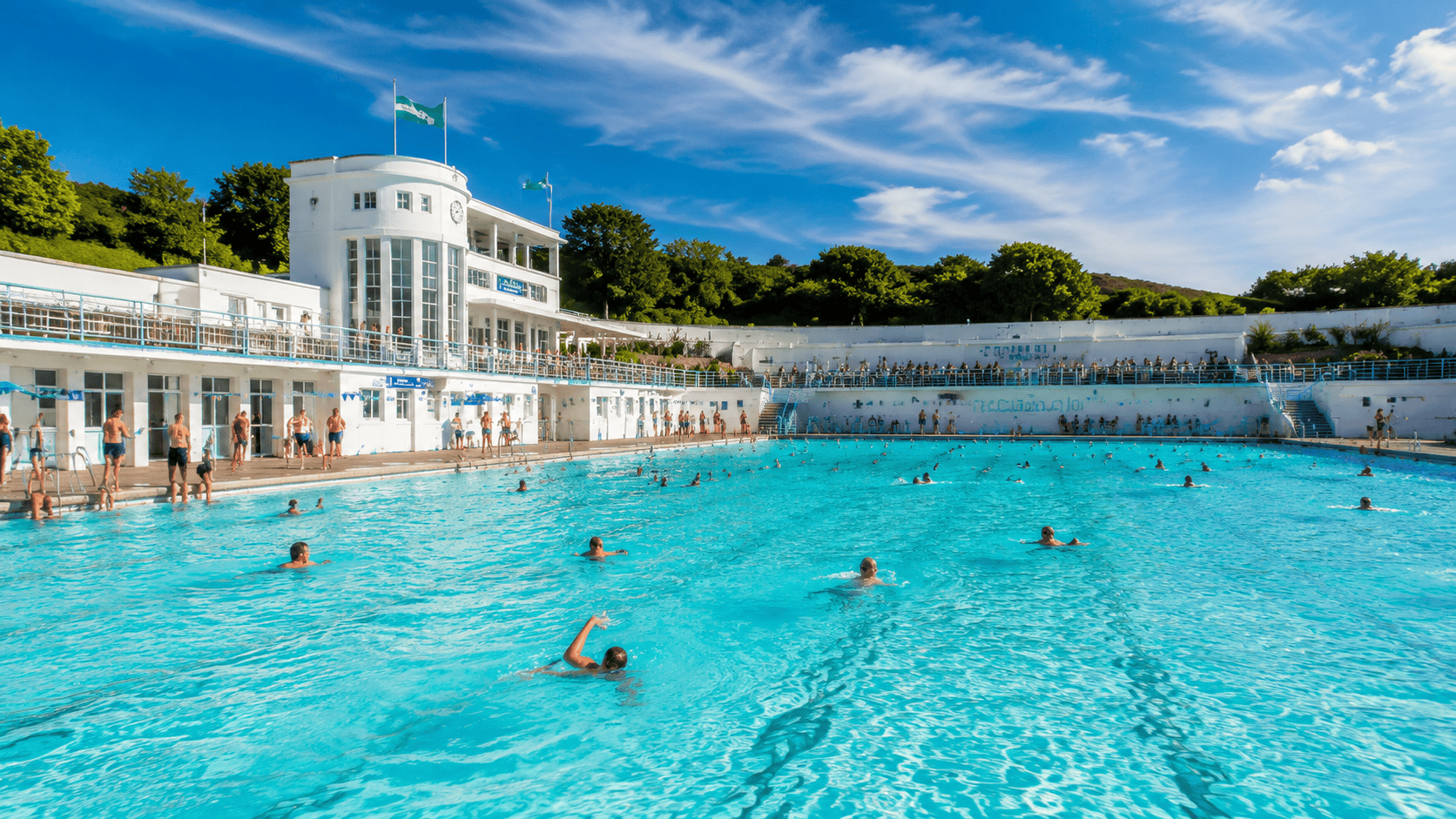
    Restored to its former 1930s glory, Saltdean is a Grade II* listed building and a genuine Art Deco treasure. The pool sits in a sweeping crescent with a sun terrace and period-accurate styling throughout. It’s community-run and hugely popular with Brighton locals.

    Jesus Green Lido, Cambridge

    At just under 100 metres, Jesus Green is one of the longest lidos in the UK. It’s a long, narrow strip of heated outdoor pool in the middle of a city park — brilliantly positioned for a pre-work dip — and it tends to be quieter than London equivalents, making it a real hidden gem.

    Stonehaven Open Air Pool, Aberdeenshire

    Up in Scotland, Stonehaven is the only heated Art Deco Olympic-sized seawater lido in the UK. Originally opened in 1934, it has a spectacular coastal setting and runs from late May through August. Worth making the trip if you’re anywhere near Aberdeen.

    Jubilee Pool, Penzance

    Built in 1935, Jubilee Pool is the UK’s largest surviving seawater lido. Perched on the Penzance seafront with views across Mount’s Bay, it was extensively restored after storm damage and now includes a geothermally heated pool alongside the main 50-metre seawater basin. It’s a genuinely breathtaking spot.

    Ilkley Lido, West Yorkshire

    Inland options aren’t short-changed either. Ilkley Lido is a 45-metre outdoor pool surrounded by forested hills, with a 1930s pavilion and sun terraces that feel a world away from the town centre. It also has a heated indoor pool for the colder months.

    Sandford Parks Lido, Cheltenham

    One of the Midlands’ finest outdoor pools, Sandford Parks runs from March to October and includes an Olympic-sized heated main pool plus a separate children’s pool. It’s popular with families and serious lane swimmers alike.

    Lido vs Wild Swimming: Which Is Right for You?

    Outdoor swimming has two main camps: the lido lovers and the wild swimmers. Both are brilliant — but they suit different people.

    Wild swimming in rivers, lakes, and reservoirs is gloriously free and takes you into genuinely natural environments, but it comes with more variables: water temperature, currents, access rights, and safety considerations. It rewards experience and preparation.

    Lidos, on the other hand, are structured and safe. The water is contained, lifeguards are usually present, and you can focus on the swimming itself rather than navigating terrain. They’re the perfect starting point if you’re new to outdoor swimming, want to build distance or speed, or simply prefer somewhere with proper facilities (including a hot shower afterwards).

    Both sit on the same outdoor swimming spectrum. Many lido regulars also wild swim; many wild swimmers got their start in a local lido. The key is finding what works for your fitness goals, your lifestyle, and your personal threshold for cold water.

    The Fitness Case for Lido Swimming

    Swimming in itself is one of the most complete exercises available — low impact, full body, cardio and strength in one. Doing it outdoors adds a further layer of physiological challenge that makes it even more effective.

    Cooler water increases caloric burn as your body works to maintain core temperature. Exposure to natural light — even on cloudy UK days — supports your circadian rhythm and boosts vitamin D synthesis. And the psychological reset of exercising outside, away from screens and strip lighting, is increasingly well-documented in sports science research.

    According to Swim England, regular swimming is one of the most accessible and sustainable forms of exercise across all life stages — from children developing confidence in water to older adults managing joint pain. Outdoor swimming adds the bonus of seasonal variation, which keeps motivation high where gym routines often flatten out.

    If you’re looking for somewhere with a pool plus access to gym equipment, sauna, or spa, health clubs with pool and spa facilities are another excellent option — especially when the British weather does its thing.

    What to Expect at Your First Lido Visit

    Never been to a lido before? Here’s the lowdown.

    Entry and booking: Many popular lidos now require advance booking, especially in summer. Check the lido’s website before turning up. Prices typically range from £5–£12 for a swim session, with memberships available at most venues.

    Facilities: Varies enormously. Some lidos have cafés, changing rooms, showers, and sunbathing terraces. Others are more spartan — basic cubicles and a pool. Check what’s available before you pack your bag.

    Temperature: Heated lidos typically maintain a water temperature of 25–29°C. Unheated lidos can be considerably colder, especially in spring — Tooting Bec has been recorded as low as 5°C in winter. If you’re not used to cold water, visit in July or August when unheated pools reach their warmest.

    Etiquette: Lidos tend to have clear lane designations for different speeds. Follow the pool’s lane system, leave space for others, and be prepared to share. Most lido communities are friendly and welcoming to newcomers.

    What to bring: Goggles are essential. A tow float is recommended at unheated outdoor pools for visibility and safety. Some lidos require swimming caps. Check the specific venue’s rules beforehand.

    The UK’s Lido Future Is Bright

    New openings are continuing to add to the UK’s outdoor swimming stock. Sea Lanes in Canary Wharf, which opened in June 2026, is London’s first National Open Water Swimming Centre — a 50-metre lido with dock water rated ‘Excellent’ for bathing. An Olympic-sized lido with saunas is planned for east London too, adding to a growing infrastructure for outdoor swimmers in the capital.

    Regional towns and cities are getting in on the act as well. Local campaigns to restore or open new lidos have succeeded in places like Peterborough, Lewes, and Bristol, driven by community crowdfunding and council investment in outdoor health infrastructure.

    If you’ve been meaning to get into outdoor swimming, this summer is genuinely the best time to start.

    Find Your Perfect Outdoor Pool with GymPal

    The UK has world-class outdoor swimming venues, and finding one near you has never been easier. Search for swimming venues on GymPal to discover lidos, leisure centres with outdoor pools, and aquatic facilities across England, Scotland, and Wales. Filter by location, check opening times, and find your nearest outdoor swim — all in one place.

    Your first outdoor swim might just be the best fitness decision you make this summer.

  • Wild Swimming in the UK: The Rise of Open Water Fitness

    Wild Swimming in the UK: The Rise of Open Water Fitness

    There is a quiet revolution happening in the UK’s relationship with water. From the glacial lakes of the Lake District to the chalk streams of the South Downs, from Scottish lochs to urban reservoirs in the Thames Valley, more people than ever are stripping off their wetsuits — or dispensing with them entirely — and plunging into open water. Wild swimming, once the preserve of hardened eccentrics, has become one of the most talked-about fitness trends in Britain.

    The numbers tell the story. According to Swim England, outdoor swimming participation has increased dramatically over the past five years, with tens of thousands of new participants entering open water each year. The pandemic played a part — when pools shut, lakes and rivers stayed open — but the trend has continued long after the restrictions lifted. Something deeper is pulling people out of their temperature-controlled indoor pools and into the cold embrace of natural water.

    Whether you are a seasoned swimmer looking for a new challenge or a curious beginner wondering whether wild swimming is for you, this guide covers everything you need to know: the health benefits, where to swim safely in the UK, what to wear, and how to get started.

    What Is Wild Swimming and Why Is It Different?

    Wild swimming refers to swimming in natural bodies of water — lakes, rivers, reservoirs, the sea, and waterfalls — rather than purpose-built swimming pools. It is sometimes called open water swimming or outdoor swimming, though purists will tell you these terms carry slightly different meanings: open water swimming often refers to the sport of distance swimming in lakes and seas, while wild swimming emphasises the connection to nature and the informality of the experience.

    The key differences from pool swimming are immediately apparent when you get in. Natural water is rarely still, rarely warm, and never a predictable 25 metres long. You navigate around weeds, rocks, and currents. You cannot see the bottom. The temperature changes as you move deeper. These challenges are precisely what many swimmers find so compelling — wild swimming demands presence and awareness in a way that pool swimming simply cannot replicate.

    Water temperatures in the UK vary enormously by location and season. Inland lakes in summer can reach a surprisingly comfortable 18–20°C. The same lake in February may be 4–6°C. The sea around the British coastline averages 12–17°C in summer, dropping to 6–9°C in winter. Understanding and respecting these temperatures is fundamental to swimming safely — and the temperature itself is a significant part of why so many people find wild swimming so transformative for their health and wellbeing.

    The Health Benefits of Open Water Swimming

    The health case for wild swimming is increasingly well-supported by research, and it goes well beyond the cardiovascular benefits you would expect from any form of swimming. The cold water itself appears to drive a distinct set of physiological responses that have attracted serious scientific interest.

    Cold water immersion triggers a stress response in the body that, with regular exposure, can lead to improved cold adaptation, reduced inflammatory markers, and changes in mood-regulating neurotransmitters. A widely cited study published in the British Medical Journal Case Reports described a young woman whose treatment-resistant depression was successfully managed through cold water swimming — with the authors hypothesising that the cold water shock triggers a release of noradrenaline and beta-endorphins. While this is a single case report, it generated enormous interest and has been followed by broader research into cold water’s effects on mental health.

    The NHS recognises swimming as one of the best all-round exercises, noting that it works the cardiovascular system, builds muscular strength and endurance, and is low-impact enough to be suitable for most people, including those with joint conditions. Open water swimming delivers these benefits while adding the documented effects of cold water exposure, which NHS guidance on swimming for fitness highlights as beneficial to circulation and overall wellbeing when approached sensibly.

    Beyond the physical, the mental health benefits are repeatedly cited by open water swimmers themselves. The immersive nature of the experience — the need to focus entirely on the water, the cold, the breath — creates what psychologists call an “attentional shift”, pulling the mind away from rumination and stress. Many swimmers describe the experience as meditative, and some communities of outdoor swimmers have built peer support networks around their shared love of cold water.

    If you are already exploring the science of cold water and recovery, our overview of cold water therapy and ice baths across the UK covers much of the same physiological territory from a recovery and performance perspective.

    Where to Wild Swim in the UK: The Best Locations

    The UK has an extraordinary range of open water swimming destinations, from the dramatic to the quietly beautiful. Finding the right spot depends on your experience level, your proximity to water, and what kind of swim you are looking for.

    The Lake District is perhaps the most celebrated wild swimming destination in England. Windermere, Ullswater, and Coniston Water are iconic, but it is the smaller tarns — Blea Tarn, Stickle Tarn, Styhead Tarn — that many swimmers consider the finest experiences. The water is exceptionally clear, the scenery is dramatic, and the swimming tradition here stretches back generations.

    The Cotswold Water Park, straddling Gloucestershire and Wiltshire, contains over 150 lakes and is home to a thriving open water swimming scene. Several lakes have organised swimming venues with lifeguards and facilities, making it an excellent option for beginners or those who prefer a more structured environment.

    Scotland offers some of Europe’s finest wild swimming. Loch Lomond is easily accessible from Glasgow and Edinburgh, while the more remote lochs of the Highlands provide an entirely different experience — wilder, colder, and more dramatic. The River Tweed, the River Tay, and numerous highland burns offer excellent river swimming for those prepared to seek them out.

    Wales punches well above its weight for wild swimming. The Pembrokeshire Coast, the Gower Peninsula, the rivers and waterfalls of the Brecon Beacons, and the lakes of Snowdonia all offer world-class swimming in stunning natural settings. The Blue Lagoon at Abereiddy in Pembrokeshire — a flooded former slate quarry with vivid blue-green water — has become one of the most photographed wild swimming spots in the UK.

    Rivers offer a different experience again. The Thames, the Wye, the Avon, the Test, and dozens of others have stretches where swimming is traditional, legal, and deeply enjoyable. River swimming requires an understanding of currents, weirs, and water quality — but for those who embrace it, there is something uniquely pleasurable about moving water swimming.

    The Outdoor Swimming Society maintains one of the most comprehensive guides to UK swimming locations, with community-contributed reviews and safety information. It is an invaluable resource for anyone building a list of places to explore.

    Safety: What Every Open Water Swimmer Must Know

    Wild swimming carries real risks that are absent from pool swimming, and understanding these risks is essential before you enter the water for the first time. The vast majority of open water swimming incidents are preventable, and they almost always involve one of a small number of factors: cold water shock, exhaustion from overestimating ability or distance, getting too far from exit points, or swimming alone.

    Cold water shock is the most serious immediate risk. When the body enters cold water (below around 15°C), it triggers an involuntary gasp reflex, followed by rapid breathing and, in some cases, hyperventilation. This can cause panic and loss of muscle control. The risk is highest in the first 30–90 seconds. The solution is to enter the water slowly, splashing water on your neck and face before getting in fully, allowing your body to adjust before your breathing becomes affected. Never jump or dive into cold water unless you are highly experienced.

    Hypothermia is a longer-term risk that depends on water temperature and time spent in the water. As a rough guide, a person of average fitness should limit swims to around 10 minutes in 10°C water and around 20–30 minutes in 15°C water. These are not precise rules — individual tolerance varies significantly — but they give a sensible framework for beginners. Learn to recognise the signs: uncontrollable shivering, confusion, loss of co-ordination. Exit the water well before you reach this point.

    Never swim alone, particularly when you are starting out. Having a swimming partner or staying within sight of others dramatically reduces the risk of an incident becoming a fatality.

    Check water quality before swimming. The Environment Agency provides water quality data for many rivers and lakes across England. Blue-green algae (cyanobacteria), which can be toxic, appears in warm, still water in summer — if you see it, do not swim. After heavy rainfall, bacterial levels in rivers and coastal waters increase significantly due to agricultural and sewage runoff.

    Wearing a brightly coloured swimming hat and a tow float (an inflatable buoy that clips to your waist) significantly increases your visibility to boats and other water users. These are small investments that meaningfully reduce risk.

    Getting Started: What You Need and How to Find Your Community

    The barrier to entry for wild swimming is relatively low compared to many other fitness activities — you need water and a swimsuit — but there are a few pieces of kit that will make the experience significantly more enjoyable, particularly in the UK’s often cold and unpredictable waters.

    A wetsuit extends your swimming season significantly and makes the cold water shock far more manageable. For most UK wild swimming, a full-length triathlon wetsuit (3mm–5mm) provides a good balance of warmth and flexibility. Many experienced wild swimmers prefer to acclimatise to cold water without a wetsuit over time, but for beginners, the additional safety margin a wetsuit provides is genuinely valuable.

    A neoprene swim hat is often underestimated. Heat loss through the head is significant in cold water, and a neoprene hat makes a noticeable difference to both comfort and how long you can safely remain in the water. Neoprene boots and gloves extend this further for very cold conditions.

    A changing robe (sometimes called a dryrobe or changing parka) has become something of an icon of outdoor swimming culture. These oversized waterproof fleece-lined capes allow you to change discreetly in outdoor locations and retain body heat rapidly after a cold swim. They are not cheap — expect to pay £80–£180 — but for regular swimmers, they are genuinely transformative.

    Finding your swimming community is arguably the most important step you can take. Wild swimming is far more enjoyable, far safer, and far more likely to become a sustainable habit when you do it with others. Local swimming groups can be found through the Outdoor Swimming Society, through Facebook groups searching your area, and increasingly through dedicated wild swimming apps and websites.

    Many areas have established “skins” swimming groups — swimmers who prefer to swim without wetsuits, often year-round. These groups tend to be exceptionally welcoming to beginners, provided those beginners respect the principles of safe, gradual acclimatisation.

    If you are newer to structured aquatic fitness, our guide on building your swimming fitness in UK pools is a useful starting point before venturing into open water — a stronger pool swimming base makes open water swimming both safer and more enjoyable from the start.

    How GymPal Can Help You Explore UK Fitness

    Wild swimming is just one of the extraordinary range of fitness options available across the UK. From open water swims to gym classes, spa and recovery facilities to bootcamp sessions in local parks, the breadth of the British fitness scene has never been wider.

    Finding the right fitness option for you — whether it is a leisure centre with pool access for your open water training, a gym with spa facilities to support your recovery, or a fitness community that matches your interests and goals — is where GymPal comes in. GymPal is the UK’s fitness discovery platform, helping you search gyms, swimming facilities, and wellness centres near you to find exactly what suits your needs and budget.

    If you are building fitness through open water swimming and want to complement it with structured gym training, yoga for flexibility, or recovery through heat and cold therapy, GymPal’s search tools make it straightforward to find gyms and fitness facilities across the UK that fit your schedule, location, and goals.

    The rise of wild swimming is part of a broader shift in how people in the UK think about fitness — less about regimented routines in climate-controlled gyms, more about connecting with nature, communities, and the genuine joy of movement. It is a shift that is long overdue, and the open water is ready and waiting.

  • How to Build a Gym Website That Ranks in Local Search Without Paying an SEO Agency

    How to Build a Gym Website That Ranks in Local Search Without Paying an SEO Agency

    If you run a gym, you don’t need a £1,000/month SEO agency to show up when someone searches “gym near me.” You need a well-structured website, the right local signals, and a bit of consistency. This guide walks through everything a gym owner can do themselves — no technical background required.

    Why Local Search Matters More Than Anything Else

    Most gym searches are local. People aren’t looking for the best gym in the country — they’re looking for the best gym they can actually get to. That means Google’s local results (the map pack and the organic listings below it) are the most valuable real estate you can win.

    The good news: local SEO rewards relevance and proximity, not just budget. A smaller independent gym with a well-optimised website can outrank a national chain that’s neglected its local presence.

    1. Get Your Google Business Profile Right First

    Before touching your website, make sure your Google Business Profile is complete and verified. This is what powers the map pack results.

    • Claim and verify your listing at business.google.com if you haven’t already
    • Add your exact address, opening hours, phone number, and website URL
    • Choose the right primary category — “Gym” or “Fitness Centre” is usually best; add secondary categories like “Personal Trainer” or “Yoga Studio” if relevant
    • Upload real photos — the equipment, the space, the classes. Listings with photos get significantly more clicks
    • Ask for Google reviews — and respond to every one. Review volume and recency are ranking signals

    This alone can move you into the local 3-pack without any changes to your website.

    2. Pick One or Two Location Keywords and Build Around Them

    You don’t need to rank for everything. Pick the one or two searches most likely to bring in new members:

    • “gym in [town name]”
    • “fitness centre [area]”
    • “personal training [town]”

    Use a free tool like Google Keyword Planner or just look at the “People also search for” suggestions in Google to find what people in your area are actually typing.

    Once you have your keywords, weave them naturally into the content on your homepage and any service pages — not crammed in, just used the way a real person would use them when describing your gym.

    3. Your Homepage Needs to Do Three Things

    For local SEO, your homepage needs to clearly signal:

    1. What you are — a gym, fitness centre, studio
    2. Where you are — the specific town, area, or postcode
    3. Who you serve — beginners, weightlifters, people over 50, busy professionals

    That means your page title (the text in the browser tab) should include your location and gym type: “Iron & Fitness Gym — Personal Training in Leeds” is far better than just “Home.”

    Your H1 heading (the main title on the page) should also include your location. Something like: “Your local gym in Harrogate — open 6am to 10pm, 7 days a week.”

    4. Create a Dedicated Location Page If You Need One

    If your gym name doesn’t naturally include your town, or if you have more than one location, create a dedicated page for each location. Don’t just duplicate content — write genuinely different copy for each one that describes the specific gym, the local area it serves, and the facilities on site.

    A URL structure like yourgymdomain.co.uk/gym-manchester or /personal-training-bristol helps search engines understand what each page is about.

    5. NAP Consistency: Name, Address, Phone

    Every time your gym’s name, address, and phone number appear online — your website, Google, Facebook, Yelp, local directories — they need to match exactly. Even minor differences (St. vs Street, Ltd vs limited) can confuse Google about whether these are all the same business.

    Do a quick audit:

    • Check your website footer — is the full address and phone number there?
    • Search your gym name and check the top five listings — do they all show the same details?
    • Fix any discrepancies directly on each platform

    6. Build Local Content That Actually Helps People

    Search engines rank content that genuinely answers local questions. A blog or resources section on your website is one of the most cost-effective SEO tools available to you.

    Good topic ideas for a gym blog:

    • “Best running routes near [your town]”
    • “How to get started at the gym for the first time in [area]”
    • “Our guide to gym etiquette at [gym name]”
    • “What’s included in our personal training sessions in [town]”

    Each piece of content is another indexed page that can show up in search results. You don’t need to publish weekly — two to four quality posts a month builds a meaningful content library over time.

    7. Get Listed in the Right Places

    Beyond Google, there are several directories that send genuine local authority signals:

    • Bing Places — many people still use Bing, and it’s free to list
    • Apple Maps — important for iPhone users
    • Yell.com and Thomson Local
    • GymPal — a UK fitness directory connecting gyms with people searching locally; a free listing puts you in front of people actively looking for somewhere to train near you (list your gym on GymPal)

    Each listing is a citation that reinforces your location to Google and provides another path for potential members to find you.

    8. Make Your Site Fast and Mobile-Friendly

    Google uses mobile-first indexing — it ranks your site based on how it performs on a mobile device. If your site is slow or hard to use on a phone, it will rank lower than it should.

    Check your site speed at PageSpeed Insights. The biggest wins are usually:

    • Compressing your images (large photo files are the most common culprit)
    • Using a fast, modern WordPress theme or website builder
    • Avoiding too many plugins or third-party scripts

    You don’t need a perfect score — but if you’re below 50 on mobile, it’s worth addressing.

    9. Internal Links Help Google Understand Your Site

    When you write a blog post or add a new page, link to other relevant pages on your own site. If you write about personal training, link to your personal training page. If you mention your class timetable, link to it.

    This tells Google which pages are important and helps visitors navigate — both of which improve your ranking over time.

    10. Track What’s Working

    Set up Google Search Console — it’s free and shows you exactly which search terms are bringing people to your site. Over time you’ll see which pages are gaining traction and where there are gaps to fill.

    Also check your Google Business Profile’s built-in insights to see how many people are finding you via search, how many are clicking for directions, and how many are calling.

    How Long Does This Take?

    Honest answer: most local SEO changes take 6 to 12 weeks to show measurable results. The algorithm needs time to re-index your pages and reassess your authority. But the work you do now compounds — a well-optimised gym website continues to bring in enquiries months and years after you’ve built it.

    The gym owners who rank well in local search are almost never those who paid the most for SEO. They’re the ones who got the basics right, stayed consistent, and gave Google the right signals over time.

    Start With a Strong Foundation

    You don’t need to do all of this at once. A practical starting order:

    1. Claim and complete your Google Business Profile
    2. Fix your homepage title and H1 to include your location
    3. Make sure your name, address, and phone number match everywhere
    4. List your gym on GymPal and other free directories
    5. Publish one piece of genuinely useful local content

    Each step builds on the last. Most gym owners who follow this process see a measurable improvement in local visibility within two to three months — without paying a penny to an agency.


    GymPal is a UK fitness directory listing 10,000+ gyms, studios, and personal trainers. A free listing puts your gym in front of people searching for fitness options in your area. Find out more about listing your gym on GymPal.

  • How to Set Up a Gym Class Timetable That Maximises Attendance and Instructor Utilisation

    How to Set Up a Gym Class Timetable That Maximises Attendance and Instructor Utilisation

    A gym class timetable sounds simple — fill slots, hire instructors, open the doors. In practice, it’s one of the most important factors in how much revenue your classes generate and how satisfied your members feel. A badly structured timetable creates empty rooms and frustrated instructors. A well-designed one drives retention, fills capacity, and makes scheduling practically run itself.

    This guide is written for gym owners and studio managers who want to build — or rebuild — a class timetable that actually works. We’ll cover the data you need, the scheduling principles that maximise attendance, and the instructor management systems that reduce no-shows and last-minute chaos.

    Start With the Data, Not the Blank Calendar

    The most common timetable mistake is designing around convenience — what time suits the instructors, what slots are available — rather than around when members actually want to train.

    Before you add a single class, gather this information:

    • Peak access times — when are members actually using the gym? Most access control systems or gym management software can give you this broken down by day of week and hour
    • Class attendance history — which classes have the best and worst attendance? What time did the best-attended classes run?
    • Member demographics — are most of your members commuters who train before or after work? Parents who need morning slots while kids are at school? Retirees who prefer mid-morning?
    • Waitlist data — if you use booking software, are there classes that consistently sell out? Classes that people abandon during booking?

    This data tells you where demand exists. Your timetable should respond to that demand, not create slots you hope demand will fill.

    The Scheduling Principles That Drive Attendance

    Anchor your peak slots

    Every gym has two or three golden time slots — typically 6–7am, 12–1pm, and 5:30–7pm on weekdays. These are your highest-demand windows. Fill them with your most popular class formats and your best instructors. Don’t waste them on low-demand formats or experiment with new concepts during peak time.

    Use progressive time blocks

    Rather than scattering classes randomly, consider grouping them. A common pattern that works well:

    • Early morning block (6am–8am): High-intensity options — HIIT, spin, circuits
    • Mid-morning block (9:30am–11:30am): Lower-intensity or moderate — yoga, Pilates, stretch, barre
    • Lunchtime (12pm–1pm): One short, punchy session — 45-min HIIT or boxing
    • After-school (4pm–5pm): If you have family members, this slot works well
    • Evening block (5:30pm–7:30pm): Your second peak — mix of formats to suit different needs

    This pattern gives members predictability. They know morning spin is always at 6:30am; they build it into their routine without checking the timetable every week.

    Build in buffer time

    Fifteen minutes between classes isn’t wasted time — it’s transition time. Members need to leave, new members need to enter, instructors need to reset equipment and debrief. Back-to-back scheduling with no buffer creates rushed exits, late starts, and instructor burnout.

    Spread demand across the day

    If you have several members who would attend any available class, use pricing or booking incentives to shift some of that demand to off-peak slots. Members who get a discount for attending the 10am rather than the 6:30am help you spread instructor costs more efficiently and reduce the pressure on peak sessions.

    Class Format Mix: What Works for Most UK Gyms

    The right class mix depends on your membership demographic, but there are some reliable patterns for typical UK independent gyms:

    Format Typical demand Notes
    HIIT / circuits High Works mornings and evenings; broad appeal
    Spin / cycle High (if you have bikes) Strong retention; members become regulars
    Yoga / stretch Steady Good mid-morning filler; appeals to recovery-focused members
    Pilates Growing Especially popular with 30–55 female demographic
    Boxing / combat Moderate-high Strong community builder; attracts male members to class schedule
    LBT / Body pump Steady Classic; reliable attendance
    Zumba / dance fitness Variable Very demographic-specific; test before committing

    A timetable of 15–25 weekly classes across 4–6 formats is manageable for most independent gyms with 3–5 instructors. Beyond that, quality tends to dilute and scheduling complexity increases sharply.

    Instructor Management: Reducing No-Shows and Late Cancellations

    The biggest operational risk in a class timetable isn’t demand — it’s supply. An instructor calling in sick at 5:45am for a 6:30am class, with no cover arranged, is an experience that drives members away permanently.

    Build a cover list before you need it

    Every class format on your timetable needs at least two people who can teach it. Not just one instructor plus a vague intention to “find someone.” An actual named list of:

    • Primary instructor
    • Confirmed cover instructor (with their contact details and confirmed availability)

    This cover list should be reviewed every month. Instructors’ availability changes. A cover person who could do Tuesday 6:30am last quarter may not be available this quarter.

    Create a clear cancellation protocol

    Instructors should know exactly what they need to do if they’re going to miss a session:

    1. Notify the gym at least 24 hours in advance where possible (emergency exceptions aside)
    2. Contact their named cover instructor directly
    3. Confirm the handoff to the gym manager

    If your gym doesn’t have a written process for this, you’re relying on goodwill and hoping for the best. That works until it doesn’t.

    Use gym management software with instructor-facing tools

    Several UK gym software platforms — including Glofox, TeamUp, and Mindbody — allow you to manage instructor rotas, send automated reminders before classes, track attendance per instructor, and process class bookings online. The investment pays for itself quickly in reduced admin time and fewer operational gaps.

    Pay instructors reliably and fairly

    This might seem obvious, but late payments or confusing pay structures are a leading cause of instructor churn and reduced commitment. If your instructors aren’t sure what they’re being paid or when, you’ll see it in their engagement. Clear, prompt payment is a basic form of respect that has a direct operational payoff.

    How to Measure Whether Your Timetable Is Working

    Most gym owners review their timetable once a year, if at all. A well-managed timetable should be reviewed quarterly, with monthly monitoring of key indicators:

    • Attendance rate per class — what percentage of capacity does each session typically fill? Below 40% is a signal to change the time, format, or instructor. Above 85% consistently means you should consider adding a session.
    • Cancellation rate — how often are classes cancelled at short notice? This measures your operational resilience.
    • Member booking patterns — are there formats that members book but then don’t attend? This creates false demand signals and blocks real bookings.
    • Revenue per class slot — especially relevant if classes are included in tiered memberships. High-cost formats (e.g. small group PT) filling poorly are a real drain; it’s worth knowing.

    Communicating Your Timetable to Members

    A great timetable that members don’t know about fails to deliver. Common mistakes:

    • Burying the timetable in the website footer or in a PDF that’s 3 updates out of date
    • Announcing changes on Instagram only — not everyone follows you
    • Using the same timetable across all communication channels and never updating it

    Best practice:

    • Keep an always-updated, mobile-friendly timetable on your website (most gym management platforms generate this automatically)
    • When you make changes, send a dedicated email to your member list — not just a social post
    • Put a laminated copy of the week’s timetable in the gym, updated weekly
    • If you have an app, push notification for timetable changes is worth doing for any significant update

    When to Refresh Your Timetable

    Class timetables have a natural decay cycle. A timetable that drove strong attendance 18 months ago may now feel stale, because member demographics shift, fitness trends evolve, and instructor rosters change.

    Signs it’s time for a refresh:

    • Multiple classes consistently under 50% capacity
    • Members requesting formats you don’t offer
    • Instructor turnover has changed who’s available
    • A new competitor opened nearby with a more modern class offering
    • Post-summer or post-January (natural re-evaluation moments for members)

    When refreshing, don’t clear the slate entirely. Keep what’s working, fix what isn’t, and introduce one or two new formats rather than overhauling everything at once. Dramatic changes confuse regular members who’ve built their routine around your existing timetable.

    Getting Listed So New Members Can Find Your Classes

    Even the best-optimised timetable only drives revenue if people know your gym exists. If you’re a UK gym owner, getting your class schedule visible to people searching for fitness options locally is one of the highest-value things you can do.

    GymPal is a UK fitness directory that connects people searching for gyms and fitness classes with venues in their area. A free listing puts your gym in front of people who are actively looking — not passive scrollers, but people searching “gym classes near me” or “Pilates in [town].” If you haven’t claimed your listing, it’s worth doing: find out how listing your gym on GymPal works.

    The Bottom Line

    A high-performing gym class timetable isn’t about having the most classes or the most exotic formats. It’s about putting the right classes at the right times, backed by instructors who show up reliably and a system that gives you the data to improve continuously.

    Start with your attendance data, anchor your best instructors in peak slots, build real cover arrangements for every class, and review the numbers every quarter. Those four habits will do more for your class attendance than any trend-chasing overhaul.


    GymPal is a UK fitness directory helping gym owners get discovered by local fitness seekers. A free listing connects your venue with people actively searching for gyms and classes in your area. List your gym on GymPal for free.